


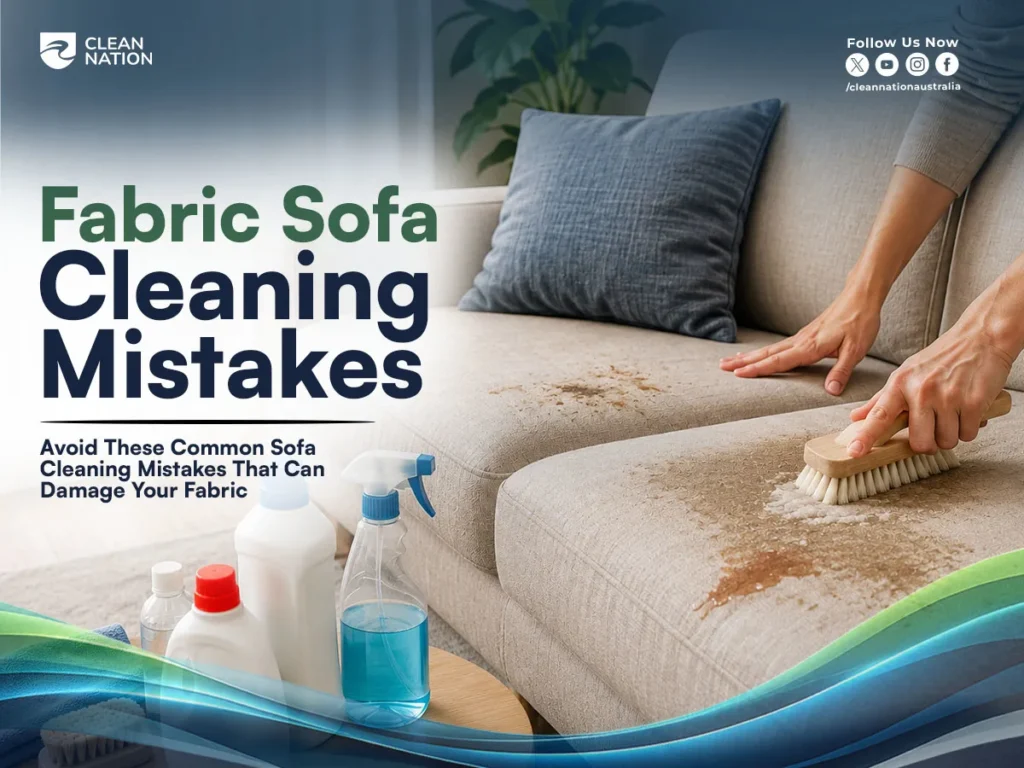
Fabric sofa cleaning mistakes can turn a simple cleaning job into costly upholstery damage. Using the wrong products, ignoring the cleaning code, scrubbing too hard, over-wetting the fabric, or applying excessive heat can cause discoloration, watermarks, shrinkage, texture changes, and other permanent issues. This guide explains 10 common cleaning errors, how to approach fabric sofa cleaning more carefully, when DIY methods should be avoided, and why professional fabric-specific cleaning can help protect your sofa’s appearance, texture, and long-term condition.
10 Sofa Fabric Cleaning Mistakes You Should Avoid
Keeping a fabric sofa clean requires more than simply applying a cleaning solution to visible stains. From using the wrong product and ignoring the sofa’s cleaning code to scrubbing too aggressively, over-wetting, or applying excessive heat, common mistakes can damage upholstery and leave uneven results. This guide highlights 10 sofa fabric cleaning mistakes to avoid and explains how following fabric-specific care instructions, gentle cleaning methods, proper testing, and controlled drying can help protect your sofa’s appearance and condition.
1. Using the Wrong Cleaning Product
One of the biggest sofa fabric cleaning mistakes is choosing a product simply because it works well on another surface. Upholstery fabrics can have different fibres, finishes, constructions, and cleaning requirements, so a product suitable for one sofa may not be appropriate for another. Always follow the cleaning instructions supplied for your particular fabric rather than treating every sofa with the same solution.
2. Ignoring the Sofa’s Cleaning Code
That small label on your sofa can determine what type of cleaning is appropriate. Common upholstery codes include W, S, WS/W-S and X, with each indicating a different level or type of cleaning compatibility.
Ignoring the code and applying water, solvent, or another cleaning agent without checking the manufacturer’s instructions can create unnecessary risk. If the label is missing or unclear, it is better to establish the fabric’s care requirements before applying a cleaning product.
3. Scrubbing the Fabric Too Hard
A stubborn stain can tempt you to scrub harder, but aggressive agitation is not automatically a better cleaning method. Some upholstery fabrics are sensitive to excessive rubbing, and certain pile fabrics can experience changes in their appearance or texture when handled too aggressively.For spills and spots, always treat the area gently instead of forcing the stain out.
4. Over-Wetting the Sofa
Using more water does not mean getting a cleaner sofa. Saturating the upholstery can allow moisture to move beyond the fabric surface and into the filling or other internal components.Over-wetting can also make drying more difficult and may lead to odours or watermarks. Moisture control is essential when cleaning fabric sofas.
5. Cleaning Without Vacuuming First
Dust, crumbs, hair and loose soil can accumulate between the fibres of a sofa. Vacuuming is therefore an important first step before any deeper cleaning.Removing dry debris first helps ensure that dirt is not spread or pushed deeper into the fabric during cleaning.
6. Trying an Untested Home Remedy
Vinegar, baking soda, dishwashing liquid and other household ingredients are often suggested as quick fixes. However, upholstery is not a single material, and what works on one fabric may damage another.A safer approach is to use fabric-approved cleaning solutions and test them in a hidden area before full application.
7. Ignoring Colour and Fabric Changes
A sofa can appear clean immediately after treatment while showing issues later. Colour changes, bleeding, rings, or texture shifts may appear once the fabric dries.This is why testing and following proper cleaning instructions is important before treating the full surface.
8. Using Excessive Heat to Dry the Fabric
Trying to speed up drying with heaters, hair dryers, or direct sunlight can damage certain upholstery fabrics.The safest method is natural drying with good airflow, following the manufacturer’s instructions. Proper drying is just as important as cleaning itself.
9. Treating Only the Visible Part of a Problem
A stain is often larger than it appears on the surface. Cleaning only the visible spot can leave uneven results once the fabric dries.Spot treatment should always be blended carefully with the surrounding area to maintain a consistent finish.
10. Assuming Every Fabric Sofa Can Be Cleaned the Same Way
Not all sofas are made from the same material. Polyester, linen, velvet, cotton blends and other fabrics all react differently to cleaning methods.The cleaning code and fabric type should always guide the cleaning approach—not assumptions or guesswork.

What Can Happen When Sofa Fabric Is Cleaned Incorrectly?
Incorrect cleaning can lead to more than just a failed stain removal. Depending on the fabric, it may cause watermarks, colour fading, shrinkage, texture damage, pile distortion, or permanent marks.This is why professional care is often recommended for delicate or high-value upholstery.
How to Clean a Fabric Sofa More Carefully?
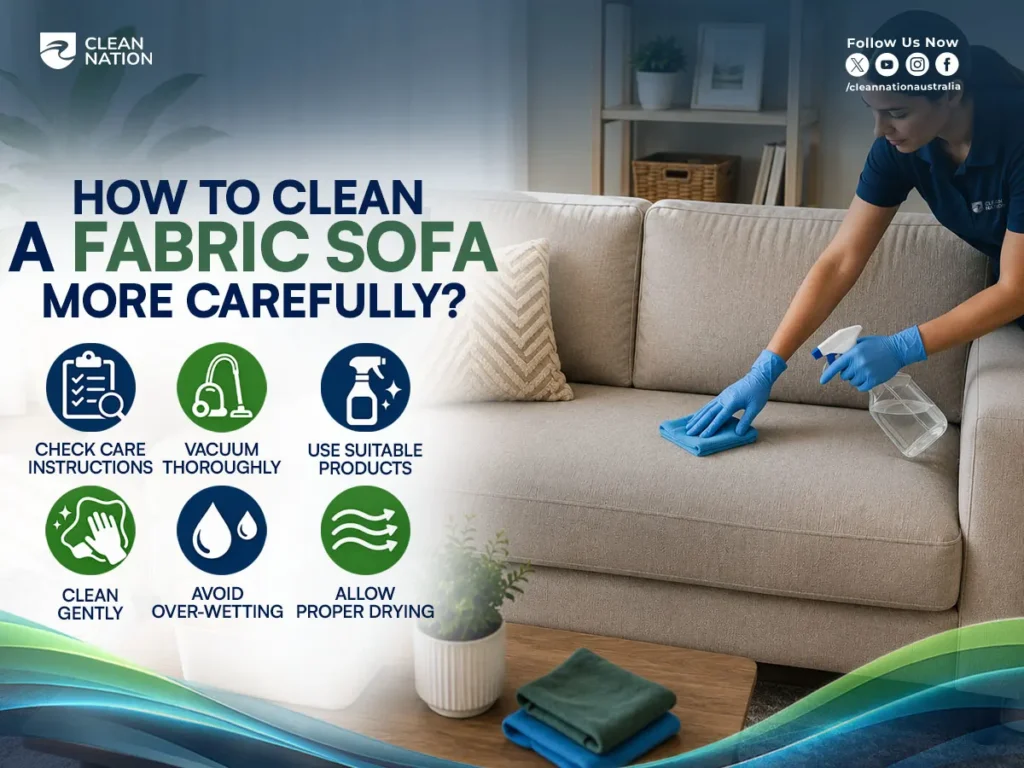
A safer cleaning approach includes:
- Check the manufacturer’s care instructions and cleaning code.
- Vacuum the sofa thoroughly before cleaning.
- Identify the fabric type and condition.
- Use only suitable, fabric-approved cleaning products.
- Test in a hidden area before full application.
- Treat stains gently without scrubbing.
- Avoid over-wetting the fabric.
- Allow proper drying with good airflow.
When Should You Avoid DIY Sofa Cleaning?
DIY cleaning is not always the best option, especially when the fabric type is unknown, the care label is missing, or previous cleaning attempts have already caused damage. Without proper knowledge, using the wrong products or methods can lead to stains setting deeper or fabric weakening over time significantly worse.Guessing in such situations can make the problem worse rather than better, often spreading stains, damaging fibers, or causing discoloration. Professional assessment is always safer because it ensures the right cleaning method is used for the specific fabric, preventing avoidable damage and helping maintain the sofa’s original condition longer overall.
Why Professional Sofa Fabric Cleaning Can Be a Better Option?
Professional upholstery cleaning begins with identifying the fabric type and understanding its specific cleaning requirements. This step is essential because different materials react differently to moisture, heat, and cleaning agents. Proper identification helps ensure a safe, controlled process that minimises the risk of shrinkage, discolouration, or surface damage during cleaning.At Clean Nation, we apply fabric-specific techniques tailored to each sofa’s material and condition. Our approach focuses on effective cleaning while carefully protecting texture, colour, and finish. By matching the method to the fabric, we ensure a deeper clean that maintains the upholstery’s quality, appearance, and long-term durability.
FAQ’s
Following are the faq’s
What Do Professional Sofa Cleaners Use?
Professional sofa cleaners use upholstery-safe cleaning solutions, fabric-specific techniques, professional equipment, and controlled moisture based on the sofa’s material. At Clean Nation, we assess the fabric and its condition before selecting a suitable cleaning method, rather than applying the same products and process to every sofa.
How Do You Clean a Sofa That Can’t Be Washed?
A sofa that cannot be washed with water may require a low-moisture or solvent-based cleaning method, depending on its fabric cleaning code. Clean Nation checks the manufacturer’s care instructions and fabric requirements first, then chooses an appropriate method to clean the upholstery without unnecessary moisture.
Is It Worth Getting a Sofa Professionally Cleaned?
Yes, professional sofa cleaning can be worthwhile for removing built-up dirt, stains, odours, and embedded debris that routine vacuuming cannot handle. Clean Nation uses fabric-specific cleaning methods to improve the appearance and cleanliness of your upholstery while reducing the risk associated with unsuitable DIY cleaning.
How Often Should a Sofa Be Cleaned?
Most sofas benefit from professional cleaning approximately every 12–18 months, although the ideal frequency depends on usage, pets, children, spills, and general household conditions. Clean Nation can recommend a suitable cleaning schedule after considering the fabric type, sofa condition, and amount of everyday use.
Are Your Cleaners Certified and Experienced?
Clean Nation cleaners are trained and experienced in professional upholstery cleaning, including fabric identification, stain treatment, suitable cleaning methods, and moisture control. Our team assesses the sofa before cleaning to determine the appropriate approach for its material and condition, helping deliver effective cleaning while protecting the upholstery.
Final Thoughts
Most sofa fabric cleaning mistakes happen when people treat upholstery like a regular household surface. But fabric sofas need more care, not more force. Follow the correct instructions, use suitable products, control moisture, and avoid shortcuts. When in doubt, trust professionals like Clean Nation to handle your sofa safely and effectively.