



For a typical household, professional sofa cleaning every 12 to 18 months is a practical starting point. However, there is no universal schedule that suits every sofa. The right frequency depends on how heavily the furniture is used, who uses it, whether you have pets or children, the upholstery material and how quickly dirt or stains accumulate. A sofa used every day needs considerably more attention than an occasional-use guest-room sofa. If your furniture regularly deals with muddy paws, food spills, perspiration, dust, pet dander or high foot traffic, leaving it untouched for years allows contaminants to become increasingly embedded in the upholstery.
How Often Should You Clean Your Sofa Based on Your Household?
Your sofa cleaning frequency depends heavily on your household and how the furniture is used. A low-use adult household may need professional cleaning every 12 to 18 months, while homes with children, pets, allergy concerns or heavy daily use may require cleaning every 3 to 12 months. Regular professional cleaning helps address accumulated dust, body oils, pet dander, food residue, stains and odors before they become harder to manage.
Average Household Without Pets or Children
If your sofa is used regularly by adults and there are no pets or young children in the home, professional cleaning every 12 to 18 months is generally appropriate. Routine vacuuming, occasional spot treatment and basic maintenance can help keep everyday dust and surface debris under control between professional services.
Even a relatively clean adult-only household produces body oils, skin particles, dust and airborne debris. These materials gradually settle into cushions, seams and upholstery fibres, so a sofa can require deep cleaning even when it still looks reasonably clean.
Homes With Children
Families with children should consider professional sofa cleaning approximately every 6 to 12 months, particularly when the sofa is a central area for watching television, playing, eating or relaxing.
Children can introduce food crumbs, drink spills, sticky residues, dirt and other contaminants into upholstery quickly. Small accidents that appear insignificant can penetrate beneath the surface and become stubborn stains or unpleasant odours if they are repeatedly ignored.
Homes With Pets
If you have dogs or cats, cleaning your sofa every 6 to 12 months can be a much better approach, with more frequent cleaning potentially necessary for heavily used furniture.
Pet hair is only part of the problem. Upholstery can also collect dander, outdoor dirt, saliva, oils and odours carried by pets. Animals that regularly sleep or rest on the sofa can significantly increase the amount of organic debris trapped within the fabric.
Homes With Allergy or Sensitivity Concerns
Households concerned about allergens and indoor air quality may benefit from more frequent professional upholstery cleaning, often around every 3 to 6 months, depending on the household and professional advice.
Dust, pet dander and fine particles can accumulate in upholstered furniture. Regular vacuuming is useful, but professional cleaning provides a deeper approach to removing accumulated soil from upholstery fibres and cushions.
High-Traffic or Frequently Used Sofas
A sofa in a busy family living room, shared accommodation, rental property or commercial environment can require professional cleaning every 6 to 12 months, or sooner when there is obvious contamination.
The more frequently people sit, lie or eat on a sofa, the faster body oils, dirt, dust and debris build up. High-use furniture should be treated according to its actual condition rather than following a fixed calendar date.
Does Sofa Material Affect Cleaning Frequency?
Absolutely. Sofa material can influence both cleaning frequency and the safest cleaning method. Different upholstery fibres respond differently to moisture, heat, agitation and cleaning products, which is why professional cleaners should identify the material and follow the manufacturer’s care instructions before starting.
Fabric Sofas
Fabric upholstery generally benefits from professional deep cleaning every 12 to 18 months, with more frequent service for high-use homes, children, pets or allergy concerns.
Fabric fibres can hold dust, body oils, food particles, pet hair and stains beneath the visible surface. Professional upholstery cleaning can target this embedded soil while using a method appropriate for the specific fabric.
Leather Sofas
Leather sofas require a different maintenance approach from fabric upholstery. Regular dusting and wiping can help prevent surface buildup, while professional leather cleaning and conditioning should be scheduled according to the leather type, usage and manufacturer’s care recommendations.
Leather should never automatically be treated like fabric upholstery. Incorrect chemicals, excessive moisture or aggressive scrubbing can damage the finish, so proper material identification matters.
Microfiber and Synthetic Sofas
Microfiber and synthetic upholstery can be durable and practical, but that does not make it immune to dirt, oils or staining. High-use microfiber furniture may require professional cleaning around every 6 to 12 months, while lightly used pieces can go longer.
The exact cleaning technique should be selected according to the fibre composition and manufacturer’s cleaning code rather than assuming every synthetic sofa can be treated in the same way.
Natural-Fiber Sofas
Natural fibres such as cotton, linen, wool and blended textiles can require greater care because their response to moisture and cleaning agents varies.
Instead of choosing a cleaning frequency based solely on the fibre name, check the upholstery care label and manufacturer recommendations. Professional cleaners can assess the fabric before selecting an appropriate cleaning process.
What Factors Determine How Often a Sofa Needs Cleaning?
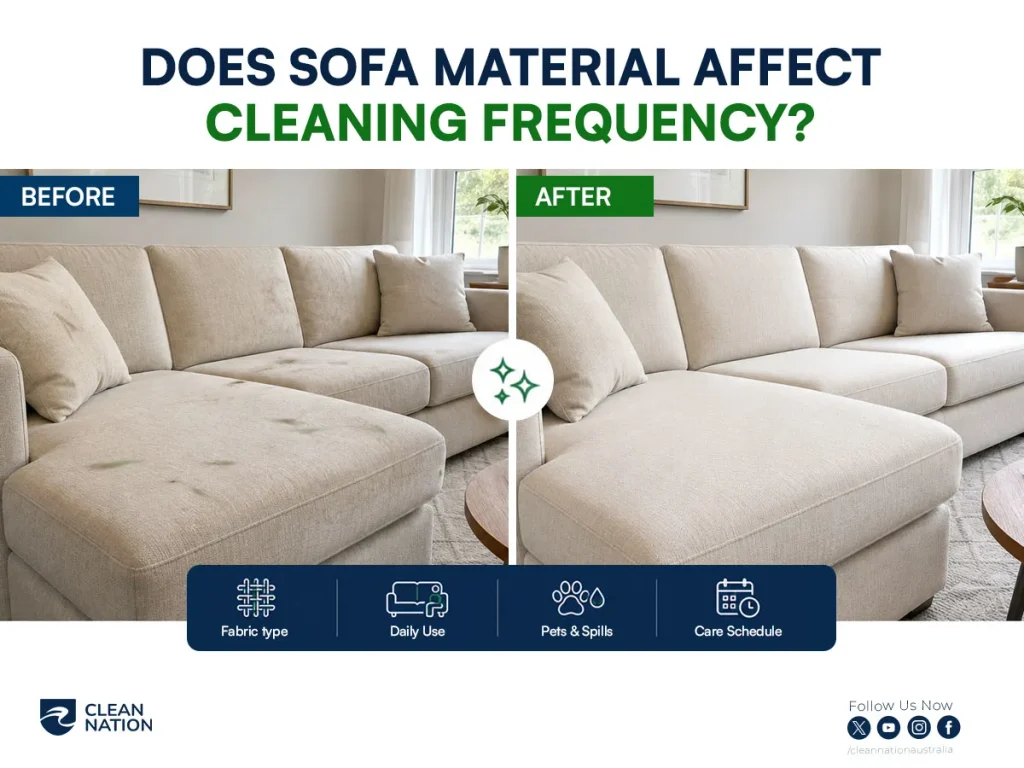
There is no one-size-fits-all sofa cleaning schedule. How often your sofa needs professional cleaning depends on daily use, pets, children, spills, odours, environmental exposure and the type of upholstery. A heavily used sofa in a busy household will need attention sooner than lightly used furniture, while the fabric and manufacturer’s cleaning instructions determine the safest and most effective cleaning approach.
Frequency of Use
The more a sofa is used, the faster it accumulates body oils, dust, skin particles and everyday soil. A family sofa used for several hours every day will generally need professional attention sooner than decorative furniture that is rarely occupied.
Pets and Pet Hair
Pets increase the cleaning load through fur, dander, outdoor dirt and odours. If your pet regularly sleeps on the sofa, treat the furniture as high-use upholstery rather than waiting for visible buildup.
Children and Food Spills
Children often turn sofas into eating, playing and relaxing spaces. Crumbs, juice, sauces, chocolate and sticky residues can quickly become embedded in upholstery, making prompt stain treatment particularly important.
Stains, Dirt and Odours
A visible stain is an obvious warning, but accumulated soil does not always announce itself. Persistent odours, darkened areas, greasy patches and a generally dirty appearance can indicate that the upholstery needs professional attention.
Sofa Location and Environmental Exposure
Sofas near open windows, entrances or frequently used areas can receive more dust and outdoor contaminants. Direct sunlight can also affect certain upholstery materials over time, so furniture placement and environmental exposure should be considered when planning maintenance.
Fabric Type and Manufacturer’s Cleaning Instructions
Cleaning frequency should never be separated from the sofa’s construction and care requirements. Always check the upholstery cleaning code, fabric composition and manufacturer’s instructions before applying cleaning products or excessive moisture.
Signs Your Sofa Needs Professional Cleaning
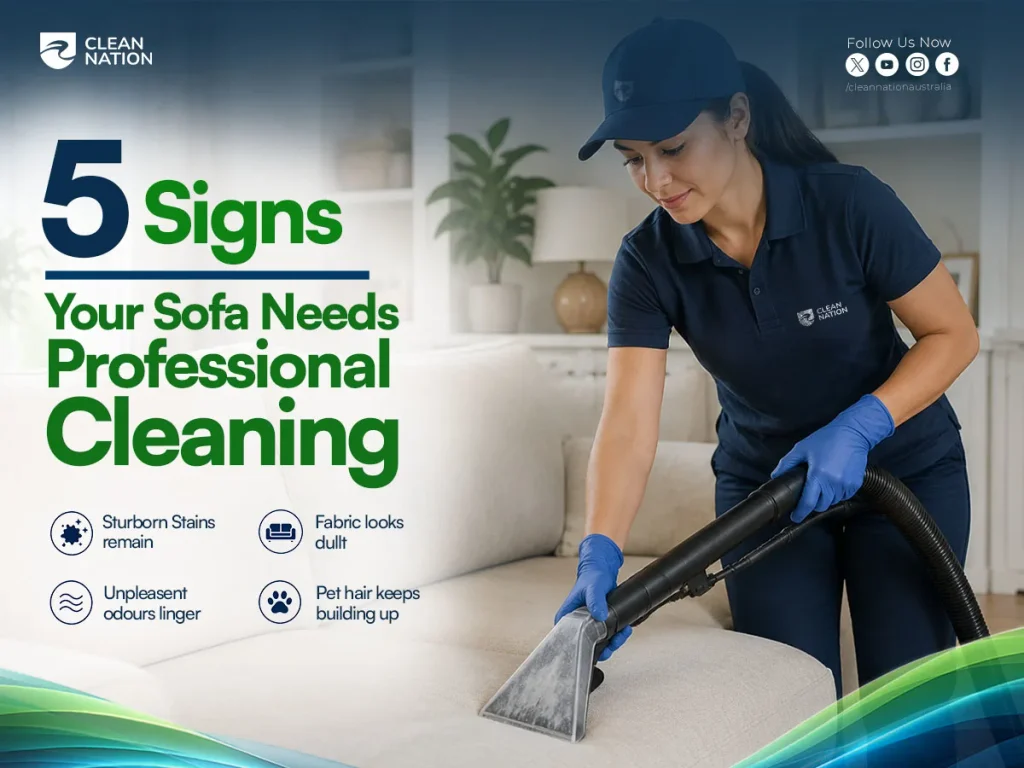
Your sofa may need professional cleaning long before it looks extremely dirty. Visible stains, persistent odours, dull fabric, accumulating dust, greasy high-touch areas and increased sensitivity around the furniture can all signal that routine vacuuming is no longer enough. These signs often indicate that dirt, oils, debris and other contaminants have built up within the upholstery and require a deeper professional clean.
Visible Stains and Discolouration
If your sofa has food stains, drink marks, dirt patches or noticeable discolouration, it is time to stop treating it as a simple surface-cleaning problem. Older stains can become increasingly difficult to remove when they remain inside upholstery for extended periods.
Lingering or Unpleasant Odours
Persistent smells can indicate that odour-causing contaminants have penetrated deeper into cushions or upholstery. Spraying fragrance over the sofa only masks the problem temporarily; proper cleaning targets the source.
Dull or Dirty-Looking Fabric
A sofa can gradually lose its original appearance as body oils, dust and soil accumulate. If the upholstery looks darker, flattened or noticeably less vibrant than it once did, professional cleaning can restore a fresher appearance.
Dust and Debris Building Up
If vacuuming repeatedly reveals large amounts of dust, crumbs, pet hair or debris around seams and cushions, the sofa may need more than routine surface maintenance.
Greasy or Sticky Upholstery
A greasy texture around armrests, headrests and frequently touched areas is a common indication of accumulated body oils and residue. These high-contact areas often need deeper cleaning than a quick vacuum can provide.
Increased Allergy or Irritation Symptoms
If your household experiences increased sensitivity around heavily used upholstered furniture, consider whether accumulated dust and pet-related debris could be contributing to the problem. Professional cleaning can help reduce accumulated soil and allergens within upholstery, although it should not be considered a medical treatment.
What Happens If You Don’t Clean Your Sofa Regularly?
Ignoring sofa cleaning does not make the contamination disappear. Dust, skin particles, body oils, pet hair, food residue and everyday dirt can continue accumulating inside the upholstery.
Over time, neglected furniture may develop persistent odours, stubborn stains, dull fabric, greasy touch points and a visibly worn appearance. Dirt can also become more difficult to remove when it remains embedded for long periods.
Regular professional cleaning is therefore about more than making a sofa look good for a day. It is part of upholstery maintenance that can help protect the fabric, improve freshness and extend the useful life of the furniture.

A Family Sofa That Needed More Than Vacuuming
A family in Sydney contacted Clean Nation after noticing that their sofa had started looking dull and developing a faint odour, even though they vacuumed it regularly. With two children using the sofa every day, food crumbs, drink spills and everyday grime had gradually built up in the upholstery.
After assessing the sofa’s fabric and condition, the Clean Nation team used a suitable professional cleaning method to target the accumulated dirt and stains. The family was surprised by how much grime had been trapped in the upholstery despite the sofa appearing reasonably clean from a distance.
The experience showed them why regular sofa cleaning should be based on household use, not just visible dirt. With children using the furniture daily, they decided to schedule professional cleaning more consistently instead of waiting for stains or odours to become noticeable.
Is Vacuuming Enough to Keep a Sofa Clean?
No. Vacuuming is essential, but it is only one part of sofa maintenance.
A vacuum cleaner can remove loose dust, crumbs, pet hair and surface debris, particularly from cushions and accessible areas. It cannot fully address everything that becomes embedded within upholstery, including body oils, sticky residues, deeper soil and certain stains.
The strongest maintenance routine combines regular vacuuming, immediate spill treatment and periodic professional sofa cleaning. This keeps everyday debris under control while allowing deeper contamination to be addressed professionally when required.
When Should You Book Professional Sofa Cleaning?
Don’t wait until your sofa becomes heavily stained or starts smelling unpleasant. Book professional sofa cleaning when:
- The recommended cleaning interval has passed.
- Your sofa receives heavy daily use.
- Pets regularly sit or sleep on it.
- Children frequently eat or play on it.
- Stains are becoming difficult to remove.
- Persistent odours remain after routine cleaning.
- Upholstery feels greasy or looks dull.
- Large amounts of dust and debris collect inside cushions and seams.
- The sofa has not received professional cleaning for a long period.
- You want to refresh the furniture before or after a major event.
For many households, 12 to 18 months is a sensible baseline, but high-use furniture may need professional cleaning much sooner.
Why Choose Clean Nation for Professional Sofa Cleaning?
Your sofa deserves more than a quick spray and surface wipe. Clean Nation provides professional sofa cleaning designed to address the dirt, stains, odours and accumulated soil that routine household cleaning may leave behind.
Our approach starts with understanding the upholstery rather than treating every sofa identically. The appropriate cleaning method depends on the fabric, condition, contamination and manufacturer’s care requirements. That helps deliver a more targeted clean while reducing the risk of using an unsuitable process.
Whether your sofa has accumulated everyday grime, pet-related debris, food stains, unpleasant odours or months of embedded dirt, Clean Nation helps bring your upholstery back to a cleaner, fresher and more presentable condition.
Don’t wait for your sofa to look filthy before taking action. Regular professional cleaning is a smarter way to protect your furniture and maintain a fresher home.
Frequently Asked Questions
Following are the faq’s
What types of sofas and upholstery can Clean Nation clean?
Clean Nation can clean a wide range of sofas and upholstered furniture, including fabric sofas, couches, lounges, recliners , dining chairs and other upholstered seating. The cleaning method depends on the upholstery material, colour, condition and manufacturer’s care instructions. Before starting, the technician assesses the fabric and recommends a suitable cleaning approach to help remove dirt, stains, odours and built-up grime safely.
How quickly can Clean Nation clean my sofa?
Clean Nation offers convenient sofa cleaning across Australian residential areas, with response times depending on your location, availability and booking schedule. Contact the team with your suburb and sofa requirements to confirm the earliest available service time.
How much does professional sofa cleaning cost?
Sofa cleaning prices vary according to sofa size, upholstery material, condition, stains and cleaning requirements. Clean Nation provides pricing based on the specific service rather than applying one fixed price to every sofa.
Does Clean Nation use certified sofa cleaning professionals?
Clean Nation focuses on professional upholstery cleaning using appropriate techniques for different sofa materials. If certification is important for your booking, ask the team which current industry training or certifications apply to the technician assigned to your service.
How do I know when my sofa needs professional cleaning?
Visible stains, persistent odours, greasy upholstery, dull fabric, excessive dust or pet debris are strong indicators. If your sofa is heavily used in areas such as Sydney, Melbourne, Brisbane, Perth or Adelaide, regular professional cleaning can help maintain its appearance and condition.
Conclusion
So, how often should a sofa be cleaned? For most households, professional sofa cleaning every 12 to 18 months is a strong starting point. Homes with children, pets or heavy furniture use may benefit from cleaning every 6 to 12 months, while households with allergy or sensitivity concerns may require a more frequent schedule. The right frequency ultimately depends on your sofa, your household and how heavily the furniture is used. Vacuum regularly, deal with spills immediately and don’t ignore stains, odours or greasy upholstery. When your sofa needs a deeper clean, Clean Nation can help you go beyond surface maintenance with professional upholstery cleaning designed around the condition and material of your furniture.