


The best way to care for your industrial cleaning vacuum is through regular maintenance. Following these 8 tips to care for your industrial cleaning vacuum will help maintain strong suction, extend its lifespan, reduce breakdowns, and keep your equipment performing at its best.
Whether you manage industrial cleaning in-house or rely on professional cleaning services in Australia, these simple maintenance tips will help improve performance, minimise downtime, and protect your investment.
1. Empty the Collection Tank or Dust Bag Regularly
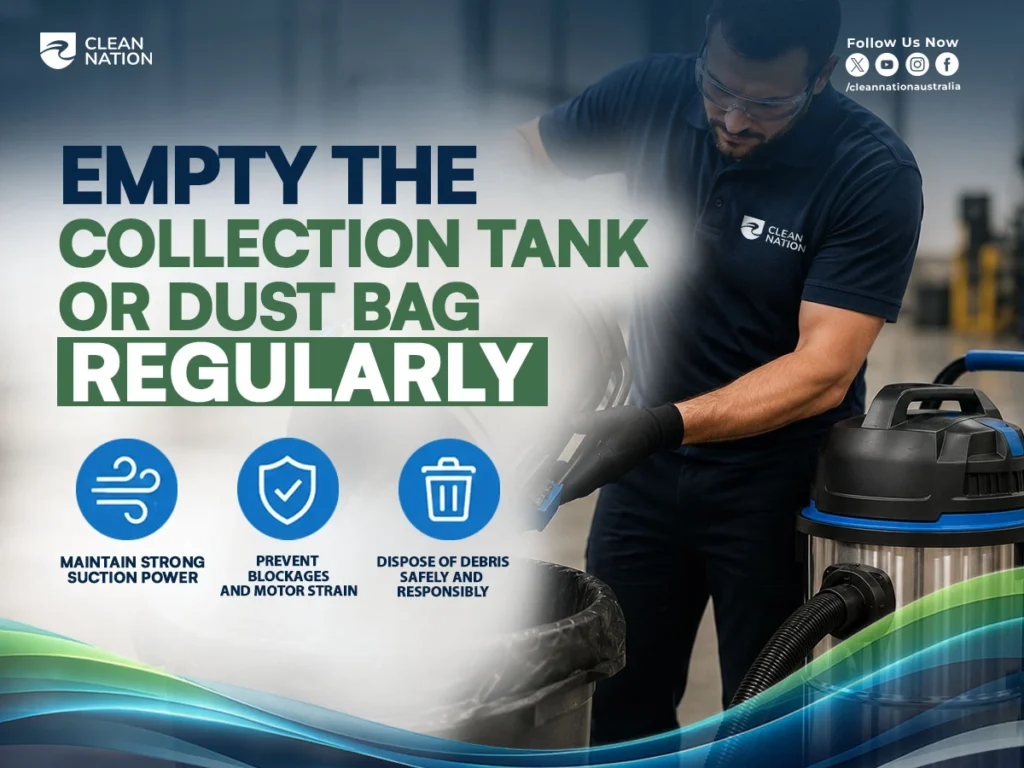
A full collection tank or dust bag is one of the most common causes of reduced suction. Once it’s packed with debris, airflow gets restricted, and your vacuum has to work harder to do the same job, which puts extra strain on the motor.
How often should you empty it? As a rule of thumb, check the tank or bag daily if the vacuum is in heavy use, and don’t wait until it’s completely full. Emptying it when it’s around two-thirds full keeps suction consistent and prevents clogs before they start. Most manufacturers specify a maximum fill level in the user manual, so it’s worth checking yours if you’re unsure.
When you do empty it, dispose of the collected debris safely, especially if you’re dealing with dust, allergens, or fine particles that could affect air quality if released carelessly. Use a proper waste container and avoid shaking dust into the air. This matters for workplace safety too, dust exposure is a recognised health hazard under Australian WHS guidelines, so proper handling protects staff as well as equipment.
2. Clean and Replace Vacuum Filters
Filters are the unsung heroes of any industrial vacuum system. They trap fine dust, allergens, and particles that would otherwise circulate back into the air, so keeping them clean matters for both machine performance and indoor air quality.
Get into the habit of inspecting your filters regularly; weekly is a good starting point for most facilities, though vacuum filter maintenance intervals vary depending on how heavily the machine is used. If a filter looks clogged or discoloured, it’s time to clean it or swap it out. Washable filters can usually be rinsed and air dried, while disposable filters or HEPA filters need replacing according to the manufacturer’s specifications. Always check your model’s manual since replacement intervals differ between brands.
Clean filters mean better airflow, which translates directly into stronger suction performance. It’s a small task that has an outsized impact on how well your vacuum actually cleans.
3. Inspect Hoses, Wands, and Attachments

Hoses and attachments take a lot of physical wear, especially if they’re being dragged across floors, bent around corners, or used in tight spaces. Over time, cracks, leaks, and blockages can develop that quietly sap suction power.
Make hose inspection part of your routine. Run your hands along the length of the hose, feeling for soft spots or cracks, and check attachments for any buildup of debris that could be restricting airflow. After each use, give attachments a quick clean; a soft brush or damp cloth is usually enough to keep them clear.
If you notice fraying, splitting, or a hose that won’t hold its shape anymore, replace it. Worn accessories are a common reason vacuums underperform even when everything else is in good condition.
4. Test Suction Power Regularly
Suction power is the clearest indicator of how well your vacuum is actually working. A drop in performance is often the first sign that something needs attention, whether that’s a clogged filter, a blocked hose, or a mechanical issue.
Set aside time to monitor suction performance, using a suction gauge if your equipment has one, or simply testing it against a known surface to feel for consistency. If you notice airflow restrictions or weaker suction than usual, work through the obvious culprits first: check the collection tank, filters, and hose for blockages before assuming it’s a bigger problem.
Catching a drop in suction early means you can troubleshoot common issues before they turn into a full repair job, and before commercial vacuum cleaner maintenance turns into a costly replacement.
5. Check the Motor and Moving Parts
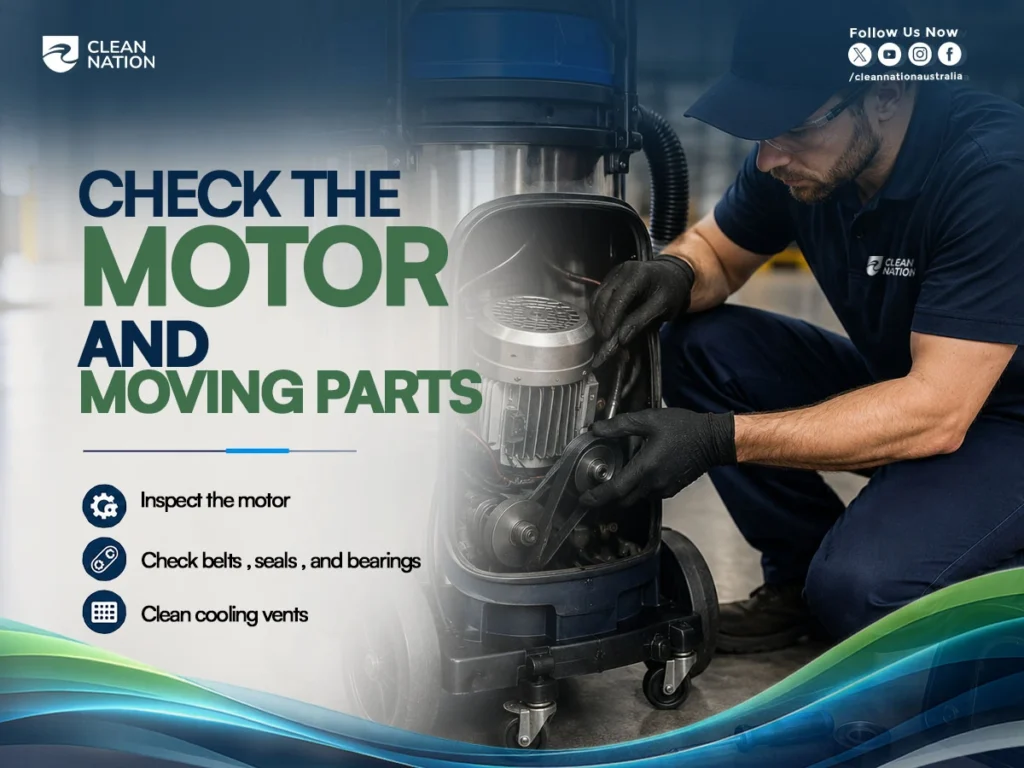
The motor is the heart of your industrial vacuum cleaner, so it deserves regular attention. Overheating, unusual noise, or a burning smell are all signs something isn’t right and should be checked immediately.
As part of your inspection, look at the belts, seals, and bearings for wear. These moving parts keep everything running smoothly, and a worn belt or seal can lead to bigger mechanical failures if ignored. Clean the cooling vents too; dust buildup around vents restricts airflow to the motor and can cause it to overheat.
If your manufacturer recommends lubrication for certain parts, stick to that schedule. Using the right lubricants at the right intervals, and sticking to manufacturer-specified oil types where applicable, helps prevent premature wear and keeps the motor running efficiently for longer.
6. Deep Clean Your Industrial Cleaning Vacuum
Beyond day-to-day upkeep, your vacuum benefits from a thorough deep clean every so often. This means going beyond simply emptying the collection tank and wiping the exterior, and cleaning the internal components where dust and debris accumulate over time. Use a damp cloth and a mild cleaning solution for external surfaces, while a soft brush or compressed air can help remove dust from hard-to-reach internal areas.
If you’re interested in learning more about safe cleaning techniques for industrial equipment, our guide on How to Clean Heavy Machinery? explains best practices for using degreasers, pressure washing, protecting sensitive components, and following a structured cleaning process. Applying these principles to your cleaning equipment helps improve reliability, reduce wear, and support long-term performance. Once everything is clean, ensure all parts are completely dry before reassembling the vacuum, as trapped moisture can lead to mould, unpleasant odours, or damage to electrical components.
7. Use the Correct Accessories and Store the Vacuum Properly
Using the wrong attachment for the job doesn’t just give you worse results; it can also put unnecessary strain on the vacuum. Match your attachments to the surface and task at hand, whether that’s a floor head for hard floors or a crevice tool for tight spaces.
How you store the vacuum between uses matters just as much as how you use it. Keep it in a clean, dry location away from direct sunlight, which can degrade plastic components and seals over time. A cool, dry storage area helps protect the whole unit.
Don’t forget the hoses and power cords. Coil them properly rather than leaving them tangled or kinked, as this prevents unnecessary wear and reduces the risk of a trip hazard in the workplace, an important consideration under general workplace safety practices.
8. Schedule Professional Industrial Vacuum Servicing
Even with solid day-to-day care, industrial vacuums benefit from a professional set of eyes every so often. Routine inspections by a trained technician can catch issues that aren’t obvious during regular use, things like early motor wear or internal component fatigue.
Professional industrial vacuum servicing typically includes motor testing, a full inspection of moving parts, and replacement of any worn parts before they cause a bigger failure. This kind of preventive maintenance is far more cost-effective than waiting for a breakdown. If your facility is based in Sydney, our team offering industrial cleaning services in Sydney can handle this kind of servicing as part of a broader maintenance plan.
If you’re looking to build a complete maintenance routine for your equipment, read our guide on 7 Tips for Keeping Your Machinery in Top Condition, where we cover preventive maintenance, daily inspections, cleaning, lubrication, performance monitoring, and proper equipment care.
Common Industrial Vacuum Problems and How to Prevent Them
Even with good industrial cleaning equipment maintenance, issues can crop up. Here’s what to watch for:
Loss of suction – Usually caused by a full collection tank, clogged filter, or blocked hose. Regular emptying and filter checks prevent most cases.
Clogged filters – Dust and fine particles build up over time, restricting airflow. Weekly inspection and cleaning keep this in check.
Hose blockages – Debris can get lodged inside hoses, especially with larger or fibrous materials. Regular hose inspection catches this early.
Motor overheating – Often linked to blocked vents, worn parts, or the vacuum being run for too long without a break. Clean vents and give the motor rest periods during heavy use.
Excessive noise – Can indicate a loose part, worn bearing, or something caught inside the motor housing. Don’t ignore unusual sounds; get it inspected promptly.
Industrial Vacuum Maintenance Checklist
Daily Maintenance
- Empty the collection tank or dust bag
- Check hoses for visible damage
- Wipe down exterior surfaces
Weekly Maintenance
- Inspect and clean filters
- Check attachments for wear
- Test suction performance
Monthly Maintenance
- Inspect motor and moving parts
- Check belts and seals
- Clean cooling vents thoroughly
Annual Servicing
- Schedule a professional inspection
- Carry out motor testing
- Replace any worn components
Why Choose Clean Nation for Industrial Cleaning Services
At Clean Nation, we understand that reliable equipment is the backbone of good cleaning outcomes. Our industrial cleaning services in Australia are backed by commercial-grade equipment and a team that knows how to keep it performing at its best, including industrial cleaning services in New South Wales for facilities across the state.
We hold ISO 9001, ISO 14001, and ISO 45001 certifications, along with B Corp certification, reflecting our commitment to quality management, environmental responsibility, and sustainable cleaning practices. Whether you need routine facility cleaning, deep industrial cleaning, or ongoing equipment maintenance support, our team delivers consistent, professional results you can count on.
A manufacturing client in Australia contacted Clean Nation after their industrial vacuum repeatedly lost suction during daily cleaning. The reduced performance was slowing cleaning schedules and leaving fine dust behind on production floors.
During our inspection, we found that the primary issues were heavily clogged filters and a damaged vacuum hose that had developed small cracks over time. After replacing the worn hose, cleaning the filtration system, and carrying out routine maintenance checks, the vacuum’s suction performance was restored.
To help prevent the problem from recurring, we recommended a simple maintenance schedule that included daily tank emptying, weekly filter inspections, monthly equipment checks, and annual professional servicing.
The result was more reliable equipment performance, reduced cleaning interruptions, and a longer service life for the industrial vacuum.
FAQs
How often should I maintain my industrial vacuum cleaner?
Daily tasks like emptying the tank should happen with every heavy use. Weekly filter checks, monthly motor inspections, and annual professional servicing round out a solid maintenance routine.
Why does my vacuum keep losing suction?
The most common causes are a full collection tank, a clogged filter, or a blocked hose. Work through these first before assuming it’s a motor issue.
Can I clean vacuum filters myself?
Yes, in most cases. Washable filters can be rinsed and air dried, but always check the manufacturer’s guidelines first since some filters are designed to be replaced rather than cleaned.
How do I know when to replace a vacuum hose or attachment?
Look for cracks, fraying, or a noticeable drop in suction. If cleaning and inspection don’t restore performance, it’s time to replace the part.
Does professional servicing really extend the vacuum’s lifespan?
Yes. Professional inspections catch wear and early issues that aren’t always visible during everyday use, which helps prevent bigger, more costly breakdowns.
Conclusion
Looking after your industrial cleaning vacuum doesn’t have to be complicated. Regularly emptying the tank, cleaning filters, inspecting hoses, and checking the motor will keep your equipment running efficiently, reduce downtime, and extend its lifespan.
We’ve seen this firsthand with an Australian manufacturing client whose vacuum regained full suction after we replaced a damaged hose and cleaned clogged filters. It’s a reminder that simple maintenance can prevent bigger problems.
If your equipment needs professional attention, contact Clean Nation for expert industrial cleaning and preventive maintenance solutions tailored to your facility.