

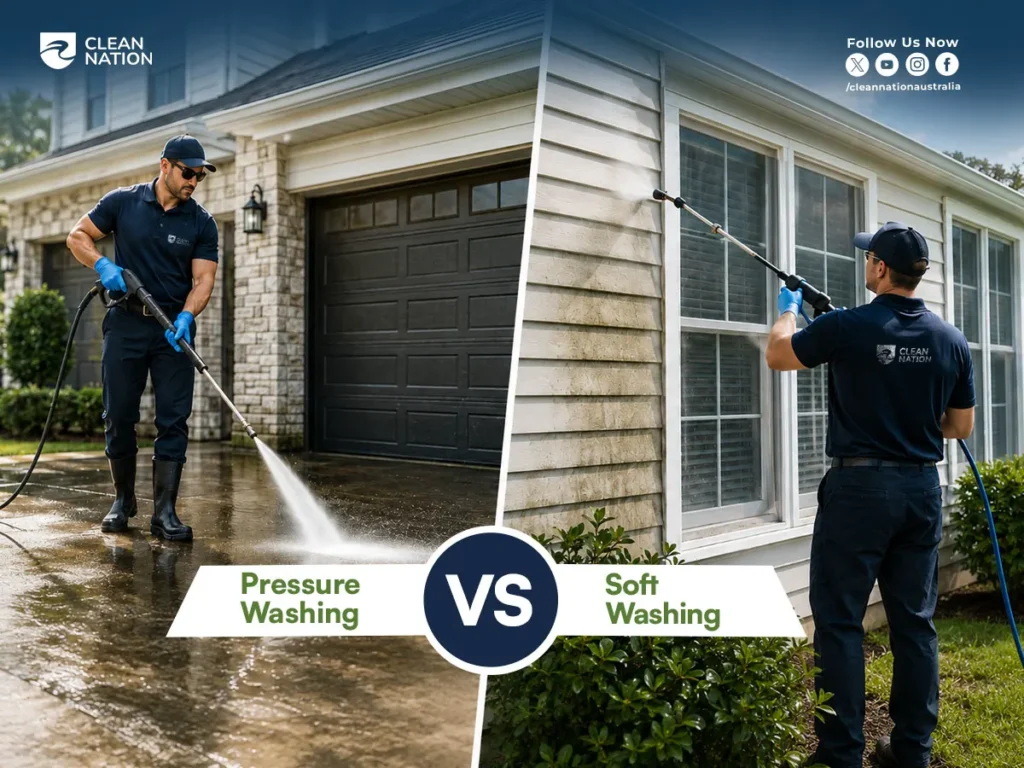
Pressure washing and soft washing use different approaches to exterior cleaning. Pressure washing uses stronger water pressure to remove dirt, grime, grease, mud and stubborn buildup from durable surfaces such as concrete, driveways, paths, pavers and other hard outdoor areas. Soft washing uses low pressure water with cleaning solutions to treat mould, algae, mildew, moss and lichen on more delicate surfaces such as roofs, render, painted walls, weatherboards and cladding. The right method depends on the surface material, its condition and the type of contamination, helping achieve effective cleaning without unnecessary surface damage.
Pressure Washing vs Soft Washing: What’s the Difference?
The main difference comes down to how the contamination is removed. Pressure washing relies on mechanical force, using a concentrated stream of high pressure water to break away dirt, grime, mud, grease, oil stains and other physical buildup. It is particularly effective on hard, durable surfaces where water pressure can safely do the heavy lifting.
Soft washing works differently by combining a cleaning solution with controlled, low-pressure water. The solution helps break down mold, algae, mildew, moss and lichen before the surface is gently rinsed. That makes soft washing especially useful for roofs, painted surfaces, render, weatherboards, cladding and other areas where aggressive pressure could cause unnecessary damage. Pressure washing attacks stubborn physical buildup; soft washing treats biological contamination with less mechanical force.
What Is Pressure Washing?
Pressure washing uses specialised equipment to deliver water at considerably higher pressure than a standard garden hose. The force created by the pressure washer helps separate contaminants from the surface, making it an effective option for removing dirt, mud, grime, grease, oil, tyre marks and embedded debris from suitable exterior areas. Pressure levels, spray distance and nozzle selection can all be adjusted according to the surface being cleaned.
The method is commonly used on durable materials such as concrete, paving, brick and other hard outdoor surfaces. However, pressure washing isn’t simply about using the strongest possible setting. Excessive water pressure or an incorrect nozzle can etch concrete, strip paint, damage coatings, erode mortar or tear timber fibers. Effective pressure cleaning requires controlled application based on the material, condition and level of contamination.
When Is Pressure Washing the Right Choice?
Pressure washing is generally well suited to durable surfaces carrying heavy physical contamination. Concrete driveways, footpaths, walkways, patios, pavers, garage floors, car parks and hard outdoor areas can often benefit from controlled pressure cleaning when they are covered in accumulated dirt, mud, grease, oil stains, tyre marks or stubborn grime. The strength of the water stream allows these contaminants to be lifted efficiently without relying entirely on chemical treatment. However, even strong materials need the correct pressure and technique to avoid surface etching or uneven results.
What Is Soft Washing?
Soft washing is a low-pressure cleaning technique that places more emphasis on cleaning solutions and controlled treatment than aggressive water force. A suitable solution is applied to the affected surface and given enough dwell time to break down organic contamination before being rinsed away using lower-pressure water. This approach is particularly effective against mould, algae, mildew, moss and lichen that can continue returning when they are only physically blasted from the surface.
Because soft washing reduces the need for aggressive mechanical force, it can be appropriate for surfaces that require more careful handling. Roofs, rendered walls, painted exteriors, weatherboards, cladding and some timber surfaces may benefit from this method depending on their material and condition. The goal isn’t to weaken the cleaning process, it is to let the cleaning solution do more of the work while minimising unnecessary pressure on the surface.
When Is Soft Washing the Better Option?
Soft washing is often the better choice when organic growth is the main problem or when a surface could be affected by aggressive pressure. Roofs, roof tiles, painted walls, render, weatherboards, exterior cladding and certain timber surfaces can require a gentler approach, particularly when affected by mould, algae, mildew, moss or lichen. By treating the contamination with an appropriate cleaning solution and using a controlled rinse, soft washing can clean vulnerable surfaces without relying on excessive mechanical force.
Pressure Washing vs Soft Washing: A Side-by-Side Comparison
Pressure washing and soft washing aren’t competing versions of the same service; they solve different cleaning problems. Pressure washing is built around mechanical cleaning, making it effective for hard surfaces and stubborn physical buildup, while soft washing combines chemical treatment with low-pressure rinsing to tackle organic contamination and protect more vulnerable materials. The right option therefore depends on what is sitting on the surface and how much force that surface can safely tolerate.
| Factor | Pressure Washing | Soft Washing |
| Main cleaning action | High-pressure water | Cleaning solution + low-pressure rinse |
| Best suited to | Durable surfaces | Delicate or coated surfaces |
| Main targets | Dirt, grime, mud, grease and oil | Mould, algae, mildew, moss and lichen |
| Water pressure | Higher | Lower |
| Cleaning approach | Mechanical force | Chemical treatment + controlled rinse |
| Common applications | Concrete, driveways, paths and pavers | Roofs, render, painted surfaces and cladding |
| Main concern | Damage from excessive pressure | Incorrect chemical application or runoff |

Which Surfaces Should Be Pressure Washed or Soft Washed?
Different materials respond differently to water pressure and cleaning chemicals, so there is no single method that should be used across an entire property. Concrete may handle controlled pressure cleaning, while a painted wall, roof or timber surface may require a significantly gentler approach. The type of contamination matters too: physical dirt and grease may need mechanical cleaning, whereas mold, algae and mildew often require targeted treatment. Matching the method to the material prevents unnecessary damage while producing a more thorough result.
Concrete, Driveways and Paved Areas
Concrete driveways, paths, patios and many paved areas are commonly suitable for pressure washing because their durable surfaces can withstand controlled mechanical cleaning. Pressure washing can break through accumulated dirt, mud, grime, grease, oil stains, tyre marks and other embedded debris, quickly improving the appearance of heavily used outdoor areas. However, older, damaged or decorative concrete still requires care because excessive pressure can cause surface etching, strip finishes or create uneven cleaning.
Roofs and Roof Tiles
Roof cleaning requires a different level of care because roof tiles, coatings, seals and roofing finishes can be vulnerable to aggressive water pressure. When mold, algae, moss or lichen are present, soft washing can provide a more controlled way to treat organic growth without blasting the roof with unnecessary force. The appropriate technique still depends on the roofing material, age and condition, so a roof should be assessed before selecting pressure washing or soft washing.
Rendered and Painted Exterior Walls
Painted walls and rendered surfaces can lose their finish when exposed to excessive pressure, particularly if the coating is already aged, cracked or deteriorating. Soft washing can be a more suitable option when the main issue is mold, mildew, algae or other organic staining because the cleaning solution can break down contamination without relying on an aggressive water stream. The result is a cleaner exterior while reducing the risk of stripping paint or damaging the render.
Timber, Weatherboards and Cladding
Timber, weatherboards and some cladding materials need careful cleaning because excessive pressure can raise timber fibres, damage finishes and force water into vulnerable areas. A pressure setting that is appropriate for concrete can be far too aggressive for timber or coated cladding. Depending on the material, condition and contamination, a controlled soft washing or low-pressure approach can provide effective cleaning while helping preserve the surface and its existing finish.
Can Pressure Washing Damage Your Property?
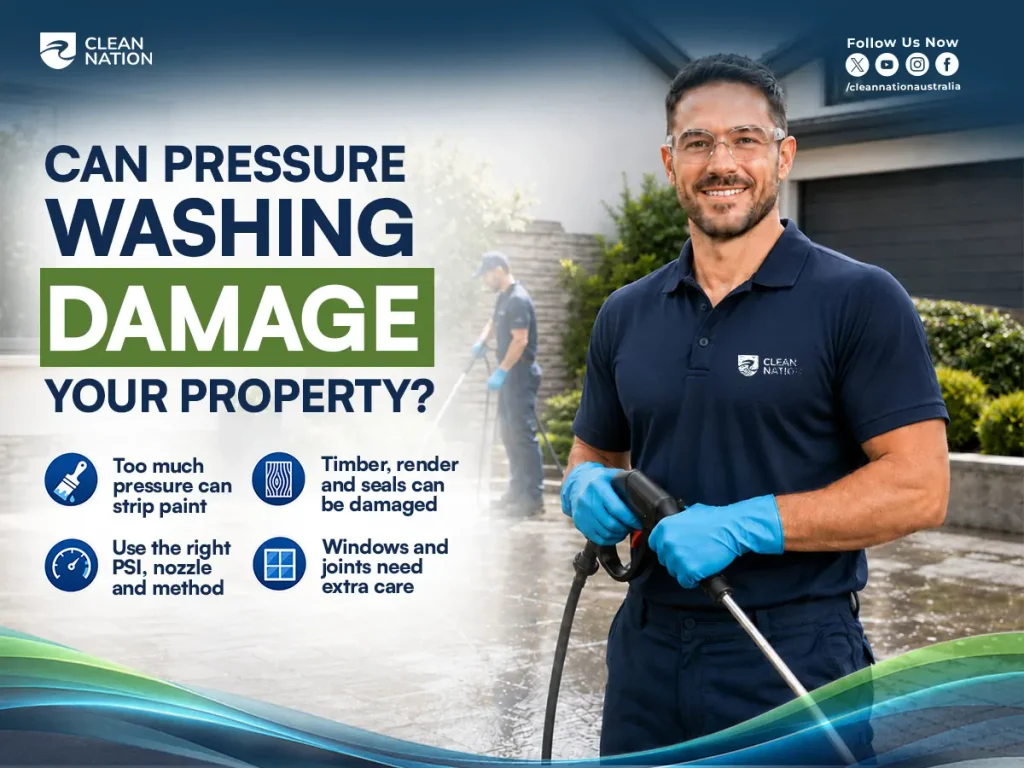
Yes, incorrect pressure washing can damage property. The equipment itself isn’t the problem; the issue is using excessive pressure, the wrong nozzle, an unsuitable spray angle or an inappropriate technique for the material. Concrete can be etched, paint can be stripped, mortar can erode and timber fibres can be damaged when the cleaning process isn’t properly controlled. Vulnerable areas can also experience water penetration when water is forced into cracks, joints or openings.
This is why professional pressure cleaning isn’t about turning the machine to its highest setting and blasting every surface. The operator needs to understand the material, surface condition, pressure requirement, nozzle selection and spray distance before cleaning begins. At Clean Nation, the focus is on removing contamination effectively while protecting the underlying surface from avoidable damage.
Does Soft Washing Keep Surfaces Cleaner for Longer?
Soft washing can deliver more durable results when the underlying problem is mold, algae, mildew, moss or other biological growth. Pressure washing may remove visible growth from a surface, but simply blasting away the outer layer doesn’t necessarily address the contamination responsible for the buildup. Soft washing uses a cleaning solution to break down organic growth before the surface is rinsed, making it a treatment-focused approach rather than simple surface removal.
How long a cleaned surface remains in good condition depends on factors such as moisture, weather exposure, surrounding vegetation, surface type, contamination levels and ongoing maintenance. There is no universal guarantee that one cleaning method will keep every property clean for a fixed period. The smarter approach is to identify the contamination first and use a treatment designed for that specific problem.
Common Pressure Washing and Soft Washing Mistakes to Avoid
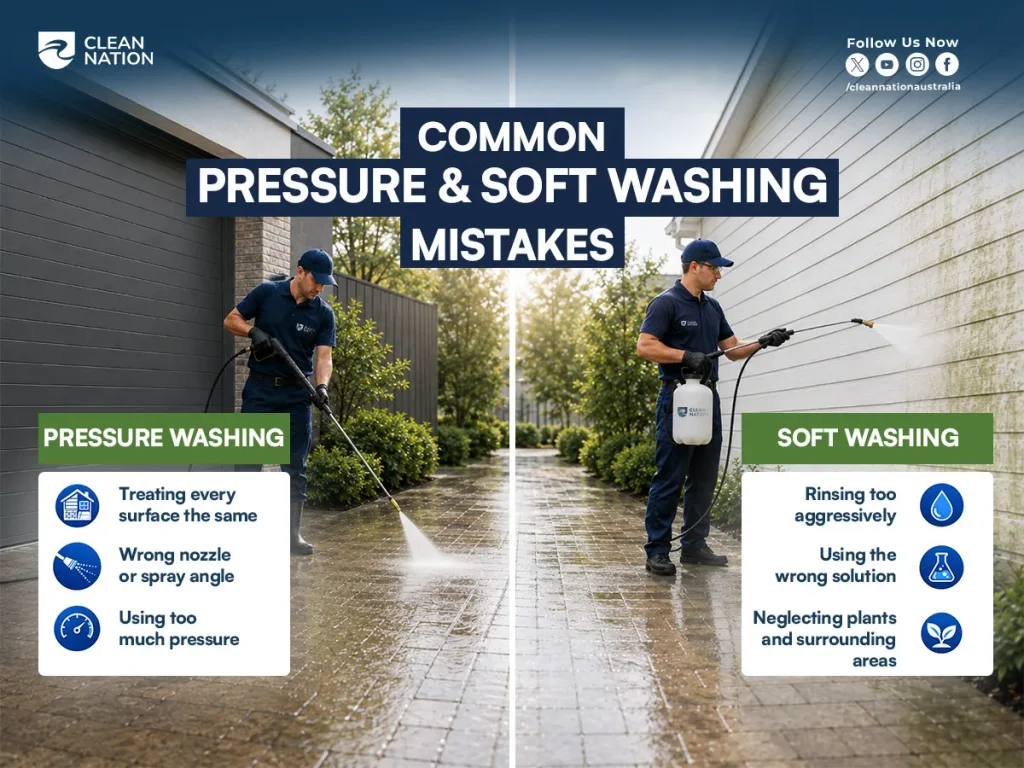
Many exterior cleaning problems start with choosing a method based on convenience rather than the actual surface. Using excessive pressure, ignoring material condition, applying unsuitable chemicals or failing to control runoff can turn a routine cleaning job into expensive property damage. Understanding these mistakes helps homeowners avoid unnecessary repairs and achieve a cleaner result from the start.
Using Too Much Pressure
More pressure doesn’t automatically produce better cleaning. Excessive force can etch concrete, strip coatings, damage timber fibres, loosen mortar and affect painted surfaces. The correct pressure should be determined by the material and contamination rather than the maximum capability of the pressure washer. Controlled cleaning is far more effective than using unnecessary force simply to remove buildup faster.
Treating Every Surface the Same
A property can contain concrete, brick, timber, render, roofing materials, painted walls and cladding all with different cleaning requirements. Using the same pressure and nozzle across every surface ignores how each material reacts to water and cleaning products. A professional approach starts with identifying the surface before deciding which equipment, pressure and treatment method should be used.
Ignoring the Type of Contamination
Not every stain or buildup requires the same cleaning technique. Mud, grease, oil and heavy dirt may respond well to mechanical pressure, while mould, algae, mildew and lichen require a treatment designed for organic contamination. Identifying the source of the buildup helps determine whether pressure washing, soft washing or a combination of cleaning techniques will produce the best result.
Using the Wrong Cleaning Solution
Cleaning chemicals need to be selected and applied according to the surface and type of contamination. An unsuitable product, excessive concentration or poor application can affect coatings, vegetation and surrounding materials. Professional soft washing involves controlled chemical application, appropriate dwell time and careful rinsing rather than simply spraying a strong solution onto the property.
Neglecting Plants and Surrounding Areas
Exterior cleaning doesn’t stop at the surface being washed. Plants, garden beds, landscaping, drainage systems and surrounding materials can be affected by overspray or chemical runoff if they aren’t properly protected. Responsible cleaning requires attention to runoff control, vegetation protection, surrounding surfaces and safe application, particularly when cleaning solutions are involved.
Should You Pressure Wash or Soft Wash Your Property?
DIY pressure washing can look easy until an incorrect pressure setting, nozzle or spray technique leaves permanent marks on a surface. A small concrete area may be manageable for an experienced homeowner with the right equipment, but roofs, rendered walls, painted exteriors, timber, cladding and heavily contaminated areas require considerably more care. The equipment is only one part of the job, the cleaning method and application technique matter just as much.
Professional exterior cleaning removes much of that guesswork. A trained cleaner can assess the surface material, contamination, condition, access requirements, pressure level, cleaning solution and surrounding areas before starting. If you’re uncertain whether your property needs pressure washing or soft washing, getting the method right at the beginning is far cheaper than repairing damage caused by the wrong one.
When DIY Cleaning May Be Suitable?
DIY cleaning may be reasonable for simple, accessible and durable surfaces when the homeowner understands the equipment and uses an appropriate pressure setting. Small concrete paths or straightforward outdoor areas can sometimes be cleaned safely with the right technique. However, homeowners should avoid assuming that a pressure washer is suitable for every material simply because the machine can produce enough force to remove the dirt.
When Professional Exterior Cleaning Makes More Sense?
Professional cleaning becomes the smarter option when the surface is delicate, difficult to access, heavily contaminated or expensive to repair. Roofs, rendered walls, painted surfaces, timber, specialised coatings and large commercial areas all require greater control and experience. A professional cleaner can select between pressure washing and soft washing based on the material, contamination and surface condition, rather than relying on a one-method-fits-all approach.
How to Choose the Right Cleaning Method for Your Surface
Choosing between pressure washing and soft washing becomes much easier when you stop focusing on the equipment and start assessing the surface. First identify the material, then determine what type of contamination you’re dealing with and finally consider the condition of the surface. Durable material with heavy dirt, grime or grease may benefit from controlled pressure washing, while vulnerable material affected by mould, algae or mildew may require soft washing.
If the surface is aged, damaged, coated, painted or unfamiliar, professional assessment is the safer route. The objective should always be effective cleaning with controlled risk, not maximum water pressure. Clean Nation uses this surface-specific approach to determine which cleaning method is appropriate before work begins, helping customers avoid unnecessary damage and poor-quality results.
Get the Right Cleaning Method for Your Property with Clean Nation
Don’t let a pressure washer decide how your property should be cleaned. Clean Nation assesses the surface, contamination and condition before selecting the appropriate cleaning method, whether that means controlled pressure washing for a heavily soiled concrete driveway or soft washing for mould and algae affecting a more delicate exterior.From driveways, paths and patios to roofs, render, timber, cladding and other exterior surfaces, the right technique can make the difference between simply removing visible dirt and delivering a properly managed clean. Choose Clean Nation when you want the cleaning method matched to your property, not a one-size-fits-all blast.
FAQ’s
Following are the faq’s;
Which is better: pressure cleaning or soft washing?
Neither method is better for every surface. Pressure cleaning suits durable areas with heavy dirt and grime, while soft washing is better for mould, algae and delicate surfaces. Clean Nation assesses the material and contamination first, then recommends the safest effective cleaning method.
Which is better for roofs and exterior walls?
Soft cleaning is often better for roofs, render, painted walls and cladding because it reduces aggressive water pressure. Clean Nation serves Sydney, Parramatta, Blacktown and surrounding areas, matching the method to your surface and its condition.
How much does pressure or soft cleaning cost?
Pricing depends on surface size, material, condition and cleaning requirements. Clean Nation provides transparent, no-obligation quotes rather than forcing every property into one fixed price. Pressure cleaning in Sydney can vary significantly by job size and surface condition.
How quickly can Clean Nation respond to a cleaning request?
Clean Nation offers fast scheduling, including same-day or next-day service where availability allows. Across Sydney and surrounding NSW areas, response times are typically within 24 hours for standard requests.
Are Clean Nation cleaners certified and insured?
Yes. Clean Nation uses trained, insured and police-checked cleaning professionals and follows professional cleaning and safety standards. The team provides services across Sydney and other Australian locations with a focus on reliable, safe and consistent results.
Conclusion
Pressure washing and soft washing each have a specific purpose, and choosing between them should never be based on pressure alone. Durable surfaces with heavy dirt, grime or grease may need controlled pressure cleaning, while roofs, render, painted surfaces and areas affected by mould or algae often benefit from soft washing. Clean Nation assesses the surface, contamination and condition before selecting the right approach, helping you get a thorough clean without putting your property at unnecessary risk.