


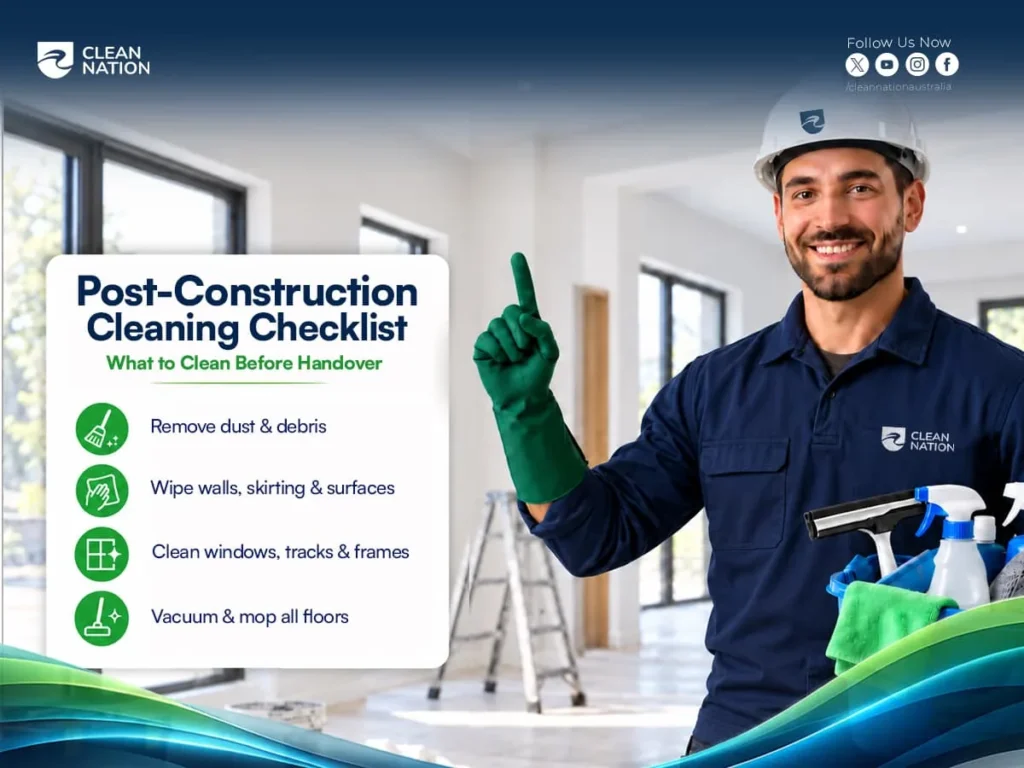
A building project can look complete while still carrying fine construction dust, grout haze, adhesive residue and paint marks across newly finished surfaces. These details become much more noticeable during a final walkthrough, property inspection or client handover.
A clear post-construction cleaning checklist helps builders, property managers, renovators and homeowners work through the site systematically. From rough debris removal and window tracks to cabinetry, bathrooms and final floor cleaning, this guide covers what should be checked before a new build, renovation or commercial fit-out is ready for handover in Australia.
What Is a Post Construction Cleaning Checklist?
A post-construction cleaning checklist is a structured list of cleaning tasks completed after building, renovation or fit-out work. Unlike routine house cleaning, a builder’s clean deals with construction dust, building debris, protective film, plaster marks, grout haze, silicone residue and other materials left behind by trades.
The checklist also creates a clear cleaning scope. Builders can use it before practical completion, homeowners can use it after renovations, and property managers can check whether a new space is genuinely handover-ready rather than simply tidy at first glance.
For projects requiring professional support, Clean Nation provides construction and builders cleaning for residential, commercial and project-based sites across Australia.
Why Post Construction Cleaning Matters Before Handover
Final cleaning is part of presenting completed workmanship properly. Fine dust on joinery, fingerprints on fixtures, adhesive on glass or plaster residue along skirting boards can make otherwise finished work appear incomplete during a client walkthrough.
A detailed handover clean also exposes areas that need further attention. Once construction debris, dust layers and surface residue have been removed, scratches, damaged fittings, incomplete silicone work or paint defects are easier to identify. Cleaning therefore helps separate presentation issues from defects that need a trade to return.
For builders and project managers, a systematic builders cleaning checklist also reduces the risk of obvious areas being overlooked when several rooms, finishes, fixtures and external zones have to be inspected at once.
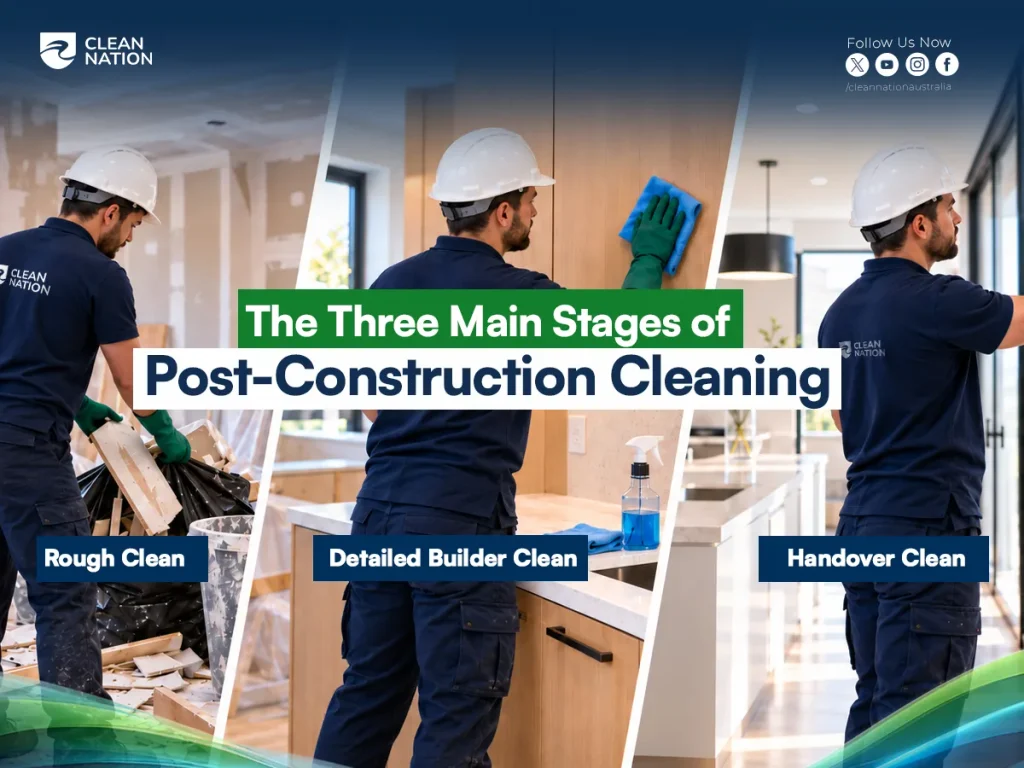
The Three Main Stages of Post-Construction Cleaning
Most construction cleaning becomes easier to manage when it is separated into stages rather than treated as one large final clean.
Rough Clean
The rough clean focuses on bulk construction debris, packaging, offcuts, loose rubbish and heavier dust. Protective materials that are no longer required may also be removed once the relevant trades have finished.
At this stage, the aim is not a polished finish. It is to make the site clear enough for more detailed dust removal, surface cleaning and finishing work.
Detailed Builders Clean
The detailed clean addresses fine construction dust, walls, skirting boards, joinery, windows, fixtures, cabinetry, kitchens, bathrooms and floor surfaces. Paint spots, adhesive residue, stickers, protective film and grout haze are also assessed where they can be removed safely without damaging the finished material.
This is usually the most labour-intensive part of a builder’s clean checklist because dust can settle above doors, inside drawers, along window tracks and on surfaces that were closed during construction.
Final or Handover Clean
The final clean is the presentation stage. Glass is checked for streaks, floors receive their final pass, fixtures are polished, cupboards are inspected and any dust that has resettled is removed.
The objective is an inspection-ready, move-in-ready space immediately before practical completion, client inspection or property handover.
Before Cleaning Starts – Prepare the Site
Cleaning too early can create unnecessary rework. Ideally, dusty construction tasks, major drilling, sanding, cutting and other trade work should be complete before the detailed builders clean starts.
Before cleaning, confirm:
- Major trade work has finished in the cleaning zone.
- Large building debris and unused materials have been removed.
- Rooms, cupboards and service areas are accessible.
- Power and water are available where required.
- Newly installed surfaces and delicate finishes have been identified.
- Protective film that must remain in place has been clearly marked.
- Building access, parking or waste-removal arrangements are confirmed.
- The expected handover or inspection date is known.
For apartment buildings and commercial properties, access arrangements can be just as important as the cleaning itself. Lift bookings, loading areas, keys, security access and working-hour restrictions should be confirmed before equipment and cleaning teams arrive.
Complete Post Construction Cleaning Checklist
The most reliable approach is to work from higher surfaces down towards the floor and complete each room systematically. This reduces the chance of cleaned surfaces being covered again by falling construction dust.
General Areas, Walls and Ceilings
Start with the areas present in almost every room.
- Remove loose construction debris and remaining packaging.
- Vacuum or remove dust from ceiling edges and cornices where accessible.
- Clean vents, grilles and accessible light fittings.
- Wipe doors, door frames and architraves.
- Detail skirting boards and wall edges.
- Clean light switches and power points externally.
- Remove suitable scuff marks and installation fingerprints.
- Dust ledges, shelves and built-in fittings.
- Clean inside wardrobes and built-in storage.
- Check behind doors and along corners for trapped debris.
- Complete a final vacuum after higher surfaces have been cleaned.
Fine plaster dust and building dust often settle on horizontal ledges, door tops, skirting boards and fittings rather than remaining only on the floor. A proper construction clean therefore needs to work beyond obvious eye-level surfaces.
Windows, Glass, Frames and Tracks
Post-construction window cleaning requires more than a standard glass wipe because new glazing may carry stickers, protective film, paint spots, silicone marks or adhesive residue.
Check:
- Internal window glass.
- External glass was safely accessible.
- Window frames and sills.
- Window and sliding-door tracks.
- Glass doors and partitions.
- Mirrors.
- Protective films and labels that are approved for removal.
- Adhesive or suitable construction residue.
- Dust trapped around frames and rebates.
- Final streaks or fingerprints.
Different glass coatings and frames require appropriate methods, so scraping or strong chemicals should never be used blindly. Clean Nation also provides window cleaning in New South Wales, including post-construction window cleaning for suitable projects.
Kitchen Cleaning Checklist
New kitchens contain multiple surfaces where construction dust, installation marks and protective materials can remain.
- Clean benchtops using products appropriate to the surface.
- Wipe splashbacks and remove suitable residue.
- Clean inside and outside cupboards.
- Vacuum and wipe drawers and drawer runners.
- Detail handles, hinges and cabinetry edges.
- Clean the pantry and shelving.
- Wipe appliance exteriors where included.
- Remove approved stickers and protective film.
- Clean the sink and surrounding surfaces.
- Polish suitable tapware and fittings.
- Check kickboards and cabinet tops.
- Vacuum and clean the floor last.
Particular care is needed around natural stone, stainless steel, painted cabinetry and specialty finishes. Strong chemicals or abrasive tools can turn a cleaning issue into permanent surface damage.
Bathrooms and Laundry Areas
Bathrooms often reveal grout haze, silicone smears, plaster dust and installation marks clearly because many of the surfaces are reflective.
Include:
- Shower glass and screens.
- Tiles and suitable grout areas.
- Mirrors.
- Basins and vanity tops.
- Vanity cupboards and drawers.
- Baths and shower bases.
- Toilet exterior and bowl.
- Tapware and accessible fittings.
- Towel rails and accessories.
- Exhaust fan covers.
- Laundry troughs and cabinetry.
- Floor edges and drains externally.
- Remaining adhesive, labels or protective materials where safe to remove.
The goal is not simply to make wet areas shiny. It is to remove construction residue while protecting new grout, sealants, coatings, chrome and other recently installed finishes.
Floors and Floor Edges
Floor cleaning should generally happen after higher surfaces because construction dust continues to fall while walls, cabinetry, tracks and fixtures are being detailed.
For hard floors:
- Vacuum loose particles first.
- Check corners and skirting edges.
- Remove appropriate paint or adhesive residue carefully.
- Address grout haze using a suitable method.
- Clean tile, vinyl, timber or polished surfaces according to their finish.
- Complete the final mop or floor-cleaning pass.
- Inspect in good natural and artificial light.
For carpeted areas, vacuum slowly along edges, corners, doorways and skirting lines where fine building dust can settle. Any additional carpet treatment should suit the carpet type and the agreed cleaning scope.
Bedrooms and Living Areas
Bedrooms and living spaces can look relatively clean while dust remains inside wardrobes, window tracks or around fittings.
Check:
- Wardrobes, shelving and drawers.
- Window sills and tracks.
- Doors and handles.
- Power points and switches.
- Air-conditioning vents externally.
- Ceiling fans where accessible.
- Skirting boards and architraves.
- Built-in cabinetry.
- Hard floors or carpets.
- Corners and areas behind doors.
A final inspection should be completed only after all protective coverings, packaging and cleaning equipment have been removed from the room.
Garage, Balcony and External Areas
A complete handover does not stop at the interior door.
Depending on project scope, check:
- Garage floor and storage areas.
- Garage door tracks.
- Entry paths.
- Balconies and patios.
- Accessible external windows.
- External doors and frames.
- Outdoor fittings.
- Driveways or paved areas were included.
- Loose construction debris.
- Remaining packaging or trade waste.
Pressure cleaning, high-access glass, façade cleaning and heavy waste removal may be separate services, so these tasks should be confirmed in the cleaning scope rather than assumed.
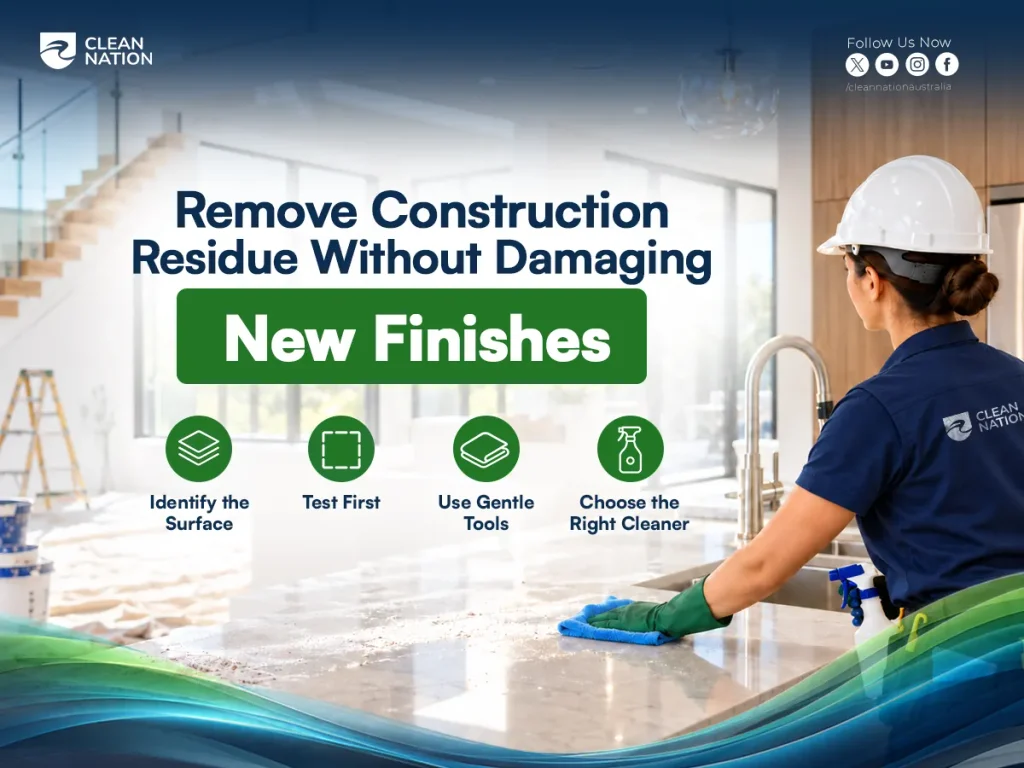
Remove Construction Residue Without Damaging New Finishes
One of the biggest differences between regular cleaning and post-construction cleaning is the type of residue involved. Paint splatters, silicone, adhesives, grout haze, plaster dust and protective-film glue may require different tools or products.
Always identify the underlying material before treating the mark. What works safely on ceramic tile may not be suitable for natural stone, coated glass, timber, stainless steel or painted joinery. Test unfamiliar products in a discreet area and follow manufacturer instructions for newly installed finishes.
Construction dust can also involve a workplace health risk. Safe Work Australia advises that work with concrete, bricks, stone and tiles can generate respirable crystalline silica. Where hazardous silica dust may be present, appropriate WHS controls should be followed rather than treating it like ordinary household dust. See Safe Work Australia’s silica guidance for current information.
Check the Finish Schedule Before Using Cleaning Products
A useful content step that is often overlooked in basic cleaning checklists is checking the project’s finish schedule.
Identify surfaces such as:
- Natural stone.
- Polished concrete.
- Timber.
- Matte or specialty tapware.
- Stainless steel.
- Coated or specialty glass.
- Painted cabinetry.
- Anodised aluminium.
- Recently sealed grout or stone.
Using one chemical across every finish can create staining, haze, scratches or coating damage. The cleaning method should match the surface rather than the cleaner relying on a single product throughout the property.
Commonly Missed Areas During a Builder’s Clean
Most missed items are small, but they become obvious during a close handover inspection.
Pay particular attention to:
- Tops of doors and frames.
- Window and sliding-door tracks.
- Inside drawers.
- Cabinet hinges and runners.
- Tops of wardrobes.
- Skirting corners.
- Air vents and exhaust covers.
- Power points and switches.
- Sticker glue on appliances or glass.
- Silicone marks around newly installed fittings.
- Floor edges.
- Behind doors.
- Protective film on fittings.
A useful final check is to change viewing angles. Look across glass in natural light, open every cupboard and drawer, inspect floors from doorway level and check high horizontal surfaces for resettled dust.

Know the Difference Between Cleaning and Construction Defects
A cleaner’s scope and a builder’s defect list are not the same thing.
A cleaner may be able to remove dust, fingerprints, appropriate adhesive residue, loose debris or a suitable paint spot. Cleaning cannot repair scratched glass, chipped tiles, cracked grout, incomplete paintwork, faulty fixtures, damaged cabinetry or defective silicone work.
Keeping these categories separate prevents cleaners from attempting repairs outside their scope and helps builders send genuine defects back to the correct trade before final handover.
Final Handover Inspection Checklist
Once the detailed builders clean is complete, carry out one final walkthrough.
Confirm that:
- No loose construction rubbish remains.
- High and low surfaces are free from obvious dust.
- Windows and glass are free from visible cleaning streaks.
- Window tracks and sills have been checked.
- Cupboards and drawers are empty and clean.
- Kitchen and bathroom fixtures are presentation-ready.
- Protective materials scheduled for removal are gone.
- Floor edges and corners are clean.
- External areas included in scope have been completed.
- Cleaning residue has not been left on new finishes.
- Any construction defects have been recorded separately.
- The property is ready for the client or inspector to enter.
For professional projects, taking completion photos and recording outstanding defects can also make the final handover easier to document.
Post Construction Cleaning for Sydney Projects
The main checklist remains the same across Australia, but Sydney projects may require additional planning around site access. Apartment developments, strata properties, CBD commercial fit-outs and occupied buildings can involve lift bookings, loading restrictions, building-management access or limited working hours.
For a Sydney builder’s clean, confirm these details before the cleaning date rather than after the team arrives. Projects may also need staged cleaning where different floors, tenancies or apartments reach completion at different times.
Clean Nation provides post-construction cleaning in New South Wales for residential, commercial and construction properties, while businesses completing fit-outs can also explore commercial cleaning services in Sydney.
When Should You Hire Professional Post Construction Cleaners?
DIY cleaning can be practical after a small, low-dust renovation, but larger construction projects usually involve more surfaces, heavier residue, specialised access and tighter handover deadlines.
Professional builders cleaning becomes particularly useful when there is extensive fine dust, multiple rooms, substantial glazing, delicate new finishes, commercial premises, multi-unit work or a fixed practical-completion date.
If you need help taking a site from construction condition to an inspection-ready finish, Clean Nation provides builders, residential, commercial and project cleaning across Australia.
Frequently Asked Questions
Can post-construction cleaning begin if newly sealed floors are still curing?
The cleaner should first confirm the curing requirements for the flooring, grout, coating or sealant. Freshly finished surfaces may have restrictions on moisture, chemicals, foot traffic or equipment, so the manufacturer’s or installer’s instructions should take priority over a standard cleaning process.
Who should approve the final clean on a commercial construction project?
Approval depends on the project structure. It may involve the site supervisor, builder, project manager, facility representative or client. The important point is to agree on the cleaning scope, excluded tasks and sign-off process before the final walkthrough.
Is pressure washing automatically included in a builder’s clean?
Not necessarily. Exterior pressure cleaning, high-access work, façade washing and heavy external restoration may sit outside a standard internal builders clean. Confirm these items in the quote and cleaning scope before work starts.
Can post construction cleaners work in a partly occupied property?
They can in some situations, but clearly separate occupied zones from active cleaning areas. Access, furniture, dust control, occupants and safe movement through the building all need to be considered before the work begins.
Can this checklist be used for apartment and multi-unit developments?
Yes, but it works best when adapted per unit or cleaning zone. A multi-unit project may need separate checklists for apartments, corridors, shared areas, lifts, glazing, garages, and external zones so you can inspect and sign off each completed area separately.
Get the Property Ready for Handover
A successful builders clean is less about making surfaces look generally tidy and more about completing the final details systematically. Construction dust, glass, joinery, wet areas, floors, protective materials and commonly missed edges all need to be checked before the property is presented.
Use this post-construction cleaning checklist as a working handover guide, adjust it for your property’s materials and scope, and separate genuine building defects from cleaning issues. For professional construction and builders cleaning across Australia, contact Clean Nation on +61480810142 or request a quote online.