


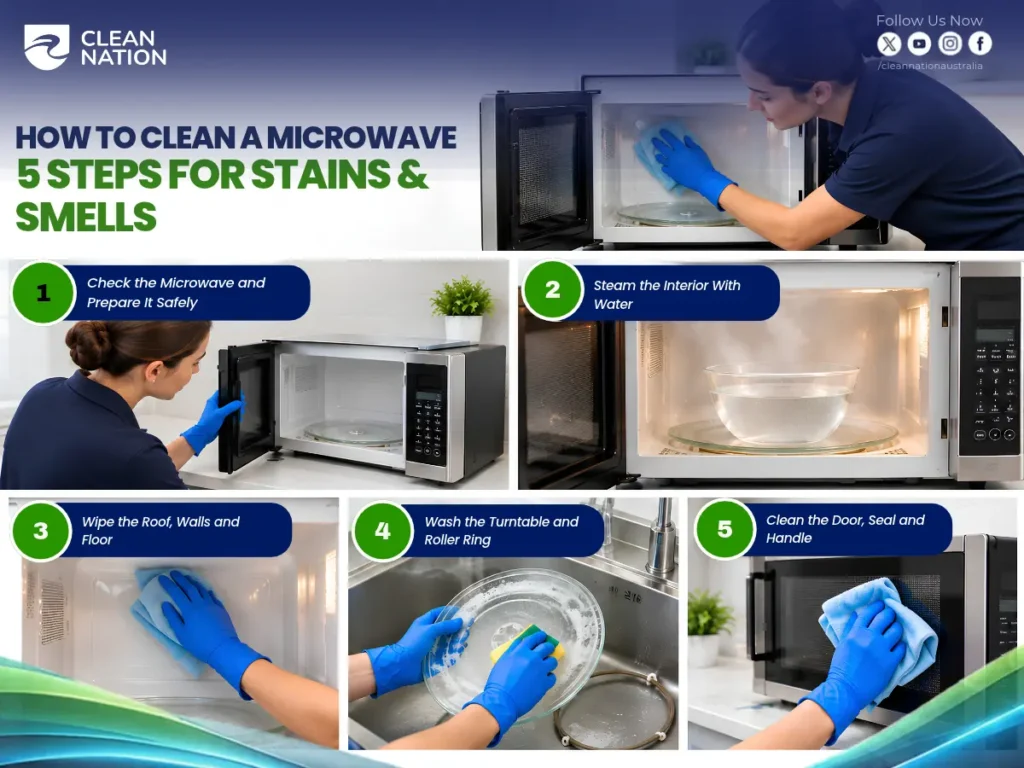
To clean a microwave, heat a microwave-safe bowl of water until steam forms, then leave the door closed for a few minutes. Carefully remove the hot bowl, switch off and unplug the appliance, and wipe the loosened food with a soft cloth. Wash the turntable and roller ring separately, then clean the door, edges and handle. Use mild dishwashing liquid for stubborn grease.
Learning how to clean a microwave properly helps remove dried food, sticky splatter and burnt smells without damaging the appliance. This guide covers a simple five-step method, different cleaning options and the areas people often forget.
What Do You Need to Clean a Microwave?
Most microwaves can be cleaned with basic household supplies.
Essential Cleaning Tools
- A microwave-safe glass or ceramic bowl.
- Clean water.
- Two soft microfibre cloths.
- Mild dishwashing liquid.
- A non-scratch sponge.
- A clean tea towel.
- Oven mitts for handling hot containers.
Optional Cleaning Products
White vinegar or lemon slices may help loosen residue and freshen the interior if the appliance manufacturer permits them.
Baking soda can help with some stubborn marks, but it should only be used where the interior finish allows it.
Check your microwave manual first. Some models have special coatings, grill elements or removable parts that need different care.
How to Clean a Microwave in 5 Easy Steps
This method uses steam to soften food residue before gentle wiping.
It works for many everyday splatters, but always follow your appliance manufacturer’s instructions.
Step 1: Check the Microwave and Prepare It Safely
Remove any leftover food, containers or loose crumbs.
Check that the door closes properly and the interior has no obvious damage.
If the microwave is already hot from cooking, let it cool before handling its surfaces.
For the steam step, the appliance needs to remain connected to power.
Use only a suitable microwave-safe bowl. Never heat a sealed container or run the microwave empty.
If the door, hinges or interior appear damaged, stop and arrange an appropriate inspection before operating it.
Step 2: Steam the Interior With Water
Fill a microwave-safe bowl with about one cup of water.
Place it in the centre of the turntable.
Heat according to your microwave’s instructions until the water creates steam. The time depends on the appliance’s power.
Stay nearby while it heats.
Turn the microwave off and leave the door closed for a few minutes so the steam can soften dried food.
Take care with hot water. Microwaved liquids can sometimes become superheated and suddenly boil over when disturbed.
Allow the bowl to stand before handling it. Use oven mitts and move it carefully.
If your manufacturer permits lemon or vinegar steam cleaning, you may use its recommended method instead of plain water.
Step 3: Wipe the Roof, Walls and Floor
After removing the bowl, switch off the microwave and unplug it if the plug is accessible.
Use a soft, damp microfibre cloth to wipe the interior.
Start at the roof and work down the walls towards the floor.
Pay attention to dried food near the back corners and around the turntable area.
For stubborn grease, add a small amount of mild dishwashing liquid to the cloth.
Wipe gently without scrubbing the interior coating.
Use a separate lightly dampened cloth to remove cleaning residue.
Do not pour water directly into the microwave or spray products into openings.
Step 4: Wash the Turntable and Roller Ring
Wait until the glass turntable has cooled before removing it.
Sudden changes in temperature may damage hot glass.
Lift out the turntable and removable roller ring according to the manufacturer’s instructions.
Wash them in warm water with a little dishwashing liquid.
Use a soft sponge to remove food and grease.
Rinse thoroughly and dry with a clean tea towel.
Some turntables are dishwasher-safe, but check the manual before placing them in the dishwasher.
Do not operate the microwave without its supplied turntable or support parts unless the manufacturer specifically permits it.
Step 5: Clean the Door, Seal and Handle
Food splatter often collects around the inside of the microwave door.
Wipe the door glass, accessible edges and the areas where the door meets the frame.
Use a soft cloth with mild detergent, followed by a clean, lightly dampened cloth.
Avoid pressing hard on seals, hinges or the door screen.
For the outside, wipe the handle and control panel with a slightly damp cloth.
Never spray cleaning liquid directly onto electronic controls.
Dry the cleaned areas and return the turntable and roller ring to their correct positions.
Your microwave is ready to use once it is clean, dry, undamaged and correctly reassembled.
Which Microwave Cleaning Method Suits Your Mess?
Not every microwave problem needs vinegar, lemon or a specialist cleaning product.
Use the type of dirt to choose a suitable method.
| Microwave Problem | Best Starting Method | Why It Helps |
| Light food splatter | Damp microfibre cloth | Removes fresh residue without strong products |
| Dried-on food | Water steam followed by wiping | Softens residue before cleaning |
| Greasy microwave roof | Mild dishwashing liquid on a soft cloth | Helps lift oil and grease |
| Burnt food smell | Remove burnt residue, then air out | Addresses the source before treating the odour |
| Sticky door | Warm, lightly soapy cloth | Removes food residue around accessible edges |
| Stainless steel exterior | Manufacturer-approved cleaner on a cloth | Protects the finish from unsuitable chemicals |
Can You Clean a Microwave With Vinegar or Lemon?
Yes, if your microwave manufacturer allows it.
Heating a suitable bowl of water with a little white vinegar or lemon can help loosen food residue and improve cooking odours.
However, the steam does most of the softening work.
Vinegar and lemon steam should not be described as a proven disinfection method. Cleaning removes visible dirt, but sanitising requires a suitable, validated process.
For routine cleaning, plain water and mild dishwashing liquid are often enough.
What About Bicarb Soda?
Bicarb soda may help with some stubborn marks when used gently on compatible surfaces.
However, it can act as a mild abrasive.
Avoid rubbing it into coated, painted or easily scratched interiors unless the manufacturer permits it.
If ordinary detergent cannot remove a mark, check the manual before trying a stronger treatment.
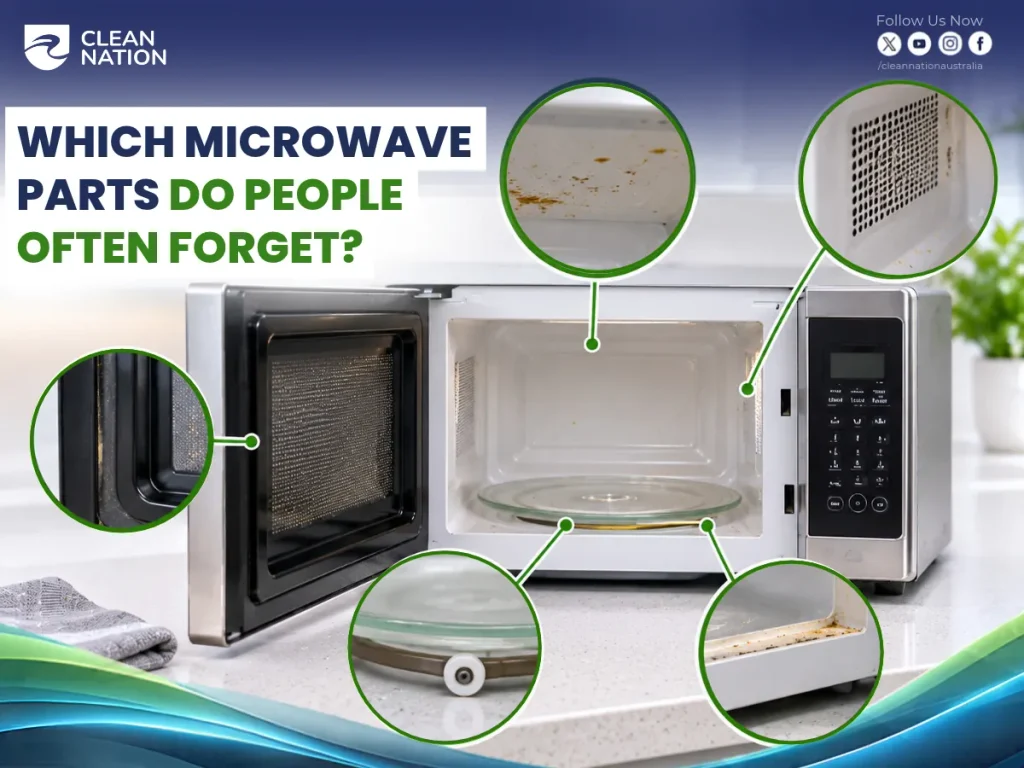
Which Microwave Parts Do People Often Forget?
Cleaning the main cavity is only part of the job.
Food, dust and grease can collect in less visible areas.
The Microwave Roof and Interior Cover
Food splatter can reach the ceiling when soup, sauce or other liquids heat too quickly.
Gently clean the roof with a soft cloth.
Some microwaves have a thin protective panel or waveguide cover on an interior wall or ceiling.
Do not remove, peel, soak or scrape this cover.
If it is damaged, ask a qualified appliance technician for advice.
Door Seals and Frame Edges
Check the areas where the door meets the microwave frame.
Food residue can build up around these surfaces and affect how cleanly the door closes.
Wipe gently using mild detergent.
Do not pull at seals or use sharp tools to remove trapped dirt.
Ventilation Openings and Exterior
Microwave vents need to remain clear so the appliance can operate correctly.
Wipe accessible exterior dust with a dry or slightly damp cloth.
Do not insert brushes into the openings or let water enter them.
Keep adequate clearance around the appliance, as directed in its manual.
For grease and dirt on the nearby kitchen splashback, follow our separate guide on how to clean kitchen tiles.
Turntable Support and Centre Shaft
Food residue can collect under the turntable, around the support wheels and near the centre drive area.
Clean only the parts the manufacturer identifies as user-accessible.
Use a lightly dampened cloth rather than pouring water into the mechanism.
Dry the area before replacing the parts.
How to Get Rid of a Burnt Smell in a Microwave
Burnt popcorn, overheated leftovers and strong-smelling foods can leave an unpleasant odour.
The best approach is to remove the source before trying to freshen the appliance.
Remove the Burnt Residue
Take out any burnt food and its container once safe to handle.
Clean visible splatter and residue using mild detergent.
Wash the turntable and roller ring if food has spilled onto them.
Use Lemon Steam if the Manual Allows It
For suitable microwave models, place lemon slices in a bowl of water.
Heat using the manufacturer’s recommended method, then allow the bowl to stand safely before removing it.
Wipe the interior after the steam has loosened the remaining residue.
This may improve mild cooking odours, but it will not repair burnt or damaged components.
Air Out the Microwave
After cleaning, leave the door open for a short period when safe and practical.
Allow moisture and cooking odours to escape.
Some household guides also suggest placing a small bowl of dry bicarb soda inside an unplugged, unused microwave overnight to absorb mild odours.
Remove the bowl completely before using the appliance again.
If you notice an electrical burning smell, smoke or repeated sparking, stop using the microwave and seek qualified repair advice.
Common Mistakes That Can Damage a Microwave
Avoid these cleaning and operating mistakes.
| Mistake | Possible Problem |
| Running the microwave empty | Can damage the appliance |
| Heating unsuitable metal items | May cause sparking or damage |
| Spraying cleaner into vents | Liquid may reach electrical components |
| Using strong oven cleaner | Can damage interior finishes or leave unsuitable residue |
| Scraping with sharp tools | Can scratch coatings and seals |
| Mixing household cleaning chemicals | May cause harmful reactions |
| Removing fixed interior panels | May damage parts that are not user-serviceable |
Some microwave models include manufacturer-approved metal racks or accessories. Use only those specifically permitted by the manual.
Do not open the outer casing or attempt electrical repairs yourself.
A cleaning cloth can remove food residue, but it cannot fix a faulty electrical component or damaged microwave door.
How Often Should You Clean a Microwave?
Cleaning frequency depends on how often the appliance is used and how much food spills inside.
A shared microwave may need attention more often than one used occasionally at home.
| Situation | Suggested Cleaning Frequency |
| Food spills or splatters | Clean after the spill, once safe |
| Microwave used daily at home | Quick wipe every few days |
| Regular home maintenance | Detailed cleaning about weekly, or as needed |
| Occasionally used microwave | Inspect and clean when dirty |
| Shared office microwave | Check daily and clean whenever soiled |
| Busy cafe or staff kitchen | Inspect during service and follow a suitable cleaning schedule |
These are practical recommendations, not a single mandatory cleaning timetable.
For a wider routine covering sinks, cupboards and appliances, read our guide on how often to clean your kitchen.
When Should You Stop Using a Microwave Instead of Cleaning It?
Some problems need an appliance technician rather than another cleaning session.
Stop using the microwave if:
- The door no longer closes properly.
- The hinges or latch are damaged.
- The door or its screening appears damaged.
- Corrosion is visible around the door or inside the cavity.
- The appliance repeatedly sparks or develops an electrical burning smell.
Australia’s radiation safety regulator advises that microwave doors should fit securely, with the door and surrounding surfaces in good condition.
Do not assume removing visible dirt makes a damaged appliance safe.
Ask a qualified technician to assess whether repair is appropriate or replacement is necessary.
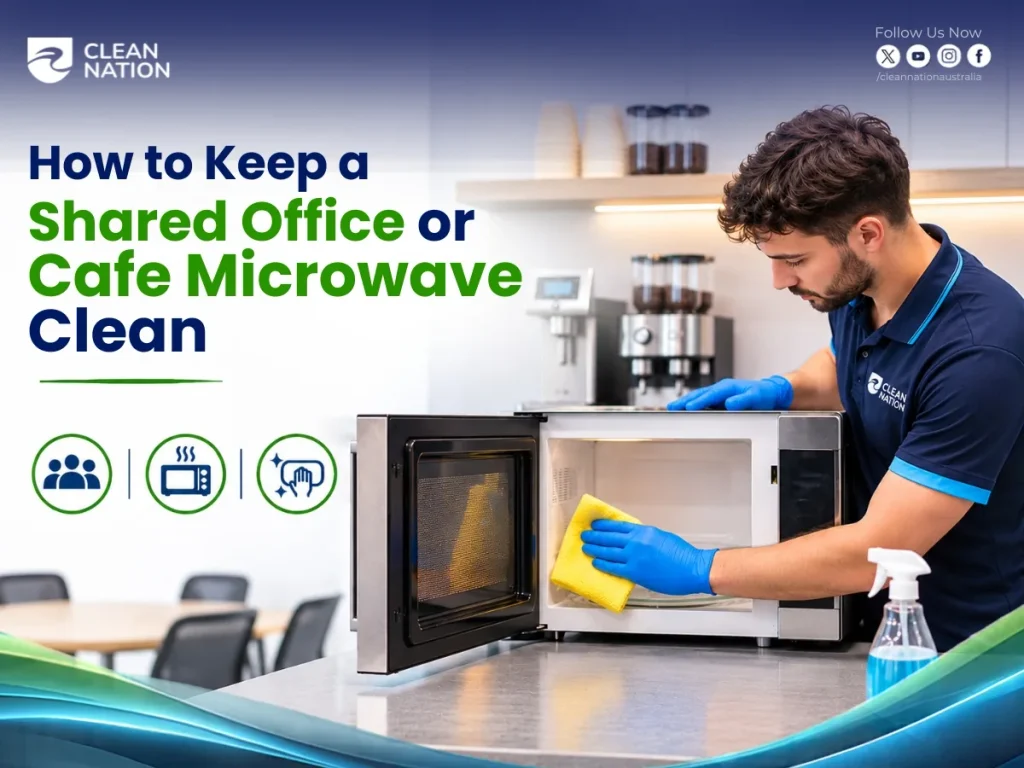
How to Keep a Shared Office or Cafe Microwave Clean
Shared microwaves often become dirty because several people use them throughout the day.
A simple cleaning routine can help prevent food residue from building up.
Shared Office Microwave Cleaning
In an office kitchen, ask staff to cover food using suitable microwave-safe lids.
Provide a clean cloth or appropriate cleaning supplies nearby.
Assign responsibility for checking the turntable, door handle and interior surfaces.
A short weekly inspection can catch dirt that individual users have missed.
If your workplace needs wider cleaning support, Clean Nation provides office cleaning services across Australia, including agreed kitchen and breakroom cleaning.
Confirm any microwave interior-cleaning requirements when arranging the service.

Cafe and Commercial Staff Microwave Cleaning
Cafes may have microwaves used by staff or as part of food preparation.
These appliances require a cleaning schedule suited to their use and the food safety risks involved.
Cleaning removes food scraps and grease. Sanitising is a separate task that must use a suitable method when required.
Follow the equipment manufacturer’s instructions and your food business’s cleaning and sanitising procedures.
Record cleaning responsibilities rather than assuming someone else has completed the work.
Our cafe cleaning checklist explains how to organise daily, weekly and monthly cleaning tasks across a cafe.
Frequently Asked Questions
1. Can I Clean a Microwave While It Is Still Warm?
A slightly warm interior may be easier to wipe, but it should not be hot enough to burn you. Let the appliance cool to a safe temperature before touching the surfaces or removing parts. Unplug it before manual cleaning where possible.
2. Can I Use a Magic Eraser Inside a Microwave?
Melamine sponges, often sold as Magic Erasers, can be abrasive. They may dull or scratch some microwave interior finishes. Use a soft microfibre cloth instead unless the manufacturer specifically approves the sponge for your model.
3. Is Heating a Wet Sponge in the Microwave a Safe Way to Sanitise It?
Do not rely on microwaving a wet sponge as a general sanitising method. Uneven heating and burn risks can make the process unsafe. Wash or replace dirty sponges using suitable methods rather than assuming microwave heating makes them hygienic.
4. What Should I Do if Paint Is Chipping Inside the Microwave?
Stop using the microwave and check the manufacturer’s advice. Chipped interior coatings may expose metal or indicate surface damage. Do not cover the problem with household paint. Ask an authorised technician whether the appliance can be safely repaired.
5. How Do I Clean a Microwave With a Grill or Convection Function?
Wait until all heating elements are completely cool. Follow the appliance manual for cleaning the grill, roof and removable accessories. These models may have exposed heating elements or special interior coatings, so ordinary microwave cleaning methods may not suit every part.
Keep Your Microwave Cleaner Between Deep Cleans
A clean microwave is easier to maintain when you remove spills before they dry.
Use a microwave-safe food cover, wipe accessible splatter after cooking and check the turntable regularly.
For a wider kitchen clean, Clean Nation offers kitchen cleaning services across Australia. Discuss the exact appliances and cleaning tasks required when requesting a quote.
Call +61480810142 to discuss suitable kitchen cleaning services for your home or workplace.