



How to clean kitchen tiles starts with removing loose dust and dirt, then washing the tiles with warm water and a pH-neutral cleaner or dish soap using a soft sponge or microfibre cloth. Clean grease and grout regularly, rinse with clean water, and dry the surface for a streak-free finish. Following this simple routine keeps your kitchen hygienic, protects your tiles and grout, and helps them last longer. If stubborn grease, mould, or deep stains remain, professional kitchen tile cleaning is the best solution. If you need help with heavy grease or stubborn stains, professional Kitchen cleaning services in Australia can restore your kitchen safely and efficiently.
Why Regular Kitchen Tile Cleaning Matters?

Kitchen tiles collect grease, food splatters, dust, and moisture every day. If they are not cleaned regularly, stains can set in, grout can become dirty, and mould may start to grow.
Regular cleaning keeps your kitchen hygiene high and helps protect your tiles. It also improves tile longevity, prevents grease build-up, and keeps your kitchen looking clean.
Benefits of Regular Cleaning
- Reduces grease build-up and stains.
- Helps with mould prevention.
- Protects the tile surface and grout.
- Keeps tiles looking fresh for longer.
- Makes home maintenance easier.
Use the Right Tools
For safe cleaning, use:
- Microfibre cloth
- Sponge
- Grout brush or tile and grout brush
- Old toothbrush for corners
- Mop or vacuum cleaner to remove dust
Choose Safe Cleaning Products
A gentle cleaning solution works best, such as:
- pH-neutral cleaner
- Neutral tile cleaner
- Dish soap and warm water
- Natural or eco-friendly tile cleaner
Avoid These Products
Do not use:
- Bleach
- Acidic cleaners
- Abrasive cleaners
- Steel wool
- Scouring pads
- Ammonia
- Window cleaners
- Toilet cleaners
At Clean Nation, we recommend cleaning your kitchen tiles regularly with gentle products to keep them clean, protected, and looking their best.
How to Clean Kitchen Tiles Step by Step?
Regular kitchen tile cleaning keeps your tiles free from grease, dirt, and stains. Follow these simple steps for effective surface cleaning and a streak-free finish. For the best results, include this routine in your weekly cleaning schedule.
Remove Loose Dust and Debris
Start by removing surface debris, household dirt, and dirt and grit.
- Sweep the floor with a broom or dust mop.
- Use a vacuum cleaner for corners and grout lines.
- Removing abrasive grit first helps prevent scratches during cleaning.
Wash Tiles with a Mild Cleaning Solution
Mix warm water with dish soap or a pH-neutral cleaner.
- Apply the cleaning solution using a sponge or microfibre cloth.
- Wipe each tile gently to lift dirt and stains.
- A neutral tile cleaner is a good choice for regular tile cleaning.
- Rinse with clean water after washing.
Remove Grease and Everyday Kitchen Residue
Cooking often leaves greasy tiles, food splatters, and sticky residue.
- Apply a little washing-up liquid to the affected area.
- Wipe with a damp cloth or sponge.
- For grease stains or stubborn residue, let the cleaner sit for a few minutes before wiping.
- Repeat if needed until the tiles are clean.
Rinse and Dry for a Streak-Free Finish
Finish by rinsing tiles with plain water to remove any cleaner.
- Wipe dry with a soft cloth or microfibre cloth.
- Buff the tiles gently for a smear-free and streak-free finish.
- Drying the surface also helps prevent water marks.
How to Clean Kitchen Tile Grout?
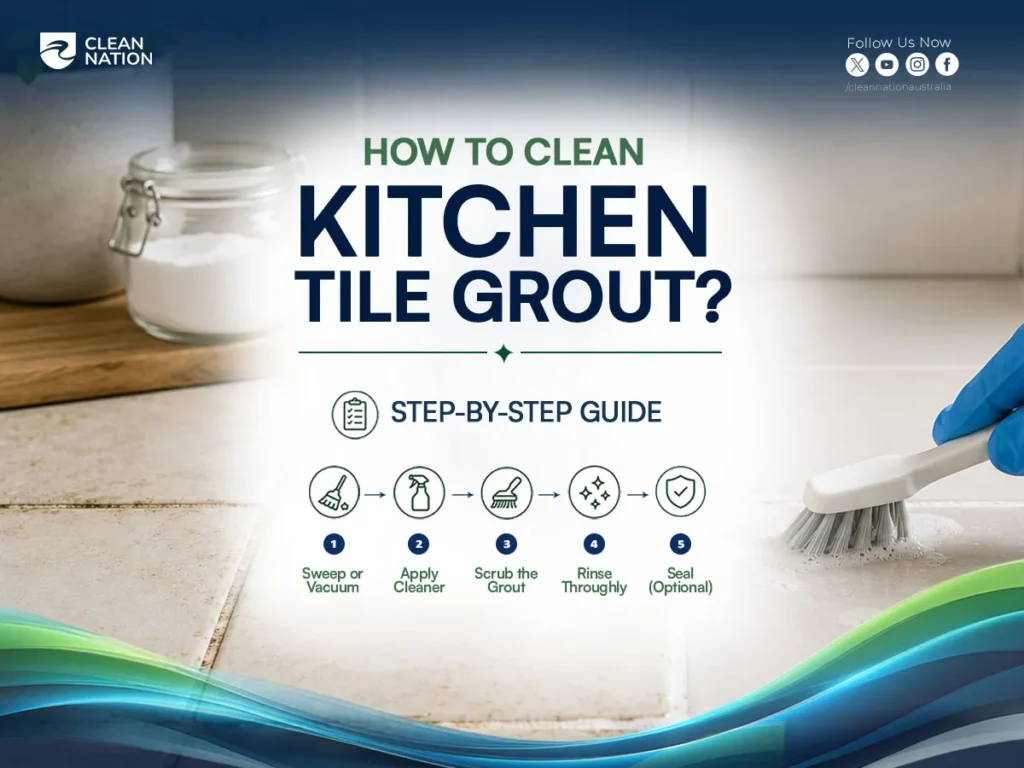
Clean grout joints are just as important as clean tiles. Regular grout cleaning removes dirt, prevents grout discolouration, and improves tile hygiene. It also helps protect your tiles and keeps your kitchen looking fresh.
Clean Everyday Dirt from Grout
For regular grout maintenance, you only need a few simple tools.
- Mix warm water with a little dish soap.
- Scrub the grout joints using a grout brush, tile and grout brush, or an old toothbrush.
- Wipe away household dirt with a damp cloth.
- Repeat this during your regular cleaning routine.
Remove Stubborn Grout Stains
If the grout is badly stained, use a stronger but safe method.
- Make a paste with bicarbonate of soda and water.
- Spray a little distilled white vinegar over the paste if suitable for your tile type.
- Scrub with a grout cleaner or specialist cleaner.
- This helps remove grease stains, mildew, and other stubborn stains while improving stain removal.
Should You Seal Kitchen Grout?
A grout sealer helps keep grout cleaner for longer.
- Apply a silicone-based grout sealer after the grout is completely dry.
- It improves moisture resistance and supports mould prevention.
- Sealing also provides tile protection, reduces future staining, and improves tile longevity.
How to Clean Different Types of Kitchen Tiles?
Not all kitchen tiles need the same cleaning method. Using the right products helps protect the surface, keeps tiles looking their best, and extends their lifespan.
Ceramic Kitchen Tiles
Ceramic tiles and ceramic wall tiles are easy to clean and maintain.
- Wipe glazed ceramic tiles with a pH-neutral cleaner and a damp cloth.
- Clean porous ceramic carefully to avoid excess water.
- Dry the surface to protect the ceramic finish.
- Regular tile care keeps ceramic flooring looking new.
Porcelain Kitchen Tiles
Porcelain tiles are durable because of their low water absorption.
- Clean porcelain wall tiles and porcelain floor tiles with a mild cleaner.
- Use a soft mop or cloth to protect the porcelain finish.
- Avoid harsh chemicals that can affect tile durability.
- Regular tile care helps keep water-resistant tiles in excellent condition.
Glass Splashback Tiles
A glass splashback can quickly collect grease and fingerprints.
- Spray a gentle cleaner onto the surface.
- Wipe with a microfibre cloth to remove cooking splatters and grease.
- Finish with a dry cloth for streak-free cleaning.
- Clean your kitchen splashback often to keep backsplash tiles sparkling. Since splashback grease often comes from the stove and range hood area, it’s worth checking our guide on How to Clean a Kitchen Range Hood Filter too.”
Natural Stone Kitchen Tiles
Natural stone tiles need extra care to avoid damage.
- Use a pH-neutral cleaner made for natural stone cleaning.
- Wipe with a soft cloth instead of abrasive pads.
- Choose suitable stone cleaning products for regular stone care and stone maintenance.
- Proper cleaning provides better tile protection and keeps natural stone looking its best.
How to Remove Stubborn Kitchen Tile Stains?
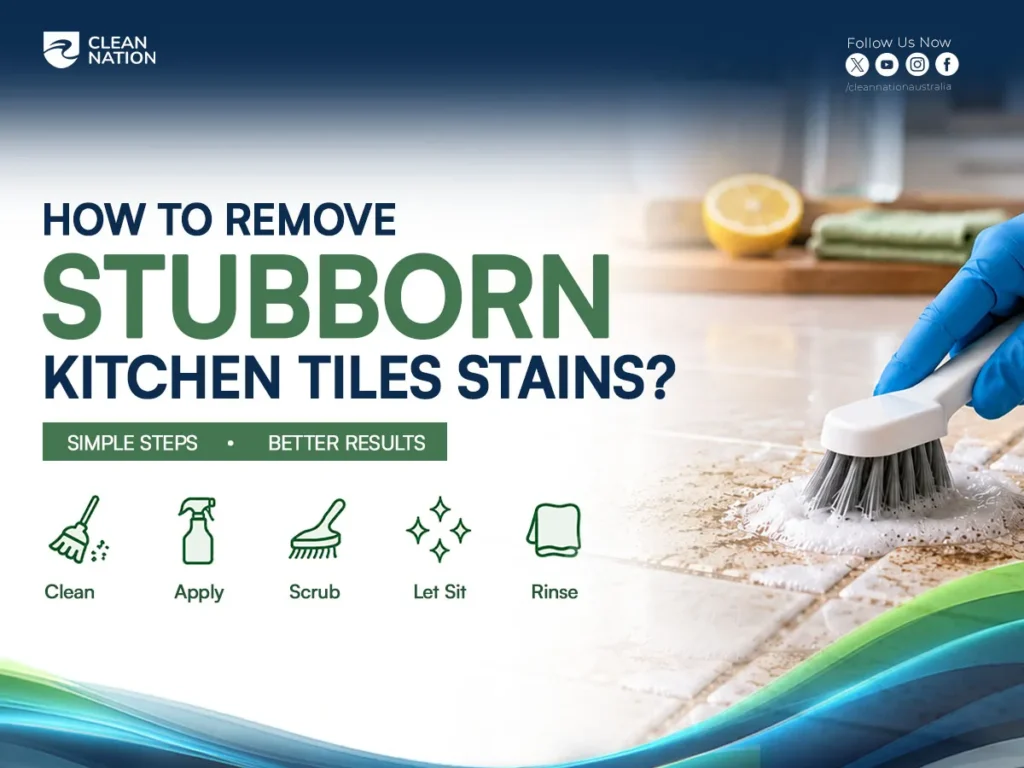
Some stains need more than regular cleaning. The right method can remove tough marks without damaging your tiles or grout.
Burnt Food Stains
Burnt food stains often appear near the kitchen hob and cooking area. If grease has spread to nearby appliances too, check out our guide on How To Clean Your Kitchen Appliances.
- Apply a gentle tile cleaner or specialist cleaner.
- Let it sit for a few minutes to loosen grease build-up and stubborn residue.
- Wipe with a soft cloth or sponge.
- Repeat if needed until the stain removal is complete.
Hard Water Marks
Hard water stains are common around sinks and splashbacks.
- Apply a small amount of distilled white vinegar to the affected area if it is safe for your tile type.
- Wipe away water splashes with a soft cloth.
- Rinse with clean water and dry the surface.
- This helps protect the tile finish and leaves a streak-free, smear-free finish.
Mould and Mildew
Moisture around sinks can cause mould to grow in the grout joints.
- Clean the area with a grout cleaner.
- Use bleach-free cleaning products where possible.
- Dry the area well after cleaning to reduce moisture.
- Regular grout maintenance supports mould prevention, improves kitchen hygiene, and helps keep grout protected with a mould shield.
Common Kitchen Tile Cleaning Mistakes to Avoid
Using the wrong cleaning method can damage your tiles and grout. Avoid these common mistakes to keep your kitchen tiles in good condition.
- Don’t use abrasive cleaners, steel wool, or scouring pads. They can scratch the surface.
- Avoid acidic cleaners on natural stone tiles. They can damage the finish.
- Don’t rely on bleach for regular cleaning. It may weaken grout over time.
- Stay away from other harsh cleaners unless they are safe for your tile type.
- Clean spills quickly instead of letting grease and stains build up.
- Always use a soft cloth or sponge to help with scratch prevention and tile surface protection.
- Follow a simple tile care guide and use gentle products for regular cleaning.
- If stains, mould, or damaged grout won’t come off, consider professional tile care instead of using stronger chemicals.
How Often Should You Clean Kitchen Tiles?
A regular cleaning routine keeps kitchen tiles looking their best and prevents grease, stains, and grime from building up.
- Daily: Wipe spills and cooking splatters with a daily tile cleaner or a damp cloth.
- Weekly: Mop floors and clean wall tiles as part of your weekly cleaning routine.
- Monthly: Do a deep cleaning to remove grease from grout, corners, and splashbacks.
- As needed: Clean high-use areas more often if you cook frequently.
Keeping up with regular cleaning makes kitchen maintenance easier, improves tile upkeep, supports better home cleaning, and helps increase tile longevity.
When to Call Professional Kitchen Tile Cleaners
Some tile problems need more than regular cleaning. If DIY cleaning no longer works, choosing a trusted cleaning service in Australia can save time and deliver better results.
Consider professional tile cleaning if:
- Stubborn stains won’t come off.
- Grease has built up over time.
- Grout is heavily stained or needs grout cleaning.
- Your tiles need deep cleaning or tile restoration.
- You want safe, eco-friendly cleaning for delicate tile surfaces.
At Clean Nation, our tile cleaning services use the right tools and products to clean tiles without causing damage. Our experienced team provides reliable professional tile care and uses a specialist tile cleaner when needed to restore the appearance of your kitchen tiles. For deep grease build-up and stained grout, professional kichten cleaning is often the safest and most effective solution.
Why Choose Clean Nation for Kitchen Tile Cleaning
At Clean Nation, we make kitchen tile cleaning simple, safe, and reliable. Our experienced team uses the right methods to remove grease, dirt, and stains without damaging your tiles.
When you choose Clean Nation tile cleaning services, you get:
- Experienced professionals for professional tile cleaning.
- Safe, eco-friendly cleaning products.
- Expert grout cleaning for cleaner, brighter grout lines.
- The right specialist tile cleaner for different tile types.
- Quality tile care that helps protect your tile finish.
- Regular tile maintenance to keep your kitchen looking its best.
Whether you need a kitchen cleaning service in Sydney or support in other Australian cities, Clean Nation delivers reliable results.
We also provide Kitchen cleaning services in New South Wales for homes looking for professional tile and grout cleaning.
Client experience with Clean Nation
A family in Melbourne contacted Clean Nation because their kitchen tiles had years of grease build-up, stained grout, and dull splashback tiles. Regular household cleaning was no longer removing the marks, especially around the stove and sink.
Our team carried out a professional kitchen tile cleaning service using eco-friendly products and specialist tile cleaners that were safe for the ceramic tiles and grout. We deep cleaned the tiles, removed grease from the splashback, restored the grout, and finished with a protective treatment.
The results were immediate. The tiles looked brighter, the grout was cleaner, and the kitchen was easier to maintain. The homeowners now follow a simple weekly cleaning routine and book professional tile cleaning once a year to keep their kitchen in excellent condition.
Read our Client reviews to see how we’ve helped homeowners across Australia restore their kitchen tiles.
FAQs
Can I Use Vinegar to Clean Kitchen Tiles?
Yes, you can use diluted white vinegar on ceramic and porcelain tiles. However, avoid using vinegar on natural stone tiles like marble or limestone because it can damage the surface.
Is Steam Cleaning Safe for Kitchen Tiles?
Steam cleaning is generally safe for sealed ceramic and porcelain tiles. Check the manufacturer’s recommendations first and avoid using steam on damaged grout or unsealed natural stone.
What Is the Best Way to Keep Kitchen Tiles Shiny?
Clean spills as soon as they happen, use a pH-neutral cleaner, rinse with clean water, and dry the tiles with a microfibre cloth. This helps prevent streaks and keeps tiles looking glossy.
Can I Use a Pressure Washer on Kitchen Tiles?
No. Pressure washers are not recommended for indoor kitchen tiles because they can damage grout and force water behind the tiles. Use a soft cloth, sponge, or mop instead.
Why Do My Kitchen Tiles Still Look Dull After Cleaning?
Tiles can still look dull if cleaner residue, hard water deposits, or worn grout is left behind. Rinsing with clean water and drying the surface properly usually restores the shine. If the problem continues, professional tile cleaning may be needed.
Final Thoughts
Keeping clean kitchen tiles doesn’t have to be difficult. With the right kitchen tile cleaning routine, gentle tile care, and regular cleaning, you can prevent grease build-up, protect your grout, and improve tile longevity. A little effort goes a long way in keeping your kitchen fresh, hygienic, and looking its best.
If your tiles have stubborn stains, dirty grout, or need a deeper clean, let the experts help. Clean Nation provides professional kitchen tile cleaning services using safe, eco-friendly products to restore spotless tiles and support long-term home maintenance.
Ready to refresh your kitchen? Contact Clean Nation today for a free quote and let our team bring back the shine to your beautiful tiles.