

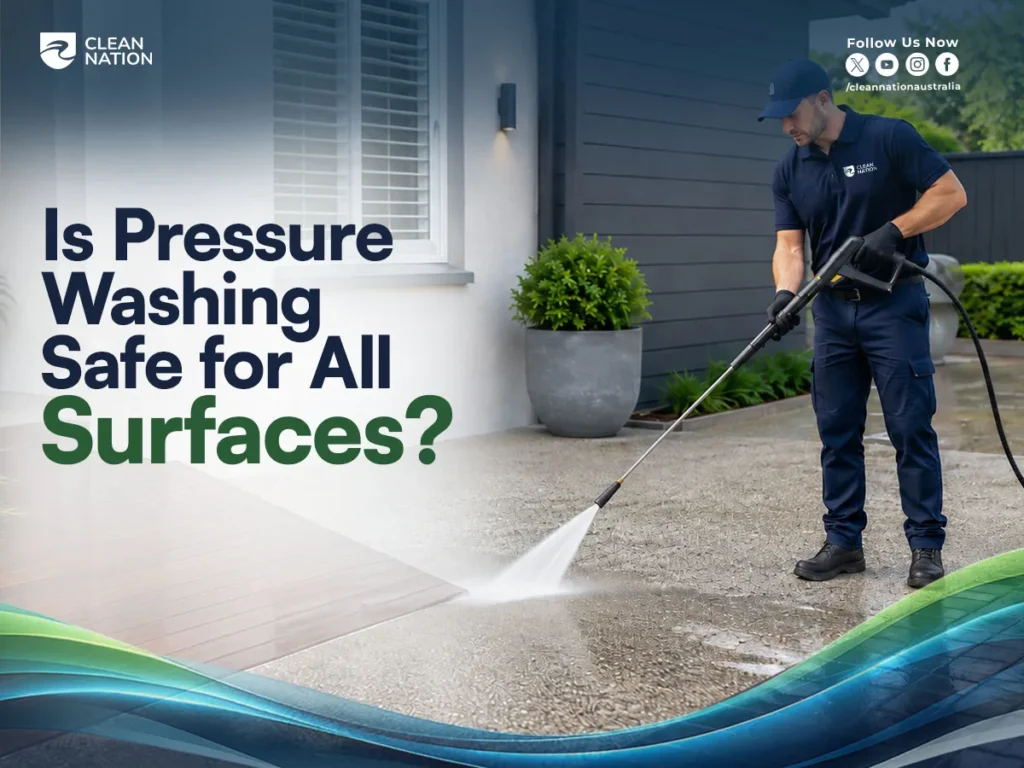
Pressure washing is highly effective for removing dirt, grime, mold, algae, oil and other buildup, but it is not automatically safe for every surface. The pressure level, nozzle, water temperature, cleaning solution and technique must match the material being cleaned. Concrete and some pavers can handle stronger pressure, while timber, painted surfaces, render and older masonry often require a gentler approach.
Which Surfaces Are Safe for Pressure Washing?
Most durable exterior surfaces can be pressure cleaned when the correct equipment and PSI are used. However, surface age, existing damage, coatings and construction also matter, so a professional should assess the condition before choosing a cleaning method.
Concrete and Driveways
Concrete is generally one of the more suitable surfaces for pressure washing because it can withstand relatively high water pressure. Pressure cleaning can remove dirt, tyre marks, oil residue, moss and general grime from driveways, paths and outdoor areas. However, excessive PSI can still cause surface etching or damage to weakened concrete.
Brick and Pavers
Brickwork and pavers can usually be pressure cleaned, but the technique needs to account for joints, mortar and the condition of individual units. Strong pressure directed too closely at damaged mortar can loosen joints or displace sand from pavers. Controlled cleaning followed by careful rinsing helps achieve a cleaner surface without unnecessary damage.
Outdoor Tiles and Hard Surfaces
Suitable outdoor tiles, sealed surfaces and durable stone can often benefit from pressure washing to remove accumulated grime and organic growth. The pressure should be adjusted according to the tile finish and sealant. Cracked, loose or poorly bonded tiles require additional care because high-pressure water can worsen existing weaknesses.
Which Surfaces Should Not Be Pressure Washed Aggressively?
Delicate exterior materials can be damaged when a pressure washer is used at excessive PSI or held too close to the surface. Timber, painted finishes, render, sandstone and older materials may need low-pressure cleaning or soft washing instead of conventional high-pressure washing.
Timber Decking and Wooden Surfaces
Timber can be cleaned with specialised low-pressure equipment, but aggressive pressure washing can scar the wood, raise fibres and remove protective coatings. The condition and type of timber should be assessed before cleaning. A controlled technique with an appropriate nozzle is generally safer than using maximum pressure to remove stubborn grime.
Render and Stucco
Rendered and stucco surfaces can be vulnerable to water intrusion, cracking and coating damage. High-pressure washing may force water behind the finish or remove sections of weakened material. Soft washing is often a better option because cleaning solutions can break down mold and organic contamination without relying on excessive water pressure.
Painted Walls and Cladding
Painted exterior walls and cladding should never be treated as though they were concrete. Excessive pressure can strip paint, create visible marks or expose the underlying material. Low-pressure cleaning combined with an appropriate detergent can remove environmental grime while reducing the likelihood of damaging the existing finish.
Sandstone and Other Natural Stone
Natural stone such as sandstone requires careful pressure control because its surface can be softer and more porous than concrete. Excessive pressure may cause surface erosion, discolouration or damage to fragile areas. Professional cleaners can select an appropriate pressure and cleaning solution after considering the stone’s condition.
What Can Go Wrong When Pressure Is Too High?
Using more pressure does not necessarily produce better cleaning results or lower the overall cost. Excessive force can etch concrete, strip coatings, damage timber fibers, loosen mortar, break fragile surfaces and drive water into vulnerable areas, potentially creating expensive repairs. The goal should be effective contamination removal using the lowest pressure necessary for the material.
Surface Etching and Physical Damage
High-pressure water can leave marks or etch certain hard surfaces when the nozzle is too close or the PSI is excessive. Damaged concrete, pavers and older masonry are particularly important to assess before cleaning because existing deterioration can become more noticeable after aggressive washing.
Paint and Coating Damage
Paint, sealants and protective coatings can deteriorate under excessive pressure. A pressure washer may remove loose paint or coating that is already failing, but unnecessarily strong cleaning can also damage sound finishes. Testing a small inconspicuous area first can help determine whether the selected method is appropriate.
Water Intrusion
Water can enter gaps, cracks, vents and vulnerable joints when pressure is directed incorrectly. This can create problems behind cladding, around windows or within older exterior structures. Professional pressure cleaning therefore involves controlling the spray angle, distance and pressure rather than simply maximising the machine’s output.
Pressure Washing vs Soft Washing: Which Is Safer?
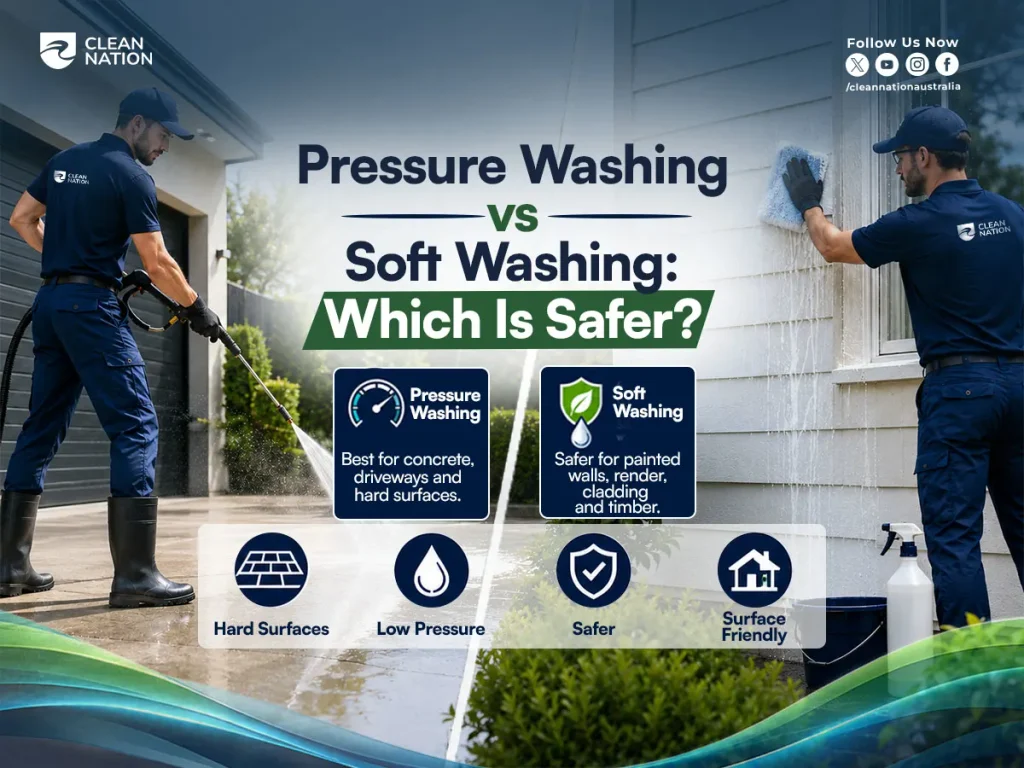
The safest cleaning method depends on the surface rather than the severity of the dirt alone. Pressure washing relies more heavily on mechanical force, while soft washing uses cleaning solutions and significantly lower pressure to break down contamination. For delicate materials, soft washing can provide effective results while placing less physical stress on the surface.
When High-Pressure Cleaning Makes Sense?
High-pressure cleaning is particularly useful for durable surfaces such as suitable concrete, some pavers and robust outdoor areas. It can efficiently remove embedded dirt, tyre marks, surface grime and certain stains when the PSI, nozzle and cleaning distance are properly controlled.
When Soft Washing Is the Better Choice?
Soft washing is often more appropriate for render, painted walls, weatherboards, timber and other sensitive surfaces. Cleaning solutions help loosen mould, algae and organic buildup before the surface is gently rinsed. This reduces dependence on high water pressure and lowers the risk of damaging fragile finishes.
Why the Correct PSI Matters?
There is no universal PSI setting that is safe for every property. A pressure washer operating at several thousand PSI may be appropriate for certain concrete applications but completely unsuitable for delicate painted or timber surfaces. Professional cleaners adjust pressure, nozzle selection and cleaning distance according to the material and condition.
Does the Cleaning Solution Matter?
Yes. Pressure washing safety depends on more than water pressure. Detergents, degreasers and other cleaning solutions must be compatible with the surface and used according to their intended application. Professionals also need to consider surrounding plants, soil, outdoor furniture and wastewater runoff when applying chemical treatments.
Detergents and Pre-Treatment
Heavy mold, algae, grease and oil stains may respond better to pre-treatment than repeated high-pressure passes. Applying a suitable cleaning solution allows contamination to break down before rinsing, which can improve results while reducing the amount of mechanical force required.
Eco-Friendly Cleaning Solutions
Biodegradable detergents and environmentally responsible cleaning products can help reduce the potential impact of exterior cleaning. However, an eco-friendly product still needs to be used correctly. Professionals should control chemical application, protect surrounding vegetation and manage runoff appropriately rather than assuming that every green-labelled product is harmless in every situation.
How Do You Know Which Cleaning Method Your Surface Needs?
Start with the material, then consider its age, condition, coating, level of contamination and previous maintenance. A dirty concrete driveway may need pressure washing, while an algae-covered rendered wall may be better suited to soft washing. Choosing the method based on the surface prevents unnecessary pressure and helps achieve more consistent results.
Inspect the Surface Before Cleaning
Look for cracks, loose paint, damaged joints, deteriorated mortar, exposed fibres and existing coating failure before operating a pressure washer. These weaknesses can determine whether pressure cleaning is suitable or whether a lower-impact cleaning method should be used.
Test an Inconspicuous Area
Testing a small section can reveal how the surface responds to the selected pressure and cleaning solution. This is particularly useful for painted surfaces, timber, natural stone and older materials where damage may not be obvious until cleaning has already started.
Is Professional Pressure Washing Safer Than DIY?
For straightforward hard-surface cleaning, experienced homeowners may be able to handle limited DIY work with suitable equipment. However, large properties, elevated areas, delicate materials and heavy contamination introduce additional risks. A professional pressure cleaning service can assess the surface, select the appropriate equipment and use controlled techniques to minimise avoidable damage.
Professional Equipment and Surface Expertise
Professional cleaners use pressure washers, specialised nozzles, detergents and access equipment suited to different cleaning requirements. Their experience also helps them recognise when high-pressure cleaning is inappropriate and when soft washing or another treatment would provide a safer result.
Safety Around Roofs and Elevated Areas
Roof cleaning and multi-storey exterior work introduce fall and access hazards that go beyond ordinary pressure washing. Ladders, wet surfaces, electrical equipment and high-pressure water create additional risks. Professional cleaners can use appropriate safety equipment and access procedures instead of relying on unstable DIY setups.
What Should You Do Before Pressure Washing?
Remove vehicles, outdoor furniture, toys and other movable items from the cleaning area. Close or protect vulnerable openings, identify damaged surfaces and keep children and pets away from the work zone. If chemicals are being used, discuss vegetation protection and wastewater management with the cleaning provider beforehand.
How Can a Clean Nation Help Protect Your Exterior Surfaces?
Clean Nation can assess your property’s exterior and determine whether pressure washing, low-pressure cleaning or soft washing is appropriate for the material. From concrete driveways and pavers to delicate walls and outdoor surfaces, the focus should be on removing contamination effectively without using unnecessary pressure.
FAQs:
Following are the faq’s;
Is pressure washing safe for every type of surface?
No. Concrete and suitable pavers can handle controlled pressure, while timber, render, painted walls and sandstone may need soft washing. Clean Nation assesses the surface first and selects the safest cleaning method to avoid unnecessary damage.
Can Clean Nation pressure wash homes in Sydney and nearby areas?
Yes. Clean Nation can provide professional exterior cleaning across Sydney and surrounding NSW areas. Response times and availability depend on your location, job size and schedule. Contact the team for current service availability and a tailored quote.
How much does safe pressure washing cost in Australia?
Pricing depends on surface type, area size, contamination, accessibility and cleaning method. Clean Nation provides job-specific pricing rather than applying one rate to every property. Request a quote to understand the exact service cost before work begins.
Does a pressure cleaning company need certification in Australia?
The Australian training framework includes competency for pressure washing, including surface assessment, equipment selection, PPE and safe cleaning methods. Licensing or certification requirements can vary by jurisdiction and job type, so Clean Nation should confirm applicable credentials for your location.
How quickly can Clean Nation respond to a pressure washing request?
Response time depends on your location, availability and job requirements. Sydney, Brisbane and other Australian service areas may have different scheduling windows. Clean Nation can confirm the earliest available appointment and provide a quote after assessing your cleaning needs.
Conclusion:
Pressure washing is not a one-setting-fits-all service. The right pressure, PSI, nozzle, cleaning solution and technique depend on the surface. Choosing the correct method protects your property while delivering the deep exterior clean you’re actually paying for.