


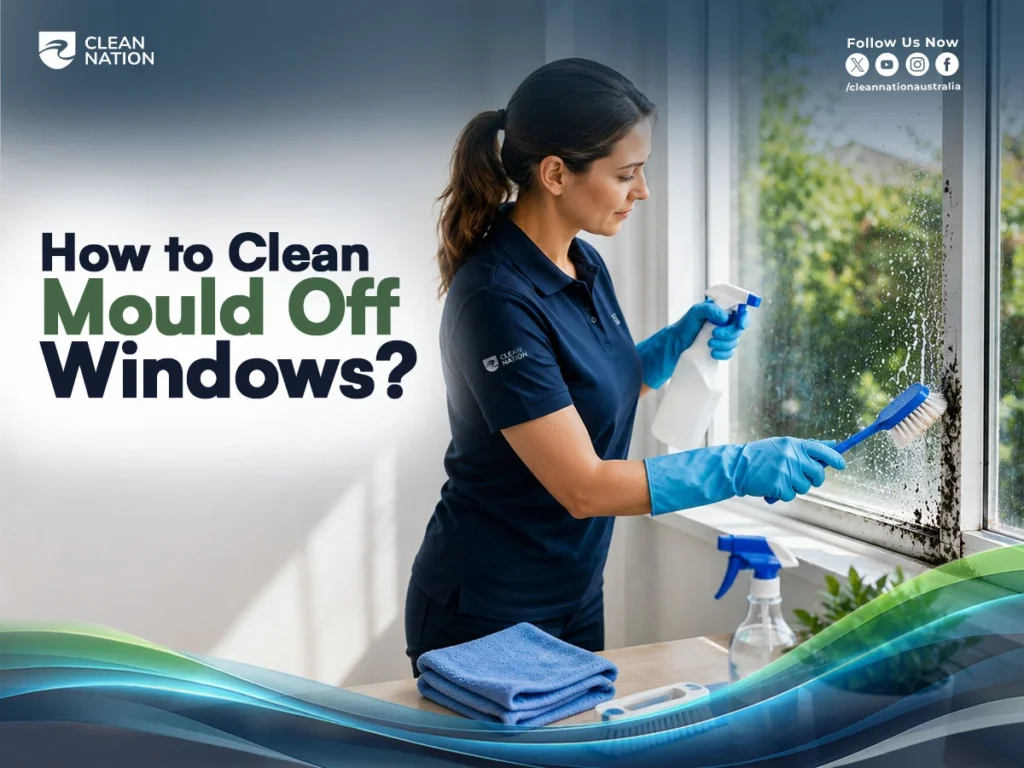
To clean mould off windows, put on protective gear like gloves and a mask, vacuum away loose dust, apply a cleaning solution and let it sit for 10:15 minutes, then scrub the glass, frames, and tracks before wiping everything dry. If you’re wondering how to clean mould off windows naturally, white vinegar or hydrogen peroxide work well for mild to moderate mould without harsh chemicals. Regular ventilation, a dehumidifier, and prompt condensation wiping help stop it from coming back, but if mould keeps returning despite proper cleaning, it usually points to a hidden moisture issue that’s best handled by professionals like Clean Nation.
Why Does Mould Grow on Windows?

Mould grows on windows mainly because of condensation. When warm indoor air meets cold glass, moisture builds up, and that dampness gives mould the perfect place to grow.
In Australian homes, especially during damp seasons, everyday activities like cooking and showering add humidity to the air. If a room has poor ventilation, that moisture has nowhere to escape, so it settles on cold surfaces like window glass and frames.
As one mould prevention guide explains, the amount of moisture air can hold depends on its temperature, and as temperature drops, air holds less moisture. This is why, in cold weather, moisture condenses on cold surfaces like the inside of a window, and this condensation can allow mould to grow on the affected surface.
This creates window condensation, which shows up as water droplets you keep wiping away. Over time, it leads to trapped humidity around the window area, especially in tracks and corners where air doesn’t move much.
That kind of damp, still environment is exactly what mould needs to grow. If it keeps coming back no matter what you try, it’s usually a sign of a deeper ventilation issue, and that’s where Clean Nation can help.
Source: Fry, Phillip. Do:It:Yourself Mold Prevention, Inspection, Testing & Remediation. Professional Certification Institute, 2010. Available at: https://biotoxinjourney.com/wp:content/uploads/2016/02/DIY%20Mold%20Prevention%20Inspection%20Testing%20Remediation.pdf
Signs You Have Mould on Your Windows
The easiest way to tell is visible mould around your window edges, usually showing up as dark mould patches or black mould stains on the glass, frame, or sill.
Watch out for these common signs:
- Visible mould: dark patches or spots forming on the glass, frame, or sill
- Black mould stains: the most obvious and often the most serious sign
- Dark mould patches: clusters that spread across frames or corners
- Musty smell: a damp, earthy odour near windows even when they look clean
- Water stains: marks around the frame that suggest moisture has been sitting for a while
- Discoloured walls: patches near the window that look different from the rest of the wall
- Sealant deterioration: cracking or crumbling sealant around the glass
- Paint peeling: paint lifting or bubbling near the window frame
- Damp spots: persistently wet or moist areas that never seem to fully dry
If you’re noticing more than one of these signs, it’s worth acting quickly before it spreads further. And if the mould keeps coming back despite regular cleaning, that’s usually the point where Clean Nation can help you deal with the actual source, not just what’s on the surface.
Tools and Cleaning Supplies You’ll Need to Clean Mould Off Windows

Before you start, gather a few basic supplies. Most of these are things you probably already have at home, and the rest are cheap and easy to find at any supermarket or hardware store.
Here’s what you’ll need:
- Rubber gloves protect your skin from direct contact with mould and cleaning solutions
- Face mask: stops you from breathing in mould spores while cleaning
- Protective equipment: includes eye protection if you’re using bleach or working with heavy mould buildup
- Spray bottle: makes it easy to apply your cleaning solution evenly across the surface
- Soft bristle brush: gets into corners, tracks, and frame edges without scratching the glass
- Microfibre cloth: wipes down surfaces and picks up loosened mould without spreading spores
- White vinegar: a natural option that works well on mild to moderate mould
- Baking soda: adds scrubbing power for stubborn spots when mixed into a paste
- Bleach: useful for heavier mould, but should be diluted and used with proper ventilation
Once you’ve got everything together, you’re ready to move on to the actual cleaning process. If the mould is widespread or keeps returning no matter what you use, that’s usually a sign the problem runs deeper than a surface clean can fix, and Clean Nation can help you sort that out properly.
How to Clean Mould Off Windows: Step-by-Step Guide
Once you’ve got your tools ready, follow these five steps in order. Skipping ahead or rushing through a step is usually why mould comes back so quickly after cleaning.
Step 1: Protect Yourself Before You Start
Before touching anything, put on your protective equipment. This means rubber gloves, a P2 mask for respiratory protection, and eye protection if you’re planning to use bleach. Mould exposure can cause skin irritation and breathing issues, so these safe cleanup procedures aren’t optional; they’re the foundation of doing this safely. Open a window or door for ventilation while you work, especially if you’re using any strong solution.
Step 2: Remove Loose Dust and Mould
Use a vacuum cleaner, ideally one with a HEPA filter, to remove loose dust and surface mould before applying any liquid. Avoid dry brushing at this stage if you can help it, since dry brushing releases spores into the air and increases the risk of airborne mould spores spreading to other parts of the room. If you do need to brush first, use a soft-bristle brush gently and try to avoid spreading mould spores further.
Step 3: Apply Your Cleaning Solution
Now it’s time to apply your mould cleaning solution. Undiluted vinegar works well for mild mould, while hydrogen peroxide or a diluted bleach solution is better suited for tougher, more established patches. Pour your chosen natural mould remover or commercial mould cleaner into a spray bottle and apply it evenly across the affected area. It’s worth doing a spot test before cleaning on a small hidden section first, especially on painted frames, to make sure the antifungal solution doesn’t damage the surface. Let it sit for 10 to 15 minutes before you start scrubbing.
Step 4: Scrub the Glass, Frames, and Window Tracks
Once the solution has had time to work, scrub the glass surfaces, window frames, window sills, and window tracks using a soft-bristle brush or a firm-bristle brush for tougher spots. A toothbrush works well for tight corners and grout lines where mould tends to hide. Pay close attention to window seals, since moisture often collects there and gets missed during a quick clean.Tracks in particular need extra attention since trapped moisture there is often what lets mould take hold in the first place. How to Clean Window Tracks covers the full process for getting them properly clean, not just mould-free
Step 5: Wipe the Surface Clean and Dry It Completely
Finish by wiping everything down with a damp cloth, then rinse with water to remove any leftover residue. After that, focus on drying hard surfaces completely; this step matters more than people think. Leaving dry window surfaces exposed to proper airflow and good air circulation helps prevent moisture buildup, which is exactly what you need to prevent mould regrowth. Skipping this final drying step is one of the most common reasons mould returns within a few weeks.
If you’ve followed all five steps and the mould still keeps coming back, that usually points to a bigger moisture issue behind the scenes, and that’s where Clean Nation can step in to help you fix the actual cause.
Common Mistakes to Avoid When Cleaning Window Mould
Even with the right tools, a few common mistakes can make window mould worse instead of better. Here’s what to watch out for.
- Dry brushing releases spores: brushing mould while it’s dry spreads spores into the air instead of removing them, so dampen the area first or go straight to your cleaning solution
- Skipping cloth rinses causes cross-contamination: using the same cloth across multiple windows without rinsing transfers mould spores from one area to another, so rinse your cleaning cloth regularly between spots.
- Skipping the spot test before cleaning: applying a new hard surface cleaner or strong chemical without testing it first can damage paint, sealant, or frame material before you even realise it
- Assuming bleach solves everything: does bleach kill mould? Yes, on the surface, but it doesn’t always reach the roots on porous materials like wood or sealant, which is why mould sometimes returns even after a bleach clean.
- Ignoring chemical safety: mixing bleach with other products, especially anything containing ammonia, can create dangerous fumes, so stick to one product at a time and keep the area ventilated.
Not following safe cleaning practices overall isn’t just about better results; it’s also about protecting your health while you clean. If you’ve avoided all of this and mould still keeps coming back, it’s worth getting a professional opinion, and that’s exactly the kind of problem Clean Nation deals with regularly.
How to Prevent Mould from Coming Back?
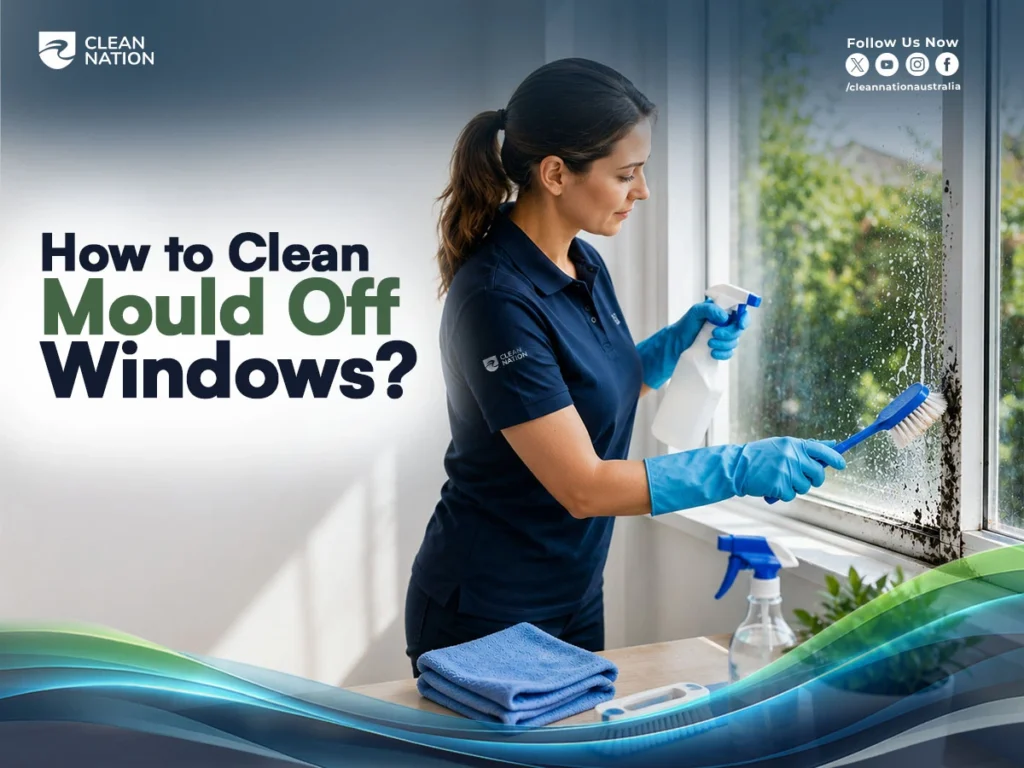
The key to keeping mould away for good is reducing moisture, since that’s the one thing mould always needs to grow. Once you control that, you take away the conditions it depends on.
- Reduce indoor humidity: keep humidity levels below 60% where possible, since anything higher creates the perfect environment for mould to return.
- Use a dehumidifier: especially helpful in rooms that stay damp year-round, like bathrooms or laundries, where moisture control is harder to manage naturally.
- Improve ventilation: open windows regularly and let fresh air move through the room, particularly after cooking, showering, or drying clothes indoors.
- Run exhaust fans: turn these on during and after showers or cooking to pull moisture out before it settles on nearby surfaces.
- Prevent condensation: wipe down window glass each morning if you notice water droplets forming, since this stops moisture from sitting there long enough to cause problems.
- Consider mould-resistant paint: if a particular window or wall keeps getting affected, repainting with a mould-resistant option adds an extra layer of protection.
These mould prevention tips work best when done consistently, not just as a one-off after you’ve already cleaned. Moisture control is an ongoing habit, not a single task.
If you’re doing all of this and mould still keeps showing up, that usually means there’s a moisture source you haven’t identified yet, like a leak or ventilation issue. That’s exactly the kind of thing Clean Nation can help you track down and fix properly.
When Should You Call a Professional Cleaner for Mould on the Window?
If mould keeps coming back no matter what you try, it’s time to call in Clean Nation. That usually means the problem runs deeper than surface cleaning can fix.
Here’s when to call a professional:
- Recurring mould growth: if the same window keeps growing mould every few weeks, there’s likely a hidden moisture issue like a leak or poor ventilation
- Difficult-to-access windows, high-set windows, especially in double-storey homes, aren’t always safe to clean yourself
- Structural moisture damage: warped frames, soft or crumbling wood, or mould spreading into the wall needs proper assessment, not just a wipe-down
As one of the trusted window cleaning services in Australia, Clean Nation goes beyond a surface clean. Our mould remediation professionals identify the actual source of the problem, so it doesn’t just come back in a few weeks.
If any of this sounds familiar, it’s time to hire professional window cleaners who can fix the root cause properly.
Why Choose Clean Nation for Clean Mould Off the Window?
When it comes to getting mould off your windows properly, Clean Nation is the team homeowners across Australia trust to get it right the first time.
Here’s what sets us apart:
- Professional mould treatment: we don’t just clean the surface; we treat the mould at its source so it’s less likely to return
- Safe mould cleaning: our team follows proper safety procedures every time, protecting both your home and your family’s health
- Eco-friendly cleaning: we use products that are tough on mould but gentle on your windows, frames, and the environment
- Commercial-grade products: we use stronger, more effective solutions than what you’d typically find at the supermarket
- Extension tools and rope: access cleaning: perfect for high set or hard:to:reach windows that aren’t safe to clean yourself
- Full mould remediation services: we go beyond a quick clean to help identify and address the moisture problem behind the mould
Whether you need residential window cleaning in Melbourne or window cleaning services in Sydney, Clean Nation brings the same level of care and expertise to every job, no matter where you are.
If you’re tired of mould coming back no matter how many times you clean it yourself, it might be time to let the professionals handle it properly.
Client Experience with Clean Nation
One of our recent jobs involved a family home in the northern suburbs of Melbourne, where the homeowners had been dealing with mould on their bedroom and bathroom windows for over a year. They’d tried cleaning it themselves multiple times using vinegar and store-bought sprays, but the mould kept returning within a few weeks, sometimes even darker than before.
When our team inspected the property, it was clear the issue wasn’t just surface mould. Poor ventilation combined with condensation on older aluminium frames meant moisture was building up behind the scenes, so the DIY cleaning was only ever treating what was visible.
Our team carried out a full professional mould treatment using safe mould cleaning methods and commercial-grade products suited to the frame material. We also flagged the ventilation gaps causing the condensation and gave the homeowners simple, practical steps for long-term mould control.
Three months on, the mould hasn’t returned, and the home finally feels mould-resistant instead of something they’re constantly fighting to keep clean.
“We’d basically given up trying to fix it ourselves. Clean Nation actually explained why it kept coming back, not just cleaned it and left. That made all the difference.” — Homeowner, Melbourne.
This is a common story among the Melbourne homes we work with, and one we hear just as often from clients using our window cleaning services in New South Wales. Most people don’t just want the mould gone once; they want a healthy living environment that stays that way, and that’s exactly what our mould remediation professionals focus on, wherever you’re located across Australia.
FAQs
The following are the FAQs:
How do I clean black mould off my window?
Spray the affected area with undiluted vinegar or a diluted bleach solution, let it sit for 10:15 minutes, then scrub with a soft-bristle brush and wipe dry. Black mould often sits deeper in tracks and sealant, so focus extra attention on those spots and repeat if needed.
Is bleach or vinegar better for mould on windows?
Vinegar is the gentler, more sustainable choice for regular upkeep since it won’t damage sealant or frames over time. Bleach can be useful as a one-off for a bad outbreak, but repeated use tends to wear down window seals faster, so it’s not something you want to rely on long-term.
What kills black mould naturally?
Beyond vinegar and hydrogen peroxide, consistency matters more than the product itself. Even the best natural solution won’t stop mould from returning if the underlying moisture problem, like poor airflow or condensation, isn’t addressed at the same time.
Can I use the same method to clean mould on wooden window frames?
Not exactly. Wood is porous and absorbs moisture more easily than glass or aluminium, so soaking it with vinegar or bleach can cause warping or damage. Use a barely damp cloth with a mild solution instead, and dry the wood thoroughly straight after to avoid making the problem worse.
How long does it take for mould to grow back after cleaning?
If the moisture source isn’t fixed, mould can return within one to two weeks, especially in humid or poorly ventilated rooms. That’s usually a sign the issue is condensation- or ventilation-related rather than a cleaning problem, and it’s worth getting it checked out if it keeps happening.
Conclusion
Mould on your windows isn’t just annoying to look at; it’s usually a sign that moisture is building up somewhere it shouldn’t be. The good news is, once you know what’s causing it, keeping it away for good is completely manageable.
Regular cleaning, better airflow, and a bit of consistency go a long way. But if mould keeps showing up no matter what you try, it’s worth getting it looked at properly rather than cleaning the same window over and over.
Clean Nation is here whenever you need a hand, whether that’s a one-off clean or getting to the bottom of a recurring problem. Contact us today, and let’s sort it out for good.