

How often should public toilets be cleaned in Australia? A small park toilet and a busy shopping centre washroom do not need the same cleaning schedule. The right frequency depends on visitor numbers, opening hours, location and how quickly the toilets become dirty.
Some public toilets are cleaned once daily, while busy facilities may need several cleaning visits throughout the day.
This guide explains Australian public toilet cleaning requirements, shares real council schedules and shows facility managers how to plan cleaning visits around daily use.
How Often Do Public Toilets Need Cleaning?
Public toilets should be cleaned as often as needed to remain clean, safe and ready for use. Daily cleaning is a common starting point for regularly used facilities, but busy public toilets may need several cleans each day.
Some low-use council facilities operate on less frequent schedules, based on their location, condition and service arrangements.
Here is a practical guide to public toilet cleaning frequency.
| Public toilet type | Suggested cleaning approach | Additional attention |
| Low-use park toilets | Follow a site-specific schedule based on use and condition | Check after busy days and reported problems |
| Moderately used public toilets | Consider daily cleaning as a starting point | Check supplies and visible dirt between visits |
| Busy shopping centre toilets | Daily cleaning with extra scheduled cleans as needed | Inspect during peak shopping hours |
| Train station or transport toilets | Multiple cleaning rounds where passenger traffic requires them | Check after busy arrival and departure periods |
| Stadium or event toilets | Clean before and after events, with cleaning during use as needed | Monitor queues, spills and supplies during breaks |
These are planning suggestions, not fixed Australian legal cleaning frequencies. Each operator must consider the site’s needs and any applicable requirements.
What Are the Public Toilet Cleaning Requirements in Australia?
Australia does not have one nationwide rule requiring every public toilet to be cleaned a fixed number of times per day.
Cleaning responsibilities depend on the type of facility, its operator and the laws or service arrangements that apply.
For workplaces, the Safe Work Australia Model Code of Practice provides guidance on maintaining suitable facilities, including toilets and handwashing areas.
The Code explains that workplace facilities should be kept clean and in good working order. Cleaning arrangements should consider how facilities are used and the risks involved.
The Code is model guidance, and its legal effect depends on the state or territory.
Public toilet operators should also check relevant council requirements, building arrangements and any special rules that apply to their premises.
How Often Do Australian Councils Clean Public Toilets?
Australian councils use different cleaning schedules based on location, visitor demand and local service needs.
The following examples come from published government information available in October 2026.
| Council | Published cleaning frequency |
| ACT Government City Services | Public toilets are cleaned at least once daily |
| Glen Eira City Council, Victoria | All public toilet facilities are serviced at least once daily, with more frequent visits at busy locations |
| City of Port Phillip, Victoria | Foreshore toilets are cleaned three times daily from November to March and twice daily from April to October |
The City of Port Phillip also reports twice-daily cleaning for public toilets outside its foreshore areas.
These examples show how public toilet cleaning schedules can change between councils and even between facilities managed by the same council.
A quiet toilet in a residential park does not always require the same service as one near a popular beach.

What Factors Determine Public Toilet Cleaning Frequency?
A cleaning timetable should reflect how people actually use the toilets. Five main factors can help managers decide how often cleaning visits are needed.
Number of Daily Visitors
The more people use a toilet block, the faster it may become dirty.
A facility used by 30 people each day has different needs from one serving hundreds of shoppers or passengers.
Managers should consider both visitor numbers and how often individual toilets are used.
For example, a small washroom with two cubicles may need frequent attention if it serves a busy shopping area.
Opening Hours and Busy Periods
Opening hours affect how long toilets remain in use between cleaning visits.
A facility open from morning until late evening may need several checks throughout the day.
Peak periods also matter.
Public toilets near train stations may become busy before and after work. Shopping centre toilets may see more visitors around lunch and on weekends.
Cleaning visits should be planned around these busy times rather than spaced evenly throughout the day.
Number of Toilets and Handwashing Facilities
A large public washroom may have several cubicles, urinals and washbasins.
If many fixtures are available, visitors can spread across the facility.
A smaller toilet block serving the same number of people may place more pressure on each fixture.
Managers should also check whether damaged or closed cubicles are increasing use of the remaining toilets.
Location, Weather and Seasonal Changes
Public toilets near beaches, parks and tourist areas often have changing visitor numbers.
For example, a beach toilet may be quiet during winter but much busier during summer holidays.
Rain can bring mud and water into facilities near outdoor recreation areas.
During school holidays, sports events or long weekends, operators may need additional cleaning visits.
Hygiene Risks and Facility Condition
Some public toilets require more attention because of their condition or the activities taking place nearby.
Repeated spills, overflowing bins and heavy soiling may show that the cleaning schedule is not meeting demand.
Leaks, broken taps and blocked drains also affect usability.
However, cleaning more often will not repair damaged plumbing or fix a broken fixture.
Managers should arrange maintenance when problems cannot be solved through routine cleaning.
How Often Should Toilets Be Cleaned in Different Public Places?
Different public venues have their own busy periods. A suitable cleaning plan should match when visitors are most likely to use the facilities.
Shopping Centres and Retail Buildings
Shopping centre toilets are used throughout trading hours.
A cleaning plan may include a full clean before opening, further cleaning when required and regular checks during busy periods.
Weekends, public holidays and large shopping events can increase demand.
Managers should pay attention to how quickly toilet paper, soap and hand-drying supplies run out.
Public Parks and Playgrounds
Park toilets often experience changing visitor numbers.
A toilet near a small walking track may receive fewer visitors than one beside a large playground or picnic area.
Weekends and school holidays can bring more users.
Councils can review these patterns and increase cleaning frequency during busy periods.
Railway Stations and Transport Hubs
Transport facilities may experience short periods of heavy use.
A train station toilet can become busy when several services arrive close together.
Cleaning rounds should account for these passenger peaks.
Staff may also need to respond quickly to wet floors, rubbish and other problems that affect public access.
Sports Grounds and Event Venues
Sports grounds and stadiums can experience large crowds within a short time.
Toilets may become especially busy before a match, during breaks and when the event ends.
Operators should plan cleaning before visitors arrive and provide suitable cleaning support during the event.
A final cleaning visit may also be needed after the venue closes.
Restaurants and Cafes
Customer toilets in restaurants and cafes often become busy during lunch and dinner.
Staff should inspect these facilities during service and arrange cleaning when conditions require it.
A restaurant’s wider cleaning plan should also cover dining areas, food preparation spaces and shared surfaces.
For these tasks, businesses can follow Clean Nation’s Restaurant Cleaning Checklist to organise front-of-house and back-of-house cleaning.
What Is the Difference Between Cleaning and Toilet Inspections?
A public toilet inspection is not always the same as a full cleaning visit.
Scheduled cleaning involves completing the agreed cleaning work across the facility.
A hygiene inspection checks the condition of toilets, supplies, floors and other areas to see whether additional work is needed.
Spot cleaning deals with smaller problems, such as fresh spills, visible dirt or marks between scheduled cleans.
Emergency cleaning responds to serious contamination or unsafe conditions and may require specialist support.
For example, a shopping centre toilet might receive a full clean before opening and another scheduled clean later in the day.
Between these visits, staff can inspect the facilities and clean individual areas when needed.
This helps managers respond to changing conditions without treating every inspection as a complete cleaning service.
Example Public Toilet Cleaning Schedule for a Busy Venue
A written schedule makes it easier to plan cleaning around visitors.
Consider a shopping centre that opens at 8 am and closes at 8 pm.
The following timetable is an example for planning purposes, not an official cleaning standard.
| Time | Cleaning activity | Purpose |
| 7:30 am | Full cleaning | Prepare toilets before opening |
| 10:00 am | Hygiene inspection | Check supplies and general condition |
| 12:30 pm | Scheduled cleaning round | Address lunchtime use |
| 3:00 pm | Hygiene inspection | Check floors, bins and visible dirt |
| 5:30 pm | Cleaning or spot cleaning as needed | Respond to afternoon demand |
| 8:15 pm | Closing clean | Prepare the facilities for the next day |
The number of visits should change if the toilets become dirty sooner than expected.
Smaller facilities may need fewer scheduled rounds. Very busy locations may require additional staff or more frequent inspections.
Operators should also arrange cleaning access so visitors and cleaners can use the area safely.
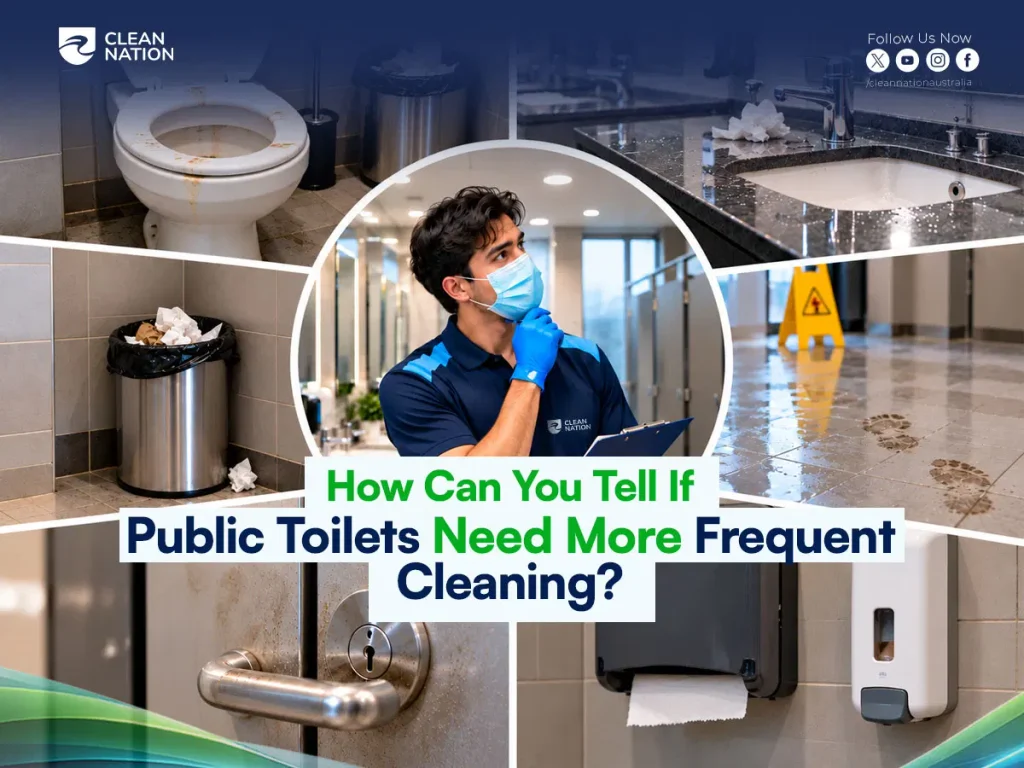
How Can You Tell If Public Toilets Need More Frequent Cleaning?
The best cleaning schedule is one that works during normal daily use.
Managers can review their current routine using three practical steps.
Step 1: Check Conditions Before the Next Cleaning Visit
Inspect the toilets shortly before the next scheduled clean.
If the facilities are regularly dirty before cleaners arrive, the gap between visits may be too long.
Look for repeated problems such as:
- Empty soap or toilet paper dispensers.
- Wet floors that create slip hazards.
- Overflowing rubbish bins.
- Visible dirt around toilets and basins.
- Complaints about poor cleanliness.
One unusual incident may not mean the entire schedule needs changing.
Repeated problems are a stronger reason to review cleaning frequency.
Step 2: Compare Problems With Visitor Activity
Look at when cleaning issues occur.
For example, a shopping centre toilet might receive complaints every Saturday afternoon but remain clean during weekday mornings.
This suggests the operator may need more cleaning support on Saturdays rather than adding unnecessary visits every day.
Visitor counts, supply use and staff observations can help identify busy periods.
Step 3: Adjust the Schedule and Check the Results
Once managers identify a problem, they can test an updated cleaning routine.
For example, adding a midday cleaning visit may help a facility that becomes dirty during lunch.
Keep records of completed visits, reported problems and visitor complaints.
After a suitable review period, compare the results.
If cleanliness improves and problems become less frequent, the new schedule may be a better fit.
When Should Public Toilets Be Cleaned Immediately?
Some cleaning problems should not wait until the next scheduled visit.
A toilet may need prompt attention when visitors report heavy soiling, a large spill or overflowing waste.
More serious problems require extra care.
Sewage spills, discarded needles and unknown hazardous materials may need trained staff or specialist cleaning services.
The affected area should be kept out of use until the risk has been properly assessed and managed.
Cleaning staff should report damaged fixtures, blocked toilets and other maintenance issues to the facility operator.
A clear reporting process helps managers respond quickly and decide when the area can safely reopen.
Plan Your Public Toilet Cleaning Schedule With Clean Nation
The right public toilet cleaning frequency depends on the facility, its users and the work needed to keep it clean.
A useful schedule combines planned cleaning, inspections and extra attention during busy periods.
Clean Nation provides washroom cleaning services in Australia for suitable commercial properties and shared facilities.
Businesses can discuss their property type, number of toilets, opening hours and cleaning requirements before arranging a service.
Call +61480810142 or complete the online enquiry form to request a quote.
Frequently Asked Questions
1. Do automatic self-cleaning public toilets still need manual cleaning?
Yes. Automatic systems may clean certain surfaces, but they do not replace every manual task. Staff may still need to remove rubbish, refill supplies, check fixtures and deal with dirt the automatic system cannot reach.
2. Can an accessible public toilet be closed for cleaning?
Temporary closure may be necessary for cleaning or safety. Operators should minimise disruption, consider the needs of people with disabilities and provide information about suitable alternatives where available, while meeting applicable accessibility requirements.
3. How often should portable toilets at public events be serviced?
It depends on attendance, event length, toilet capacity and waste tank size. Portable toilets may need cleaning, restocking and waste removal during an event. Organisers should agree on servicing requirements with their supplier beforehand.
4. Should a public toilet remain open if there is no running water?
Not if the loss of water makes flushing or handwashing unsafe or unsuitable. Operators should assess the problem, arrange repairs and provide access to appropriate alternatives before allowing normal use to resume.
5. Does a public toilet cleaning contract include toilet paper and soap?
Not always. Some contracts include restocking and supplies, while others charge separately. Facility managers should confirm who purchases toilet paper, soap, bin liners and hand-drying products before agreeing to a cleaning service.