


A restaurant can serve great food and offer friendly service, but a dirty table or unpleasant bathroom can still leave customers disappointed.
Restaurant cleanliness affects customer experience, trust and the way people remember a visit. Guests notice more than their meals. They also pay attention to the dining area, seating, floors and overall condition of the venue.
For Australian restaurant and cafe owners, keeping these spaces clean helps create a pleasant experience and may reduce complaints that affect online reviews.
But what do customers notice most, and how does cleanliness influence their decision to return?
Why Restaurant Cleanliness Matters to Australian Customers
Customers want to enjoy their meals in a place that feels safe and comfortable. A clean environment helps them feel more confident about the care a business takes.
A June 2024 YouGov survey of 1,001 Australian adults found that:
- 76% said visible cleanliness would reassure them about a food outlet’s hygiene.
- 55% had stopped ordering from at least one food or beverage outlet after learning about poor hygiene practices.
- 22% said reviews mentioning cleanliness would help them feel confident about a venue’s hygiene.
These findings covered different food and beverage businesses, including restaurants and cafes.
The results show why restaurant hygiene deserves attention beyond food preparation. What customers can see around them also matters.
Clean surroundings do not guarantee customer satisfaction. However, visible dirt, unpleasant smells, and poorly maintained facilities can make guests question how much care the business receives.
First Impressions Start at the Restaurant Entrance
Customers begin forming opinions before they taste anything.
Imagine walking into a restaurant with fingerprints on the glass doors, rubbish near the entrance, and marks on the floor.
Even if the menu looks good, these details may create doubt about the venue.
Now imagine entering a restaurant with clear windows, clean entrance mats and a well-kept waiting area.
That setting creates a more welcoming first impression.
The entrance is especially important for restaurants near busy roads, shopping centres and high-foot-traffic areas. Dust, wet shoes and outdoor dirt can quickly affect how the space looks.
For cafes, the service counter may also be one of the first things customers notice. Coffee spills, sticky surfaces or overflowing bins can change how people feel while waiting to order.
The first impression sets expectations for the rest of the dining experience.

How Clean Dining Areas Affect Customer Comfort
Once guests are seated, they start noticing the space around them.
A clean dining area helps customers relax, enjoy their food and spend time with family or friends without worrying about the condition of the venue.
Several parts of the dining space can shape that experience.
Clean Tables and Seating Make Guests Feel Welcome
Nobody wants to sit at a table covered in crumbs or place their hands on a sticky surface.
Tables, chairs and booth seats are among the most noticeable parts of a restaurant.
Food marks on chair backs, stained fabric seating and dirty table edges can make an otherwise attractive dining room feel poorly cared for.
Clean furniture also matters in family restaurants, where children may touch chairs, table edges and nearby surfaces.
For upholstered seating, the right cleaning method depends on the fabric and type of stain. Damaged or heavily worn furniture may need repair or replacement rather than another clean.
Well-Maintained Floors Improve the Dining Space
Restaurant floors receive constant foot traffic.
Shoes bring in dust and dirt, while dropped food and drinks can leave visible marks.
These problems affect more than appearance. Wet or slippery walkways can also create a risk for customers and staff.
Floor care should suit the surface. Timber, tiles, vinyl and carpet may all need different methods.
When floors are clean and properly maintained, the whole dining room can look more welcoming.
Clean Shared Areas Make Visits More Pleasant
Customers may use payment counters, waiting benches, condiment stations and shared doors during their visit.
When these areas look neglected, guests may notice even if their own table is spotless.
Keeping shared spaces in good condition helps create a more consistent customer experience.
Why Restaurant Bathroom Cleanliness Affects Customer Trust
Bathrooms are a part of the restaurant experience that customers often remember.
A guest may enjoy the food and service, then find dirty bathroom floors, an unpleasant smell or an empty soap dispenser.
That experience can change their view of the business.
Customers cannot see every cleaning task completed behind the scenes. They often use visible areas, such as bathrooms, to judge how carefully a restaurant is managed.
A well-maintained customer bathroom should have clean fixtures, working taps, suitable handwashing supplies and bins that are not overflowing.
It should also be free from problems such as blocked drains, leaking pipes and damaged fittings.
These issues need proper maintenance, not just surface cleaning.
A clean bathroom cannot prove that every part of a restaurant is hygienic, but a poorly maintained one can quickly weaken customer confidence.
How Restaurant Cleanliness Influences Online Reviews
Online reviews help people choose where to eat, especially when visiting a restaurant for the first time.
Google reviews and other customer feedback may mention food quality, service, atmosphere and cleanliness.
These comments can shape how potential customers view a venue before booking a table.
Poor Cleanliness Can Lead to Negative Feedback
Imagine a couple visiting a restaurant for dinner.
The food arrives on time, and the staff are helpful. However, they notice stained seating and an unpleasant smell near their table.
They may still enjoy the meal, but those problems could appear in their online review.
Other customers reading that feedback might become concerned about the venue.
One negative review does not mean a restaurant has poor hygiene. But repeated complaints about the same problem deserve attention.
Positive Reviews Can Build Customer Confidence
Customers may also mention cleanliness when they have a pleasant experience.
For example, a guest might praise the fresh-looking dining room, comfortable seating or well-kept customer bathrooms.
Such comments can help new diners understand what the venue is like.
Positive reviews are valuable, but restaurant cleaning alone cannot guarantee high star ratings. Customers also judge food, value, service and atmosphere.
How Should Restaurant Owners Handle Cleanliness Complaints?
Ignoring a complaint can leave customers feeling unheard.
When a review mentions a cleaning issue, the restaurant manager should investigate what happened before replying.
A useful response should:
- Acknowledge the customer’s concern.
- Avoid arguing or blaming the guest.
- Explain any steps taken to address the problem.
- Invite private contact if more details are needed.
Keep responses polite and avoid offering rewards for changing or removing reviews.
Handling feedback professionally shows that the business takes customer concerns seriously.
Can Restaurant Cleanliness Encourage Repeat Visits?
Getting someone to visit a restaurant once is only part of running a successful hospitality business.
Many cafes and restaurants also depend on regular customers who return for breakfast, lunch, dinner or weekend meals.
These guests know what to expect from the venue.
A customer who regularly finds clean seating, comfortable surroundings and well-maintained facilities has fewer reasons to feel disappointed.
Poor cleanliness can have the opposite effect.
For example, a guest might overlook one dirty table during a busy lunch. But finding the same problem on several visits may make them consider another restaurant.
This is why consistent standards matter more than making a venue look good only on special occasions.
Food quality, pricing and friendly service still play major roles in customer loyalty. Cleanliness supports those strengths by helping provide a dependable dining experience.
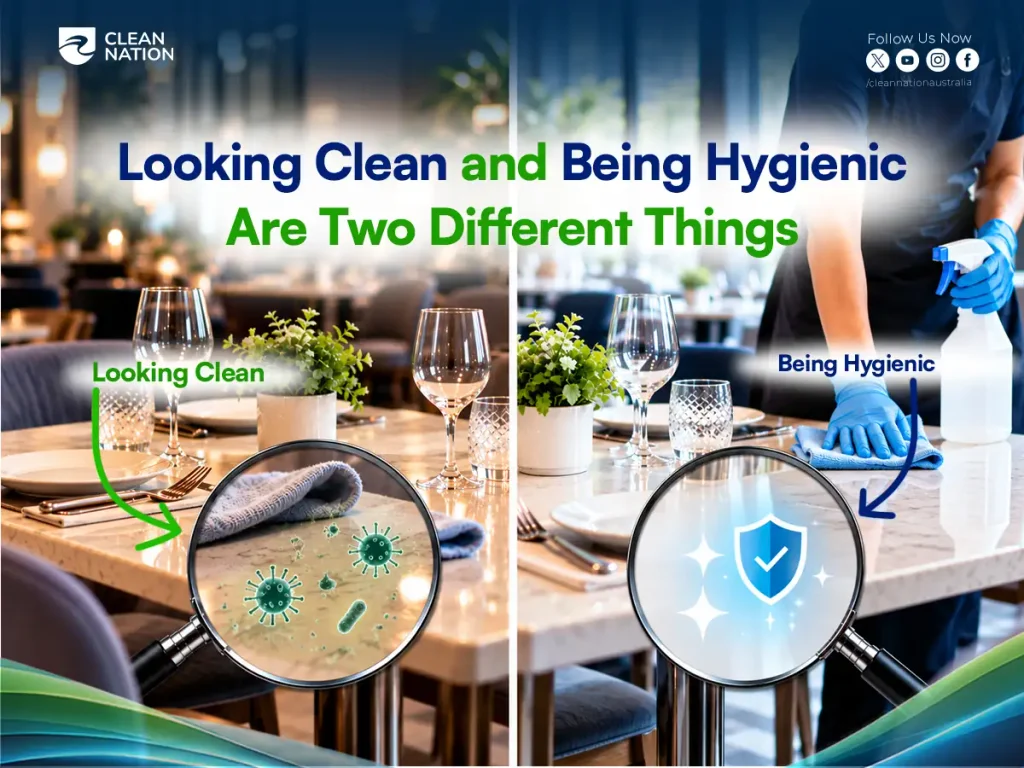
Looking Clean and Being Hygienic Are Two Different Things
A restaurant can look attractive without every surface being properly cleaned.
Fresh paint, bright lighting and pleasant decorations can improve appearance, but they do not remove dirt or harmful microorganisms.
Actual restaurant hygiene requires suitable cleaning methods, safe product use and attention to the risks in each area.
For example, a table may look clean after a quick wipe but still need proper cleaning and sanitising, depending on how it has been used.
Cleaning removes visible dirt and other unwanted material. Sanitising, where required, reduces microorganisms to a safer level.
Australian food businesses must follow the food safety rules that apply to their operations.
For more detail on the requirements, Clean Nation has a separate guide to Food Safety Cleaning Standards for Cafes in Australia.
Restaurant owners should aim for both a pleasant-looking venue and proper hygiene practices.
How to Maintain Cleaning Standards During Busy Restaurant Hours
A restaurant may look excellent before opening but become dirty during a busy lunch or dinner service.
Spilled drinks, dropped food and constant customer movement are normal parts of hospitality.
The challenge is dealing with them without disturbing guests.
Give Staff Clear Responsibilities
Problems are more likely to be missed when everyone assumes someone else will handle them.
A restaurant manager can assign responsibility for customer areas, such as the dining room, bathrooms and entrance.
Staff should know who to contact when they find a spill, damaged fixture or area that needs extra attention.
Clear responsibilities help the team respond before small problems affect the customer experience.
Schedule Detailed Work Outside Peak Hours
Some cleaning work can be completed while the restaurant is open.
Other jobs, such as detailed floor care or upholstery cleaning, may involve equipment, noise or drying time.
These tasks are often better suited to quiet periods or times when customers are not present.
The right arrangement depends on the venue’s layout, opening hours and customer traffic.
For practical cleaning tasks and suggested timing, see Clean Nation’s Restaurant Cleaning Checklist.
Pay Attention to Customer Feedback
Customers sometimes notice problems that staff have become used to seeing.
A guest may mention an unpleasant smell near a seating area or a recurring mark on the floor.
Rather than treating each complaint as a separate issue, managers should look for the cause.
For example, a smell may come from damp furniture or a drainage problem. Cleaning the surface again may not solve it.
Listening to feedback helps restaurants identify issues that need cleaning, repairs or other action.

How Professional Cleaning Supports the Restaurant Experience
Restaurant staff spend much of their day taking orders, serving food and assisting customers.
Although staff can handle many routine tasks, detailed cleaning may require extra time, suitable equipment or trained cleaners.
Professional restaurant and cafe cleaning can support the team by maintaining agreed areas outside busy service periods.
For example, a cleaning arrangement may include dining floors, customer bathrooms, entrance areas and other shared spaces.
Clean Nation provides Restaurants & Cafes Cleaning Services for Australian hospitality businesses.
The cleaning requirements should reflect the venue’s size, trading hours, floor surfaces and daily customer numbers.
Before hiring a provider, owners should understand what work is included and how cleaning concerns will be managed.
Clean Nation’s guide to Questions to Ask Before Hiring Restaurant Cleaners explains what to check when choosing a cleaning company.
With suitable cleaning support, restaurant managers can give more attention to customer service while keeping important cleaning work organised.
Clean Restaurants Help Create Better Dining Experiences
Customers remember more than the meals they order.
They notice how a restaurant looks when they arrive, how comfortable they feel while eating and whether the facilities are well cared for.
Restaurant cleanliness helps support customer satisfaction, a positive business reputation and a more pleasant dining experience.
For Australian restaurant and cafe owners, the aim should be simple: make cleanliness a consistent part of the service customers receive, not something addressed only after a complaint.
Frequently Asked Questions
1. How should restaurants care for outdoor seating after rain?
Outdoor tables and chairs should be checked before customers use them. Remove leaves, mud and standing water, then clean and dry the surfaces as needed. Check nearby walkways for slippery areas or damage.
2. What should a restaurant do if a stain keeps returning on its seating?
The owner should identify the stain’s cause and check the upholstery material. Repeated scrubbing may damage the fabric. Professional treatment may help, but seating with lasting damage or trapped moisture may need replacement.
3. Can restaurant staff use cleaning sprays near customers who are eating?
Staff should avoid spraying cleaning chemicals near exposed food, drinks or seated guests. Move or protect items as needed and follow product instructions. Choose a suitable cleaning time and method that limits customer exposure.
4. Who is responsible for cleaning shared seating in a food court?
Responsibility depends on the agreement between the food business and the centre or property manager. Shared seating may be managed centrally, while individual operators handle their own premises. Each party should confirm its duties.
5. Can air fresheners replace cleaning when a restaurant smells unpleasant?
No. Air fresheners may cover a smell for a short time, but they do not remove its cause. Check for waste, damp materials, drainage faults or poor ventilation and address the underlying problem.