

Food safety cleaning standards for cafes in Australia require food businesses to keep their premises, equipment and utensils clean, with food-contact surfaces properly cleaned and sanitised to prevent contamination. The Australia New Zealand Food Standards Code covers these requirements, particularly Standards 3.2.2, 3.2.2A and 3.2.3.
Whether you run a small coffee shop or a busy Sydney cafe, regular cleaning is essential to protect customers and meet food safety obligations.
However, wiping down tables and mopping floors is not enough. Cafe operators also need to understand sanitising methods, equipment hygiene, cross-contamination risks and the evidence required for certain food safety activities.
This guide explains the Australian cafe cleaning standards, what areas need attention, how often cleaning should occur and how to prepare for food safety inspections.
What Food Safety Cleaning Standards Apply to Cafes in Australia?
Australian cafes must follow the applicable requirements of the Australia New Zealand Food Standards Code, developed by Food Standards Australia New Zealand (FSANZ).
Three standards are particularly important for cleaning and hygiene in cafes.
| Food safety standard | Main requirements | What it means for cafés |
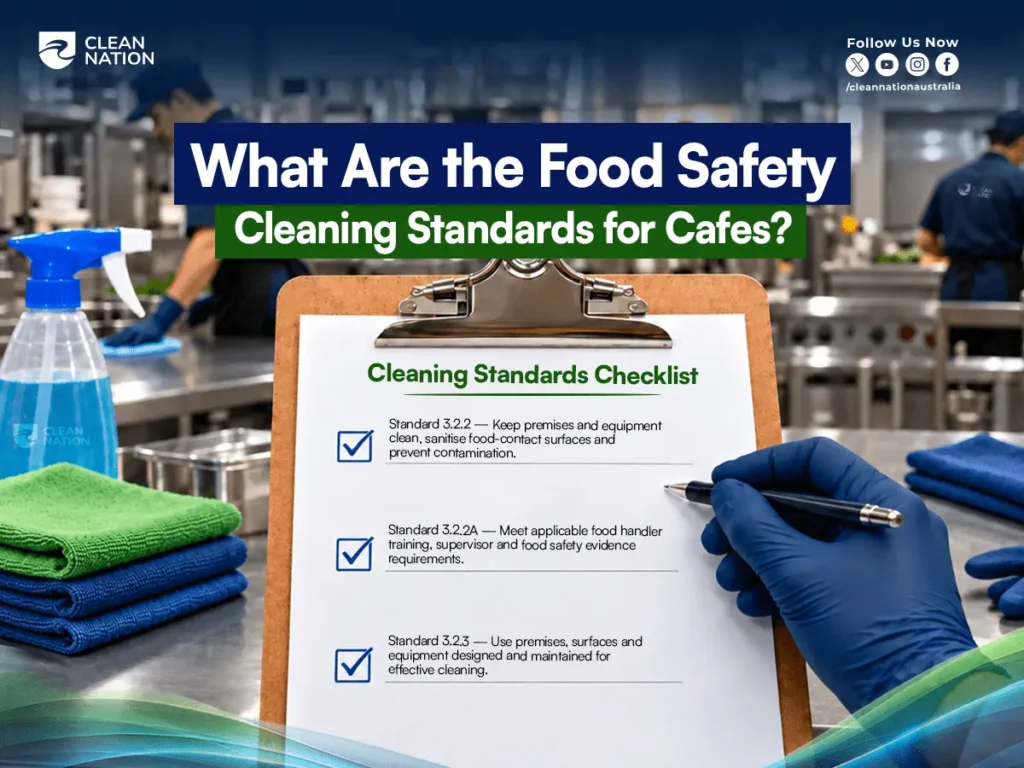
| Standard 3.2.2 | Food safety practices and general requirements | Keep premises and equipment clean, sanitise food-contact surfaces and prevent contamination. |
| Standard 3.2.2A | Food safety management tools | Meet applicable food handler training, supervisor and food safety evidence requirements. |
| Standard 3.2.3 | Food premises and equipment | Use premises, surfaces and equipment designed and maintained for effective cleaning. |
Standard 3.2.2 – Cleaning, Sanitising and Hygiene
Standard 3.2.2 sets the main cleaning requirements for Australian food businesses.
Under this standard, cafe owners must prevent the accumulation of food waste, dirt and grease on premises, fixtures, fittings and equipment. Eating and drinking utensils must also be clean and sanitary immediately before use.
Food-contact surfaces require cleaning and sanitising whenever contamination could make food unsafe.
For example, a chopping board used to prepare raw chicken cannot be used for ready-to-eat sandwiches without effective cleaning and sanitising between tasks.
These requirements also extend to maintaining equipment, preventing pest contamination and ensuring food handlers have appropriate hygiene knowledge.
Standard 3.2.2A – Food Safety Management Tools
Standard 3.2.2A introduces additional food safety requirements for certain food service and retail businesses.
Depending on their activities, cafés may be classified as Category 1 or Category 2 businesses.
Category 1 businesses generally handle unpackaged, potentially hazardous food by processing it into ready-to-eat, potentially hazardous food for customers. These businesses must meet applicable supervisor, training and evidence requirements.
Category 2 businesses have different obligations and do not have the same evidence requirement under this standard.
A café’s classification depends on what food it handles and how it prepares that food, rather than its size or business name.
The official FSANZ guide to food safety management tools explains these requirements in more detail.
Standard 3.2.3 – Food Premises and Equipment
Standard 3.2.3 focuses on the design and condition of food premises.
Café kitchens, food preparation benches, storage areas and equipment must be constructed and installed so they can be cleaned effectively.
This includes suitable surfaces, accessible cleaning areas, adequate handwashing facilities and appropriate waste management arrangements.
Damaged benches, cracked tiles, difficult-to-clean equipment and deteriorating seals can create places where dirt and food residue collect.
Keeping the premises in good repair makes routine cleaning more effective and helps reduce contamination risks.
What Is the Difference Between Cleaning and Sanitising in Cafes?
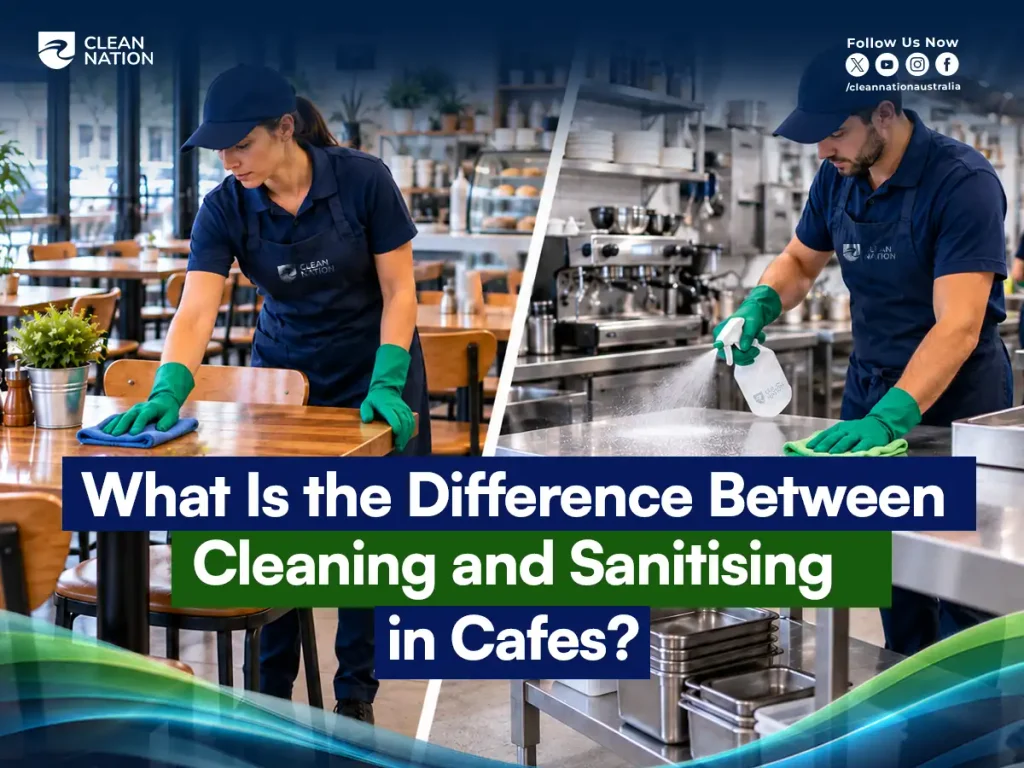
Cleaning and sanitising are two different processes, and both are important for café food safety.
Cleaning removes visible dirt, food particles, grease and other residue from equipment and surfaces.
Sanitising reduces harmful microorganisms on already-clean surfaces to a level that does not compromise food safety.
A bench may look clean but still contain microorganisms. Likewise, applying sanitiser to a greasy surface may not work effectively.
For this reason, food-contact surfaces must be cleaned before sanitising.
How to Clean and Sanitise Food-Contact Surfaces
A practical café cleaning and sanitising process includes six steps:
- Remove food waste: Scrape away crumbs, spills and visible food residue.
- Wash: Use suitable detergent and water to loosen dirt and grease.
- Rinse: Remove detergent and remaining residue with clean water.
- Sanitise: Apply an appropriate sanitising method, following the product or equipment instructions.
- Rinse if required: Some chemical sanitisers require a final rinse.
- Dry safely: Allow surfaces to air dry or use clean, suitable single-use towels.
Commercial dishwashers may also provide effective cleaning and sanitising when operated using an appropriate cycle and maintained correctly.
Which Areas and Equipment Must Cafes Clean?
Effective cafe hygiene goes beyond kitchen benches. Coffee equipment, food displays, customer areas, waste storage and frequently touched surfaces all need suitable cleaning procedures.
The level of cleaning depends on how each area is used and whether it comes into contact with food.
Food Preparation Benches and Kitchen Equipment
Food preparation areas need particular attention because contamination can pass directly from surfaces to food.
Benches, chopping boards, knives, slicers, mixers and utensils should be cleaned and sanitised when necessary, especially between raw and ready-to-eat food preparation.
Staff should also check joints, handles, seals and other areas where food residue can collect.
Kitchen equipment must be cleaned according to its design and manufacturer instructions. Some appliances may require safe disassembly to reach hidden surfaces.
Coffee Machines, Steam Wands and Milk Jugs
Coffee equipment creates cleaning challenges that general kitchen checklists often overlook.
Milk residue can collect on steam wands, inside jugs and around removable coffee-machine components. Coffee oils and grounds can also build up in group heads, grinders and drip trays.
Practical cleaning tasks include:
- Purging and wiping steam wands after milk preparation, following the machine instructions.
- Cleaning and sanitising milk jugs and other food-contact accessories appropriately.
- Emptying and washing drip trays.
- Cleaning removable coffee-machine components using manufacturer-approved methods.
- Removing coffee grounds and oils from grinders and brewing equipment as required.
A dedicated espresso-machine cleaning schedule helps staff maintain equipment hygiene throughout busy service periods.
Refrigerators, Display Cabinets and Storage Areas
Café refrigerators, cake displays, sandwich cabinets and storage shelves need regular attention.
Food spills, condensation, damaged seals and dirty handles can create hygiene problems.
Clean shelving, trays, door seals and internal surfaces with products suited to the equipment and food environment.
When removing food for cleaning, maintain the required food temperature controls. Do not leave potentially hazardous food at unsafe temperatures while staff wash shelves or display units.
Dining Areas, Counters and Customer Facilities
Front-of-house cleaning is important for both hygiene and customer experience.
Tables, chairs, service counters, payment terminals, menus, door handles and customer toilets should be included in the cleaning schedule.
Use separate cleaning equipment for toilets and food preparation areas to prevent contamination.
For a broader approach to maintaining hospitality premises, Clean Nation provides restaurant and cafe cleaning services covering kitchens, dining areas and other relevant spaces.
Floors, Drains, Waste Bins and Pest-Prone Areas
Food scraps, moisture and grease can accumulate around floors, drains, bins and hard-to-reach corners.
These areas should be cleaned before waste or residue builds up.
Pay attention to spaces beneath equipment, floor edges, waste storage areas and places where food packaging is kept.
Waste containers should be managed to prevent overflowing, leakage and pest attraction.
Cleaning also supports pest prevention, although cafés must maintain appropriate pest management measures beyond routine cleaning.
How Often Should a Cafe Be Cleaned?
Australian food safety standards require cafes to maintain clean and sanitary conditions. They do not set one universal daily, weekly or monthly cleaning schedule for every item.
Cleaning frequency depends on the type of food handled, equipment use, contamination risks and the condition of the premises.
The following is a practical starting schedule, not a fixed legal timetable.
Recommended Cafe Cleaning Schedule
| Frequency | Cleaning tasks |
| During service | Clean spills, wipe and sanitise food-contact surfaces when needed, manage waste and clean steam wands after use. |
| After use or between tasks | Clean and sanitise utensils, preparation tools and equipment where contamination could occur. |
| Daily | Clean food preparation areas, coffee equipment, counters, floors, sinks, bins and commonly touched surfaces. |
| Weekly | Inspect and clean suitable refrigerator shelves, storage racks, splashbacks, accessible equipment surrounds and grease-prone areas. |
| Periodically | Deep-clean hard-to-access areas, review exhaust cleaning needs, inspect drains and arrange specialised maintenance where required. |
Cleaning During Food Preparation
Food-contact surfaces may need immediate cleaning and sanitising when staff switch between different food preparation activities.
For example, a knife used for raw meat should not be used for ready-to-eat food without effective cleaning and sanitising.
Cleaning spills promptly also helps prevent contamination and reduces slip hazards.
Daily Cleaning Tasks
End-of-day cleaning should focus on areas that collect food residue, grease and general dirt during trading.
Staff can follow a closing checklist to inspect preparation surfaces, cooking equipment, coffee stations, dining areas and waste storage.
The aim is to leave the premises in a suitable condition for the next trading period, not simply make visible surfaces look tidy.
Weekly and Periodic Deep Cleaning
Some areas require more detailed cleaning because they are difficult to access during normal service.
Examples include movable equipment surrounds, high shelving, refrigeration components and grease-prone kitchen surfaces.
The required frequency will vary. A cafe cooking large quantities of greasy food may need certain areas cleaned more frequently than a coffee-focused venue serving limited prepared food.
What Cleaning Products Are Safe to Use in Cafes?
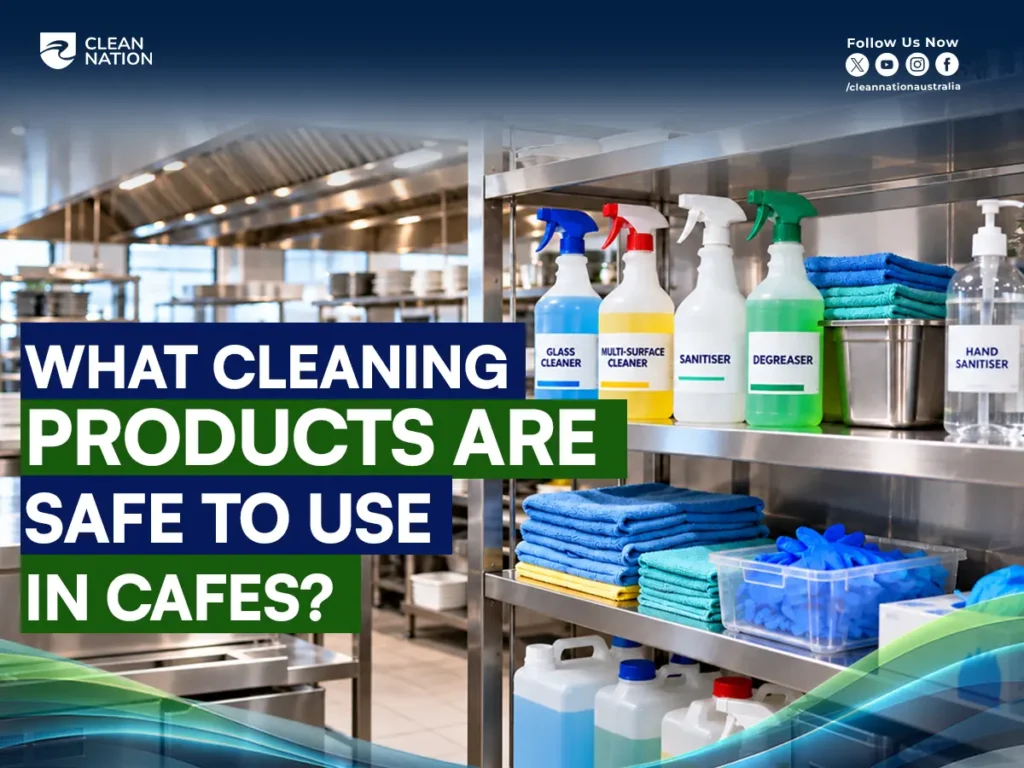
Cafes must choose cleaning products that are suitable for their intended use and do not create a food contamination risk.
Not every general-purpose disinfectant is suitable for food preparation surfaces.
The NSW Food Authority advises businesses to check whether chemicals are appropriate for use in food environments and to retain suitable evidence, such as product labels or manufacturer information.
Choosing Suitable Food-Contact Sanitisers
Food-contact surfaces should be sanitised using a suitable method that achieves the required sanitary condition.
Depending on the equipment and circumstances, this may involve heat, a suitable chemical sanitiser or an appropriate commercial dishwasher cycle.
Chemical products should clearly identify their intended use.
Do not assume that a product intended for floors, bathrooms or general disinfection is safe for kitchen benches or utensils.
Dilution, Contact Time and Rinsing
Chemical sanitisers must be used correctly to work effectively.
Before using a product, check:
- Whether it is suitable for food-contact surfaces.
- Whether it requires dilution.
- The required contact time.
- Whether rinsing is necessary.
- Any temperature, storage or shelf-life instructions.
Using too much or too little chemical may reduce effectiveness or introduce other risks.
Never mix cleaning chemicals, and keep them in clearly labelled containers.
The NSW Food Authority’s chemical sanitiser guidance provides further information.
Safe Storage of Cleaning Chemicals
Store cleaning chemicals away from food, ingredients, packaging and clean utensils.
Keep original labels where possible and ensure staff can identify products correctly.
Cleaning cloths, brushes, buckets and other equipment should also be maintained appropriately and stored to prevent cross-contamination.
How Can Cafes Prevent Cross-Contamination During Cleaning?
Cross-contamination occurs when harmful microorganisms, allergens or other contaminants move from one surface, food or item of equipment to another.
In busy cafés, this can happen through shared utensils, dirty cloths, unwashed hands or poorly cleaned food preparation surfaces.
Useful prevention measures include:
- Keeping equipment used for raw foods separate from ready-to-eat food preparation where possible.
- Cleaning and sanitising shared equipment between incompatible tasks.
- Using separate cleaning tools for toilets and food preparation areas.
- Replacing dirty or damaged cleaning cloths.
- Washing hands at appropriate times.
- Following allergen-cleaning procedures when changing between food preparation tasks.
- Storing sanitised equipment where it cannot become contaminated again.
Colour-coded chopping boards and cleaning equipment can help staff identify different tasks. However, colour coding alone does not replace effective cleaning, sanitising and staff training.
What Cleaning Records Do Cafes Need for Food Safety Compliance?
Cleaning records help café managers check that important tasks have been completed and identify areas needing corrective action.
Under Standard 3.2.2A, Category 1 businesses must substantiate compliance with certain prescribed food safety controls, including relevant cleaning and sanitising activities.
They may do this through records or another method that satisfies an authorised officer.
Where records are required under this provision, they must be kept for at least three months.
What to Include in a Cafe Cleaning Log
A practical cleaning record may include:
| Date and time | Area or equipment | Cleaning task | Completed by | Verification or corrective action |
| 15 Oct, 9:00 am | Preparation bench | Cleaned and sanitised | Staff initials | Checked |
| 15 Oct, 2:00 pm | Food slicer | Cleaned and sanitised | Staff initials | Checked |
| 15 Oct, 5:30 pm | Display cabinet | Cleaning inspection | Staff initials | Additional cleaning required |
This is an illustrative operational checklist, not a prescribed government form.
The record should make it possible to identify incomplete tasks and show how problems were corrected.
What Happens When a Cleaning Check Fails?
If staff discover that equipment has not been cleaned properly, it should not be used for food handling until the problem is corrected.
The responsible person should arrange appropriate cleaning, sanitising and verification.
Where relevant, the business should record the problem, the action taken and whether any food may have been affected.
The FSANZ evidence tool provides further information and practical guidance.
What Food Safety Cleaning Rules Apply to Sydney Cafes?
Sydney cafes must follow the applicable Australian Food Standards Code requirements, as implemented and enforced in New South Wales.
The NSW Food Authority works with local councils to oversee food safety compliance in cafes, restaurants and other retail food businesses.
Cafe operators need to notify their local council of their food business activities and meet relevant food safety obligations.
Council inspections can assess premises cleanliness, food handling procedures, staff knowledge, equipment condition and other compliance requirements.
Businesses preparing potentially hazardous ready-to-eat foods may also have additional responsibilities under Standard 3.2.2A.
The NSW Scores on Doors program provides eligible food businesses with hygiene and food safety ratings based on inspections.
Sydney cafe managers can use the NSW Food Authority’s café and restaurant guidance when reviewing their procedures.
Routine food hygiene tasks remain the business operator’s responsibility, but planned professional cleaning can support premises maintenance. For businesses seeking broader support, Clean Nation also provides commercial cleaning services in Sydney.
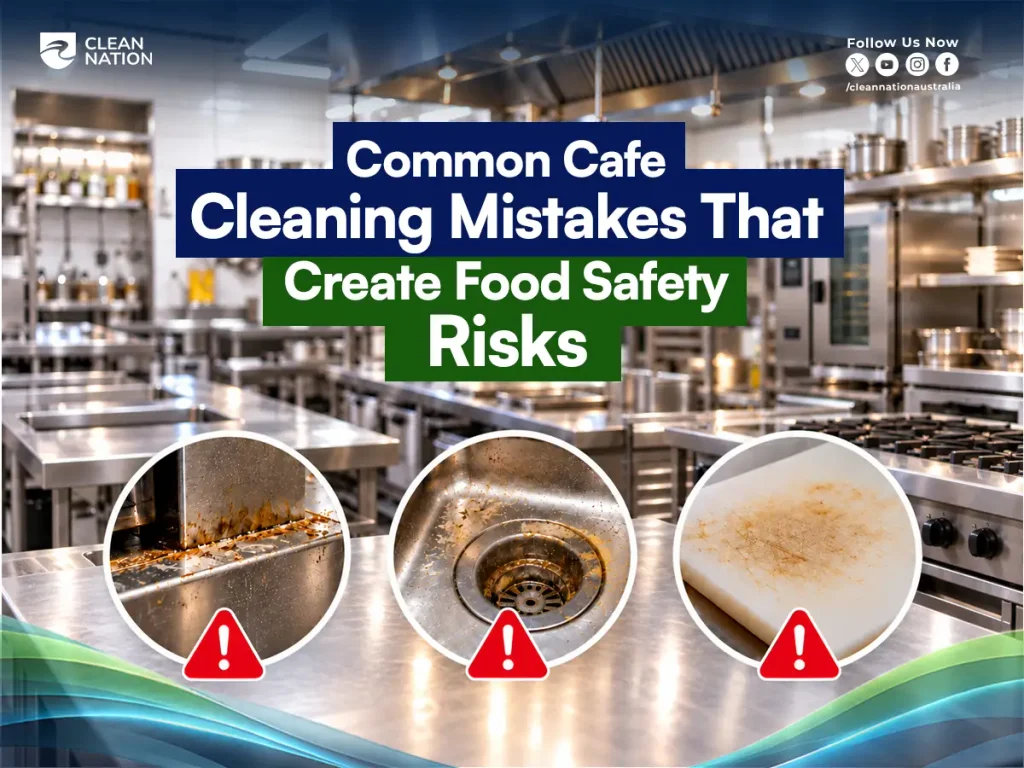
Common Cafe Cleaning Mistakes That Create Food Safety Risks
Even cafés with regular cleaning routines can overlook important hygiene issues.
Some common mistakes include:
Sanitising surfaces before cleaning: Food residue and grease can interfere with sanitiser effectiveness.
Using unsuitable cleaning products: Chemicals intended for general cleaning may not be appropriate for food-contact equipment.
Neglecting coffee equipment: Milk residue, coffee oils and grounds can accumulate around steam wands, grinders and removable components.
Using the same cloth everywhere: Shared cleaning cloths can transfer contaminants between food preparation spaces, counters and other areas.
Ignoring difficult-to-reach areas: Grease and food debris may collect beneath equipment, behind appliances and near drains.
Failing to correct identified problems: Completing a checklist does not demonstrate effective cleaning if contamination remains.
Regular staff training, equipment inspections and clear cleaning responsibilities help reduce these risks.
When Should a Cafe Arrange Professional Deep Cleaning?
Routine cleaning by cafe staff is essential, but some cleaning tasks may require additional time, equipment or specialist experience.
Professional deep cleaning may be useful when grease has accumulated around kitchen fixtures, floors require detailed cleaning or areas behind equipment cannot be reached during trading hours.
Busy cafes may also need planned cleaning outside customer service times to reduce disruption.
Clean Nation offers restaurant and cafe cleaning services across Australia, including kitchen, dining area, floor and washroom cleaning.
A professional cleaning provider can support a cafes cleaning program, but the business remains responsible for food safety compliance, including food handling controls, staff hygiene and regulatory requirements.
Before engaging a cleaner, confirm the work areas, methods, suitable products, equipment access and responsibilities for any food-contact surfaces.
Frequently Asked Questions
1. Do small coffee shops have to follow the same food safety standards as larger cafes?
Yes. Small coffee shops must comply with the food safety requirements relevant to their activities. However, additional obligations under Standard 3.2.2A depend on the types of food handled and how the business operates.
2. Do Australian cafes need HACCP certification?
Not every cafe needs formal HACCP certification. Applicable food safety program obligations depend on the business and jurisdiction. Cafe owners should check their relevant state or territory regulator’s requirements rather than assuming certification is universally mandatory.
3. Can cafes use household disinfectants on food preparation benches?
Only if the product is suitable for its intended food-contact use and its instructions are followed. A household disinfectant should not be used on food preparation surfaces simply because it claims to kill germs.
4. Do commercial cafe cleaners need food safety training?
People performing cleaning tasks must have the skills and knowledge needed to avoid contaminating food. The training requirements depend on their duties and whether they are handling food. Café operators should verify contractor competence and procedures.
5. Can a cafe receive a food safety inspection without prior notice?
Yes. Authorised officers may conduct inspections without advance notice under applicable regulatory powers. Cafe owners should maintain food safety practices during everyday operations rather than relying on cleaning immediately before an expected inspection.
Keep Your Cafe Clean With Clean Nation
A well-maintained cafe supports safer food handling, better working conditions and a more welcoming experience for customers.
Clean Nation provides professional restaurant and café cleaning services across Australia, including Sydney, with cleaning options for kitchens, dining spaces, floors and customer facilities.
Whether your cafe needs routine premises cleaning or a more detailed clean, discuss your requirements with Clean Nation.
Call +61480810142 or submit an enquiry through the Clean Nation website to request a cleaning quote.