

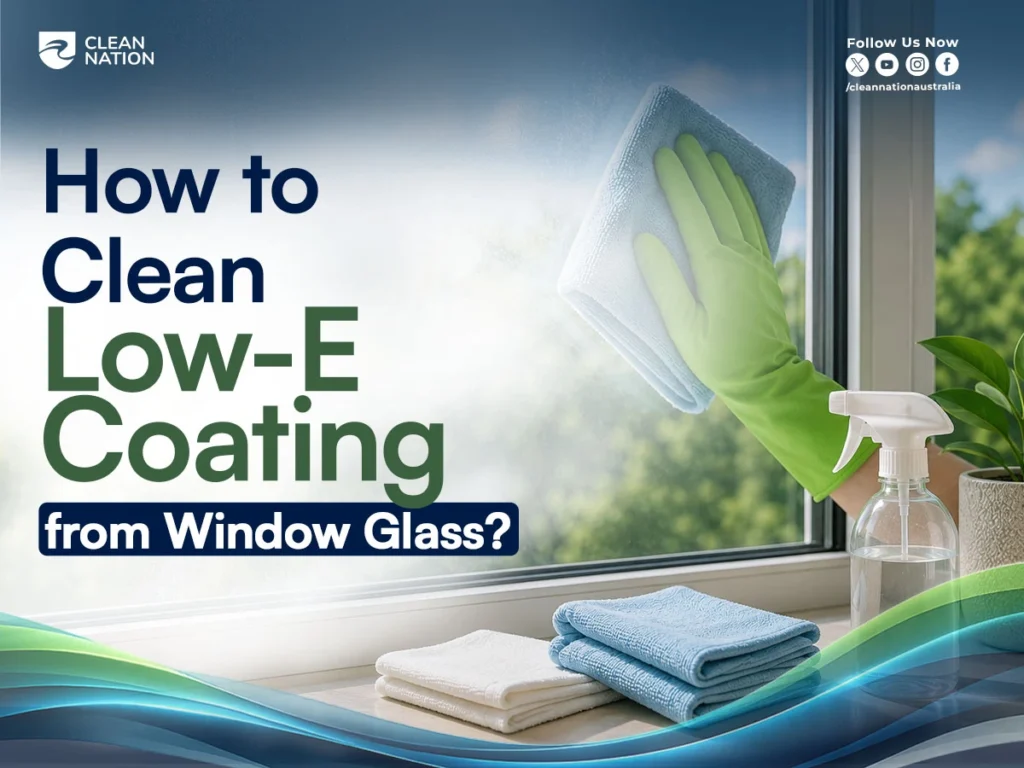
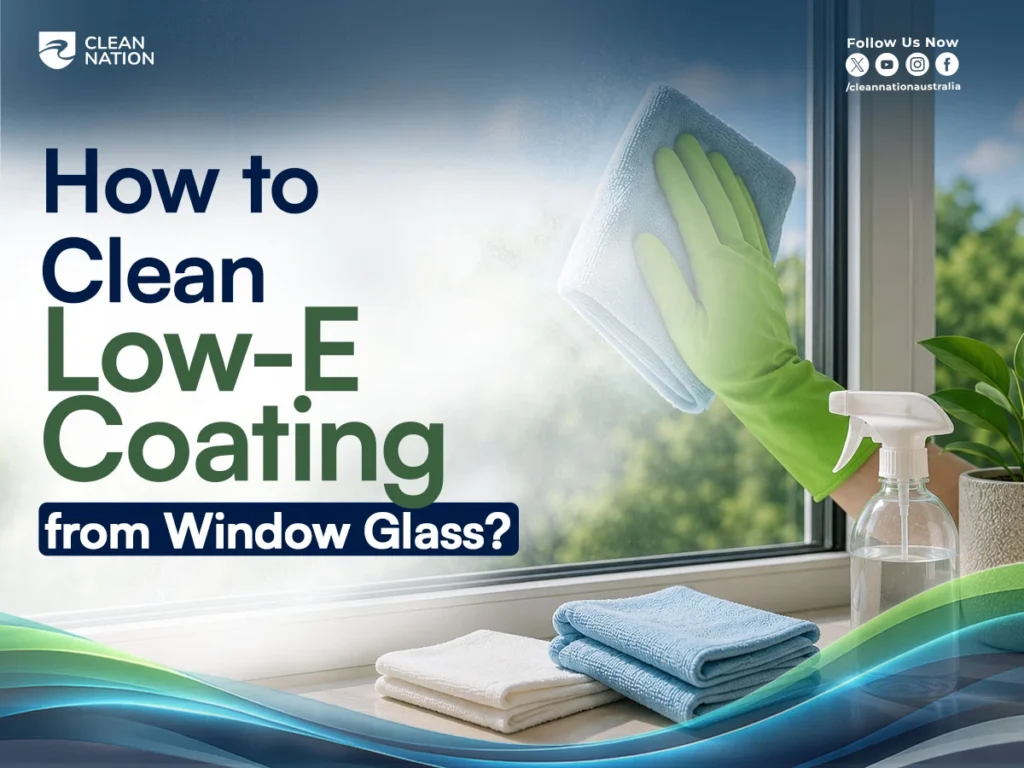
How to clean Low-E coating from window glass? Dust off loose dirt first, then wipe gently with a diluted vinegar solution (1 part vinegar to 10 parts water) using a soft microfibre cloth in light, circular motions. Treat stubborn spots with a cotton bud and isopropyl alcohol instead of scrubbing. Dry the glass immediately with a clean microfibre cloth for a streak-free finish.
Avoid abrasive materials, metal scrapers, and ammonia-based cleaners, as these permanently damage the coating. Clean 3-4 times a year, roughly once per season, to keep the coating performing well.
If you’d rather skip the effort, Clean Nation safely cleans Low-E-coated window glass without any risk to the coating.
What Is Low-E Coated Window Glass?
Low-E-coated window glass is glass with a thin, invisible metal oxide coating applied to its surface to reflect heat while still letting natural light through.
So, what does Low-E mean? It stands for low emissivity. The coating itself is a transparent coating, sometimes called a thin metal coating or metallic oxide layers, and it’s so thin you can’t actually see it on the glass.
This is one of the main Low-E glass features that makes it energy-efficient. By reflecting heat back instead of absorbing it, this heat-reflective glass helps keep your home warmer in winter and cooler in summer, all without blocking sunlight.
Since the glass coating is invisible, most homeowners can’t tell just by looking whether their windows have it. That’s exactly what we’ll cover next, and if you’re ever unsure, Clean Nation’s team can identify and safely clean Low-E-coated window glass for you.
How Do You Know If Your Window Has a Low-E Coating?
The easiest way to identify Low-E coated window glass is to hold a flame, like a lighter, close to the window at night and look at the reflections in the glass. If one reflection looks slightly blue, purple, or pink while the others appear normal, your window likely has a Low-E coating.
Unlike standard glass, coated glass can create faint coloured reflections that are visible under certain lighting conditions.
This happens because the coating creates a reflective surface on one side of the glass, so light bounces back slightly differently depending on the coating placement.
It also helps to know the coating type. Low-E coatings can sit on the interior coating side (facing into your home) or the exterior coating side (facing outside), which is worth knowing before you clean, since it affects which side needs gentler handling.
If you’re still not sure, checking your window’s original documentation or asking the manufacturer is the most reliable way to confirm the glass coating type. Or, skip the guesswork altogether. Clean Nation can identify your coating and handle the cleaning safely from there.
What You’ll Need Before You Start Cleaning?
Before you start, you’ll only need a handful of basic cleaning tools, nothing specialised or expensive.
Here’s your quick cleaning checklist:
- Microfibre cloth for wiping the glass without scratching the coating.
- Lint-free cloths, a second one for drying, so you’re not reusing a damp cloth.
- Spray bottle to apply your solution evenly rather than pouring it directly on the glass.
- Vinegar-based cleaning solution a gentle, effective option for Low-E coated window glass (more on the exact mix in the next step).
- Non-metallic cleaning pads for stubborn spots, without risking any scratches.
- Soft sponge handy for loosening light dirt before wiping.
That’s really all the cleaning supplies you need. No harsh chemicals, no fancy equipment, just a few soft, non-abrasive tools and a proper cleaning solution.
Once you’ve got these ready, you’re all set to move on to the actual cleaning process. And if gathering all this feels like more effort than it’s worth, Clean Nation’s team already carries everything needed to clean Low-E coated window glass safely and correctly, every time.
How to Clean Low-E Coated Window Glass?
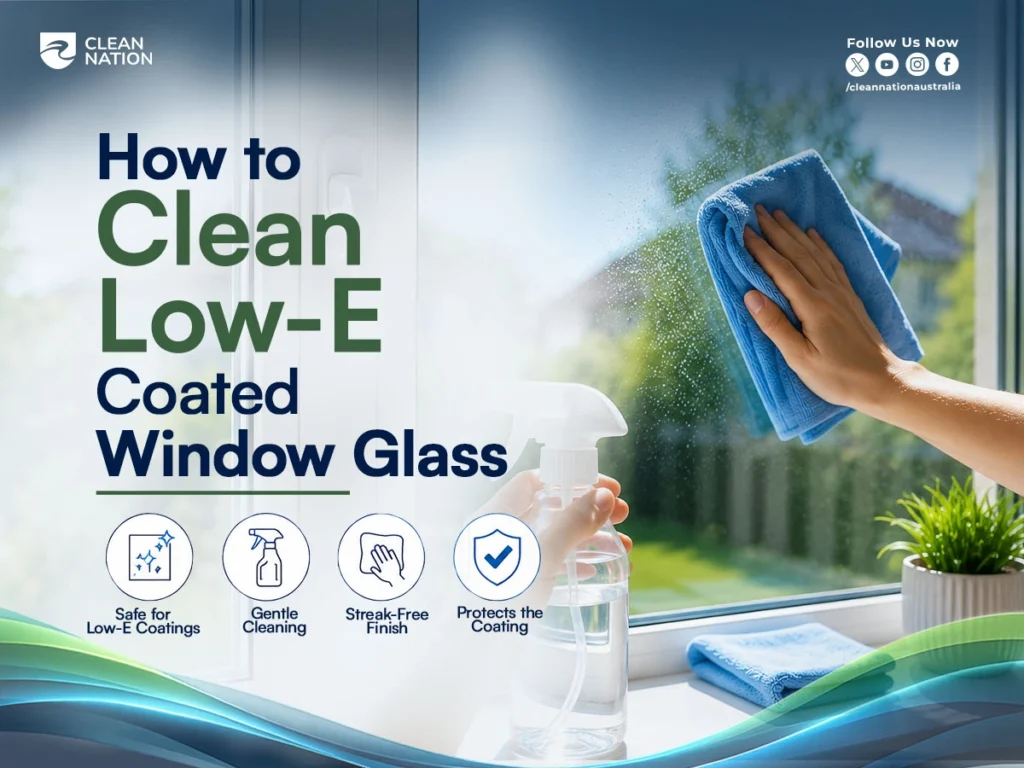
The proper cleaning method for Low-E-coated window glass involves five simple steps: dusting, a gentle solution, soft wiping, spot treatment, and thorough drying. Following this cleaning technique keeps the coating safe while still getting your glass streak-free.
Step 1: Remove Dust and Loose Dirt
Before using any cleaning solution, wipe away loose dust and dirt with a dry cloth or duster. This step matters because rubbing a wet cloth over dust or surface contaminants can grind grit into the coating. A soft, dry cloth is enough for this general cleaning pass; no product is needed yet.
Step 2: Make a Gentle Cleaning Solution
For your homemade glass cleaner, mix a vinegar-water solution using a 1:10 vinegar-water ratio, one part white vinegar to ten parts water. This diluted vinegar mix works as an effective, ammonia-free cleaner that won’t damage the coating. If you’d rather not use vinegar, a few drops of mild soap or mild detergent in water also work fine.
Step 3: Wipe the Glass with a Soft Microfiber Cloth
Dampen a microfiber cloth with your solution and wipe the glass using gentle wiping in circular motions. Keep the pressure light; a grit-free cloth and gentle pressure are enough to lift dirt without risking the surface. This is the core wipe technique for coated window glass, slow and controlled, not scrubbed.
Step 4: Clean Stubborn Spots Gently
For stubborn stains like oily spots or silicone stains, spot cleaning with a cotton bud dipped in isopropyl alcohol usually does the trick. This targeted spot removal approach handles sticky residue removal without needing to scrub the whole pane harder than necessary.
Step 5: Dry the Glass for a Streak-Free Finish
Finish by drying the glass straight away with a clean, dry microfibre cloth. Immediate drying prevents water spots and gives you that smear-free glass finish. Wipe in the same direction for uniform dryness, then do a final polish pass to remove any excess water.
This same drying technique is one of the biggest factors in getting any window streak-free, not just Low-E coated ones. How Do You Clean Windows Streak Free? covers the full method in more detail if you want to get it right across the whole house.”
And if all this feels like a lot of steps to get right, Clean Nation’s team handles the entire process professionally, so your Low-E-coated window glass stays streak-free and undamaged every time.
Common Mistakes to Avoid When Cleaning Low-E Coated Window Glass
A few common cleaning mistakes can permanently damage a Low-E coating, so it’s worth knowing what to avoid before you start.
- Using abrasive materials. Steel wool, scouring pads, or anything rough will scratch the coating, and these scratches can’t be buffed out.
- Reaching for metal scrapers or razor blades. These are sometimes used on regular glass, but on Low-E coated window glass, they can strip the coating right off in that spot.
- Applying excessive pressure while wiping. Even with a soft cloth, pressing too hard can wear down the coating over time, especially with repeated cleaning.
- Using harsh chemicals. Acidic or alkaline cleaners can break down the coating’s protective layer and cause discolouration.
- Using ammonia-based cleaners. These are common in standard glass cleaners but are one of the most frequent cleaning errors on Low-E coated window glass, since ammonia reacts with the coating and leaves it cloudy over time.
These improper cleaning methods are the main reason Low-E coatings wear out early. Stick to soft tools and gentle products, and your coating will hold up for years. If you’re ever unsure what’s safe to use, Clean Nation’s team can handle the cleaning for you without any of the guesswork.
How Often Should You Clean Low-E-Coated Windows?
The general recommendation is to clean glass 3-4 times a year, roughly once each season, to keep Low-E coated window glass performing well.
This kind of routine glass cleaning doesn’t need to be intensive every time. A quick seasonal window cleaning session is usually enough to stop dust, grime, and residue from building up and affecting the coating’s performance. If you’re in a dustier or coastal area, you might want routine window cleaning a little more often, closer to every 6-8 weeks.
Sticking to a regular maintenance routine is really a form of preventive maintenance. It’s much easier to wipe away light dirt every few months than to deal with stubborn buildup later, and it protects the coating’s long-term maintenance and effectiveness.
One of the simplest maintenance tips: mark it on a calendar or tie it to the change of seasons, so it becomes part of your regular upkeep rather than something you only think about when the windows already look dull. And if keeping track of it slips your mind, Clean Nation can handle routine cleanings on a schedule that suits you.
Tips to Keep Your Low-E Coated Window Glass Clean for Longer
A few simple habits go a long way toward keeping your Low-E coating in good shape and preserving energy efficiency for years to come.
- Stick to soft, non-abrasive tools every time. This is the single biggest factor in coating longevity. One rough scrub with the wrong material can undo months of proper care.
- Do a quick window inspection each season. Check for any cloudiness, scratches, or discolouration early; catching small issues sooner helps prevent coating damage before it spreads.
- Avoid letting dirt sit for too long. Built-up grime is harder to remove and often needs more scrubbing, which puts unnecessary strain on the coating and reduces coating effectiveness over time.
- Keep sprinklers and hoses away from direct contact with the glass. Repeated water exposure, especially hard water, can leave mineral deposits that are tough to clean without extra effort.
- Use the same gentle cleaning solution consistently. Switching between random products increases the risk of accidentally using something too harsh, which is one of the easiest ways to protect the Low-E coating long-term.
These small habits are what separate long-lasting windows from ones that need coating repairs or replacement early. Done right, they help extend window lifespan and keep your glass performing the way it’s meant to, for longer, with far less effort.
Why Choose Clean Nation for Low-E Coating Window Glass Cleaning?
Cleaning Low-E-coated window glass isn’t the same as cleaning regular windows, and that’s exactly where Clean Nation window cleaning services in Australia make the difference.
Our trained cleaning team understands how the coating works, what it can and can’t handle, and how to get a proper streak-free finish without putting the glass at risk. As cleaning professionals, we follow strict professional cleaning standards on every job, using only non-abrasive tools and manufacturer-safe solutions, never the harsh chemicals or scrapers that damage coated glass.
Choosing professional window cleaning over a DIY attempt also means peace of mind. You’re not left wondering whether a product is safe or whether too much pressure just scratched your coating. That’s the kind of professional assistance that protects your investment long-term.
We’ve built our reputation as a trusted window cleaning company on consistent service quality and genuine customer satisfaction, backed by technical cleaning expertise that general cleaning services simply don’t specialise in.
According to the client, the Chens contacted Clean Nation after noticing a cloudy haze developing across several windows in their newer build, windows they knew had Low-E coating but weren’t sure how to clean safely. They’d avoided cleaning them properly for months, worried that using the wrong product would make things worse.
Our team carried out an inspection first, confirmed the coating was intact (just affected by mineral residue from a nearby sprinkler system), and used a diluted vinegar solution with soft microfibre cloths to gently clear the buildup. Every window was restored to a clear, streak-free finish without any risk to the coating itself.
The Chens mentioned afterward that they hadn’t realised how easy it was to damage Low-E-coated window glass with the wrong cleaner, and were relieved to finally have a reliable window cleaning service in Sydney they could count on to maintain their windows confidently going forward.”
FAQs:
The following are the FAQs
Can you use regular glass cleaner on Low-E-coated windows?
No, most regular glass cleaners contain ammonia, which reacts with the metal oxide coating and causes it to cloud or discolour over time. Stick to a diluted vinegar-water solution or a cleaner specifically labelled safe for Low-E or coated glass.
Does cleaning Low-E glass affect its energy efficiency?
Cleaning itself doesn’t reduce energy efficiency, but using the wrong tools or chemicals can damage the coating and weaken its ability to reflect heat properly. Gentle, correct cleaning actually helps maintain the coating’s performance over time.
Can a scratched Low-E coating be repaired?
No, once the coating is scratched, it can’t be repaired or restored, since the damage removes the thin metal layer permanently. In most cases, the affected pane needs to be replaced to maintain the window’s energy performance.
Is it safe to use a squeegee on Low-E-coated windows?
A squeegee can be used, but only one with a clean, soft rubber blade and light pressure, never a metal-edged or worn blade that could scratch the surface. Many professionals prefer microfibre cloths instead, since they carry less risk on coated glass.
How much does it cost to replace a damaged Low-E window?
Costs vary depending on the window size, glass type, and location, but replacing a single Low-E-coated pane is generally more expensive than standard glass due to the specialised coating process. Getting a quote from a local glazier or window specialist is the best way to get an accurate price for your specific windows.
Conclusion
Cleaning Low-E-coated window glass really comes down to using the right tools and a gentle touch; that’s all it takes to protect the coating while still getting streak-free windows. The reward is clear glass that supports better energy efficiency and keeps your home comfortable, not just spotless glass for a few days.
If you’d rather leave it to people who handle this every day, Clean Nation is here to help with professional results you can count on. Contact us today, and let’s keep your windows clean year-round.