

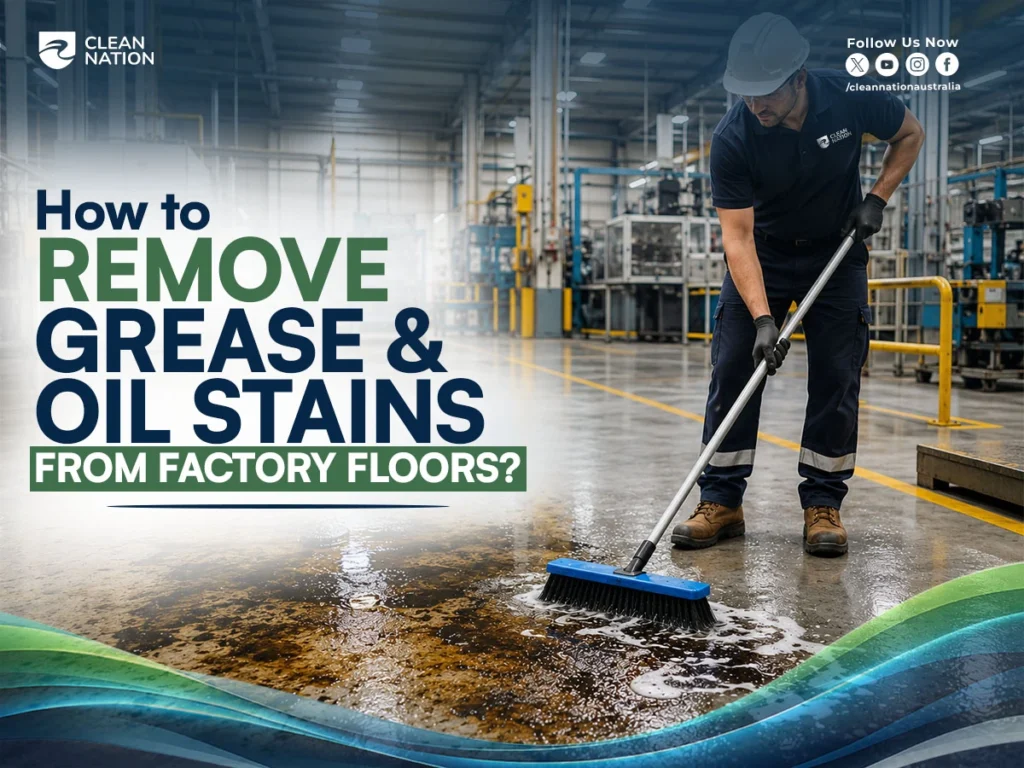
How to Remove Grease and Oil Stains From Factory Floors? Remove grease and oil stains from factory floors by containing the spill, absorbing excess oil with sawdust, cat litter, or absorbent pads, applying an industrial degreaser, scrubbing the surface, and rinsing thoroughly with water. For older stains, use a heavy-duty degreaser and a pressure washer, then maintain a regular cleaning schedule to prevent future build-up. If you need expert help, Clean Nation’s industrial cleaning team keeps factory floors across Australia safe, clean, and compliant.
Why Are Grease and Oil Stains a Problem on Factory Floors?
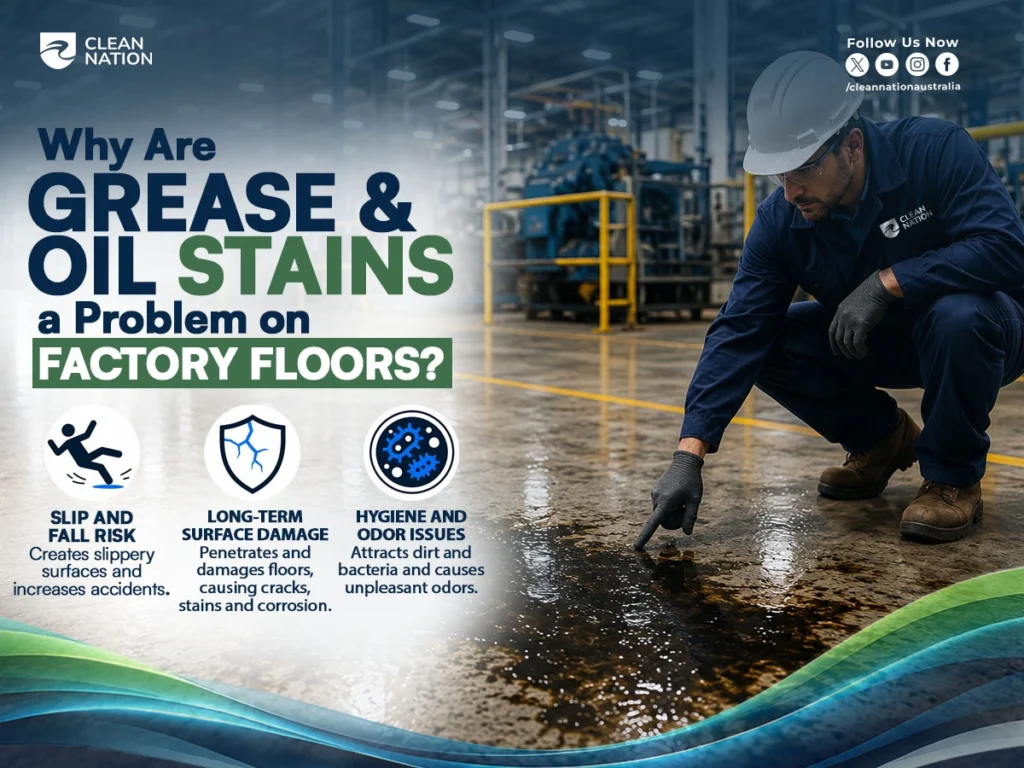
Grease and oil stains make factory floors unsafe by creating slippery floors, increasing slip hazards, and damaging surfaces over time. If they are not cleaned quickly, they can affect workplace safety, reduce productivity, and make it harder to meet workplace compliance and cleanliness regulations.
In busy factories, warehouses, and manufacturing facilities, oil and grease build up from machinery, vehicles, and production equipment. As more residue collects, floors become slick and difficult to walk on safely. Even a small spill can lead to a serious accident if employees or visitors lose their footing.
Beyond safety risks, grease can cause surface damage by penetrating concrete, leaving permanent stains, and weakening protective floor coatings. Damaged floors are harder to clean, wear out faster, and often require costly repairs or resurfacing.
Regular cleaning also supports industrial hygiene by removing contaminants that collect dirt, dust, and bacteria. A cleaner workplace helps create a healthier environment for employees while improving the overall appearance of the facility.
Keeping floors free from grease is also an important part of accident prevention. Businesses that maintain clean walkways and work areas are better positioned to reduce workplace incidents, minimise downtime, and protect both staff and equipment.
For many Australian businesses, maintaining clean and safe floors also helps support OSHA (compliance) principles and broader workplace compliance requirements by reducing preventable risks and following recognised safety and cleanliness standards.
At Clean Nation, our industrial cleaning services in Australia help businesses remove stubborn grease and oil build-up, restoring safer factory floors that protect workers, extend the life of the flooring, and maintain a professional workplace.
What You’ll Need to Remove Oil and Grease Stains?
Removing oil and grease from a factory floor starts with having the right tools on hand. Here’s what to gather before you begin.
- Absorbent materials. Sawdust, cat litter, or industrial absorbent pads soak up excess oil before it spreads further or sinks deeper into the surface.
- Industrial degreaser. A commercial-grade degreaser breaks down grease and oil residue that plain water and detergent can’t shift on their own.
- Floor scrubber. For larger factory or warehouse floors, a floor scrubber works the degreaser into the surface far more effectively than manual scrubbing.
- Pressure washer. A pressure washer helps rinse away loosened grease and flush out stains that have worked into porous concrete.
- Personal protective equipment (PPE). Gloves, goggles, and other protective wear keep your team safe from chemical exposure while handling degreasers and cleaning equipment.
At Clean Nation, our team arrives fully equipped with industrial-grade tools and PPE, so your factory floor gets cleaned properly and safely, without your staff needing to source or stock specialist cleaning supplies themselves.
How to Remove Fresh Oil and Grease Stains?
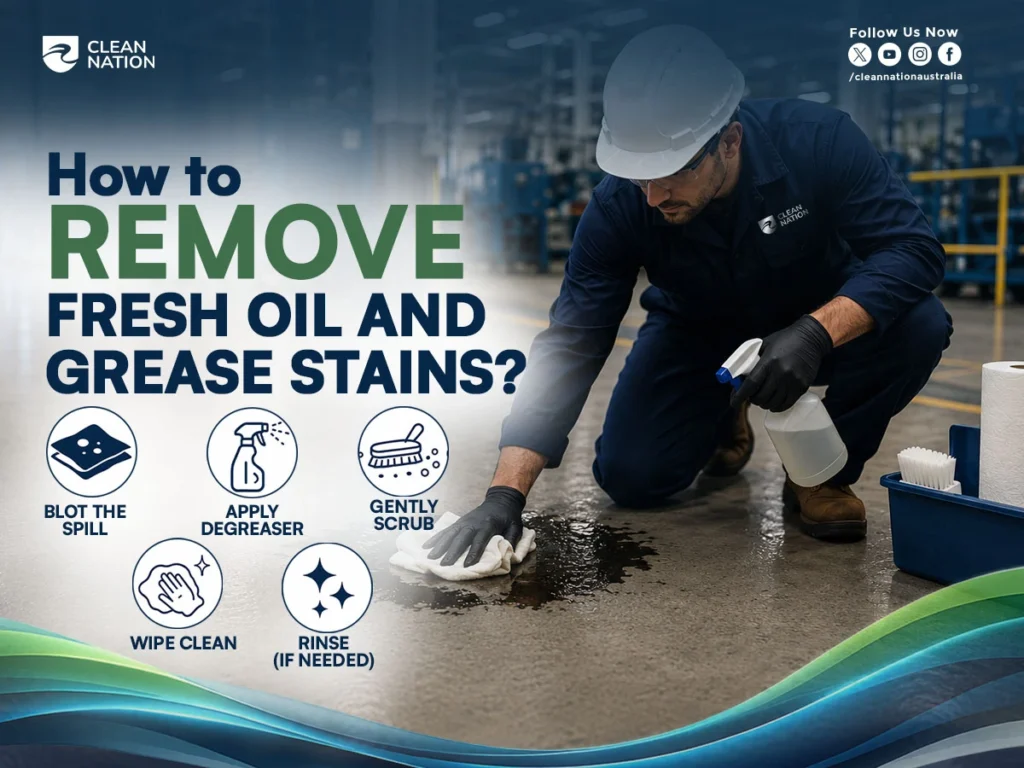
A fresh oil spill is far easier to deal with than one that’s had time to sink in, so acting quickly makes all the difference. Follow these steps as soon as fresh oil stains appear on your factory floor.
Contain the spill. Block off the area straight away to stop the oil spreading further and to keep staff and equipment away from the slip hazard while you clean.
Absorb excess oil. Cover the fresh oil spill with sawdust, cat litter, or absorbent pads and let it sit for a few minutes. This pulls up as much surface oil as possible before you start scrubbing.
Apply a degreasing solution. Once the excess oil is absorbed, apply an industrial degreasing solution directly onto the stain, giving it enough time to break down the remaining residue.
Scrub the surface. Use a stiff brush or floor scrubber to work the degreasing solution into the concrete, paying close attention to the edges where oil tends to spread outward.
Rinse and wash with water. Finish by rinsing the area thoroughly with rinse water, washing away any leftover degreaser, oil, or residue until the surface runs clean.
At Clean Nation, we treat fresh oil stains as a priority job. The faster a spill is contained and cleaned, the less chance it has to soak into your flooring or turn into a stubborn stain later on.
How to Remove Old or Stubborn Oil and Grease Stains?
Stubborn oil stains need more than a quick wipe down; they’ve had time to settle in and fight back a little harder. Here’s how to tackle them properly.
Use a heavy-duty degreaser. Old oil stains and dried oil stains call for a stronger, industrial-grade degreaser than you’d use on a fresh spill. Look for a product designed to cut through deep-set stains and ingrained dirt that’s had time to bond with the surface.
Pressure wash the surface. A pressure washer helps force the degreaser into porous concrete and lift grease that’s worked its way beneath the surface, especially useful across heavily soiled areas of a factory floor.
Repeat cleaning as needed. Stubborn stains rarely lift in one pass. Reapply the degreaser, scrub again, and rinse thoroughly; repeat cleaning is often the difference between a faded mark and a fully restored floor.
Give it time to work. Heavy-duty degreasers need a few extra minutes of dwell time on dried oil stains compared to fresh ones. Rushing the process usually means the stain isn’t fully broken down before rinsing.
At Clean Nation, we deal with old, dried, and deeply set oil stains regularly across Australian factories and warehouses, including our industrial cleaning service in Sydney team. With the right heavy-duty products and repeat treatment where needed, even the toughest, longest-standing stains can be restored to a safe, clean surface.
Removing Oil and Grease Stains by Floor Type
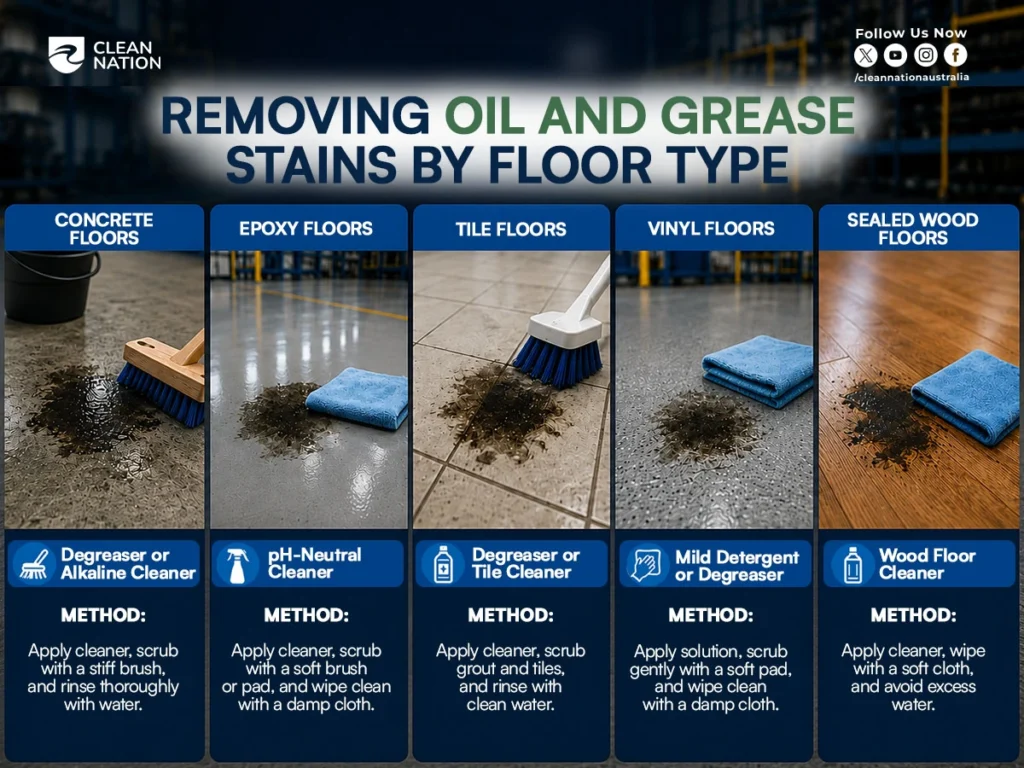
Different floor types need different cleaning approaches; using the wrong method can damage the surface instead of cleaning it. Here’s how to handle oil and grease on the most common factory floor types.
Concrete Flooring
As a porous flooring material, concrete allows oil penetration deep into the substrate, which is why stains spread and set in so quickly. A strong degreaser paired with scrubbing and pressure washing usually gets the best results, though older stains may need a repeat pass.
Epoxy-Coated Floors
Epoxy sits on top of the concrete surface rather than soaking in, so it resists staining better. That said, harsh chemicals can strip the coating, so stick to a degreaser rated safe for epoxy and avoid aggressive scrubbing tools.
Tile Floors
Tile is non-porous, so oil sits on the surface rather than sinking in, making cleanup easier overall. The main challenge is grout lines, which can trap grease, so a stiff brush and a standard degreaser usually do the job.
Warehouse and Factory Floors
Scale changes the approach more than the surface does. Across a big footprint, oil and grease rarely sit in one spot; they track along forklift routes, pool near machinery bays, and build up gradually in low-traffic corners that get missed during daily wipe-downs.
Cleaning needs to be zoned and scheduled around production, so high-traffic aisles and loading areas get treated more often than storage zones, and work is timed around shifts to avoid halting operations. For a fuller breakdown of cleaning frequency, see our guide on How Often Should Warehouses Be Professionally Cleaned? Where machinery is running nearby, low-residue methods such as steam cleaning are often preferred over heavy chemical use, since they cut through grease without leaving a slippery film once the floor dries.
At Clean Nation, we assess your specific floor type concrete, epoxy, or tile and the scale of your site before choosing a cleaning method. Our industrial cleaning services in New South Wales cover everything from single-site facilities to multi-warehouse operations, so you get a spotless factory floor without risking damage or disrupting operations.
Common Mistakes That Make Oil Stains Worse
Even with the right products, small mistakes during cleaning can make oil stains harder to remove or damage your floor further. Here’s what to avoid.
- Letting the degreaser dry on the surface. Avoid product drying by rinsing within the recommended window; once it dries, it’s harder to lift and can leave residue behind.
- Ignoring the dilution ratio. Using cleaner at full strength doesn’t mean better results. Follow the product instructions closely; over-concentrated solutions waste product and increase chemical exposure risk.
- Skipping safe handling practices. Chemical safety matters; always wear PPE and follow safe handling guidelines when working with industrial degreasers.
- Going straight to mechanical scrubbing. Scrubbing before absorbing excess oil just spreads the stain further into the surface instead of lifting it out.
- Ignoring oil oxidation. Old stains that have oxidised need a stronger approach than fresh ones. Treating them the same way often means the stain doesn’t fully break down.
- Skipping surface preparation. Not clearing debris or pre-treating heavily soiled areas before cleaning reduces how effectively the degreaser can work.
- Overlooking contamination prevention. Failing to contain a spill properly lets oil spread to unaffected areas, turning a small patch into a bigger cleaning job.
At Clean Nation, our team follows strict safe handling and product application standards on every job, so stains get removed the first time properly, without the setbacks these common mistakes cause.
How to Keep Factory Floors Stain-Free Going Forward?
Cleaning a stain once is only half the job; keeping it from coming back takes a bit of ongoing effort. Here’s how to build that into your factory’s routine.
- Set up preventive maintenance. Regular floor maintenance catches small leaks and residue before they turn into stubborn stains, saving time and cost down the track. For a complete step-by-step process covering site inspections, PPE, equipment selection, cleaning methods, and final safety checks, read our guide on How to Do Industrial Cleaning?
- Stick to routine maintenance scheduling. A set cleaning schedule for high-traffic and machinery areas keeps grease buildup from accumulating unnoticed.
- Have a clear spill response plan. Good spill management means staff know exactly what to do the moment oil hits the floor: contain it, absorb it, clean it, rather than waiting for the next scheduled clean.
- Run regular machinery inspections. Leaking equipment is one of the most common causes of repeat stains. Checking machinery regularly helps catch leaks before they hit the floor at all.
- Train your team properly. Staff training on safety procedures and spill response ensures everyone knows where PPE and absorbent materials are kept, and who to notify when something goes wrong.
At Clean Nation, we don’t just clean your factory floor once and leave. We help set up a practical maintenance schedule and train your team on the basics, so grease and oil stains stay a rare problem instead of a recurring one.
Why Choose Clean Nation for Factory Floor Cleaning?
When oil, grease, and grime build up, you need more than basic cleaning. Clean Nation is known as a cleaning service in Australia, offering professional factory cleaners and factory floor cleaning that help Australian businesses maintain safer, cleaner, and more productive workplaces.
As a trusted industrial cleaning company and industrial cleaning contractor, we use professional equipment, safe cleaning products, and proven methods to remove stubborn oil and grease stains from factory floors. Whether you need a one-off deep clean or ongoing commercial cleaning services, our team delivers reliable results with minimal disruption to your operations.
Real Client Success Story
A manufacturing company in Melbourne was dealing with heavy grease build-up around production lines and loading bays. The slippery floors created safety concerns for employees and made daily cleaning difficult. After they decided to hire factory cleaners from Clean Nation, our team carried out a deep factory floor clean using industrial degreasers, floor scrubbers, and pressure washing equipment. The result was cleaner, safer floors, improved workplace safety, and a more professional environment for staff and visitors.
If you’re looking for professional industrial cleaning services, trust Clean Nation factory cleaning to deliver consistent, high-quality results. Get a free quote today and let our experienced team restore your factory floors to a safe and clean condition.
Before you hire factory cleaners, take a look at our customer reviews to see how Clean Nation has helped Australian businesses achieve cleaner, safer, and more compliant factory floors.
FAQs
The following are the FAQs:
How often should factory floors be professionally cleaned to prevent grease build-up?
Most factories benefit from a professional deep clean every 1–3 months, with daily or weekly spot-cleaning in high-traffic and machinery areas in between. High-output facilities with heavy machinery traffic may need monthly attention.
Is it safe to pour oily wastewater or absorbed grease down a regular drain?
No. Oil and grease waste should never go down a standard drain, as it can contaminate wastewater systems and breach environmental regulations. Used absorbents and oily rinse water should be collected and disposed of through a licensed waste contractor.
Can household products like vinegar or dish soap remove industrial grease stains?
They can help with very light, fresh residue, but they aren’t strong enough to break down set-in industrial oil and grease on concrete. An industrial-grade degreaser is needed for reliable results on factory floors.
How long does a floor need to dry before it’s safe to walk or drive on after cleaning?
This depends on ventilation and floor type, but most factory floors are safe for foot traffic within 30–60 minutes and for vehicle or forklift traffic within a few hours. Wet floor signage should stay up until the surface is fully dry.
Does Clean Nation use eco-friendly or biodegradable degreasers?
Yes, biodegradable and low-toxicity degreaser options are available on request for facilities that need to limit chemical runoff or meet stricter environmental handling requirements.
Conclusion
Effective oil and grease stain removal is essential for safe factory floor maintenance and long-lasting industrial floor cleaning results. Regular cleaning and preventive maintenance help create a hygienic workplace, reduce safety risks, and support workplace compliance.
If you need professional factory floor cleaning, Clean Nation provides reliable industrial cleaning solutions for businesses across Australia. Contact us today or call +61 480 810 142 to discuss your cleaning needs and keep your facility clean, safe, and operating at its best.