

If you run a warehouse, a factory floor, or a large commercial site anywhere in Australia, you’ve probably noticed the same thing every facility manager is dealing with right now: it’s getting harder to find and keep good cleaning staff, and the sites keep getting bigger. Robots have quietly become part of the answer. Not as a replacement for people, but as a way to take the repetitive, physically hard, or downright dangerous jobs off human plates so cleaning crews can focus on the work that actually needs a person’s judgement.
This guide walks through what industrial cleaning robots actually are, why businesses are adopting them, the different types on the market, and what to think about before you bring one onto your site. It’s also worth understanding how this fits into the bigger picture of industrial cleaning services in Australia, since robots are increasingly just one part of a broader cleaning operation rather than a standalone solution.
What Are Industrial Cleaning Robots?
Industrial cleaning robots are autonomous or semi-autonomous machines built to clean large commercial and industrial spaces without someone pushing them around by hand. Most fall into the category of autonomous mobile robots, or AMRs, which means they can navigate a space on their own using a mix of sensors, cameras, and mapping software rather than following a fixed track.
Some are fully autonomous cleaning robots that map a warehouse or factory floor and clean it on a set schedule with no operator present. Others work more like collaborative robots, or cobots, sitting alongside a human cleaner and taking on part of the job. Either way, the core idea is the same: motion sensing technology and onboard software let the machine understand where it is, what’s around it, and where it still needs to clean. If you’d like to see how this looks in practice, this short clip on industrial cleaning gives a quick look at robotic equipment working on a real site.
Why Are Robots Becoming Important in Industrial Cleaning?
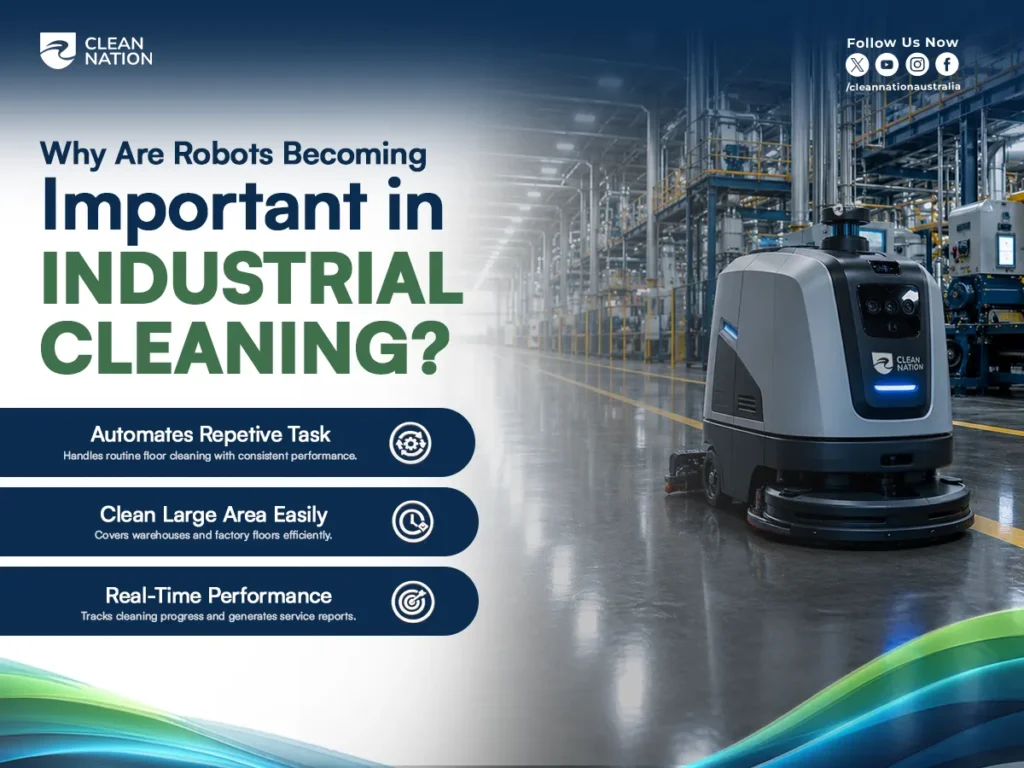
A few things are pushing this shift at the same time. Labour shortages have hit cleaning and facilities services hard, and it’s a problem echoed globally, not just here. Groups like the International Federation of Robotics and McKinsey Global Institute have both pointed to labour gaps and rising labour costs as one of the biggest drivers behind warehouse and facility automation over the past few years.
On top of that, sites are simply getting bigger. A modern distribution centre or manufacturing plant can cover tens of thousands of square metres, and covering that ground consistently with a mop and bucket just isn’t realistic anymore. Add in growing pressure around workplace safety, sustainability targets, and the need to actually prove that cleaning work has been done to a standard, and it’s easy to see why robotics has moved from a novelty to a genuine operational tool.
The Role of Robots in Industrial Cleaning
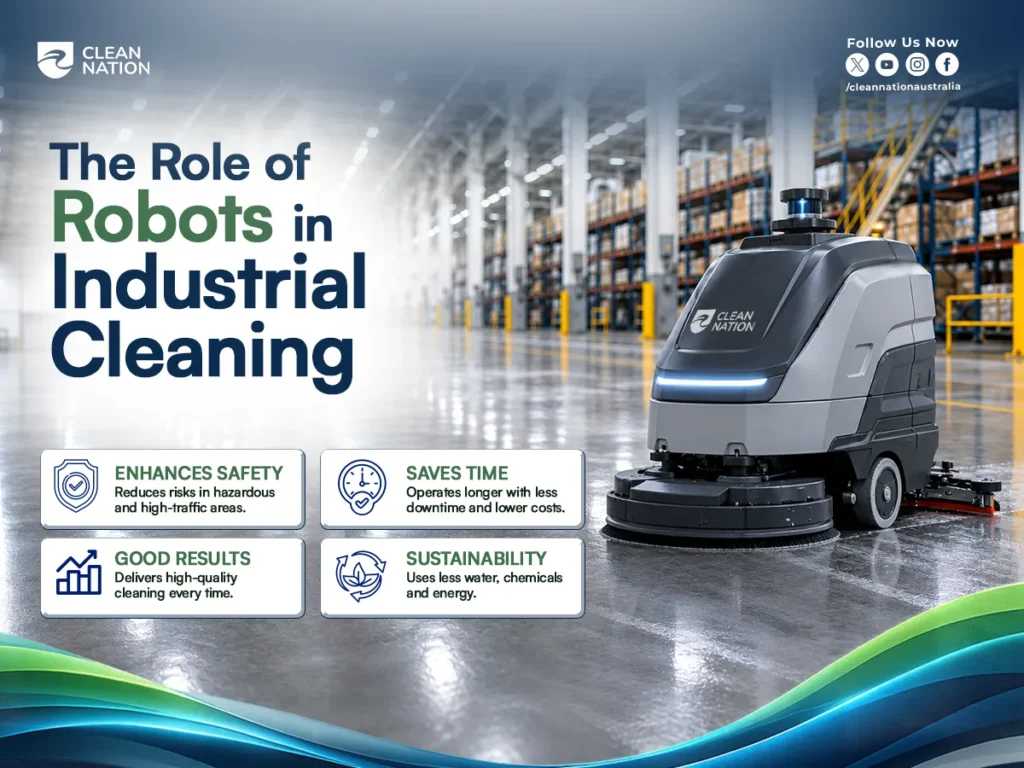
Robots aren’t there to take over every part of the job. They’re there to take on the parts that are repetitive, predictable, or risky, and free up your cleaning workforce to handle everything else, like detailed spot cleaning, quality checks, and areas that need a bit of judgement.
Automating Repetitive Cleaning Tasks
Large floor areas, corridors, and loading zones need cleaning on a predictable schedule, day in and day out. That kind of repetitive work is exactly what robots are good at. An autonomous floor scrubber can run the same route every night without getting tired, bored, or rushing near the end of a shift. That consistency frees up your human cleaning workforce for tasks that actually need a person’s attention, like detailed spot cleaning or handling something unexpected.
Improving Cleaning Consistency
Anyone who’s managed a cleaning team knows that quality can vary from shift to shift, especially near the end of a long one. Robots don’t get tired, and they don’t cut corners when they’re running behind schedule. They follow the same programmed route and apply the same pressure and water flow every time, which means fewer missed spots and a more consistent result across a facility, whether it’s cleaned at 6 am or midnight.
Enhancing Workplace Safety
Industrial sites often have areas that are genuinely risky for a person to clean regularly, such as confined spaces, areas near heavy machinery, or zones with airborne dust. Robots can take on these jobs, reducing how often staff need to enter hazardous areas. Many models also come with built-in collision detection and avoidance systems, so they navigate safely around people, forklifts, and equipment while they work.
Cleaning Large Industrial Facilities Efficiently
Warehouses, logistics centres, and manufacturing plants often have vast open floor areas that would take a human cleaner hours to cover properly. A robotic scrubber can cover that same ground methodically, often overnight or during low-traffic periods, without needing supervision the whole time. For large facilities, that’s a big shift in how much ground your cleaning operation can realistically cover each day.
Supporting Data Collection and Performance Monitoring
This is one of the most underrated benefits. Most modern cleaning robots collect data as they work, tracking things like area covered, time spent, and battery use. Some link into fleet management software that produces proof of service reports, so facility managers have an actual record of what was cleaned and when, rather than just taking someone’s word for it. That kind of data also helps spot patterns, like areas that need more frequent attention, over time.
Types of Industrial Cleaning Robots
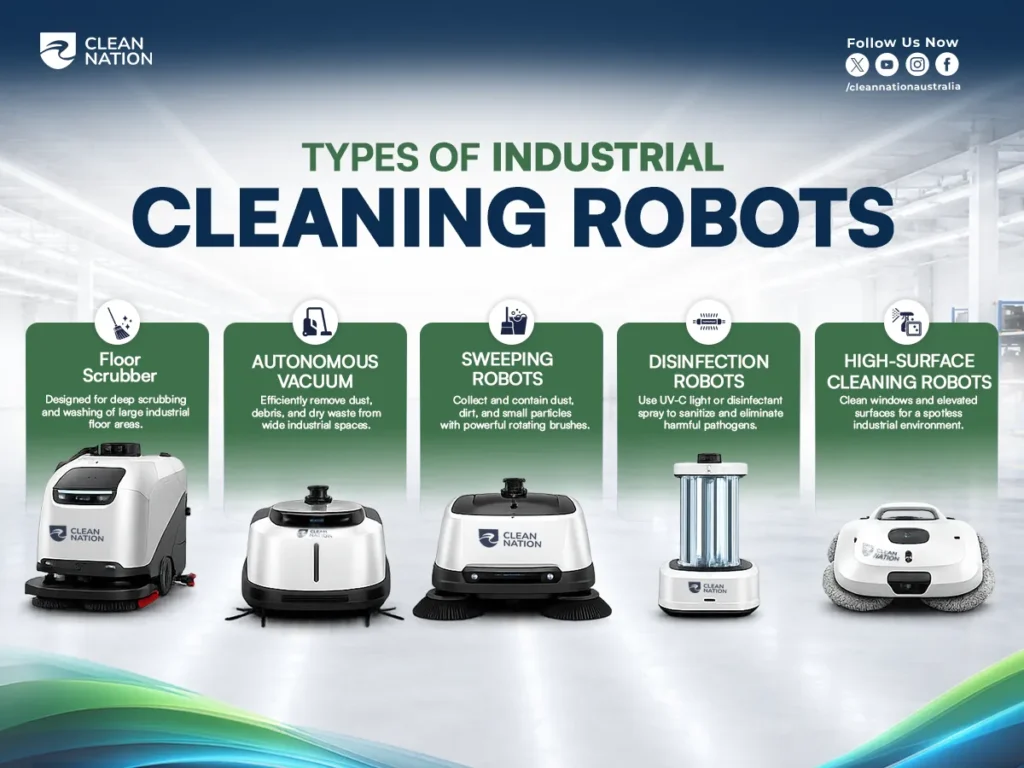
Not all cleaning robots do the same job. Here’s a rundown of the main types you’ll come across.
Autonomous Floor Scrubbers
These are the most common type you’ll see in warehouses and large retail spaces. An autonomous floor scrubber maps the space, then scrubs hard flooring using rotating brushes and a water and cleaning solution mix, much like a ride-on scrubber but without a driver. They’re well suited to big, open areas with predictable layouts.
Robotic Vacuum Cleaners
Built for carpeted areas and lighter debris, commercial robotic vacuums are common in offices, hotels, and retail environments. They’re generally smaller and lighter than scrubbers, designed to pick up dust, dirt, and debris across large floor areas without the water component.
High-Pressure Cleaning Robots
These handle tougher jobs, like removing grease, oil, or heavy grime from industrial floors. You’ll find them in manufacturing plants and food processing facilities where standard scrubbing isn’t enough to meet hygiene or safety requirements.
Hazardous Environment Cleaning Robots
Some sites have areas that need explosion-proof ratings or specific hazardous area classifications, such as coal handling zones, paint spray booths, or areas with combustible dust. Robots designed for these environments are built to strict safety standards and can operate where sending a person in regularly would be a genuine risk.
Benefits of Robots in Industrial Cleaning
The case for robotic cleaning usually comes down to a handful of practical benefits: lower labour costs over time, more consistent results, reduced water and chemical use thanks to precise, programmed application, and better data on what’s actually being cleaned. There’s also a knock-on effect for staff retention. When robots take the repetitive, physically demanding work off people’s plates, cleaning roles become more about quality control and problem solving, which tends to be more satisfying work and can help with keeping good staff around.
Industries That Benefit Most from Industrial Cleaning Robots
Some sectors get more out of robotic cleaning than others, mostly down to the size and layout of their facilities. Warehousing and logistics is probably the biggest adopter, thanks to large open floor plans that suit autonomous scrubbers well. Manufacturing plants use them for factory floors and production areas. Retail chains, shopping centres, and supermarkets use robots for overnight cleaning when foot traffic is low. Airports rely on them to keep enormous terminals clean around the clock. And healthcare facilities, including hospitals, are increasingly using UV-C disinfection robots alongside standard cleaning to manage infection control.
This shift is especially visible in busy commercial hubs. Businesses looking into industrial cleaning services in Sydney are seeing more sites bring robotic scrubbers on board simply because of how much ground large city facilities need covered overnight. The same trend is playing out more broadly too, with industrial cleaning services in New South Wales increasingly built around a mix of robotic and human cleaning teams working together.
Robots vs Manual Cleaning
This isn’t really a competition; it’s more of a partnership. Robots are excellent at covering large, predictable areas consistently, but they can’t do everything a trained cleaner can. Edge detailing, bathroom cleaning, spot cleaning after a spill, and touchpoint sanitising still need a human. Robots also can’t make judgement calls, like noticing something’s out of place or adjusting to an unexpected mess.
The businesses getting the most value out of robotics tend to run a hybrid model: robots handle the large-scale, repetitive floor cleaning, while human cleaners focus on detail work, quality checks, and the tasks that genuinely need a person’s attention. It’s worth being upfront about this with your team too, since robots taking over the boring parts of the job isn’t the same as robots taking over the jobs.
Challenges and Limitations of Industrial Cleaning Robots
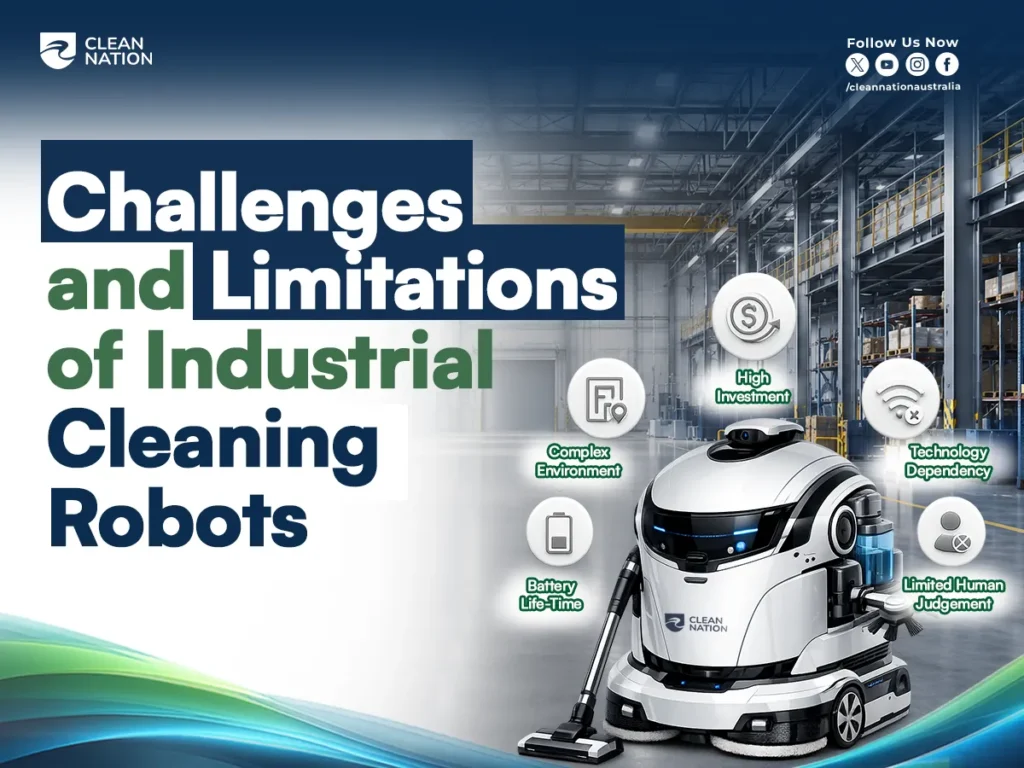
It’s not all smooth sailing. Robots represent a real upfront cost, and that investment needs to be weighed against expected labour savings over time. They also need maintenance, software updates, and occasional troubleshooting, so having a reliable technical support arrangement with your supplier matters.
Layout also matters more than people expect. Robots work best in spaces with predictable, mapped floor plans. Sites with constantly changing layouts, lots of clutter, or irregular obstacles can be trickier for a robot to navigate reliably. And while robots are great at covering ground, they still need human oversight; someone has to manage the fleet, handle exceptions, and make sure the robot is actually doing its job properly, not just running through the motions.
Best Practices for Implementing Robotic Cleaning
If you’re considering bringing robots onto your site, a few things make the transition smoother. Start with a proper site assessment so you understand where robots genuinely add value versus where manual cleaning still makes more sense. Invest in operator training early, since a cleaning team that understands how to work alongside the robot will get far better results than one that sees it as a mystery box in the corner.
It also helps to choose a supplier with a solid technical support network in Australia, so if something goes wrong, you’re not waiting weeks for a fix. And treat the rollout as a change management exercise, not just an equipment purchase. Bring your cleaning staff into the conversation early, explain what the robot will and won’t do, and be clear about how their role is shifting rather than disappearing.
The Future of Robots in Industrial Cleaning
The next few years will likely bring smarter navigation, better integration with building management systems, and more use of AI and machine learning to help robots adapt to changing environments rather than relying purely on a fixed map. Expect to see more data-driven cleaning, where robots don’t just clean but also feed information back into facility management systems to flag maintenance issues or high-traffic areas that need extra attention.
Sustainability will keep pushing adoption too. Robots that use less water and fewer chemicals fit neatly into ESG targets that a lot of Australian businesses are now reporting against. Over time, it’s likely we’ll see robots handling a bigger share of routine cleaning work across industrial and commercial sites, with human cleaning teams shifting further into supervision, quality control, and the detailed work robots still can’t do.
Why Choose Clean Nation for Industrial Cleaning?
Here’s what sets Clean Nation apart for businesses looking at industrial cleaning:
- Experienced industrial cleaning team – skilled staff who know how to handle large, complex sites, not just standard offices.
- Smart use of robotic technology – robots are brought in where they genuinely add value, like large open floor areas and overnight scrubbing, not used as a gimmick.
- Transparent reporting – clients get clear records of what’s been cleaned and when, so nothing gets left to guesswork.
- Tailored cleaning plans – every site is different, so plans are built around your facility rather than a one-size-fits-all package.
- Reliable customer support – a single point of contact who understands both the technology and the day-to-day running of your site.
Client Experience with Clean Nation
Businesses working with Clean Nation consistently mention a few things: cleaner sites with fewer missed spots, less time spent chasing up cleaning issues, and a smoother handover between robotic and manual cleaning tasks. Facility managers in particular appreciate having a single point of contact who understands both the technology and the day-to-day realities of running a busy site.
For many clients, it’s the reliability that stands out most. Knowing a large warehouse or manufacturing floor will be cleaned to the same standard every single time, without having to micromanage it, takes a genuine load off. That consistency, paired with a team that’s easy to reach when something needs adjusting, is what tends to keep businesses working with Clean Nation long term rather than switching providers every year.
FAQs
Do cleaning robots replace human cleaners?
No. Robots handle repetitive, large-scale floor cleaning, while people are still needed for detail work, spot cleaning, and tasks that require judgement.
Are robotic cleaning machines cost-effective for businesses?
For large facilities with predictable floor areas, yes, over time the labour savings and consistency usually offset the upfront cost. Smaller or more irregular sites may see less benefit.
What types of cleaning robots are commonly used?
Autonomous floor scrubbers, robotic vacuums, high-pressure cleaning robots, and hazardous environment robots are the main categories used across Australian industrial and commercial sites.
How do cleaning robots improve workplace safety?
They reduce how often staff need to work in hazardous areas and come with sensors that help them avoid collisions with people and equipment.
What skills do staff need to work with cleaning robots?
Basic operator training covers programming cleaning routes, troubleshooting common issues, and managing the robot alongside the rest of the cleaning team.
Conclusion
Robots aren’t replacing cleaning teams; they’re changing what those teams spend their time on. For businesses managing large sites across Australia, robotic cleaning means more consistent results, less time on repetitive work, and real data on what’s actually been done. The best outcomes come from pairing robots with skilled people, not choosing one over the other. Clean Nation offers a cleaning service in Australia that can help you figure out the right mix for your site.
Ready to improve your facility with smarter cleaning solutions? Contact Clean Nation today for a tailored industrial cleaning plan that combines expert teams with advanced robotic technology.