

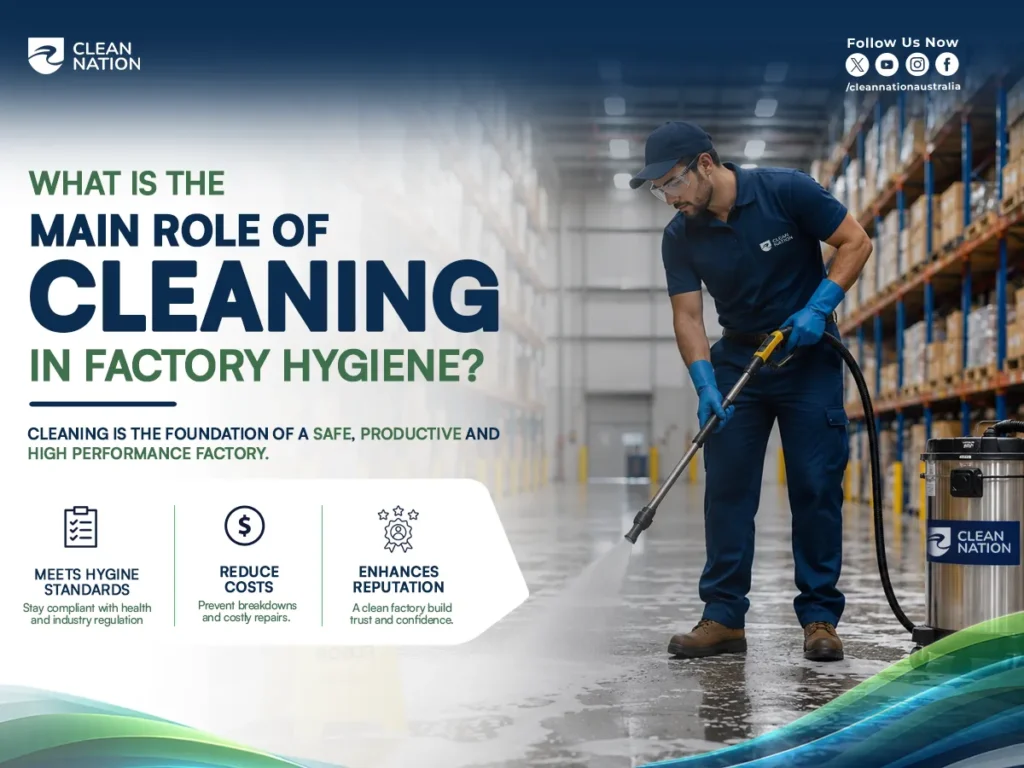
The main role of cleaning in factory hygiene is to prevent contamination, protect worker safety, and keep a manufacturing facility compliant with health regulations. Cleaning removes dust, grease, dirt, and harmful substances before they affect product quality, cause workplace accidents, or breach hygiene standards. It also extends machinery lifespan, reduces production downtime, and improves overall efficiency, making it one of the most valuable ways a factory protects its people, its products, and its bottom line.
What Is Factory Hygiene?
Factory hygiene is the overall standard of cleanliness and sanitation maintained across a manufacturing site. It covers everything from the floors and walkways to the machinery, storage areas, and staff facilities. Good hygiene isn’t just about appearances. It’s about controlling the dust, grease, bacteria, and other contaminants that build up during daily operations and could otherwise put products, equipment, or people at risk.
For manufacturers, hygiene standards aren’t optional extras. They’re tied directly to workplace legislation, industry regulations, and, in food and pharmaceutical settings, strict compliance requirements around cross-contamination and sanitation.
Importance of Cleanliness in Industrial Environments
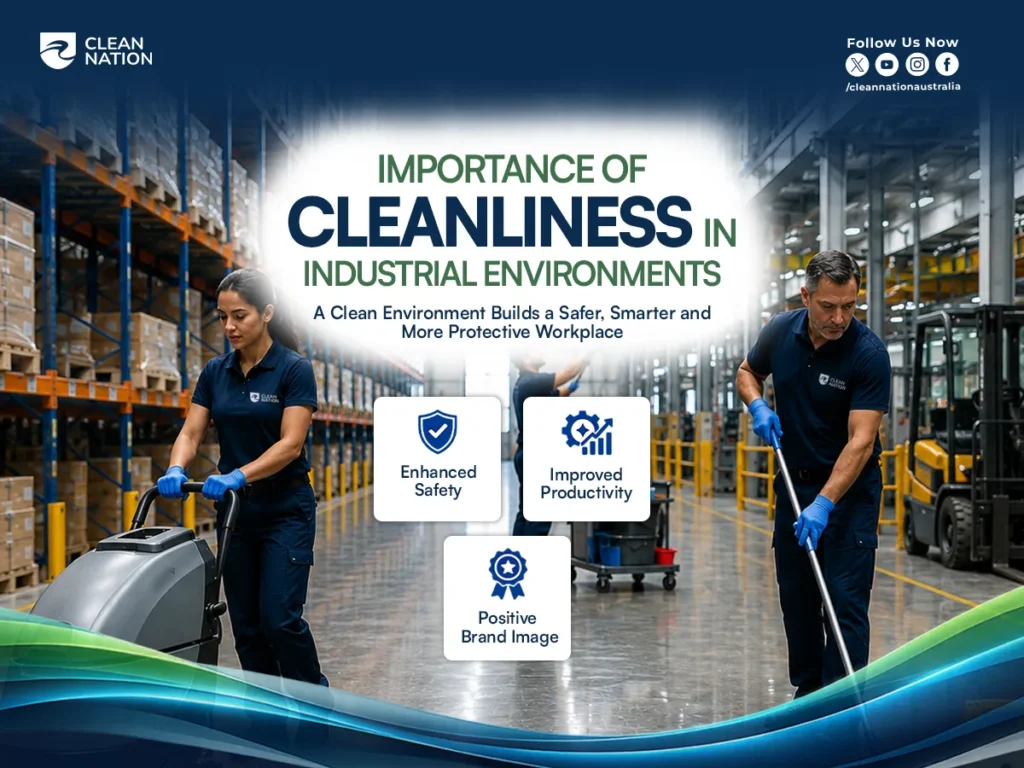
Industrial environments generate a lot of mess. Machinery sheds dust and metal particles, production lines leave behind grease and residue, and heavy foot and vehicle traffic tracks dirt through the whole site. Left unchecked, this buildup doesn’t just look bad. It creates slip hazards, clogs equipment, and can contaminate the very products the factory exists to make.
A clean industrial environment reduces the chance of workplace accidents, supports better air quality, and gives staff a workplace they can actually take pride in. It also makes a strong first impression on clients, auditors, and business partners who walk through the site.
Difference Between Cleaning and Sanitising in Factories
People often use “cleaning” and “sanitising” interchangeably, but they’re not the same thing, and the distinction matters in a factory setting.
Cleaning removes visible dirt, dust, grease, and debris from a surface, usually with detergent and water. Sanitising goes a step further. It reduces bacteria, pathogens, and other microorganisms to a safe level, typically using a chemical sanitiser, high-temperature water, or a solution like diluted bleach or isopropyl alcohol.
In most factories, both steps are needed. You clean a surface first to remove the physical mess, then sanitise it to deal with what you can’t see. Skipping straight to sanitising without cleaning first rarely works, because leftover grease or debris can shield bacteria from the sanitiser.
How Does Cleaning Support Factory Hygiene?
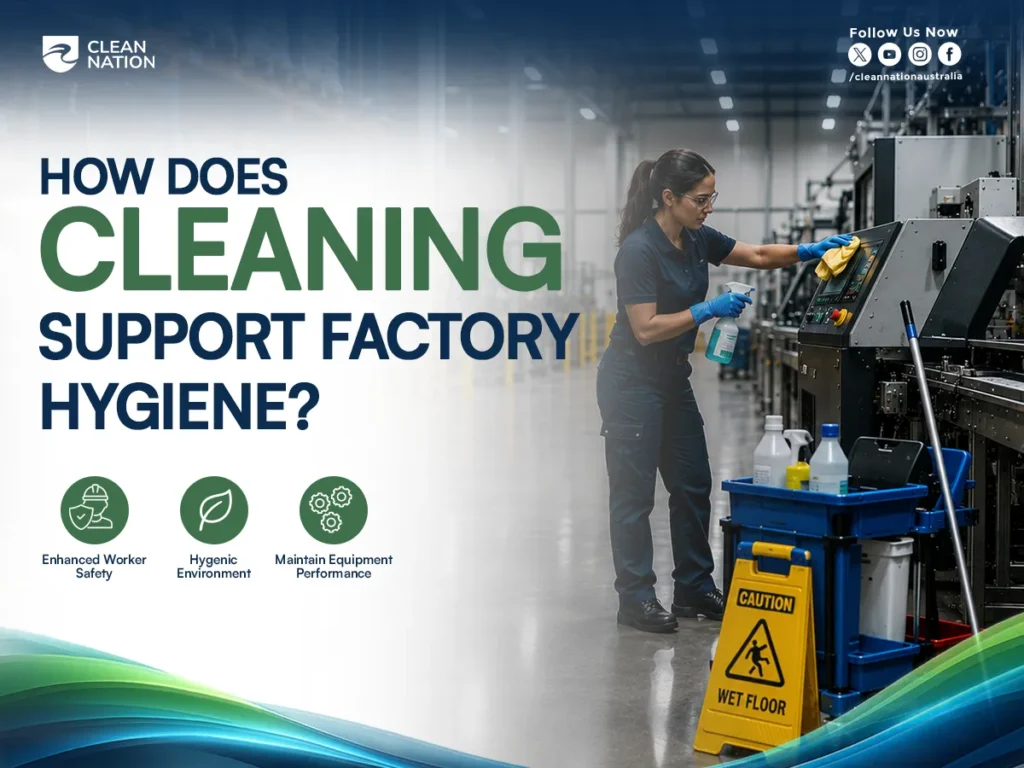
Cleaning is the mechanism that keeps hygiene standards in check day to day. Without a consistent cleaning program, even the best-designed hygiene policy falls apart within weeks. Here’s how cleaning actually delivers on factory hygiene goals.
Prevents Contamination and Protects Product Quality
Contamination is one of the biggest risks a manufacturer faces. Dust, grease, or bacteria on a production line can end up in the finished product, leading to quality issues, customer complaints, or, in food and pharmaceutical settings, a full product recall.
Regular cleaning of production equipment, work surfaces, and storage areas breaks the chain of contamination before it ever reaches the product, which keeps customers confident in what they’re buying.
Removes Dust, Dirt, Grease, and Harmful Substances
Beyond the everyday buildup covered earlier, some of what accumulates in a factory needs more careful handling. Certain industrial byproducts, oils, and residues count as hazardous materials that require proper storage, handling, and disposal, not just a wipe-down. A structured cleaning process identifies which substances fall into this category and makes sure they’re dealt with using the right method and equipment, rather than treated the same as ordinary dust and dirt.
Reduces Health, Safety, and Compliance Risks
Australian workplaces are expected to meet hygiene and safety obligations under legislation like the Health and Safety at Work Act and relevant food safety standards. These aren’t just guidelines. A factory that can’t show a consistent cleaning record is exposed if an inspector or auditor comes through, and repeated non-compliance can mean fines or worse. For a closer look at what’s actually at stake when cleaning standards slip, see our guide on The Hidden Dangers of Poor Industrial Cleaning. Regular cleaning gives a business the paper trail and the physical standard needed to demonstrate it’s meeting its legal obligations, not just its own internal expectations.
Benefits of Regular Factory Cleaning
Beyond the obvious hygiene and compliance angle, a solid cleaning routine pays for itself in ways that show up on the balance sheet.
Improves Productivity and Efficiency
A clean, organised factory floor is simply easier to work in. Staff aren’t wasting time navigating clutter or dealing with equipment that’s underperforming because it’s clogged with dust and grime. Fewer disruptions mean smoother workflows and better output across the board.
Reduces Equipment Damage and Extends Machinery Lifespan
Machinery is one of the biggest investments a manufacturer makes, and dirt is one of its biggest enemies. Dust and debris work their way into moving parts, grease builds up where it shouldn’t, and corrosion sets in faster on surfaces that aren’t properly maintained. Regular cleaning cuts down on wear and tear, which means fewer repairs, lower maintenance costs, and machinery that lasts years longer than it would under neglect.
Minimises Production Downtime
Nothing eats into profitability quite like an unplanned stoppage. A lot of unscheduled downtime traces back to equipment failures that could have been avoided with regular cleaning and inspection. Keeping machinery clean means fewer breakdowns, and fewer breakdowns mean the production line keeps running when it’s supposed to.
Areas That Require Regular Factory Cleaning
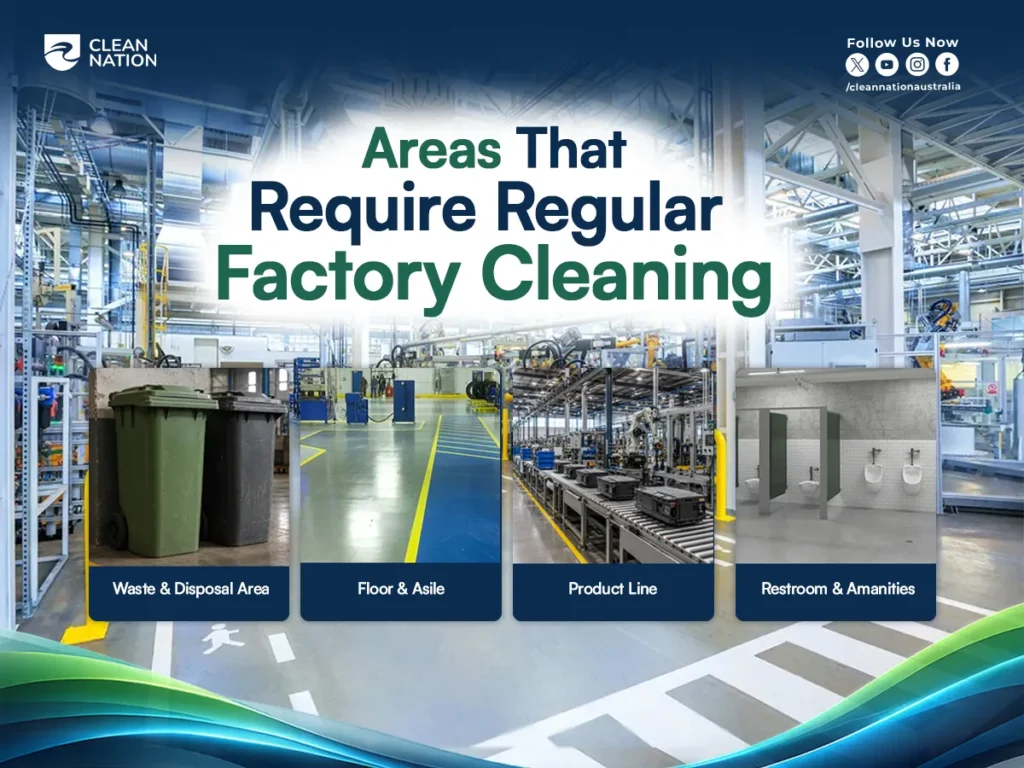
Not every part of a factory needs the same level of attention. Some areas need daily cleaning, others need a deeper clean on a weekly or monthly basis. Here are the spots that matter most.
Machinery and Production Equipment
This is the heart of any factory, and it’s also where dust, grease, and residue build up fastest. Regular cleaning of machinery and production equipment keeps it running efficiently and reduces the risk of unexpected breakdowns.
Factory Floors and Work Areas
Floors take a beating from foot traffic, vehicles, spills, and dropped materials. Whether it’s concrete, epoxy, or vinyl flooring, regular cleaning removes slip hazards and keeps walkways safe for everyone on site.
Storage and Material Handling Areas
Storage areas are easy to overlook because they’re not part of active production, but they’re still a risk if left unclean. Dust and debris accumulate on shelving, packaging waste piles up, and disorganised storage makes it harder to find what you need. A tidy, well-maintained storage area also supports better inventory management.
Food Processing and High-Risk Areas
For food manufacturers, this is the section that carries the most weight. Food contact surfaces, preparation areas, and equipment used for ready-to-eat or potentially hazardous food need cleaning and sanitising on a strict schedule. Cross-contamination in these areas isn’t just a hygiene issue; it’s a direct food safety risk that can lead to illness, recalls, and serious reputational damage.
Best Practices for Maintaining Factory Hygiene
Good hygiene doesn’t happen by chance. It comes from a structured approach that’s built into how the factory operates day to day.
Create a Regular Cleaning Schedule
A cleaning schedule takes the guesswork out of hygiene. It sets out what gets cleaned, how often, and by whom, covering everything from daily wipe-downs to monthly deep cleans. Without a schedule, cleaning tends to happen reactively, usually after something’s already gone wrong.
Use Proper Industrial Cleaning Equipment
Standard cleaning tools aren’t built for industrial-scale mess. High-pressure washing, industrial vacuums with HEPA filtration, and specialised equipment for grease or hazardous residue all play a role depending on what’s being cleaned. Using the right tool for the job means a more thorough clean and less risk of damaging equipment or surfaces.
Train Employees on Cleaning Procedures
Even the best cleaning schedule falls apart if staff doesn’t know how to follow it. Following an Industrial Workspace Cleaning Safety Checklist helps employees understand safe cleaning procedures, use equipment correctly, and comply with workplace safety requirements.
Training employees on proper cleaning procedures, including how to handle chemicals and hazardous materials safely, builds a culture where hygiene is everyone’s responsibility, not just something left to a cleaning crew.
Maintain Cleaning Records and Inspections
Keeping a log of cleaning activity, along with regular inspections, does two things. It helps catch problem areas before they become serious, and it gives the business a clear audit trail if a compliance check or inspection comes up. Good records also make it easier to spot patterns, like a piece of equipment that keeps getting dirty faster than expected, which might point to a maintenance issue.
How Does Clean Nation Help Maintain Factory Hygiene?
Keeping on top of factory hygiene is a lot easier with a team that does this for a living. Clean Nation provides industrial cleaning services in Australia built specifically for manufacturers, helping them create cleaning programs that fit the way each site actually operates.
Professional Industrial Cleaning Solutions
Our team understands the specific demands of industrial and manufacturing environments, from machinery and production lines to high-traffic floors and storage areas. We bring the right equipment and experience to handle jobs that go well beyond what a standard cleaning service can manage. Whether you’re running a site in the city and need an industrial cleaning service in Sydney, or you’re based elsewhere across the state and are after industrial cleaning services in New South Wales, our team can get to you.
Safe and Effective Cleaning Methods
We use cleaning methods suited to each surface and substance, whether that’s high-pressure washing for stubborn grime, dry ice blasting for delicate machinery, or eco-friendly solutions where sustainability is a priority. Every method is chosen to get the job done properly without damaging equipment or leaving harmful residue behind. You can see some of our industrial cleaning work in action to get a sense of what’s involved.
Custom Cleaning Plans for Different Facilities
No two factories are the same, so we don’t offer a one-size-fits-all service. After assessing your site, we build a cleaning plan around your layout, your production schedule, and your compliance requirements, so cleaning fits into your operations instead of getting in the way of them.
Client Experience with Clean Nation
Manufacturers who work with us consistently point to the same things: fewer disruptions, cleaner audits, and a workplace their staff feels good about. That kind of trust is built job by job, and it’s why so many of our clients stick with us long term rather than switching providers every year.
This kind of scenario is typical of what we see across the industry. A growing manufacturing facility had been managing cleaning in-house, but as production volumes increased, hygiene tasks kept getting pushed down the priority list. Grease buildup around the production line became a recurring issue, and staff were spending more time firefighting spills and mess than focusing on output. A routine internal review flagged concerns around inconsistent cleaning records and a lack of documented sanitising procedures in high-risk areas.
A tailored cleaning plan like the ones Clean Nation builds would typically cover daily cleaning of production equipment, scheduled deep cleans of high-risk zones, and a documented sanitising routine for food contact or high-touch surfaces. Facilities that put this kind of structure in place generally report smoother compliance audits, fewer unplanned equipment issues linked to dust and grease buildup, and a noticeable shift in how staff talk about their workplace day to day.
FAQs
How much does industrial factory cleaning cost in Australia?
Industrial factory cleaning in Australia typically costs between AUD $45 and $120 per hour per cleaner. For one-off factory cleaning projects, prices generally range from AUD $350 to $10,000+, depending on the factory size, level of contamination, and cleaning requirements.
How often should a factory hire a professional cleaning service?
This varies by industry and risk level, but most factories benefit from a mix of daily, weekly, and monthly cleaning tasks, with an in-house team or professional cleaners handling the daily basics and a specialist team coming in for deeper, less frequent cleans. Food processing and other high-risk facilities usually need professional sanitising on a much tighter schedule than a general warehouse.
What should you look for when choosing an industrial cleaning company?
Look for a provider with genuine experience in industrial settings, not just general commercial cleaning. Ask about the equipment they use, whether their staff are trained in handling hazardous materials, and whether they can provide cleaning records for compliance purposes. It’s also worth checking they’re properly insured and familiar with Australian workplace safety requirements.
Can factory cleaning be scheduled outside production hours to avoid downtime?
Yes, and for most manufacturers this is the preferred option. Cleaning teams can work overnight, on weekends, or during planned production breaks so the cleaning process doesn’t interrupt the production line. A good provider will work around your operating hours rather than asking you to work around theirs.
Is Clean Nation insured and compliant with Australian safety standards?
Yes. Clean Nation operates in line with Australian workplace health and safety legislation and carries the appropriate insurance for industrial and commercial cleaning work. Our team follows safe work practices for handling chemicals, hazardous materials, and specialised equipment on every job.
Conclusion
Cleaning isn’t a side task in a factory. It’s one of the main things holding hygiene, safety, and product quality together. A solid cleaning routine protects your people, extends the life of your equipment, keeps you compliant with Australian regulations, and helps production run without unnecessary interruptions.
If your factory’s cleaning program needs a rethink, Clean Nation can help you build one that actually works for your site. Get in touch to talk through what a tailored cleaning plan could look like for your facility.