

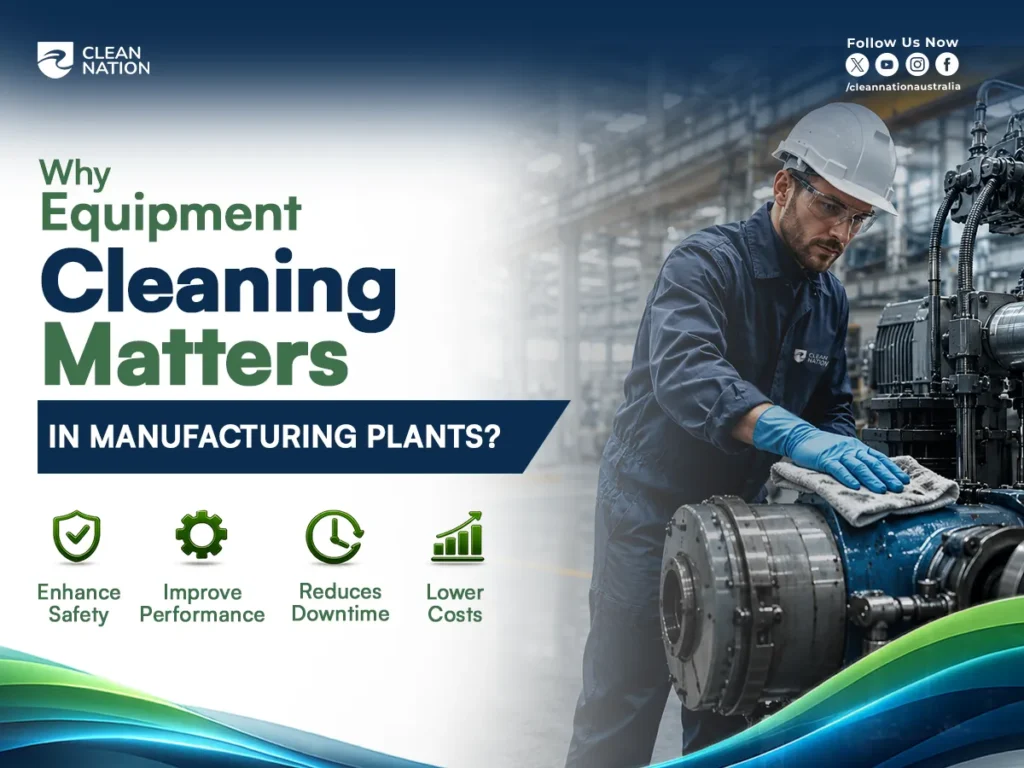
Dust, grease, oil, and product residue build up on machinery faster than most people expect. Left unchecked, that buildup does more than make a factory look messy. It affects how equipment performs, how safe a workplace is, and even the quality of what comes off the production line. So Why Equipment Cleaning Matters in Manufacturing Plants? Because it touches nearly every part of how a facility runs, from safety to output quality.
A solid cleaning program keeps operations running smoothly, cuts down on unplanned downtime, helps equipment last longer, and makes it easier to stay on the right side of regulatory requirements. At Clean Nation, we provide a cleaning service in Australia built specifically for manufacturers who need their facilities to stay clean, safe, and productive.
What Equipment Cleaning Actually Involves?
Equipment cleaning is the process of removing dust, grease, oil, product residue, and other contaminants from factory machinery. It’s a core part of routine facility maintenance, and it plays a real role in keeping operations safe and reliable.
Depending on the machinery and the materials being handled, a cleaning program might cover production equipment, external surfaces, accessible components, and the work areas around them. The right approach depends on the manufacturer’s guidelines and what the equipment is exposed to day-to-day.
Cleaning also pairs naturally with preventive maintenance. When dirt and grease are cleared away regularly, it’s much easier to spot leaks, wear, or other problems before they turn into bigger issues.
One thing worth being clear about: cleaning is not the same as mechanical servicing. At Clean Nation, our factory cleaning work supports maintenance teams; it doesn’t replace them.
The Real Benefits of Keeping Equipment Clean
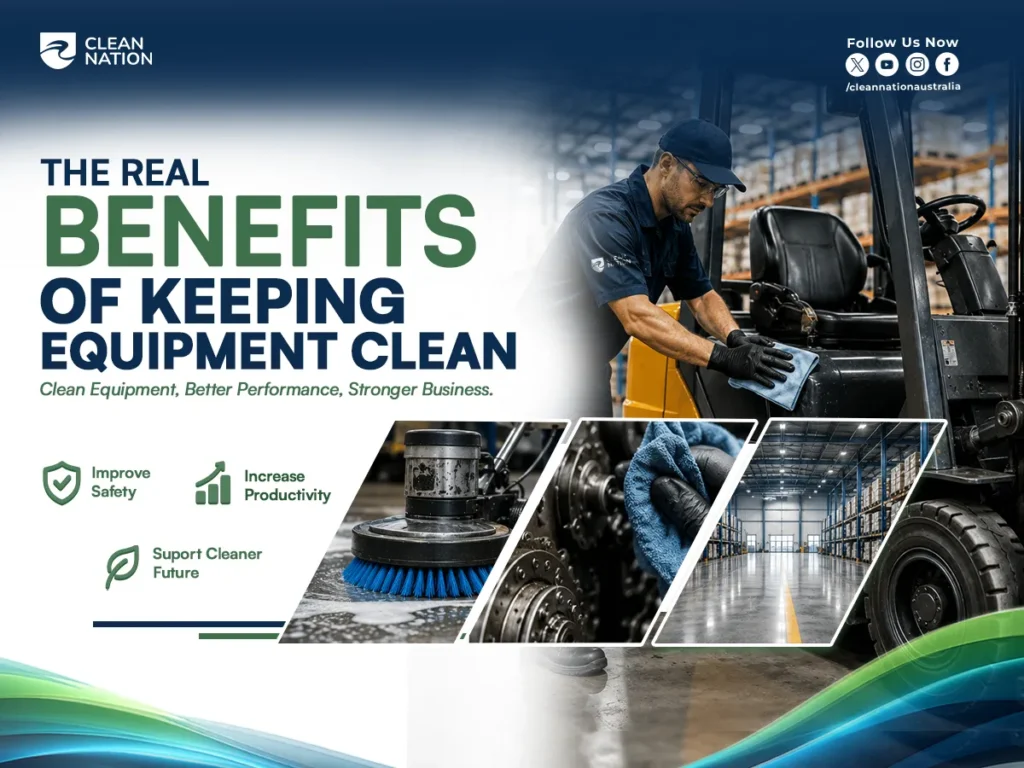
A clean facility isn’t just about appearances. Here’s what a consistent cleaning program actually does for a manufacturing plant.
It makes the workplace safer
Grease, dust, and spills create real hazards, from slippery floors to reduced visibility around moving equipment. Regular cleaning removes those risks and helps prevent accidents before they happen. It also cuts down on employees’ exposure to accumulated dust and buildup, which matters for long-term worker health. Paired with clear procedures and routine inspections, this is one of the simplest ways to support a safer plant.
It helps prevent contamination
For manufacturers in food, beverage, pharmaceutical, or consumer goods production, clean equipment is directly tied to product quality. Residue left behind from a previous run can contaminate the next one. Consistent cleaning reduces that risk, supports quality control, and helps avoid the kind of defects that lead to costly recalls.
It extends the life of your equipment
Grease and grime don’t just look bad. Over time, they contribute to wear that shortens a machine’s usable life. Clean equipment is also easier to inspect, which means maintenance teams can catch small issues before they become expensive ones. Cleaning won’t replace servicing, but it makes servicing more effective.
It reduces unplanned downtime
Excess dirt and residue can interfere with normal operation and make it harder to spot problems during inspections. Keeping equipment clean means fewer surprises and fewer unscheduled stops. Teams can catch concerns early and plan maintenance around them, instead of reacting after something breaks.
It improves day-to-day efficiency
Machines that operate in a cleaner environment tend to run more consistently, with fewer interruptions caused by buildup or blockages. Over time, that adds up to real gains in productivity across the facility.
It supports compliance
Many industries require documented cleaning procedures as part of their regulatory obligations, and having a clear cleaning program on record makes audits and inspections far less stressful. Regular cleaning also helps with general health and safety compliance, including OSHA requirements where they apply.
It lowers maintenance and repair costs
Clean machinery is easier to inspect, and easier inspections mean problems get caught sooner. That earlier detection often means smaller, cheaper fixes instead of major repairs down the line. It’s a simple way to get more value out of a preventive maintenance strategy.
Signs Your Equipment Needs Cleaning
Most equipment gives clear warning signs before things get out of hand. Here’s what to watch for:
- Visible dirt or dust building up on machine surfaces
- Grease collecting around housings, guards, or accessible components
- Equipment that looks dirty again shortly after cleaning, which usually means your current schedule isn’t frequent enough
- Blocked vents or cooling fins, which can restrict airflow and lead to overheating
- Harder-to-read inspections, where grime is hiding leaks or loose fittings
- Recurring issues between scheduled maintenance visits
- Residue spreading beyond the production process into surrounding areas
- Missed cleaning schedules, which let contaminants pile up faster than expected
At Clean Nation, we help manufacturers catch these signs early, before they turn into bigger operational problems.
Common Contaminants Found on Factory Equipment
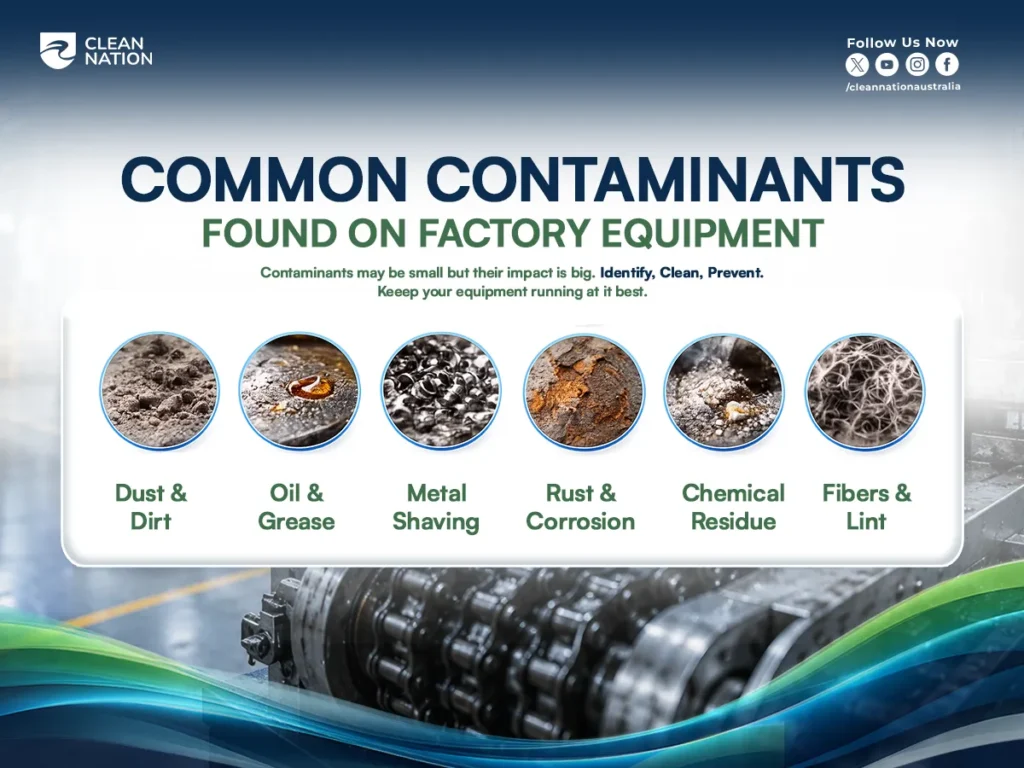
What builds up on your equipment depends heavily on your production process. Here’s what we see most often:
Dust and debris. Fine airborne particles and larger fragments like packaging scraps settle on machinery constantly. Regular removal keeps surfaces clean and supports better air quality on the floor.
Oil, grease, and lubricants. These are essential for machine operation, but excess buildup on external surfaces is common. Professional degreasing removes what’s unwanted without touching the lubrication systems that actually need it.
Chemical residue. Processing agents, cleaning chemicals, and solvents can leave residue behind if they’re not handled correctly. Removing it safely means following proper chemical handling and spill response procedures.
Metal shavings and production waste. Cutting, grinding, and machining operations generate scrap and shavings that need to be cleared regularly to keep moving parts and work areas free of unnecessary buildup.
How Often Should You Clean Manufacturing Equipment?
There’s no single answer here. It depends on your machinery, your production volume, and your operating environment. That said, most facilities benefit from a layered schedule:
- Daily: Clear dust, dirt, and residue from high-use equipment and operator areas after each shift
- Weekly: Clean external machine surfaces, guards, and accessible components
- Monthly: Deep clean to remove accumulated grease and stubborn residue that daily cleaning doesn’t catch
- Quarterly: A more thorough clean of production equipment and surrounding areas
It’s also worth revisiting your schedule periodically. As production demands or equipment usage change, your cleaning frequency should change with them. At Clean Nation, we build these schedules around the actual needs of each plant we work with.
Cleaning Methods Used in Manufacturing Plants
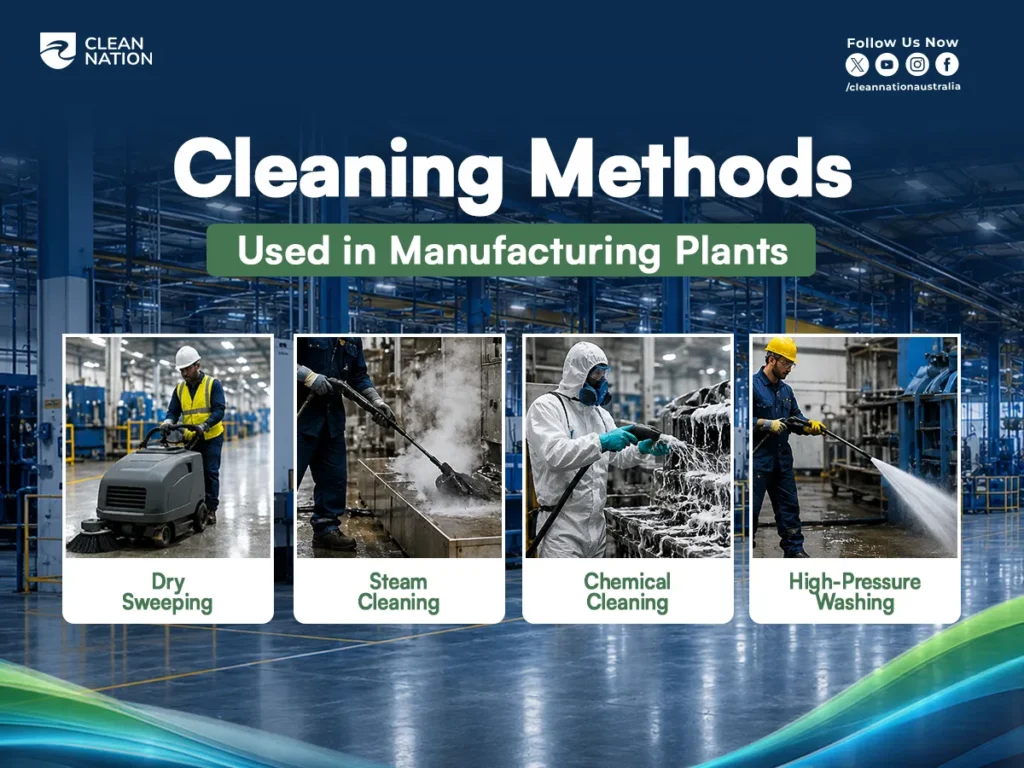
Different equipment and contaminants call for different approaches. Here are the main methods used across the industry, and you can see what professional industrial cleaning looks like in practice.
Pressure washing. High-pressure water jets are effective for removing dirt and grease from durable surfaces, flooring, and large external machinery.
Steam cleaning. High-temperature steam loosens grime without relying on heavy water use, and it’s well suited to deep cleaning and sanitization tasks.
Dry ice blasting. This method uses carbon dioxide pellets to remove contaminants without leaving secondary waste behind, which makes it a good fit for precision or sensitive equipment.
Chemical cleaning. Industrial-grade detergents and specialized agents dissolve grease, oil, and chemical residue. The right product depends on the industry, whether that’s food-grade chemicals or eco-friendly alternatives.
Industrial vacuuming. Vacuum systems remove dust and loose debris efficiently and help keep production floors clear.
We select the method (or combination of methods) that fits the facility, the machinery, and the type of contamination involved.
Best Practices for Equipment Cleaning
Build a routine schedule. Base it on equipment usage, production demands, and manufacturer recommendations, not guesswork.
Follow Lockout/Tagout procedures. Any cleaning near active or powered equipment needs to follow proper LOTO steps to keep workers safe.
Use the right products and tools for the job. Not every cleaning agent or piece of equipment is suited to every surface. Matching the right tool to the right contaminant protects both the equipment and the people cleaning it.
Wear appropriate PPE. This isn’t optional. Proper protective gear reduces exposure risk, especially when chemicals are involved.
Inspect and document afterward. A quick inspection after cleaning confirms the job was done properly, and keeping records makes audits and continuous improvement much easier down the line.
Common Mistakes to Avoid
A few things we see go wrong again and again:
- Using the wrong cleaning method, which can damage surfaces or simply fail to remove what it’s supposed to.
- Skipping scheduled cleanings, which lets contaminants build up faster and makes future cleaning harder.
- Relying only on manual cleaning, which tends to produce inconsistent results, especially in larger facilities.
- Ignoring manufacturer guidelines, which can affect performance and increase the risk of breakdowns.
- Incomplete contamination removal, which raises the risk of cross-contamination in facilities with strict hygiene needs.
- Skipping safety procedures, which puts both workers and equipment at unnecessary risk.
- Not inspecting after cleaning, which means missed contaminants or issues go unnoticed.
- Poor documentation, which makes it harder to prove compliance during an audit.
When It’s Time to Bring in a Professional Cleaning Service
There’s a point where routine, in-house cleaning isn’t enough to keep operations safe, efficient, and compliant. That’s usually when it makes sense to bring in a dedicated cleaning partner.
We provide industrial cleaning services in Australia for manufacturing plants of all sizes, including:
- Trained technicians with real experience in industrial environments
- Scheduled cleaning, shutdown cleaning, or large-scale projects
- Support with maintaining compliance and consistent cleaning standards
- Safe removal of heavy dust, grease, oil, and other contaminants
- Flexible scheduling that works around your production timeline
- A cleaning approach that complements your existing maintenance team, rather than working around it
We also run dedicated teams for our industrial cleaning service in Sydney and our broader industrial cleaning services in New South Wales, so manufacturers across the region have a local team they can rely on.
A Recent Project
A manufacturing facility in Perth brought us in to clean up production equipment and the surrounding work areas. Over time, dust, grease, oil residue, and metal shavings had accumulated to the point where routine inspections were becoming difficult.
We scheduled the work outside peak production hours to avoid disrupting operations. Our team cleaned accessible machinery, production areas, and surrounding surfaces using methods suited to the site, all in line with their existing safety procedures.
The result: cleaner equipment, better housekeeping, and a safer floor overall. The maintenance team also noted that visual inspections became noticeably easier once the equipment was properly cleaned.
Client feedback:
“The Clean Nation team was professional, punctual, and easy to work with. They completed the cleaning with minimal disruption to our operations, and the difference was noticeable immediately. The equipment and surrounding work areas looked much cleaner, helping us maintain a higher standard across the facility.”
FAQs
Can equipment be cleaned without stopping production?
Sometimes. External cleaning can often happen while nearby operations continue, but anything involving a safety risk needs to follow proper Lockout/Tagout procedures first.
Who’s responsible for equipment cleaning in a manufacturing plant?
It varies. Operators typically handle basic daily cleaning, while maintenance teams manage scheduled tasks. Many manufacturers also bring in outside companies like Clean Nation for deep cleaning, shutdown cleaning, or specialized jobs.
How long does a professional cleaning job take?
It depends on the size of the facility, how many machines are involved, and how much cleaning is needed. Smaller jobs might take a few hours. Larger facilities or full shutdown cleans can take a day or more.
Can cleaning be scheduled outside business hours?
Yes, and it often is. After-hours, overnight, and planned-shutdown cleaning are all common ways to minimize disruption to production.
How do I choose the right industrial cleaning company?
Look for experience in manufacturing environments, trained staff, proper equipment, solid safety procedures, and flexible scheduling. Reading customer reviews and asking about their track record in your specific industry is a good way to narrow things down.
Final Thoughts
Equipment cleaning isn’t just housekeeping. It’s a practical part of running a safe, efficient, and compliant manufacturing plant. Regular cleaning removes the contaminants that slow equipment down, cause safety issues, and drive up maintenance costs, while also making the workplace better for everyone in it.
If you’re looking for reliable equipment cleaning for your manufacturing plant, Clean Nation can help. Get in touch to talk through your requirements or request a free quote.