



To deep clean the kitchen, start by decluttering counters and drawers, then work through each area in order: sink and taps, countertops, cabinets, fridge and freezer, oven and stovetop, range hood, dishwasher, small appliances, pantry, bin, and finally the floor. Use basic supplies like microfibre cloths, white vinegar, baking soda, and dish soap to cut grease and remove limescale from every surface. That’s the full answer to how to deep clean the kitchen properly, and doing it every few months, backed by a daily and weekly routine, keeps your kitchen hygienic and prevents grease and bacteria from building up again. If you’d rather leave it to the experts, Clean Nation offers a trusted cleaning service in Australia built for exactly this kind of job.
What Is Deep Kitchen Cleaning?

Deep cleaning goes beyond what you clean every day. It targets the grease, bacteria, and grime that build up over time in places you don’t normally check.
Regular cleaning is your daily routine. Wiping counters, washing dishes, sweeping the floor. It keeps your kitchen looking neat.
Deep cleaning covers what regular cleaning misses:
- Inside the fridge, oven, and range hood
- Behind and under appliances
- Cabinet interiors and drawer tracks
- Grout lines and sink drains
Regular cleaning handles what you see. Deep cleaning removes what you don’t, like hidden grease and bacteria.
Your kitchen is a food preparation area. That makes hygiene a must, not a nice-to-have. Grease and food scraps build up in spots you rarely check. Over time, this becomes a breeding ground for bacteria, putting kitchen hygiene at risk.
Deep cleaning helps by:
- Stopping bacteria from spreading to food and surfaces
- Keeping pests away
- Helping appliances run better and last longer
- Lowering the risk of foodborne illness
This is what preventive cleaning is about. You stop problems before they start.
At Clean Nation, we see deep cleaning as part of everyday household hygiene, not a once-a-year task. A kitchen that gets deep cleaned regularly stays safer and easier to maintain.
Essential Kitchen Cleaning Supplies
Before you start, gather the right cleaning supplies. Having everything ready saves time and makes the job easier.
Here’s what you’ll need:
- Microfibre cloth – traps dust and grease better than regular rags, and won’t scratch surfaces
- White vinegar – cuts through grease and removes limescale naturally
- Baking soda – great for scrubbing stains without damaging surfaces
- Dish soap – handles everyday grease on dishes, counters, and stovetops
- Spray bottle – mix your own vinegar-and-water solution for easy, repeated use
- Rubber gloves – protect your hands from harsh chemicals and hot water
- Scrubbing brush, sponge, and a bucket for larger jobs
- A good all-purpose cleaner for quick wipe-downs
If you prefer safer options, look for non-toxic cleaning products. They work just as well without leaving strong chemical residue on surfaces where you prepare food.
Eco-friendly cleaning is also worth considering. Vinegar, baking soda, and lemon are natural, budget-friendly, and just as effective as many store-bought cleaners.
You don’t need a cupboard full of products. A few reliable basics will handle almost every kitchen cleaning task.
How to Deep Clean Your Kitchen (Step-by-Step)
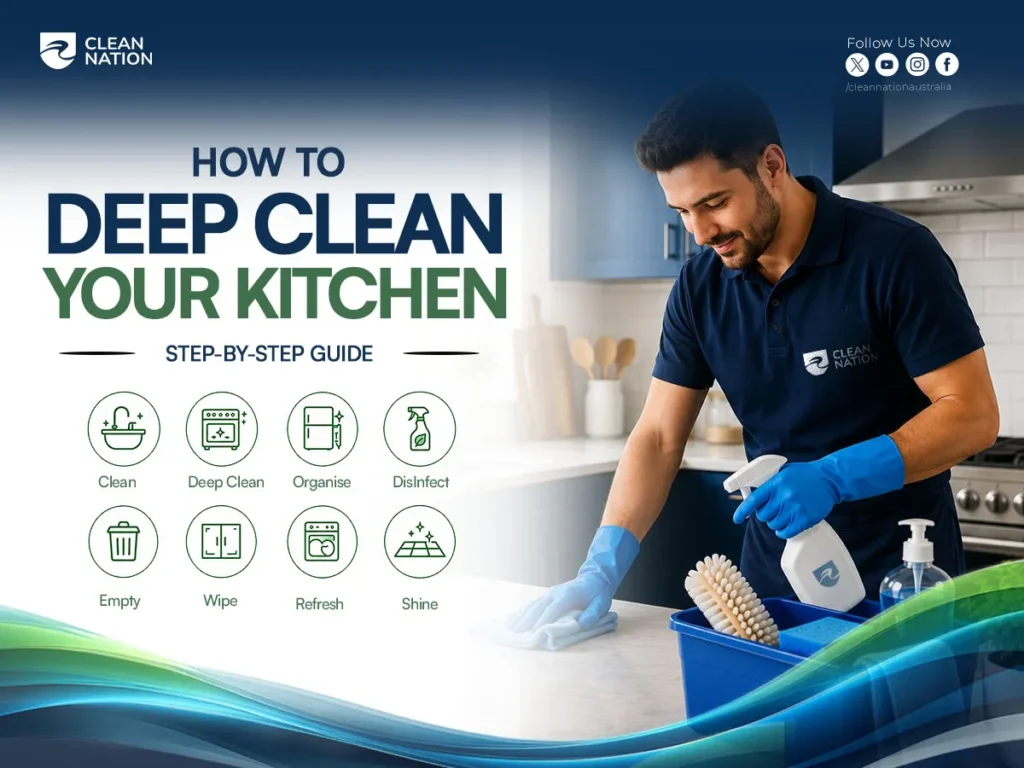
A good deep cleaning routine doesn’t have to feel overwhelming. Break it into steps and it becomes a simple cleaning workflow you can repeat every few months.
Follow this cleaning checklist in order. Each step builds on the last, so you won’t miss anything or double back.
This isn’t just about looks. It’s part of a smart kitchen maintenance routine that supports preventative maintenance and keeps your kitchen running well. Working through the steps in sequence is the most efficient cleaning method, and it turns a big job into something manageable.
Here’s how to deep clean kitchen spaces from top to bottom.
Step 1: Declutter and Empty the Kitchen
Start by clearing everything off counters, out of drawers, and off shelves. You can’t deep clean around clutter.
Declutter as you go:
- Sort items into keep, donate, and toss piles
- Grab a trash bag for anything broken or expired
- Set aside a donation box for items you no longer use
- Add a recycling bin for cardboard, glass, and cans
Kitchen decluttering also gives you a chance to rethink storage solutions. Once everything’s out, it’s easier to see what needs a better spot. This step alone can make a big difference in home organisation.
Step 2: Clean the Sink and Taps
Your kitchen sink sees daily use and buildup fast.
To clean it properly:
- Scrub the basin with a paste of baking soda and water
- Wipe down kitchen taps and the faucet with vinegar to remove water spots
- Focus on limescale removal around the tap base
- Run hot water down the drain to help with drain cleaning
- If drains smell, this also fixes smelly drains
Good sink cleaning removes both grime and bacteria, not just visible marks.
Step 3: Clean Countertops and Splashbacks
Wipe down all counters and splashbacks with a damp cloth and all-purpose cleaner.
For different surfaces:
- Granite countertops need a pH-neutral cleaner, not vinegar
- Quartz countertops are more durable but still avoid abrasive scrubs
- For the backsplash, focus on grout lines where grease collects
Good countertop cleaning means checking for stains, not just surface dust. For tough marks, use a stain removal paste and let it sit before wiping. This kind of regular countertop care keeps surfaces looking new and helps you finish with a streak-free finish.
Step 4: Clean Cabinets and Drawers
Kitchen cabinet cleaning and kitchen drawer cleaning go together, since both collect grease and dust over time.
Work through each one:
- Wipe cabinet fronts and cupboard doors with a degreaser
- Clean cabinet knobs and handles, where fingerprints build up
- Replace worn drawer liners
- Wipe drawer interiors before putting items back
This is also a good time for fingerprint removal on high-touch spots. Use this step for light cabinet organisation too, grouping similar items together as you refill each space.
Step 5: Deep Clean the Refrigerator and Freezer
Refrigerator cleaning should include everything, not just the shelves.
Work through it in order:
- Remove refrigerator shelves and refrigerator drawers and wash them separately
- Wipe down the fridge door, seals, and interior walls
- Check for expired food and toss anything past its date
- Clean refrigerator coils at the back to help the fridge run efficiently
- Finish with freezer cleaning, defrosting if needed
This step also helps with odour removal. A clean fridge smells better and keeps food fresher longer. To fully clean freezer compartments, wipe down ice buildup and check stored items for freezer burn.
Step 6: Clean the Oven, Stovetop, and Range Hood
This trio collects the most grease in your kitchen.
Start with oven cleaning:
- Remove oven racks and soak them separately
- Use an oven cleaner or baking soda paste on interior walls
Move to stovetop cleaning:
- Take off burner grates and clean underneath
- Use a degrease solution on stuck-on residue
Finish with range hood cleaning:
- Remove and wash the range hood filter
- Wipe down the exterior to remove grease film
If you have a ceramic cooktop maintenance routine, use a non-abrasive cleaner made for glass surfaces to avoid scratches.
Step 7: Clean the Dishwasher
Dishwasher cleaning is often skipped, but food particles build up inside over time.
Here’s what to check:
- Remove and rinse the dishwasher filter
- Wipe down door seals where grime collects
- Check spray arms for clogged holes
- Run an empty cycle with vinegar to descale and remove limescale
Regular dishwasher filter maintenance keeps it running well and prevents bad smells. Once it’s clean, rinse the interior, and you’re ready to load the dishwasher normally again.
Step 8: Clean Small Kitchen Appliances
Small appliance cleaning is quick but easy to forget.
Go through each one:
- Clean toaster crumb trays and wipe the exterior
- Clean kettle and descale it with vinegar or citric acid
- Clean coffee maker by running a vinegar cycle through it
- Clean microwave by heating a bowl of water and vinegar, then wiping the softened residue
Descaling kettle buildup regularly improves how it heats water and extends its life. Don’t forget the air fryer basket and tray, which collect grease fast.
For detailed steps on each appliance, see our full guide on How To Clean Your Kitchen Appliances.
Step 9: Organise the Pantry
Pantry cleaning works best alongside pantry organisation.
Steps to follow:
- Check every item and remove expired food
- Transfer dry goods into airtight containers or storage containers
- Group similar items into pantry zones
- Replace worn shelf liners
- Label containers so items are easy to find
Good food storage organisation saves time on future grocery trips and keeps pests away from open packaging.
Step 10: Empty and Sanitise the Bin
Your kitchen bin needs regular attention, not just a bag change.
To properly sanitise it:
- Empty trash and remove the liner
- Wash the bin inside and out
- Use a disinfectant or enzyme cleaner to disinfect the interior
- Let it dry fully before adding a new liner
This step supports odour control and helps with bacteria removal. A clean bin means better germ control and a fresher-smelling kitchen overall. It also helps remove odours that linger even after taking the trash out.
Step 11: Vacuum, Mop, and Disinfect the Floor
Finish with kitchen floor cleaning to catch anything that fell during the other steps.
Depending on your floor type:
- Tiled kitchen floors need grout cleaning to remove trapped dirt
- Vinyl kitchen floors do well with a pH-neutral cleaner
- Hardwood kitchen floors need a damp mop, not a soaking wet one
Start by vacuuming or sweeping up crumbs and dust. Then mop with the right cleaner for your floor type. This final step of floor maintenance completes the deep clean and leaves your whole kitchen looking and feeling fresh.
Daily, Weekly, and Monthly Kitchen Cleaning Checklist

Deep cleaning works best when you keep up with smaller tasks in between. A clear cleaning schedule stops grime from building up again.
Here’s a simple kitchen maintenance plan broken down by frequency.
Daily kitchen cleaning:
- Wipe down counters and the stovetop after cooking
- Wash dishes or load the dishwasher
- Sweep the floor
- Take out the trash if it’s full
- Wipe the sink dry to prevent water spots
Think of this as your daily kitchen reset. It takes ten minutes but keeps mess from piling up.
Weekly kitchen cleaning:
- Clean the microwave inside and out
- Wipe down cabinet fronts and handles
- Mop the floor
- Clean the sink and taps thoroughly
- Empty and wipe out the fridge door shelves
This weekly pass handles what daily wiping misses.
Monthly appliance cleaning:
- Clean the oven interior
- Descale the kettle and coffee maker
- Wash the range hood filter
- Check the fridge for expired items
- Clean the dishwasher filter and run a vinegar cycle
Monthly tasks focus on appliances, since grease and limescale build up slower but need more effort to remove.
This kind of routine maintenance is part of good household maintenance overall. Staying consistent with a schedule is the easiest form of preventive maintenance. It’s far simpler than one overwhelming clean every few months.
Common Kitchen Cleaning Mistakes to Avoid
Even with a good routine, small mistakes can undo your effort. Here are the ones to watch for.
- Using the wrong cleaner on surfaces. Harsh chemicals can damage granite, wood, or stainless steel. Check what’s safe for surface care before scrubbing.
- Skipping the drying step. Wiping a surface and leaving it wet often causes streaks. For streak-free cleaning, dry surfaces with a clean cloth right after wiping.
- Ignoring small kitchen stains early. Fresh kitchen stains come off easily. Left too long, they turn into built-up grime that needs much more scrubbing.
- Letting grease sit. Grease build-up on stovetops and range hoods gets harder to clean the longer it sits. Wipe grease while it’s still fresh.
- Using a dirty cloth or sponge. A dirty cloth spreads bacteria instead of removing it. Rinse or replace cloths and sponges often, especially after handling raw food.
- Cleaning without a plan. Jumping between tasks wastes time and lowers cleaning efficiency. Stick to a clear cleaning workflow, working top to bottom to avoid double work.
- Forgetting hidden spots. Overall kitchen cleanliness depends on more than visible surfaces. Behind appliances, inside drawers, and under the sink need attention too.
Avoiding these mistakes makes your cleaning routine faster and more effective, without extra work.
Why Choose Clean Nation for Professional Kitchen Cleaning
Not everyone has time for a full deep clean, and that’s fine. This is exactly what professional kitchen cleaning is for.
At Clean Nation, we offer full Kitchen cleaning services in Australia built around what your space actually needs.
Here’s what we cover:
- Residential cleaning for homes of any size, from small kitchens to large family setups
- Commercial kitchen cleaning for restaurants, cafes, and workplaces that need to meet strict hygiene standards
- Kitchen maintenance services on a schedule that fits you, weekly, monthly, or one-off
- Appliance cleaning for ovens, fridges, dishwashers, and range hoods
- Surface disinfection using products that are safe around food but tough on bacteria
- Kitchen organisation services to help sort cabinets, drawers, and pantry space
We’re not just wiping counters. Our team handles the parts of a kitchen most people skip, the grease behind the stove, the grime in cabinet corners, the buildup inside appliances. If you’re based in New South Wales, our Kitchen cleaning services in New South Wales cover homes and businesses across the region.
Choosing professional cleaning services means you get a properly sanitised kitchen without spending your weekend on it. Book a session with Clean Nation and let us handle the deep clean, so you can focus on everything else. Want to see it in action first? Watch this short clip on professional kitchen cleaning.
Client experience with Clean Nation
A family of five in Sydney reached out to Clean Nation’s Kitchen cleaning service in Sydney after months of putting off a proper kitchen clean. Between full-time work and cooking for five, they only had time for quick daily wiping.
During our walkthrough, we found grease coating the range hood and stovetop, limescale around the kettle and taps, a fridge with expired items, and a dishwasher filter clogged with food debris causing a bad smell.
Our team worked through the kitchen in stages: decluttering counters, deep cleaning the fridge, degreasing the stovetop and range hood, descaling the kettle, cleaning the dishwasher filter, and finishing with a full floor clean. The job took under four hours.
Results were immediate. Grease and limescale were gone, the fridge odour disappeared, cabinet fronts were free of fingerprints, and the dishwasher ran quieter with no smell.
The family now follows a monthly maintenance plan with Clean Nation, keeping the kitchen easier to manage between visits. See what other customers say in our Client reviews.
FAQs
How long does a full kitchen deep clean take?
For an average home kitchen, expect 3 to 5 hours if you’re doing it yourself. Professional teams like Clean Nation usually finish in under 4 hours since they work in pairs with the right tools.
How often should I deep clean my kitchen?
Once every 2 to 3 months works for most households; kitchens that see heavy daily cooking, or homes with pets, may need it monthly.
Is it safe to mix vinegar and baking soda for cleaning?
Yes, but they neutralise each other quickly, so the fizzing reaction has little cleaning power. Use them separately: baking soda for scrubbing, vinegar for cutting grease and limescale.
Can I deep clean my kitchen with kids or pets at home?
Yes, as long as you use non-toxic products and keep them out of reach while surfaces dry. Stick to vinegar, baking soda, and dish soap instead of bleach or ammonia-based cleaners if pets or young kids are around.
What’s the average cost of professional kitchen deep cleaning in Australia?
Prices typically range from $150 to $400, depending on kitchen size and condition. Larger kitchens or ones with heavy grease buildup may cost more due to extra time needed.
Conclusion
A spotless kitchen doesn’t happen by accident. It takes a proper deep clean followed by a routine that keeps grease and bacteria from coming back.
A clean kitchen supports household hygiene and a healthy home. Stick to a simple kitchen cleaning routine and daily upkeep gets much easier.
Short on time? Clean Nation handles the deep clean and ongoing kitchen maintenance for you, leaving a fresh kitchen without the hours of scrubbing.
Ready for a truly clean kitchen? Book your deep clean with Clean Nation today.