


How to Clean a Stainless Steel Kitchen Sink: Rinse the sink with warm water, then sprinkle baking soda over the surface and scrub gently in the direction of the grain using a non-abrasive sponge. Spray white vinegar to dissolve water spots and light stains, let it sit for a few minutes, then rinse thoroughly with clean water. Dry and buff the sink with a microfiber cloth to leave a streak-free shine. Avoid bleach, steel wool, and scrubbing against the grain, as these damage the protective finish and cause rust or scratches. For daily upkeep, wipe the sink dry after each use and do a full baking soda and vinegar clean once a week.
Why Cleaning Your Stainless Steel Sink Matters?
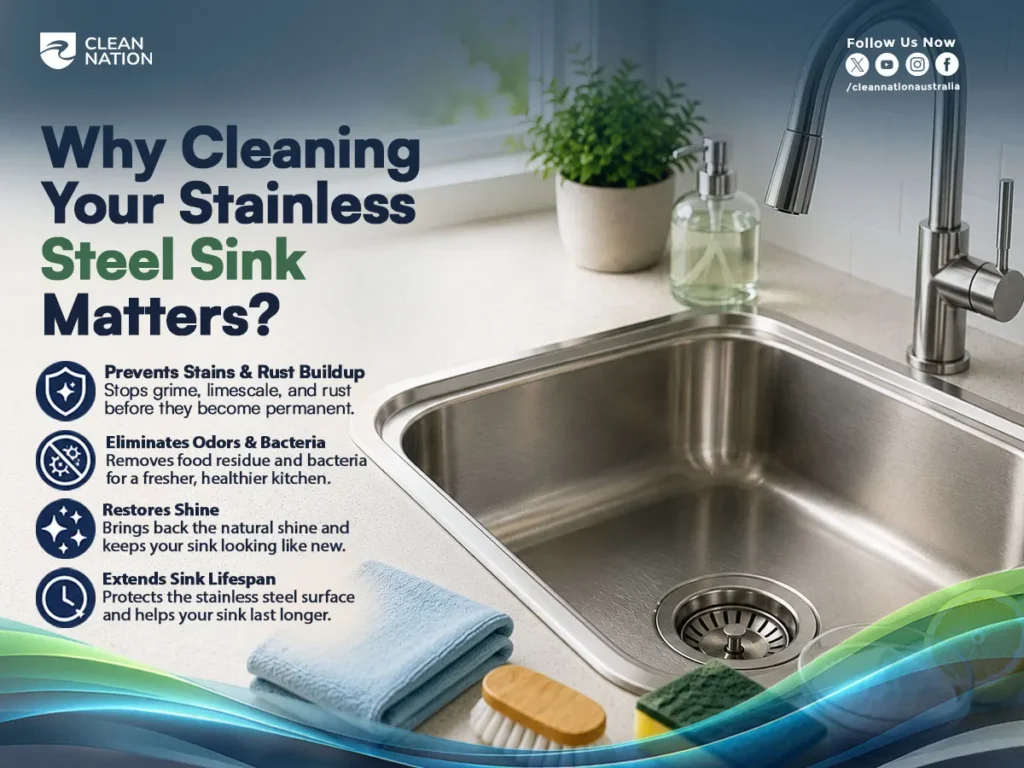
A dirty sink is not just an eyesore. It affects hygiene, safety, and how long your fixture lasts.
- Prevents stains and rust buildup before they become permanent
- Eliminates odours and bacteria, including E. coli and Salmonella that build up in food residue
- Restores shine and keeps the sink looking new
- Extends sink lifespan by protecting the chromium oxide layer that gives stainless steel its corrosion resistance
- Supports better kitchen hygiene and a cleaner food preparation area
Sink hygiene is really just one piece of a bigger issue. If you want to understand how it connects to broader food safety concerns in the kitchen, What Are the 3 Types of Hazards in Kitchen Cleaning? is worth a read.
Skip regular cleaning for too long, and grease, limescale, and soap residue start to harden. Once that happens, you’re stuck using stronger products to break it down, and stronger products come with a higher risk of scratching or damaging the surface.
Supplies You’ll Need Before You Start
You do not need commercial stainless steel cleaners for most jobs. A few basics handle almost everything.
- Baking soda (bicarbonate of soda) — a mild abrasive that lifts grime without scratching
- Dish soap — cuts through grease and food residue
- White vinegar — dissolves hard water stains and disinfects naturally
- Warm water
- Microfiber cloth or soft cloth for buffing
- Non-abrasive sponge
- Soft-bristled brush (optional, for tight corners and the drain area)
- Rubber gloves to protect your hands from repeated exposure to cleaning agents
Avoid steel wool, bleach, and abrasive pads. They scratch the surface and break down the sink’s protective coating over time.
Step-by-Step Cleaning Process
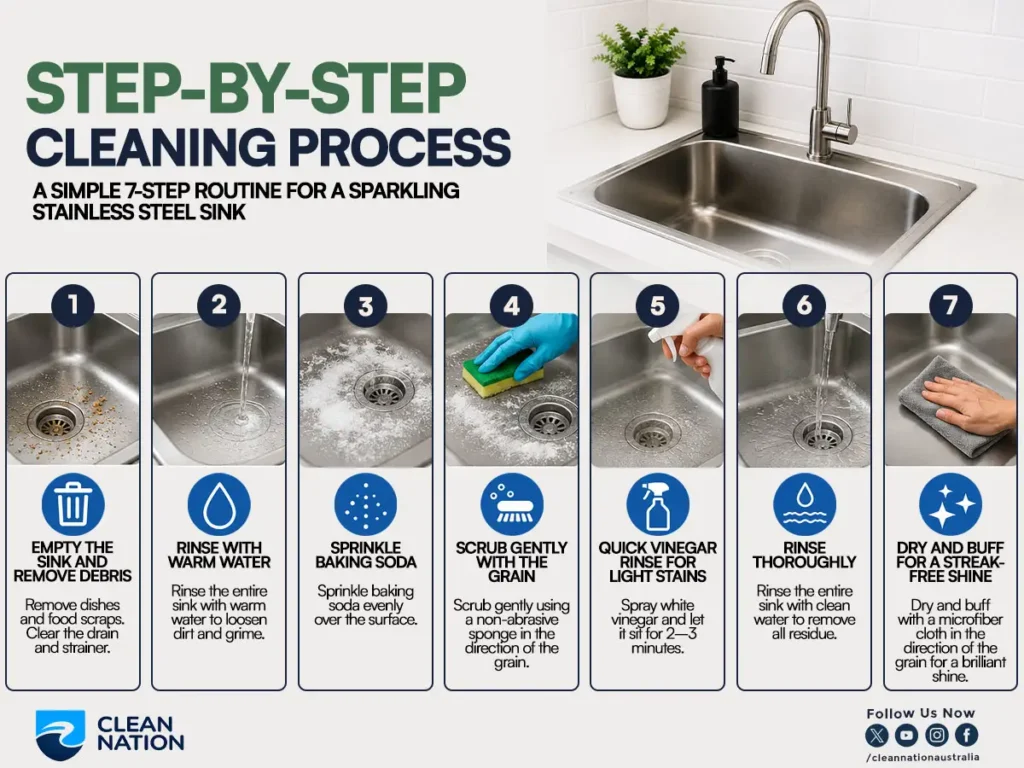
Follow these steps in order for the best results.
Step 1: Empty the Sink and Remove Debris
Clear out dishes, pots, and any food scraps. Remove loose particles from the drain and sink strainer before you add water. This stops debris from spreading around the basin while you scrub.
Step 2: Rinse with Warm Water
Run warm water over the entire sink surface, including the corners and edges. This loosens surface dirt and makes the next steps more effective. Use the faucet sprayer to reach tight spots near the drain.
Step 3: Sprinkle Baking Soda
Sprinkle baking soda evenly across the damp surface. It works as a gentle abrasive, lifting grime without scratching the metal. For tougher spots, mix it with a little water to form a paste.
Step 4: Scrub Gently with the Grain
Stainless steel has a visible grain — fine brushed lines running in one direction. Always scrub along the grain, never against it. Scrubbing against the grain traps dirt in the microscopic grooves and can leave faint scratches.
Step 5: Quick Vinegar Rinse for Light Stains
Spray white vinegar over the sink and let it sit for two to three minutes. The vinegar reacts with the baking soda residue and helps dissolve soap scum, light water spots, and mineral deposits.
Step 6: Rinse Thoroughly
Rinse the entire sink with clean water to remove all cleaning residue. Leftover baking soda or vinegar can leave streaks once the sink dries.
Step 7: Dry and Buff for a Streak-Free Shine
Dry the sink completely with a microfiber cloth, working in the direction of the grain. This final buffing step is what gives the sink its gleaming, streak-free finish. Skipping it is the most common reason a sink looks dull right after cleaning.
Mistakes That Can Ruin Your Cleaning Effort
Small mistakes cause most of the scratches, discolouration, and dullness people deal with.
- Using bleach — it reacts with chromium and can cause pitting corrosion
- Using steel wool or abrasive scrubbers — these leave micro-scratches that trap dirt
- Scrubbing against the grain — damages the finish and dulls the surface over time
- Leaving standing water — causes water spots and speeds up limescale buildup
- Using harsh chemical cleaners — ammonia, undiluted vinegar, and chlorine-based products — weakens the protective layer
- Leaving metal utensils or cast iron cookware in the sink — these cause rust transfer marks
If you are unsure which products are safe for your sink type, a kitchen cleaning services provider in Australia can advise on the right approach for commercial or high-use kitchens.
How to Remove Tough or Stubborn Stains?
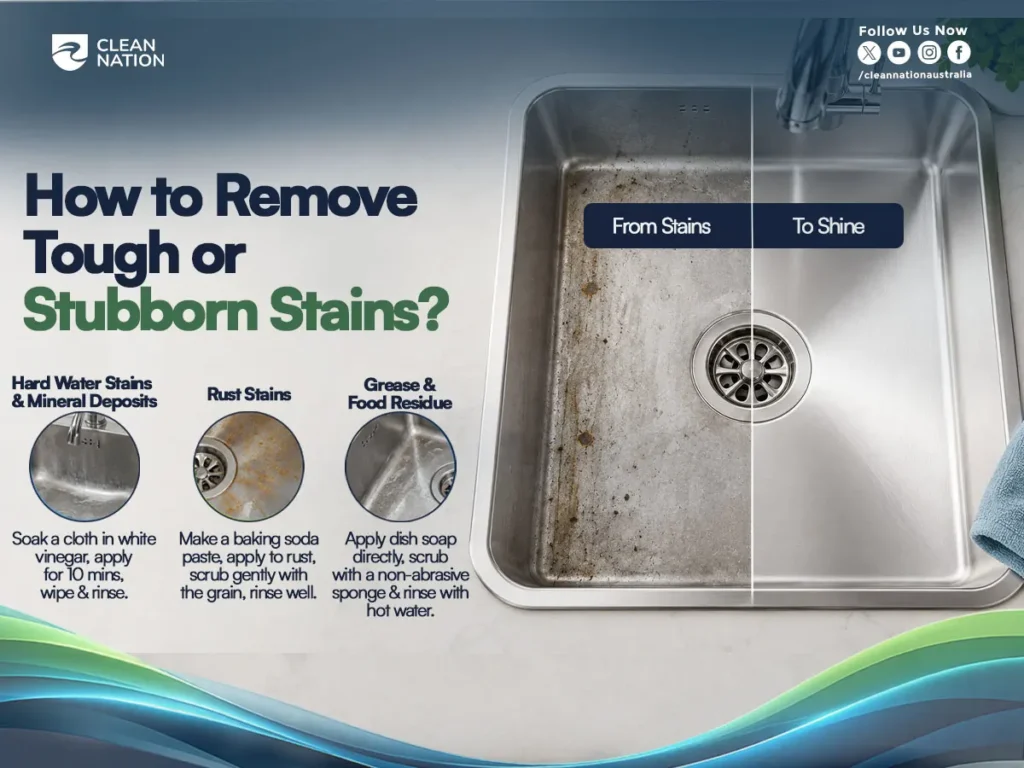
Sometimes daily cleaning is not enough. Here is how to handle specific problems.
Hard Water Stains & Mineral Deposits
Hard water leaves white or grey mineral deposits that build up around taps and drains. Soak a cloth in white vinegar and lay it over the affected area for 10 minutes. Wipe clean, then dry thoroughly to prevent new water spots from forming.
Rust Stains
Rust spots usually come from old water pipes, rust-flecked cookware, or steel wool left in the sink. Make a paste of baking soda and water, apply it directly to the rust mark, and scrub gently with the grain. For stubborn rust, a specialised stainless steel cleaner like Bar Keepers Friend works well.
Grease and Food Residue
Grease buildup collects around the drain and along the sink edges. Apply dish soap directly to the area and scrub with a non-abrasive sponge. Hot water helps break down grease faster than cold water.
Daily & Weekly Habits to Keep It Shiny
Small daily habits do more than any deep clean.
- Wipe it dry after every use to stop water spots before they form
- Clean spills immediately, especially acidic foods like tomato sauce or citrus juice
- Avoid leaving metal cookware in the sink to prevent rust transfer
- Polish occasionally with mineral oil or a stainless steel polish for extra shine
- Rinse and dry the sink at the end of the day, not just after each wash
These habits protect the sink’s finish and reduce how often you need a full deep clean.
How Often Should You Clean Your Sink?
Cleaning frequency depends on how much the sink gets used.
- Daily: A quick rinse and wipe-down after use
- Weekly: A full clean with baking soda and vinegar to remove buildup
- Monthly: Polish the surface to maintain shine and protect against scratches
Kitchens with heavy use — including cafes and commercial kitchens — often need a more frequent, deep cleaning routine. That is where a professional service becomes worth the cost, especially when staff time is limited, and downtime in the kitchen needs to stay low.
Why Choose Clean Nation for Cleaning?
Not every stain comes out with baking soda and vinegar. Years of buildup, heavy commercial use, or a sink that has already lost its shine often need a professional touch.
Clean Nation provides kitchen sink and appliance cleaning across Australia, using methods that protect the stainless steel finish instead of damaging it. Their team handles everything from routine maintenance to full kitchen deep cleans.
- Clean Nation kitchen deep cleaning for sinks, benches, and appliances
- Clean Nation commercial kitchen cleaning for cafes, restaurants, and food prep facilities
- Clean Nation stainless steel appliance cleaning, including fridges and dishwashers
- Clean Nation kitchen hygiene services built around food safety standards
- Clean Nation surface cleaning services that avoid harsh chemicals and abrasive tools
Choosing the right vendor matters. The wrong cleaning approach can scratch a sink permanently or void a manufacturer’s warranty. Clean Nation’s technicians know which products and techniques suit each sink material, so you get results without the risk of surface damage.
Client Experience With Clean Nation
A café in Sydney’s inner west had been using steel wool and bleach on its stainless steel sink for over a year. The surface had visible scratches, dull patches, and early rust spots near the drain.
Clean Nation’s team assessed the damage and switched the kitchen to a grain-direction cleaning method using non-abrasive products. After one deep clean and a follow-up polish, the sink’s shine was fully restored, and the rust spots were removed without any further scratching.
The café now follows a weekly maintenance schedule through Clean Nation’s kitchen cleaning services in New South Wales, avoiding the buildup that caused the original damage. You can see similar results and read more in client reviews, or watch a quick walkthrough of the professional kitchen cleaning process in action.
Frequently Asked Questions
Can you use a Magic Eraser on a stainless steel sink?
Yes, but with caution. A melamine sponge is mildly abrasive and can dull a brushed stainless steel finish if used too often. Stick to light pressure and always test a small area first.
How do you clean a stainless steel sink drain and strainer?
Remove the basket strainer and soak it in warm, soapy water. Scrub with an old toothbrush to clear trapped food particles, then rinse and pour boiling water down the drain to clear grease buildup.
Can lemon juice replace vinegar for cleaning?
Yes. Lemon juice works as a natural disinfectant and stain remover, similar to vinegar. It also leaves a fresh citrus scent, which some people prefer over the smell of vinegar.
What is the chromium oxide layer, and why does it protect my sink?
Stainless steel contains chromium, which forms a thin, invisible oxide layer on the surface. This layer is what makes the sink resistant to rust and corrosion. Harsh chemicals like bleach can strip this layer, leaving the metal exposed.
Is it safe to use essential oils in sink cleaning?
Yes, a few drops of essential oil in your cleaning paste can help mask odours and add a light fragrance. They do not affect the cleaning power of baking soda or vinegar.
Can boiling water help unclog or clean a sink drain?
Yes. Pouring boiling water down the drain weekly helps break down grease and food residue before it hardens into a clog. Avoid this method on sinks with plastic drain components, as heat can warp them.
Conclusion
A stainless steel kitchen sink stays shiny and scratch-free with consistent, gentle care, not harsh chemicals or heavy scrubbing. Stick to baking soda, vinegar, and soft tools; always work with the grain, and dry the sink after every use.
For daily maintenance, this routine is all you need. For deeper stains, commercial kitchens, or a sink that has lost its shine, a trusted cleaning service in Australia can restore it safely and keep it looking new for years.
Ready for a safer, spotless kitchen? Contact Clean Nation today for a free consultation.