

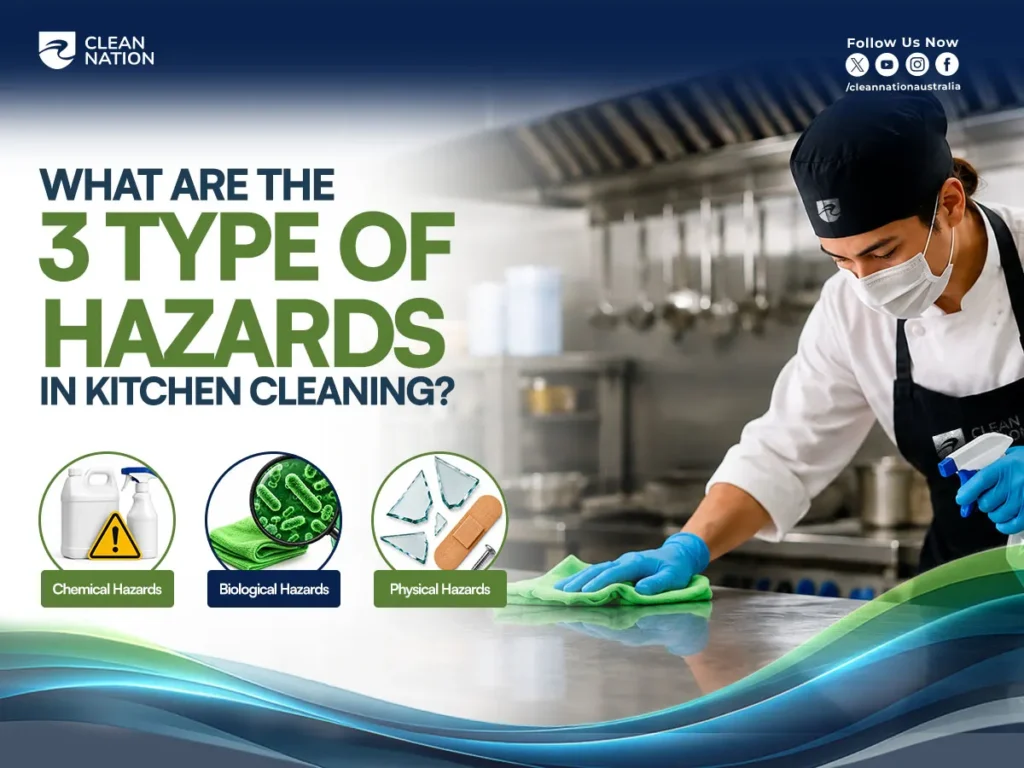
What Are the 3 Types of Hazards in Kitchen Cleaning? There are three types of hazards in kitchen cleaning: chemical, biological, and physical. Chemical hazards come from cleaning products like acid and solvent cleaners, which can cause burns or breathing problems if handled incorrectly. Biological hazards involve bacteria and pathogens like Salmonella and E. coli that spread through cross-contamination.
Physical hazards are solid objects, such as glass fragments, metal shavings, or loose hair, that can injure workers or end up in food. So when someone asks what the 3 types of hazards in kitchen cleaning are, the answer always comes back to these three categories. Preventing all of them requires proper PPE, safe chemical storage, staff training, and consistent cleaning routines. If you’d rather leave this to professionals, a trusted kitchen cleaning services provider in Australia can handle the full process for you.
What Is a Kitchen Cleaning Hazard?
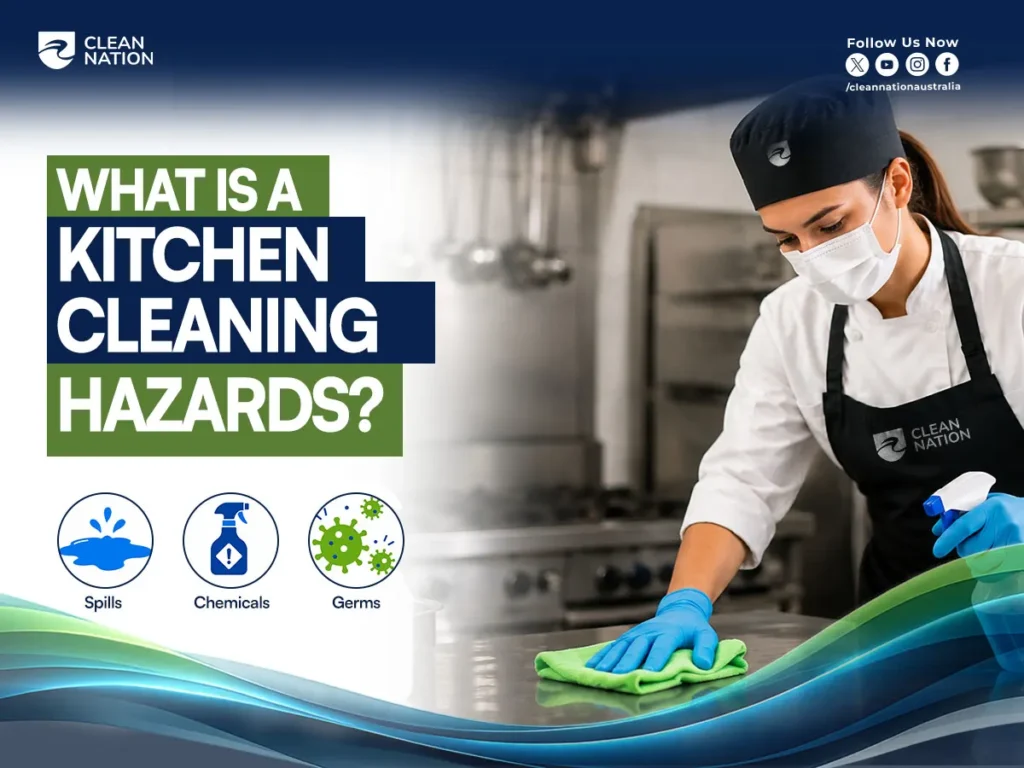
A kitchen cleaning hazard is anything that can hurt a worker or contaminate food during cleaning. It could be a chemical splash, a wet floor, or leftover bacteria on a surface.
Hazard identification means spotting these risks before they cause harm. Walk through the kitchen and ask: What could go wrong here? A chemical stored near food. A frayed cord on a dishwasher. These are workplace hazards worth flagging.
Next comes risk assessment. This means checking how likely a hazard is to cause harm, and how bad that harm could be. A spill near a busy prep station is riskier than one on an empty shelf.
Risk management isn’t a one-time job. Kitchens change often. New staff, new equipment, new products. Each change can bring a new food safety hazard if it’s not checked.
That’s why kitchen safety and commercial kitchen hygiene work together. A clean-looking kitchen isn’t always a safe one. Real hazard prevention means checking chemical storage, training staff, and watching equipment condition, not just wiping counters.
At Clean Nation, we build cleaning programs around this idea. As a leading cleaning service in Australia, we help kitchens catch risks early, so cleaning protects people and food.
The 3 Types of Kitchen Cleaning Hazards
Every kitchen cleaning hazard falls into one of three groups: chemical, biological, or physical. Knowing the difference helps you build the right hazard control plan for your kitchen.
Good food safety management means addressing all three at once. Miss one, and you leave a gap that can lead to injury, illness, or contamination. This is also part of basic occupational health and safety, protecting both your staff and your customers.
Let’s break down each type of food safety hazard.
Chemical Hazards
Chemical hazards come from the products used to clean your kitchen. Cleaning chemicals like acid cleaners and solvent cleaners are strong by design. That strength is what makes them risky if handled wrong.
Chemical exposure can happen through skin contact, inhalation, or splashing. This can lead to chemical burns, breathing problems, or eye irritation. Some products count as hazardous substances and need extra care.
To stay safe:
- Always wear PPE for commercial kitchen cleaning, like gloves and goggles
- Keep chemical storage areas separate from food
- Never mix cleaning products together
- Read labels before every use
Toxic substances left on surfaces can also transfer to food if rinsing isn’t done properly.
Biological Hazards
Biological hazards are living things you can’t see, but they cause real harm. This includes bacteria, viruses, and other microorganisms that spread through poor cleaning habits.
Common culprits include Salmonella, E. coli, and Listeria. These foodborne pathogens can survive on dirty surfaces, cutting boards, and equipment for hours.
Cross-contamination is the main way biological hazards spread. Raw meat touching a clean counter. A cloth used on multiple surfaces. Unwashed hands after handling raw food.
To reduce food contamination:
- Clean and sanitize surfaces after each use
- Use separate tools for raw and cooked food
- Wash hands often, especially between tasks
- Keep cleaning cloths fresh and dedicated to one area
Physical Hazards
Physical hazards are solid objects that end up where they shouldn’t. These are physical contaminants that can injure workers or customers.
Common examples include:
- Glass fragments from broken jars or lightbulbs
- Metal shavings from worn equipment
- Sharp objects left on counters or in bins
- Foreign objects in food, like packaging bits or utensil pieces
These hazards cause cuts and injuries during cleaning, and choking hazards if they end up in food.
Two often-missed sources are hair contamination and loose jewelry. That’s why jewelry prevention matters as much as wearing a hairnet. Simple habits, like tying back hair and removing rings before a shift, cut this risk fast.
How to Prevent These Hazards in Kitchen Cleaning?
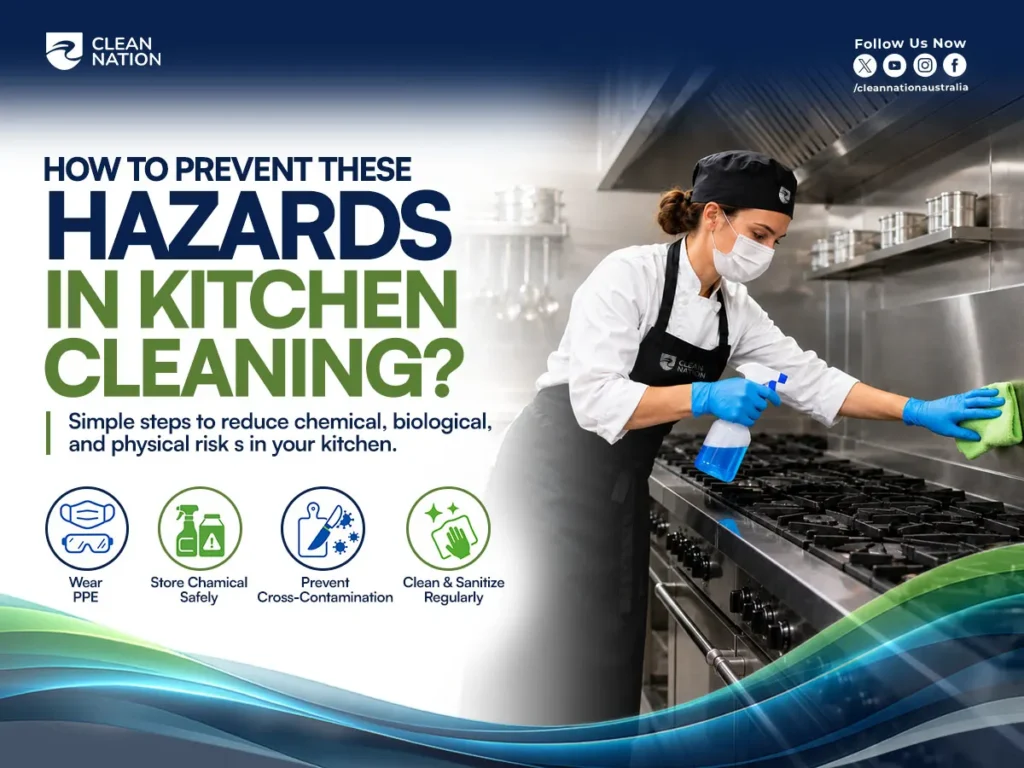
Preventing kitchen hazards doesn’t need to be complicated. A few consistent habits can cut most risks down to size.
Follow the hierarchy of controls
- Remove the hazard completely if you can.
- Reduce exposure through training and procedures.
- Use PPE as a backup, not the first line of defense.
Wear the right PPE
- Chemical-resistant gloves protect skin from burns and irritation.
- Goggles stop splashes from reaching your eyes.
- Match your gear to the task, not just what’s easiest to grab.
Read the safety data sheets (SDS)
- Every cleaning chemical comes with one.
- It explains how to handle, store, and respond to spills.
- Keep sheets where staff can find them fast, not buried in a drawer.
Store chemicals properly
- Keep products away from food, in labeled containers.
- Store in a well-ventilated space.
- Never store acids near bleach-based products; mixing can create dangerous fumes.
Check your ventilation
- Good airflow clears chemical fumes before they build up.
- Poor ventilation raises the risk of breathing problems.
- Pay extra attention to small kitchens or storage rooms.
Stop cross-contamination before it starts
- Use separate cutting boards and cloths for raw and cooked food.
- Clean surfaces between tasks, not just at the end of a shift.
Train your staff
- New hires need hands-on guidance.
- Existing staff need regular refreshers.
- Everyone should know how to spot a hazard and what to do about it.
Build safe cleaning practices into daily routines
- Consistency matters more than perfection.
- A short checklist followed every shift beats a detailed plan that gets skipped when things get busy.
A short checklist followed every shift beats a detailed plan that gets skipped when things get busy. Watch how our team handles kitchen cleaning the right way, from prep to sanitizing.
Kitchen Cleaning Safety Checklist
A good checklist turns safety rules into daily habits. Use this as a starting point, then adjust it to fit your kitchen’s cleaning protocols.
Before you start cleaning
- Check that all PPE is available and in good condition
- Review safety data sheets for any new products
- Make sure ventilation is working properly
During cleaning procedures
- Follow proper chemical storage and never mix products
- Use separate tools for raw and cooked food areas
- Wipe down high-touch surfaces first, then work outward
- Keep floors dry as you go to avoid slips
Sanitizing steps
- Clean visible dirt and grease before sanitizing; sanitizer doesn’t work well on dirty surfaces
- Let sanitizing procedures sit for the time stated on the label
- Rinse food contact surfaces if the product label requires it
Kitchen sanitation checks
- Inspect equipment for leftover food residue
- Check drains and grease traps for buildup
- Look for foreign objects, screws, glass, or metal shavings in prep areas
Regular inspections
- Walk through the kitchen weekly to spot new hazards
- Check that chemical labels are still readable
- Confirm staff are following safety guidelines correctly
Workplace compliance
- Keep training records up to date
- Store SDS sheets where they’re easy to find
- Review your process against current food safety standards
Following food safety checklists like this one keeps your kitchen consistent, even when staff or shifts change. At Clean Nation, we build these checklists into every professional kitchen cleaning program we run, so nothing gets missed.
Why Choose Clean Nation for Kitchen Cleaning?
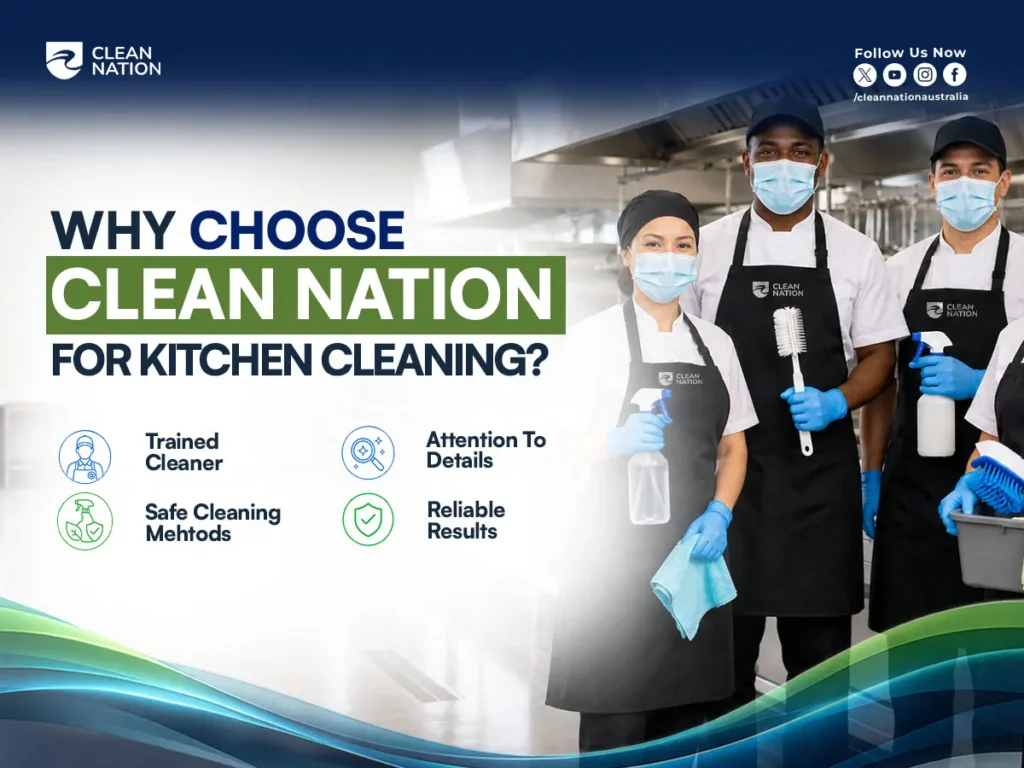
Cleaning a commercial kitchen properly takes more than a mop and some bleach. If you’re based in Sydney, our kitchen cleaning service in Sydney team knows the local health codes inside out.
We know commercial kitchens inside out. From restaurants to hospitals to schools, we’ve cleaned kitchens across the hospitality and healthcare sectors. We understand the pace, the pressure, and the standards each one needs to meet.
We follow proper safety protocols every time. Our team handles chemical storage, PPE, and safe cleaning practices as standard, not as an afterthought. You get a kitchen that’s clean and compliant, not just clean.
We help you stay inspection-ready. Our cleaning programs align with food safety standards, so you’re not scrambling before an audit. Regular inspections and documented procedures mean you always know where you stand.
We train our staff properly. Every cleaner on our team understands hazard identification, chemical handling, and cross-contamination risks. That means fewer mistakes and a safer kitchen for your team.
We build a plan around your kitchen, not a generic template. Cleaning frequency, product choice, and focus areas depend on your setup, your volume, and your risks. We adjust the plan to fit, not the other way around.
Get a kitchen that’s safe, clean, and compliant, without the guesswork. Talk to Clean Nation today.
Client experience with Clean Nation
The Problem
A mid-sized restaurant chain with six locations came to Clean Nation after a health inspection flagged multiple issues. This client operates kitchen cleaning services in New South Wales, where inspection standards are strict.
The chain also faced high staff turnover. New hires often skipped proper cleaning steps because no one had shown them the right process.
The Approach
We started with a full hazard assessment at each site. This covered chemical storage, equipment condition, staff habits, and cleaning schedules.
From there, we built a plan around three areas:
- Chemical safety – Separated cleaning chemicals from food storage areas and introduced labeled, locked storage units
- Staff training – Ran hands-on sessions covering PPE use, safe chemical handling, and cross-contamination risks, repeated for every new hire
- Cleaning schedule – Set daily, weekly, and monthly tasks with clear checklists, so cleaning didn’t depend on memory or experience
We also introduced sanitizing procedures for high-touch surfaces during peak service hours, not just at closing time.
The Result
Within three months, the chain passed its follow-up health inspection at all six locations. Staff reported feeling more confident handling chemicals safely. The kitchen managers noted fewer near-miss incidents, including slips near cooking stations.
Turnover-related training gaps dropped too. New hires now follow the same checklist from day one, so cleaning quality doesn’t drop when staff changes.
This is what a proper hazard prevention plan looks like in practice. If your kitchen needs the same clarity and consistency, Clean Nation can help you build it.
Frequently Asked Questions
How often should a commercial kitchen be deep cleaned?
Most commercial kitchens need a deep clean at least once a month. High-use areas like grills, fryers, and floors may need weekly attention. Daily cleaning handles surface dirt, but deep cleaning removes buildup in places daily wiping misses, like behind equipment and inside vents.
What is the difference between cleaning and sanitizing?
Cleaning removes dirt, grease, and visible debris from a surface. Sanitizing kills bacteria and germs that cleaning alone leaves behind. You need to clean a surface first, then sanitize it. Sanitizing a dirty surface doesn’t work well, since dirt blocks the sanitizer from reaching germs.
Who is responsible for kitchen cleaning hazards in a commercial kitchen?
The kitchen manager or owner holds legal responsibility for identifying and controlling hazards. This includes providing PPE, training staff, and keeping safety records. Staff shares responsibility too, by following procedures and reporting hazards they spot during their shift.
Can I use household cleaning products in a commercial kitchen?
No, household products usually aren’t strong enough for commercial-grade grease and bacteria loads. They also may not meet food safety standards required for food contact surfaces. Commercial kitchens need products approved for food service use, with the right concentration and safety data sheets.
What should I do if a cleaning chemical spills?
First, clear the area and keep people away from the spill. Check the safety data sheet for that specific chemical to see the correct response. Wear proper PPE before cleaning it up, and ventilate the space if fumes are present. Report the spill so it can be logged and reviewed.
Conclusion
Kitchen safety comes down to knowing your risks. Chemical, biological, and physical hazards each need their own approach, but the goal stays the same: protect people and food.
Hazard prevention isn’t a one-time fix. It’s a habit built through PPE, proper storage, training, and regular checks. Strong risk management keeps your kitchen ahead of problems instead of reacting to them.
Workplace safety and food safety compliance go hand in hand. Safe cleaning practices protect your team and keep your kitchen inspection-ready.
Ready to build hygiene compliance into your daily routine? Clean Nation helps commercial kitchens set up cleaning programs that keep staff safe and standards met. See what other kitchens are saying in our client reviews, then get in touch with our team today.