



Here are 5 professional tips for a cleaner, more hygienic kitchen: clean as you go to stop mess before it hardens, sanitise high-touch surfaces like handles and light switches to prevent cross-contamination, give your sink a daily clean since it’s a hotspot for bacteria, check hidden areas like fridge coils and range hood filters that daily cleaning skips, and schedule a regular deep clean to handle buildup in ovens, grout, and exhaust systems. Together, these habits keep grease, germs, and hidden grime from taking over your kitchen. For the deep cleaning tasks that need proper equipment, Clean Nation offers professional kitchen cleaning to cover what daily habits can’t reach.
1. Clean As You Go to Prevent Buildup

Small messes are easy to fix. Big messes take real effort. That’s the whole idea behind clean as you go.
The CAYG method is simple. You clean up right after you use something, not at the end of the night. This one habit stops most kitchen buildup before it starts.
Why Timing Matters
Fresh spills wipe up in seconds. Wait an hour, and that same spill turns into a sticky patch. Wait a day, and you’re scrubbing.
Dried spills and hardened spills are harder to remove because the liquid has already bonded to the surface. Heat from cooking speeds this up even more, especially near the stove.
What Daily Kitchen Cleaning Looks Like
You don’t need a long routine. A few quick habits cover most of it:
- Wipe up spills the moment they happen, not after dinner
- Rinse dishes right after use instead of letting them sit
- Wipe down the stove while it’s still warm, before grease sets
- Clear crumbs and food scraps off counters as you cook
Food Residue Removal Made Easier
Food residue removal is much simpler when it’s fresh. Raw meat juices, sauce splatters, and oil residue all wipe away easily with warm water and a cloth. Left overnight, they harden and grab onto dust and grime, adding another job to your cleaning list.
This habit alone can cut your weekly cleaning time in half. It also lowers the risk of attracting pests, since food residue left out overnight is exactly what draws them in.
Clean Nation still recommends a regular deep clean on top of this. Daily habits keep the surface clean, but grease in vents and grime behind appliances need proper equipment to remove. Clean as you go handles the everyday mess. We handle what builds up underneath it.
2. Sanitise High-Touch and Food Contact Surfaces
Some spots in your kitchen get touched dozens of times a day. Those are the ones most likely to spread germs.
High-touch surfaces include anything your hands land on without thinking. Light switches, cabinet handles, and countertops all fall into this group. A quick wipe with a damp cloth won’t kill bacteria sitting on these surfaces. You need an actual disinfectant.
Where Cross-Contamination Happens
Cross-contamination is how germs move from one surface to another, often without anyone noticing. It usually happens fast:
- Touching raw meat, then grabbing a cabinet handle
- Wiping a knife on a towel, then using that towel on the counter
- Prepping vegetables on a board that just held raw chicken
Cross-contamination prevention comes down to breaking that chain. Clean and disinfect surfaces between tasks, especially when raw meat is involved.
Food Contact Surfaces Need Extra Care
Food contact surfaces are anywhere food touches directly, like countertops, cutting boards, and prep areas. These need to be disinfected, not just wiped, after each use.
A simple routine works well:
- Spray disinfectant on countertops after food prep
- Wipe down cabinet handles once a day, more often if someone’s been sick
- Clean light switches near the kitchen weekly, since hands touch them constantly
- Let disinfectant sit for the time listed on the label before wiping it off
Why This Step Gets Skipped
Most people clean surfaces but forget to disinfect them. Cleaning removes visible mess. Disinfecting kills what you can’t see. Both steps matter, especially in a kitchen where food gets prepared daily.
Clean Nation builds proper disinfection into every deep clean, covering the high-touch spots that get missed in daily routines. If it’s been a while since your cabinet handles or light switches were properly sanitised, it’s worth adding to your next clean.
3. Give Your Kitchen Sink a Daily Clean
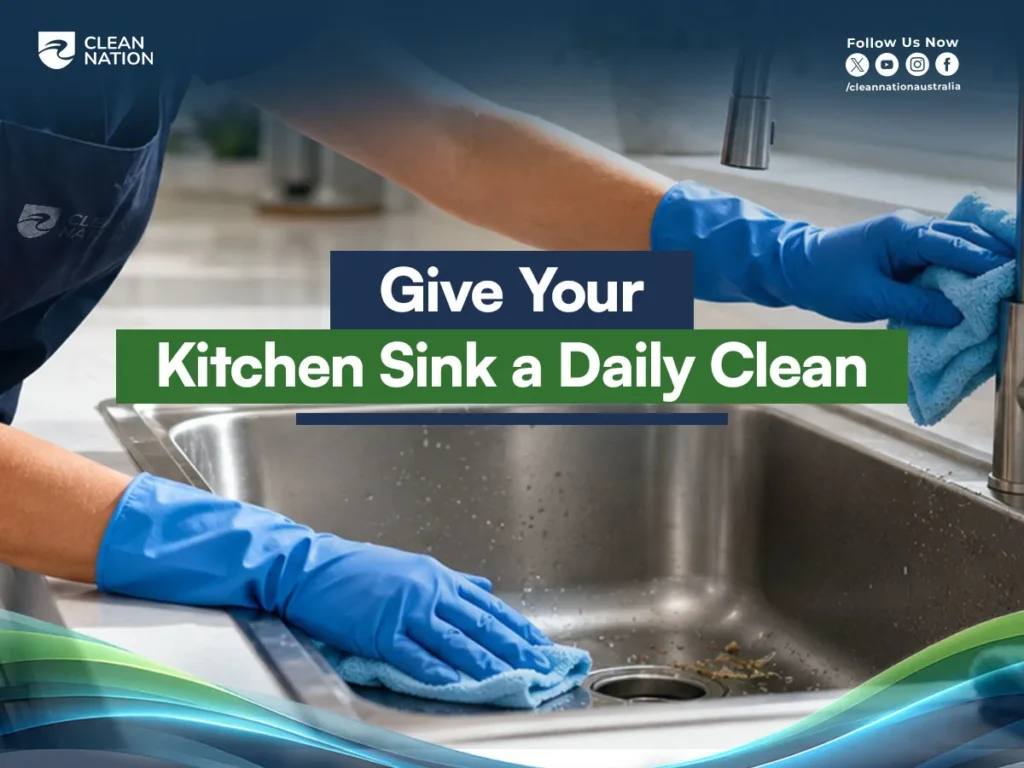
Your sink might be the dirtiest spot in your kitchen. It handles raw meat, dirty dishes, and food scraps every single day.
Kitchen sink cleaning often gets skipped because the sink looks fine after a quick rinse. But looking clean and being clean are two different things.
Why Sink Hygiene Matters
Raw meat juices go straight down the drain during prep. So does dirty dishwater full of food particles. Left sitting, this creates the perfect spot for bacteria to grow.
Poor sink hygiene doesn’t just smell bad. It can spread germs onto anything that touches the basin afterward, including clean dishes and hands.
A Simple Daily Routine
You don’t need special tools for this. A few steps each day keep things under control:
- Clear food particles from the drain after every use
- Wash the basin with dish soap and hot water at the end of the day
- Wipe down the taps to remove water spots and fingerprints
- Dry the sink instead of leaving it wet overnight
Sink Sanitisation and the Drain
Dish soap handles daily grime, but it won’t fully sanitise the sink. For proper sink sanitisation, use a disinfectant spray or a diluted bleach solution on the basin and taps a few times a week.
Don’t forget the sink drain. Food particles and grease build up inside it, causing odours over time. A weekly rinse with hot water helps keep it clear.
Make Daily Disinfection a Habit
Daily disinfection sounds like extra work, but it takes less than five minutes. Clean the basin after raw meat prep, and give the whole sink a proper wipe-down before bed.
Clean Nation includes full sink sanitisation as part of every kitchen deep clean, reaching areas like the drain and overflow gap that daily cleaning tends to miss. A dirty sink undoes a lot of the other cleaning you do, so it’s worth the extra minute each day.
4. Don’t Forget Hidden and Often-Missed Areas
Some parts of your kitchen never get touched during a normal clean. They’re not hard to find, just easy to forget.
Hidden dirt collects in spots you don’t look at every day. These overlooked areas don’t cause problems overnight, but they build up fast over weeks and months.
Where Forgotten Areas Usually Hide
A few spots turn up in almost every kitchen, no matter how often you clean:
- Top of the fridge – Collects greasy dust that sticks to the surface and hardens over time.
- Fridge coils – Sit behind or underneath the fridge, gathering dust that makes the appliance work harder.
- Cabinet bases – Crumbs and spills settle along the bottom edge where a cloth rarely reaches.
- Range hood filters – Trap grease from cooking, turning sticky and clogged if left too long.
These hard-to-reach areas need a different approach than daily wiping. Some need to move appliances. Others need the right tool to reach a tight gap.
Why It’s Worth Checking
Greasy dust on top of the fridge might seem harmless, but it can drop onto food or surfaces below. Dusty fridge coils make the appliance run less efficiently, which can raise your energy bill. A clogged range hood filter reduces airflow and lets more smoke sit in your kitchen.
None of these areas need daily attention. But checking them once a month stops small buildup from turning into a bigger job later. Take a look at how our team handles kitchen cleaning around these hard-to-reach spots.
Clean Nation covers every one of these spots during a proper deep clean, from fridge coils to range hood filters. If it’s been months since anyone checked behind your fridge, that’s usually where the biggest surprise is waiting.
5. Schedule Regular Deep Cleaning
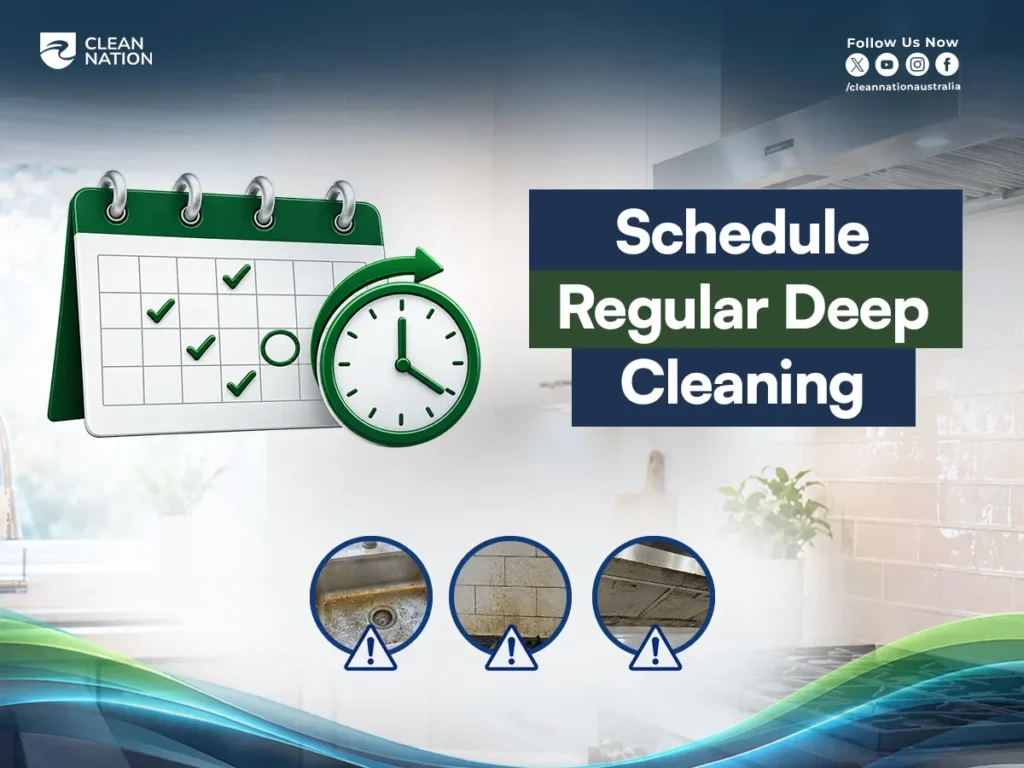
Daily habits keep your kitchen looking tidy. They don’t replace a proper deep clean.
A deep clean reaches the spots that build up slowly, no matter how good your daily routine is. Grease inside vents, grime in grout lines, and buildup inside appliances all need more than a wipe-down to shift.
Building a Deep Cleaning Schedule
A monthly deep clean works well for most households. If you cook often or have a bigger family, you might want to do it more frequently.
A solid deep cleaning schedule usually covers:
- Oven cleaning – Clears baked-on grease and food residue from racks and the cavity walls.
- Pantry cleaning – Checks for expired food, crumbs, and pests hiding behind stored items.
- Dishwasher filter – Removes trapped food particles that affect wash quality and cause odours.
- Grout cleaning – Lifts dirt trapped between floor tiles that regular mopping leaves behind.
- Exhaust cleaning – Clears grease from the range hood filter and housing to restore airflow.
Why This Step Matters Long Term
Skipping deep cleaning doesn’t cause problems right away. But over months, grease thickens, grime sets deeper, and buildup gets harder to remove.
This is what long-term kitchen cleaning is really about. It’s not just about how the kitchen looks today. It’s about keeping appliances running well and stopping small buildup from turning into bigger, more expensive problems.
A dishwasher filter clogged with food particles reduces wash quality. A dirty oven takes longer to heat and uses more energy. Left long enough, none of these issues fix themselves with regular wiping.
Clean Nation handles the full deep cleaning schedule in one visit, covering everything from the oven to the exhaust system. If your kitchen hasn’t had a proper deep clean in a few months, that gap is exactly where problems start to build.
Why Professional Kitchen Cleaning Helps Keep Your Kitchen Hygienic?
Daily habits and occasional deep cleans go a long way. But some jobs need trained hands and the right equipment to do them properly.
Our professional kitchen cleaning reaches areas that household tools and products simply can’t. Professional cleaners use equipment built for grease, grime, and buildup that’s had time to set in.
What Comprehensive Cleaning Covers
A proper clean doesn’t stop at visible surfaces. Comprehensive cleaning includes:
- Degreasing range hoods and exhaust systems
- Clearing drains and sink pipes
- Cleaning behind and underneath heavy appliances
- Treating grout lines and hard-to-reach corners
- Sanitising high-touch surfaces throughout the kitchen
A Healthier Kitchen and Home
A healthier kitchen isn’t just about appearance. Removing built-up grease and grime cuts down on the bacteria and mould that thrive in damp, dirty spots.
This has a flow-on effect for the whole house. A healthier home environment means better air quality, fewer allergens floating around, and less chance of illness spreading from the kitchen to the rest of the family.
Allergen and Pest Prevention
Dust, grease, and food particles all contribute to allergen buildup. Allergen removal during a professional clean helps anyone in the house who deals with asthma, allergies, or sensitive skin.
Pest prevention works the same way. Crumbs, grease, and food residue left in hidden spots are exactly what attract pests. Clearing these areas removes the food source before it becomes a bigger problem.
Protecting Kitchen Health and Safety
Kitchen health and safety depend on more than just tidiness. Bacteria in drains, mould around sinks, and grease near heat sources all carry real risks if ignored.
Professional cleaning also protects appliance lifespan. Removing grease and dust buildup helps ovens, fridges, and dishwashers run properly, so they last longer and cost less to run.
Clean Nation’s professional cleaners bring this level of detail to every job. If your kitchen needs more than what daily habits and occasional wiping can manage, a proper clean covers what’s been missed.
How Often Should You Deep Clean Your Kitchen?
There’s no single answer that fits every kitchen. Kitchen cleaning frequency depends on how often you cook and how many people use the space.
A General Guide
Most households can follow a simple pattern:
- Weekly cleaning – Wipe down surfaces, clean the sink, and take out the rubbish.
- Fortnightly cleaning – Give appliances like the microwave and stovetop a proper scrub.
- Monthly cleaning – Tackle a bigger deep cleaning task, like the oven, fridge, or pantry.
- Seasonal cleaning – Cover the bigger jobs, like exhaust systems, grout, and behind appliances.
Busy households or anyone cooking daily should lean toward the shorter end of this range. Less frequent kitchen use means you can usually stretch these timeframes out a bit further.
Signs You Shouldn’t Wait
Some problems mean it’s time for a clean, no matter where you are in your schedule:
- Kitchen odours that don’t go away after normal cleaning
- Reduced airflow from your range hood or exhaust fan
- Visible grease or grime that’s hard to remove
- Appliances that seem to be working harder than usual
If any of these show up, don’t wait for your next scheduled clean. Book one straight away.
Why Proactive Cleaning Works Better
Proactive cleaning means staying ahead of buildup instead of reacting to it. Waiting until you notice a problem usually means the mess has already settled in deep.
A little planning goes a long way here. Sticking to a rough schedule and acting fast when warning signs show up keeps your kitchen in better shape year-round. It also means less scrubbing for you and fewer surprises when something finally gets checked properly.
Our kitchen cleaning services in New South Wales can help you set up a cleaning frequency that actually fits your household, rather than following a generic timeline that doesn’t match how your kitchen gets used.
Why Choose Clean Nation for Professional Kitchen Cleaning?
Our kitchen cleaning services are built for the problem areas most companies skip: drains, exhaust systems, grout, and the spots behind heavy appliances. We don’t just tidy the surface.
A reliable cleaning service means trained technicians who know where grease, mould, and bacteria hide, proper equipment for deep cleaning jobs, and a team that turns up on time and finishes the job properly.
Cost-effective cleaning doesn’t mean cutting quality. It means a thorough job that extends your appliances’ lifespan and saves you from bigger repairs later. We also offer general home cleaning services alongside kitchen-specific work.
Not sure what your kitchen needs? Get in touch for a free, no-obligation quote. Clean Nation brings the right team, tools, and approach to every kitchen.
Case Study: A Family Kitchen in Melbourne
A family in Melbourne’s eastern suburbs booked our kitchen cleaning services in Australia after noticing a musty smell near the sink and grease building up around the stove, despite cleaning most days.
Our technicians found that the daily wiping was only handling the surface. The real problems were hiding underneath:
- Clogged range hood filter – Years of grease buildup had reduced airflow, letting smoke linger during cooking
- Fridge coils – Covered in dust, making the fridge run harder and less efficiently
- Sink drain – Trapped food particles were causing the persistent odour
- Grout lines – Dirt had built up along the kitchen floor despite regular mopping
We cleared the drain, degreased the range hood, cleaned behind and under the fridge, and deep-cleaned the grout, all in a single visit.
Results:
- Odour gone within a day
- Better airflow while cooking
- Fridge running quieter and more efficiently
- Noticeably fresher, cleaner kitchen overall
The family’s daily habits were solid. They just couldn’t reach the buildup sitting behind appliances and inside vents. One professional deep clean closed that gap completely.
FAQs
How long does cleaning as you go actually take each day?
Just a few extra minutes per task. Wiping a spill or rinsing a dish takes seconds if you do it right away, far less time than scrubbing a dried mess later.
Can I use the same cloth for the sink and the countertops?
No. Using one cloth across different surfaces spreads bacteria instead of removing it. Use separate cloths for the sink, food prep areas, and general surfaces, and wash them often.
Is vinegar safe to use on all kitchen surfaces?
No. Vinegar works well on glass, stainless steel, and some countertops, but it can damage natural stone like marble or granite. Always check what your surface is made of first.
How do I know if my range hood filter needs cleaning?
If you notice more smoke lingering in the kitchen while cooking, or the filter looks visibly greasy and dull, it’s overdue. Most filters need cleaning every few weeks with regular cooking.
Should I clean appliances differently if someone in the house has allergies?
Yes. Increase how often you disinfect high-touch surfaces and clean areas that collect dust, like fridge coils and vents. Fewer allergens in the kitchen means better air quality throughout the home.
Conclusion
A hygienic kitchen doesn’t happen by accident. It takes daily habits, regular deep cleaning, and the occasional professional touch to stay on top of grease, grime, and hidden buildup.
Clean Nation makes that last part easy. Book your professional kitchen cleaning today and get a free, no-obligation quote, or check our client reviews to see what other households across Australia have to say.