

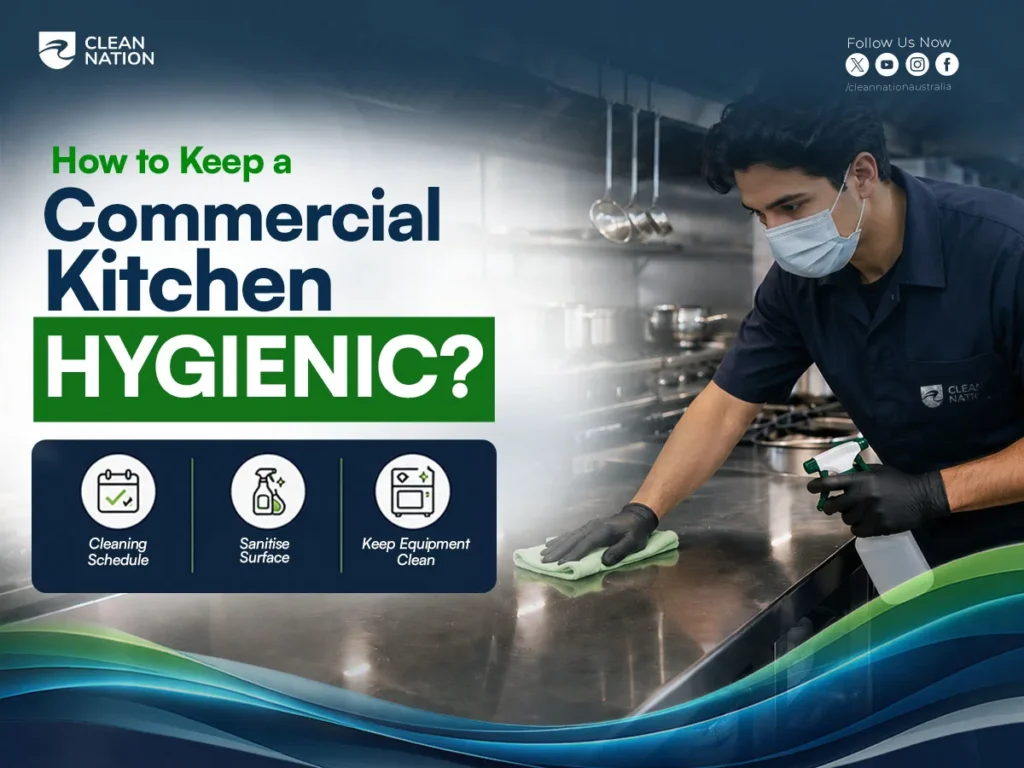
How to Keep a Commercial Kitchen Hygienic: Build a clear cleaning schedule, clean and sanitise surfaces after every task, keep equipment and ventilation grease-free, prevent cross-contamination with colour-coded tools, train staff on hygiene practices, and hire professional cleaners for regular deep cleans. Together, these steps keep food safe, pass health inspections, and protect both staff and customers.
Why Commercial Kitchen Hygiene Matters?
Poor hygiene in a commercial kitchen doesn’t just look bad. It puts people at real risk.
Foodborne illness prevention starts with clean surfaces and equipment. Germs and pathogens spread fast in a busy kitchen. One dirty cutting board or unwashed hand can contaminate an entire prep line. When that happens, customers get sick — and so can staff. Partnering with a trusted cleaning service in Australia is one of the simplest ways to keep this risk under control.
Cross-contamination is one of the biggest risks in any kitchen. Raw meat touching a surface used for salad. A knife used on poultry, then on bread. These small mistakes cause big problems, including allergic reactions in customers with food sensitivities.
Health inspection readiness isn’t something you build overnight. Inspectors check everything: storage temperatures, surface cleanliness, staff practices, pest control. A kitchen that cleans as it goes, every day, passes these checks without scrambling. A kitchen that doesn’t often fail — and failed inspections can shut you down.
Hygiene also protects the people working in your kitchen. Staff safety matters as much as customer safety. Slippery floors, grease buildup, and dirty equipment create injury risks for the team preparing your food. A safe kitchen is one where staff can work without added danger.
Workplace safety and food poisoning prevention go hand in hand. When you keep a kitchen clean, you protect three groups at once: the people eating your food, the people cooking it, and the reputation of your business.
At Clean Nation, we see the cost of skipped cleaning firsthand — lost trust, lost customers, and sometimes lost licences. Good hygiene isn’t extra effort. It’s the baseline every commercial kitchen needs to operate safely and stay open.
Build a Commercial Kitchen Cleaning Schedule
A cleaning schedule turns hygiene into a habit, not a guess. Without one, tasks get skipped, and standards slip.
Start with a cleaning checklist. List every task, from wiping counters to deep cleaning ovens. Assign each one a cleaning frequency: daily, weekly, or monthly.
Give staff cleaning responsibilities clear owners. Assign names to tasks, not just shifts. When everyone knows their job, nothing falls through the cracks.
Keep cleaning records. Log what was cleaned and when. This protects you during health inspections and helps spot patterns, like equipment that needs attention sooner.
A good schedule works like a maintenance plan. It combines routine kitchen maintenance with preventative maintenance, so small problems get caught before they become big ones.
Set clear cleaning protocols for each task. Write down how to clean, not just what to clean. This keeps standards consistent, even when staff changes. If building this from scratch feels overwhelming, kitchen cleaning services in Australia can set up a schedule tailored to your kitchen.
Daily, Weekly and Monthly Cleaning Tasks
Not every task needs the same attention. Break cleaning into three levels.
Daily cleaning:
- Wipe down all surfaces and touchpoints (handles, switches, fridge doors)
- Clean as you go during food prep
- Sanitise cutting boards and utensils after each use
- Sweep and mop floors
- Empty bins and clean around them
- End-of-day cleaning: full wipe-down before closing
Weekly cleaning:
- Deep clean fridges and freezers
- Descale kettles and coffee machines
- Clean behind and under equipment
- Wash range hood filters
- Scrub grout and tile lines
Monthly cleaning:
- Deep clean ovens, grills, and fryers
- Clean grease traps
- Check and clean air filtration systems
- Inspect and clean drains
- Review the full deep cleaning schedule and adjust as needed
Set clear cleaning priorities. High-touch areas and food-contact surfaces come first. Hidden spots, like under equipment, matter too. They just need less frequent attention. For a household version of this same daily/weekly/monthly breakdown, see How Often Do You Clean Your Kitchen?
Clean and Sanitise Kitchen Surfaces
Every surface in your kitchen touches food, hands, or both. That makes cleaning them non-negotiable.
Countertops need cleaning between every task. Wipe them down before and after prep. Food-contact surfaces should never carry residue from the last job.
Cleaning and sanitising are two different steps. Cleaning removes dirt and food debris. Surface disinfection kills the germs left behind. Skip either step, and surfaces aren’t truly safe.
Use the right sanitiser for the job. Follow the instructions on the label, including how long it needs to sit before wiping. Too short, and it won’t work.
Don’t forget touchpoints. Door handles, light switches, and fridge doors get touched constantly. They spread germs just as easily as a countertop.
Cutting boards need extra care. Use colour-coded cleaning to keep boards separate for raw meat, vegetables, and ready-to-eat food. This simple system stops cross-contamination before it starts.
Hand hygiene ties it all together. Clean surfaces mean nothing if hands aren’t washed properly and often. Wash before handling food, after touching raw meat, and after cleaning tasks.
Keep Kitchen Equipment Clean
Dirty equipment doesn’t just look bad. It shortens equipment lifespan and puts food safety at risk.
Clean commercial kitchen equipment after each use. Ovens, hobs, fryers, and grills all build up grease fast. Wipe down surfaces as soon as you’re done cooking, before residue hardens.
Deep cleaning ovens, hobs, and fryers takes more effort. Do this weekly or monthly, depending on how often they’re used. Remove grates and trays, and scrub away built-up grease and carbon.
Small appliances need attention too. Microwaves, kettles, and blenders collect food splatter and limescale. Clean microwaves daily. Descale kettles weekly. Take blenders apart fully to reach hidden buildup.
Dishwasher cleaning is often overlooked. Machines that clean dishes still need cleaning themselves. Run empty cycles with descaler and wipe down filters and seals regularly.
Equipment sanitisation matters as much as cleaning. Removing grease is step one. Killing bacteria on food-contact parts is step two. Both steps protect the food that passes through.
Regular equipment maintenance pays off. Clean equipment runs more efficiently and lasts longer. Neglected machines break down sooner and cost more to repair or replace. Watch this short guide on professional kitchen cleaning to see how deep equipment cleans are done properly.
Prevent Cross-Contamination
Cross-contamination is one of the fastest ways food safety breaks down. It’s also one of the easiest things to prevent.
Raw meat handling needs strict rules. Store raw meat on the bottom shelf of the fridge, away from other food. Never let raw meat juices touch anything ready to eat.
Colour-coded cutting boards and knives stop mistakes before they happen. Use one colour for raw meat, another for vegetables, and another for bread. This system works because it removes guesswork.
Fresh vegetable preparation needs its own clean space. Wash produce separately from where raw meat is handled. Use separate boards and utensils every time.
Allergen control protects vulnerable customers. Gluten and other allergens can transfer through shared equipment, even in trace amounts. Clean surfaces and tools fully between dishes with different allergen profiles.
Food-contact surface cleaning should happen between every task, not just at the end of the day. A surface that touched raw chicken needs cleaning before it touches anything else.
Handwashing is the simplest defence against food contamination. Wash hands before handling food, after touching raw meat, and after using the bathroom. It sounds basic, but it stops more problems than any other step on this list.
Clean Floors, Drains and Hidden Areas
The areas you don’t see every day often need the most attention.
Kitchen floor cleaning stops slip hazards before they cause injuries. Grease and spills make floors dangerous fast. Sweep and mop daily, and clean up spills the moment they happen.
Commercial kitchen drainage needs regular care. Drains collect fat, food scraps, and debris all day long. Left alone, they slow down and start to smell.
Grease trap cleaning prevents bigger problems down the line. A full grease trap stops working properly and can cause backups. Clean it on a set schedule, not just when it overflows.
Drainage channel cleaning keeps water moving where it should. Scrub the channels and corners where grease and grime collect. These spots get missed easily but cause blockages fast.
Drain blockage prevention starts with what goes down the drain. Scrape food waste into the bin, not the sink. Use drain guards to catch debris before it builds up.
Under-equipment cleaning reaches the spots people forget. Grease and food particles collect under ovens, fridges, and prep tables. Pull equipment out and clean underneath at least monthly.
Hidden and hard-to-reach areas need scheduled checks. High shelves, behind equipment, corners near the ceiling — these spots build up dust and grease over time.
Odour control comes down to clean drains and clean floors. Bad smells almost always trace back to something dirty that’s been missed. Fix the source, not just the smell.
Maintain Ventilation and Exhaust Systems
Ventilation does more than clear smoke. It protects your kitchen from fire risk and keeps air breathable.
Commercial kitchen ventilation removes heat, smoke, and grease particles from the air. Without it, air quality drops fast, and grease settles on every surface, including equipment and walls.
Range hood cleaning should happen weekly, at minimum. Grease builds up on the hood surface every time you cook. Left alone, it turns sticky and hard to remove.
Range hood filters and ceiling filters trap grease before it spreads. These filters fill up fast in a busy kitchen. Clean or replace them on a set schedule, not just when they look dirty.
Air filtration systems need regular checks, not just cleaning. Check that fans run properly and filters sit correctly. A blocked or broken system can’t do its job.
Grease buildup prevention is the main reason this matters. Grease that collects in vents and filters doesn’t just smell bad. It’s highly flammable.
Fire hazard prevention starts with clean ventilation. Grease fires spread fast through ductwork that hasn’t been cleaned. Regular grease and smoke removal is one of the simplest ways to lower fire risk in any commercial kitchen. See a real example of kitchen cleaning in action to understand what a proper ventilation clean looks like.
Use the Right Cleaning Products and Tools
The wrong product can leave a surface looking clean while germs and grease stay behind. Choosing the right matters.
Cleaning product selection depends on the job. A degreaser cuts through grease on ovens and hoods. A disinfectant or sanitiser kills germs on surfaces. Using one where you need the other leaves gaps in your cleaning.
Always use a food-grade sanitiser on surfaces that touch food. Regular household cleaners aren’t built for this. Food-grade products are tested to be safe for food-contact areas once used correctly.
Look for TGA-listed sanitiser products. This confirms the product meets safety and effectiveness standards. It’s an easy way to know you’re using something that actually works.
Sanitiser test strips take the guesswork out of concentration. Too weak, and it won’t kill germs. Too strong, and it can leave harmful residue. Test strips confirm you’ve got the mix right.
Commercial cleaning products differ from what you’d use at home. They’re designed for tougher jobs, faster action, and higher volumes of use. Stock the right ones for each task, not a single all-purpose bottle.
Cleaning tools and equipment matter as much as the products. Scrubbers, sponges, and microfibre cloths each suit different surfaces. Use colour-coded tools to match your colour-coded cleaning system, and keep them clean between uses. Dirty tools spread germs instead of removing them.
Train Staff in Kitchen Hygiene
The best cleaning schedule fails if staff don’t understand it. Training makes hygiene stick.
Staff cleaning training should happen from day one. New hires need to learn kitchen hygiene practices before they touch food or equipment. Don’t assume experience elsewhere covers your standards.
Set clear cleaning responsibilities for every role. When each person knows exactly what they’re accountable for, tasks don’t get missed or duplicated.
Cleaning procedures should be written down, not just explained once. Post them where staff can check them. This keeps standards consistent across every shift, even when new people join the team.
Hand hygiene deserves its own training focus. Show staff when to wash hands, not just how. Before food prep, after handling raw meat, after using the bathroom, and after cleaning tasks.
Staff accountability keeps standards from slipping over time. Check in regularly. Correct small issues before they become habits.
Hygiene compliance should be checked, not assumed. Spot checks and regular reviews catch gaps that daily routines might miss.
Bring in certified cleaning professionals for staff training when needed. An outside expert can teach proper techniques and catch bad habits your team may not notice on their own.
Prevent Pests and Control Odours
Pests and bad smells both point to the same problem: something wasn’t cleaned or stored properly.
Pest control starts with removing what attracts them. Pests need food, water, and shelter. Take away access to all three, and you take away the reason they’d stay.
Secure food storage keeps pests out and food safe. Store dry goods in sealed containers, not open bags. Keep food off the floor and away from walls where pests travel.
Food waste management matters as much as food storage. Scraps left out overnight are an open invitation. Dispose of waste properly and don’t let bins overflow.
Bin cleaning should happen regularly, not just when bins start to smell. Rinse and sanitise both indoor and outdoor bins. A dirty bin breeds bacteria and draws pests fast.
Odour control comes down to consistent waste management. Empty bins daily. Clean drains regularly. Bad smells almost always trace back to something that’s been sitting too long.
Pest infestation prevention works best with routine checks. Look for droppings, gnaw marks, or nesting signs weekly. Catching a problem early is far easier than fixing an established infestation.
Common Commercial Kitchen Hygiene Mistakes to Avoid
Even well-run kitchens slip up. These are the mistakes that cause the most damage:
- Improper storage — Raw meat stored above ready-to-eat food, or dry goods left in open packaging. Small errors that lead to contamination and pest problems.
- Inconsistent cleaning schedule — Cleaning “when there’s time” instead of on a set routine. Tasks get skipped, and standards slip without anyone noticing.
- Neglected equipment maintenance — Skipping deep cleans on ovens, fryers, and grills. Grease builds up fast, shortening equipment lifespan and raising fire risk.
- Poor staff training — assuming staff already know hygiene basics. Every team member needs proper training, not guesswork.
- Blocked drains — Ignoring slow drainage until it backs up completely. Regular drain cleaning prevents costly, disruptive blockages.
- Grease buildup — Letting grease collect in vents, filters, and range hoods. One of the leading causes of commercial kitchen fires.
- Cross-contamination risks — Skipping colour-coded boards or reusing utensils between raw and ready-to-eat food. Shortcuts that cause the exact problems hygiene practices are meant to prevent.
- Non-compliance risks — Falling short of health and safety standards. This can mean fines, closures, or worse. Regular checks against your cleaning checklist keep you audit-ready year-round.
Commercial Kitchen Hygiene Checklist
Use this commercial kitchen cleaning checklist to keep your cleaning schedule on track and stay ready for inspection at any time.
| Task | Cleaning Frequency | Why It Matters |
| Wipe surfaces and touchpoints | Daily | Removes germs before they spread |
| Sanitise cutting boards and utensils | Daily (after each use) | Prevents cross-contamination |
| Sweep and mop floors | Daily | Reduces slip hazards |
| Empty and clean bins | Daily | Controls odours and pests |
| Deep clean fridges and freezers | Weekly | Prevents food spoilage and bad smells |
| Clean range hood and filters | Weekly | Lowers fire risk from grease buildup |
| Scrub behind and under equipment | Weekly | Removes hidden grease and debris |
| Deep clean ovens, fryers, and grills | Monthly | Maintains equipment lifespan and safety |
| Clean grease traps and drains | Monthly | Prevents blockages and odours |
| Equipment inspection | Monthly | Catches wear before it causes breakdowns |
| Check air filtration systems | Monthly | Maintains air quality and hygiene standards |
| Review cleaning records | Monthly | Confirms food safety compliance |
This compliance checklist covers the basics, but every kitchen is different. Adjust cleaning frequency based on how busy your kitchen is and what you cook. A high-volume fryer station needs more attention than a light prep area.
Keep this checklist visible and update your cleaning records as tasks are completed. It’s the simplest way to prove hygiene standards are met, whether an inspector shows up unannounced or not.
When to Hire Professional Commercial Kitchen Cleaners?
Daily cleaning keeps a kitchen running. But some jobs need more than staff can handle alone.
Commercial kitchen deep cleaning goes beyond regular staff duties. Ovens, ductwork, and hard-to-reach areas often need specialised tools and training to clean properly. Professional cleaning services have both.
Certified cleaners understand health and safety standards inside and out. They know what inspectors look for and clean to a standard that meets compliance requirements, not just a visual check.
Specialised cleaning services suit high-risk environments. Hospitality and healthcare cleaning both demand stricter hygiene standards than a standard kitchen. These settings often need professional support to stay compliant.
Providers like Jaymak and Leading Catering offer commercial-grade cleaning for kitchens of all sizes. They bring equipment and expertise that go beyond a mop and bucket.
Bunzl Australia & New Zealand supplies the products and tools professional cleaners rely on. Access to commercial-grade supplies makes a real difference in cleaning results.
Professional equipment servicing catches problems staff might miss. A technician can spot early wear on ovens, fridges, or ventilation systems before it turns into a breakdown.
Build professional cleaning into your deep cleaning schedule. Book it monthly or quarterly, depending on how busy your kitchen is. This keeps standards high between the daily tasks your team already handles. If you’re based in Sydney, a local kitchen cleaning service in Sydney can build this straight into your routine.
Hire professionals when: your kitchen handles high volumes, you’re preparing for an inspection, equipment needs specialist attention, or your team simply doesn’t have time to do a proper deep clean.
Why Choose Clean Nation for Commercial Cleaning?
Not all cleaning services understand commercial kitchens. Clean Nation does.
We know food safety compliance inside and out. Our team cleans to the standards health inspectors actually check for, not just a surface-level wipe down.
We build a cleaning schedule around your kitchen, not a generic template. High-volume fryer station? Healthcare facility with stricter hygiene standards? We adjust cleaning frequency and methods to match how your kitchen actually runs.
Our certified cleaners handle the jobs staff can’t. Deep cleaning ovens, range hoods, grease traps, and ductwork takes the right tools and training. We bring both.
We use food-grade, TGA-listed products. Every surface gets cleaned and sanitised safely, without harmful residue left behind.
We keep records, so you don’t have to scramble. Every clean is logged. When an inspector shows up, you’ve got proof of compliance ready to go.
We reduce your risk, not just your mess. Grease buildup, blocked drains, neglected equipment — these cause fires, breakdowns, and failed inspections. Regular professional cleaning catches problems before they cost you.
We work around your hours. Kitchens don’t stop for cleaning. We schedule deep cleans when it suits your business, not the other way around.
Whether you run a restaurant, aged care facility, or hospitality venue across New South Wales, our kitchen cleaning services in New South Wales bring the standards your kitchen needs to stay safe, compliant, and running smoothly. Don’t just take our word for it — see our client reviews to hear from businesses we’ve worked with.
Client Experience With Clean Nation
The Problem
A busy restaurant in Sydney received a warning after a routine health inspection. Inspectors flagged grease buildup in the range hood, a blocked floor drain, and inconsistent cleaning records. The owner had one month to fix the issues or risk a fine and possible closure.
The Challenge
Staff was already stretched thin during service hours. Daily cleaning was happening, but deep cleaning tasks like range hood maintenance and drain cleaning had been skipped for months. There was no clear cleaning schedule and no records to prove compliance.
What Clean Nation Did
- Carried out a full commercial kitchen deep clean, including range hood filters, grease traps, and drainage channels
- Built a custom cleaning schedule covering daily, weekly, and monthly tasks
- Trained staff on cleaning responsibilities and proper hand hygiene practices
- Set up a simple cleaning log system so records were ready for the next inspection
The Result
The restaurant passed its follow-up inspection with no issues. Grease-related fire risk dropped significantly after the range hood and ducts were cleaned. Staff reported the new schedule was easier to follow than trying to “clean when there’s time.”
Six months on, the kitchen still uses the schedule Clean Nation set up, with a quarterly professional deep clean to stay ahead of buildup.
The takeaway: A clear schedule and the right professional support turned a compliance risk into a kitchen that passes inspections without stress.
FAQs
How often should a commercial kitchen be deep cleaned?
Most commercial kitchens need a professional deep clean every one to three months, depending on how busy the kitchen is. High-volume kitchens with fryers and grills may need monthly deep cleans, while smaller kitchens can often go quarterly.
What’s the difference between cleaning and sanitising?
Cleaning removes visible dirt, grease, and food debris from a surface. Sanitising kills the germs and bacteria left behind after cleaning. Both steps are needed — cleaning alone doesn’t kill pathogens.
How much does professional commercial kitchen cleaning cost?
Costs vary based on kitchen size, how often you need cleaning, and the level of grease buildup. Most providers offer a free quote after assessing your kitchen, so get a few quotes before committing to a schedule.
Can I clean a commercial kitchen myself, or do I need a professional?
Daily and weekly cleaning can be handled by trained staff. But deep cleaning ductwork, ovens, and grease traps often needs specialised equipment and training that most kitchens don’t have in-house.
What happens if my kitchen fails a health inspection?
Outcomes depend on the severity of the issues found. Minor problems may result in a warning with a set timeframe to fix them. Serious or repeated breaches can lead to fines, or in extreme cases, closure until standards are met.
Conclusion
Commercial kitchen hygiene isn’t a one-time task. It’s a daily habit built on clear schedules, trained staff, and consistent standards.
Get it right, and you protect customer and staff safety, meet food safety compliance, and keep a safe working environment for everyone in the kitchen. Preventative maintenance and staff accountability also extend equipment longevity and boost operational efficiency.
A hygienic food environment doesn’t happen by accident. It takes routine, training, and the right support.
Ready to get your kitchen inspection-ready? Contact Clean Nation today for a cleaning schedule built around your kitchen — and the professional support to keep it that way.