


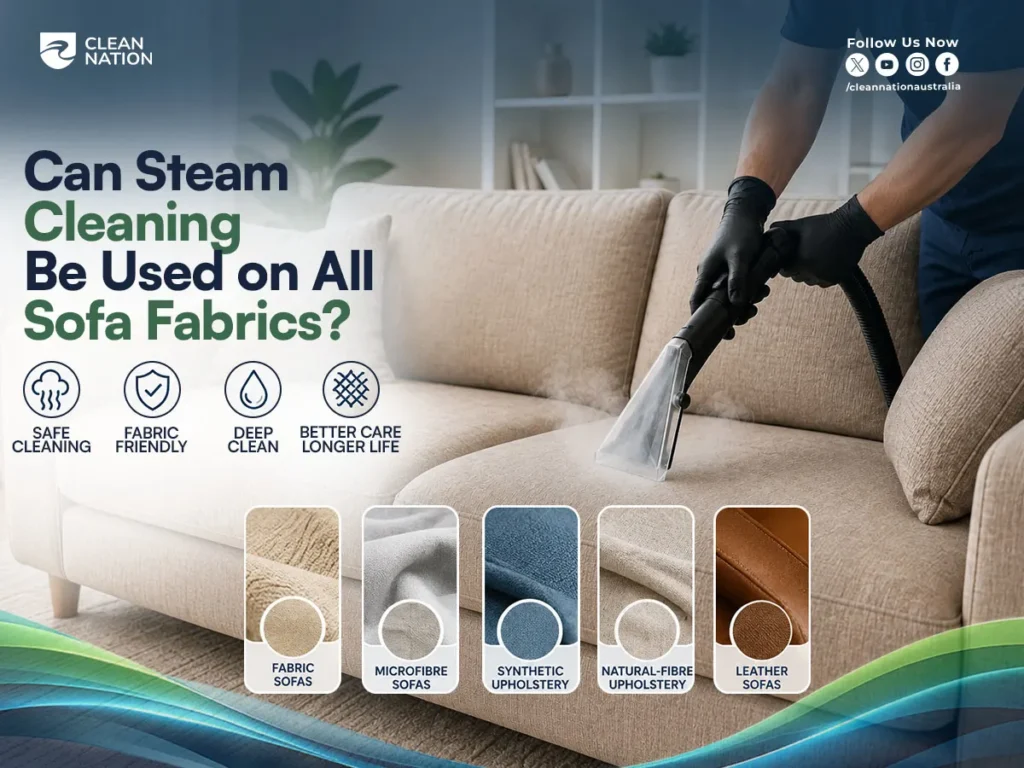
Steam cleaning can effectively remove many common sofa stains, including food spills, coffee, grease, pet-related marks and everyday grime, when the upholstery is suitable for the process. However, old stains, ink, dye and permanent colour damage may be harder or impossible to remove completely. The final result depends on the fabric, stain type, age and previous DIY treatments.
Can Steam Cleaning Remove Stains From a Sofa?
Steam cleaning can help loosen and remove many stains by combining controlled heat, moisture and professional extraction. The process can break down accumulated dirt and residues within suitable upholstery, allowing loosened contamination to be extracted rather than simply moved around the fabric.
However, steam cleaning does not work identically on every stain. A fresh food spill may respond quickly, while an old ink mark, permanent dye or bleach-damaged area may require a completely different approach—or may not be removable at all. The fabric, stain age, chemical composition and previous treatments all affect the final result.
What Types of Sofa Stains Can Steam Cleaning Remove?
Steam cleaning can help tackle common sofa stains caused by food, drinks, coffee, tea, grease and body oils. Professional cleaning loosens residues trapped within suitable upholstery and extracts accumulated soil. Fresh stains generally respond better, while older or heavily embedded marks may require targeted pre-treatment for effective results.
Food and Drink Stains
Food crumbs, sauce, juice and other drink spills are common sources of sofa stains, especially in busy family homes. When treated correctly, professional sofa cleaning company can loosen food residue and remove soil trapped around the affected fibres.
Fresh spills are generally easier to deal with than stains that have been left for weeks or repeatedly scrubbed. Professional treatment can also help prevent sticky food residue from attracting additional dirt.
Coffee and Tea Stains
Coffee and tea can leave noticeable brown marks, particularly on light-coloured upholstery. Professional cleaning can help break down the residue and extract contaminants from suitable sofa fabrics.
The result depends on how long the spill has been present and whether previous products have been used. Older stains may require targeted pre-treatment before the main cleaning process.
Grease and Oil Marks
Body oils, greasy food and other oily substances commonly accumulate on armrests, seat cushions and headrests. These areas can become darker and develop a greasy or sticky texture over time.
A suitable professional cleaning process can help dissolve and extract oily soil. Simply wiping the surface with water often does little to remove the underlying residue and may spread it across a larger area.
Pet Stains and Odours
Pet owners often deal with more than visible hair. Sofas can collect pet dander, outdoor dirt, oils, saliva, urine and other organic contaminants when dogs or cats regularly use the furniture.
Professional upholstery cleaning can help remove surface contamination and reduce associated odours when the material is suitable for the cleaning method. Deep contamination inside cushions may require additional specialised treatment.
Dirt and Everyday Grime
Not every dirty sofa has obvious stains. Regular use gradually transfers dust, skin particles, body oils, crumbs and outdoor soil into the upholstery.
Professional deep cleaning can remove accumulated soil that ordinary vacuuming cannot reach. This can make a visibly dull sofa look fresher while addressing the hidden buildup responsible for its tired appearance.
Which Sofa Stains Are Harder to Remove With Steam Cleaning?
Steam cleaning may struggle with old set-in stains, ink, dyes, bleach damage and stains affected by previous DIY treatments. These marks can penetrate deeply, bond with upholstery fibres or cause permanent colour changes. Professional assessment helps determine whether the stain can be removed, improved or requires a different treatment approach.
Old and Set-In Stains
Old stains are more challenging because contaminants can penetrate deeper into upholstery fibres and become more difficult to dissolve. Previous heat, moisture and repeated cleaning attempts can also change the way a stain responds.
Professional treatment may significantly improve an old stain, but complete removal cannot always be guaranteed. The sooner suitable treatment is applied, the better the chance of achieving a strong result.
Ink and Dye Stains
Ink, permanent marker and dye-based stains can be particularly difficult because the colouring agents may bond strongly with upholstery fibres.
Steam alone is unlikely to remove every ink or dye stain. Incorrect DIY treatment can make the situation worse by spreading the colour or causing permanent discolouration, so these stains should be assessed before applying additional products.
Bleach or Permanent Colour Damage
Steam cleaning cannot restore colour that has already been chemically removed from a sofa. If bleach or another harsh substance has permanently altered the upholstery colour, professional cleaning may remove surrounding dirt but cannot recreate the original pigment.
This is why stain removal and colour restoration are not the same thing. A professional cleaner should identify whether a mark is removable contamination or permanent fabric damage.
Stains Previously Treated With DIY Products
A stain treated with dish soap, bleach, carpet cleaner, multipurpose spray or another household chemical can become more complicated. Product residue may remain inside the fibres, while excessive scrubbing can damage the surface.
Repeatedly applying different products can also create chemical interactions or leave sticky residues that attract more dirt. If DIY treatment has failed, professional assessment is usually a better next step than continuing to experiment.
Can Steam Cleaning Be Used on All Sofa Fabrics?
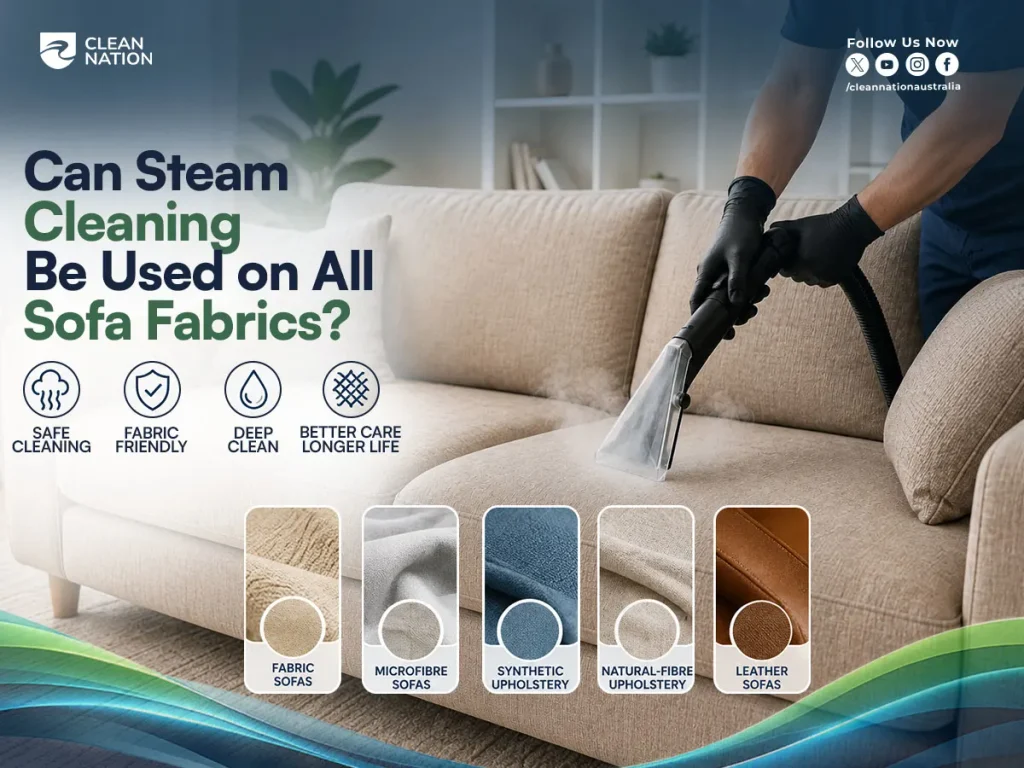
No. Not every sofa should automatically be steam cleaned. Upholstery materials differ in their tolerance for moisture, heat, agitation and cleaning agents, so the correct method should be determined after assessing the fabric and manufacturer’s care instructions.
Fabric Sofas
Many fabric sofas are suitable for professional steam cleaning or hot-water extraction when their cleaning code and construction permit it.
The process can help remove embedded dirt, stains and everyday soil while refreshing the appearance of the upholstery. The exact cleaning method should still be selected according to the fabric rather than assuming every fabric sofa can receive identical treatment.
Microfibre Sofas
Microfibre is popular because of its soft texture and practical durability, but it still requires an appropriate cleaning technique.
Excessive moisture, unsuitable chemicals or aggressive agitation can affect the appearance and texture of some microfibre upholstery. Professional assessment helps determine the safest approach for the particular material.
Synthetic Upholstery
Synthetic fibres such as polyester and nylon can be durable and commonly used in household upholstery. However, durability does not mean that every cleaning product or steam setting is suitable.
The technician should consider fibre composition, colour stability, cleaning code and the sofa’s overall condition before selecting the cleaning process.
Natural-Fibre Upholstery
Natural materials such as cotton, linen and wool can require more controlled treatment because their reaction to moisture and heat varies.
A professional cleaner should follow the manufacturer’s recommendations and assess the upholstery before cleaning. Using excessive moisture or the wrong product can cause problems such as shrinkage, colour bleeding or texture changes.
Leather Sofas
Leather should not automatically be treated like fabric upholstery. Excessive heat or moisture can affect leather finishes, while unsuitable cleaning products may cause drying, discolouration or surface damage.
Leather furniture generally requires a material-specific cleaning and conditioning process rather than conventional fabric steam cleaning.
Why DIY Sofa Stain Cleaning Can Make Things Worse
Trying to remove a fresh stain immediately is sensible, but using the wrong technique can create a bigger problem. Aggressive scrubbing can push contamination deeper into fibres, spread a stain and damage delicate upholstery.
Over-wetting is another common mistake. Excess moisture can penetrate cushions and may leave behind cleaning residue if it is not properly extracted. Household chemicals can also cause colour fading, sticky residue or permanent fabric damage.
The safest approach for a minor fresh spill is usually to blot rather than scrub, avoid unnecessary chemicals and follow the sofa manufacturer’s care instructions. For stubborn stains, professional treatment is a better option than repeatedly testing different products.
How Professional Steam Cleaning Improves Sofa Stain Removal?
Professional steam cleaning improves stain removal by combining upholstery inspection, suitable pre-treatment, controlled steam or extraction, targeted stain treatment and proper drying. This structured approach helps loosen embedded dirt and stubborn stains while reducing the risk of excess moisture, fabric damage and residue that can result from improper DIY cleaning.
Upholstery and Stain Inspection
Professional sofa cleaning should begin with an assessment. The cleaner can identify the upholstery material, cleaning code, stain type, affected areas and potential risks before deciding how the sofa should be treated.
This step matters because the wrong cleaning method can cause more damage than the original stain.
Appropriate Pre-Treatment
Different contaminants require different treatments. Food residue, grease, body oils and other stains may respond to different pre-treatment solutions designed to loosen contamination before extraction.
The objective is to prepare the stain for removal without unnecessarily exposing the upholstery to harsh chemicals.
Professional Steam Cleaning or Extraction
Once the upholstery has been prepared, suitable professional equipment can loosen dirt using controlled heat and moisture before extracting the contaminated solution.
This is significantly different from simply steaming the surface. Effective professional cleaning involves controlling moisture, agitation and extraction according to the sofa material.
Targeted Stain Treatment
Stubborn areas may require additional attention instead of repeatedly cleaning the entire sofa. Targeted stain treatment allows the cleaner to concentrate on specific contamination while considering the limitations of the upholstery.
This can be particularly useful for coffee marks, food spills, greasy areas and other visible stains.
Proper Extraction and Drying
Removing loosened dirt is only part of the process. Excess cleaning solution and moisture also need to be extracted appropriately.
Professional equipment can help remove contaminated moisture from suitable upholstery, followed by drying procedures appropriate for the furniture and environment. Proper drying reduces the risk associated with leaving excessive moisture inside the sofa.

Can Steam Cleaning Remove Sofa Stains Permanently?
It can permanently remove many stains, but no professional cleaner should promise that every sofa stain will disappear completely.
Permanent results depend on several factors, including the stain’s chemical composition, age, depth, upholstery material, colour stability and whether previous cleaning products have altered the fabric.
Some marks are not removable stains at all. Bleach spots, permanent dye changes, fibre damage and colour loss can remain even after the surrounding upholstery has been professionally cleaned.
The realistic goal is to achieve the best possible stain-removal result while protecting the sofa. A proper inspection before cleaning helps establish what can reasonably be achieved.
What Should You Do Before Professional Sofa Cleaning?

Remove Loose Items and Cushions
Clear blankets, toys, books, remotes and other items from the sofa before the technician arrives. Removable cushions should also be made accessible so suitable surfaces can be inspected and cleaned.
Vacuum Loose Dirt and Pet Hair
Vacuuming loose dust, crumbs and pet hair beforehand can reduce surface debris. This allows professional cleaning to focus more effectively on embedded soil and stains.
Identify Recent Spills
If you know what caused a stain, tell the cleaner. Whether it is coffee, juice, grease, food, ink or a pet accident, knowing the source can help determine the most suitable treatment.
Avoid Applying More DIY Products
Once professional cleaning has been arranged, avoid applying additional stain removers or household chemicals. Extra residue can interfere with professional treatment and may make the stain more difficult to assess.
Check the Sofa’s Cleaning Code
Look for the manufacturer’s upholstery cleaning code and care instructions. These details help determine whether moisture-based cleaning is suitable and provide important information about how the fabric should be treated.
Following these steps gives your professional cleaner a better starting point and reduces the risk of unnecessary damage.
Why Choose Clean Nation for Sofa Stain Removal?
When a sofa has stubborn stains, the goal should not be to cover them with fragrance or repeatedly scrub them with household products. Clean Nation approaches sofa cleaning as a professional upholstery service, with attention to the fabric, contamination and condition of the furniture.
The cleaning process can include upholstery assessment, appropriate pre-treatment, professional cleaning, targeted stain treatment and controlled extraction based on the sofa’s requirements.
Whether your sofa has accumulated food marks, coffee spills, pet-related contamination, greasy areas or years of everyday grime, Clean Nation can help restore a cleaner and fresher appearance while using a cleaning approach suited to the upholstery.
Don’t let a stubborn sofa stain become a permanent-looking feature of your furniture. Get it professionally assessed and cleaned before more DIY treatment makes the problem harder to solve.
FAQ’s
Following are the faq’s;
Is steam cleaning safe for every type of sofa?
No. Different fabrics have different moisture and heat tolerances. Clean Nation checks the upholstery material, cleaning code and manufacturer’s care instructions before cleaning to determine whether steam cleaning or another professional method is appropriate.
How quickly can Clean Nation clean my sofa?
Response times depend on your suburb, technician availability and booking schedule. Clean Nation provides sofa cleaning across areas including Sydney, Melbourne, Brisbane, Perth and Adelaide. Contact the team with your location to confirm the earliest available appointment.
How much does professional sofa steam cleaning cost?
Pricing depends on factors such as sofa size, upholstery material, number of seats, stain severity and cleaning requirements. Clean Nation can assess your sofa and provide service-specific pricing rather than applying the same rate to every piece of furniture.
Are Clean Nation sofa cleaning technicians certified?
Certification can vary by technician and service. Clean Nation can confirm the applicable qualifications or industry training of your assigned technician before your appointment. This provides greater transparency about who is handling your upholstery and which cleaning methods they are trained to perform.
How much does professional sofa steam cleaning cost?
Pricing depends on factors such as sofa size, upholstery material, number of seats, stain severity and cleaning requirements. Clean Nation can assess your sofa and provide service-specific pricing rather than applying the same rate to every piece of furniture.
Final Verdict
Yes, steam cleaning can remove many sofa stains, but its effectiveness depends on the stain and upholstery. Fresh food, drink, dirt, grease and some pet-related stains can respond well to professional cleaning, while old set-in stains, ink, dye and permanent colour damage are considerably harder.For the best possible result, avoid aggressive DIY scrubbing and unnecessary chemicals. Have the sofa assessed first, use a fabric-appropriate cleaning method and address stains before they become deeply embedded