

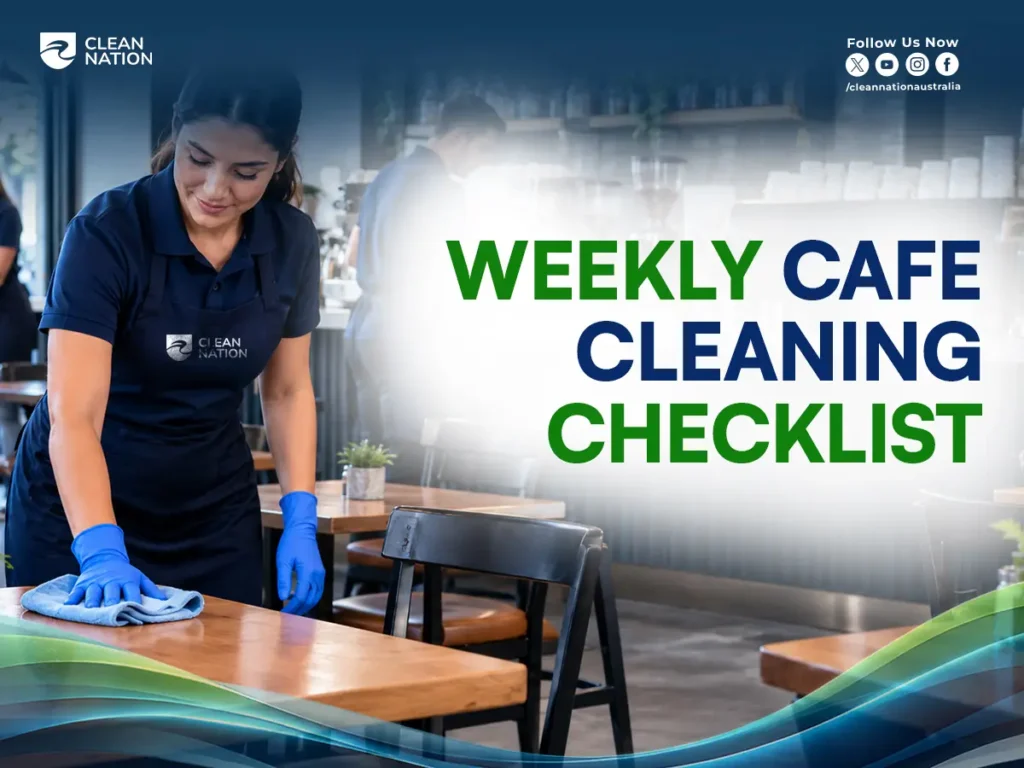
A cafe cleaning checklist should cover three levels of work. Every day, clean food benches, coffee equipment, tables, toilets, floors and bins. Each week, wash fridge shelves, scrub hidden corners and clean behind safe-to-move equipment. Every month, review hard-to-reach areas, deep-clean furniture and check maintenance needs. Clean spills and food-contact tools whenever needed during service, not just at closing time.
Running a cafe means dealing with coffee drips, crumbs, milk spills and busy tables all day. A clear cleaning plan stops small jobs from piling up. This guide shows what to do, when to do it and how to share the work across your team.
Daily Cafe Cleaning Checklist
Daily cafe cleaning is not one job at closing time. Divide it into opening checks, quick tasks during service and an end-of-day clean. A busy cafe may need some jobs repeated many times a day.
Before Opening – Get Each Area Ready
Start with a quick walk-through of the cafe before the first customer arrives.
- Check dining tables, seats, menus and the service counter for marks or crumbs.
- Check that food preparation benches, clean utensils and coffee tools are ready for safe use.
- Inspect the espresso machine, drip tray and grinder. Follow the maker’s start-up instructions.
- Check that handwashing sinks have soap and suitable hand-drying supplies.
- Look at customer toilets, door handles, glass doors and entrance mats.
- Make sure bins have liners and cleaning tools are ready in their proper areas.
Do not treat yesterday’s signed checklist as proof that everything is still clean. A fresh visual check catches spills, leaks and overnight problems.
During Service – Clean As You Go
The busiest hours create the fastest build-up. Give staff short cleaning tasks that fit between orders.
- Clear and clean tables between customers, using a product suited to the surface.
- Clean and purge milk steam wands after every use, following the machine instructions. Wash milk jugs as required.
- Clean and sanitise food-contact benches, boards and tools whenever contamination may occur, especially when switching from raw to ready-to-eat food.
- Wipe coffee splashes and sticky syrup from the counter. Keep the condiment station clean.
- Check EFTPOS terminals, handles and other high-touch points regularly. Do not spray liquids straight onto electronics.
- Remove floor spills at once and use a wet-floor sign when needed.
- Check toilets, handwashing supplies and waste bins throughout the shift.
Use separate cloths for food areas and toilets. A simple colour-coded system can help staff avoid mixing them up. For the differences between customer and kitchen areas, see Clean Nation’s front-of-house and back-of-house restaurant cleaning checklist.
After Closing – Reset for Tomorrow
Closing is the time to finish work that would interrupt customers during the day.
- Clean the espresso machine group heads, portafilters, steam wands and drip tray as the manufacturer directs. Backflush where the machine allows it.
- Brush loose coffee grounds from the grinder and clean removable parts only as instructed.
- Wash and sanitise used utensils, chopping boards and food containers, then let them dry safely.
- Clean food benches, sinks, taps and the outside of fridges. Remove fresh spills inside cold storage.
- Remove crumbs from display cases and clean accessible glass and shelves with suitable products.
- Sweep and mop floors, including under stools and around the service counter.
- Empty and clean bins, remove waste to the correct collection area and leave toilets ready for the next day.
Finally, put cleaning products away from food and ask the closing supervisor to check the work. Keep a note of broken items or jobs that could not be finished.
Weekly Cafe Cleaning Checklist
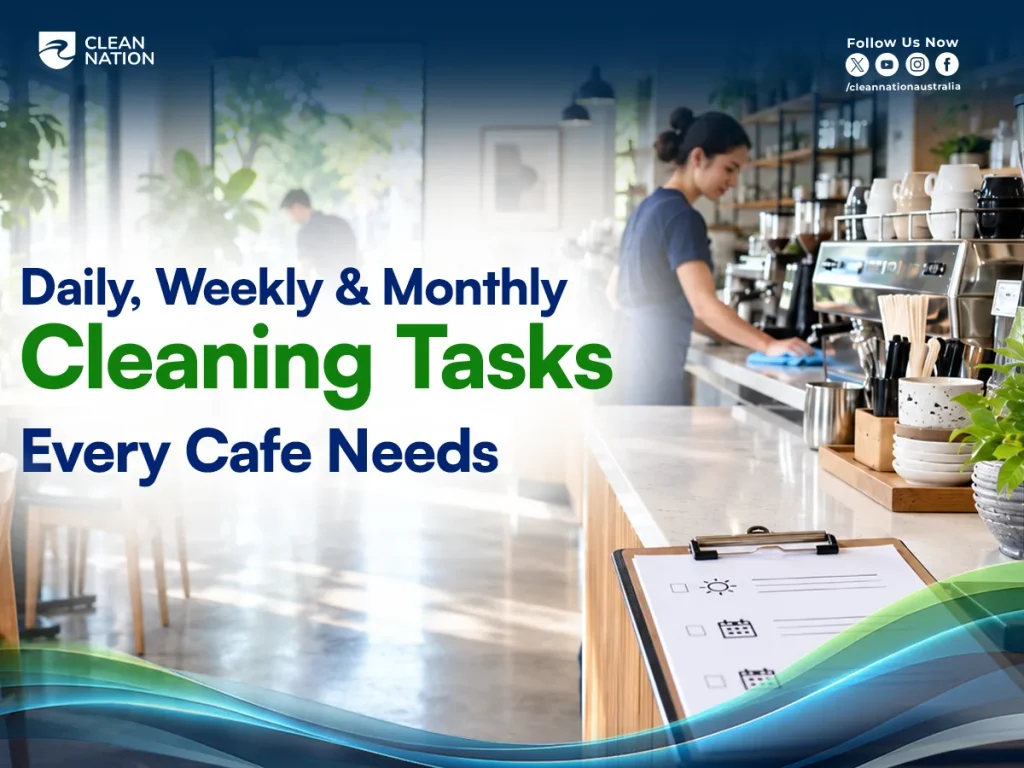
Weekly jobs target dirt that is easy to miss during a busy shift. Choose a quieter period or a time after closing, and move tasks forward if the area gets dirty sooner.
Deep Clean the Coffee Bar
Remove coffee oils and old grounds from parts that staff can safely access. Clean group-head accessories, the knock box, drip areas, shelves and grinder hopper according to equipment instructions. Check for milk residue around the fridge and under the coffee station. Never put electrical grinder parts in water unless the manufacturer says it is safe.
Refresh the Kitchen and Food Storage Areas
Clean fridge shelves, door seals and reachable corners without leaving chilled food at unsafe temperatures. Wipe dry-storage racks and check for crumbs, spills or damaged food packs. Scrub splashbacks, oven interiors and floor edges where grease collects. Inspect drains for visible build-up and report slow drainage rather than pouring in random chemicals.
Reach the Places Customers Do Not See
Clean behind light furniture and any equipment designed to be moved safely. Wash waste bins and the bin bay, wipe lower walls, and check under benches for food scraps. Pay attention to bathroom edges, window tracks, chair legs and outdoor seating. Ask the shift lead to note any signs of pests or water leaks.
Monthly Cafe Cleaning Checklist
Monthly cleaning is for detailed work and reviewing areas that need more care. It does not replace any daily or weekly food safety task.
Review Equipment, Filters and Ventilation
Inspect accessible vents, extraction covers and filters for dust or grease. Arrange cleaning by trained staff or a specialist when equipment and safety rules require it. Review espresso-machine descaling, water filters, ice-machine cleaning and dishwasher care against each manufacturer’s schedule. Some jobs will be needed more often than monthly; others less often.
Deep Clean Furniture and Hard-to-Reach Areas
Wash skirting boards, high shelves, accessible light fittings and the tops of storage units. Check booth seats, fabric chairs and rugs for marks that need a deeper clean. Clean window frames and less-used storage spaces. Use safe access methods for high areas; do not ask staff to stand on chairs or move heavy equipment without a safe plan.
Inspect the Cafe for Problems
Look for damaged floor tiles, worn door seals, mould, leaks, grease build-up and gaps that may let pests in. Check whether cleaning brushes and cloths need replacing. Record repairs separately from completed cleaning work, so a ticked box never hides a problem. Review the plan after a menu change or a rise in customer numbers.
Simple Cafe Cleaning Schedule Template
A good cafe cleaning schedule answers four questions: what needs cleaning, when, who does it and who checks it? Use this example as a starting point for your own venue.
| When | Example job | Responsible person | Check |
| Before opening | Check dining area, sinks and coffee station | Opening barista | Shift lead initials |
| During service | Wipe tables, remove spills, monitor toilets | Assigned floor staff | Shift lead checks |
| After closing | Clean coffee tools, kitchen surfaces, floors and bins | Closing team | Closing sign-off |
| Once a week | Clean fridge shelves and behind safe-to-move items | Assigned team member | Manager reviews |
| Once a month | Inspect high areas, furniture and equipment care needs | Manager or contractor | Record work and defects |
Place a printed list where staff can use it, or use a shared digital form. Add a date, task owner and space for problems found. Keep food safety records as required for your business. If a task is missed, carry it forward with a named person instead of ticking it off.
Essential Cleaning Supplies Every Cafe Should Have
Keep the right tools close to each work area. That saves time and lowers the risk of using the wrong product.
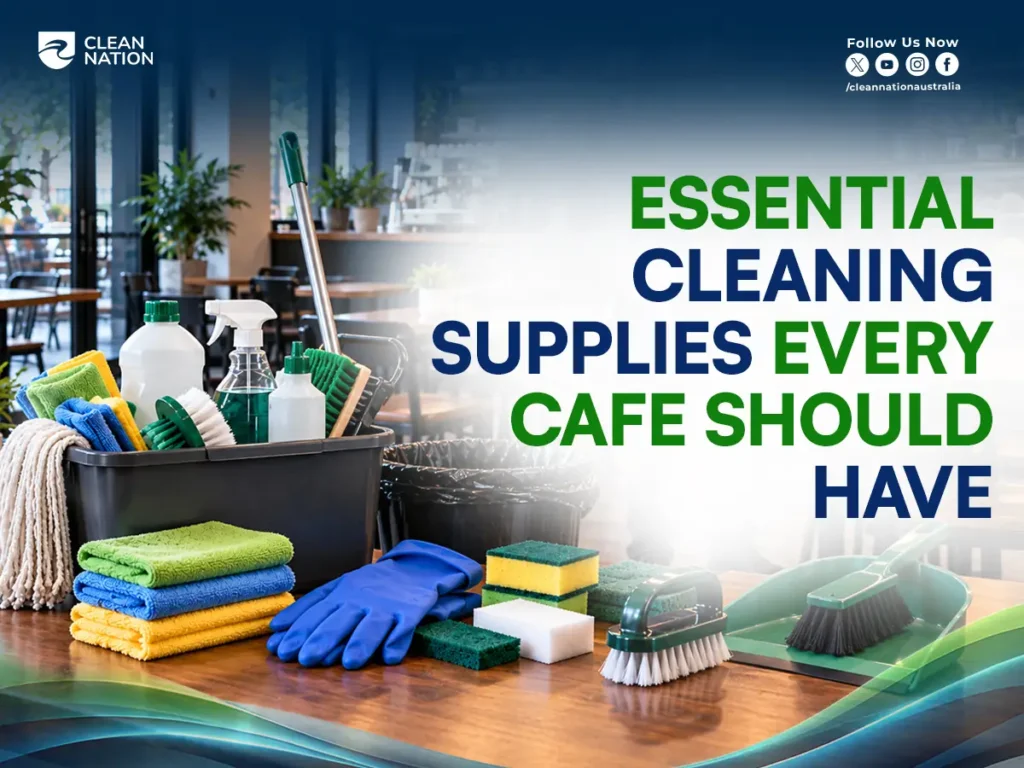
- Food-contact sanitiser suitable for its intended use, with clear label instructions.
- Detergent, approved kitchen degreaser and espresso-machine cleaning products.
- Separate microfibre cloths, brushes and cleaning tools for food areas, dining spaces and toilets.
- Broom, dustpan, mop, bucket and wet-floor signs.
- Gloves and other protective equipment where the product label or task requires them.
- Bin liners, soap, paper towels and a safe place to store cleaning chemicals.
Check stock before it runs out. Never mix cleaning chemicals, and keep them away from food and food-contact tools. Follow product labels for dilution, contact time and any final rinse.
Australian Food Safety Rules for Cafe Cleaning
In Australia, Food Standards Code Standard 3.2.2 requires food businesses to keep premises and equipment clean and food-contact items clean and sanitary. Some cafes also have duties under Standard 3.2.2A, depending on the food they handle and their business category.
Remember the simple order: remove food and dirt, wash, rinse as needed, then sanitise. Cleaning lifts crumbs and grease. Sanitising reduces harmful microorganisms on an already-clean surface. Use a method suited to the item, and follow the product or equipment instructions.
The law does not give every cafe a single fixed daily, weekly and monthly timetable. Set cleaning times based on the food handled, equipment use and risk of contamination. Read Food Standards Australia New Zealand’s cleaning and sanitising advice and Clean Nation’s food safety cleaning standards for cafes for more on the rules.
When Should a Cafe Book Professional Cleaning?
Cafe staff can handle many routine jobs, but some tasks need more time, equipment or training. Consider specialist support if grease keeps returning, floors stay slippery after normal cleaning, fabric seating needs treatment or hard-to-reach areas are being missed. Exhaust ducts and other specialist systems need the right qualified contractor and a schedule based on their condition and requirements.
Clean Nation offers restaurant and cafe cleaning services for commercial hospitality spaces. You can discuss dining areas, floors, washrooms and agreed kitchen work when planning a service. Keep food preparation and equipment safety duties clearly assigned between your staff and any external cleaner.
Keep Your Cafe Cleaning Plan Easy to Follow
You do not need a long list that nobody reads. Start with daily tasks, add a few weekly deep-clean jobs and plan monthly checks for hidden areas. Give each job an owner, use the right products and review the results. A clear routine helps your cafe stay ready for the next customer without leaving everything to the closing team.
Frequently Asked Questions
1. What should staff do if glass breaks near food?
Stop work in that area and keep customers clear. Throw away any exposed food that may contain glass. Use a brush and dustpan made for broken glass, never bare hands, and check the area before reopening it.
2. What should a cafe do if its handwashing sink stops working?
Tell the manager at once. Food handlers need suitable handwashing facilities. Do not continue food handling that cannot be done safely; arrange repairs and follow advice from the local food regulator before normal service resumes.
3. Should food stay on the counter while staff spray cleaners?
No. Move or protect exposed food before using a cleaning spray. Follow the product label and prevent chemicals from reaching ingredients, utensils or drinks. Return food only when the area is safe for use.
4. How should staff clean up a food allergen spill?
Stop preparing food in the affected area. Remove the spill, then thoroughly clean utensils and food-contact surfaces using your approved method. Replace any ingredients that may be contaminated, and follow your cafe’s allergen control procedure.
5. How should cafe cleaning change after a large event?
Check how much extra food waste, foot traffic and spill risk the event created. Add a focused clean of seating, floors, toilets and waste areas before the next service. Do not wait for the usual weekly clean if an area needs attention now.