

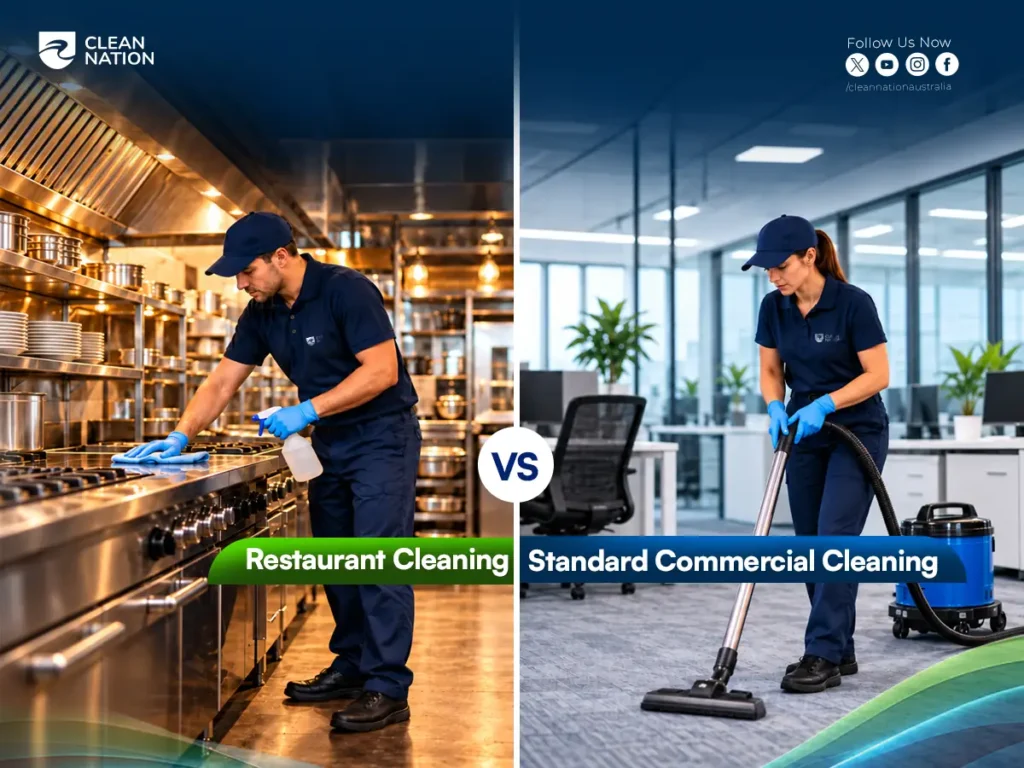
Restaurant cleaning vs standard commercial cleaning comes down to one main point: food safety. Both services keep business spaces clean. But a restaurant has food, grease, cooking equipment and busy service periods to manage. A standard office or shop usually needs floor care, dust removal, clean toilets and tidy shared areas.
What Is Standard Commercial Cleaning?
Standard commercial cleaning covers the day-to-day care of places such as offices, shops and reception areas. Common tasks include vacuuming, mopping, emptying bins, wiping desks, cleaning toilets and looking after shared kitchens.
The goal is a clean, safe and pleasant workplace. Restaurant cleaning sits within commercial cleaning, but it needs extra steps around food and cooking areas.
Why Is Restaurant Cleaning Different?
Restaurant cleaning must deal with more than marks on a floor or dust on a desk. Food scraps, oil, raw ingredients and wet areas can lead to contamination, pests or slips when they are not managed well.
A restaurant also has two very different spaces. Customers use the dining area, while staff prepare food in the kitchen. Clean Nation explains these areas in its front-of-house and back-of-house restaurant cleaning checklist.
Side-by-Side Comparison
| Feature | Restaurant cleaning | Standard office or shop cleaning |
| Main goal | Protect food and keep the venue clean | Maintain workplace hygiene and presentation |
| Common mess | Grease, food scraps, spills and waste | Dust, footprints, paper waste and general dirt |
| High-priority areas | Food benches, equipment, dining rooms and bins | Desks, entrances, floors, toilets and break rooms |
| Methods | Cleaning plus suitable food-contact sanitising | Routine cleaning and targeted surface disinfection |
| Timing | During service, after closing and planned deep cleans | Daily, weekly or after-hours visits |
| Special work | Kitchen degreasing; specialist work quoted separately | Carpet care, window cleaning and floor treatments |
Food Safety Rules Change the Cleaning Standard
Australian food businesses have duties that ordinary offices do not usually face. Under Food Standards Australia New Zealand (FSANZ) Standard 3.2.2, food premises and equipment must be kept clean. Food-contact surfaces and utensils must also be clean and sanitary.
Some restaurants must also meet Standard 3.2.2A. Depending on the business category, this can include a food safety supervisor, food handler training and proof that key food safety controls are working. It does not mean every restaurant must keep the same set of cleaning records.
The FSANZ food safety management tools guide explains who the extra rules apply to. For cafés, Clean Nation also has a guide to food safety cleaning standards for cafes.
Food-Contact Sanitising Is Not Just a Surface Wipe
In most workplaces, a cleaner may wipe tables, remove dirt and disinfect shared touchpoints when needed. A restaurant must also think about the surfaces that touch food.
Cleaning removes food, grease and dirt. Sanitising reduces harmful microorganisms using a suitable process. The product must suit the surface, and staff must follow its label, including contact time and any rinsing steps.
Commercial Kitchen Degreasing Needs a Different Approach
An office cleaner may spend more time on carpets, glass, desks and shared toilets. Restaurant cleaners often face sticky floors, splashbacks, cooking residue and grease around equipment.
Kitchen degreasing may require suitable products, protective gear and access to areas behind or below appliances. Tools used near food should not be moved into toilet or waste areas.
Clean Nation’s commercial kitchen cleaning services page covers this more detailed type of work. Internal exhaust ducts and grease traps may need separate specialist contractors; they should not be assumed to be part of a normal cleaning booking.
Cleaning Frequency Depends on How the Site Works
A standard office may have a set cleaning time after staff leave. Restaurants cannot leave every task until closing. A food preparation surface may need cleaning between tasks. Staff also need to respond to spills, full bins and dirty tables while the venue is open. More detailed work can happen after service or on a separate date.
A café serving coffee and cakes will have different cleaning needs from a restaurant using several fryers. Workload, trading hours and the kind of food served all matter.
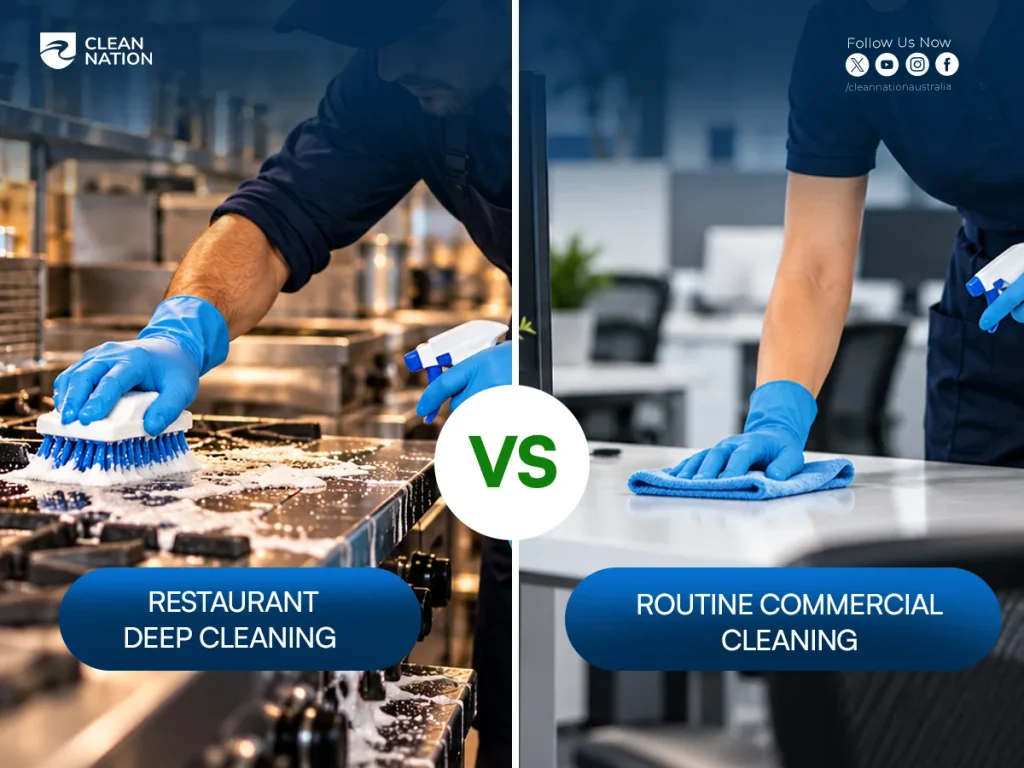
Restaurant Deep Cleaning vs Routine Commercial Cleaning
Routine cleaning keeps a venue ready for everyday use. Deep cleaning tackles built-up residue in places that are harder to reach.
For a restaurant, this may mean detailed floor scrubbing, heavy grease removal, cleaning beneath movable equipment or deeper attention to storage areas. In an office, deep cleaning may focus on carpets, upholstery, floor finishes or high dusting.
But a regular commercial cleaning quote does not always include deep cleaning. Ask for a written list of what is included, what costs extra and what needs a different contractor.
Who Should Handle Restaurant Cleaning Tasks?
In a normal office, an external cleaner may complete most agreed tasks after hours. Restaurants often split cleaning between kitchen staff, service staff and professional cleaners.
Food handlers usually manage immediate food-contact tasks during food preparation. Service staff deal with customer spills and table resets. Contract cleaners can support agreed floor, washroom, dining-area and scheduled deep-cleaning work.
A restaurant manager should know who cleans each area, who checks the result and who reports a problem. A signed task sheet can help, but the business remains responsible for meeting its food safety duties.
Does Restaurant Cleaning Cost More?
Restaurant cleaning can cost more than a basic office clean, but it is not always more expensive. Price depends on the work, not just the business name.
Important quote factors include the size of the venue, number of toilets, cooking equipment, grease build-up, cleaning frequency, staff access and whether work takes place late at night. Special tasks and required products can also affect the price.
Compare quotes using the same scope.
How to Choose the Right Cleaning Service
Before you book, ask a provider these questions:
- Which areas are covered? Separate food preparation, dining, storage, toilets and general work areas.
- What cleaning methods are used? Ask how food-contact areas are cleaned and sanitised, and how tools stay separated.
- When will work happen? Match the cleaning plan to food preparation, trading hours and safe kitchen access.
- What is excluded? Check whether deep cleans, exhaust duct work, grease traps and equipment servicing require separate arrangements.
- How is work checked? Agree on a simple way to report missed tasks and confirm completion.
For a workplace without food preparation, office cleaning services may be the better fit. For food venues, look for a team that can discuss the needs of a commercial kitchen rather than offering only a standard office checklist.
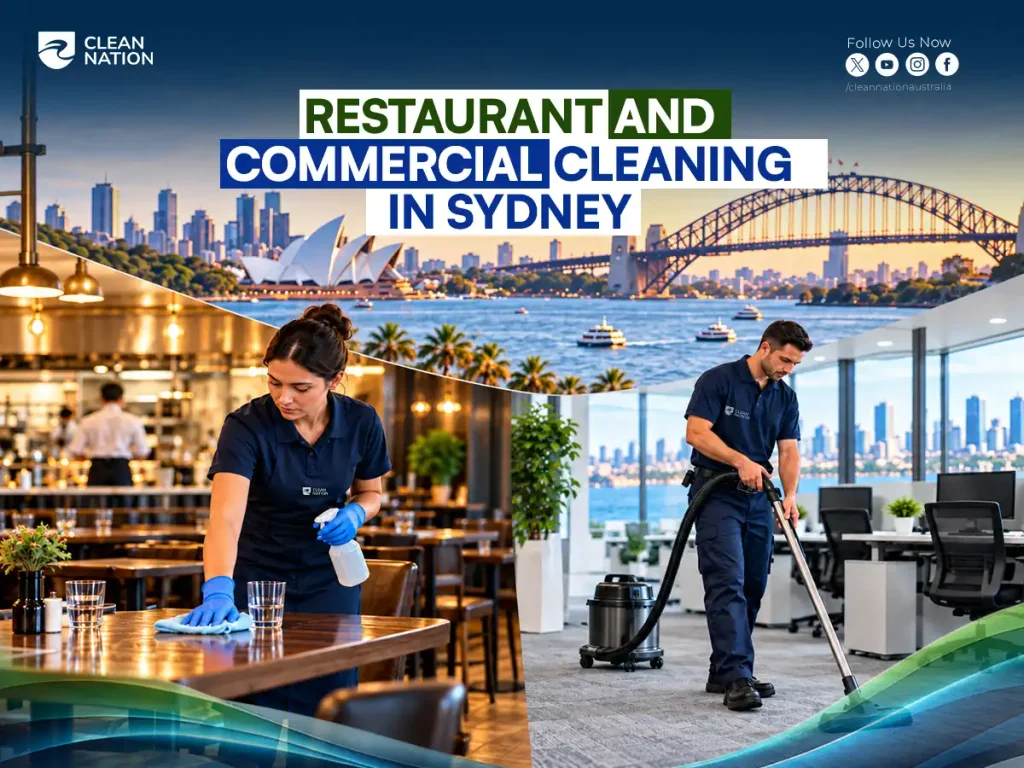
Restaurant and Commercial Cleaning in Sydney
The same national food standards apply in Sydney, alongside relevant NSW and local council requirements. A small café in the Inner West, a busy CBD restaurant and an office in Parramatta may all need different cleaning plans.
Sydney businesses comparing wider workplace services can also see Clean Nation’s commercial cleaning services in Sydney.
Which Cleaning Service Should You Book?
Choose routine commercial cleaning for an office, shop or workplace that mainly needs general upkeep. Choose specialist restaurant cleaning when food preparation, kitchen grease, food-contact surfaces and service-time cleaning are part of the job.
Clean Nation provides restaurant and cafe cleaning services across Australia. Share your venue type, trading hours and problem areas so the team can discuss a suitable scope and quote.
Frequently Asked Questions
1. Can a restaurant and an office in the same building use one cleaning company?
Yes, if the company can manage separate cleaning plans and tools for each space. Food preparation zones need special care even when the office and restaurant share an address.
2. Do cleaning needs change when a restaurant adds allergen-containing dishes?
They can. New ingredients may create fresh cross-contact risks. Review how tools, benches and equipment are cleaned between tasks, and follow your food safety and allergen-control procedures.
3. Should outdoor dining be part of a restaurant cleaning contract?
Yes, if the venue is responsible for that space. Agree on table care, litter removal, spills and extra cleaning after rain, wind or heavy use before signing the contract.
4. Is a standard office clean enough for a workplace that starts preparing food for sale?
Not by itself. Once a workplace prepares or serves food as a food business, its cleaning plan must address the relevant food safety duties as well as general workplace hygiene.
5. What cleaning should happen before a renovated restaurant reopens?
Construction dust and debris should be removed first. Then check food preparation areas, equipment and storage before food handling starts. Confirm any required sanitising and equipment checks with the venue manager.