

A clean washroom is important for every business. Staff, customers and visitors use toilets, sinks and other shared surfaces throughout the day. Without regular care, dirt, bad smells and empty supplies can become common problems.
A commercial bathroom cleaning checklist helps businesses keep track of daily, weekly and monthly tasks. It covers toilets, urinals, basins, floors, high-touch surfaces and washroom supplies.
This guide explains what to clean, how often to check each area and how to record completed work. It is useful for Australian offices, shops, restaurants and other commercial properties.
Commercial Bathroom Cleaning Checklist at a Glance
Not every washroom task needs to be done at the same time. Routine cleaning removes daily dirt, while deeper cleaning deals with build-up in less accessible areas.
Use this washroom cleaning schedule as a starting point.
| Frequency | Main cleaning tasks |
| Daily | Clean toilets, urinals, basins, mirrors, touchpoints, floors and bins; refill supplies |
| Weekly | Scrub grout, clean cubicle partitions, remove limescale and detail hard-to-reach areas |
| Monthly | Deep-clean suitable floors, wash wall tiles, inspect sealants and clean accessible high fittings |
| During busy hours | Check spills, toilet paper, soap, bins, odours and visible dirt |
These are suggested cleaning intervals, not fixed legal rules for every workplace. A small office and a busy shopping centre may need different routines.
What to Prepare Before Cleaning a Commercial Washroom
Before starting, cleaners need suitable products, equipment and a safe work area. Poor preparation can spread dirt between surfaces or create slip hazards.
Essential cleaning supplies include:
- Separate cleaning cloths and mop heads for toilet and basin areas.
- Toilet brushes, non-scratch pads and suitable surface cleaners.
- Detergent and disinfectant products appropriate for the surfaces and task.
- Gloves and other personal protective equipment (PPE) based on the product instructions and risks.
- Bin liners, toilet paper, hand soap and paper towels.
- Wet-floor signs and safe chemical storage.
Cleaners should check product labels and Safety Data Sheets (SDS) before use. Never mix cleaning chemicals, particularly bleach with acidic or ammonia-based products.
Use separate equipment for toilet areas and handwashing surfaces. Remove dirt with detergent before disinfecting where needed, or use a suitable combined product as directed. Follow the product’s stated contact time.
Daily Commercial Washroom Cleaning Checklist
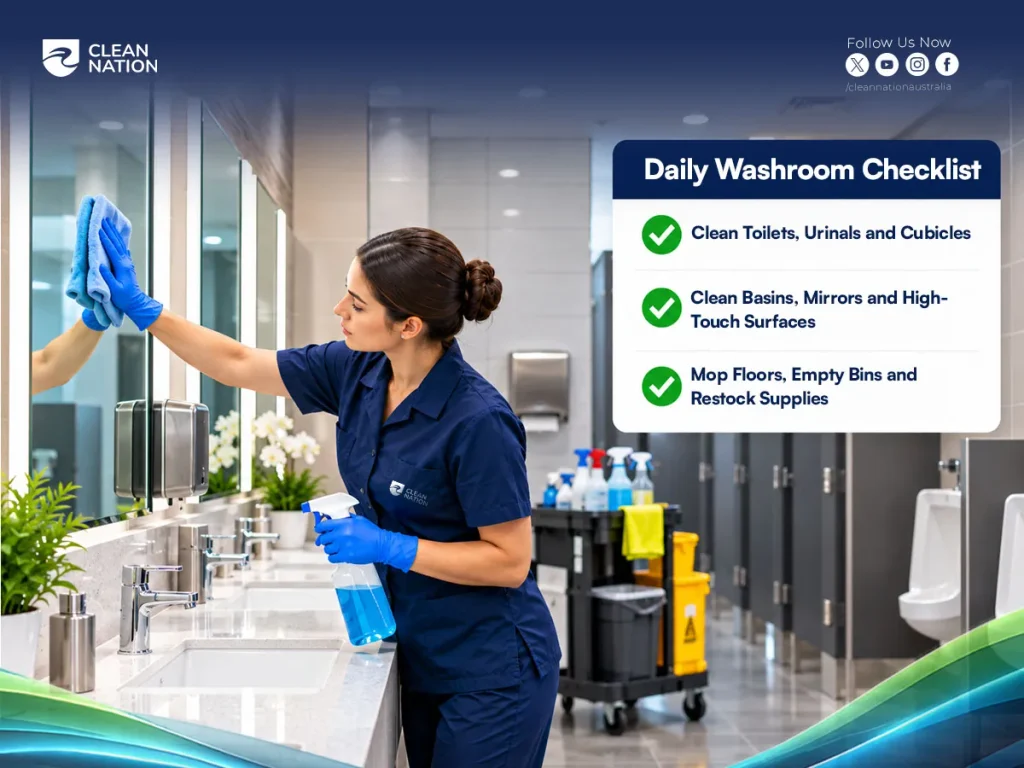
Daily washroom cleaning should focus on surfaces people use most. The aim is to remove visible dirt, clean shared fixtures, manage waste and keep essential supplies available.
1. Clean Toilets, Urinals and Cubicles
Toilets and urinals need attention inside and outside the bowl. Dirt can collect around flush plates, seat hinges and the base of each fixture.
Daily toilet cleaning tasks:
- Scrub toilet bowls, rims and suitable urinal surfaces.
- Clean toilet seats, lids, cisterns and flush buttons.
- Wipe cubicle door handles, locks and latches.
- Clean visible splash marks around toilet bases.
- Check for blockages, leaks or damaged fittings.
Use toilet-only brushes and cloths. Keep this equipment away from basins and other shared surfaces.
2. Clean Basins, Mirrors and High-Touch Surfaces
Handwashing areas often collect soap marks, water spots and fingerprints. Regular high-touch surface cleaning helps maintain better hygiene around shared fittings.
- Wash basins, taps and surrounding benchtops.
- Remove visible soap residue from suitable surfaces.
- Clean mirrors and glass panels.
- Clean and disinfect appropriate touchpoints, including door handles, light switches and dispenser buttons.
- Wipe accessible grab rails without damaging their fittings.
Check that taps work and water drains normally. Report faults rather than trying to repair plumbing.
3. Mop Floors, Empty Bins and Restock Supplies
Wet floors, full rubbish bins and missing soap can make a commercial toilet unpleasant to use.
Finish the routine clean with these tasks:
- Remove loose rubbish and visible debris.
- Empty general waste bins and replace liners.
- Check sanitary bins and report when specialist servicing is needed.
- Refill toilet rolls, hand soap and paper towels using agreed supplies.
- Mop suitable floors, including reachable corners and areas around fixtures.
- Leave floors dry and remove safety signs only when the area is safe.
Check each cubicle before marking the daily bathroom cleaning checklist as complete.
Weekly Commercial Bathroom Deep Cleaning Checklist
Daily cleaning handles regular use, but some grime builds up slowly. Weekly commercial washroom maintenance should focus on the details that are easy to miss.
Deep-Clean Tiles, Grout and Fixtures
A weekly bathroom cleaning routine may include:
- Scrub accessible grout lines and floor edges.
- Clean cubicle partitions, hinges and door frames.
- Remove suitable limescale deposits around taps and basins.
- Detail areas behind toilets and beneath accessible fittings.
- Remove marks from tiled splash zones and lower walls.
- Clean bin exteriors and dispenser housings.
- Wipe accessible ventilation grilles using safe methods.
- Clean floor drain covers where included in the service scope.
Use products that suit the surface. Strong acidic cleaners can damage some natural stone, grout and fittings.
Check Areas That Need Maintenance
Weekly checks should also identify problems that cleaning alone cannot fix.
Look for loose toilet seats, dripping taps, damaged dispensers, blocked drains and poor ventilation. Pass these issues to the property manager or maintenance team.
This helps businesses keep cleaning work separate from plumbing, electrical repairs and specialist waste services.
Monthly Washroom Cleaning and Maintenance Checklist
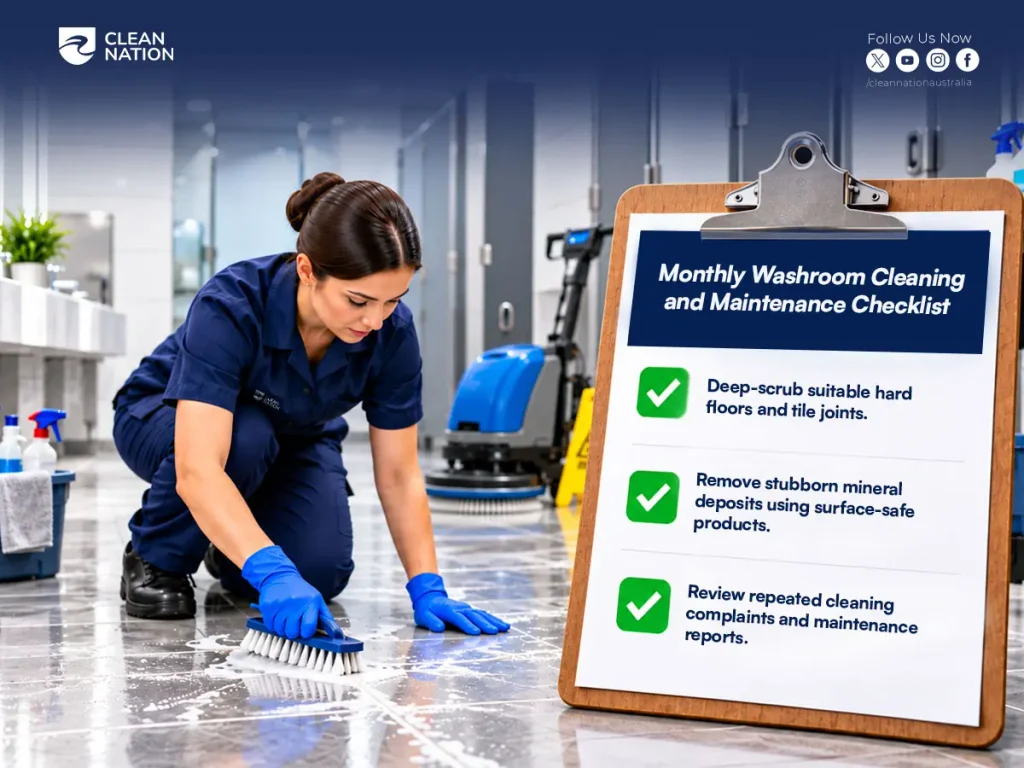
Monthly cleaning deals with heavier build-up and areas that may not need attention during every visit.
A monthly commercial restroom cleaning checklist can include the following tasks:
- Deep-scrub suitable hard floors and tile joints.
- Wash accessible wall tiles and larger partition surfaces.
- Remove stubborn mineral deposits using surface-safe products.
- Detail floor edges, skirting and hard-to-reach corners.
- Clean accessible light covers and ventilation grilles where safe and authorised.
- Inspect silicone seals for damage, discolouration or possible mould.
- Review repeated cleaning complaints and maintenance reports.
Some sites may need machine floor scrubbing or specialist tile and grout cleaning. These jobs should be agreed upon separately if they are outside the regular cleaning contract.
Monthly inspections can also show whether the current cleaning schedule is keeping up with washroom use.
How to Manage High-Traffic and Public Washrooms
A busy public toilet needs closer attention than a small staff bathroom. Shopping centres, event venues and customer-facing businesses can have many users throughout the day.
For these facilities, a public toilet cleaning checklist should include short checks between scheduled full cleans.
During each check, staff can look for:
- Spills or wet floors that need immediate attention.
- Empty soap dispensers or toilet roll holders.
- Overflowing bins or visible waste.
- Dirty toilet seats and frequently touched surfaces.
- Damaged fittings or blocked access.
The number of inspections should depend on actual use, not just the opening hours.
For example, an office washroom may need extra checks when staff arrive and during lunch breaks. A restaurant may need them during peak meal periods.
Businesses can use a wider Restaurant Cleaning Checklist to coordinate customer washrooms with front-of-house tasks.
Sample Washroom Cleaning Log for Businesses
A washroom cleaning log records when a check or clean was completed. It helps supervisors see missed visits, repeated issues and tasks that need follow-up.
Here is a simple record template that businesses can copy into a printed sheet or digital form.
| Date / Time | Task or area checked | Result | Cleaner initials | Action needed |
| ___ | Toilets and urinals | Pass / Issue | ___ | ___ |
| ___ | Basins and touchpoints | Pass / Issue | ___ | ___ |
| ___ | Floors and bins | Pass / Issue | ___ | ___ |
| ___ | Soap and paper supplies | Pass / Issue | ___ | ___ |
| ___ | Final inspection | Pass / Issue | ___ | ___ |
Add a supervisor review field if the business needs a separate quality check.
This bathroom cleaning record template is an example, not proof of legal compliance on its own. Keep entries accurate and record any faults that have not been fixed.
Common Washroom Cleaning Areas That Get Missed
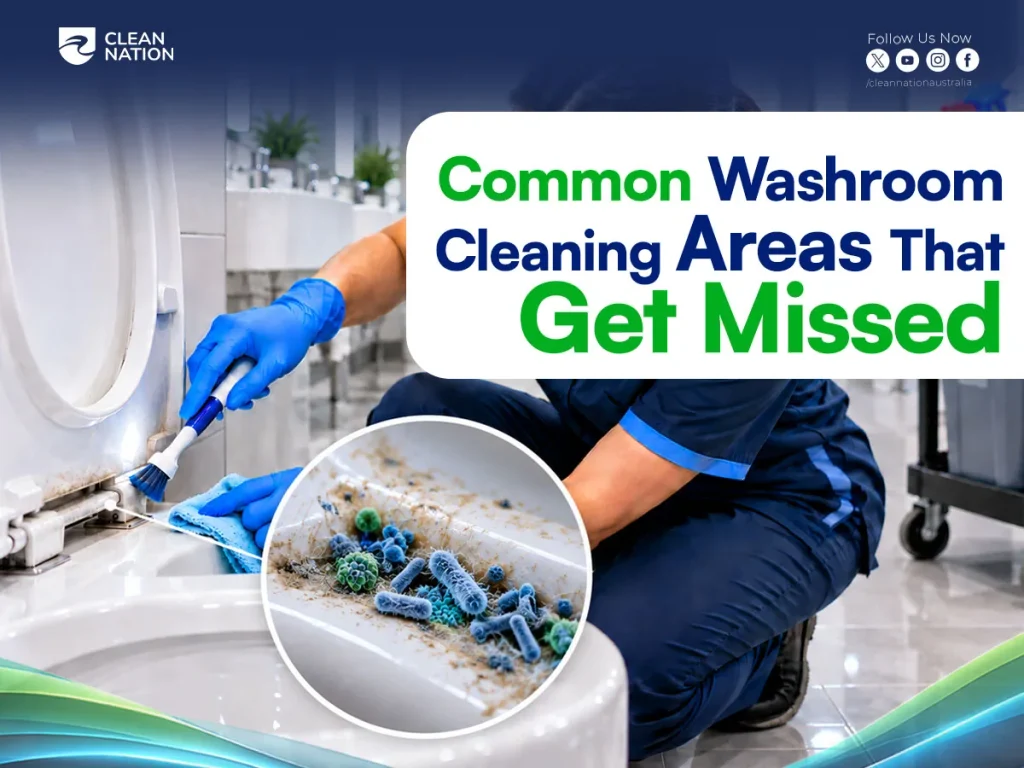
Even when the main fixtures look clean, small areas can still collect dirt.
During a washroom inspection, pay attention to:
- Toilet seat hinges: Dirt and residue can collect around narrow joints.
- Cubicle partition feet: These can trap grime close to the floor.
- Behind toilet bowls: Limited access makes these areas easy to overlook.
- Dispenser edges: Soap and water can leave residue around fittings.
- Floor corners: Mops may not fully reach tight spaces.
A short quality check after cleaning can help staff identify these spots before the washroom reopens.
Australian Workplace Washroom Hygiene and Safety
Businesses in Australia need to provide and maintain suitable workplace facilities, including toilets and handwashing areas.
Safe Work Australia’s Model Code of Practice for Managing the Work Environment and Facilities explains that workplace facilities should be kept clean, safe, accessible and in working order.
Cleaning arrangements should consider the number of workers, shift patterns, type of work and likely contamination. The model Code does not set one fixed toilet cleaning timetable for every Australian business. Its legal effect can differ between jurisdictions.
A workplace cleaning plan should therefore consider:
- Site-specific hygiene and safety risks.
- Appropriate cleaning chemicals and safe handling.
- Access for people using mobility aids.
- Cleaning records and prompt fault reporting.
- Clear duties for cleaners, supervisors and building managers.
For businesses with shared workplaces, office cleaning services can also be planned alongside washroom cleaning so different areas follow suitable routines.
When Should Businesses Arrange Professional Washroom Cleaning?
Some businesses have an in-house team for basic daily checks but need outside support for detailed or scheduled cleaning.
Professional commercial washroom cleaning may be useful when a property has several toilet cubicles, long trading hours, limited cleaning staff or work that needs specialist equipment.
Before booking, agree on the number of washrooms, task frequency, consumable responsibilities and any extra services. Specialist sanitary waste collection, plumbing repairs and major mould treatment should not be assumed to be part of routine cleaning.
For wider property needs, businesses can also explore restaurants and cafes cleaning services alongside their customer washroom requirements.
Keep Your Business Washrooms Clean With Clean Nation
Clean Nation provides washroom cleaning services in Australia for offices, shops, commercial properties and shared facilities.
Our cleaning arrangements can cover agreed toilet cleaning, basin care, floors, high-touch surfaces and detailed washroom cleaning based on the property’s needs.
Call +61 480 810 142 or send an online enquiry to discuss your washroom cleaning requirements and request a quote.
Frequently Asked Questions
1. Who is responsible for cleaning shared toilets in a commercial building?
It depends on the lease and building management arrangements. The landlord, tenant or facilities manager may arrange cleaning. Check the written agreement to confirm who handles shared toilets, washroom supplies and ongoing maintenance.
2. Can commercial washrooms be cleaned with fragrance-free products?
Yes, fragrance-free cleaning products may be an option if they are suitable for the surfaces and hygiene requirements. Businesses should discuss product preferences with their cleaning provider before work begins. Fragrance-free does not mean chemical-free.
3. Should baby-changing stations have their own cleaning procedure?
Yes. Baby-changing stations need suitable surface cleaning and careful attention to hygiene. Follow the manufacturer’s instructions, use appropriate products and check the station for damage. A separate cleaning procedure can help staff avoid cross-contamination.
4. What should a business do after a sewage overflow in a washroom?
Keep people away from the affected area and arrange an appropriate specialist assessment and clean-up. Sewage may contain harmful contaminants. Routine commercial toilet cleaning is not enough, and plumbing problems should be fixed before the washroom returns to use.
5. Can medical clinics use the same washroom cleaning checklist as ordinary offices?
A general checklist can provide a starting point, but clinics may need additional infection prevention procedures. Cleaning products, disinfection methods, frequency and staff responsibilities should follow the healthcare facility’s risk assessment and relevant clinical guidance.