

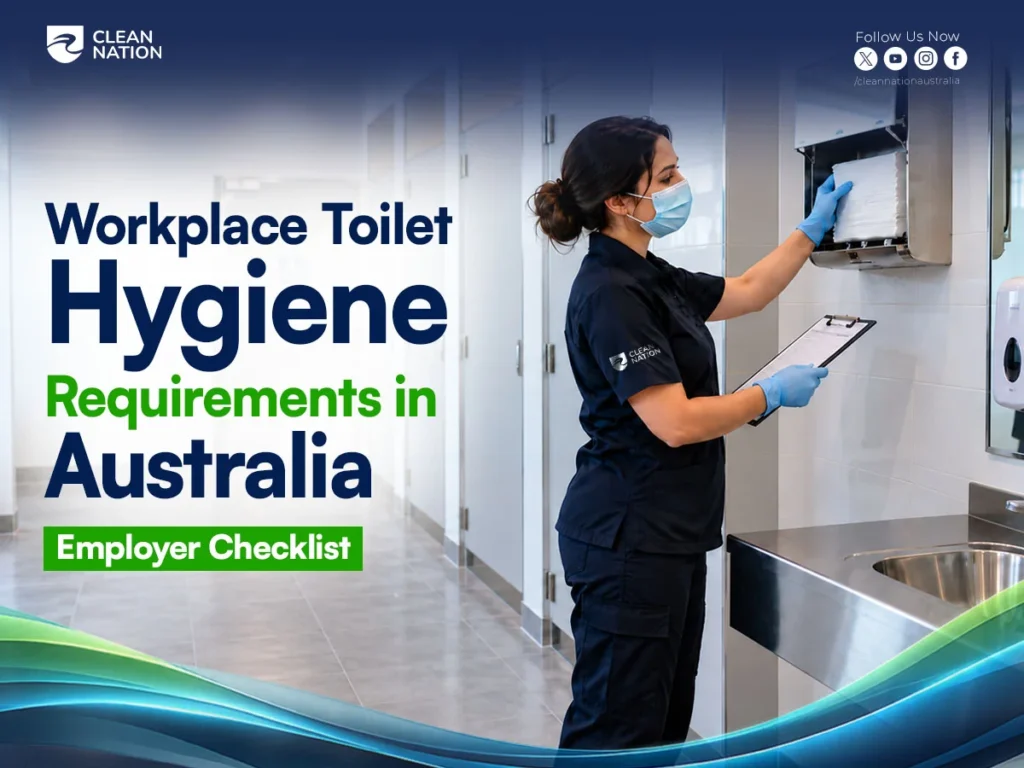
Australian employers must provide workers with adequate, clean, safe and accessible toilet facilities, so far as reasonably practicable. Workplace toilets need suitable handwashing facilities, toilet paper, privacy, waste disposal and regular maintenance. The exact requirements depend on the workplace, applicable laws and number of workers.
This 2026 guide explains workplace toilet hygiene requirements in Australia, including WHS duties, facility numbers, handwashing standards, accessibility and employer responsibilities. It also includes a practical checklist to help businesses review their facilities.
What Are the Workplace Toilet Hygiene Requirements in Australia?
Workplace toilet hygiene requirements cover more than cleaning toilet bowls and floors. Employers also need to consider whether workers have suitable facilities that are safe, accessible and properly maintained.
Under Australia’s model Work Health and Safety (WHS) framework, a person conducting a business or undertaking (PCBU) has duties relating to workplace facilities.
These include providing adequate toilets and washing facilities, keeping them in good working order and managing risks to workers’ health and safety.
The Safe Work Australia Model Code of Practice: Managing the Work Environment and Facilities provides guidance on meeting these duties.
It covers several important workplace toilet requirements:
- Access to suitable toilet facilities for workers.
- Enough toilets and handwashing facilities for workplace needs.
- Privacy, accessibility, lighting and ventilation.
- Toilet paper, soap and appropriate waste disposal.
- Regular cleaning, maintenance and safe working conditions.
The model Code provides guidance, but its legal effect depends on the state or territory. Employers must check the legislation and approved guidance that applies to their workplace.
What Are an Employer’s Legal Responsibilities for Workplace Toilets?
Australian employers are responsible for managing workplace health and safety risks. The duty to provide suitable facilities does not end once toilets have been installed.
Businesses must also consider whether those facilities remain usable during normal working hours.
Provide Adequate and Accessible Toilet Facilities
Workers need suitable access to toilets while they are at work.
Under the model WHS framework, facilities must be adequate for the workplace and accessible to the people who need them.
Employers should consider staff numbers, working hours, workplace layout and the needs of workers with disabilities.
For example, a warehouse operating several shifts may need different arrangements from a small office operating during standard business hours.
Keep Toilets Safe and in Working Order
Workplace toilets must remain safe and suitable for use.
Broken locks, leaking taps, blocked drains and damaged fittings can affect both hygiene and worker safety.
Employers should arrange repairs when problems are reported rather than relying on cleaning staff to manage faults outside their duties.
A toilet that looks clean but cannot be flushed or accessed safely may still be unsuitable.
Maintain Suitable Hygiene Conditions
Workplace toilets should be cleaned regularly and maintained in a hygienic condition.
This includes making sure workers can wash and dry their hands and that essential supplies remain available.
Employers should also consider waste disposal, ventilation and any risks linked to the type of work being performed.
These responsibilities apply even when an external company completes the cleaning.
How Many Toilets Must an Employer Provide in Australia?
The number of workplace toilets depends on worker numbers, the type of workplace and the applicable building and safety requirements.
Safe Work Australia’s December 2025 Model Code provides the following general guidance for workplaces where separate male and female facilities are provided.
| Workers | Model Code guidance |
| Male workers | 1 toilet pan for every 20 male workers |
| Female workers | 1 toilet pan for every 15 female workers |
| Male workers | 1 urinal for every 25 male workers |
These figures are model guidance, not a single binding toilet-ratio rule for every Australian workplace.
The National Construction Code and state or territory requirements may also affect the number and design of facilities.
Can a Small Workplace Have One Unisex Toilet?
The December 2025 model Code explains that a private unisex facility may be suitable in certain small workplaces.
Its example applies where no more than 10 people normally work at the workplace and no more than two workers are of one sex.
Such a facility should provide suitable privacy, a toilet, a washbasin and a hygienic means of sanitary disposal.
However, employers must still check local requirements and the needs of their workers.
Do the Same Toilet Ratios Apply in Every State?
No. Australian jurisdictions can have different workplace facilities guidance.
For example, Victoria operates under its own occupational health and safety framework. WorkSafe Victoria’s workplace facilities compliance code also includes guidance on all-gender and accessible toilets.
Employers should check their relevant state or territory regulator before deciding how many toilets their workplace needs.
What Handwashing Facilities Must Workplaces Provide?
Handwashing facilities are an important part of workplace toilet hygiene.
Workers need suitable facilities to wash their hands after using the toilet and at other times when their work creates hygiene risks.
The model Code recommends that handwashing facilities provide:
- Accessible washbasins.
- Suitable water supply.
- Soap or appropriate hand-cleaning products.
- Hygienic hand-drying facilities.
- Safe access from toilets and work areas.
Paper towels and suitable hand dryers are examples of hygienic drying options.
Hand sanitiser should not automatically be treated as a replacement for suitable handwashing facilities.
For example, SafeWork NSW’s workplace toilet guidance specifically identifies soap or handwash and hand-drying facilities as part of suitable toilet amenities.
Employers should also check for leaking taps, blocked basins and empty dispensers.
What Are the Requirements for Toilet Privacy and Accessibility?
A workplace toilet must be suitable for the people who use it.
This includes considering privacy, safe access and the needs of workers with disabilities.
Toilet Privacy and Security
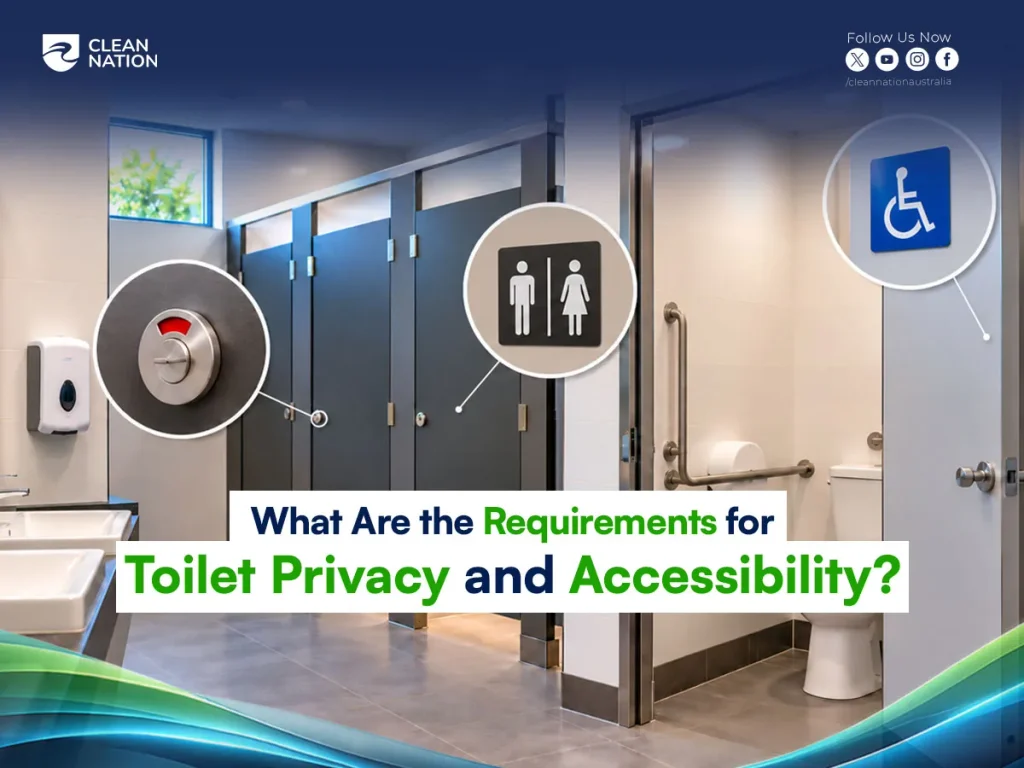
Workplace toilets should provide suitable privacy.
The Safe Work Australia model Code recommends features such as lockable cubicle doors, clear signs, adequate lighting and ventilation.
Cubicle locks should work properly, and the toilet layout should allow safe access in an emergency.
Employers should also consider privacy when workers of different genders share facilities.
Accessible Toilet Facilities
Workers with disabilities need suitable toilet access.
Accessible toilets should remain available for their intended use and should not become storage areas for cleaning supplies or other equipment.
Businesses should check that access routes remain clear and that essential fittings are working.
The facility’s design and accessibility requirements may also depend on the National Construction Code and applicable access standards.
All-Gender Toilet Facilities
Workplace toilet arrangements should consider the needs of all workers.
WorkSafe Victoria provides specific guidance on all-gender facilities, including suitable signs, privacy and access.
An all-gender toilet is not automatically the same as a fully accessible toilet.
Employers should review both privacy and disability access when planning workplace amenities.
What Waste Disposal Facilities Should Workplace Toilets Have?
Waste disposal is another important part of workplace bathroom hygiene.
The model Code recommends that workplace toilets have suitable rubbish bins and a hygienic means of disposing of sanitary items.
A business should consider:
General waste: Suitable bins for ordinary rubbish, with arrangements to prevent overflow.
Sanitary waste: Appropriate disposal facilities where needed, with hygienic servicing arrangements.
Period products: The December 2025 model Code also discusses making period products available where workers may have limited access to their own supplies, such as remote workplaces or sites with long or irregular shifts.
Providing period products is discussed in the model guidance according to what is reasonably practicable. It should not be described as a blanket legal requirement for every Australian workplace.
Waste handling arrangements should suit the type of waste involved. Specialist sanitary waste collection may need a separate service provider.
Workplace Toilet Hygiene Checklist for Australian Employers
Employers and facility managers can use this checklist to review the condition and suitability of workplace toilets.
It is designed as a practical inspection tool based on common workplace facilities guidance.
This checklist supports workplace reviews but does not replace a legal compliance assessment.
| Workplace Toilet Requirement | Yes | No | Action Required |
| Workers have suitable access to toilets | ☐ | ☐ | ______ |
| Toilet numbers suit workplace needs | ☐ | ☐ | ______ |
| Toilets are clean and safe to use | ☐ | ☐ | ______ |
| Cubicle doors and locks work | ☐ | ☐ | ______ |
| Handwashing facilities are working | ☐ | ☐ | ______ |
| Soap and hygienic hand drying are available | ☐ | ☐ | ______ |
| Toilet paper is available | ☐ | ☐ | ______ |
| Waste disposal facilities are suitable | ☐ | ☐ | ______ |
| Accessible toilets and access routes are usable | ☐ | ☐ | ______ |
| Lighting and ventilation are suitable | ☐ | ☐ | ______ |
| Plumbing faults are reported and addressed | ☐ | ☐ | ______ |
| Cleaning and maintenance responsibilities are clear | ☐ | ☐ | ______ |
Record the inspection date, the person completing the review and any action needed.
If a problem creates an immediate safety risk, arrange suitable controls without waiting for the next routine inspection.
For a detailed task-by-task cleaning guide, use Clean Nation’s Commercial Washroom Cleaning Checklist covering daily, weekly and monthly tasks.
How Should Employers Manage Workplace Toilet Cleaning?
Meeting workplace toilet hygiene requirements needs clear arrangements between employers, cleaners and building managers.
A cleaning contractor may carry out the agreed work, but hiring a contractor does not automatically remove the employer’s workplace safety duties.
Set a Cleaning Scope That Matches the Workplace
Identify the toilets, washbasins, changing areas and other facilities that require cleaning.
Consider how many workers use the facilities and whether the workplace operates outside normal business hours.
For example, a manufacturing site with several shifts may need additional cleaning arrangements because the toilets remain in use for longer periods.
Businesses can learn more about cleaning frequency in our guide on how often public toilets should be cleaned in Australia.
Assign Responsibility for Supplies and Maintenance
The employer, property manager and cleaning contractor should understand their agreed responsibilities.
For example, a cleaning company may refill soap dispensers while the business purchases replacement soap.
A separate maintenance contractor may be responsible for plumbing repairs.
Written responsibilities help prevent important work from being missed.
Provide a Clear Way to Report Problems
Workers should know how to report problems with workplace toilets.
A simple reporting system can cover blocked toilets, broken fittings, water leaks, missing supplies and unsafe conditions.
The person receiving the report should know who is responsible for arranging a response.
Review Workplace Facilities When Conditions Change
Toilet arrangements may need reviewing when staff numbers, shift patterns or workplace activities change.
For example, a business that expands its workforce may need to reassess the number of available facilities.
Employers should consult affected workers as required under the relevant workplace safety framework.
This helps identify problems that may not be obvious during a short inspection.
Do Different Australian Workplaces Have Different Toilet Hygiene Needs?
The general duty to provide suitable workplace facilities applies across many industries. However, the risks and additional requirements can vary.
| Workplace type | Important hygiene considerations |
| Offices | Shared toilets, handwashing supplies, staff access and routine maintenance |
| Warehouses and factories | Dust, grease, shift work, changing facilities and contamination risks |
| Restaurants and cafes | Staff handwashing, customer toilets and food-related hygiene requirements |
| Healthcare facilities | Infection prevention procedures and additional clinical hygiene requirements |
| Construction sites | Portable toilets, safe access, water supply and regular servicing |
Businesses handling food or providing healthcare may have additional requirements under relevant health and industry regulations.
Construction sites may also need special arrangements where permanent toilets are unavailable.
Employers should apply the guidance relevant to their industry rather than assuming one workplace toilet policy suits every site.
Common Workplace Toilet Hygiene Problems Employers Should Avoid
Some workplace amenity problems happen because responsibilities are unclear rather than because no cleaning takes place.
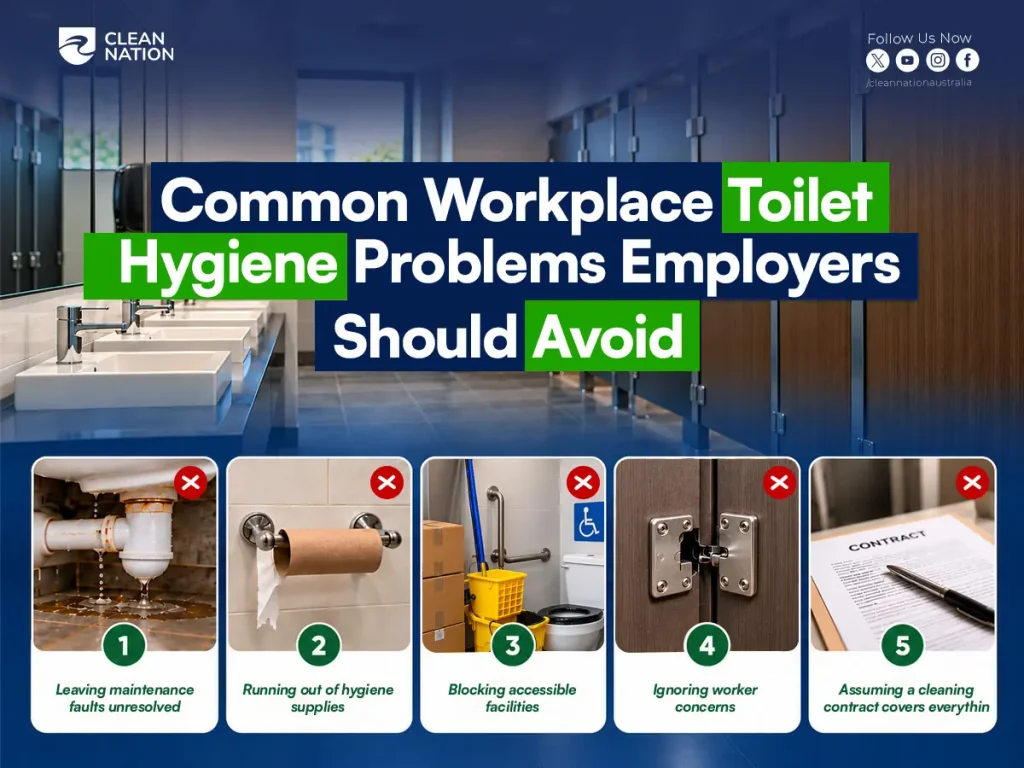
Leaving maintenance faults unresolved:
A damaged toilet or leaking pipe needs repair, not repeated surface cleaning.
Running out of hygiene supplies:
Missing soap or toilet paper can make facilities unsuitable even when the washroom looks clean.
Blocking accessible facilities:
Storage boxes and cleaning equipment can prevent workers from using accessible toilets safely.
Ignoring worker concerns:
Complaints about privacy, access or unsafe conditions should be assessed and addressed.
Assuming a cleaning contract covers everything:
Routine cleaning may not include sanitary waste collection, plumbing or specialist maintenance.
Employers can reduce these problems by reviewing facilities regularly and making responsibilities clear.
Who Is Responsible for Hygiene in a Shared Workplace Building?
Several businesses may use toilets managed by the same building owner or facilities manager.
In these situations, the lease or building agreement may explain who arranges cleaning, supplies and maintenance.
However, contractual arrangements do not automatically remove workplace health and safety duties.
Under the model WHS framework, parties with overlapping duties may need to consult, cooperate and coordinate with each other.
For example, a business tenant should report a broken washbasin to the building manager and take reasonable steps to manage any risk affecting its workers.
The building manager may then arrange the necessary repairs.
Businesses should confirm how urgent problems are handled, especially when staff work outside normal building management hours.
Keep Workplace Toilets Clean With Clean Nation
Suitable workplace toilets need more than an occasional clean. Employers must consider cleanliness, handwashing facilities, access, privacy and ongoing maintenance.
Clean Nation provides washroom cleaning services in Australia for suitable commercial properties and workplaces.
Our team can discuss regular toilet cleaning, basins, floors, high-touch surfaces and other agreed washroom cleaning requirements.
Businesses needing cleaning across the rest of their workplace can also explore our office cleaning services in Australia.
Cleaning services can help businesses maintain their facilities, but they do not replace an employer’s own legal responsibilities.
Call Clean Nation on +61480810142 or submit an online enquiry to discuss your workplace cleaning needs.
Frequently Asked Questions
1. Can an employer require workers to ask permission before using the toilet?
Employers need to provide reasonable access to suitable toilet facilities. Workplace arrangements should not create unreasonable barriers to access. Specific concerns should be assessed against applicable workplace laws, safety requirements and the nature of the work.
2. Do Australian workplaces legally need to display toilet cleaning records?
There is no single nationwide requirement for every workplace to display a toilet cleaning sheet. Records may still be useful for monitoring cleaning work, and some businesses may have additional contractual or industry-specific documentation obligations.
3. Can workers report unhygienic toilets to a workplace safety regulator?
Yes. Workers can raise concerns with their employer or health and safety representative. If the issue remains unresolved, they may contact the relevant state or territory workplace safety regulator for advice about reporting unsafe facilities.
4. Can an employer rely on customer toilets for employee use?
It depends on whether the facilities provide suitable access, privacy, hygiene and capacity for workers. Employers should assess the arrangements against applicable requirements. Customer toilet access does not automatically mean an employer has met every workplace facilities duty.
5. What should happen if the only staff toilet stops working?
The employer should assess the problem, arrange repairs and provide suitable alternative toilet access. Any unsafe facility should be managed appropriately. Workers need to know where they can use an alternative toilet while repairs are completed.