

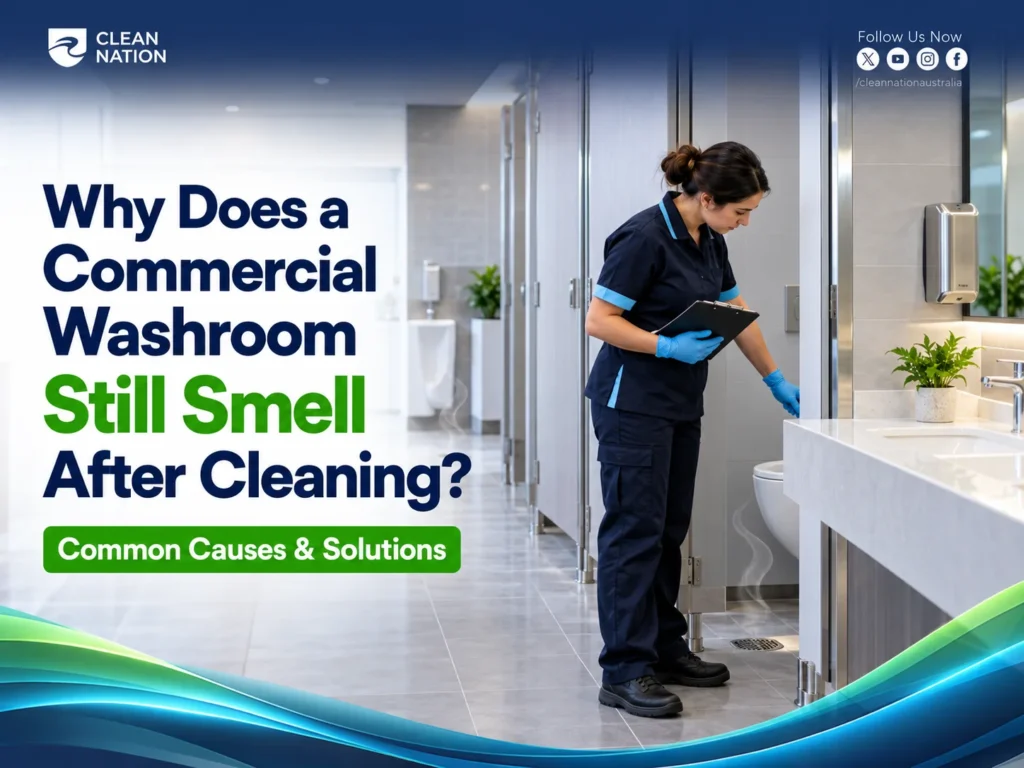
A commercial washroom can still smell after cleaning because the source is not always on visible surfaces. Dry floor drains, urine deposits, dirty grout, waste bins, poor ventilation and plumbing faults can cause unpleasant odours. Regular mopping or air fresheners may not solve these problems. The right solution depends on finding the source and deciding whether it needs deeper cleaning, hygiene servicing or repairs.
This guide explains the common causes of commercial washroom odours, how to identify them and what Australian businesses can do to prevent smells from returning.
Why Does a Clean Commercial Washroom Still Smell?
A washroom can look clean but still have an unpleasant smell. This happens when the odour comes from somewhere that routine cleaning does not reach.
For example, a cleaner may wipe every toilet, mop the floor and empty the bins. Yet an unused floor drain could still allow sewer gases into the room. Cleaning the tiles again will not fix that problem.
Sometimes the cause is simpler. Urine may remain around a toilet base, or an old bin may hold waste residue even after its liner has been changed.
The type of smell and where it appears can provide useful clues.
| Type of smell | Possible source | What to investigate |
| Urine or ammonia-like smell | Urinals, toilet bases or contaminated grout | Hidden deposits and fixture condition |
| Sewage or rotten-egg smell | Floor drains, damaged seals or drainage faults | Water traps and plumbing |
| Musty or damp smell | Moisture, poor ventilation or possible mould | Leaks, damp surfaces and airflow |
| Waste or rubbish smell | Sanitary bins, nappy bins or general waste | Bin condition and servicing |
| Strong chemical smell | Cleaning products or excessive fragrance | Product use and ventilation |
These are possible causes, not a way to diagnose a problem from smell alone.
6 Common Causes of Persistent Commercial Washroom Odours
Several problems can make a commercial bathroom smell unpleasant even after regular cleaning.
Dry Floor Drains and Missing Water Seals
Many commercial washrooms have floor drains that collect water during cleaning or washing.
These drains commonly use a trap that holds a small amount of water. The water forms a seal that helps stop sewer gases from entering the room.
If the drain is rarely used, the water can evaporate.
This may happen in:
- Staff bathrooms that receive little use.
- Accessible toilets that are rarely used.
- Seasonal facilities closed for several weeks.
- Storage or cleaning rooms with unused floor wastes.
For example, a business may notice a sewage-like smell after reopening a washroom that has been closed for a holiday period.
If the drain has a suitable water trap, adding clean water may help restore the seal. However, the facility manager should confirm the drainage arrangement before taking action.
A smell that returns quickly, gurgling sounds or slow drainage may indicate a fault that requires a licensed plumber.
Urine Deposits Around Toilets and Urinals
Persistent urine odours can develop when residue collects in places that normal cleaning does not reach.
Urinals are a common problem area because urine and mineral deposits can build up around outlets, internal surfaces and nearby flooring.
These deposits may hold organic material that produces unpleasant smells.
Possible problem areas include:
- Edges and bases of urinals.
- Toilet seat hinges and surrounding joints.
- Floor tiles beside toilet fixtures.
- Recessed grout lines.
- Urinal waste outlets and internal components.
For example, a shopping centre urinal may look clean from the front while residue remains around the outlet or nearby floor joints.
Removing the source may require detailed cleaning or specialist urinal servicing.
Waterless urinals can also develop odour problems when their cartridges, seals or maintenance procedures are not managed correctly.
The correct treatment depends on the type of urinal and the manufacturer’s instructions.
Dirty Grout and Hidden Floor Residue
Commercial washroom floors receive water, cleaning products and everyday contamination.
Some residue can collect in grout lines, floor joints and areas around fixtures.
A mop usually cleans the exposed floor surface. It may not remove material trapped in recessed or damaged grout.
This can explain why a washroom smells unpleasant even when the floor looks clean.
For example, an office toilet may have dark grout around the toilet base that remains unchanged after regular mopping.
Detailed cleaning may help when the problem is removable dirt or residue.
However, damaged grout, loose tiles or failed seals may need repairs. Cleaning alone cannot restore broken materials.
Businesses should assess the surface condition before using strong products or abrasive equipment.
Sanitary Bins and Other Waste Disposal Units
Waste bins can cause unpleasant smells when they are not cleaned or serviced correctly.
Changing a bin liner does not always remove residue from the bin itself.
Common problem areas include:
Sanitary disposal bins: These may require specialist collection and servicing arrangements.
Nappy disposal units: Busy shopping centres, childcare facilities and family venues may need more frequent servicing.
General waste bins: Paper towels, discarded food packaging and other rubbish can create smells when waste remains inside for too long.
Bins should be checked for residue, damage and overflowing waste.
Facility managers should also confirm who is responsible for specialist waste collection.
A routine cleaning contract does not always include sanitary disposal servicing.
Poor Ventilation and Trapped Moisture
A commercial bathroom can develop a musty smell when moisture remains inside the room.
Poor ventilation may allow unpleasant odours to linger after the visible surfaces have been cleaned.
Common signs include condensation, damp corners, a persistent musty smell and moisture that takes a long time to dry.
Blocked ventilation grilles or faulty extraction systems may contribute to the problem.
Moisture from leaks can also affect wall materials, grout and other surfaces.
The Australian Government’s environmental health guidance explains that mould can grow in damp, poorly ventilated indoor areas, including places affected by plumbing leaks and condensation.
A cleaning service may remove suitable surface contamination, but ongoing leaks or ventilation faults need maintenance.
If mould covers a large area or keeps returning, specialist assessment may be necessary.
Damaged Toilet Seals and Plumbing Problems
Not every washroom smell is a cleaning problem.
Damaged toilet seals, blocked drains and faulty pipe connections may allow unpleasant gases or wastewater odours to enter a room.
A sewage-like smell that remains after cleaning should be investigated rather than covered with fragrance.
Other warning signs include:
- Water collecting around a toilet base.
- Gurgling sounds from drains.
- Slow water drainage.
- Smells affecting several fixtures.
- Odours returning soon after the area has been cleaned.
Water Corporation advises that a persistent sewage smell around a cleaned toilet can indicate a plumbing problem.
The appropriate response is to arrange a plumbing inspection when a fault is suspected.
Cleaners should not be expected to repair damaged seals, dismantle drainage systems or treat unknown sewage problems as routine cleaning work.
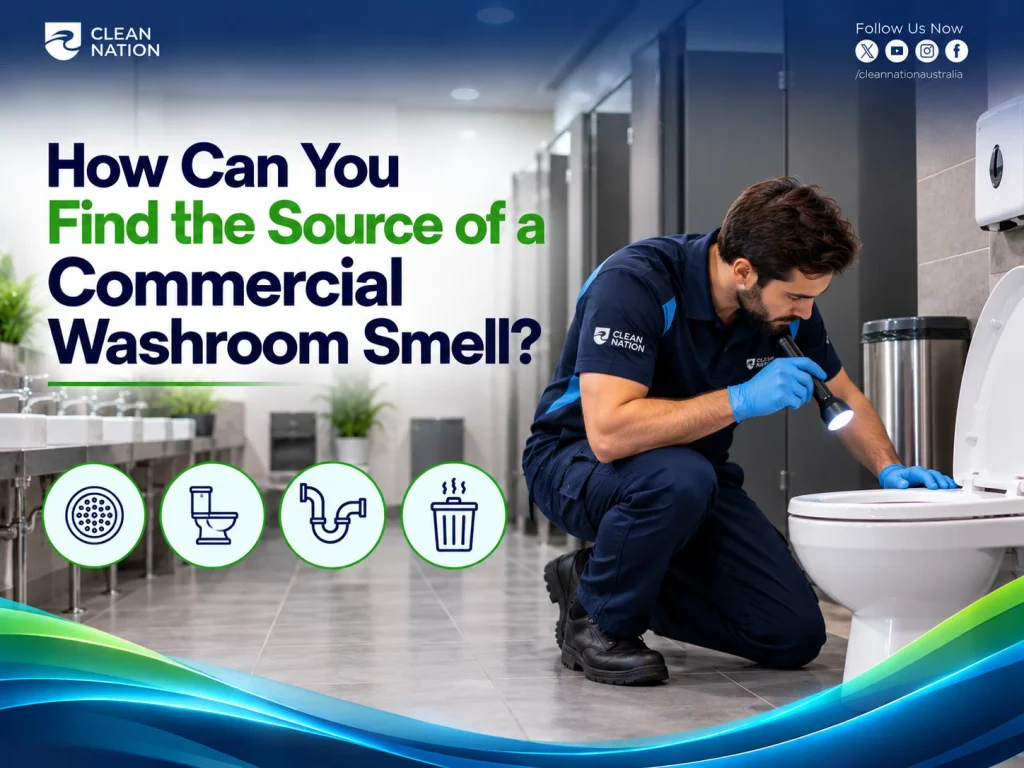
How Can You Find the Source of a Commercial Washroom Smell?
Finding the cause is usually more useful than adding another air freshener.
Facility managers can begin with a simple inspection.
Step 1: Record When the Smell Appears
Notice whether the smell is strongest before opening, during busy hours or after cleaning.
For example, a toilet that smells after a weekend closure may have a different problem from one that develops odours during a busy lunch period.
Record when the problem occurs and which washroom is affected.
This gives cleaning and maintenance teams a clearer starting point.
Step 2: Check Where the Odour Is Most Noticeable
Without touching or dismantling fixtures, check whether the smell appears strongest near toilets, urinals, floor drains, bins or damp areas.
A smell near the waste bins may point towards servicing. A sewage-like smell around drains may need plumbing attention.
Do not rely on smell alone to identify hazardous substances or enter an area with strong or irritating fumes.
Step 3: Review Recent Cleaning and Servicing Work
Check whether the washroom received its scheduled cleaning.
Look at the agreed service scope and any reported maintenance problems.
For example, a daily cleaning contract may cover visible urinal surfaces but not internal urinal servicing.
This does not automatically mean the cleaner missed a task. The required work may be outside the contract.
Step 4: Decide Who Should Investigate Further
Once the likely problem area is identified, arrange the appropriate response.
Surface contamination may need detailed cleaning. A faulty exhaust fan may need building maintenance. Persistent sewage smells may require a licensed plumber.
The aim is to address the cause rather than repeatedly treating the same symptom.
What Is the Best Way to Remove Commercial Washroom Odours?
The right solution depends on the source of the smell.
There is no single cleaning product that can solve every washroom odour problem.
Remove Hidden Dirt and Organic Build-Up
Where residue is the cause, targeted cleaning may help.
This can include detailed attention to suitable grout lines, toilet bases, urinal surrounds, floor edges and other accessible surfaces.
Products should match the surface and the type of contamination.
For example, a cleaner should not use a strong acidic product on a surface that the manufacturer says is unsuitable.
The aim is to remove the material producing the odour without damaging fixtures or flooring.
Service Waste Bins and Urinal Systems
When smells come from bins or urinals, the existing servicing arrangement may need reviewing.
This could involve cleaning the bin body, changing the collection schedule or arranging the correct maintenance for a urinal system.
Some waterless urinals require specific cartridges or treatment products.
Businesses should follow the equipment manufacturer’s guidance rather than assuming any general toilet cleaner will be suitable.
Address Drainage and Ventilation Faults
A damaged seal or blocked pipe needs repair.
Similarly, an exhaust system that is not working correctly may require inspection by a suitable maintenance professional.
Adding more cleaning visits will not fix broken plumbing or failed ventilation equipment.
Where the problem involves mould, removing the moisture source is also important.
Avoid Using Fragrance to Hide the Problem
Air fresheners may improve the smell of a clean washroom, but they do not repair faulty drains or remove hidden urine deposits.
Strong fragrances can also be unsuitable for some workplaces or people sensitive to scents.
Products should be chosen according to the facility’s needs.
Important safety note: Never mix bleach with acidic toilet cleaners, ammonia-based products or other cleaning chemicals. Dangerous reactions can occur.
Australian workplace safety guidance recommends checking product labels and Safety Data Sheets (SDS), using suitable protective equipment and managing chemical risks.
When Is Cleaning Enough, and When Is Maintenance Needed?
Cleaning contractors, hygiene servicing providers and maintenance professionals perform different types of work.
The table below can help businesses identify the appropriate service.
| Washroom problem | Likely action | Suitable service |
| Urine marks around toilet bases | Detailed surface cleaning | Commercial cleaner |
| Dirt trapped in suitable grout lines | Targeted grout cleaning | Cleaning specialist |
| Smelly general waste bin | Clean bin and review collection | Cleaner or waste provider |
| Sanitary disposal unit needs servicing | Arrange specialist collection | Hygiene service provider |
| Dry or faulty drain trap | Assess trap and drainage condition | Facility maintenance or plumber |
| Gurgling drains or damaged toilet seal | Investigate plumbing | Licensed plumber |
| Poor extraction or ongoing dampness | Inspect ventilation and moisture source | Building maintenance specialist |
A single washroom may need more than one type of service.
For example, a facility might require detailed grout cleaning while a plumber separately investigates a drain fault.
Businesses should clearly explain the problem when requesting a cleaning quote.
When Should a Business Stop Using an Affected Washroom?
A bad smell does not always mean a washroom is unsafe. However, certain conditions need prompt attention.
Facility managers should restrict access to an affected area when they identify problems such as sewage overflow, significant contamination, unsafe chemical fumes or other serious hazards.
Staff should report the issue and arrange an appropriate assessment.
A strong sewage-like smell accompanied by leaking wastewater, drain backups or other plumbing problems should not be treated with repeated deodorising.
The facility should return to normal use only when the relevant risks have been addressed.
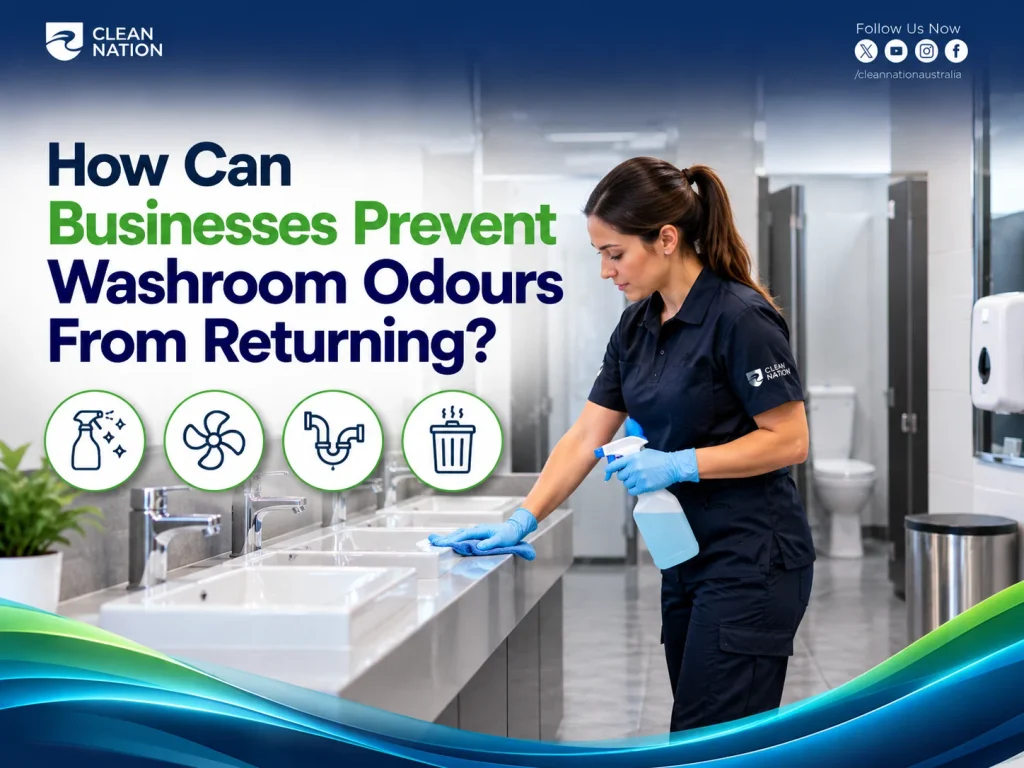
How Can Businesses Prevent Washroom Odours From Returning?
After the source has been addressed, a few practical arrangements can reduce the chance of repeat problems.
Keep Cleaning and Maintenance Responsibilities Clear
A cleaning contract should state which surfaces and fixtures are included.
It should also identify who handles drain problems, ventilation faults, sanitary waste collection and specialist servicing.
This prevents important work from being missed because everyone assumes another contractor is responsible.
Review Recurring Odour Complaints
Keep a simple record of where complaints occur and what action was taken.
For example, if the same urinal produces odours every week, the problem may need a closer inspection rather than another general clean.
Recording the outcome helps managers see whether the problem was actually resolved.
Check Facilities After Long Closures
Unused facilities may develop drainage problems when water evaporates from floor traps.
Before reopening a seasonal or rarely used washroom, the building maintenance team can check suitable drains, flushing systems and other fixtures.
Repeated loss of a water seal may need a plumbing solution.
Match Cleaning Support to the Facility
A washroom used by a small office team may have different cleaning needs from one serving a busy public venue.
If repeated smells come from surface contamination during peak hours, the cleaning arrangement may need reviewing.
For more guidance on visit frequency, read Clean Nation’s How Often Should Public Toilets Be Cleaned in Australia?
Can Professional Washroom Cleaning Help With Persistent Odours?
Professional cleaning can help when unpleasant smells come from removable dirt, urine residue, waste contamination or build-up on suitable washroom surfaces.
Clean Nation provides washroom cleaning services in Australia for commercial properties, workplaces and shared facilities.
Our published services include toilet and urinal cleaning, floor cleaning, suitable tile and grout cleaning, waste-bin attention and odour-control cleaning within the agreed scope.
Businesses dealing with recurring surface build-up can discuss whether routine cleaning or a more detailed service is appropriate.
However, cleaning cannot repair damaged pipes, failed drain seals or ventilation faults. These problems require the relevant maintenance professionals.
For routine task planning, businesses can also use our Commercial Washroom Cleaning Checklist to understand which areas may need regular or periodic cleaning.
Discuss Your Washroom Cleaning Needs With Clean Nation
If unpleasant smells are returning because of dirt or build-up on washroom surfaces, Clean Nation can discuss suitable cleaning options for your property.
Tell our team which washroom is affected, the problem you have noticed and any maintenance issues already identified.
Call +61480810142 or submit an online enquiry to discuss your requirements and request a quote.
Frequently Asked Questions
1. Does a bad smell always mean a commercial washroom is unhygienic?
No. Some smells come from plumbing or ventilation problems rather than dirty surfaces. However, unpleasant odours should still be investigated because they may indicate hidden contamination, maintenance faults or other conditions that need attention.
2. Can odours from another room enter a commercial bathroom?
Yes. Air movement, shared drainage systems and nearby waste areas can sometimes carry smells between spaces. If the source is not inside the washroom, building maintenance staff may need to investigate surrounding rooms and services.
3. Can a newly renovated commercial washroom develop unpleasant smells?
Yes. New fixtures can still have installation or drainage problems. Some building materials may also produce temporary smells. Persistent sewage-like odours should be checked by a suitable plumbing professional rather than assumed to be normal.
4. Should businesses record an odour complaint if the smell disappears?
Yes. A short record can help identify recurring problems. Note the location, date, time and any action taken. If similar complaints continue, the information can help cleaners or maintenance professionals investigate the cause.
5. Can a commercial washroom be cleaned without scented products?
Yes, where suitable fragrance-free cleaning products are available for the required tasks. Businesses should discuss product preferences, surface compatibility and hygiene requirements with their cleaning provider before arranging the service.