

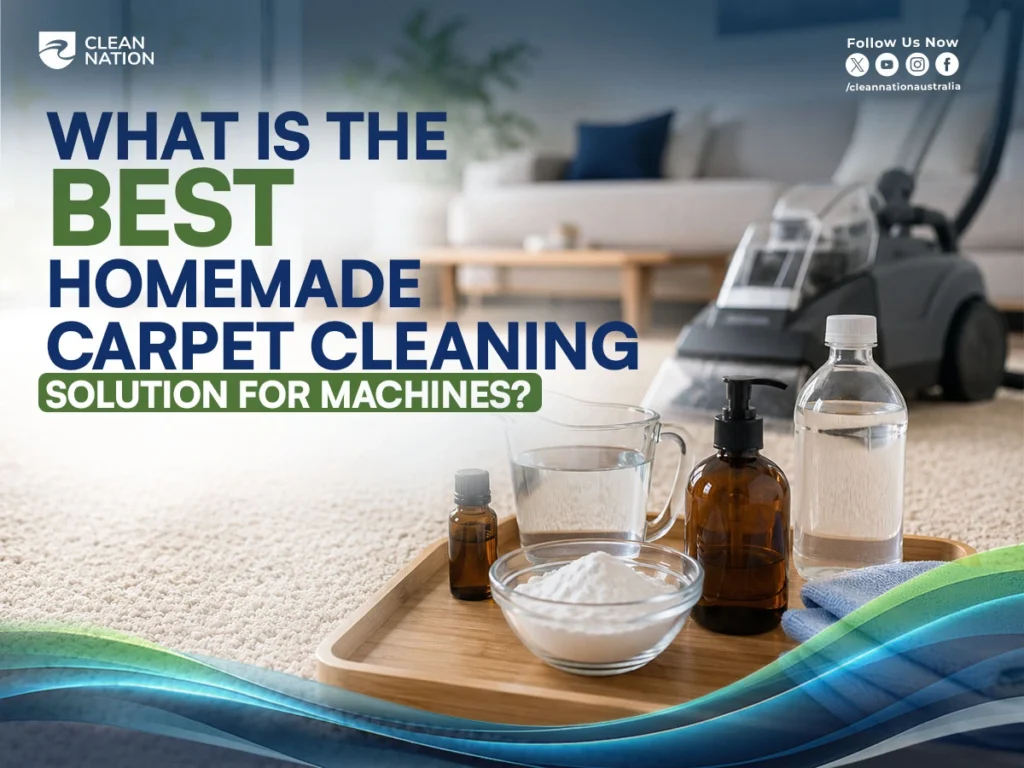
What is the best homemade carpet cleaning solution for machines? It comes down to a simple mix: 2 cups of hot water, 2 tablespoons of white vinegar, 1 teaspoon of mild dish soap, 1 tablespoon of baking soda, and a few drops of essential oils if you like a scent. Mix it in that order, then do a quick foam check before using it in a machine, since too much soap can damage the pump. This low-foam, pH-balanced mix cleans well without leaving residue behind, and it’s safe for kids and pets.
It’s great for everyday upkeep and high-traffic areas, but it won’t fix deep-set stains, mould, or pet odours that have soaked into the padding. For those, you need real heat extraction with professional equipment, like the truck-mounted systems we use at Clean Nation. Our advice: use this DIY mix for regular cleans, and book a professional deep clean every six months to keep your carpet properly healthy.
How do carpet cleaning machines work? (Know This First)
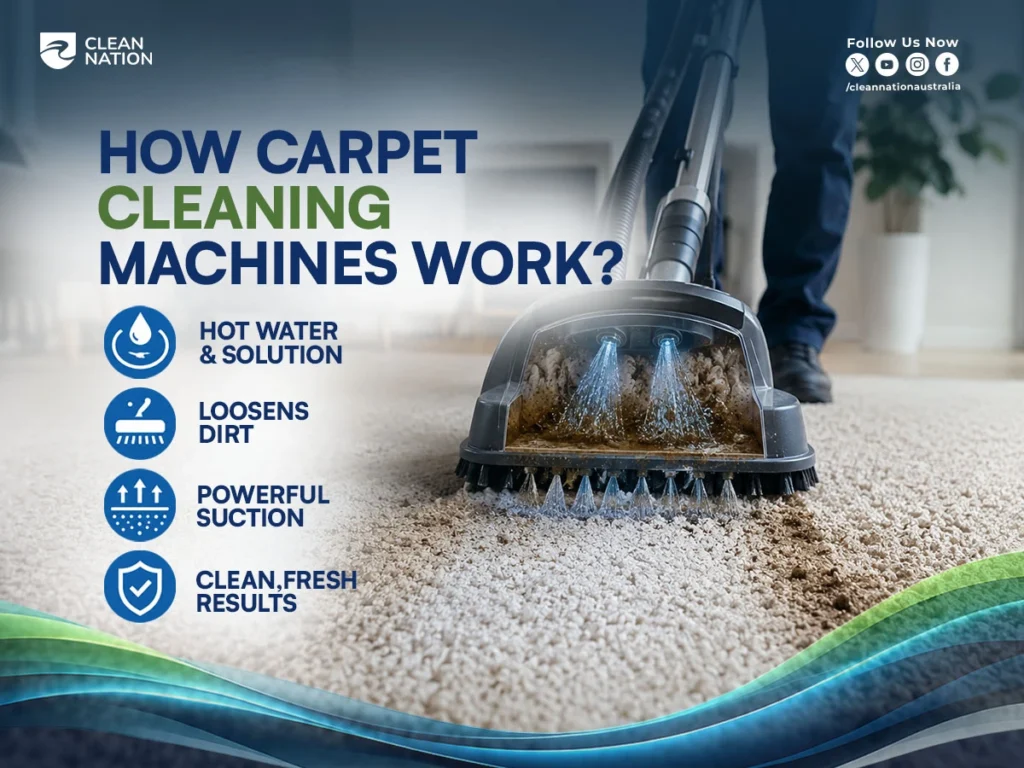
Carpet cleaning machines mostly work using hot water extraction (sometimes called “steam cleaning,” though no steam is actually involved). Water heated to around 200°F is pushed deep into the carpet fibres along with a cleaning solution, loosening dirt and grime. A strong vacuum then sucks that dirty water straight back out.
The equipment used makes a big difference to the result. Portable machines like a Rug Doctor or Bissell carpet cleaner are fine for quick home touch-ups, but they don’t reach the same heat or suction power as professional gear. Spot tools like a Spot Bot machine are good for single stains, not full rooms.
At Clean Nation, we use truck-mounted carpet cleaning systems, where the heating and vacuum unit sits outside in the truck. This means much stronger heat extraction and suction, which gets carpets cleaner and dries them faster than anything you’d rent or buy yourself.
What Makes a Good Homemade Solution?
A good homemade carpet cleaning solution should tick a few boxes at once.
It needs to be low foam, especially if you’re running it through a machine, since too many suds can damage the pump. It should be pH-balanced to protect your carpet fibres from fading or breaking down, and it needs to rinse out fully for residue-free cleaning; otherwise, it leaves a sticky film that attracts dirt faster afterwards.
Stick to natural cleaning ingredients like vinegar, baking soda, and a bit of mild dish soap. These keep things non-toxic, pet-safe, and child-safe, while still being tough on everyday dirt and stains. A solution that hits all of these is genuinely machine-safe and won’t wear down your carpet fibres over time.
So, how do I keep my carpet looking new? It comes down to using the right solution, avoiding over-wetting, vacuuming regularly, and booking a professional deep clean every few months to remove what everyday cleaning can’t reach.
That’s the standard we use at Clean Nation, whether it’s a homemade mix or a professional-grade product..
What Is the Best Homemade Carpet Cleaning Solution?
What you need:
- 2 cups of hot water
- 2 tbsp white vinegar
- 1 tsp mild dish soap
- 1 tbsp baking soda
- A few drops of essential oils (optional)
Steps:
- Pour the hot water into a bowl or jug.
- Add the white vinegar and stir.
- Add the mild dish soap, just a small amount; this keeps the formula low-foam.
- Stir in the baking soda last and let it settle for a moment.
- Add a few drops of essential oils if you want a scent.
Foam check: Pour a little of the mixed solution into a glass and give it a shake. Light foam is fine. If it bubbles up heavily, add more hot water to dilute it before using it in a machine.
That’s the ratio Clean Nation recommends; it’s already diluted properly, so no need to water it down further once mixed.
How to Use It in Your Machine?
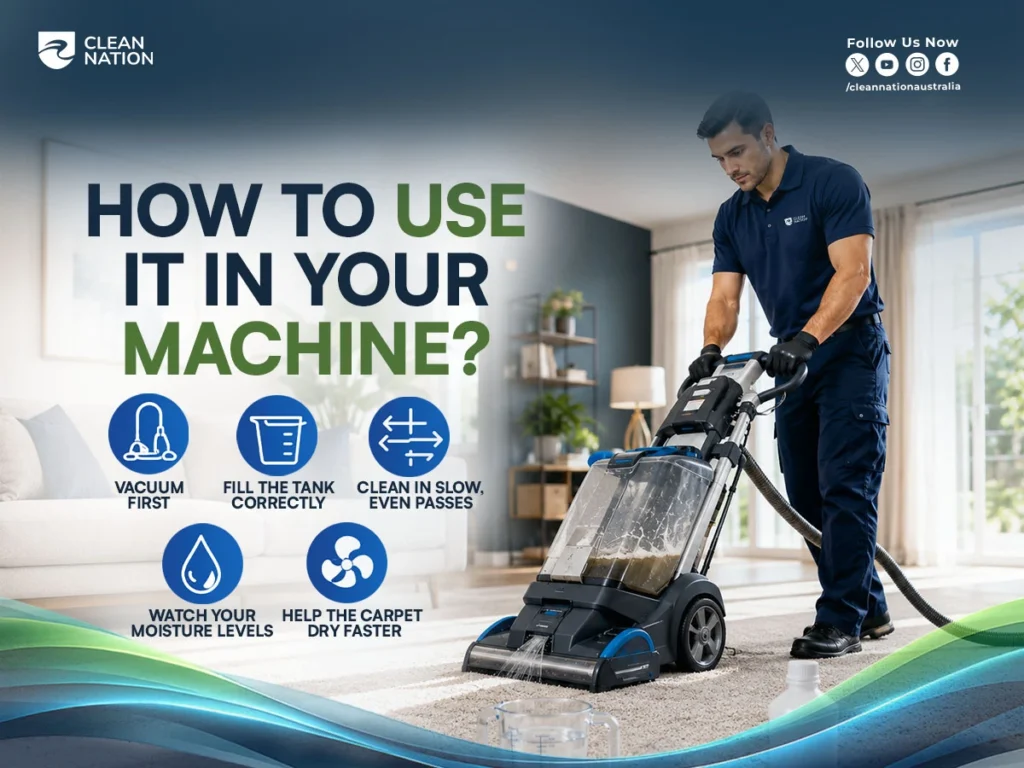
Once your solution is mixed and you’ve done your foam check, here’s how to actually use it the right way.
Vacuum first
Always vacuum before cleaning. This isn’t optional. Loose dirt, dust, and debris sitting on the surface will just turn into mud once water hits it, making your job harder and your carpet dirtier in the process. A good vacuum pass clears all that out so the machine can focus on what’s actually embedded in the fibres.
Fill the tank correctly
Pour your homemade solution into the machine tank, following whatever dilution ratio your specific machine recommends. Most machines have markings inside the tank to guide you, so don’t just eyeball it. Too strong and you risk residue; too weak and the machine won’t clean properly.
Clean in slow, even passes
This is where people often rush. Go over the carpet in slow passes, not quick back-and-forth scrubbing. Slow passes give the machine enough time to apply solution, agitate the fibres, and extract the dirty water properly. Rushing through means the machine doesn’t get a proper chance to pull moisture and grime back out, which leads to over-wetting carpet and leaving more dirt behind than it should.
Try to overlap each pass slightly so you’re not leaving thin clean strips with dirty patches between them.
Watch your moisture levels
Over-wetting carpet is one of the most common mistakes with DIY cleaning. If you go over the same spot too many times or use too much solution, the carpet stays damp for far longer than it should, which can lead to mould, mildew, or that musty smell. One or two slow passes per area are usually enough. If a spot is still showing colour in the extracted water, give it one more pass, but don’t overdo it.
Help the carpet drying process along
Once you’re done, the carpet drying process starts immediately, but you can speed it up. Open windows for air drying if the weather allows, or set up a few fans pointed across the carpet rather than straight down at it. Cross airflow dries carpet faster than air just blowing on one spot. Avoid walking on the carpet or putting furniture back until it’s fully dry, usually a few hours depending on humidity and airflow.
At Clean Nation, this vacuum, fill, clean, dry order is exactly what keeps results consistent, whether it’s a DIY clean at home or one of our professional jobs.
When Does This DIY Solution Work Best?
This DIY mix is great for light carpet cleaning and everyday carpet maintenance, things like general dirt removal in high-traffic areas between deep cleans, or quick spot maintenance on small marks before they set in. It’s routine carpet cleaning, the kind you do to keep things fresh, not to fix a real problem.
It’s not strong enough for deeper issues, though, like pet odour control on accidents that have soaked into the padding, set-in stains, or mould. Those need real heat extraction and professional equipment.
At Clean Nation, we recommend this as a between-visits top-up, not a replacement for a proper deep clean.
What Mistakes Should You Avoid?
- Using too much dish soap – Excessive suds can damage your machine and leave behind soap residue and sticky residue that attracts dirt faster.
- Using undiluted vinegar – Straight vinegar is too harsh and can affect your carpet’s colour and fibres over time.
- Skipping vacuuming – Cleaning over loose dirt just turns it to mud and makes the whole job less effective.
- Over-wetting carpet – Too much solution or too many passes keeps carpet damp for too long, leading to mould growth and that musty smell.
- Soaking the carpet backing – Excess moisture can cause carpet backing damage, weakening the carpet from underneath.
- Skipping a patch test – Always test your solution on a small, hidden area first to make sure it doesn’t affect colour or texture before doing the whole room.
At Clean Nation, these are the most common mistakes we see with DIY cleans, and they’re all easy to avoid with a bit of care.
When Should You Skip DIY and Call a Professional?
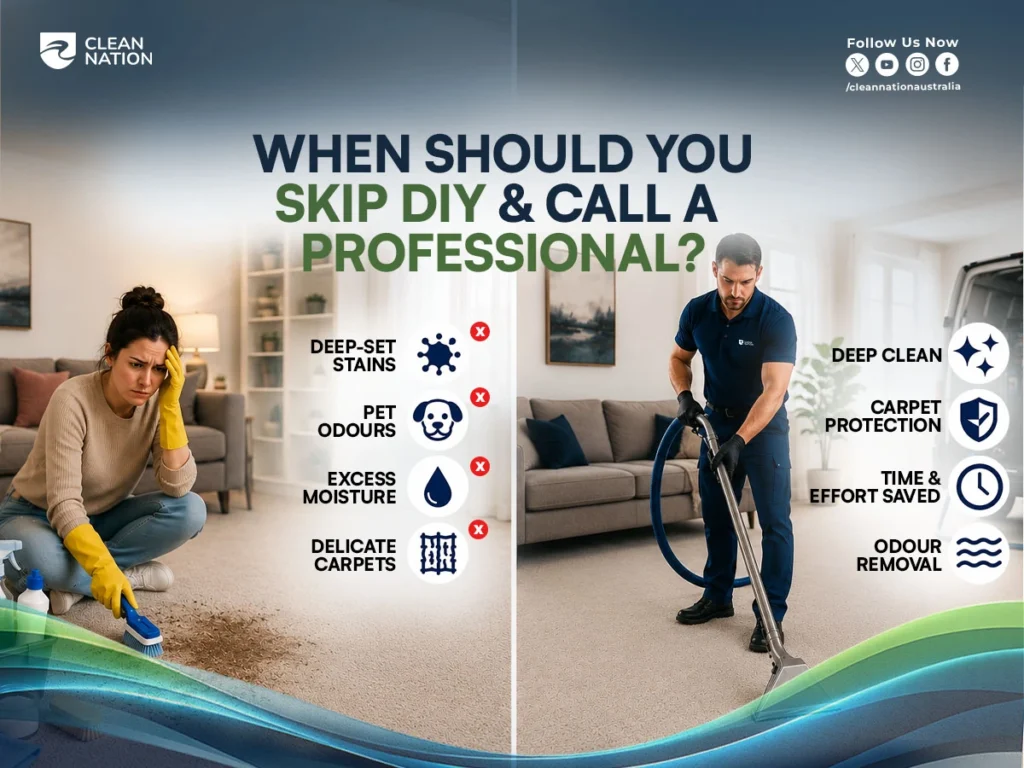
Call in the professionals if you’re dealing with deep-set stains that haven’t budged after a clean, since trying again and again at home can risk permanent stain setting. Any sign of mould growth means it’s time to stop DIY altogether, as that needs proper treatment, not a quick spray and vacuum.
If you’ve got wool carpet or silk carpet, skip the homemade route entirely. These fibres are delicate and easily damaged by the wrong pH or too much moisture, leading to carpet backing degradation over time. And if allergen removal or indoor air quality is your main concern, like for asthma, allergies, or pet dander, only professional carpet cleaning with real heat extraction gets deep enough to make a real difference.
At Clean Nation, this is exactly where we step in, handling what DIY methods simply aren’t equipped to fix.
Why Choose Clean Nation for Carpet Cleaning?
Clean Nation offers proper professional carpet cleaning using industrial carpet cleaning equipment, giving you real carpet extraction that no DIY method or rental machine can match. Our carpet cleaning experts know how to handle different fibres and stains the right way, from wool and silk to deep-set stains and pet odours.
As a local carpet cleaning service, we focus on customer satisfaction over quick jobs, and we offer a free consultation so you know exactly what your carpet needs before committing to anything.
Our Client Experience With Clean Nation
A family in Glenroy had been using a homemade vinegar solution with a basic Rug Doctor for about a year. It kept things looking okay, but the entrance area stayed dull, and a faint pet odour kept returning, especially on humid days.
During a free consultation, our team found the portable machine just wasn’t generating enough heat or suction to reach what had built up over time. There was also early carpet backing damage from repeated over-wetting, and the odour had soaked down into the padding, well past what surface cleaning could touch.
This case highlights some of the top 5 benefits of hiring a professional carpet cleaning company: stronger heat and suction that DIY machines can’t match, the right solution for tough odours and stains, protection against backing damage from over-wetting, expert assessment of what’s really going on beneath the surface, and long-lasting results that hold up between cleans.
We used our truck-mounted system to run a full hot water extraction clean at 200°F, treating the affected area separately for the odour and using a pH-balanced solution to protect the fibres. The carpet came up noticeably brighter, and the smell was gone within a day of drying.
The family still does DIY cleans between visits, but now books Clean Nation every six months for a proper deep clean. A good example of DIY and professional cleaning working together, not competing.
FAQs
The following are the Faq’s:
How long does it take for carpet to dry after cleaning?
Usually a few hours, depending on humidity and airflow. Using fans and open windows can speed it up.
Can I add fabric softener to my homemade carpet cleaner?
It’s best avoided. Fabric softener can leave a sticky residue behind and create excess foam, which isn’t good for your machine or your carpet fibres
How often should I clean my carpets at home?
Every 2 to 4 weeks for general upkeep, depending on foot traffic and whether you have kids or pets.
Can I use a homemade solution in any carpet cleaning machine?
Mostly yes, but always check your machine’s manual first, since some brands recommend specific cleaning agents only.
Will baking soda damage my carpet cleaning machine?
No, as long as it’s mixed properly and fully dissolved in the solution. Loose, undissolved baking soda can clog the machine’s nozzle, so always stir it in well before use.
Final Thoughts
The best approach to carpet care isn’t choosing between DIY carpet care and professional carpet cleaning; it’s using both as part of one carpet maintenance strategy. Regular homemade cleans handle the everyday upkeep, while periodic professional visits protect your carpet investment by reaching what DIY methods can’t.
This combined cleaning strategy genuinely extends carpet lifespan and carpet longevity, while also supporting better carpet health and a healthier home environment for everyone in it. At Clean Nation, this is exactly the approach we recommend to every customer we work with.
Contact us today or call Clean Nation to book your free consultation.