

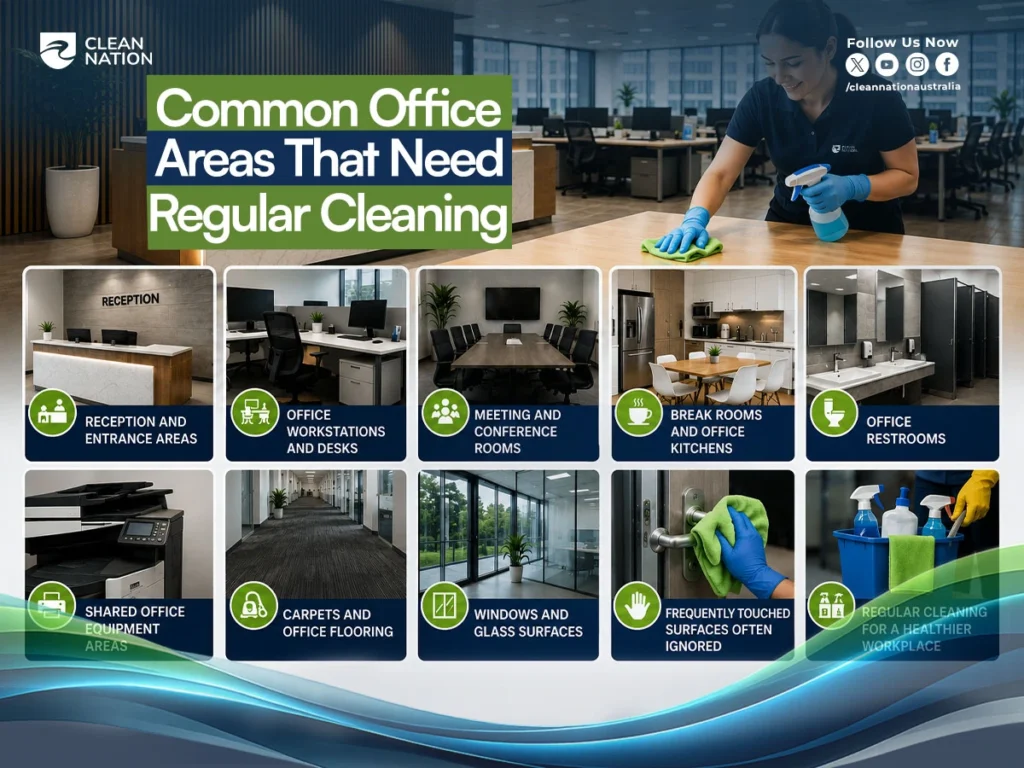
Common Office Areas That Need Regular Cleaning include common office areas such as reception spaces, workstations, meeting rooms, kitchens, restrooms, floors, and shared touchpoints require regular cleaning to maintain a healthy and professional workplace environment. Dirt, bacteria, dust, and germs can quickly build up in these high-traffic areas, affecting employee wellbeing, indoor air quality, and overall workplace hygiene.
Consistent office cleaning and disinfection from a Cleaning Services Company in Australia helps reduce contamination risks, improve workplace safety, and create a cleaner, more welcoming space for both staff and visitors.
Complete Process of Office Common Areas Cleaning
A complete office common areas cleaning process involves much more than basic dusting and bin emptying. From reception areas and workstations to restrooms, shared kitchens, carpets, and high-touch surfaces, every part of the office requires regular cleaning and disinfection to control bacteria, improve indoor air quality, and maintain workplace hygiene.
Consistent cleaning routines help create a healthier, safer, and more professional office environment while reducing contamination risks, supporting employee wellbeing, and leaving a positive impression on clients and visitors.
Reception and Entrance Areas
Reception areas and building entrances are the first spaces visitors, employees, and clients notice when entering a commercial workplace. Dust accumulation, fingerprints on glass doors, dirty entry mats, and contaminated high-touch areas such as door handles, lift buttons, and stair handrails can quickly damage customer impression and business perception.
Regular office cleaning in these zones helps maintain a spotless environment while reducing contamination risk caused by outside foot traffic, making businesses look more professional compared to the top 10 Cleaning Companies in Australia standards.
Professional cleaning services usually focus on vacuuming floors, mopping hard floor surfaces, glass cleaning, reception desk disinfection, and waste removal to maintain workplace hygiene.
Daily surface disinfection of reception counters, seating areas, intercom systems, and shared touchpoints also supports infection prevention and hygiene compliance obligations. Maintaining clean lobbies, hallways, and entry points creates a professional appearance while supporting workplace safety and environmental hygiene standards across office buildings.
Office Workstations and Desks
Office workstations collect bacteria, dust accumulation, food residue, and airborne particles throughout the workday. Keyboards, mice, monitors, desks, and office chairs are high-touch areas that require regular workstation disinfection to reduce germ transmission and cross-contamination. Without structured cleaning systems, bacteria load can increase rapidly and negatively affect employee health, workplace wellbeing, and productivity improvement.
Daily desk cleaning should include disinfectants safe for electronics, microfiber cloths for monitor cleaning, keyboard cleaning, chair wiping, and bin sanitization. Professional office cleaners also clean under desks, cable areas, and shared workspaces where hidden contamination often develops.
Maintaining organized workspaces through proper office sanitation services improves cleanliness standards, workplace efficiency, and indoor air quality while supporting occupational health requirements in commercial office environments.
Meeting and Conference Rooms
Meeting rooms and conference rooms experience constant employee traffic, making them one of the most overlooked cleaning priority areas in office environments. Shared equipment such as conference phones, presentation remotes, printers, copiers, and touchscreens can become major contamination risk zones when surface disinfection is ignored. Food crumbs, coffee spills, and fingerprints also contribute to sanitation maintenance issues in these shared workspaces.
Regular office cleaning should include table disinfection, chair cleaning, carpet cleaning, vacuuming floors, and sanitizing shared equipment after meetings whenever possible. Glass cleaning, whiteboard maintenance, and waste removal also help maintain professional office presentation standards.
A consistent cleaning maintenance routine in conference areas supports workplace hygiene management, improves environmental quality, and creates a cleaner atmosphere for staff discussions and client meetings.
Break Rooms and Office Kitchens
Shared kitchens and break rooms often contain the highest bacteria load in a commercial workplace because multiple employees use the same appliances, sinks, countertops, and food preparation areas throughout the day. Microwave handles, fridge doors, coffee machines, benches, and sinks are high-touch areas exposed to food residue, moisture, and microbial growth, increasing infection risk and cross-contamination.
Kitchen cleaning should include sink cleaning, bench cleaning, surface disinfection, waste removal, and regular replacement of fresh bin liners to maintain sanitation control. Professional cleaning procedures also involve disinfecting shared appliances, cleaning tables, and removing dust accumulation from ventilation systems and surrounding surfaces. Maintaining hygiene in break rooms supports employee health, workplace wellbeing, and workplace sanitation services while reducing unpleasant odours and bacteria spread across office buildings.
Office Restrooms
Office restrooms require strict cleaning protocols because they contain the highest concentration of pathogens, germs, and contamination risks in workplace environments. Toilets, sinks, cubicles, mirrors, soap dispensers, and door handles all require daily restroom disinfection to maintain hygiene compliance requirements and workplace health and safety standards.
Professional cleaning services use disinfectants, safe cleaning chemicals, microfiber cloths, and sanitation procedures to clean restroom surfaces thoroughly. Tasks such as floor maintenance, toilet supplies replacement, soap refills, hand towels restocking, and bin emptying are essential for maintaining cleanliness control and preventing germ transmission. Regular deep office cleaning in restroom areas also helps reduce mold spores, unpleasant odours, and workplace exposure risks while supporting a healthier and more hygienic office environment.
Shared Office Equipment Areas
Shared office equipment areas are commonly neglected during general office cleaning, even though printers, copiers, shared keyboards, telephones, and touch panels are frequently used by multiple employees every day. These shared equipment surfaces can easily spread bacteria and pathogens if workstation cleaning and surface disinfection are inconsistent.
Professional office cleaning services focus on disinfecting control buttons, cleaning surrounding desks, removing dust accumulation from ventilation openings, and sanitising shared devices using safe cleaning chemicals.
Regular cleaning of these areas helps maintain workplace hygiene, reduce contamination risk, and improve service reliability across commercial office cleaning operations. Structured cleaning schedules for shared equipment also contribute to hygiene enforcement systems and infection prevention strategies within busy workspaces.
Carpets and Office Flooring
Office floors experience continuous foot traffic, making them one of the largest collection points for dirt, allergens in workplace environments, airborne particles, and bacteria. Carpeted floors trap dust, debris, and microbial growth deep within fibres, while hard floor cleaning areas often accumulate stains, moisture, and grime near entry points, hallways, and workstations.
Vacuuming floors daily and mopping floors with appropriate disinfectants are essential for maintaining workplace cleanliness standards. Deep office cleaning tasks such as carpet cleaning commercial offices, floor maintenance, and pressure washing exterior walkways help improve indoor air quality and environmental quality.
Professional cleaning protocols also focus on reducing slip hazards, preserving flooring materials, and supporting workplace safety within commercial buildings and office environments.
Windows and Glass Surfaces
Windows, glass doors, partitions, and other glass surfaces have a big impact on how an office looks and feels to customers. Fingerprints, dust, water stains, and smudges can make a workplace look neglected pretty fast, even if everything else is spotless. Regular window and glass cleaning keeps things looking sharp and lets in more natural light, which actually helps with focus and productivity too.
Professional cleaners use microfiber cloths, streak-free solutions, and set maintenance schedules to clean glass safely, both inside and out. Blind cleaning, frame wiping, and clearing dust from window ledges also matter for indoor air quality, not just appearance. If you’re setting up a schedule, it’s worth knowing how often should office windows be cleaned so you’re not doing it too much or too little. Clean glass surfaces make the space look more professional while keeping the whole office easier to maintain.
Frequently Touched Surfaces Often Ignored
Frequently touched surfaces are among the highest contamination risk zones in any office environment, yet they are commonly missed during regular office cleaning routines. Door handles, lift buttons, stair handrails, light switches, shared keyboards, printers, and touch panels collect bacteria from repeated employee contact throughout the day, increasing cross-contamination and infection risk.
Daily surface disinfection using disinfectants and professional cleaning procedures is necessary to reduce germ transmission and maintain workplace hygiene compliance. Commercial cleaning services often include specialised cleaning checklists to ensure these hidden high-touch areas are consistently sanitised. Paying attention to these overlooked surfaces supports employee health, sanitation maintenance, workplace safety, and long-term infection prevention across office buildings and commercial workplaces.
How Regular Clean Nation Office Cleaning Improved Hygiene and Productivity
A small accounting office with around 30 employees started noticing repeated hygiene issues during the busy tax season. Staff members often complained about dusty workstations, unpleasant smells coming from the shared kitchen, and fingerprints covering the glass entrance doors.
Sick leave also began increasing because high-touch surfaces like keyboards, meeting room tables, printers, and door handles were rarely disinfected properly. The office manager decided to hire a professional office cleaning service to create a structured cleaning schedule covering reception areas, workstations, restrooms, carpets, and shared office equipment.
Within a few weeks, the difference was noticeable. Daily workstation disinfection, restroom sanitization, kitchen cleaning, and regular vacuuming helped improve indoor air quality and reduce dust buildup throughout the office environment.
Employees said the workplace felt fresher, more organized, and easier to work in, while visiting clients immediately noticed the cleaner reception area and polished office presentation. The company also saw fewer employee sick days and improved workplace productivity because the office maintained consistent hygiene and cleanliness standards across all common areas.
Why Choose Clean Nation For Office Cleaning?
Clean Nation delivers reliable office cleaning services designed to keep commercial workplaces clean, hygienic, and professionally maintained. Our experienced cleaners handle everything from workstations and meeting rooms to restrooms, carpets, and high-touch surfaces using safe cleaning methods and structured cleaning schedules. We focus on consistent results, healthier workspaces, and creating a spotless office environment that leaves a positive impression on both employees and visitors.
FAQ’s
Following are the FAQ’s
How often should common office areas be professionally cleaned?
Most office common areas should be cleaned daily, while carpets, windows, and deep cleaning tasks can be scheduled weekly or monthly. Clean Nation provides flexible office cleaning schedules across Australia based on workplace size, traffic, and hygiene requirements.
Can Clean Nation clean offices after business hours?
Yes, Clean Nation offers after-hours and flexible office cleaning services to avoid disrupting your staff or daily operations. Our team can arrange early morning, evening, or weekend cleaning for commercial workplaces across Australia.
How quickly can Clean Nation respond to office cleaning requests?
Clean Nation aims to respond to office cleaning enquiries as quickly as possible, with fast scheduling available for urgent commercial cleaning needs. Response times may vary depending on service location and office size.
Does Clean Nation use safe cleaning products in offices?
Yes, Clean Nation uses safe cleaning chemicals and professional cleaning methods suitable for office environments, including workstations, shared kitchens, restrooms, and high-touch surfaces to help maintain workplace hygiene and safety.
How much does office cleaning cost in Australia?
Office cleaning pricing depends on office size, cleaning frequency, and the services required. Clean Nation offers customized commercial cleaning quotes with transparent pricing for businesses looking for reliable and professional office cleaning services across Australia.
Conclusion
Maintaining clean office common areas is essential for creating a healthier, safer, and more productive workplace. Regular cleaning of workstations, kitchens, restrooms, floors, and high-touch surfaces helps reduce germs, improve indoor air quality, and leave a strong professional impression on visitors and staff. With structured cleaning routines and reliable professional support, businesses can maintain better workplace hygiene standards while creating a cleaner and more comfortable office environment every day.