

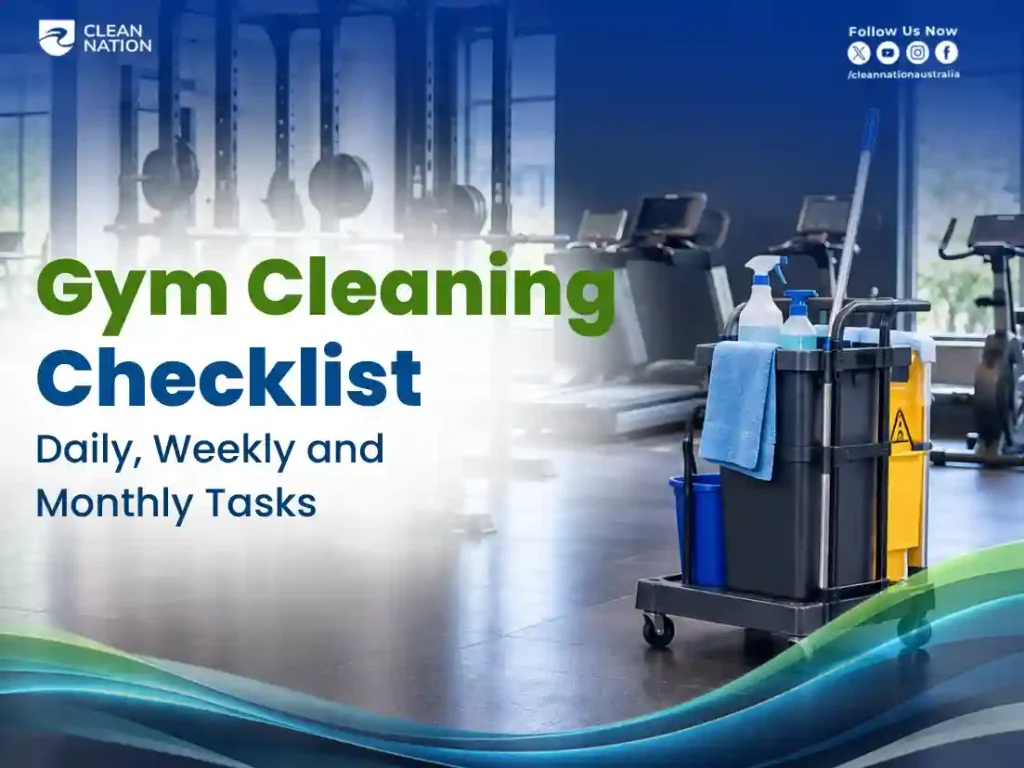
A busy gym can look clean while sweat, dust, body oils and dirt are building up on equipment, floors, mats, lockers and other shared surfaces. With members using the same spaces throughout the day, cleaning needs to be consistent rather than something done only when an area looks dirty.
A practical gym cleaning checklist makes this easier. Instead of asking staff to simply “clean the gym,” you can divide tasks into daily, weekly and monthly routines. This helps your team focus on high-touch areas first while making sure deeper cleaning does not get forgotten.
For Australian gyms and fitness centres, the right schedule should also consider member traffic, operating hours, facility size, wet areas and the type of equipment and flooring used.
Quick Gym Cleaning Checklist
Here is a simple overview before we get into the full routine:
| Frequency | Main Cleaning Tasks |
| Daily | Equipment, high-touch surfaces, floors, bathrooms, showers, change rooms, bins, reception and mats |
| Weekly | Deep equipment cleaning, rubber flooring, mirrors, vents, lockers, mats, glass and hard-to-reach areas |
| Monthly | Deep floor care, grout, ventilation areas, upholstery, equipment inspection, high-level dusting and detailed cleaning |
| As needed | Spills, odours, overflowing bins, heavily used equipment and unexpected hygiene issues |
The exact frequency should be adjusted to the gym’s size, traffic and opening hours. A small personal training studio will not have the same cleaning demands as a large 24-hour fitness centre.
Why Does a Gym Need a Regular Cleaning Schedule?
Gyms are different from many other commercial spaces because the same equipment and surfaces can be touched by many people during a single day. Treadmill handles, dumbbells, benches, machine controls, door handles, lockers and shared mats can quickly collect sweat, dirt and body oils.
A regular fitness centre cleaning schedule helps divide the workload into manageable tasks. Daily cleaning maintains the basic hygiene level, weekly cleaning reaches areas that routine cleaning may miss, and monthly cleaning deals with slower build-up and detailed maintenance.
It also makes responsibility clearer. When tasks are written down, staff can see what needs to be completed, when it should happen and which areas require extra attention.
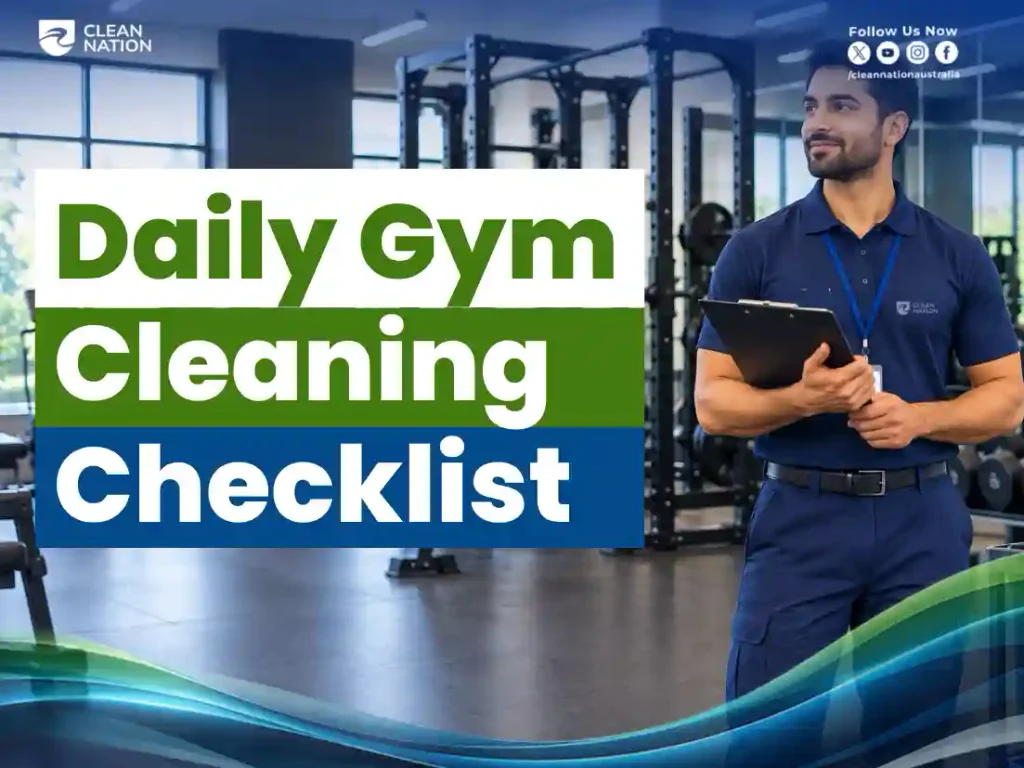
Daily Gym Cleaning Checklist
Daily cleaning should focus on the areas members use most. In a high-traffic gym, some high-touch surfaces may need attention more than once during the day rather than waiting until closing.
1. Clean and Disinfect Gym Equipment
Start with the equipment members touch frequently.
Daily gym equipment cleaning should include:
- Treadmill handles, controls and screens
- Exercise bikes and cross-trainers
- Weight machines and adjustment points
- Dumbbells and kettlebells
- Barbells and other shared weights
- Benches and seat pads
- Resistance bands and shared accessories
- Cable machine handles
- Medicine balls and similar equipment
- Touchscreens and control panels
Use products and cleaning methods that are suitable for the equipment. Do not automatically use the strongest chemical available. Some screens, vinyl surfaces, rubber components and manufacturer finishes can be damaged by unsuitable products.
Where equipment manufacturers provide cleaning instructions, follow them.
2. Wipe High-Touch Surfaces
A gym cleaning routine should go beyond workout machines.
Check:
- Door handles
- Light switches
- Reception counters
- Touchscreens
- Handrails
- Payment or check-in terminals
- Locker handles
- Water fountain buttons
- Shared storage handles
These areas can easily be overlooked because they are not part of the workout floor. Add them to the daily gym sanitation checklist so they become routine rather than an afterthought.
3. Vacuum, Sweep and Mop Gym Floors
Gym floors collect dust, hair, chalk, sweat and other debris throughout the day.
Daily floor care should include:
- Sweeping or vacuuming workout areas
- Removing visible dirt and debris
- Spot-cleaning spills immediately
- Mopping hard floors with a suitable product
- Cleaning around equipment bases
- Paying attention to corners and edges
- Keeping walking paths clear
- Making sure floors are dry before normal use
Rubber gym flooring needs particular care because the wrong chemical or excessive residue can affect its appearance and surface condition.
Wet floors should also be managed carefully. If an area is being mopped, control access until the surface is safe to walk on.
4. Clean Bathrooms, Toilets and Showers
Bathrooms and wet areas should be a core part of every commercial gym cleaning routine.
Daily tasks include:
- Cleaning and disinfecting toilets
- Cleaning basins and taps
- Cleaning shower areas
- Removing visible hair and debris
- Mopping bathroom floors
- Cleaning mirrors
- Emptying sanitary and general waste bins
- Restocking toilet paper
- Refilling soap and hand hygiene supplies
- Checking for unusual odours
- Looking for signs of mould or water problems
Busy fitness centres may need several checks during operating hours rather than one clean at the end of the day.
5. Clean Change Rooms and Lockers
Change rooms can become damp, busy and odorous very quickly.
Daily gym cleaning tasks should cover:
- Locker fronts and handles
- Benches
- Floors
- Mirrors
- Doors and handles
- Shower entry areas
- Bins
- Frequently touched surfaces
Where practical, inspect inside lockers according to the facility’s policies and cleaning arrangements.
6. Clean Exercise Mats and Shared Accessories
Shared mats and fitness accessories can collect sweat and dirt after repeated use.
Clean:
- Yoga mats
- Exercise mats
- Stretching equipment
- Resistance bands
- Foam rollers
- Shared training accessories
Allow cleaned items to dry properly before storage. Damp equipment placed into enclosed storage can contribute to unpleasant odours and moisture problems.
7. Keep Reception and Entry Areas Presentable
The entrance creates the first impression of a fitness facility.
Daily reception and entry cleaning should include:
- Reception counters
- Check-in areas
- Door glass
- Entry doors
- Mats
- Floors
- Seating
- Touchscreens and terminals
- Visible fingerprints and marks
- Waste bins
This is a small part of the facility but one that members see every time they enter.
8. Empty Bins and Manage Waste
Do not wait until bins are overflowing.
Check waste bins throughout the day based on traffic. Replace liners when required and clean the surrounding floor if rubbish or liquid has escaped.
A good gym cleaning schedule should also identify where waste is stored and how staff should report unusual waste, leaks or damaged containers.
Daily Cleaning Should Be Split Into Different Time Periods
One of the useful improvements over a simple once-a-day checklist is to divide work according to gym activity.
Before Opening
Before members arrive, the team can focus on:
- Floors
- Bathrooms
- Showers
- Equipment
- Reception
- Mirrors
- Change rooms
- Supplies
- Visible dirt and waste
During Operating Hours
During busy periods, focus on:
- High-touch equipment
- Spills
- Toilets and showers
- Bins
- Sanitiser stations
- Reception touchpoints
- High-use workout areas
Between Busy Periods or Classes
Use quieter periods to reset:
- Cardio equipment
- Benches
- Mats
- Group fitness studios
- Shared equipment
- Floors
At Closing
The closing routine can include the full daily reset:
- Detailed equipment wipe-down
- Floor cleaning
- Bathrooms and showers
- Change rooms
- Bins
- Reception
- Mats
- High-touch surfaces
- Final inspection
This approach is particularly useful for gyms with long opening hours.
Weekly Gym Cleaning Checklist
Weekly cleaning should reach the areas that daily cleaning may not fully address.
1. Deep Clean Equipment
Move or access equipment where it is safe and practical to do so.
Clean:
- Equipment frames
- Machine bases
- Areas behind equipment
- Undersides of benches
- Cable areas
- Adjustment mechanisms
- Seams and edges
- Hard-to-reach surfaces
Check equipment at the same time for visible damage, loose components or cleaning-related issues that should be reported to management.
2. Deep Clean Rubber Floors and Mats
Weekly floor maintenance can remove dirt that routine mopping leaves behind.
Depending on the flooring, tasks may include:
- Detailed vacuuming
- Scrubbing
- Edge cleaning
- Spot treatment
- Deep cleaning of rubber mats
- Cleaning underneath movable mats
- Removing built-up residue
Always match the cleaning method to the flooring manufacturer’s recommendations.
3. Clean Mirrors, Glass and Windows
Daily spot cleaning keeps mirrors presentable, but a weekly detailed clean can deal with:
- Fingerprints
- Sweat marks
- Dust
- Streaks
- Edges
- Frames
- Window sills
- Glass partitions
Clean mirrors can also make workout areas feel brighter and better maintained.
4. Deep Clean Lockers and Change Rooms
Weekly fitness centre cleaning should include more detailed attention to locker areas.
Check:
- Locker fronts
- Locker handles
- Benches
- Corners
- Skirting
- Floors
- Behind doors
- Difficult-to-reach areas
- Shower surrounds
Pay particular attention to damp areas where odours or buildup are developing.
5. Clean Vents and Accessible High-Level Areas
Dust can accumulate around:
- Air vents
- Ceiling fans
- Light fittings
- High shelves
- Equipment tops
- Wall corners
Clean accessible areas safely and use appropriate equipment for higher surfaces. Any specialist HVAC servicing or filter replacement should be handled according to the facility’s maintenance arrangements.
6. Clean Water Fountains
Water fountains and bottle-filling stations are frequently touched and should be included in the weekly detailed routine.
Clean the surrounding surfaces, buttons, taps and accessible areas, while following the manufacturer’s cleaning instructions.
7. Deep Clean Group Fitness Areas
For studios used for yoga, Pilates, functional training or group classes, weekly tasks may include:
- Deep-cleaning floors
- Cleaning mats and props
- Wiping storage racks
- Cleaning mirrors
- Dusting corners
- Cleaning wall contact points
- Checking equipment storage areas
If multiple classes run every day, some of these tasks may need to move into the daily schedule.
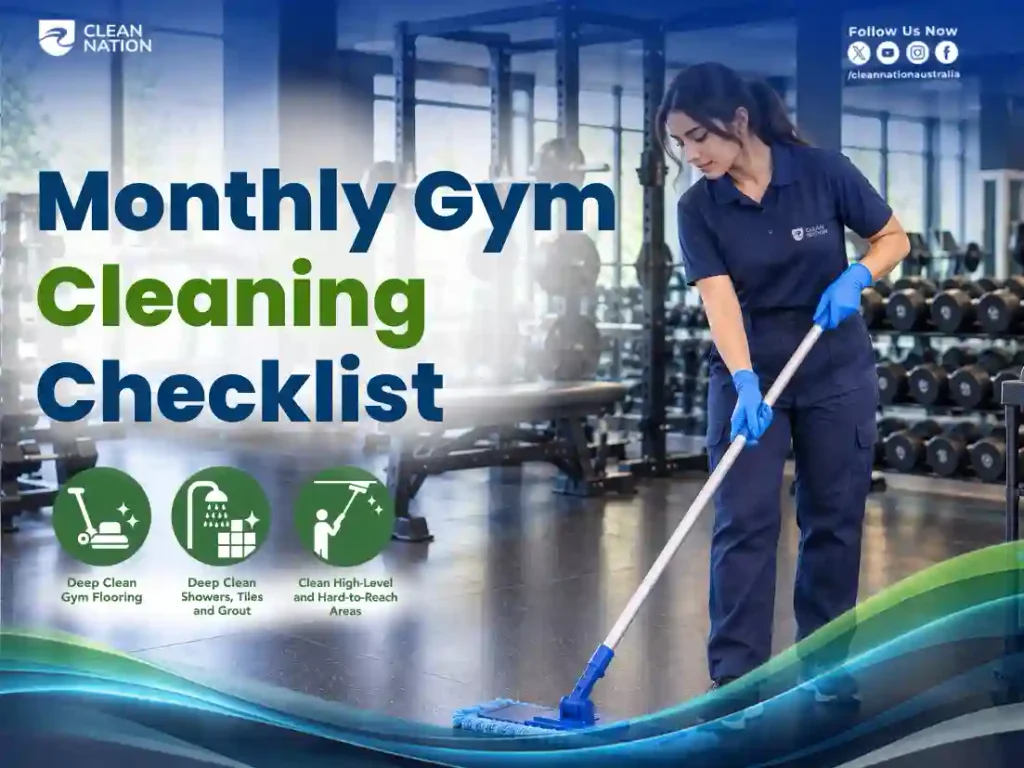
Monthly Gym Cleaning Checklist
Monthly cleaning focuses on detailed areas, long-term buildup and preventative care.
1. Deep Clean Gym Flooring
Depending on the flooring material, monthly work may include:
- Machine scrubbing
- Detailed edge cleaning
- Deep treatment
- Carpet extraction
- Stain treatment
- Periodic floor maintenance
For carpeted reception or lounge areas, professional carpet cleaning can help remove embedded dirt and odours that normal vacuuming cannot reach.
2. Deep Clean Showers, Tiles and Grout
Monthly detailed cleaning can target:
- Shower tiles
- Grout lines
- Shower corners
- Drains
- Tap fittings
- Hard-water buildup
- Soap residue
- Difficult-to-reach wet areas
If mould or persistent moisture problems are found, cleaning alone may not solve the underlying issue. The facility should investigate leaks, ventilation or drainage problems.
3. Clean High-Level and Hard-to-Reach Areas
Monthly cleaning is a good opportunity to address areas often missed during normal shifts:
- Tops of cabinets
- High shelves
- Ceiling corners
- Light fittings
- Behind equipment
- Under large machines
- High wall surfaces
- Accessible ventilation covers
A clear monthly schedule prevents these areas from becoming “out of sight, out of mind.”
4. Deep Clean Upholstery and Fabric Areas
Where gyms have upholstered benches, seating or other fabric surfaces, include them in a scheduled deep-cleaning plan.
Look for:
- Sweat marks
- Stains
- Odours
- Dust
- Cracks or damage
- Buildup around seams
Cleaning methods should match the material to avoid damaging upholstery.
5. Review Equipment Condition
Cleaning staff should not repair gym equipment unless they are qualified to do so. However, they can report visible problems such as:
- Damaged padding
- Loose parts
- Cracked surfaces
- Rust
- Worn mats
- Damaged cables
- Broken handles
Add a simple “report maintenance issue” section to the checklist so cleaning and facility maintenance work together.
Gym Cleaning Checklist by Area
A frequency-based schedule becomes even easier to manage when tasks are organised by zone.
| Gym Area | Daily | Weekly | Monthly |
| Cardio equipment | ✓ | ✓ | ✓ |
| Weight machines | ✓ | ✓ | ✓ |
| Dumbbells & weights | ✓ | ✓ | — |
| Benches | ✓ | ✓ | ✓ |
| Gym floors | ✓ | ✓ | ✓ |
| Exercise mats | ✓ | ✓ | — |
| Reception | ✓ | ✓ | — |
| High-touch points | ✓ | ✓ | — |
| Bathrooms | ✓ | ✓ | ✓ |
| Showers | ✓ | ✓ | ✓ |
| Change rooms | ✓ | ✓ | ✓ |
| Lockers | ✓ | ✓ | ✓ |
| Mirrors & glass | ✓ | ✓ | ✓ |
| Water fountains | ✓ | ✓ | ✓ |
| Vents & high areas | — | ✓ | ✓ |
| Carpeted areas | Vacuum | Deep clean | Extraction as needed |
This is a starting framework rather than a fixed rule. A 24-hour commercial gym with heavy member traffic may need more frequent cleaning than a small studio.
How Often Should a Gym Be Cleaned?
There is no single frequency that works for every fitness facility.
A useful approach is to consider:
- Number of members
- Daily visitor volume
- Opening hours
- Number of showers and bathrooms
- Equipment density
- Group class schedule
- Flooring type
- Climate and humidity
- Number of cleaners available
- Whether the gym operates 24/7
- How quickly bins, bathrooms and high-touch areas become dirty
High-use equipment, toilets, showers and high-touch surfaces generally deserve more frequent attention. Less-used areas can follow a longer scheduled cycle.
The key is to build the gym cleaning schedule around actual use, rather than treating every area the same.
Cleaning vs Deep Cleaning – What’s the Difference?
Daily cleaning and deep cleaning have different purposes.
Routine cleaning keeps the gym presentable and hygienic during normal operations. It covers equipment touchpoints, floors, bathrooms, bins, reception and other frequently used areas.
Deep cleaning takes more time and targets accumulated dirt in places such as equipment bases, floor edges, grout, upholstery, difficult-to-reach surfaces and other areas that routine cleaning cannot fully address.
Both are important. A gym that only performs daily surface cleaning may gradually develop buildup in overlooked areas. A gym that deep cleans but neglects daily high-touch cleaning has the opposite problem.
The strongest approach is a layered gym sanitation programme.
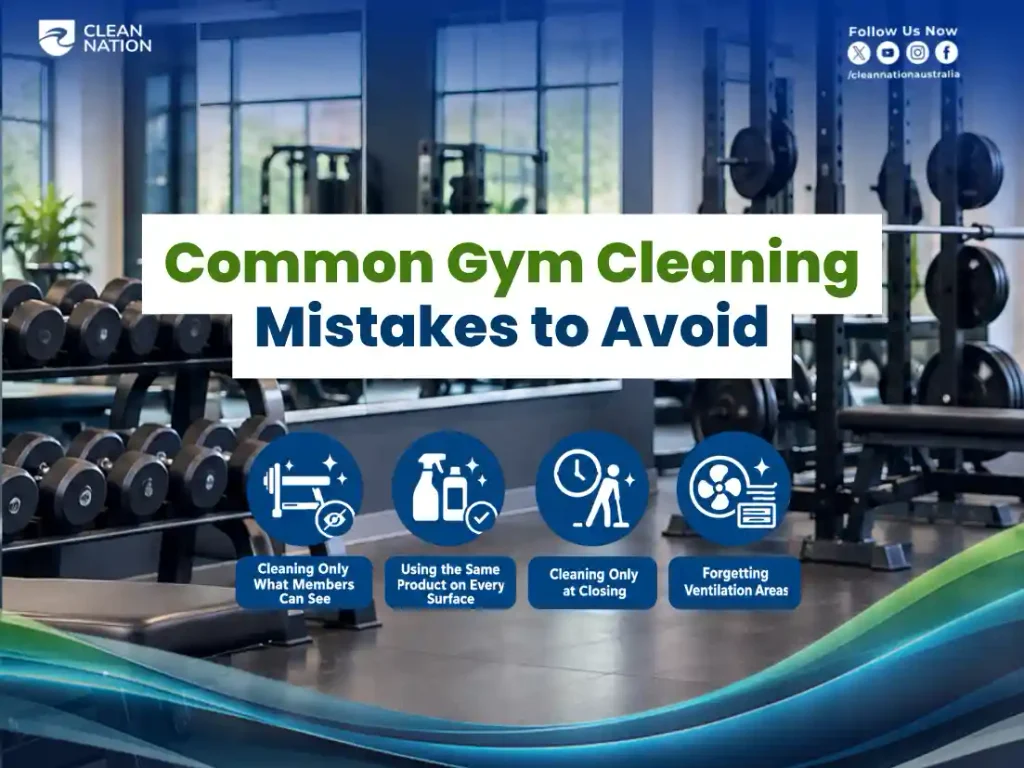
Common Gym Cleaning Mistakes to Avoid
Even gyms with cleaning staff can miss important details.
Cleaning Only What Members Can See
A clean-looking floor does not mean the areas underneath equipment, inside seams or around locker corners are clean.
Using the Same Product on Every Surface
Rubber, vinyl, glass, screens, metal and fabric may require different cleaning approaches. Always check product and equipment guidance.
Cleaning Only at Closing
High-touch equipment and wet areas may need attention during operating hours, especially in busy facilities.
Forgetting Ventilation Areas
Dust around vents, fans and accessible high-level surfaces can easily be overlooked.
Ignoring Spills
A small spill can quickly become a slip hazard. Staff should know how to isolate and clean spills promptly.
No Record of Completed Tasks
A checklist is much more useful when someone can mark the task as completed and report anything that could not be finished.
How to Make a Gym Cleaning Checklist Actually Work
A checklist should be practical, not a giant document that staff stop using after a few days.
Keep each task clear and assign responsibility.
For example:
| Task | Frequency | Responsible | Checked |
| Disinfect cardio handles | Multiple rounds | Cleaner | Supervisor |
| Clean bathrooms | Daily | Cleaner | Manager |
| Deep clean mats | Weekly | Cleaner | Supervisor |
| Clean vents | Monthly | Cleaning team | Manager |
| Report equipment damage | As found | Cleaner | Manager |
This creates accountability without making the process complicated.
It also helps gym managers identify recurring problems. If the same shower, floor area or piece of equipment keeps appearing on the issue list, the facility may need a deeper cleaning or maintenance solution.
When Should a Gym Hire Professional Cleaners?
Managing gym cleaning internally can work for smaller facilities with enough trained staff and time. Larger or high-traffic gyms may need a dedicated cleaning programme because routine staff can struggle to maintain the same standard while also managing normal gym operations.
Professional cleaners can help with:
- Regular commercial cleaning
- Equipment and high-touch surface cleaning
- Floor care
- Locker and change room cleaning
- Shower and bathroom sanitation
- Deep cleaning
- After-hours cleaning
- High-traffic facilities
- Recurring cleaning schedules
For Australian gyms that need a structured service rather than occasional cleaning, Clean Nation provides professional gym and fitness centre cleaning services across Australia with flexible scheduling around facility operations.
Clean Nation’s gym cleaning service covers equipment, workout areas, floors, locker rooms, showers, high-touch surfaces and periodic deep cleaning. The service can also be scheduled outside busy operating periods to reduce disruption to members.
For broader workplace requirements, commercial cleaning services can be tailored around the property’s traffic, operating hours and cleaning requirements.
A Simple Final Gym Cleaning Check
Before considering the day’s cleaning complete, walk through the facility once more.
Check:
- Are the main equipment touchpoints clean?
- Are floors free from visible dirt and spills?
- Are bathrooms fresh and fully supplied?
- Are showers and change rooms clean?
- Are bins emptied?
- Are mats and shared equipment clean?
- Are mirrors and reception areas presentable?
- Are there any unusual odours?
- Are any maintenance problems visible?
- Are all scheduled tasks marked as complete?
A short final inspection can catch problems that are easy to miss while moving between cleaning zones.
Final Thoughts
A good gym cleaning checklist is not about making every area deep-cleaned every day. It is about giving each part of the facility the right level of attention at the right time.
Daily cleaning should protect high-touch and high-use areas. Weekly cleaning should tackle deeper buildup and overlooked surfaces. Monthly cleaning should address detailed floor care, hard-to-reach areas, wet-area buildup, ventilation-related dust and equipment condition.
For Australian gyms, the best schedule is one that reflects actual member traffic, facility size, operating hours and surface types. When the checklist is clear, responsibilities are assigned and completed work is checked, maintaining a consistently clean fitness environment becomes much easier.
If your gym needs help maintaining that routine, Clean Nation’s gym cleaning team can create a cleaning plan around your facility and schedule.
FAQs
Can gym staff use the same cleaning checklist for a small studio and a large gym?
Not always. A small studio may need a shorter routine, while a large or high-traffic gym may require multiple cleaning rounds throughout the day. The checklist should reflect member numbers, equipment, operating hours and wet-area usage.
What should be recorded when a cleaning task cannot be completed?
Record the unfinished task, the reason it was missed and who needs to follow it up. This makes the checklist useful for handovers and prevents missed work from disappearing between shifts.
Should gym cleaning and equipment maintenance be on the same checklist?
They can be connected, but they should remain separate responsibilities. Cleaning staff can identify visible damage or maintenance issues, while qualified personnel should handle repairs, servicing and mechanical adjustments.
Does a 24-hour gym need a different cleaning schedule?
A 24-hour gym usually benefits from cleaning rounds throughout the day rather than relying on a single closing clean. High-touch equipment, bathrooms, bins and spills can require attention while the facility remains open.
How can a gym reduce disruption while professional cleaners work?
Schedule detailed cleaning during quieter periods, overnight, early mornings or between major classes where possible. A zone-based plan can also allow cleaners to work on one area while the rest of the facility remains available to members.