


How Often Should an Office Be Cleaned? Office cleaning frequency matters because dust and germs build up quickly in workplaces and can affect health and productivity. Small offices usually need cleaning 2–3 times a week, medium offices need frequent or daily cleaning, and large offices require daily professional cleaning.
Bathrooms and kitchens should be cleaned every day, while desks, meeting rooms, and reception areas need regular weekly attention. A mix of routine cleaning and deep cleaning helps keep the workplace fully hygienic. Proper cleaning reduces sickness, improves employee comfort, and creates a professional image for visitors. A well-planned cleaning schedule ensures the office always stays clean, safe, and productive.
Why Office Cleaning Frequency Matters?
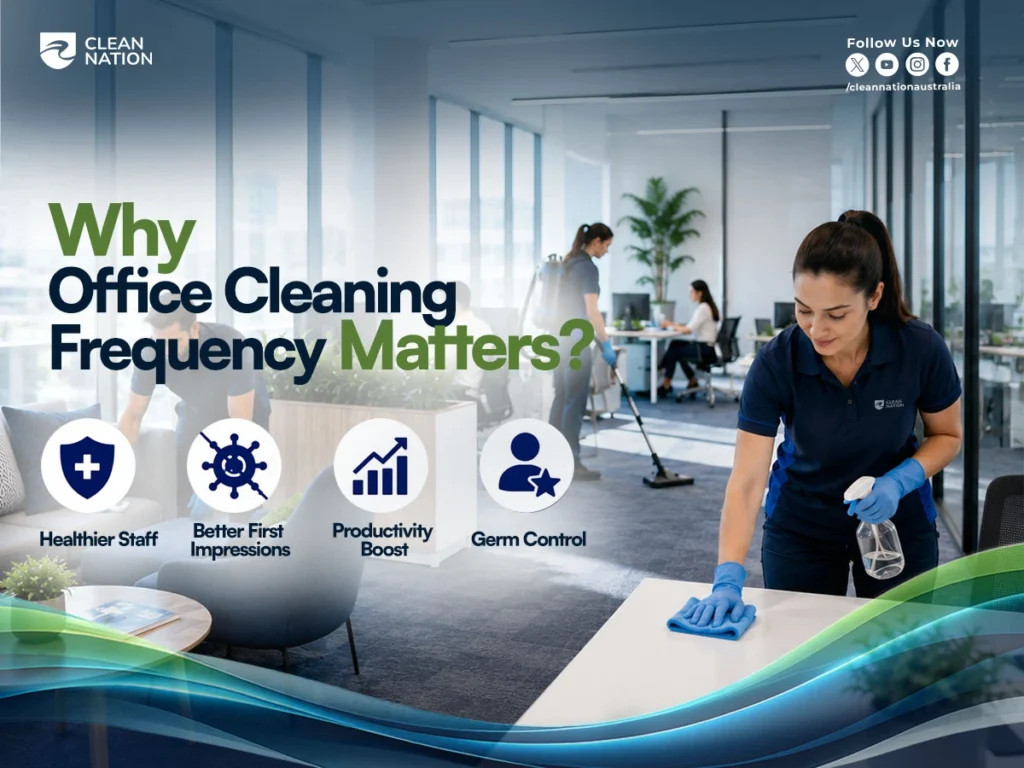
Office cleaning is important for keeping the workplace clean, healthy, and safe. Dust, germs, and dirt can quickly build up on desks, kitchens, bathrooms, and other shared areas. Regular cleaning helps improve workplace hygiene, maintain good indoor air quality, and reduce the spread of illness among staff.
A clean office also helps employees feel more comfortable and work better each day. It creates a professional image for clients and visitors while supporting a healthier workplace. At Clean Nation, we help businesses keep their offices clean and well-maintained with cleaning schedules that suit their needs.
Recommended Office Cleaning Frequency (By Office Size)
The right office cleaning schedule depends on workplace usage levels, staff numbers, visitor traffic, and the overall size of your workplace. As businesses grow, workplace activity levels increase, creating greater cleaning requirements across shared spaces, kitchens, bathrooms, and work areas. A scalable cleaning schedule helps maintain office cleanliness, workplace hygiene practices, and operational efficiency while ensuring the service frequency matches daily business needs.
Small Offices (1–20 Staff)
Small offices are typically cleaned on a weekly schedule with about two to three visits, depending on how many employees they have and how much foot traffic the office receives. A low-traffic office may require less frequent cleaning, while a client-facing office often needs additional attention to maintain office cleanliness and a professional appearance. Regular office maintenance, facility upkeep, and a consistent cleaning routine help keep the workplace clean, healthy, and welcoming.
Medium Offices (20–100 Staff)
Medium office cleaning typically requires daily cleaning or multiple visits each week due to increased workplace activity levels. Shared spaces, meeting rooms, kitchens, and bathrooms experience higher usage, making touchpoint cleaning and hygiene management essential. A structured workplace cleaning routine helps maintain cleaning consistency, supports workplace productivity, and ensures high-use areas remain clean throughout the week.
Large Offices (100+ Staff)
Large office cleaning generally requires daily commercial cleaning to manage a high-traffic workplace effectively. Many larger businesses benefit from on-site cleaning teams, zoned cleaning, and structured cleaning systems that cover different areas throughout the day. Regular workplace sanitation, contamination control, and commercial workspace maintenance help maintain hygiene standards, support operational efficiency, and keep the workplace clean, safe, and professional.
What Are the Recommended Office Cleaning Frequency by Area?
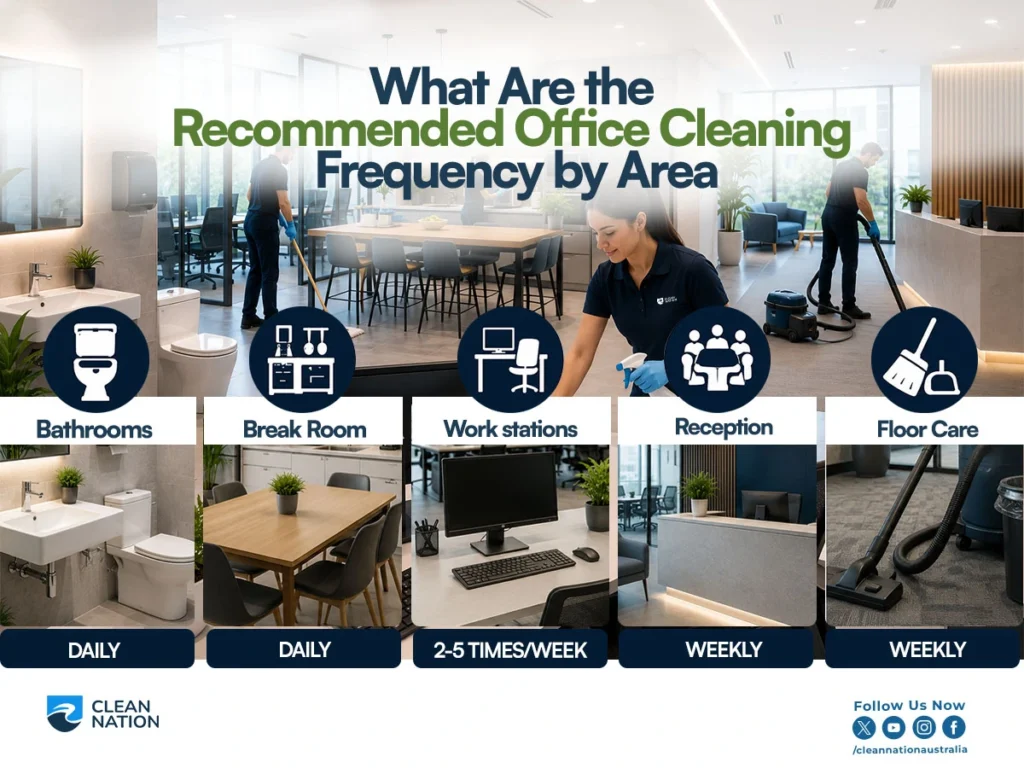
Different office areas require different cleaning intervals based on usage, visitor traffic, and contamination risk. An effective office sanitation routine should focus on high-traffic areas, follow a clear cleaning checklist, and support workplace hygiene systems through consistent hygiene maintenance. At Clean Nation, we tailor the cleaning scope to meet workplace needs while maintaining high cleaning standards and sanitation practices.
Bathrooms and Kitchens
Bathrooms and kitchens should be cleaned daily because they experience heavy use and are most vulnerable to contamination. Regular bathroom cleaning, kitchen cleaning, washroom sanitization, sink cleaning, food waste removal, and sanitizing surfaces help support hygiene compliance, odour control, contamination prevention, and workplace health protection.
Workstations and Shared Desks
Desk and workstation cleaning should be carried out several times each week, especially in offices using shared desks or hot-desking systems. Regular cleaning of keyboards, high-touch surfaces, shared equipment, and dusting helps improve surface hygiene, reduces the risk of cross-contamination, and keeps the workplace clean and well-maintained.
Reception Areas and Meeting Rooms
Reception areas and meeting rooms should be cleaned regularly to ensure a professional look and create a strong, positive impression on clients and visitors. Reception cleaning, internal glass cleaning, and cleaning of glass partitions help manage visitor traffic while supporting workplace presentation and client-facing office cleanliness.
Floors, Carpets, and Bins
Floors, carpets, and bins require regular attention to prevent dirt buildup and maintain cleanliness standards. Vacuuming carpets, mopping floors, waste removal, floor maintenance, carpet cleaning, and periodic deep carpet cleaning help keep workspaces clean, safe, and presentable throughout the day.
Industry & Workplace Type Differences
Not every workplace environment requires the same cleaning schedule. Factors such as hygiene risk levels, daily activity, and compliance requirements can significantly influence cleaning needs. For example, healthcare offices often require more frequent sanitization and stricter hygiene controls than corporate offices due to higher contamination risks.
Similarly, co-working spaces and call centers experience constant movement, shared facilities, and higher surface contact, increasing the need for industry-specific cleaning. At Clean Nation, we offer customized cleaning solutions tailored to your workplace environment, ensuring the right level of cleaning based on your industry type, staff size, and visitor traffic.
Deep Cleaning vs Regular Cleaning
Regular cleaning and deep cleaning both play an important role in maintaining workplace hygiene and long-term cleanliness. Routine cleaning focuses on everyday tasks that keep offices tidy and presentable, while periodic deep cleaning targets hidden dirt, bacteria, and hard-to-reach areas that are often missed during daily maintenance.
| Regular Cleaning | Deep Cleaning |
| Performed daily or weekly as part of a routine cleaning schedule. | Performed as a monthly cleaning or a quarterly cleaning to maintain long-term cleanliness. |
| Focuses on visible surfaces, workstations, kitchens, washrooms, and floors. | Targets neglected areas, built-up dirt, and hidden contaminants. |
| Includes dusting, vacuuming, mopping, waste removal, and surface sanitization. | Includes carpet shampooing, upholstery cleaning, air vent cleaning, and high dusting. |
| Helps maintain day-to-day workplace hygiene and cleanliness. | Improves overall hygiene standards and extends the life of office furnishings and flooring. |
| Keeps the office clean and presentable for staff and visitors. | Provides a deeper refresh that routine cleaning cannot achieve. |
At Clean Nation, we recommend combining routine cleaning with scheduled periodic deep cleaning to ensure a healthier workplace, better hygiene outcomes, and consistent cleanliness throughout the year.
Signs Your Office Needs More Frequent Cleaning
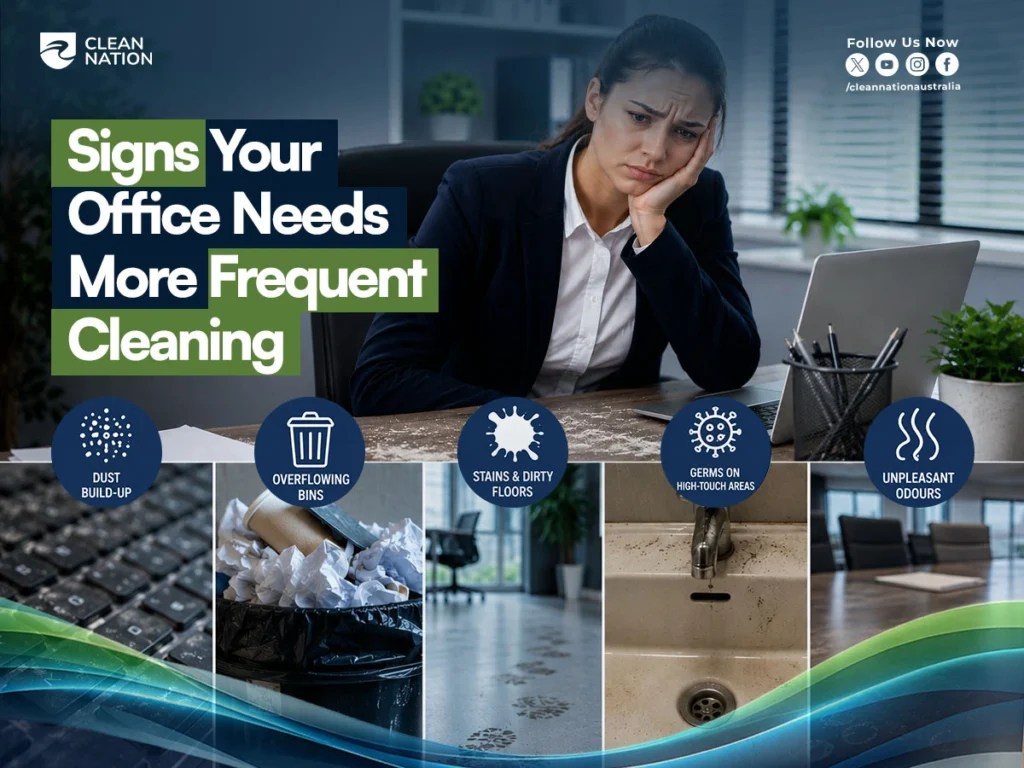
- Persistent dust on desks, shelves, and equipment can affect workplace hygiene, indoor air quality, and overall cleanliness.
- Unpleasant odours or lingering washroom odours often indicate that cleaning frequency is no longer meeting workplace demands.
- Overflowing bins, food waste, and visible dirt build-up in shared areas are clear signs that the current cleaning schedule needs reviewing.
- Dirty carpets and stained floors can make the workplace look unprofessional and create a poor impression on staff and visitors.
- Staff complaints, recurring hygiene issues, and concerns about poor workplace hygiene may suggest that your cleaning schedule’s effectiveness is declining and requires more frequent servicing.
Benefits of Professional Office Cleaning Services
Professional office cleaning services help maintain consistent hygiene and high workplace cleanliness standards across your business. Regular cleaning reduces the spread of germs, supports employee wellbeing, and creates a healthier environment that can improve workplace productivity.
By investing in commercial cleaning services, businesses can protect their reputation, present a professional image to clients and visitors, and minimize workplace disruptions caused by hygiene issues. At Clean Nation, our professional cleaning services are designed to deliver reliable cleaning service benefits, helping businesses maintain clean, safe, and productive workplaces year-round.
One of Clean Nation’s clients, a growing corporate office with around 60 employees, was struggling to keep up with workplace cleanliness as the business expanded. The office had busy meeting rooms, shared workstations, frequently used kitchens, and washrooms that were showing signs of heavy daily use. Staff had started raising concerns about dust build-up, overflowing bins, and inconsistent hygiene standards in shared areas.
After conducting an on-site assessment, Clean Nation introduced a customized office cleaning schedule that included daily cleaning of high-traffic areas, regular touchpoint sanitization, and monthly deep cleaning services. Within weeks, the office was noticeably cleaner, washroom and kitchen hygiene improved, and employees reported a more comfortable working environment. The client also noticed fewer cleanliness complaints and a more professional appearance for visitors and customers. By matching the cleaning frequency to the workplace’s actual usage levels, Clean Nation helped create a cleaner, healthier, and more productive office environment.
Faqs
The following are the FAQs:
What are the signs of a poorly cleaned office?
Dirty restrooms, dusty desks, bad odours, visible stains on carpets, overflowing bins, and germs on high-touch surfaces like keyboards and door handles.
2. What is an example of a toxic office?
An office with constant clutter, mould or damp smells, poor air quality, unclean restrooms, and shared spaces that are never properly sanitized.
3. How often should an office be professionally cleaned?
Daily light cleaning is recommended for high-traffic areas, with weekly deep cleaning and monthly detailed sanitation for best hygiene.
4. Why do employees get sick frequently in some offices?
Because of poor hygiene, unclean shared equipment, lack of disinfecting high-touch areas, and buildup of dust, bacteria, and allergens.
What areas are most commonly missed during office cleaning?
Behind furniture, under desks, air vents, keyboards, elevator buttons, and kitchen appliances; these areas often collect hidden germs and dust.
Conclusion
There’s no single answer to how often offices should be professionally cleaned, since every workplace has different needs. The best approach is to base your cleaning recommendations on your office size, staff activity, visitor traffic, and hygiene requirements. A structured cleaning schedule helps you manage workplace hygiene, keep cleanliness standards consistent, and create a healthier space for everyone.
Professional cleaning is a necessity, not a luxury. Consistent cleaning delivers real long-term benefits, improves how your workplace presents itself, and helps you maintain a clean, productive environment. If you’re wondering what commercial office cleaning service: what to expect actually looks like in practice, it usually starts with an assessment of your space before a schedule gets built around it. If you’re looking for expert guidance on cleaning frequency and reliable results, contact Clean Nation today to discuss a customized cleaning plan and see how our office cleaning services can keep your workplace clean, healthy, and professional year-round.