

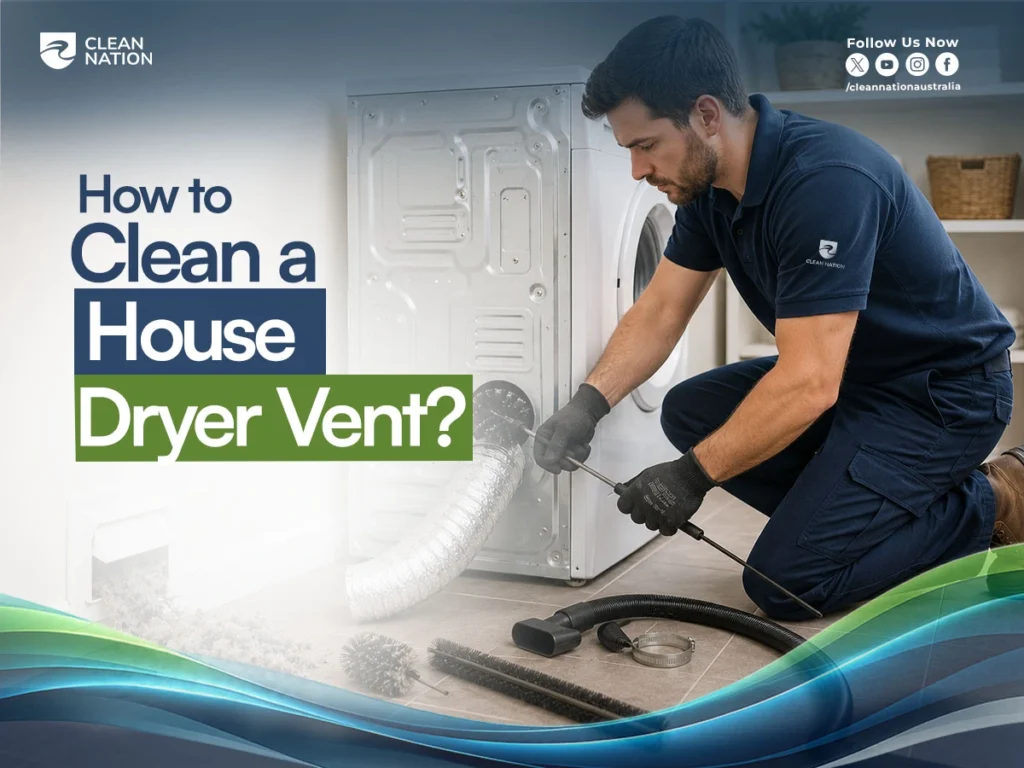
How to clean a house dryer vent? Cleaning your dryer vent is important for keeping your home safe, efficient, and free from fire risks caused by lint buildup and airflow blockage. Regular maintenance helps prevent issues like longer drying times, overheating, and reduced dryer performance, which often happen when vents are not properly cleaned. By following a simple process that includes lint removal, duct cleaning, outdoor vent inspection, and final airflow checking, you can ensure your dryer runs smoothly and safely while also improving energy efficiency and extending the appliance’s life.
Why Cleaning Your Dryer Vent Is Important?
A clogged dryer vent is more than just a maintenance issue; it can quickly become a dangerous fire hazard inside the home. Over time, lint, dust, and debris collect inside the vent system, restricting airflow and trapping excessive heat.
Many Australian homeowners overlook this hidden buildup until they notice overheating, burning smells, or longer drying cycles. Regular dryer vent cleaning from a cleaning services company in Australia helps reduce these risks while keeping the laundry area safer and more efficient.
Poor ventilation also leads to dryer inefficiency, forcing the appliance to work harder during every cycle. When airflow becomes restricted, clothes take longer to dry, energy consumption increases, and unnecessary strain is placed on internal components.
Proper vent maintenance supports dryer performance improvement by allowing hot air and moisture to escape correctly, helping the appliance operate smoothly while lowering household energy waste.
Consistent vent cleaning is an important part of long-term appliance care and overall fire prevention for modern homes. A clean dryer vent not only improves safety but also extends the lifespan of the dryer and supports healthier indoor air circulation and a dust free home. Whether in busy family households or compact apartment laundries, maintaining a clear vent system is a smart preventative step that protects both the property and the appliance year-round.
Warning Signs Your Dryer Vent Needs Cleaning
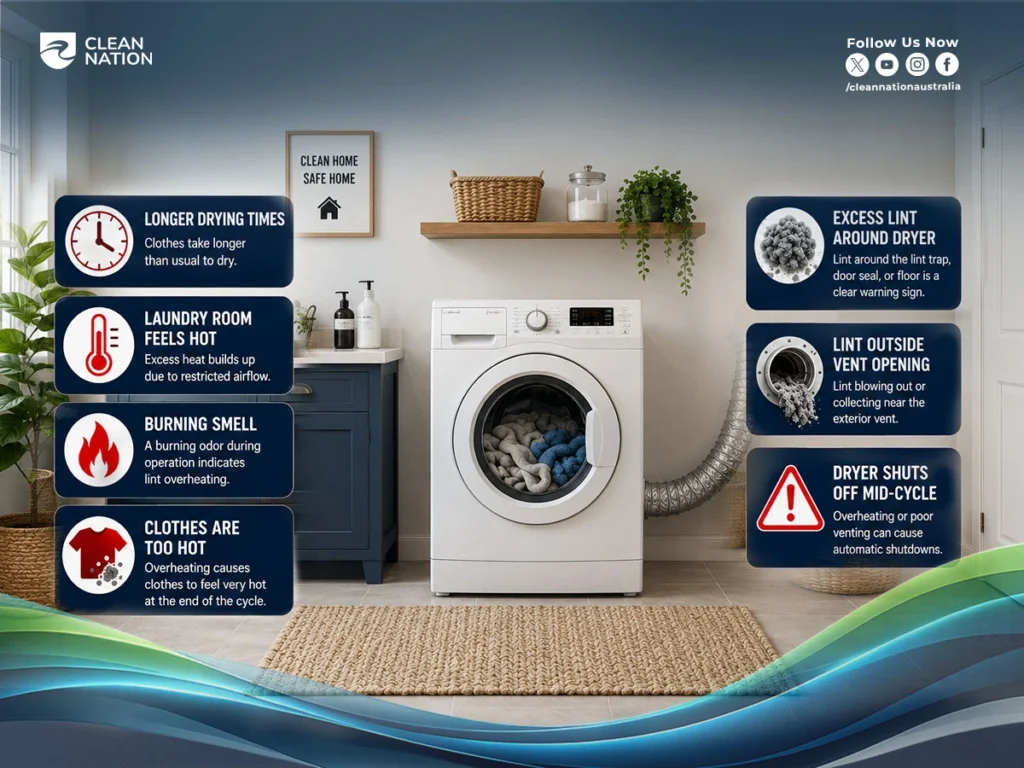
One of the most common signs of vent blockage is when clothes take much longer than usual to dry. Restricted airflow caused by blocked vents prevents heat and moisture from escaping properly, forcing the dryer to run multiple cycles. If your laundry room feels unusually hot after use, it may indicate that the vent system is struggling to function efficiently.
Another warning sign is a noticeable burning smell coming from the dryer during operation. Excess lint buildup around the lint trap or inside the vent line can overheat quickly, creating both safety concerns and reduced appliance performance.
Paying attention to these early symptoms is an important part of any responsible dryer maintenance guide for Australian households and also helps maintain efficiency of House Cleaning machines.
You may also notice excessive lint collecting around the dryer, outside vent opening, or surrounding floor areas. When the ventilation system becomes clogged, airflow pressure changes and lint can escape into the home instead of exiting safely outdoors. Regular inspections and preventative cleaning help reduce strain on the appliance while keeping the dryer operating safely and effectively year-round.
Safety Precautions Before Cleaning
Before starting any dryer vent cleaning task, it is important to prioritize cleaning safety to reduce the risk of injury or exposure to harmful particles. Disconnecting the dryer from the power source and allowing the appliance to cool down helps prevent electrical accidents and overheating issues.
Wearing proper Personal Protective Equipment such as safety goggles, gloves, and masks can also help protect against dust, lint, and airborne debris during the cleaning process, especially when following a custom house cleaning approach for different home setups.
Dryer vents often contain compacted lint, dirt, and hidden contaminants that may release toxic fumes or irritants when disturbed. Using safety goggles and protective gloves provides an added layer of protection while handling narrow vent spaces or potentially hazardous equipment around the laundry area. Good airflow and proper ventilation should always be maintained while cleaning to avoid inhaling excessive dust particles indoors.
If chemical products are being used to sanitise surrounding surfaces, careful chemical handling is essential. Reading product instructions and reviewing Safety Data Sheets helps ensure safe usage and storage practices. Following these precautions not only improves safety during maintenance but also supports a cleaner, healthier, and more secure home environment for Australian households.
Step-by-Step Guide to Cleaning Your Dryer Vent
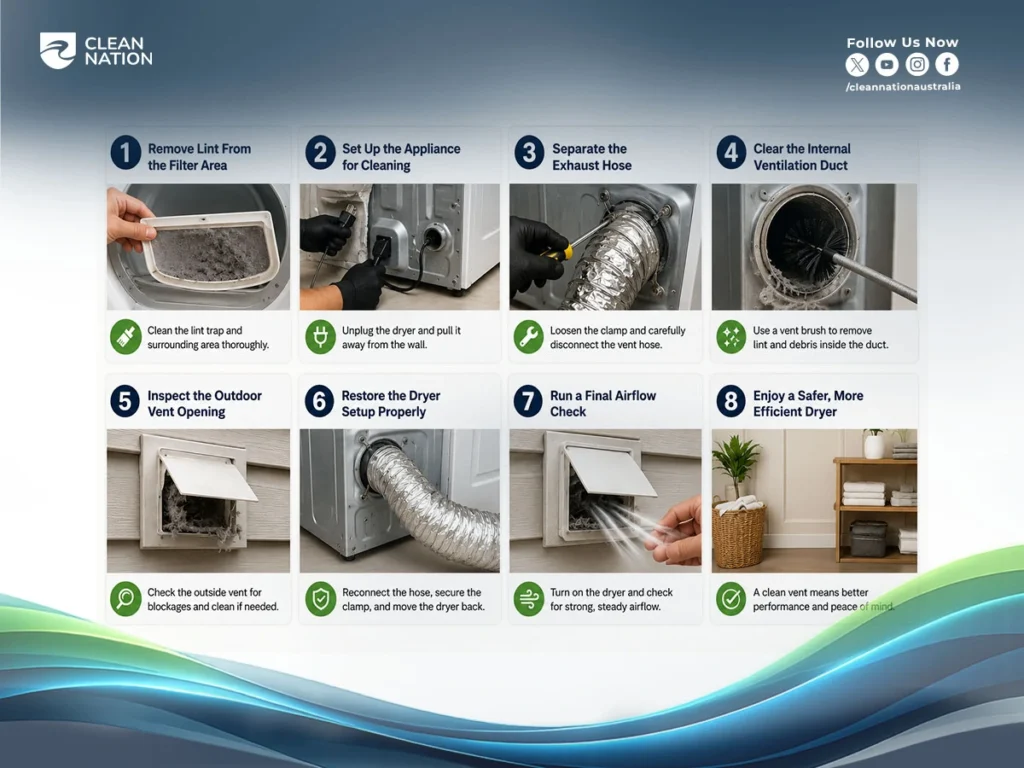
This step-by-step guide to cleaning your dryer vent walks you through the complete process, starting from removing lint in the filter area and safely setting up the appliance to disconnecting parts and clearing internal duct blockages for better airflow and performance. It also explains how to inspect the outdoor vent opening and properly restore the dryer setup so everything is aligned and working efficiently.
In the end, a final airflow check ensures the system is clean, safe, and running smoothly, helping improve dryer efficiency and reduce long-term maintenance issues. Regular house cleaning routines alongside this maintenance can further reduce dust and lint buildup in your laundry area, keeping the environment cleaner, safer, and more organized over time.
Remove Lint From the Filter Area
The lint trap plays a major role in maintaining safe and efficient dryer performance. During each drying cycle, dust, fibers, and fabric particles collect on the lint screen, gradually limiting proper airflow inside the appliance. Regularly taking time to clean lint trap areas helps improve drying efficiency, reduce excess heat, and support smoother airflow throughout the vent system.
In many homes, hidden lint buildup can also collect beneath the filter compartment, so proper lint removal is an important part of routine dryer maintenance. A vacuum attachment or soft cleaning brush can help clear lint from tight spaces that get overlooked during regular cleaning. Keeping the lint screen and surrounding filter area clean, as part of your broader house cleaning routine, helps the dryer run more effectively and reduces strain on its internal components over time.
Set Up the Appliance for Cleaning
Before starting the cleaning process, carefully unplug the dryer and move the appliance away from the wall to access the vent connection safely. Using a screwdriver, disconnect the vent hose while wearing gloves and a mask to avoid contact with dust and lint particles.
A flashlight can help inspect hidden buildup inside the duct, while a dryer vent brush or complete vent cleaning kit makes it easier to reach deeper areas of the system.
For more thorough cleaning, many homeowners use a brush kit with flexible rods connected to a power drill through a drill attachment to loosen compacted debris inside long vents. In some cases, a leaf blower can help push remaining lint out from the exterior vent opening after brushing is complete.
While professional services such as the top 10 cleaning companies in Australia can also handle deep vent cleaning for better safety and efficiency, once cleaning is finished, securely reconnect the vent using metal tape to help maintain safe airflow and reliable dryer performance.
Separate the Exhaust Hose
Before starting any deep dryer vent cleaning, it is important to unplug the dryer to ensure complete safety during the process. Once the appliance is powered off, carefully pull it away from the wall to access the back panel. This step helps create enough working space and reduces the risk of damage while handling the ventilation system.
Next, gently separate the exhaust hose by loosening the clamp or connection point and disconnecting the exhaust duct from the dryer outlet. Take your time during this process to avoid tearing or bending the hose, as it can affect airflow efficiency later.
Proper disconnection ensures a safe and smooth start to the cleaning process while preventing lint and debris from spreading inside the laundry area.
Clear the Internal Ventilation Duct
Once the vent hose and external connections are removed, the next step in dryer vent cleaning is to carefully access and clear the internal ventilation duct. This area often holds hidden dust, fibres, and compacted debris that contribute to airflow restriction. Using proper tools for clogged dryer vent cleaning, you can begin loosening buildup inside the duct to restore proper air movement and improve overall dryer efficiency.
During this process, focus on thorough lint buildup removal by working slowly through the duct using a vent brush or similar cleaning tool. In some cases, partial vent cover removal may be required to reach deeper blockages and ensure complete cleaning. Clearing this internal pathway helps the dryer operate safely, reduces overheating risks, and improves the long-term performance of the appliance.
Inspect the Outdoor Vent Opening
After completing internal cleaning, it is important to carefully inspect the dryer exhaust vent at the outside of your home. This step helps identify any blockages, lint buildup, or obstructions that may be restricting airflow. Check the exhaust vent pipe and ensure that the air is passing freely through the system without any signs of backflow or clogging.
Next, examine the exhaust port and the full exhaust connection to confirm everything is securely attached and in proper condition. Pay close attention to the exterior vent cover, as it can often become blocked by lint, dust, or even outside debris. A clear outdoor opening ensures efficient airflow, better dryer performance, and safer operation of the entire vent system.
Restore the Dryer Setup Properly
After completing the cleaning process, the first step is to unplug the unit again and carefully move the dryer back into its original position. Take time to make sure all connections are properly aligned and there’s an unobstructed path for airflow behind the appliance. Before final placement, it’s also worth vacuuming any lint buildup around the surrounding floor and wall area, since this is a small but important part of general house cleaning that keeps the laundry space safe.
Next, gently straighten the vent hose to avoid any bends or kinks that could restrict airflow and reduce efficiency. Once everything is aligned, check and level the machine’s feet so the dryer stands stable and vibration-free during operation. Proper reinstallation not only improves performance but also helps maintain long-term safety and efficiency of the appliance system.
Run a Final Airflow Check
After completing all maintenance steps, it is important to run a final airflow check to ensure the system is operating correctly across different technical domains. Whether you are dealing with HVAC diagnostics, automotive diagnostics, house AC cleaning, or even complex data engineering pipelines, a final inspection helps confirm that airflow is stable, efficient, and free from any hidden blockages. This step ensures proper airflow analysis and verifies that the system is functioning as expected after cleaning or adjustments.
In modern systems like Apache Airflow, structured workflow management, and data orchestration platforms, final checks also support reliable pipeline monitoring and overall system diagnostics.
The same principle applies to mechanical systems, where proper troubleshooting ensures smooth operation and performance stability. Performing a final airflow check helps validate system health and ensures long-term efficiency across all connected components.
Benefits of Cleaning Dryer Vent
Regular dryer vent cleaning plays a key role in overall dryer efficiency improvement by allowing hot air and moisture to flow freely through the system. When vents are clean, the dryer does not have to work as hard, which directly supports better dryer airflow improvement and reduces unnecessary strain on internal components. This simple maintenance step also enhances everyday performance, making laundry cycles faster and more effective.
Another major benefit is improved dryer vent safety, as removing lint and debris helps prevent dangerous heat buildup inside the system. This not only lowers fire risks but also contributes to better energy efficiency across household appliances.
With smoother airflow and reduced resistance, homeowners can enjoy noticeable energy savings while also extending the lifespan of their dryer through consistent and proper maintenance.
Maintenance Tips to Keep Vent Clean Longer
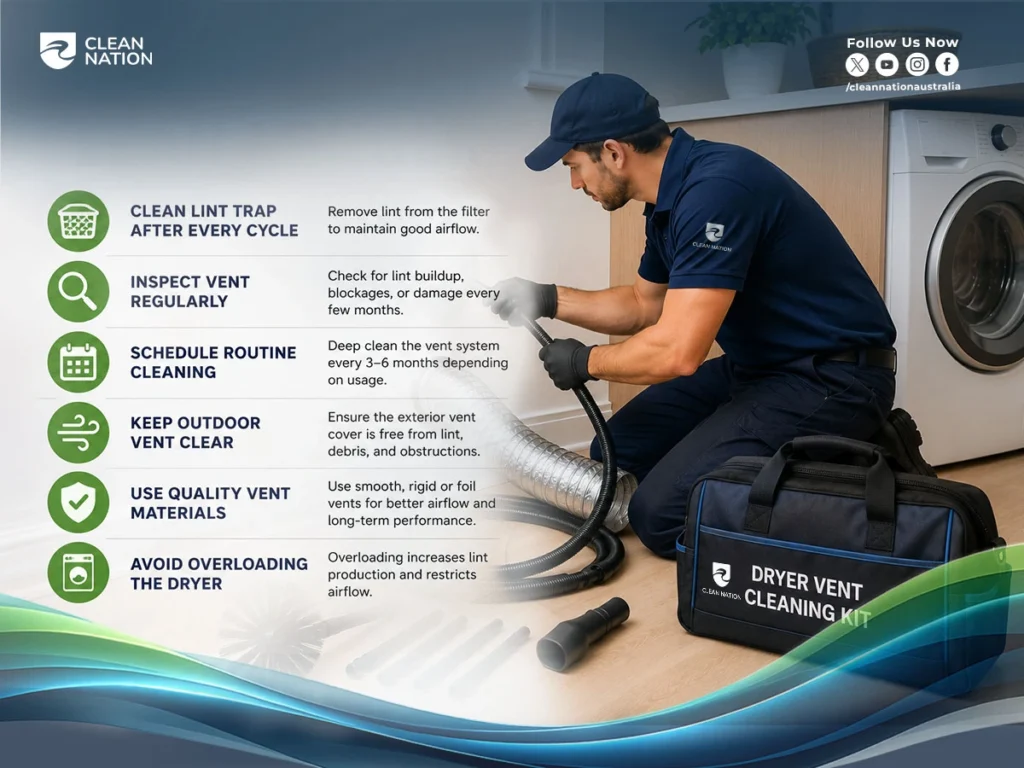
Keeping your dryer vent in good condition requires a consistent vent cleaning routine supported by proper preventive maintenance practices. Using a reliable dryer cleaning kit from time to time helps remove early signs of lint buildup before they turn into serious blockages.
Simple habits like checking airflow after each cycle and ensuring proper ventilation can significantly improve long-term performance.
To maintain efficiency, it is recommended to follow an annual maintenance routine that includes detailed inspection and cleaning of the entire vent system. Incorporating regular airflow testing helps identify any hidden restrictions early, ensuring smooth operation throughout the year.
By sticking to structured routine maintenance, homeowners can extend the life of their dryer while keeping it safe, efficient, and cost-effective.
How Often Should You Clean Your Dryer Vent?
How often you should clean your dryer vent depends on your household size, usage habits, and living conditions. For most homes, a general recommendation is every 3 6 months, especially if you use the dryer frequently or have a busy laundry routine. Regular cleaning during this interval helps prevent lint buildup, improves airflow, and keeps the system running safely and efficiently.
For large households or homes with pets, more frequent cleaning is often necessary because hair, fibers, and lint accumulate much faster. In contrast, single people or households with light usage can usually follow a schedule of once a year or even every 18 to 24 months if usage is minimal. Adjusting your cleaning frequency based on your lifestyle ensures better performance, improved safety, and longer appliance life.
When to Hire Clean Nation Professionals?
If you start noticing drying delays in your laundry cycles or repeated error code alerts on your dryer, it may indicate deeper issues that need professional attention. Problems like airflow blockage, lint accumulation, or hidden moisture buildup inside the vent system are not always easy to fix with basic cleaning and often require expert inspection or hiring house cleaning professionals to restore proper performance.
It is also time to call Clean Nation professionals if you detect air leaks, unusual sounds, or signs of overheating that could increase fire risk. These warning signals suggest the system is under stress and not operating safely. Professional cleaning services ensures the entire vent system is properly cleared, reducing risks and improving long-term efficiency and safety of your dryer.
FAQ’s
Following are the faq’s
How do I clean a dryer vent at home quickly in Sydney or Melbourne?
Turn off power, remove lint trap, disconnect vent hose, and use a brush kit to clear lint buildup. Clean Nation offers same-day dryer vent cleaning across Sydney & Melbourne with 24 to 48 hour response time.
How often should I clean my dryer vent in Australian homes?
Every 3 to 6 months for large families, or yearly for small households. In Brisbane, Perth, and Adelaide, Clean Nation recommends regular maintenance to prevent fire risk and airflow blockage.
What is the cost of professional dryer vent cleaning in Australia?
Clean Nation pricing starts from affordable basic service packages depending on vent length and blockage level. Exact quotes are given instantly for homes across Australia.
Is dryer vent cleaning necessary for fire safety?
Yes. Lint buildup can cause overheating and fire hazards. Professional cleaning reduces risk, improves airflow, and ensures safe dryer operation in all Australian households.
How fast can Clean Nation respond to booking requests?
Clean Nation typically responds within 24 hours, with emergency same-day service available in major cities like Sydney, Brisbane, and Canberra depending on availability.
Are Clean Nation technicians certified?
Yes, Clean Nation technicians are trained in appliance safety, vent cleaning systems, and follow Australian safety standards for residential and commercial cleaning services.
Can blocked dryer vents increase electricity bills?
Yes. Blocked vents force longer drying cycles and higher energy use. Clean Nation helps restore airflow efficiency, reducing energy costs for Australian homeowners.
Conclusion
To sum it up, keeping your house dryer vent clean is one of those simple home habits that makes a big difference in safety and everyday comfort. When lint and dust are cleared on time, your dryer breathes better, works faster, and uses less energy while cutting down on real risks like overheating or fire hazards. With regular attention and proper cleaning, you can keep things running smoothly in the background without unexpected issues or costly repairs. And if you’re trying to figure out who to trust with tasks like this, it helps to know what makes a great cleaning company in the first place.