



To clean a kitchen sink drain, start by flushing it with boiling water to loosen light grease. Follow up with ½ cup baking soda and ½ cup white vinegar; let it fizz for 10-15 minutes, then rinse with hot water. This is the natural way most people learn how to clean a kitchen sink drain without harsh chemicals. For tougher clogs, use a plunger to clear blockages or remove the P-trap under the sink to clean out stubborn buildup by hand. Run hot water after each dishwash to keep grease from hardening, and use a sink strainer to catch food scraps before they cause problems. If clogs keep coming back no matter what you try, the buildup is likely too deep for DIY fixes, and it’s time to call a cleaning service in Australia like Clean Nation.
Why Should You Keep Your Kitchen Sink Drain Clean?
Your kitchen sink drain sees a lot of use. Food, grease, and soap all pass through it every day.
A dirty drain isn’t just a smell problem. It’s a kitchen hygiene issue. Bacteria buildup happens quickly in a warm, damp pipe filled with leftover food.
That bacteria doesn’t stay in the drain. It can spread to your dishes, hands, and countertops. Poor sink hygiene puts your whole kitchen at risk.
Cleaning your drain also helps prevent clogs. Small buildup is normal. But if you ignore it, that buildup hardens and blocks water flow. Then you’re calling a plumber instead of grabbing baking soda.
Think of drain cleaning as part of your normal household sanitation. You already wipe counters and wash dishes. Your drain needs the same care.
Regular cleaning also helps you maintain plumbing for longer. Grease and debris travel deeper into your pipes over time. This can cause damage that costs far more to fix later.
At Clean Nation, we see this a lot. Our kitchen cleaning services in Australia cover exactly this kind of issue. People assume their sink is fine because water still drains. But a truly hygienic environment starts inside the pipe, not just on the surface.
A few minutes of kitchen sanitation each week saves money, protects your health, and helps extend plumbing life.
Signs Your Kitchen Sink Drain Needs Cleaning
Not sure if your drain needs attention? Your sink usually gives you warning signs before things get bad. Watch for these:
- Slow drainage – Water takes longer than usual to disappear, which usually means buildup is blocking the pipe.
- Standing water – Water pools around the drain instead of flowing down. This often follows a slow-draining sink.
- Gurgling drain – Strange bubbling sounds happen when air gets trapped behind a clog. Your pipes are telling you something’s stuck.
- Foul odours – A bad drain odour usually means food particles or grease are rotting inside the pipe. Cleaning the surface won’t fix this.
- Water backup – Water rises back up instead of draining, sometimes even in a different sink or your dishwasher. This means the clog has gotten serious.
- Blocked kitchen sink – If water won’t drain at all, DIY methods may not be enough. You risk damage to your pipes or cabinets from overflow.
Catching these signs early makes cleaning easier and cheaper. Waiting until the sink is completely blocked usually means more time, more mess, and sometimes a call to a plumber.
What Causes Kitchen Sink Drain Buildup?
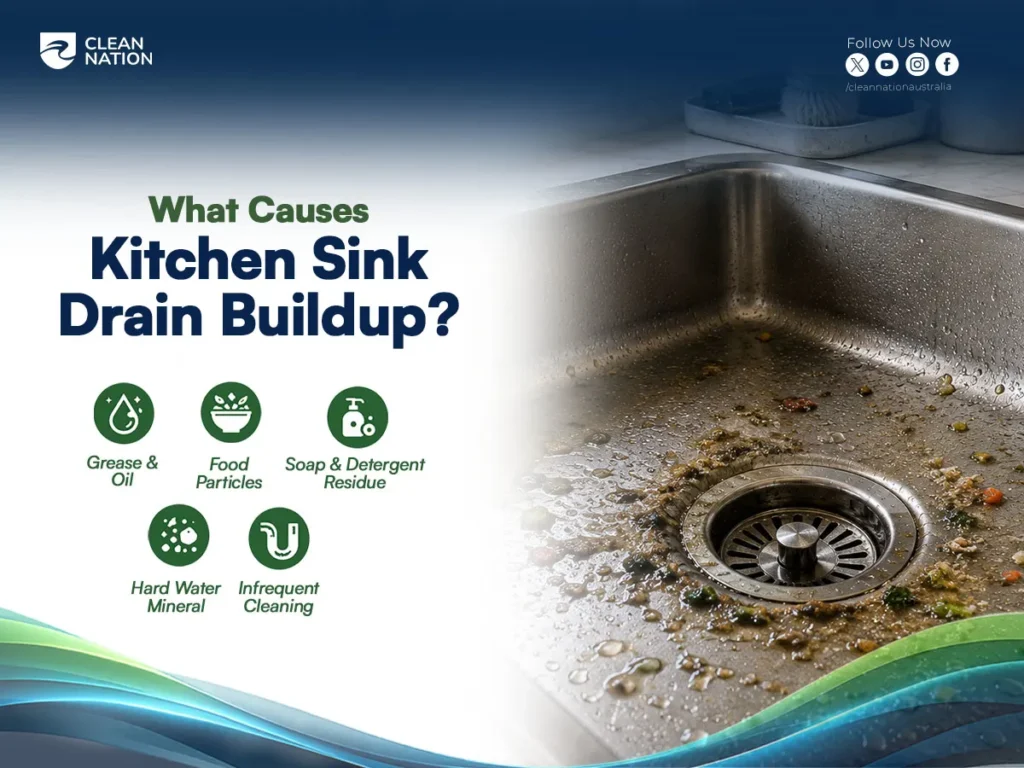
Buildup doesn’t happen overnight. It’s the result of small things going down the drain every day. Here’s what’s usually behind it:
- Grease buildup – Oil and fat from cooking stick to the inside of pipes. As it cools, it hardens and narrows the space water can flow through.
- Food scraps – Even small bits of food add up over time. They get caught in bends and joints inside the pipe.
- Soap scum – Dish soap doesn’t fully rinse away. It leaves a filmy residue that traps other debris.
- Hard water stains – If you have hard water, mineral buildup can coat your pipes and slowly reduce water flow.
- Coffee grounds – These don’t dissolve in water. They settle at the bottom of the drain and pack together over time.
- Food debris – Larger bits of food that slip past the strainer collect and rot inside the pipe.
- Hair – Common in bathroom sinks, but kitchen sinks aren’t immune, especially if you rinse cleaning tools or pet bowls there.
- Mineral deposits – Left behind by hard water, these deposits build up on pipe walls and create rough surfaces where debris sticks.
- Organic matter – Any leftover food, grease, or soap breaks down into organic matter that feeds bacteria and creates smells.
Most drain problems come from a mix of these, not just one. That’s why regular cleaning matters more than trying to fix one specific cause.
Supplies and Tools You’ll Need
You don’t need anything fancy to clean a kitchen sink drain. Most of these items are already in your kitchen or under $10 at the store.
- Baking soda – Breaks down grease and grime naturally. No harsh chemicals needed.
- White vinegar – Reacts with baking soda to loosen buildup and clear light odors.
- Plunger – A basic sink plunger helps clear minor clogs using suction and pressure.
- Drain snake – A flexible tool that reaches into the pipe to pull out hair, food, and debris.
- Rubber gloves – Protect your hands from grime, bacteria, and any cleaning solution you use.
- Kettle – For boiling water. A steady pour works better than dumping water straight from a pot.
- Measuring cup – Helps you get the right ratio of baking soda to vinegar for the best reaction.
- Plumber’s snake – A longer, more heavy-duty version of a drain snake for stubborn clogs deeper in the pipe.
- Sink strainer – Not for cleaning, but for prevention. Catches food scraps before they go down the drain.
Keep these together in one spot under your sink. That way, you can clean the drain as soon as you notice a problem instead of putting it off.
How to Clean a Kitchen Sink Drain: Step-by-Step Methods
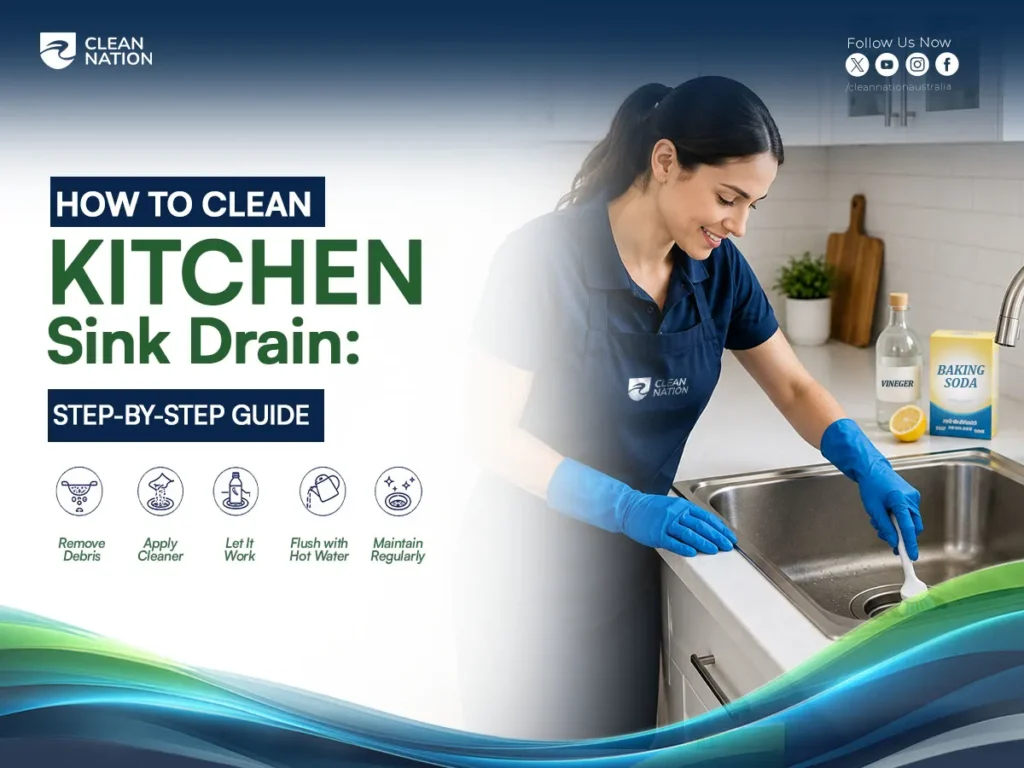
There are several sink drain cleaning methods that work well, depending on how bad the clog is. Try these DIY sink drain cleaning steps in order, starting with the easiest.
Method 1: Flush the Drain With Boiling Water
Boiling water drain cleaning is the simplest first step. It works well for light grease and buildup.
- Boil a full kettle of water.
- Pour it slowly and directly into the drain.
- Wait a few minutes, then run hot tap water for 30 seconds.
This hot water treatment helps dissolve grease and flush debris out of the pipe. One caution: avoid boiling water burns by pouring carefully and standing back from splashback. Also, handle boiling water carefully if you have older PVC pipes, since very high heat can occasionally soften plastic joints. If your pipes are PVC, use hot tap water instead of a full boil.
Method 2: Clean With Baking Soda and Vinegar
This is one of the most popular natural drain cleaning methods, and for good reason. It’s cheap, safe, and effective.
- Pour ½ cup of baking soda down the drain.
- Follow with ½ cup of white vinegar.
- You’ll see a fizzing reaction start immediately. Let it work for 10-15 minutes.
- Flush with hot water.
This DIY drain cleaner with baking soda and vinegar helps dissolve buildup and break down grease without harsh chemicals. It also helps neutralise odours, making it a solid homemade drain cleaner for regular maintenance.
Method 3: Use Salt and Ice to Remove Grease Buildup
This method is great for grease removal in garbage disposals and nearby drain sections.
- Pour 1 cup of coarse salt and 2 cups of ice cubes down the drain.
- Run cold water while turning on the disposal (if you have one).
- The ice scrubs the pipe walls while the salt helps dissolve grease.
This combo works well to break down residue and clear minor clogs caused by grease accumulation. It’s a good way to degrease without chemicals.
Method 4: Use a Plunger for Minor Clogs
A basic plunger can clear a lot of clogs on its own. A rubber plunger creates the best seal.
- Fill the sink with a few inches of water.
- Place the plunger over the drain, covering it completely.
- Push down and pull up firmly, 10-15 times.
This is the go-to way to use a plunger to clear a sink blockage for minor clogs and partial blockage situations. It’s often enough to unclog sink drain problems without any extra tools, and it works fast on clear light drain clogs.
Method 5: Clean the P-Trap for Stubborn Blockages
If the clog won’t budge, the problem may be in the P-trap, the curved pipe under your sink.
- Place a bucket under the P-trap to catch water.
- Loosen the slip nuts on both ends by hand or with pliers.
- Remove the P-trap and clear out any buildup.
- Rinse it out, then reattach and tighten the nuts.
Knowing how to clean a P-trap safely helps with deep blockages that other methods can’t reach. Check the pipe joints for stubborn stains while it’s off, and remove trapped debris before putting everything back together.
Dealing With Brown Gunk? Here’s What Works Best
Brown gunk in your drain is usually a mix of food sludge, grease, and soap residue. It’s common and treatable.
To remove brown gunk from sink drain buildup, combine the baking soda and vinegar method with a bottle brush to scrub visible residue near the drain opening. For gunk further down the plumbing line, boiling water followed by a plunger usually clears it.
If the sludge keeps coming back, check your P-trap. Organic buildup and greasy deposits often collect there first, leaving pipe residue that causes the gunk to return. Regular cleaning stops this cycle before it starts.
How Often Should You Clean a Kitchen Sink Drain?
If you’re wondering how often to clean sink drain pipes, the answer depends on how much you use your sink. But there’s a simple routine that works for most households.
Weekly sink maintenance routine: Run hot water down the drain for 30 seconds after washing dishes. This is a quick routine sink cleaning that prevents grease from settling.
Monthly drain maintenance: Once a month, do the full baking soda and vinegar treatment. This deeper monthly sink cleaning clears out buildup that daily rinsing misses.
Here are a few drain maintenance tips to keep in mind:
- If you cook with a lot of oil or grease, clean more often, closer to every two weeks.
- Households with garbage disposals should run cold water for 15 seconds after each use to keep debris moving.
- Watch for early signs like slow draining. If you notice this, don’t wait for your usual schedule.
Regular drain maintenance is far easier than fixing a full blockage. Think of it as preventative maintenance; a few minutes now saves hours of work later.
Sticking to this kind of routine maintenance also extends the life of your pipes and keeps bad smells from building up in the first place.
How to Prevent Kitchen Sink Drain Clogs?
Cleaning your drain is only half the job. Preventative cleaning is what actually keeps clogs from coming back. These simple habits go a long way toward sink blockage prevention.
Use a Sink Strainer
A sink strainer is one of the easiest ways to prevent clogs before they start.
- Place a mesh strainer or drain strainer over the drain opening before you wash dishes.
- It will catch food debris and food particles before they go down the pipe.
- Clean the drain strainer regularly, ideally after every use, so it keeps working properly.
This one habit alone helps prevent kitchen sink clogs without any extra effort during plug hole cleaning.
Avoid Pouring Grease and Oil Down the Drain
Grease disposal habits matter more than people think. Even small amounts of cooking oil add up fast.
- Never pour hot fat or oil straight down the sink.
- Let grease cool, then scrape it into the trash or a sealed container.
- Avoid pouring grease down the drain even when running hot water. Oil still sticks to pipe walls as it cools.
Good grease management means fewer oil-related clogs down the line. If you’re serious about grease prevention, keep a dedicated container near the stove and dispose of grease properly every time you cook.
Remove Food Scraps Before Washing Dishes
Scrape plates into the trash or compost before rinsing them in the sink.
- This cuts down on food waste accumulation in your pipes.
- It also reduces food scraps and organic debris that build up over time.
- A few seconds of scraping saves you from food debris removal later.
This habit makes debris removal almost automatic and keeps you from having to remove food debris from drain pipes down the road.
Run Hot Water Regularly
Hot water is one of the simplest tools you already have.
- Run hot water regularly for 20-30 seconds after washing dishes.
- Hot tap water helps keep grease from hardening inside the pipe.
- This basic hot water drain cleaning method works well as daily drain flushing.
Doing this consistently helps maintain drainage and improve water flow, so buildup never gets the chance to settle.
Clean Your Garbage Disposal
If you have a garbage disposal, it needs its own care to prevent drain blockages further down the line.
- Run cold water while using the food disposer, and keep it running for a few seconds after.
- Garbage disposal cleaning once a week helps prevent smells and buildup.
- Grind ice cubes occasionally to clean the blades and keep the garburator running smoothly.
Regular garbage disposal maintenance and knowing how to clean food disposer parts properly will help you prevent sink drain blockages and keep food waste disposal running the way it should. A clean disposal unit also makes it easier to clean food disposal unit components without extra scrubbing later.
These habits together cover the most useful kitchen drain maintenance tips for blockage prevention long-term.
Common Kitchen Sink Drain Cleaning Mistakes to Avoid
Even with good intentions, some cleaning habits do more harm than good. Here’s what to steer clear of.
- Using harsh chemical drain cleaners – Store-bought chemical drain cleaner products can damage older pipes over time. They’re also rough on the environment and your plumbing seals.
- Mixing different cleaners – Never mix drain cleaners, especially bleach and ammonia-based products. Combining chemicals can create toxic fumes that are dangerous to breathe in an enclosed space.
- Using steel wool – Avoid steel wool when scrubbing near the drain opening. It can scratch metal pipes and create rough surfaces where buildup sticks more easily.
- Reaching for bleach – Avoid bleach as a regular drain cleaner. It doesn’t break down grease or organic buildup the way baking soda and vinegar do, and it can corrode certain pipe materials.
- Using ammonia-based cleaners – Avoid ammonia-based cleaners near your drain, especially if you’ve recently used bleach. The combination is a serious chemical safety risk.
- Choosing lye-based cleaners – Lye-based cleaners are powerful, but they generate heat that can warp PVC pipes and cause burns if handled without gloves.
- Scrubbing too aggressively – Avoid scratching pipes with sharp tools or wire brushes. Small scratches trap debris and make future buildup worse.
The safest approach is sticking to natural methods like baking soda, vinegar, and hot water for regular cleaning. Save stronger products only for situations where nothing else works, and always follow the instructions carefully.
When Should You Call Clean Nation for Kitchen Sink Drain Problems?
DIY methods handle most clogs, but some problems need a professional touch. Here’s when to stop troubleshooting and call for help.
- Recurring drain blockage – If the same clog keeps coming back within weeks of clearing it, something bigger is going on. Repeated clogs usually mean buildup deeper in the pipe that home methods can’t reach.
- No improvement after multiple methods – If you’ve tried boiling water, baking soda and vinegar, and a plunger with no luck, it’s time to seek professional plumbing assistance.
- Signs of collapsed pipes – Gurgling, slow drainage across multiple sinks, or sewage smells can point to collapsed pipes somewhere in your plumbing system. This isn’t a DIY fix.
- Root intrusion – If your home has older pipes or nearby trees, root intrusion can block or crack pipes underground. A licensed plumber can confirm this with a drain camera inspection.
- Deep or stubborn blockages – A professional plumber has tools like hydro jetting, which uses high-pressure water to clear buildup that plungers and snakes can’t touch.
Trying to force a serious blockage yourself can make things worse or damage your pipes further. If you’re unsure what’s causing the problem, a camera inspection takes the guesswork out and points to the real issue before any professional drain cleaning work begins.
If you’re based in New South Wales, our kitchen cleaning services in New South Wales can send a qualified team to inspect and fix the problem properly. Sydney homeowners can also book directly through our kitchen cleaning service in Sydney page.
Kitchen Sink Drain Cleaning by Clean Nation
Not everyone has the time or the tools for regular drain maintenance. That’s where Clean Nation comes in.
Our Clean Nation Portable Hand Steamer is built for exactly this kind of job. It uses hot steam instead of chemicals to break down grease, grime, and buildup inside your drain. No harsh cleaners, no fumes, just steam doing the work. Watch it in action in this kitchen cleaning video.
Here’s what makes it a solid option:
- Steam cleaning sink drain buildup reaches areas a brush or liquid cleaner can’t always get to.
- A steam cleaner for sink drain use is safer for your pipes than caustic chemical products.
- It works on grease, soap scum, and light mineral deposits without scratching surfaces.
Beyond the steamer itself, Clean Nation cleaning services cover more than just drains. Our deep cleaning solutions are designed for kitchens that need a full refresh, not just a quick fix. See what a full service looks like in this professional kitchen cleaning walkthrough.
If your drain issues keep coming back or you’d rather leave it to someone with the right equipment, our drain maintenance solutions are built to handle it properly the first time.
We offer professional cleaning services across Australia, so wherever you’re located, a qualified team can help keep your kitchen running the way it should.
A Clean Nation Customer Story
Sarah, a homeowner in Brisbane, noticed her kitchen sink was draining slower every week. She tried the usual fixes: boiling water, baking soda and vinegar, even a plunger. Nothing worked for long. The smell kept coming back too.
After three weeks of the same clog returning, she called Clean Nation.
Our team inspected the drain and found the real problem: years of grease buildup had hardened deep in the P-trap, past where any home method could reach. A quick DIY fix wasn’t going to cut it.
Using our Portable Hand Steamer, we cleared the blockage without chemicals or pipe damage. The steam broke down the grease that had built up over time, something a plunger or store-bought cleaner couldn’t touch.
Sarah’s sink has drained normally ever since. She now runs a quick maintenance clean every month to keep it that way.
“I didn’t realize how much was stuck in there until it was gone. The smell is completely gone too,” she said.
If your drain keeps clogging no matter what you try, it might be time to get it looked at properly. Sometimes the fix is simple. Sometimes it just needs the right tool.
You can read more experiences like Sarah’s on our client reviews page. If your drain keeps clogging no matter what you try, it might be time to get it looked at properly. Sometimes the fix is simple. Sometimes it just needs the right tool.
FAQs
Can I use Coca-Cola to unclog a kitchen sink drain?
No, it’s not a reliable method. While its acidity can dissolve minor residue, Coca-Cola isn’t strong enough for grease or food buildup and can leave sticky sugar residue behind. Stick with baking soda and vinegar instead.
Is it safe to pour cold water down the drain after cooking?
Yes, and it’s actually better than hot water in one specific case: garbage disposals. Cold water keeps grease solid so it gets chopped and flushed away rather than melting and coating the pipe walls.
How long should I wait between DIY methods before calling a plumber?
If you’ve tried two or three methods (boiling water, baking soda and vinegar, plunging) over 24-48 hours and the clog hasn’t cleared or keeps returning within a week, it’s time to call a professional rather than keep repeating the same steps.
Can a clogged kitchen sink drain affect my dishwasher?
Yes. Many kitchen sinks and dishwashers share the same drain line, so a clog in the sink can cause water to back up into the dishwasher during its drain cycle.
Does vinegar damage PVC or metal pipes?
No, diluted white vinegar used occasionally is safe for both PVC and metal pipes. It only becomes a concern if used at full strength daily over years, which can slowly wear down pipe seals.
Conclusion
Kitchen sink drain cleaning doesn’t need to be complicated. A few minutes each week is enough to prevent clogs and keep your pipes in good shape.
Stick to the basics: boiling water, baking soda and vinegar, and good habits like scraping food scraps before washing dishes. This kind of regular plumbing maintenance keeps your kitchen in hygienic conditions and saves you from bigger repairs later.
Good sink drain care is simple once it’s part of your routine. But if a clog keeps coming back no matter what you try, don’t force it.
Book a professional drain cleaning with Clean Nation today and keep your pipes running the way they should.