

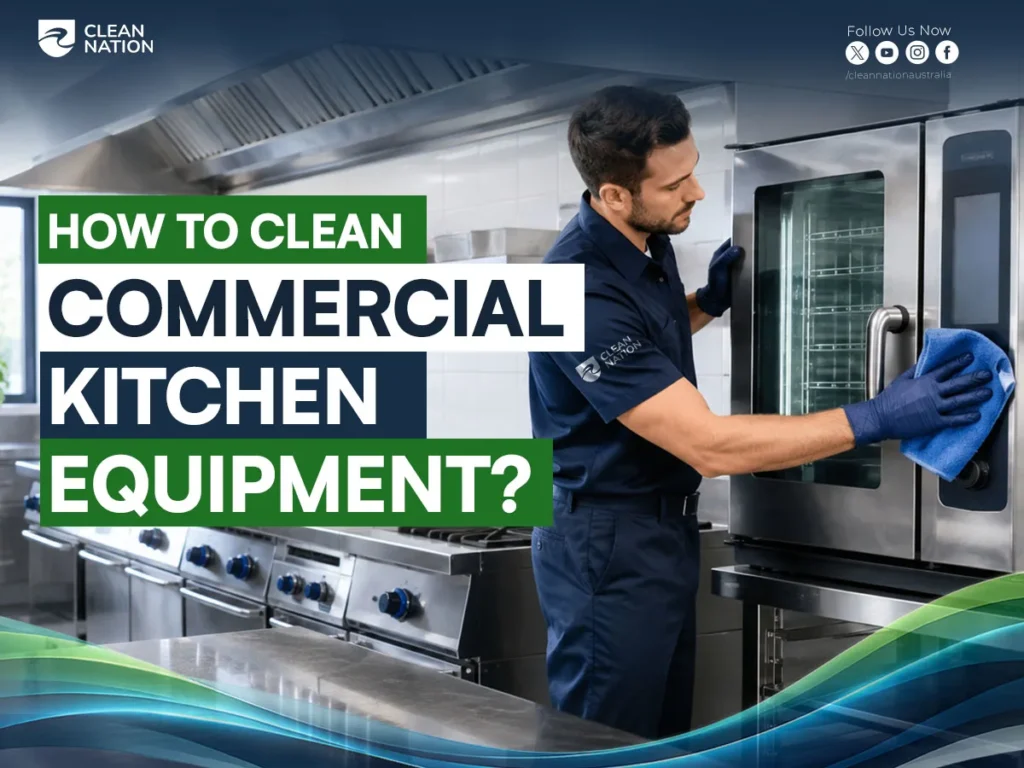
How to clean commercial kitchen equipment starts with turning it off, unplugging it, and letting it cool down before you touch it. If you’d rather leave this to a trained team, a cleaning service in Australia like Clean Nation can handle it for you. Put on PPE like gloves and goggles, then clear away food debris and apply a food-safe degreaser to break down grease. Scrub with a non-abrasive sponge, rinse with clean water, and sanitise food contact surfaces with an EPA-registered disinfectant.
Dry the equipment fully before reassembling it, then check hidden spots behind, under, and around each unit, since that’s where grease and bacteria build up fastest. Stick to a regular schedule: daily wiping, weekly scrubbing, and monthly deep cleans for hoods, traps, and drains, so buildup never turns into a bigger problem.
Why Is Cleaning Commercial Kitchen Equipment Important?
A dirty kitchen puts your food, your staff, and your business at risk.
Food safety. Grease and food buildup breed bacteria fast. That raises your risk of foodborne illness.
Cross-contamination. Dirty equipment spreads bacteria and allergens to other surfaces and food. Clean gear stops that spread.
Health inspections. Inspectors check your equipment, not just your floors. Greasy hoods or dirty fryers can mean fines or a shutdown.
Fire hazard. Grease buildup in hoods and traps is a top fire risk in commercial kitchens. Regular cleaning removes that danger.
Pest prevention. Food debris and grease attract roaches and rodents. A clean kitchen gives pests nothing to eat.
Equipment performance. Grease makes ovens and fryers work harder. That means higher energy bills and slower cooking.
Appliance longevity. Dirty equipment wears out faster. Regular cleaning protects your investment and saves you money long term.
Kitchen hygiene. Clean equipment and clean habits go together. One affects the other, every day.
At Clean Nation, our kitchen cleaning services in Australia help kitchens stay safe, clean, and compliant, so you can focus on running your business.
How to Prepare Commercial Kitchen Equipment for Cleaning?
Good cleaning starts before you pick up a rag. A few prep steps keep your team safe and your equipment protected.
Turn Off and Cool Down Equipment
Start with equipment shutdown. Turn everything off and disconnect equipment from its power source.
Hot surfaces cause burns, and live power creates electrical risks. Give equipment time to cool down before you touch it.
Watch for wet floors too. Water near hot or electrical equipment is a serious safety hazard.
Follow Manufacturer Instructions
Every appliance is different. Check the manufacturer’s instructions before you start cleaning.
An oven manufacturer, for example, may list specific cleaning instructions and safety procedures for that model. Following them protects your equipment and keeps you within company procedures.
This is also a good time to check your cleaning schedule and cleaning records. Staying on track helps with equipment maintenance and makes cleaning preparation easier next time.
Wear PPE and Follow Safety Rules
Always wear PPE before you clean. This means:
- Protective gloves to guard your hands from chemicals and grease
- Safety goggles or nonvented goggles to protect your eyes
- Disposable gowns or disposable aprons to keep clothes clean and skin protected
This protective gear isn’t optional. It’s a basic safety precaution that prevents injury and chemical exposure.
Use Food-Safe Cleaning Products
Not every cleaner belongs in a kitchen. Stick to food-safe cleaning products made for commercial use.
Look for:
- A food-safe degreaser to cut through grease
- Food-grade cleaning products that won’t leave harmful residue
- An EPA-registered disinfectant or sanitiser to kill bacteria
Using the right kitchen cleaning chemicals matters as much as the cleaning itself. The wrong kitchen cleaning products can contaminate food surfaces instead of protecting them.
At Clean Nation, we follow every one of these steps before we start any job, whether it’s our kitchen cleaning service in Sydney or any other location we cover, so your kitchen stays safe from prep to finish.
How to Clean Commercial Kitchen Equipment Step by Step
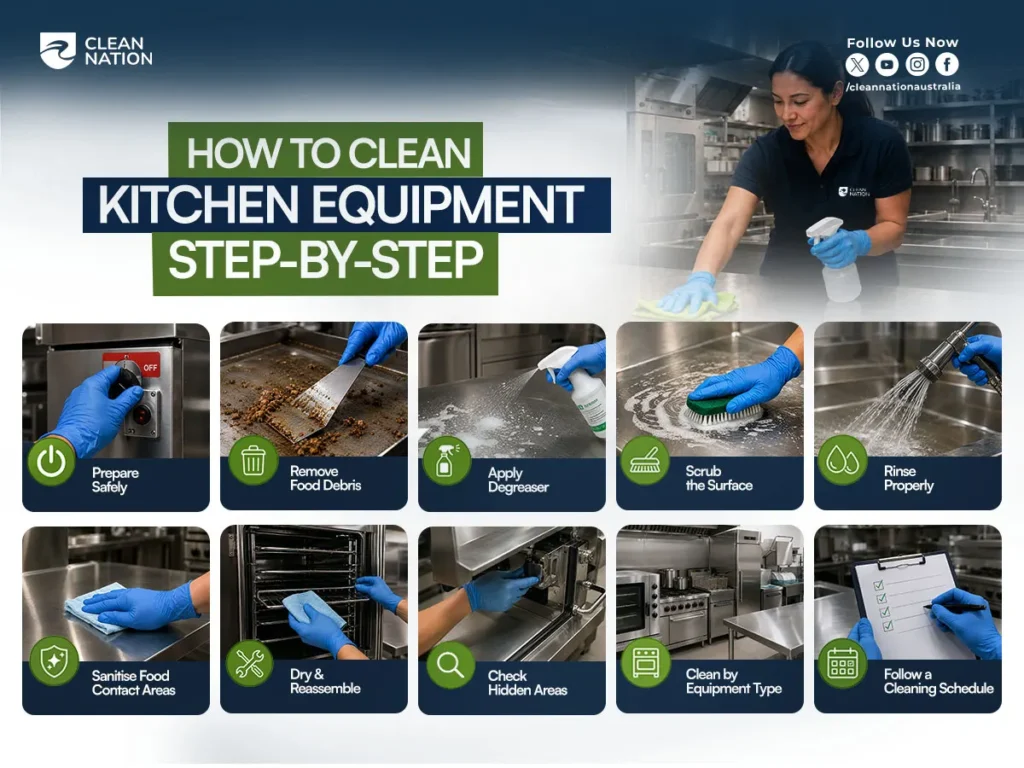
A good equipment cleaning process follows the same order every time. Use this cleaning checklist to make sure nothing gets missed.
Remove Food Debris
Start by clearing away food debris. Wipe off loose food, crumbs, and food scraps before you apply any product.
Getting rid of food residue and waste first makes every step after this easier. Loose residue left behind can mix with cleaning chemicals and leave a mess.
Apply a Suitable Degreaser
Next, apply a food-safe degreaser. A good kitchen degreaser breaks down grease molecules so they lift off the surface instead of spreading around.
For heavy grease or grease buildup, give the degreaser a few minutes to work before you wipe it away. This step handles most grease deposits and sets up easier grease removal later.
Scrub Grease and Residue
Now it’s time to scrub. Use a non-abrasive sponge or scouring pad to work on grease and grime.
For stubborn residue like tough stains or baked-on stains, you may need a few extra passes. Burnt residue often needs more scrubbing time, so don’t rush this step.
Rinse the Equipment
Rinse everything with clean water. Hot water or warm soapy water works well for full chemical residue removal.
Rinse water should run clear before you stop. This step prevents watermarks and leftover residue, and it gives you a streak-free finish.
Sanitise Food Contact Surfaces
Any surface that touches food needs a sanitiser. Use a sanitising spray or an EPA-registered disinfectant made for kitchen use.
Check the label for the sanitiser contact time. This dwell time is how long the product needs to sit to kill germs. Skipping this step means the sanitisation didn’t actually happen.
Dry and Reassemble Equipment
Let everything finish with natural air drying, or wipe it down with a dry cloth or a microfibre cloth.
Proper equipment drying stops watermarks and odours from forming. Once everything’s dry, reassemble the equipment for safe storage.
Check Hidden and Hard-to-Reach Areas
Don’t stop at the surfaces you can see. Check hidden areas and hard-to-reach areas too, like behind equipment, underneath equipment, and around equipment.
Corners, handles, and splash zones are common grease collection points. These spots get missed the most, and they’re often where bacteria build up first.
At Clean Nation, we follow this exact process on every job across our kitchen cleaning services in New South Wales, so nothing gets skipped, and your equipment gets a real clean, not just a quick wipe-down.
How to Clean Different Types of Commercial Kitchen Equipment
Not all commercial kitchen equipment cleans the same way. Ovens need different care than fryers, and a fridge needs different care than a dishwasher.
Here’s how to handle kitchen equipment maintenance for each major appliance, from cooking equipment cleaning to prep benches and removable parts. You can also watch this quick kitchen cleaning video for a look at how it’s done in real kitchens.
How to Clean Commercial Ovens?
To clean a commercial oven, start by removing the oven trays and racks and soaking them separately to loosen burnt residue. While they soak, wipe down the oven interior with a food-safe degreaser to cut through built-up oven grease, working from top to bottom so grime doesn’t drip onto already cleaned areas.
Clean the oven doors inside and out, paying close attention to the door seals where grease tends to collect. Don’t forget the extractor fan above the unit, since grease builds up there fast and it’s one of the most commonly missed spots. Once everything is degreased, rinse and dry the racks and trays before sliding them back in, and give the exterior a final wipe down to finish the job.
How to Clean Commercial Deep Fryers?
To clean a commercial deep fryer, start by letting the oil cool completely, then drain the used cooking oil into a proper container for disposal or recycling. Remove the fryer baskets and trays and scrub off any fryer crumbs stuck to the bottom and sides. Wipe up oil spills right away, since oil left on the floor is a slip hazard. Once the tank is empty, fill it with hot water and a food-safe degreaser, then boil this cleaning solution for about 20 to 30 minutes to break down grease inside the tank.
Drain the solution, scrub any remaining residue with a non-abrasive brush, and rinse thoroughly until the water runs clear. Dry the tank and all removable parts fully before reassembling, and give the exterior a final wipe down with a stainless steel-safe cleaner if needed.
How to Clean Commercial Grills and Griddles?
Griddle cleaning works best while the surface is still warm, not hot, since grease and food residue lift off more easily than once everything has cooled and hardened. Use a grill brush or grill pad to scrape the cooking surface clean, working in one direction to avoid pushing debris around. Apply a grill cleaner to help lift stubborn grease from the grease channels along the edges, where buildup tends to collect fastest. Wipe the surface down with a damp cloth to remove any leftover residue, then dry it completely. Once clean, apply a light layer of oil across the surface to maintain seasoning on griddles and keep the cooking surface in good condition for the next shift.
How to Clean Commercial Cooktops and Stovetops?
Cooktop cleaning and stovetop cleaning both start with removing the grates and burner caps and soaking them in warm soapy water to cut through heavy grease. While they soak, wipe down the main surface with a food-safe degreaser to lift any spilled food or grease left from cooking. Clean around the burner areas carefully, since food and grease collect there fast and can affect how evenly the burners heat. Don’t forget the knobs. They get touched constantly during service and are often skipped, even though they carry just as much grime as the surface itself. Once everything is scrubbed, rinse and dry the grates and burner caps fully before putting them back in place.
How to Clean Commercial Rangehoods and Filters?
Rangehood cleaning means more than wiping the outside surface. Start by removing the baffle filters and soaking them in hot water with a degreaser to loosen built-up rangehood grease, since these filters trap most of the airborne grease from cooking. Scrub each filter thoroughly before rinsing and letting it dry. While the filters soak, wipe down the interior and exterior of the hood itself to clear any grease that’s collected there. Exhaust hoods and duct-accessible areas should be checked on a set schedule, not just when they look dirty. This is where grease trap cleaning and kitchen hood cleaning become critical, since buildup in these areas is one of the leading causes of kitchen fires.
How to Clean Commercial Dishwashers?
Dishwasher cleaning starts with clearing food scraps from the dishwasher filter, since a clogged filter is one of the main reasons dishes come out dirty. Check the spray arms and dishwasher nozzles for blockages too, because clogged nozzles mean poor wash results even when the rest of the machine is running fine. Wipe down the dishwasher racks to remove any built-up grease or food residue that’s collected over time. Once everything’s clear, run a cleaning cycle using a dishwasher-safe cleaning solution to help with odour reduction and clear out any residue left inside the machine. Doing this regularly keeps the dishwasher working properly and stops smells from building up in the unit.
How to Clean Commercial Refrigerators, Fridges, and Freezers?
Start by checking for expired food and clearing it out before you begin cleaning. This step matters as much for chilled food storage safety as it does for basic cleanliness, since expired items can contaminate other food or cause odours.
Once cleared, wipe down the refrigerator shelves and trays with a food-safe cleaner, removing any spills or residue that’s built up. Clean the vents to keep airflow working properly, since blocked vents make the unit work harder and struggle to hold temperature. Check the fridge seals for grime too, as dirty seals can affect how well the door closes and let warm air seep in. Finish by wiping down the exterior and handles to keep the whole unit looking and running well.
How to Clean Commercial Prep Equipment?
Prep equipment cleaning starts with clearing loose residue from food preparation equipment before any real scrubbing begins. Some machines need equipment dismantled first, since parts like blades and attachments often hide grease and food buildup that’s impossible to reach otherwise. Clean surfaces, blades, and chopping boards separately, using a food-safe degreaser to break down grease and a scrub brush for stuck-on residue. Rinse everything well to avoid leaving detergent residue behind, since leftover soap can transfer onto food during the next use. Dry each part fully before reassembling the equipment, and store it properly so it’s ready for the next prep session.
How to Clean Smallwares and Utensils?
Smallwares like cutting boards, knives, bowls, and other kitchen utensils need a thorough wash with hot water and detergent after every use. Scrub off any stuck-on food before rinsing, since leftover residue gives bacteria a place to grow even after a quick rinse. For items that touch raw meat or produce, a separate wash and sanitising step helps prevent cross-contamination between different food types. Once clean, place items on clean racks to air dry instead of stacking them wet or drying them with a cloth. Wet storage invites bacterial growth, so letting everything dry fully before it goes back into use or storage is one of the simplest ways to keep smallwares safe.
How to Clean Holding Cabinets, Bain-Maries, and Warming Equipment?
Warming equipment like bain-maries and holding cabinets needs regular attention too, since food sitting at warm temperatures for hours can leave residue that’s easy to overlook.
Empty and clean the pans and inserts after each use, washing them with hot water and detergent to remove any dried-on food before it hardens further. Drain and refill the water reservoirs to prevent buildup, since standing water can develop bacteria or mineral deposits over time if it’s left too long. Wipe down the external surfaces daily to keep the unit looking presentable and running well, paying attention to handles and control panels that get touched throughout service. Regular cleaning like this keeps warming equipment working properly and stops buildup from affecting food safety.
How to Clean Stainless Steel Kitchen Equipment?
Stainless steel kitchen equipment needs a stainless steel-safe cleaner, not just any product you have on hand. Harsh chemicals can dull the finish over time, leaving the surface looking worn even when it’s technically clean. Use a mild cleaner with a soft cloth or non-scratch pad, applying gentle pressure to lift grease and fingerprints without damaging the metal. Always wipe with the stainless steel grain rather than against it, since going against the grain can leave fine scratches that build up over time. Finish by buffing away any product residue and watermarks with a dry cloth, which gives the surface a clean, polished look and helps it stay that way longer.
How Often Should Commercial Kitchen Equipment Be Cleaned?
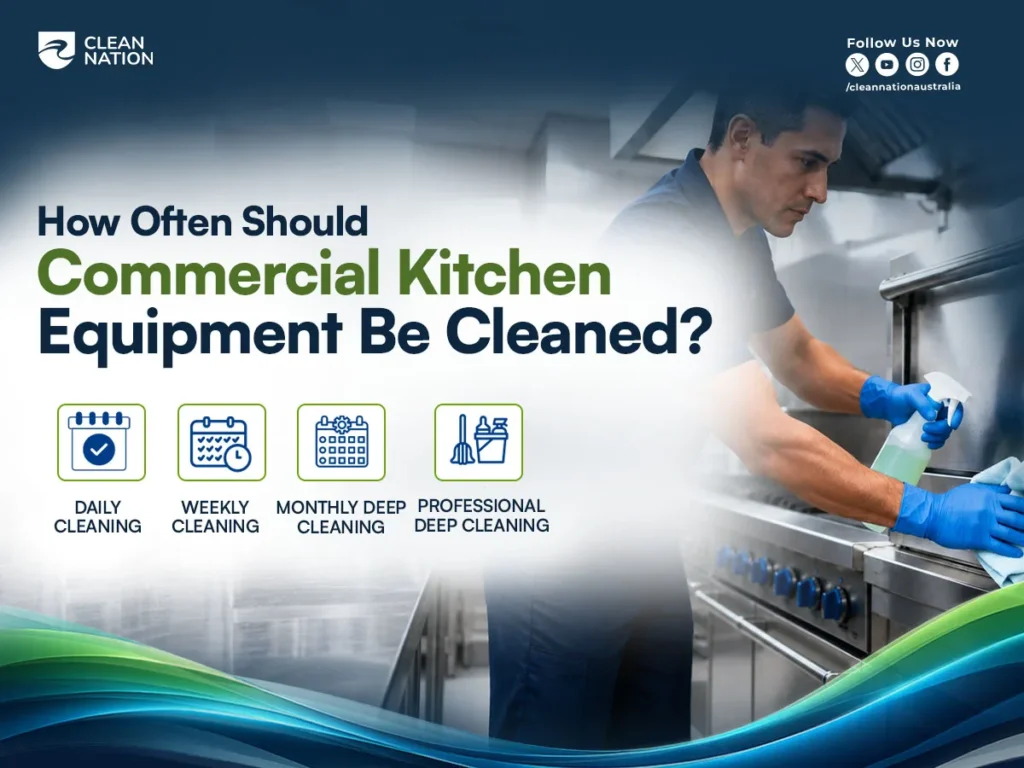
There’s no one-size-fits-all answer here. Your commercial kitchen cleaning schedule depends on how much you cook, what equipment you use, and how busy your kitchen gets.
That said, most kitchens follow the same basic cleaning frequency guidelines: daily, weekly, and monthly tasks. This short professional kitchen cleaning video shows what that routine looks like in practice. Here’s how to break it down.
Daily Cleaning
Daily cleaning covers anything that gets used or touched every shift. This is your clean-as-you-go work, plus end-of-day cleaning before you close.
A basic daily cleaning checklist should include:
- Stovetops wiped down after every use
- Crumb trays emptied and cleaned
- Visible spills cleaned up right away
- High-touch surfaces like handles and switches wiped down
Skipping daily kitchen cleaning lets grease and grime build up fast, which makes every other cleaning task harder later.
Weekly Cleaning
Weekly cleaning goes a bit deeper. These are the tasks that don’t need daily attention but can’t wait a full month either.
A solid weekly cleaning checklist includes:
- Waste bins and food waste areas, cleaned and deodorised
- Deep fryers, drained and scrubbed
- Grills and griddles, given a full scrub down
- Fridge seals and fridge handles, wiped and checked for grime
Weekly kitchen cleaning catches the buildup that daily wiping misses.
Monthly Deep Cleaning
Monthly deep cleaning is where you tackle the spots that get overlooked in daily and weekly routines.
A monthly deep clean should cover:
- Exhaust hoods, checked and cleaned to reduce fire hazard risk
- Grease traps, emptied and cleaned out fully
- Floor drains, cleared to prevent clogs and odours
- Shelving and storage racks, wiped down and reorganised
This monthly deep cleaning checklist protects your equipment and keeps you ready for health inspections.
Every kitchen is different, so it helps to build a tailored cleaning schedule around your actual equipment and workflow. At Clean Nation, we help kitchens set up a cleaning routine that fits how they actually operate, not a generic template.
What Areas of Commercial Kitchen Equipment Are Often Missed?
Even kitchens with a solid cleaning routine tend to miss the same spots. These hard-to-reach areas don’t get much attention, but they cause the most trouble.
Hidden dirt and hidden grease in these common areas, often forgotten, can lead to hygiene issues, pest issues, and odour issues over time. Here’s where to look.
Behind and Under Equipment
Behind equipment and underneath equipment are two of the most skipped spots in any kitchen. Underneath appliances collects grease, food scraps, and dust that never gets touched during a normal wipe-down.
The space between walls and equipment, and the spaces between equipment pieces, trap floor moisture and dust build-up over time. If your equipment is movable, pull it out regularly and check around equipment for buildup you can’t see from the front.
Corners, Joints, Handles, and Seals
Small gaps get overlooked constantly. Corners, crevices, and joints collect grime that builds up layer by layer.
Handles, gaskets, hinges, and seals need regular attention too. A fridge door handle gets touched dozens of times a day but rarely gets cleaned on its own. Door seals are another common miss, and dirty seals can affect how well a fridge or freezer holds temperature.
Grease Trays, Channels, and Filters
Grease trays and grease channels are built to catch grease, which means they need regular emptying and cleaning. Skip this step and they stop doing their job.
Filters, especially rangehood filters and baffle filters, get greasy fast in a busy kitchen. Dirty filters reduce airflow and raise fire risk. These grease collection points are common spots for heavy grease buildup, and they’re often part of the required cleaning for grease traps too.
Drains and Hard-to-Reach Areas
Drains get used constantly, but they rarely get cleaned properly. Kitchen drains and floor drains collect trapped food residue that builds up over time.
Drains and gullies need regular attention to avoid blocked drains. Without proper drain maintenance, you’ll end up dealing with mould, odours, and eventually a bigger drain cleaning job than you wanted.
At Clean Nation, we check these missed spots on every job. They’re often where hygiene problems start, even in kitchens that look clean on the surface.
What Are the Common Mistakes When Cleaning Commercial Kitchen Equipment?
Even well-meaning kitchens make cleaning mistakes. Some are small habits. Others create real safety hazards and hygiene issues down the line.
Here are the mistakes we see most often, and why they matter.
Using the Wrong Cleaning Chemicals
Not every cleaner works on every surface. Using the wrong cleaning chemicals can cause surface damage or equipment damage that’s expensive to fix.
Stick to surface-specific cleaning products made for the job. Mixing chemicals or using the wrong one can lead to chemical exposure or chemical contamination on food surfaces. Cleaning chemical safety isn’t optional. Accidental misuse of the wrong product is one of the easiest mistakes to prevent with the right training.
Cleaning Hot Equipment
Cleaning equipment while it’s still hot is a common shortcut that leads to burns and other injuries.
Hot surfaces combined with cleaning products create real electrical risks and safety hazards, especially near wet floors. Always cool down equipment first. Following proper safety procedures and wearing PPE takes a few extra minutes, but it prevents accidents that cost far more time.
Ignoring Hidden Grease Buildup
It’s easy to clean what you can see and skip what you can’t. But hidden grease and grease buildup in places like exhaust hoods and grease traps don’t go away on their own.
Heavy grease buildup left behind adds up fast, and grease and grime are a leading fire risk. Flammable fats and flammable oils build up quietly until they become a fire hazard nobody saw coming. Regular grease buildup removal in hidden spots is just as important as the visible cleaning.
Leaving Chemical Residue
Rinsing gets rushed more than any other step. But leftover chemicals and chemical residue on food contact surfaces can lead to food contamination.
Detergent residue and product residue need to be fully rinsed away with clean rinse water. If you’re using a sanitiser, don’t skip the sanitiser contact time either. Cutting that step short means the product didn’t do its job, even if the surface looks clean.
Not Drying Equipment Properly
Wet equipment left to sit invites trouble. Moisture and damp conditions on wet surfaces are exactly what bacteria and mould need to grow.
Watermarks aren’t just a cosmetic issue. They’re often a sign that equipment didn’t get properly dried. Skipping air drying or a proper wipe-down can lead to lingering odours and bacterial growth, even after a thorough clean.
Using Dirty Cleaning Tools
A dirty sponge or cloth undoes the work you just did. Contaminated cleaning tools spread bacteria instead of removing it.
Sponge contamination and contaminated cloths or towels are more common than most kitchens realize. Reusable cleaning cloths need proper cleaning tool maintenance, including regular cleaning tool disinfection and correct cleaning tool storage between uses. A clean kitchen needs clean tools to do the job right.
At Clean Nation, we train every team member to avoid these mistakes on every job. Getting the small steps right is what makes a deep clean actually stick.
When Should You Hire Professional Commercial Kitchen Equipment Cleaners?
Daily wiping and weekly scrubbing only go so far. At some point, most kitchens need professional commercial kitchen cleaning to fill the gaps. If you’re weighing whether it’s worth it, our breakdown of the Benefits of Hiring a Professional Kitchen Cleaning Service covers exactly what you gain beyond just a cleaner kitchen.
Before health inspections, an inspection-ready kitchen needs more than a quick tidy-up. Professional equipment cleaning reaches the spots inspectors actually check, like exhaust hoods, grease traps, and behind heavy equipment. This kind of prep supports commercial kitchen compliance and helps you meet HACCP standards without last-minute stress.
When grease buildup gets ahead of you. If your regular cleaning routine can’t keep up, that’s a sign it’s time for a deep kitchen cleaning. Commercial kitchen cleaning services use stronger tools and products than most in-house teams have access to, which makes a real difference on heavy grease and baked-on residue.
During kitchen audits. Regular kitchen audits often flag equipment that’s overdue for a proper clean. Bringing in professionals before an audit gives you time to fix problems instead of scrambling after the fact.
When your team doesn’t have the time or training. Cleaning ovens, hoods, and fryers properly takes real know-how. If your staff is stretched thin, professional commercial kitchen cleaning fills that gap without pulling your team off other work.
On a regular schedule, not just when something goes wrong. The kitchens that stay in the best shape don’t wait for a problem. They book professional equipment cleaning on a set schedule, so grease, grime, and compliance issues never get the chance to build up.
At Clean Nation, we work with kitchens that want to stay ahead of inspections, not scramble before them. Take a look at our client reviews to see how other businesses rate our work. Regular professional cleaning keeps your equipment running well and your kitchen ready for whatever comes next.
Case Study: How Clean Nation Helped a Busy Adelaide Restaurant Pass Its Health Inspection
The Client: A mid-sized restaurant in Adelaide, serving 200+ meals a day across lunch and dinner service.
The Problem
The kitchen was busy from open to close. Staff kept up with daily wiping, but deeper cleaning kept getting pushed back.
A routine health inspection flagged three issues:
- Heavy grease buildup in the exhaust hood and filters
- Grease trapped behind the deep fryers
- A dirty walk-in fridge seal causing temperature inconsistency
The restaurant had 14 days to fix the problems or risk a follow-up inspection with possible fines.
The Challenge
The kitchen couldn’t shut down for a full day. Service needed to keep running while the cleaning happened.
The team also didn’t have the tools or time to tackle the grease that had built up over months. Regular staff cleaning wasn’t enough to meet HACCP standards on its own.
What Clean Nation Did
We worked with the restaurant to build a plan that fit around their service hours.
Step 1: Scheduled cleaning during low-traffic hours. We came in early in the morning, before prep started, so the kitchen never lost a service.
Step 2: Deep-cleaned the exhaust system. We removed and soaked the baffle filters, then cleaned the hood and duct-accessible areas to clear the grease buildup completely.
Step 3: Cleaned behind and under the fryers. This is one of the most commonly missed areas in any kitchen. We cleared out trapped grease and food residue that had been sitting for months.
Step 4: Replaced and cleaned the fridge seal. A dirty, damaged seal was letting warm air in. Once cleaned and reset, the fridge held temperature properly again.
Step 5: Set up a recurring cleaning schedule. We built a monthly deep cleaning plan alongside their existing daily and weekly routine, so these issues wouldn’t come back.
The Result
The restaurant passed its follow-up inspection with no violations.
Beyond the inspection, the kitchen saw a few other changes:
- Lower energy use. With grease cleared from the fryers and the fridge running properly, the equipment didn’t have to work as hard.
- Fewer pest sightings. Clearing out old grease and food residue removed what was drawing pests in.
- Less stress for staff. The kitchen team no longer had to worry about hidden buildup turning into a bigger problem down the line.
Why It Worked
The fix wasn’t just a one-time deep clean. It was catching the areas that get missed, fixing them properly, and setting up a schedule that keeps them from building up again.
That’s the difference between passing an inspection once and staying ready for the next one.
Need help getting your kitchen inspection-ready? Clean Nation builds cleaning schedules around real kitchens, not templates. Get in touch to find out what a tailored plan looks like for your space.
FAQs
How much does professional commercial kitchen cleaning cost?
Cost depends on your kitchen size, equipment type, and how often you need service. Most companies offer a quote after assessing your space, since a small cafe and a full commercial kitchen need very different levels of work.
Can I clean commercial kitchen equipment myself, or do I need a licensed cleaner?
Daily and weekly cleaning can usually be handled by your own staff. But deep cleaning of exhaust hoods, grease traps, and ductwork often requires a licensed contractor, especially if your local fire code requires proof of professional service.
How long does a commercial kitchen deep clean take?
A full deep clean typically takes a few hours to a full day, depending on how much equipment you have and how much grease buildup needs to be removed. Most cleaning companies can schedule around your service hours so you don’t lose a full day of business.
What happens if I don’t clean my exhaust hood regularly?
Neglected exhaust hoods build up grease that becomes a serious fire hazard. Many insurance policies also require proof of regular hood cleaning, so skipping it can affect your coverage if a fire does happen.
Do I need to keep records of my kitchen cleaning schedule?
Yes, most health departments expect kitchens to keep cleaning records as proof of compliance. Keeping a simple log of what was cleaned and when makes inspections faster and protects you if a dispute ever comes up.
Conclusion
A clean commercial kitchen isn’t just about passing inspections. It protects your staff, your equipment, and your customers every single day.
Grease buildup, hidden dirt, and skipped cleaning steps don’t stay small problems for long. They turn into fire risks, failed inspections, and equipment that wears out before its time.
The good news is none of that has to happen. With the right cleaning schedule and the right team behind it, your kitchen stays safe, compliant, and ready for whatever the day brings.
Don’t wait for a health inspection to find the problems for you. Get in touch with Clean Nation today, and let’s build a cleaning plan that actually fits your kitchen.