

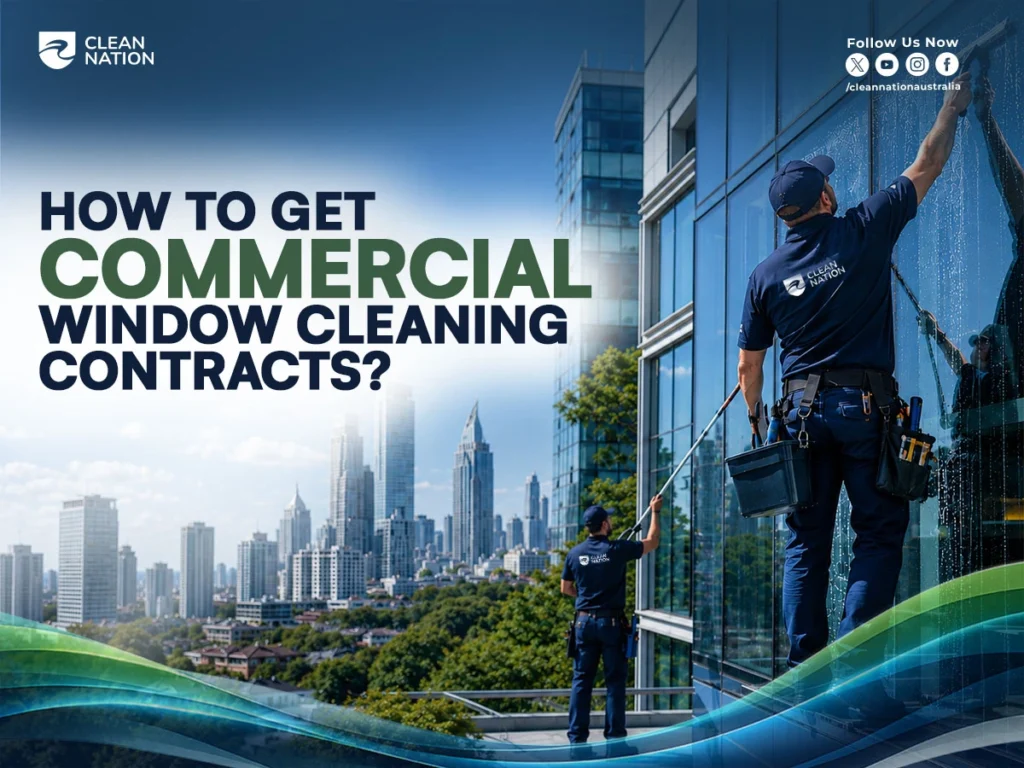
How to get commercial window cleaning contracts? Start by preparing your business with proper insurance, equipment, and a professional online presence. Identify the right clients, offices, retail spaces, schools, and property managers, then find leads through networking, directories, referrals, and tender portals. Send clear, detailed proposals that highlight your safety compliance and experience, price fairly without undervaluing your work, and build trust through testimonials and consistent service. Avoid common mistakes like generic proposals and poor follow-up, and focus on long-term client relationships. That’s exactly how Clean Nation wins and keeps reliable commercial contracts.
Why Commercial Window Cleaning Contracts Matter?
Recurring cleaning contracts give your business something more valuable than a one-off job: predictability. Instead of chasing new work every week, you build a long-term cleaning partnership with clients who already trust your team and know your standards.
For businesses offering professional window cleaning, contracts also mean steadier income and less time spent re-quoting the same jobs. Adding business cleaning solutions like scheduled window cleaning into a client’s broader facility management plan makes Clean Nation feel like a partner, not just another vendor.
Repeat business also means your team knows the site inside out, which leads to better, more consistent results. That consistency drives client retention, so once a business finds a provider they trust, they usually stick with them.
For Clean Nation, keeping commercial clients on ongoing contracts isn’t just about a full calendar. It’s what real business growth looks like: fewer gaps, more stability, and steady work you can count on.
Common Challenges Businesses Face When Trying to Win Contracts
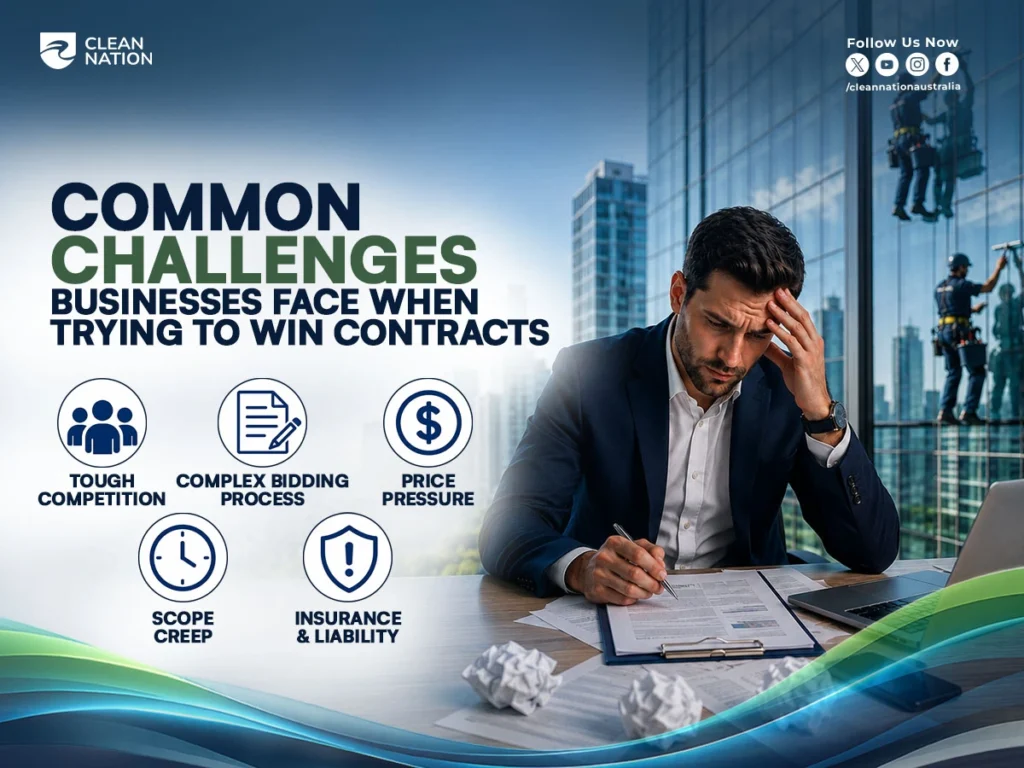
Winning commercial work isn’t always straightforward, and most window cleaning businesses hit the same roadblocks along the way.
The bidding process itself can be tough to navigate, especially when you’re up against bigger, more established competitors offering competitive quotes. Even after you win a job, contract negotiation can drag on, with clients pushing back on terms, pricing, or scope before anything gets signed.
Scope creep is another common headache. What starts as a clearly defined job can quietly expand- extra windows, added frequency, unplanned tasks- without the contract or price reflecting the change. Without solid client acquisition strategies, many businesses also struggle with lead conversion, generating interest but failing to turn it into signed work.
Then there’s the operational side. Unclear insurance obligations can leave you exposed to unnecessary business risk, and poorly defined payment terms often lead to payment disputes down the track. Getting these fundamentals right from the start makes it far easier to win contracts and actually keep them.
Prepare Your Business Before Pitching for Contracts
Before you approach a single commercial client, your business needs to actually look and function like one worth hiring. That means getting the fundamentals sorted first.
Get Registered, Insured, and Equipped
Most commercial clients won’t even consider a proposal without proof of proper cover. At minimum, you’ll need public liability insurance, workers’ compensation insurance, and ideally professional indemnity insurance to protect your business if something goes wrong on site. Keep your certificates of currency up to date and ready to send, since most clients ask for them upfront as part of their business insurance requirements.
Beyond insurance, you need the right window cleaning equipment and proper Personal Protective Equipment (PPE) to work safely on commercial sites, especially anything involving height. Some jobs, like accessing sliding window tracks for a deeper clean, need extra know-how too. How to Remove a Sliding Window for Cleaning? covers the technique your team should know for these jobs. A documented Safe Work Method Statement (SWMS) shows clients you take safety seriously, not just as a formality. And if you’re using subcontractors, a clear contractor agreement protects everyone involved and keeps expectations on paper, not just verbal.
Build a Strong Brand and Online Presence
A professional website is often the first thing a potential client checks before they even reply to your email. A clean, simple cleaning business website with clear services, pricing guidance, and contact details builds instant credibility. Pair that with a claimed and updated Google Business Profile, and you’re already ahead of competitors who skip this step.
Investing in basic local SEO helps clients find you when searching for window cleaning services in Sydney or other parts of the country. Active social media profiles and simple content marketing, like before-and-after photos or client wins, build brand awareness and strengthen your online reputation over time. None of this needs to be complicated, but it does need to exist before you start pitching.
Identify Your Ideal Commercial Clients
Not every commercial client is the right fit for your business, especially early on. Knowing who to target first makes it much easier to win the right contracts.
Offices, Retail, and Shopping Centres
Office buildings are often the easiest starting point for anyone offering window cleaning services in New South Wales, thanks to steady demand and predictable schedules, make a solid target market for ongoing work. Retail spaces are another strong option, since commercial premises with high foot traffic need frequent attention to stay presentable for customers.
Larger sites, like shopping centres, often need broader commercial facility cleaning or business premises cleaning across multiple tenants. These jobs can mean more volume from a single contract, making them worth pursuing once you’ve built some experience with smaller commercial clients and general facility cleaning.
Hotels, Schools, Healthcare, and Property Managers
Some sectors have specific requirements worth understanding before you pitch. School cleaning services and childcare centre cleaning usually involve strict hygiene standards and scheduling around school hours. Medical centres come with their own compliance expectations, and if you’re working with disability support providers, NDIS cleaning services often require awareness of disability support compliance.
Property managers, real estate agents, and strata companies are also worth building relationships with, since they often oversee multiple properties and can hand you several contracts at once rather than just one. Working through facility management contacts is often one of the fastest ways to scale beyond single-site clients.
Where to Find Commercial Window Cleaning Leads?
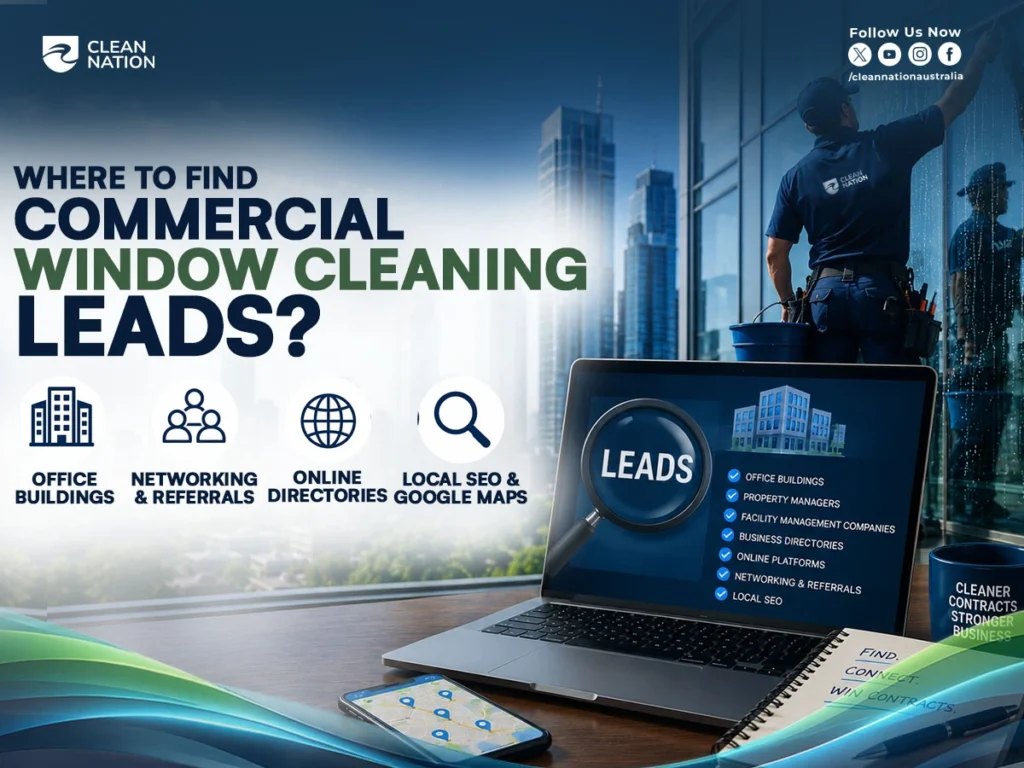
Knowing who to target is only half the job. You also need to know where to actually find these clients.
Directories, Google Business Profile, and Networking
A well-optimised Google Business Profile helps local businesses searching for window cleaning services in Australia find you faster than competitors who skip this step. Joining relevant industry associations also puts you in front of other businesses and potential referral partners in your field.
Business networking events and trade shows are worth attending too, since face-to-face conversations often lead to work that cold emails never will. Simple networking strategies, like following up after events or staying in touch with contacts, go a long way. Building real estate partnerships and property management relationships can be especially valuable, since these contacts often oversee multiple properties and can send steady work your way.
Tender Portals and Referrals
For larger jobs, government and private tender portals list opportunities you won’t find anywhere else. Tendering takes more effort upfront, but well-prepared tender submissions can win you long-term commercial contracts that are hard to land through cold outreach alone.
Referral marketing is often underrated. Client referrals and general word-of-mouth marketing tend to convert faster since there’s already trust built in. Setting up a simple referral program encourages business referrals from existing clients, turning good work into a steady source of lead generation without much extra effort.
Create Professional Quotes and Proposals That Stand Out
A messy or unclear quote can lose you a contract before you’ve even explained your work. How you present a proposal matters just as much as the job itself.
H3: Scope, Pricing, and Terms
Every cleaning proposal should start with a clear scope of work, what’s included, how often, and where. A detailed quote with a proper service quotation avoids confusion later and shows the client you’ve actually looked at their site, not just used a copy-paste template.
List your service inclusions and cleaning specifications clearly so there’s no guesswork. Simple contract terms, including payment terms, protect both sides and stop awkward conversations later. Good contract documentation also makes you look far more professional than a quick email or a verbal deal.
H3: Highlight Insurance, Safety, and Experience
Commercial clients want to feel safe before they hand over the keys, literally. Make sure your proposal clearly shows your public liability insurance and other insurance requirements, along with any compliance documents you can provide if asked.
Showing your safety compliance, including your approach to Work Health and Safety (WHS), risk assessment, and height safety certification where needed, builds real trust, especially for tall buildings or hard-to-reach jobs. Presenting your team as commercial cleaning experts who understand their contractor responsibilities shows clients you’re not just able to do the work; you take the risks seriously too.
Set Competitive Pricing Without Undervaluing Your Services

Pricing is often where businesses either win or lose a contract, but going too low can hurt you just as much as pricing yourself out of the job.
Research Rates and Offer Customised Packages
Before sending out commercial cleaning quotes or window cleaning quotes, take time to check local market rates in your area. Knowing the usual price ranges helps you stay competitive without underselling your work.
Every site is different, so tailored cleaning contracts almost always work better than a one-size-fits-all price. Offering customised service packages or custom cleaning solutions shows clients you understand their specific needs, whether that’s frequency, access, or building size. Building in some service flexibility also helps you win jobs where the client’s needs might change over time. Competitive quotes don’t mean the cheapest quotes; they mean fair pricing that still reflects the quality of your work.
H3: Focus on Value, Not Just Price
Clients rarely choose the cheapest option once they understand what streak-free window cleaning and consistent quality are actually worth. For a look at the kind of basic techniques clients may already be trying themselves before calling a professional, How to Clean a Window Without Windex? shows the DIY approach and where it typically falls short. Focus on service quality and clear performance standards, so the client knows exactly what to expect from every visit.
Quality assurance steps, like regular checks or simple reporting, help maintain consistent service levels over time. This kind of consistency builds real client satisfaction and long-term customer trust. Backing your work with a service guarantee also shows confidence in what you do. In the end, value isn’t just about the number on the quote; it’s about the reliability clients get with every job.
Build Trust to Secure Long-Term Contracts
Winning a contract is one thing. Keeping it long-term comes down to trust, and that’s something you build over time, not overnight.
Testimonials, Case Studies, and Before-and-After Photos
Real proof matters more than any sales pitch. Customer testimonials and client testimonials give potential clients confidence that you actually deliver on what you promise. Positive reviews and honest customer reviews online help build credibility before a client even picks up the phone.
Simple case studies, especially ones with before-and-after photos, show your work in action rather than just describing it. Sharing customer satisfaction reports or feedback also strengthens your reputation over time. A bit of ongoing online reputation management, like responding to reviews and keeping your profiles updated, keeps that trust visible to anyone checking you out.
Consistent Communication and Quality Service
Good work alone isn’t always enough to keep a client long-term. Clear client communication from the start, and staying consistent with it, makes clients feel informed rather than left guessing. Good customer service and strong client relationships often matter just as much as the cleaning itself.
Sticking to clear service delivery standards and simple quality assurance checks helps maintain reliability across every visit. A proper follow-up process after each job shows clients you care about getting it right, not just getting it done. Over time, this kind of consistent communication and dependable service is what turns a single contract into lasting client satisfaction.
Common Mistakes to Avoid
Even solid businesses lose contracts over small, avoidable mistakes.
- Sending generic proposals. A copy-paste quote tells the client you haven’t actually looked at their site or needs.
- Failing to follow up. Many contracts are lost simply because nobody chased the client after the first conversation.
- Competing only on price. This might win a job short-term, but it often attracts clients who leave the moment someone cheaper comes along.
- Overstating your experience or guarantees. Misleading or deceptive conduct can damage your reputation fast and create real compliance risks down the line.
FAQs
The following are the FAQs:
How to create a commercial cleaning contract?
A commercial cleaning contract should clearly set out the scope, pricing, and duration of the agreement, along with what happens if either party wants to end it early. Keeping it simple and specific to the site helps avoid confusion later.
Do I need a written contract for commercial cleaning jobs?
Yes, a written contract is strongly recommended for commercial cleaning jobs. It protects both parties, sets clear expectations, and reduces the risk of disputes over pricing, scope, or service quality later on.
How long do commercial cleaning contracts usually last?
Most commercial cleaning contracts run for 12 months, though shorter 3 to 6 month terms are common for new clients. Longer contracts often include a review period to adjust pricing or scope if needed.
Can I negotiate the terms of a commercial cleaning contract?
Yes, most terms are negotiable, including pricing, frequency, and notice periods. It’s normal for both parties to go back and forth before finalising a contract that works for everyone.
What should I do if a client wants to cancel a commercial cleaning contract early?
Check the termination clause in your contract, which should outline the required notice period. Most contracts require 30 to 60 days’ written notice before either party can end the agreement early.
Conclusion
Winning commercial window cleaning contracts comes down to preparation, clear proposals, and showing up as reliable service clients can count on. Get the basics right: insurance, pricing, communication, and the rest follows.
At Clean Nation, we’ve seen how much of this comes down to trust building. Clients don’t just want professional window cleaning; they want a long-term cleaning partnership they don’t have to think twice about. Focus on genuine client acquisition, and recurring contracts become far easier to land and keep. That’s how real business growth happens, one solid client at a time.
Looking to grow your commercial cleaning business? Get in touch with Clean Nation to see how we build lasting partnerships with our commercial clients.