

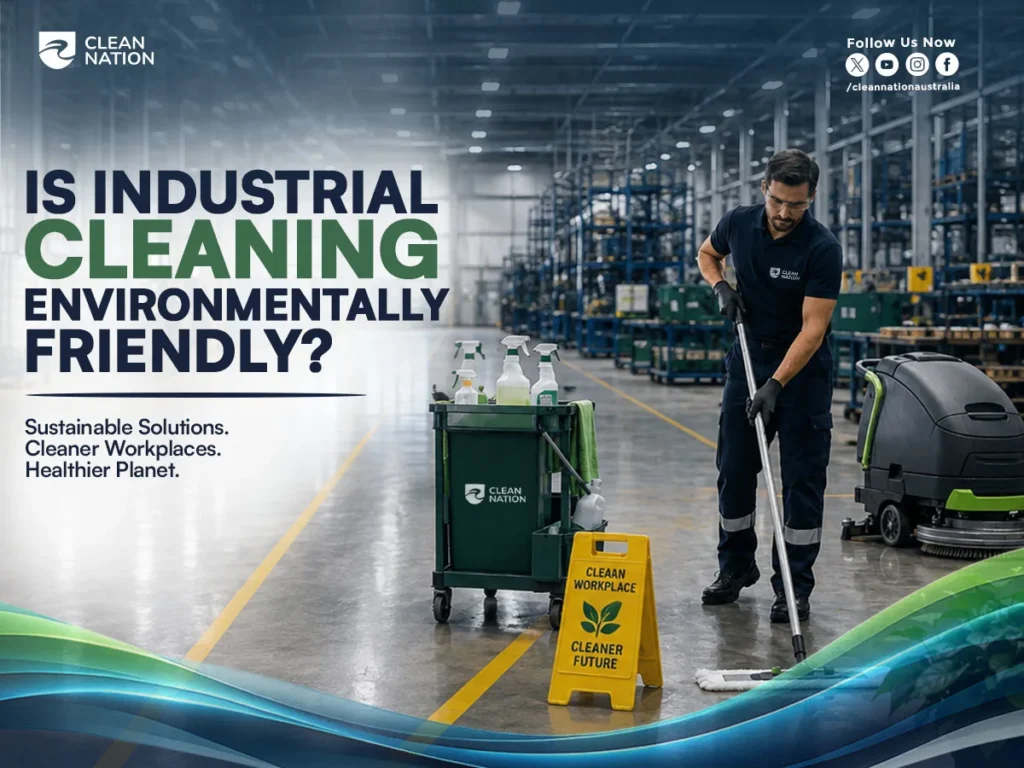
Industrial cleaning can be environmentally friendly, and more facilities are proving it every year. Is industrial cleaning environmentally friendly? It depends on the products and habits a business uses. Traditional methods cause real harm: chemical exposure, water pollution, waste, and carbon emissions, but switching to biodegradable, non-toxic products and water- and energy-efficient equipment closes that gap. Eco-friendly cleaning delivers the same results as traditional cleaning while lowering long-term costs, creating a healthier workplace, and supporting easier regulatory compliance.
Can Industrial Cleaning Be Sustainable?
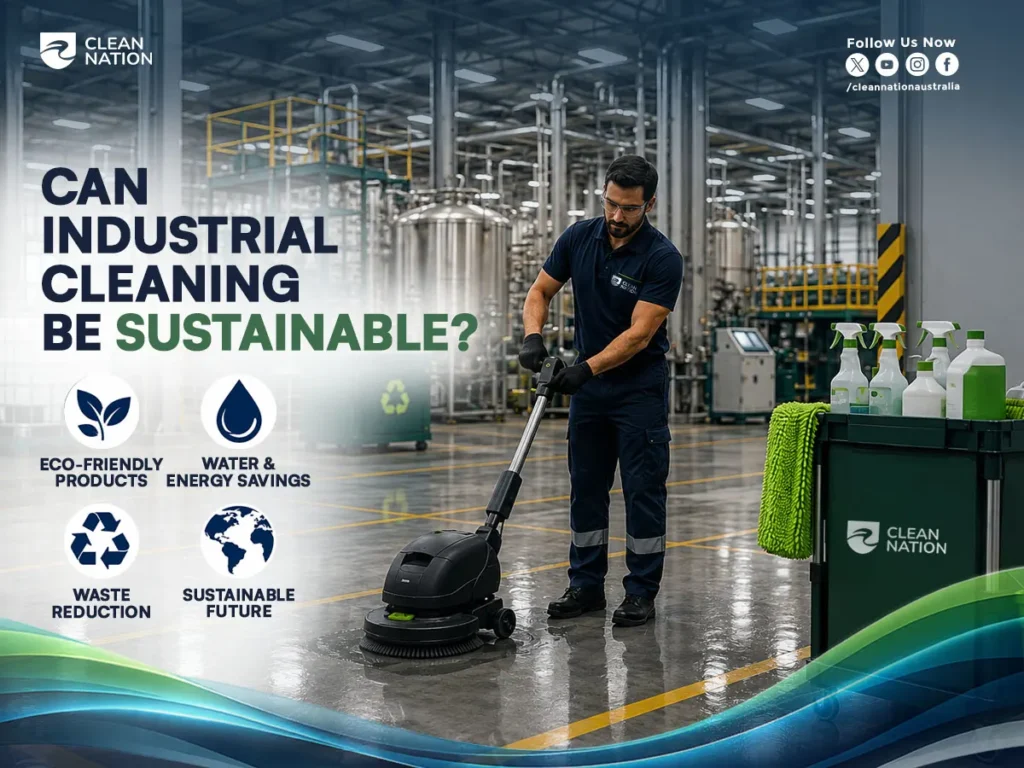
Yes, industrial cleaning can be sustainable. It just needs the right products, equipment, and habits. Businesses offering cleaning services in Australia are increasingly proving this by combining performance with lower environmental impact.
Sustainable cleaning solutions are becoming standard, not optional. More facilities are switching to eco-friendly cleaning because it cuts waste, protects workers, and meets stricter rules.
Three things drive this shift. The products you use matter — biodegradable, non-toxic formulas clean just as well as harsh chemicals. The equipment you run matters too. Water-efficient tools and energy-saving machines lower your footprint. And the habits you build matter most. Green cleaning practices only work when they’re part of a daily routine, not a one-time switch.
Plant managers feel real pressure here. Regulators expect environmental responsibility. Customers expect it too. Workers want fewer harsh chemicals around them every day.
Environmental stewardship isn’t just paperwork. It protects your team and reduces your impact outside the plant walls.
Sustainable business practices also save money. Concentrated products cost less to ship and store. Efficient equipment uses less water and energy. These savings build up over time.
At Clean Nation, sustainability isn’t a marketing label. Our green business initiatives focus on products that perform well and reduce environmental harm together. Facilities don’t have to choose between clean results and lower impact. They can get both.
Environmental Problems Caused by Traditional Industrial Cleaning
Traditional industrial cleaning creates real environmental damage. Here’s how.
Harmful chemicals
- Toxic chemicals and hazardous chemicals are common in traditional cleaners.
- Chemical-based cleaners release VOCs (Volatile Organic Compounds) into the air.
- Chemical exposure puts workers at risk during daily use.
- Hazardous chemical exposure can cause long-term health problems.
- Toxic chemical regulations are getting stricter, pushing plants toward safer options.
- Poor chemical safety practices increase accident risk on the floor.
Water pollution
- Chemical runoff leads to water pollution in nearby streams and groundwater.
- Poor water pollution prevention lets contaminants spread beyond the facility..
- Contaminated water reduces water quality for nearby communities.
- Polluted water harms wildlife and disrupts local ecosystems.
- Chemical runoff threatens biodiversity in nearby habitats.
- Weak pollution control at the facility level makes the problem worse.
- General environmental pollution from cleaning runoff adds up over time.
Waste generation
- High waste generation is common with single-use cleaning products.
- Many cleaners contribute to plastic waste through packaging.
- Some cleaning byproducts count as toxic waste.
- Poor waste disposal practices increase environmental risk.
- Excess packaging waste piles up with every order
- Rising waste disposal costs eat into cleaning budgets.
- Improper hazardous waste disposal can trigger compliance violations.
- Weak waste management systems make tracking and reduction harder
Carbon emissions
- Traditional cleaning adds to a facility’s carbon footprint.
- Energy-heavy equipment increases carbon emissions during operation.
- Chemical production and shipping contribute to air pollution.
- Higher emissions link directly to climate change.
- Without carbon reduction efforts, footprints keep growing.
- Poor air quality inside facilities affects worker health.
- High energy consumption drives up both cost and emissions.
- All of this adds to the facility’s overall environmental impact.
Eco-Friendly Industrial Cleaning Practices Businesses Can Adopt
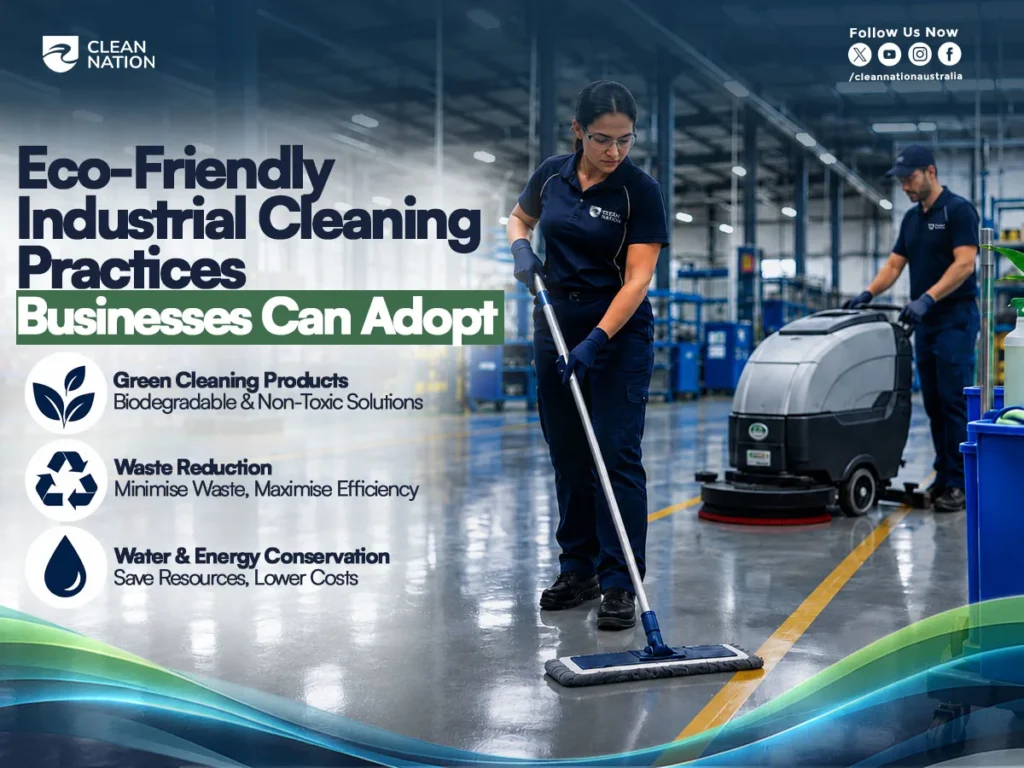
Switching to sustainable cleaning doesn’t require a full overhaul. Small changes across products, equipment, and habits add up fast. Many providers of industrial cleaning services in Australia now build their entire process around these practices.
Green cleaning products
- Biodegradable cleaning products break down safely instead of lingering in the environment.
- Non-toxic cleaning products protect workers from harmful chemical exposure.
- Natural cleaning ingredients replace harsh synthetic chemicals.
- Plant-based cleaners offer strong performance without the toxic load.
- Concentrated cleaning products cut down on shipping and storage waste.
- Chlorine-free cleaning products lower the risk of harmful fumes.
- Phosphate-free cleaners reduce water pollution.
- Biodegradable surfactants clean effectively while breaking down naturally after use.
Sustainable equipment
- Sustainable cleaning equipment lowers both water and energy use. Microfibre cloths and microfibre mops trap more dirt with less product.
- Steam cleaners disinfect surfaces without chemical cleaners. Automated scrubbers improve consistency and cut manual chemical use.
- Energy-efficient cleaning tools reduce power consumption during operation. Refillable dispensers cut down on plastic packaging waste. Low-energy cleaning equipment keeps operational costs down over time.
- You can see how this kind of industrial cleaning equipment works in practice.
Waste reduction
- Waste reduction starts with choosing products designed to last longer.
- Packaging reduction lowers the amount of material sent to landfill.
- Reusable packaging helps replace single-use containers throughout the facility.
- Recyclable packaging gives materials a second life instead of adding to waste.
- Plastic waste reduction targets one of the biggest sources of facility waste.
- Waste minimisation practices cut disposal costs and environmental impact together.
- Sustainable packaging choices support long-term waste goals.
- Reduced packaging waste means fewer disposal fees and less landfill pressure.
Water and energy conservation
- Water conservation starts with equipment built for lower usage.
- Energy efficiency reduces both costs and emissions.
- Water usage reduction protects local water supplies.
- Water-efficient cleaning methods use less without sacrificing results.
- Energy conservation habits lower a facility’s overall footprint.
- Resource conservation covers water, energy, and materials together.
- Reduced water usage cuts utility costs month over month.
- Freight optimisation lowers emissions tied to shipping and delivery.
Is Eco-Friendly Cleaning as Effective as Traditional Cleaning?
Yes, eco-friendly cleaning products perform just as well as traditional ones. Modern formulas are built to match, and often beat, standard cleaning power.
- Cleaning performance has improved a lot in recent years, closing the gap with harsh chemical cleaners.
- Cleaning efficiency depends more on the right process than the type of product.
- High-performance cleaning products now use plant-based ingredients without losing strength.
- Product concentration matters more than people think. A small amount of concentrated cleaner often outperforms a diluted traditional one.
- Cleaning productivity improves when staff use the correct dilution and contact time
- Concentrated formulas cover more surface area per bottle, cutting reapplication time
- Product performance standards from third-party labs confirm eco-friendly cleaners meet industrial requirements.
- Labour-saving cleaning products reduce scrubbing time, which speeds up daily cleaning routines.
Does Eco-Friendly Industrial Cleaning Cost More?
Eco-friendly cleaning can cost more upfront, but it saves money over time. The long-term numbers usually favor the switch.
A simple cost-benefit analysis shows why. The initial investment in green products or equipment is often higher than sticking with traditional chemicals. But long-term cost savings from concentrated formulas, less waste, and fewer health incidents add up fast.
Operational costs drop once eco-friendly practices are in place. Concentrated products need less storage space and lower shipping volumes. Water-efficient equipment cuts utility bills month after month.
Return on Investment (ROI) becomes clear within the first year for most facilities. Lower disposal costs, fewer compliance fines, and reduced sick days all factor into the payback.
Cost optimization works best when you look at lifecycle costs, not just the price tag on the shelf. A cheaper traditional cleaner might cost more once you factor in waste disposal, health claims, and regulatory risk.
A direct cost comparison between traditional and eco-friendly cleaning rarely favors traditional products once you account for the full picture. The sticker price is lower, but the total cost isn’t.
Benefits of Environmentally Friendly Industrial Cleaning
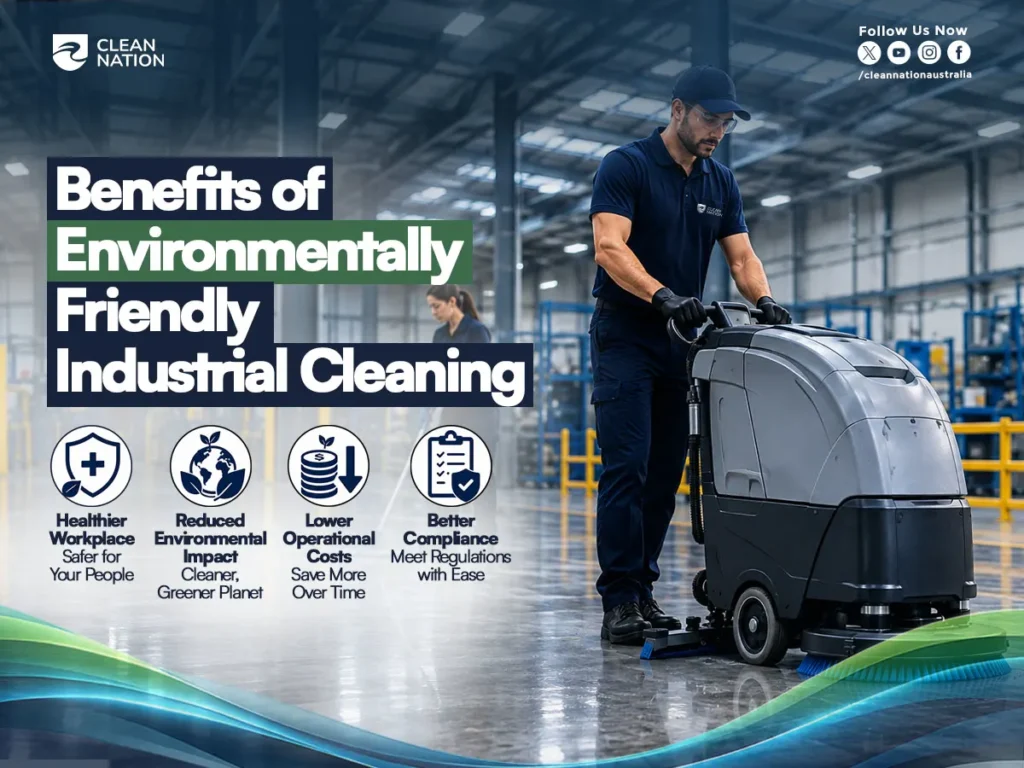
Switching to eco-friendly cleaning pays off in more ways than one. Here’s what businesses gain.
Healthier workplace
A healthier workplace starts with removing harsh chemicals from daily cleaning. Better workplace health means fewer sick days and stronger productivity.
Employee health improves when exposure to toxic fumes drops. Indoor air quality gets better without VOC-heavy cleaners in the air.
Respiratory health benefits directly when chemical fumes are reduced. Skin irritation prevention improves with non-toxic, gentler formulas.
Workplace wellness programs work better when the environment itself supports health. Cases linked to Sick Building Syndrome drop with cleaner indoor air. Overall employee wellbeing rises when the workplace feels safer.
Reduced environmental impact
Reduced environmental impact is one of the clearest wins of switching. Environmental impact reduction starts with better products and smarter processes.
Carbon reduction strategies lower a facility’s footprint over time. Pollution reduction protects nearby water sources and air quality.
Ecosystem protection benefits when harmful runoff and emissions drop. Biodiversity conservation improves when facilities reduce chemical discharge.
Better environmental performance strengthens a company’s public standing. Resource efficiency means using less water, energy, and material for the same results. All of this supports a more sustainable future for the business and its community.
Lower operational costs
Lower operational costs come from concentrated products and efficient equipment. Financial savings build up through reduced shipping, storage, and product use.
Cost reduction happens naturally when waste and rework drop. Cost efficiency improves when fewer products are needed to get the same results.
Health-related savings show up as fewer sick days and lower insurance claims. Waste management savings come from less packaging and safer disposal.
Long-term value beats short-term price differences once you track the full picture. These changes count as a long-term investment, not just an expense.
Better compliance
Better compliance protects the business from fines and legal risk. Regulatory compliance gets easier when products already meet safety standards.
Environmental compliance improves with lower emissions and safer waste handling. Meeting compliance standards becomes routine instead of a scramble.
EPA regulations are easier to satisfy with certified eco-friendly products. OH&S compliance improves when workers face fewer chemical hazards.
Compliance audits go smoother with proper documentation and safer processes. Legal compliance protects the business from costly violations. Regulatory adherence builds trust with clients, regulators, and the community.
How Clean Nation Supports Sustainable Industrial Cleaning
Clean Nation builds sustainability into every part of its cleaning solutions, not just the label. As a trusted industrial cleaning service in Sydney, Clean Nation combines certified products with proven processes.
The Clean Nation Green Cleaning Range uses biodegradable, non-toxic formulas designed for industrial-strength results. These products cut chemical exposure without cutting cleaning power.
The Clean Nation Colour Coded Cleaning System reduces cross-contamination and improves cleaning accuracy across large facilities. It also cuts product waste by making sure the right cleaner gets used in the right area every time.
Clean Nation products carry recognized eco-labels, including GECA certification and Green Seal. These certifications confirm the products meet independent environmental and safety standards, not just marketing claims.
Behind the scenes, Clean Nation runs a sustainable supply chain. That means responsibly sourced ingredients, reduced packaging waste, and efficient freight to lower emissions from delivery.
For businesses across Sydney, and more broadly across industrial cleaning services in New South Wales, Clean Nation offers full commercial cleaning services built around these eco-labelled products. Facilities get consistent results without compromising on environmental goals.
Client experience with Clean Nation
A mid-sized manufacturing facility in Sydney was using traditional chemical cleaners across its production floor. Staff reported frequent skin irritation, and the facility struggled to keep up with tightening environmental compliance requirements.
After switching to the Clean Nation Green Cleaning Range, the facility reported fewer chemical-related health complaints within the first three months. The Colour Coded Cleaning System also helped reduce product misuse, cutting monthly cleaning supply costs by using concentrated formulas more efficiently.
Within a year, the facility passed its environmental compliance audit with no chemical-handling violations, something it had struggled with under its previous cleaning program.
In their client review, the facility manager credited the switch with cutting both health complaints and cleaning costs. This kind of result is common when facilities pair the right products with a structured cleaning system, not just a one-time product swap.
FAQs
How often should industrial facilities schedule eco-friendly cleaning?
Cleaning frequency depends on your industry, but most facilities need daily light cleaning and a deep clean weekly or monthly. High-traffic areas or food and chemical plants often need more frequent attention to stay compliant and safe.
What should a business look for when choosing an eco-friendly cleaning contractor?
Look for certifications like GECA or Green Seal, proof of biodegradable and non-toxic products, and a track record with industrial-scale facilities. Ask for references or case studies showing real compliance and cost results.
Is eco-friendly industrial cleaning legally required?
Not always, but environmental regulations are tightening across Australia. Facilities that adopt eco-friendly cleaning now avoid scrambling to meet future compliance deadlines and reduce the risk of fines.
How is ash or hazardous waste disposed of safely during industrial cleaning?
Hazardous waste, including chemical residue and ash, must go through licensed disposal channels that meet EPA and state regulations. Reputable cleaning providers handle this as part of their service, so facilities don’t manage it in-house.
Can small and mid-sized businesses afford eco-friendly industrial cleaning?
Yes. Concentrated products and efficient equipment lower per-use costs, making eco-friendly cleaning accessible even for smaller operations. Many businesses see savings within the first year through reduced waste and fewer compliance issues.
Conclusion
Industrial cleaning doesn’t have to harm the environment. The right products and habits make sustainability possible without losing cleaning power.
Traditional methods bring real problems: harmful chemicals, water pollution, waste, and emissions. Eco-friendly practices fix these issues while matching, or beating, traditional results, and they save money over time.
Clean Nation makes the switch easy with certified, high-performance products built for real industrial demands.
Ready to cut costs and go green? Contact Clean Nation today.