



5 Signs Your Kitchen Needs a Professional Clean: persistent odours that won’t go away even after cleaning, grease and grime building up on cabinets, walls, or countertops, appliances losing efficiency or taking longer to work properly, visible mould, mildew, or stubborn stains that won’t lift, and a general sense that everyday cleaning just isn’t keeping up anymore. These signs usually mean dirt and grease have built up in hidden spots like drains, behind appliances, and grout lines, areas that regular cleaning can’t reach. A professional deep clean from Clean Nation targets these hidden problem areas directly, restoring a fresh, hygienic kitchen.
1. Persistent Bad Odours That Won’t Go Away
Does your kitchen smell off no matter how much you clean it? That’s usually a sign the odour source isn’t on the surface. It’s hidden somewhere deeper.
Bad kitchen smells that keep coming back are rarely random. A foul odour that lingers, especially a musty smell near the sink, often points to a blocked or dirty drain. Drain odour builds up slowly from oil buildup, food scraps, and food residue that gets trapped inside the pipe. You won’t see it, but you’ll definitely smell it. Our kitchen cleaning services in Australia are built to find and fix exactly this kind of hidden problem.
Hidden Sources of Kitchen Odours
Most kitchens have a few odour traps that don’t show up during a normal clean:
- Kitchen drain and sink blockage – Grease and food particles stick to pipe walls and rot over time.
- Trash bins – Even with a liner, bins collect hidden dirt and bacteria in the seams and lid.
- Blocked drains – Slow-draining water is often the first warning sign of a bigger odour problem.
- Hidden corners – Gaps behind appliances and under cabinets trap grime you can’t reach with a wipe-down.
These unwelcome odours build up gradually. That’s why they often go unnoticed until the smell becomes hard to ignore.
Why Everyday Cleaning Doesn’t Remove Them?
Your regular cleaning routine is built for what you can see. Wiping counters and mopping floors is a surface clean, and it’s important, but it doesn’t reach deep contamination sitting inside drains or behind fixtures.
Standard cleaning routines miss embedded dirt and embedded odours because they’re not designed to go that deep. Grease inside a pipe or grime packed into a hidden area needs more than soap and a sponge.
This is where deep cleaning specialists make the difference. At Clean Nation, we target the hidden areas standard cleaning skips, so you get real kitchen freshness, not just a clean-looking surface. If your kitchen still smells off after cleaning, the problem isn’t your effort. It’s what’s hiding out of sight.
2. Grease and Grime Keep Building Up on Surfaces
Grease doesn’t stay where it lands. It spreads, dries, and turns into a sticky film that’s harder to shift every day you leave it.
Grease and grime buildup is one of the most common kitchen problems and one of the most misunderstood. Cooking oil evaporates into the air and settles on nearby surfaces. Within days, that light film turns into accumulated grease that grabs dust and dirt as it passes by.
Sticky Cabinets, Walls, and Countertops
Check these spots, and you’ll likely find grease before you find dirt:
- Cabinet doors and handles – Touched constantly, so oil from hands mixes with kitchen grease.
- Countertops – Sit close to the stove, so they catch splatters throughout the day.
- Kitchen walls and backsplash – Absorb rising steam and oil, leaving dirt stains that darken over time.
- Fingerprints – Small marks add up fast on greasy surfaces, especially around high-touch areas.
An all-purpose cleaner can handle light marks, but it struggles once grease has had time to set. At that point, you need proper degreasing, not just wiping.
Clogged Range Hood Filters and Exhaust Fans
Your range hood filters work hard, and they show it. Every bit of smoke and oil that leaves your pan gets pulled through the extractor fan, and a lot of it stays behind.
Over time, this creates a clogged filter and a grease-clogged housing inside the unit. That means reduced airflow, more smoke sitting in your kitchen, and a higher fire risk if it’s left too long.
Exhaust fan cleaning and exhaust hood cleaning aren’t jobs most people do often, simply because they’re hard to reach and easy to forget. But a blocked kitchen exhaust puts extra strain on the motor and lets grease drip back onto your stove. Watch a quick look at how our team handles kitchen cleaning like this on the job.
Clean Nation handles full grease removal, from cabinet surfaces down to the extractor fan cleaning most people skip. If your kitchen feels sticky no matter how often you wipe it down, the grease has moved in deeper than you think.
3. Appliances Are Losing Efficiency
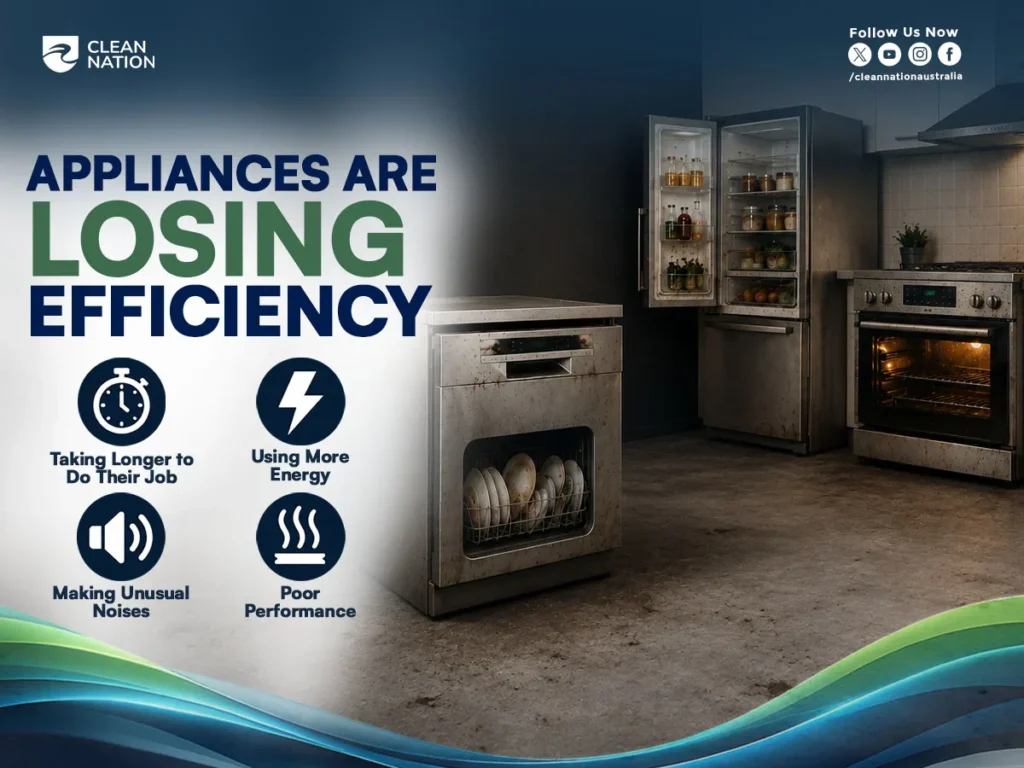
If your oven takes longer to heat up or your fridge seems to run constantly, dirt could be the reason. Dirty appliances have to work harder to do the same job.
Appliance efficiency drops slowly, which is why most people don’t notice until energy bills climb. Grime acts like insulation. It blocks heat, traps cold air, and forces appliances to use more energy just to reach normal performance. Regular appliance maintenance keeps them running at peak efficiency and helps protect appliance lifespan.
Baked-On Grease in Oven and Stovetop
Ovens take the worst of it. Every spill that isn’t cleaned right away turns into baked-on grease the next time you cook.
Here’s what typically builds up:
- Oven cavity – Collects oven grease and food drips that harden with repeated heating.
- Stove burners – Trap carbon buildup that affects flame consistency and heat output.
- Oven door glass – Gets a cloudy film that makes it hard to check on food.
- Stovetop – Holds stains that get baked in a little more with every use.
Without proper oven cleaning, this buildup affects both cooking results and energy consumption. A dirty oven simply takes longer to reach and hold temperature.
Grime Buildup in Microwave, Fridge, and Dishwasher
It’s not just the oven. Grime buildup shows up in almost every appliance you use daily.
- Microwave cleaning – Needed often, since food splatters cook onto the interior walls with every use.
- Refrigerator cleaning – Refrigerator shelves and door bins collect spills that turn sticky and affect airflow.
- Dishwasher cleaning – Prevents residue from clogging spray arms and reducing wash quality.
Small appliances need attention too. Kettles, toasters, and coffee machines all build up grime that affects how well they work.
Clean Nation offers comprehensive appliance cleaning that covers ovens, fridges, microwaves, and the smaller appliances people tend to forget. Clean appliances aren’t just about appearance. They perform better, last longer, and cost less to run.
4. Mould, Stains, or Bacteria Are Visible
Seeing visible mould or mildew in your kitchen is a clear sign it’s time for proper cleaning. This isn’t something to leave for later.
Kitchens are warm and often damp, which makes them a natural home for mould growth and dangerous bacteria. Moist kitchen areas around sinks and appliances create the perfect conditions for hidden bacteria to spread, even in spots that look clean. Left untreated, this becomes a real health hazard for your household.
Common Mould and Bacteria Zones
These are the areas where mould and bacteria show up first:
- Sinks – Constant moisture makes this a hotspot for bacterial growth and damp smells.
- Under cabinets – Poor airflow lets kitchen moisture sit, leading to moisture buildup over time.
- Inside refrigerators – Spills and condensation create damp conditions ideal for mildew growth.
- Grout lines – Porous grout absorbs moisture fast, making it one of the toughest wet areas to keep clean.
If you notice damp smells but can’t see the source, check these spots first. Mildew growth often starts before it becomes visible.
Stains That Won’t Lift With Regular Wiping
Some marks just won’t budge, no matter how much you scrub. Stubborn stains and persistent stains usually mean the mess has soaked into the surface, not just sitting on top of it.
Common culprits include:
- Grease stains – Set into countertops and stovetops after repeated heat exposure.
- Wall stains – Build-up from steam and splatters near cooking areas.
- Tough stains – Often the result of spills left too long before cleaning.
Repeated scrubbing with household products can wear down surfaces without actually lifting the stain. At that point, proper stain removal and stain treatment work better than more elbow grease.
Clean Nation deals with bacteria removal, mould treatment, and difficult stains using methods built for the job, not guesswork. If mould, bacteria, or stubborn marks have shown up in your kitchen, it’s worth getting them handled properly before they spread further.
5. Everyday Cleaning Just Isn’t Cutting It Anymore
If you’re keeping up with standard weekly cleaning but your kitchen still feels dirty, you’ve built up a cleaning backlog. This happens to almost every household eventually. If you want to tighten up your daily routine first, our guide on Kitchen Cleaning Hacks That Actually Save You Time covers the habits that prevent this backlog from forming.
Deferred cleaning adds up quietly. A missed spot here, a skipped corner there. Over months, this turns into cleaning debt, where deep contamination settles into hard-to-reach areas that a quick wipe-down never touches. At some point, no amount of everyday effort closes that gap. You need a proper deep clean, not just more of the same routine.
Dirt Hidden Behind and Under Heavy Appliances
Heavy appliances rarely move, which means the space behind and under them rarely gets cleaned.
Here’s what typically collects there:
- Behind appliances – Dust accumulation builds fast in the gap between the appliance and the wall.
- Under appliances – Food particles and grease slide underneath and sit there unnoticed.
- Hard-to-reach corners – Become dumping grounds for dust buildup and dirt buildup over time.
- Hidden dirt – Goes unnoticed simply because moving a fridge or oven isn’t part of a normal clean.
These missed spots don’t cause problems overnight. But months of dust buildup and food particles left behind can affect air quality and attract pests.
Buildup in Cabinet Corners, Drawers, and Grout Lines
Some areas need a proper look, not just a glance. Cabinet interiors and drawers collect crumbs, spills, and dust in corners you don’t check daily.
Worth paying attention to:
- Grout lines – Trap dirt accumulation between tiles, and grout cleaning is often skipped entirely.
- Drawer inspection – Reveals embedded dirt that builds up under cutlery trays and liners.
- Cabinet inspection – Shows crumbs and residue tucked into back corners and hinges.
- Nook-and-cranny cleaning – Covers the small gaps that standard cleaning tools can’t reach.
This is exactly the kind of work a professional reset handles well. Clean Nation focuses on the deep cleaning tasks most routines skip, from behind your appliances to the grout lines under your feet. If your kitchen needs more than a quick tidy-up, it’s probably time for a proper deep clean.
When Should You Book a Professional Kitchen Clean?
There’s no single answer that fits every household. Kitchen cleaning frequency really depends on how often you cook and how many people use the space.
As a general guide, most kitchens benefit from a professional clean every three to six months. If you cook daily or have a larger household, you’re looking at the shorter end of that range. Frequent kitchen use means grease, food residue, and moisture build up faster, so waiting a full six months might let things get away from you.
Signs You Shouldn’t Wait
Some situations call for immediate deep cleaning, regardless of when your last clean was:
- Persistent odours that don’t go away after normal cleaning
- Visible mould or mildew around sinks, grout, or cabinets
- Reduced airflow from your range hood or exhaust fan
- Appliances that seem to be working harder than usual
- Stains that don’t lift no matter how much you scrub
If any of these show up, it’s worth booking a clean straight away rather than sticking to a set schedule.
Building a Kitchen Cleaning Schedule
A simple approach works best:
- Every 3 months – Ideal for busy households or anyone who cooks most days.
- Every 6 months – Suits smaller households or kitchens that see lighter use.
- Seasonal deep cleaning – A good rhythm to follow if you’d rather tie it to a time of year, like before summer or ahead of winter entertaining.
- Pre-event cleaning – Worth booking before hosting family or guests, so the kitchen is in top shape when it matters.
Setting a regular deep cleaning frequency takes the guesswork out of it. Instead of waiting until something looks or smells off, you stay ahead of the buildup before it becomes a bigger job.
Our kitchen cleaning services in New South Wales can help you find the right schedule for your kitchen, based on how it’s actually used, not just a generic timeline. A bit of planning now saves you from a much bigger clean later.
What Does Professional Kitchen Cleaning Include?
A proper deep clean covers far more ground than a normal wipe-down. Here’s what to expect when a trained technician handles your kitchen.
Professional kitchen cleaning areas typically follow a deep cleaning checklist, so nothing gets missed. Using deep cleaning equipment and specialised cleaning products, the process delivers a complete deep clean rather than a surface pass. The right cleaning techniques make the difference between a quick tidy and a full kitchen detail. Take a look at what professional kitchen cleaning actually looks like in action.
Appliances and Cooking Areas
Appliances get the most attention, since they build up grease and grime the fastest.
- Oven cleaning service – Covers oven racks, heating elements, and baked-on residue inside the cavity.
- Stovetop splatters – Removed from burners and surrounding surfaces, including stubborn cooked-on marks.
- Range hood cleaning – Clears grease from the filter and housing to restore proper airflow.
- Kitchen exhaust cleaning – Addresses ducting and vents that trap smoke and oil over time.
- Comprehensive appliance cleaning – Includes the fridge, microwave, and dishwasher, not just the oven.
An appliance inspection is usually done alongside cleaning, so any issues get flagged early. The result is sparkling appliances that work better and look better.
Cabinets, Countertops, and Fixtures
Cabinets and countertops see daily use, which means daily buildup.
- Cabinet shelves and doors – Wiped down inside and out to clear crumbs, spills, and sticky residue.
- Countertop inspection – Checks for stains, scratches, and grease that’s settled into the surface.
- Sink fixtures and faucets – Cleaned to remove water stains and soap residue, including stainless steel faucets that show marks easily.
- Backsplash – Cleared of splatters and grease that build up behind the stove.
These are the areas people touch constantly, so getting them properly clean makes an immediate difference to how the kitchen looks and feels.
Floors, Grout, and Hard-to-Reach Spots
Your kitchen floor takes a beating, especially around the sink and stove.
- Floor scrubbing – Lifts grime that regular mopping leaves behind, particularly on tile flooring.
- Grout cleaning – Targets dirt trapped between tiles that turns grout lines dark over time.
- Tile cleaning – Restores dull floors by removing built-up residue and stains.
- Hard-to-reach areas – include corners, edges, and the gaps behind appliances that get skipped in daily mopping.
By the end, floors go from dull to properly clean ones, not just recently mopped ones.
Clean Nation’s process is built to leave nothing out, from your oven to your grout lines. If you want to know exactly what’s included before booking, just ask. We’re happy to walk you through it.
Benefits of Professional Kitchen Cleaning
Hiring help for a deep clean isn’t just about a spotless kitchen. It affects your time, your health, and your bottom line.
Time and Effort Savings
A proper deep clean takes hours, sometimes a full day, if you’re doing it yourself. Booking a professional gives you time savings and effort reduction you can’t get any other way.
You skip the scrubbing, the moving of heavy appliances, and the hunt for the right products. That’s real stress reduction, especially if cleaning has been sitting on your to-do list for weeks.
A Healthier, Safer Kitchen
Grease, mould, and bacteria don’t just look bad. They affect your health and well-being over time, especially in a space where you prepare food daily.
Professional cleaning gets you:
- A germ-free kitchen, with bacteria removed from high-touch surfaces and damp areas
- A hygienic kitchen, free from the mould and mildew that build up in hidden corners
- A healthier kitchen overall, with better air quality once grease and dust are cleared from vents and filters
For households with kids or anyone with allergies, this matters more than it might seem.
Better-Performing Appliances
Clean appliances don’t just look better. They work better. Removing built-up grease and grime helps protect appliance lifespan, so your oven, fridge, and dishwasher run efficiently for longer.
That means lower energy use, fewer repairs, and less chance of a breakdown at the worst possible time.
The Result: A Spotless Kitchen
At the end of it, you’re left with a spotless kitchen that’s clean in the ways that actually matter, not just the ones you can see. Clean Nation handles the work so you get the benefits without the hours of scrubbing.
Why Choose Clean Nation for Professional Kitchen Cleaning?
- Deep cleaning specialists – Every professional cleaner is a trained technician who knows exactly where grease, mould, and bacteria hide.
- Modern cleaning equipment – Built for deep cleaning jobs, not basic household tools.
- Eco-friendly products – Thorough cleaning with no harsh chemical residue left behind.
- Flexible cleaning options – One-off deep cleans, seasonal bookings, or a regular schedule that fits your household.
- Reliable professional cleaning team – On time, efficient, and focused on a proper deep clean, not a quick tidy-up.
- Free quote – Get a clear idea of what your kitchen needs before you book.
Clean Nation brings the right team, tools, and approach to every kitchen. If yours needs more than a wipe-down, we’re ready when you are.
Client experience with Clean Nation
A café in Sydney’s inner west called our kitchen cleaning service in Sydney after a musty smell near the sink wouldn’t go away, even with daily cleaning. An exhaust fan had also lost airflow, letting smoke build up during lunch service, and a food safety inspection was coming up.
Our technicians found the real problems once appliances were moved and the drain was inspected:
- Blocked drain – Oil buildup and food scraps had narrowed the pipe, causing the odour
- Grease-clogged range hood filter – Cutting airflow by nearly half
- Grime behind appliances – Dust and food particles never reached by daily cleaning
- Grout lines – Embedded dirt built up despite regular mopping
We cleared the drain, degreased the exhaust system, cleaned behind appliances, and deep-cleaned the grout, all in one day outside trading hours.
Results:
- Odour gone within 24 hours, no return after two weeks
- Airflow restored to normal
- Passed the food safety inspection
- Noticeably fresher kitchen, especially around the sink and stove
Standard cleaning kept the café looking tidy, but the real issues were hiding in places daily cleaning couldn’t reach. A single deep clean fixed what months of regular cleaning couldn’t.
FAQs
How long does a professional kitchen deep clean take?
Most kitchens take between 3 and 6 hours, depending on size and how much buildup there is. Commercial kitchens or larger homes may need a full day.
Do I need to empty my cabinets before the cleaning?
It helps to remove personal items and food from open shelves, but cabinet interiors are cleaned as part of the service, so you don’t need to fully empty every drawer.
Are the cleaning products safe to use around food?
Yes. Clean Nation uses eco-friendly, food-safe products that won’t leave harmful residue on surfaces where meals are prepared.
Can I stay in the kitchen while the cleaning is happening?
You can, but most people prefer to step out, especially during appliance and exhaust cleaning. It’s not required for safety reasons, just for convenience.
What’s the difference between a regular clean and a deep clean?
A regular clean covers visible surfaces like counters and floors. A deep clean goes further, targeting drains, grout, behind appliances, and inside ovens and range hoods- areas regular cleaning skips.
Conclusion
A kitchen that looks clean isn’t always a healthy one. Grease, odours, and grime often build up in places daily cleaning can’t reach.
Clean Nation’s deep cleaning specialists handle it all, from ovens and exhaust fans to grout lines and drains, leaving you with a sparkling, healthier kitchen.
Ready for a fresh, organised kitchen? Get in touch for a free quote today, or read our client reviews to see what other households and businesses across Australia have to say.