

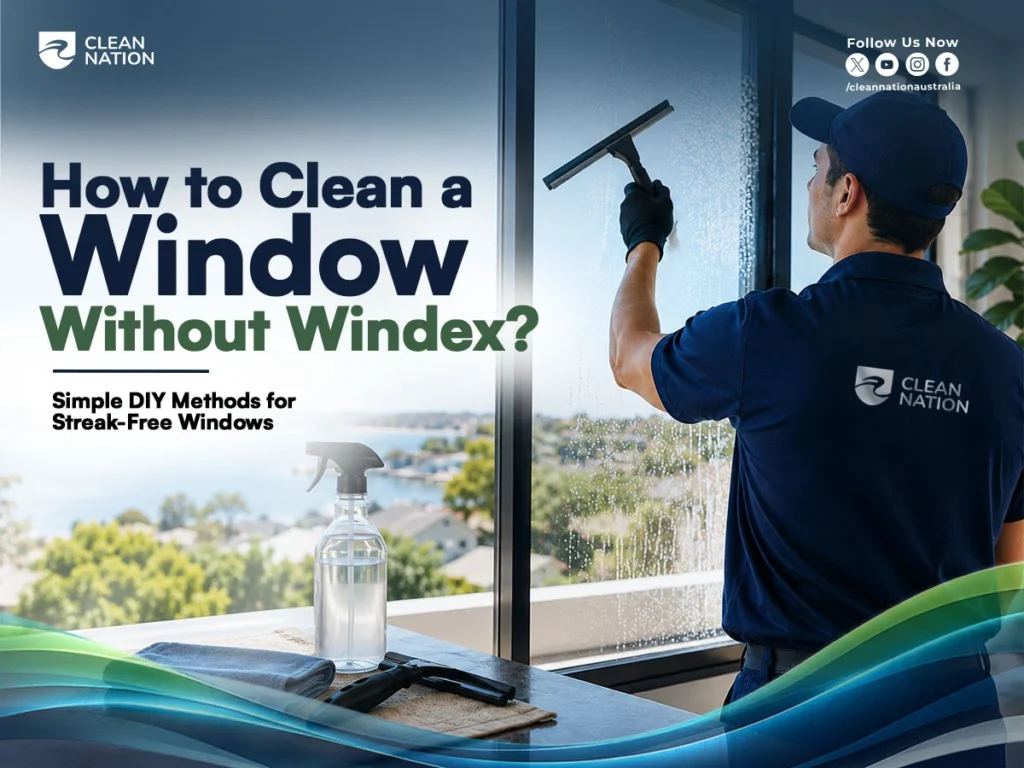
To clean a window without Windex, mix white vinegar or dish soap with warm water, wipe the glass in a top-to-bottom motion with a squeegee or microfiber cloth, then dry the edges to avoid streaks. Clear away dust first, avoid cleaning in direct sunlight, and always dry the squeegee blade between passes for a crystal-clear finish. Once you know how to clean a window without Windex this way, it costs less, skips harsh chemicals, and works just as well for regular home maintenance.
Why Clean Windows Without Windex?
You don’t need Windex to get clean, streak-free windows. Most people switch to alternatives because they want a chemical-free cleaning option that’s safer for their home, cheaper, and just as effective.
The smell and ammonia in Windex bother a lot of people, especially if you’ve got kids or pets around. Avoiding harsh cleaning chemicals just makes sense for a lot of households, and natural cleaning products don’t leave that lingering chemical smell behind.
There’s also a bigger shift happening toward safer homes in general. An environmentally friendly cleaning approach means fewer synthetic chemicals and less packaging waste, and simple swaps like vinegar or dish soap are safe DIY cleaning solutions that get the job done without the trade-off.
Cost matters too. Most DIY cleaning products use stuff you already have in your kitchen, making them some of the more affordable window cleaning methods around. And sometimes it’s simpler than that. You run out of Windex, the store’s closed, or you just want to try something different. Household cleaning doesn’t have to stop just because one product is missing.
At Clean Nation, we hear these reasons often from customers who switch to DIY methods for everyday upkeep, then call us in when they want a deeper, professional-grade result. Both approaches work. It just depends on what you’re trying to achieve. And if you’re on the other side of that relationship, running your own window cleaning business, How to Get Commercial Window Cleaning Contracts? covers how to win that kind of ongoing work.
What Can You Use Instead of Windex?
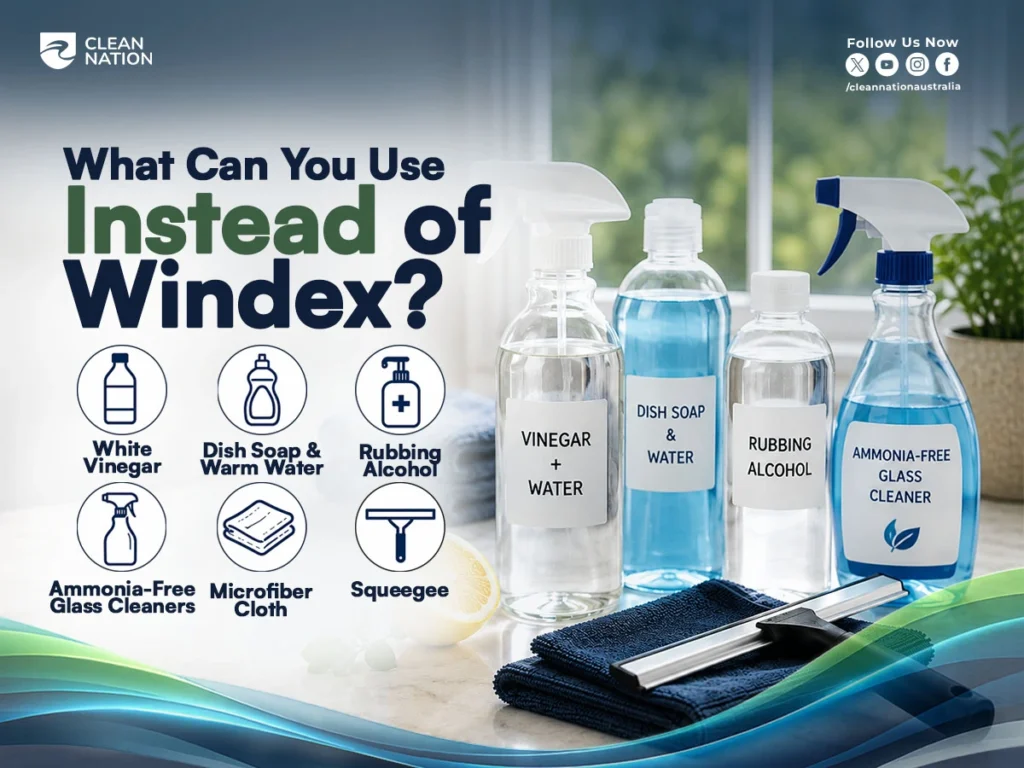
You’ve got a few solid options: white vinegar, dish soap, rubbing alcohol, or a store-bought ammonia-free cleaner. All of these methods can be effective. The best choice depends on the cleaning supplies you have and the amount of dirt on your windows.
Here’s a quick look at each homemade glass cleaning solution and when it makes sense to use it.
White Vinegar and Water
This is the go-to DIY window cleaner for most people, and for good reason. Mix white vinegar with water in a spray bottle, and you’ve got a natural window cleaning recipe that cuts through grime without leaving a chemical smell behind. The acidity in vinegar breaks down dirt, fingerprints, and light grease just as well as most store brands.
One thing to watch for: avoid vinegar on windows with certain tinted or treated coatings, since the acid can affect the finish over time. For regular glass, though, a vinegar window cleaning solution is hard to beat.
Dish Soap and Warm Water
If your windows aren’t too dirty, mild dish soap for windows mixed into warm water is often all you need. A few drops of liquid dish soap in a bucket of warm water makes a gentle, soapy water solution that lifts dirt without scratching the glass.
This dish soap window cleaner method works especially well before you follow up with a squeegee, since it helps loosen grime before you wipe it away.
Rubbing Alcohol Solution
For streaky windows or hard water spots, a rubbing alcohol solution is one of the more effective glass cleaner recipes out there. Alcohol evaporates fast, which helps prevent the streaking you sometimes get with other cleaning solutions. It’s especially good if you’re trying to remove water spots left behind from sprinklers or rain.
Mix it with a bit of water, and you’ve got one of the more reliable, safe DIY cleaning solutions for tougher jobs.
Commercial Ammonia-Free Glass Cleaners
If you’d rather skip the mixing altogether, plenty of store-bought glass cleaners are made without ammonia. These give you the convenience of a ready-to-use product without the smell or residue that comes with traditional glass cleaners.
Look for one labeled ammonia-free glass cleaner, and you’ll get similar results to Windex without the drawbacks. It’s a good middle ground if you want quality window cleaning tools and products without the DIY prep work.
At Clean Nation, we use a mix of these same principles in our professional glass cleaning work, just with professional-grade tools and techniques that get an even sharper finish on a larger scale.
Tools and Materials You’ll Need
Before you start, gather a few basic tools. Nothing fancy here, just the right window cleaning equipment to get a streak-free finish.
- Squeegee – A rubber squeegee is the single best tool for avoiding streaks. It pulls water off the glass cleanly instead of smearing it around.
- Microfibre cloth – Use this for wiping edges and buffing out any leftover moisture. A lint-free cloth won’t leave fibers stuck to the glass.
- Spray bottle – For applying your cleaning solution evenly across the window.
- Bucket – Handy for mixing larger batches of solution or dunking your sponge between wipes.
- Soft bristle brush – Good for loosening dust, cobwebs, and dry dirt before you apply any liquid.
- Extension pole – Makes reaching upper-story or hard-to-reach windows a lot safer and easier.
You likely already have most of these items at home. If not, they’re cheap and easy to find, and once you’ve got them, you’re set for every future clean.
At Clean Nation, our team carries a similar but heavier-duty version of this kit on every job, built for speed and consistency across dozens of windows a day.
How to Clean a Window Without Windex (Step-by-Step)
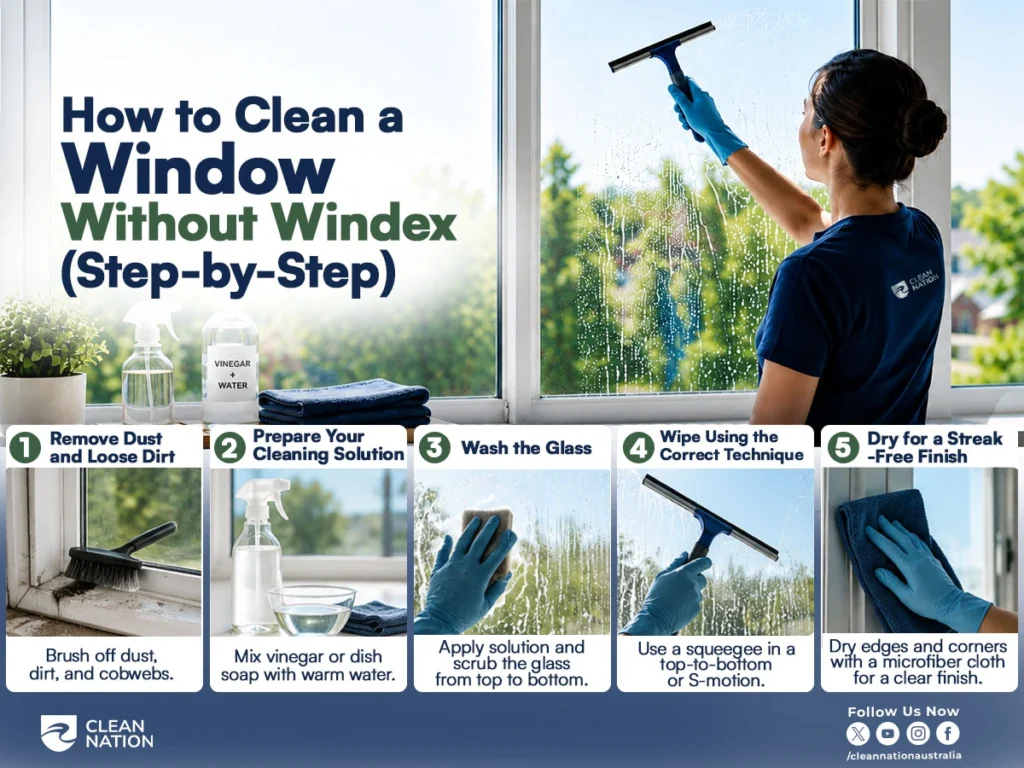
Cleaning a window without Windex takes five simple steps: clear the dust, mix your solution, wash the glass, wipe it correctly, then dry it off. Follow this window cleaning guide in order, and you’ll get a streak-free finish every time.
Step 1 – Remove Dust and Loose Dirt
Before any liquid touches the glass, clean window frames and tracks first. Use your soft bristle brush to knock off dust, cobwebs, and loose grime. This step matters more than people think. If you skip it, that dry dirt turns into mud the second it gets wet, and you’ll just be smearing grime around instead of removing it. A quick brush-down here prevents dust from sticking to the glass later and makes the rest of the process much easier.
Step 2 – Prepare Your Cleaning Solution
Now mix your cleaning solution. If you’re using vinegar, combine it with warm water in your spray bottle. For a dish soap mix, add a few drops of liquid dish soap to a bucket of lukewarm water. Either one makes an effective homemade window cleaning solution that cuts through dirt without leaving residue. Keep the mixture simple. You don’t need a long list of ingredients, just clean water and one active cleaning agent.
Step 3 – Wash the Glass
Apply your cleaning solution evenly across the glass surface using a sponge or soft bristle brush. Always wash windows from top to bottom so dirty water runs down and off the glass instead of dripping back onto areas you’ve already cleaned. If you’re doing multiple windows, rinse your sponge applicator regularly so you’re not just spreading grime from one window to the next.
Step 4 – Wipe Using the Correct Technique
This is where most streaks happen, so it’s worth doing right. Use the S technique with your squeegee, moving in a continuous zig-zag motion from top to bottom, or stick with a straight pull-down technique if you prefer a simpler pass. The key is keeping constant contact with the glass and wiping the squeegee blade dry after every single pass. Skip that step, and you’re just dragging dirty water back across the window.
Step 5 – Dry for a Streak-Free Finish
Finish by drying the window edges and corners thoroughly with a microfiber cloth or lint-free paper towels. This is where you catch any leftover moisture the squeegee missed, especially in the corners and along the frame. A quick buff with a dry cloth is what gives you that final streak-free glass finish.
Follow these five steps, and you’ll get results close to what a professional would deliver. At Clean Nation, this is essentially the same window cleaning technique our team uses on every job, just refined through doing it hundreds of times a week.
Pro Tips to Avoid Streaks (Beyond the Basics)
A few small habits make a big difference when it comes to streak-free windows.
• Avoid cleaning windows in direct sunlight. The heat dries your solution too fast and leaves streaks. Cloudy days or early mornings work better.
• Skip paper towels. They leave lint behind. A microfiber cloth picks up moisture without leaving fibers on the glass.
• Careful with newspaper. It can work, but older ink can transfer onto the glass. Test a small area first.
• Stay consistent. Work top to bottom, wipe your squeegee dry after every pass, and dry the corners well. Small habits like these are what actually improve your results.
At Clean Nation, these are the same small details our crews watch for on every job. It’s usually what separates an okay clean from a spotless one.
Common Mistakes to Avoid When Cleaning Windows Without Windex
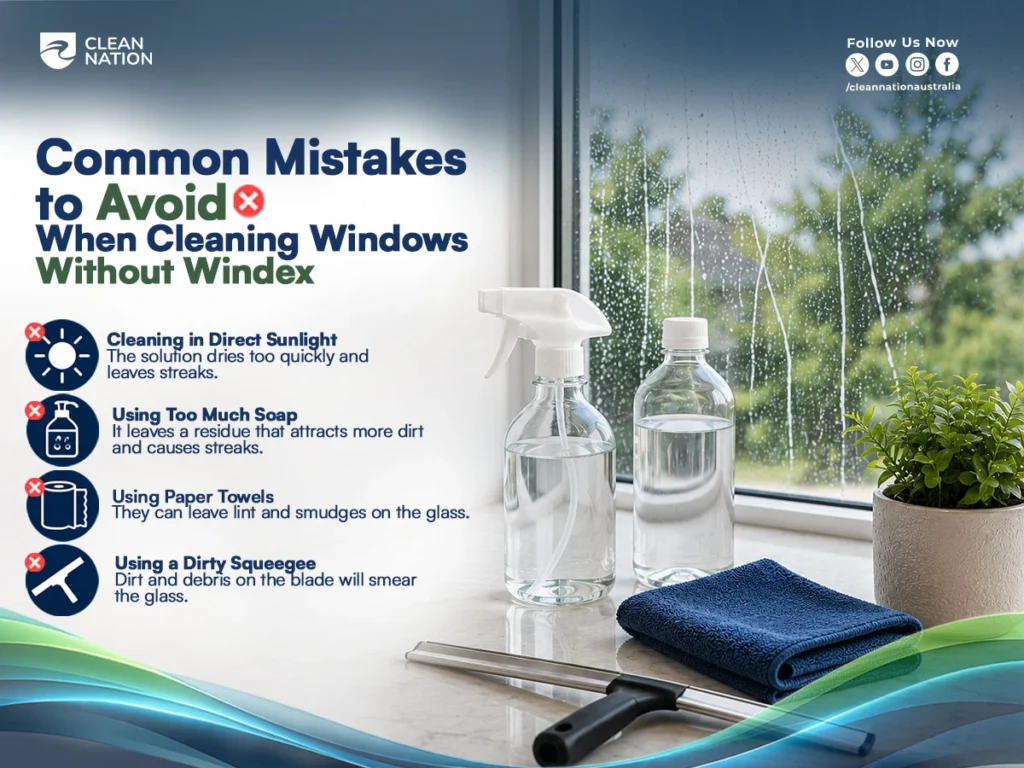
A few mistakes go beyond technique and streaks, things that can actually damage your windows or slow you down over time.
- Using hot water on cold glass, or the other way around, can cause glass stress and lead to cracked windows over time. Stick to lukewarm water to avoid damaging window glass, especially in colder months.
- Reaching for strong household chemicals instead of gentle solutions is another common one. Avoid harsh chemical cleaners like ammonia-heavy sprays or anything not meant for glass; they can damage seals and coatings over time.
- Skipping the frame and tracks before washing the glass is a mistake people make often. Dirt left in the tracks just gets kicked up onto clean glass the next time you open the window.
- Over-spraying your cleaning solution leaves too much liquid on the glass, which takes longer to dry and increases the odds of streaking, no matter how good your wiping technique is. A light, even spray goes further than a heavy one.
- If you’re cleaning windows above ground level, window cleaning safety matters more than people think. Use a stable ladder, don’t overreach, and take your time. It’s the easiest way to reduce the risk of slips and falls while you work.
At Clean Nation, we see these same mistakes often when we’re called in for touch-ups. Most of them are simple to fix once you know what’s causing the problem.
How Often Should You Clean Your Windows?
Most homes should aim for regular window cleaning every 4 to 6 weeks. Homes near busy roads or coastal areas may need it every 2 to 3 weeks instead.
Dust, pollen, and grime build up faster in high-exposure areas, so sticking to a regular cleaning schedule helps keep glass looking clear year-round. For quieter homes, once every couple of months is usually enough to maintain clean glass surfaces.
Regular glass maintenance also does more than keep windows looking good. It helps extend window lifespan, since buildup left too long can wear down glass and seals over time.
A simple home window maintenance tip: clean the outside a bit more often than the inside, since it takes the brunt of weather and pollution. Small, consistent cleanings keep windows cleaner for longer than one big deep clean a few times a year.
At Clean Nation, we tailor cleaning frequency to your home’s location and exposure; it’s one of the easiest ways to simplify routine window maintenance.
When Should You Choose Clean Nation Professional Window Cleaning?
DIY works fine for regular upkeep, but sometimes it’s worth calling in a professional window cleaner. If your windows haven’t been cleaned in months, sit above ground level, or you just don’t have the time, that’s when Clean Nation window cleaning services make sense.
Heavy buildup and hard water stains are tough to shift with a basic vinegar or dish soap mix. Professional window cleaning uses stronger techniques to cut through grime without damaging the glass.
Height and safety matter too. Cleaning upper-story windows with a wobbly ladder isn’t worth the risk. Clean Nation handles both residential window cleaning and commercial window cleaning, so the job gets done safely, no matter the property size.
Clean Nation is one of the trusted names offering window cleaning services in Australia, covering homes and businesses across multiple states.
Whether you’re in Victoria or need window cleaning services in New South Wales, Clean Nation’s teams follow the same reliable process on every job.
And sometimes it’s just about time. If windows keep sliding down your to-do list, reliable window cleaning methods handled by someone else are one less thing to worry about.
If you’re on the fence about booking a professional clean, it helps to know what the actual result looks like. What to Expect After Professional Window Cleaning? walks through what a proper job includes and how long the results typically last.
Clean Nation offers affordable cleaning services built around your schedule, whether that’s a one-off deep clean or a regular plan. If DIY isn’t cutting it anymore, that’s the sign to bring in the pros.
Client Experience with Clean Nation
A homeowner in Melbourne reached out after months of putting off window cleaning. Between weather buildup and a couple of upper-story windows they couldn’t safely reach, it had turned into more than a quick DIY job.
The Clean Nation team came in with proper equipment and handled the full property, inside and out. Since it was a mix of ground-level and second-story windows, they used extension tools instead of a ladder, keeping things safe while still getting a streak-free finish across every window.
The difference was noticeable right away: more natural light, clearer glass, and a job finished in under two hours instead of an entire weekend of DIY effort.
This is one of many jobs our team handles regularly, from Melbourne homes to window cleaning services in Sydney and beyond.
“I kept putting this off because I didn’t want to deal with the ladder. Clean Nation got it all done faster than I expected, and the windows have never looked this clear.” — Melbourne homeowner
FAQs
The following are the FAQs :
Can I clean a window with just water?
Yes, but only for lightly dusty windows. Plain water can rinse off surface dust and light grime, but it won’t cut through grease, fingerprints, or stubborn buildup the way a vinegar or dish soap mix will. For a deeper clean, add a small amount of dish soap or vinegar to your water.
What is the best thing to put in water to clean windows?
White vinegar or a few drops of mild dish soap are the two most effective additions. Vinegar cuts through grease and mineral buildup, while dish soap works well for lighter, everyday dirt. Both mix easily into warm water and rinse clean without leaving residue.
Can you use homemade cleaners on every type of window?
Mostly yes, but tinted, coated, or treated glass needs a bit more caution. Vinegar’s acidity can wear down certain window films or coatings over time, so a mild dish soap and water solution is usually the safer choice for those surfaces. Standard, untreated glass works fine with any of the DIY methods.
Does hard water affect how you clean windows?
Yes, hard water leaves mineral spots that a regular vinegar or dish soap wipe won’t always fully remove. For stubborn hard water marks, let a vinegar solution sit on the spot for a few minutes before wiping, rather than wiping it off right away. This gives the acidity more time to break down the mineral buildup.
Can I use the same cleaning solution for windows and mirrors?
Yes, the same vinegar or dish soap mix works fine on mirrors too. Just use a bit less liquid, since mirrors can show water marks around the edges more easily if the solution pools near the frame.
Final Thoughts
Getting streak-free window cleaning results without Windex isn’t complicated. A bit of vinegar, dish soap, or rubbing alcohol, combined with the right technique, can get you crystal-clear windows just as easily as any store-bought spray.
DIY window cleaning works great for regular upkeep, and once you get the hang of it, it doesn’t take long to simplify window cleaning into a quick, easy routine. Sparkling clean windows do more than just look nice too; they improve home appearance and enhance curb appeal, making the whole property feel brighter and better maintained.
But if you want long-lasting clean windows without the time or effort, that’s where a professional touch helps.
Ready for spotless windows without the hassle? Get in touch with Clean Nation today for a free quote.