

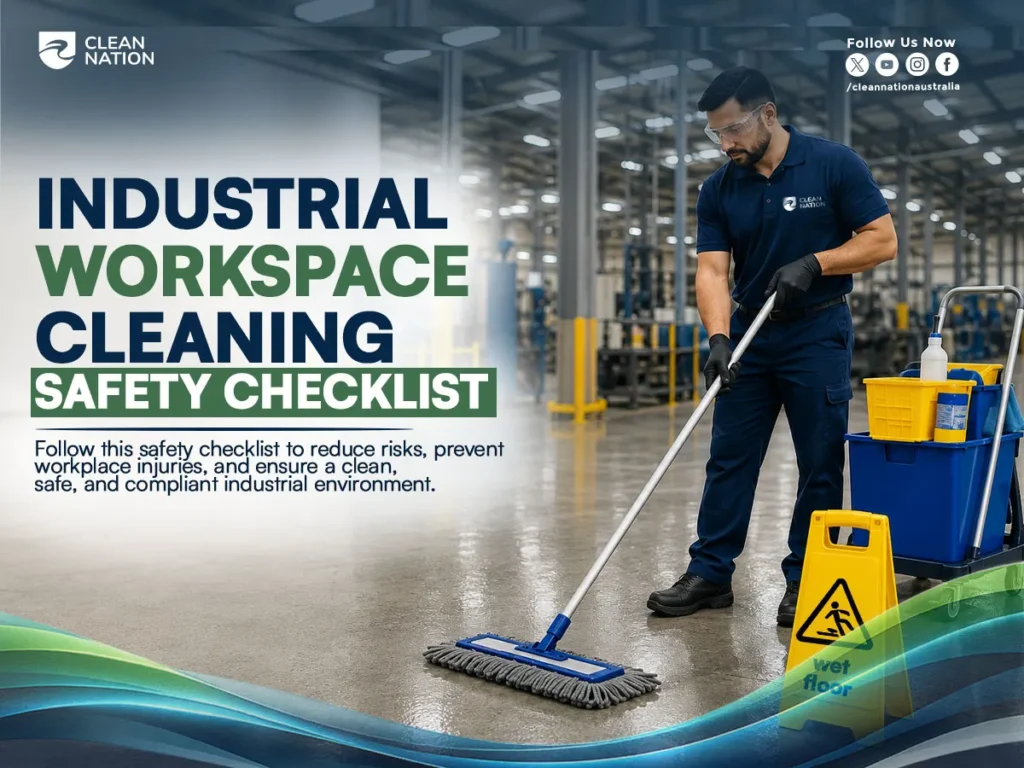
An Industrial Workspace Cleaning Safety Checklist is a step-by-step guide that helps businesses prevent workplace accidents, meet Australian WHS requirements, and maintain a safe, clean, and compliant industrial facility.
This checklist covers pre-shift inspections, PPE, chemical safety, equipment checks, floor safety, manual handling, hazard control, emergency procedures, and end-of-shift inspections to protect workers and improve operational efficiency. At Clean Nation, we follow these best practices to deliver safe, reliable, and WHS-compliant industrial cleaning services.
Why Is Industrial Cleaning Safety Important?
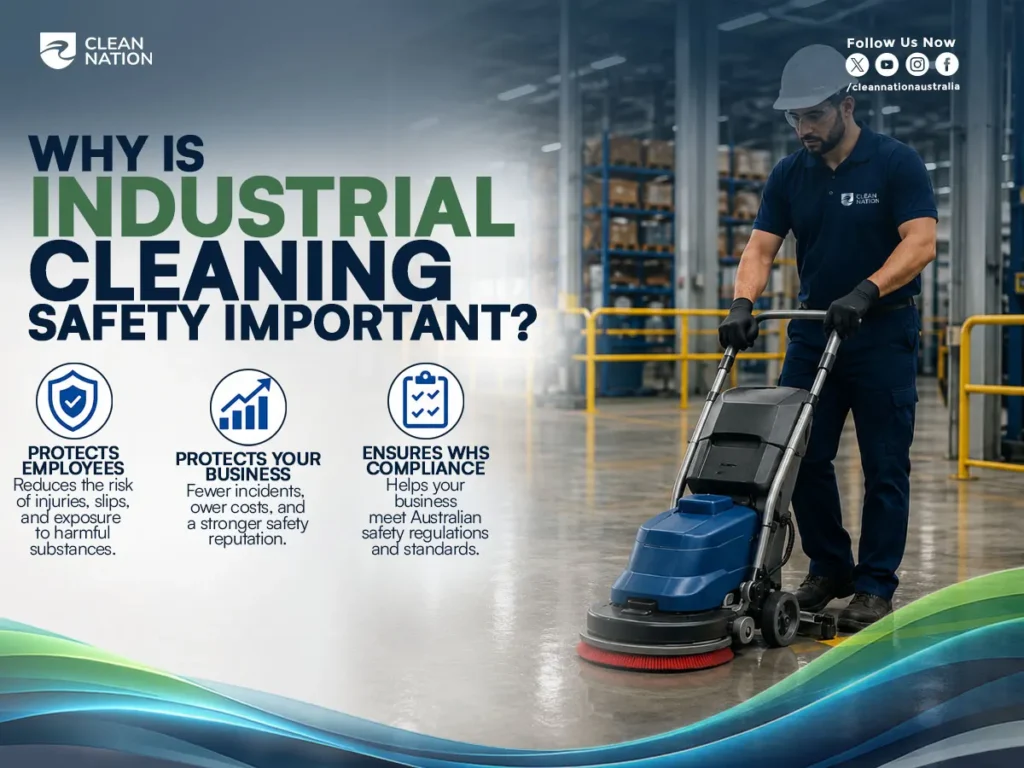
Professional industrial cleaning is essential for protecting employees, reducing workplace hazards, and keeping industrial environments safe and productive. Grease, dust, chemical spills, and wet floors can quickly cause accidents if they are not managed correctly.
Following safe work practices helps minimise chemical exposure, prevent injuries, and support WHS compliance. A clean workplace also improves productivity, reduces downtime, and creates a healthier environment for everyone on site. For a closer look at how cleaning ties into workplace hygiene specifically, see our guide on What Is the Main Role of Cleaning in Factory Hygiene?
At Clean Nation, we deliver industrial cleaning services in Australia that prioritise safety, compliance, and high-quality results for businesses across a wide range of industries.
Pre-Shift Industrial Cleaning Safety Checklist
A thorough pre-shift safety preparation helps prevent accidents, protects your team, and ensures every industrial cleaning shift starts safely. Before cleaning begins, carry out a site assessment, complete your safety preparation checklist, and confirm the cleaning zone is safe to enter. Proper cleaning shift preparation and a clear hazard identification checklist are essential for cleaning staff safety and efficient operations.
Inspect the Work Area and Identify Hazards
Start with a site safety assessment to identify any potential risks. Look for workplace hazards such as spills and leaks, uneven surfaces, poor lighting, or hazardous material incidents. Check for operating machinery, moving forklifts, and separate active work areas from inactive zones before cleaning begins. Good hazard identification reduces risks and keeps everyone safe.
Review Workplace Safety Requirements
Before starting work, review the site’s workplace safety checklist and site WHS plan. Make sure all required safety permits, permit to work, and isolation certificates are in place where needed. Follow all isolation procedures, understand any operational restrictions, and check the required safety documentation to ensure compliance with the WHS compliance framework.
Check Personal Protective Equipment (PPE)
Complete a PPE inspection before every shift. Wear the correct safety footwear, including steel-capped footwear or slip-resistant footwear, along with a high-visibility vest, safety glasses, chemical-resistant gloves, ear protection, and P2 rating respirators where required. The right PPE helps protect workers from chemical, physical, and environmental hazards.
Inspect Cleaning Equipment and Tools
Perform an industrial cleaning equipment check before use. Inspect floor scrubbers, industrial vacuums, pressure washers, wet vacuums, and other cleaning machines for damage or faults. Check all electrical equipment, complete routine equipment maintenance checks, and remove any damaged equipment from service immediately to ensure safe and reliable operation.
Industrial Cleaning Chemical Safety Checklist
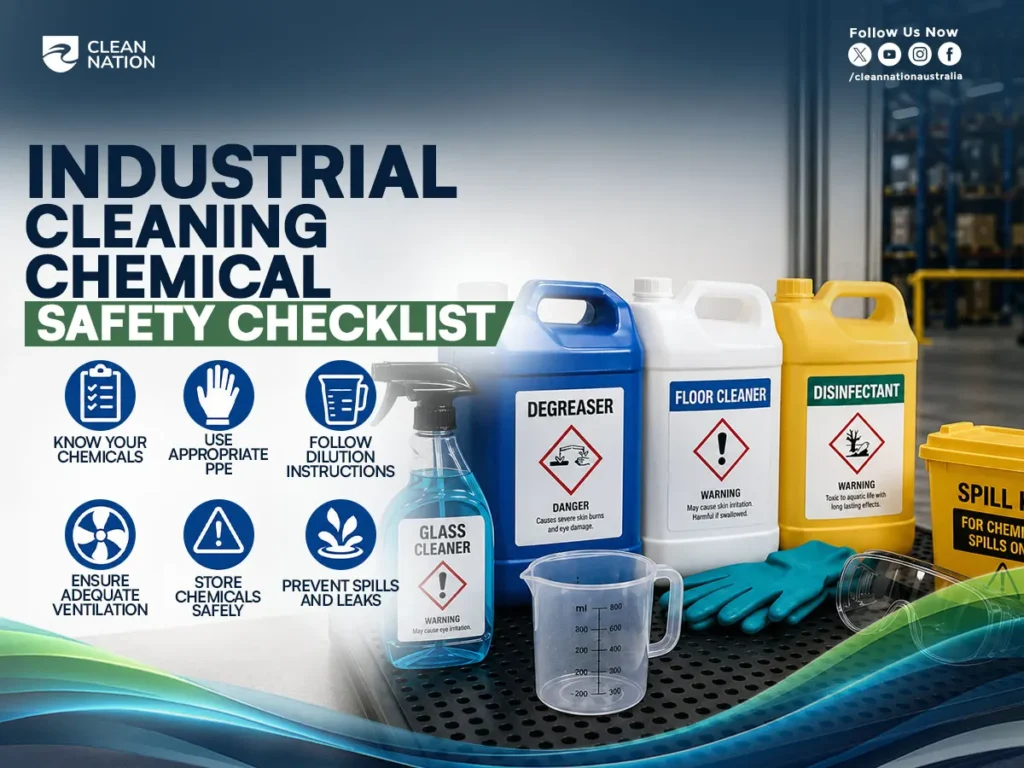
Proper chemical safety is essential for protecting workers, preventing accidents, and meeting Australian chemical storage compliance requirements. Every workplace should follow a clear chemical safety checklist that covers chemical handling procedures, safe chemical storage, hazardous material management, and the safe use of hazardous chemicals. At Clean Nation, we follow strict chemical safety procedures on every industrial cleaning project.
Read Safety Data Sheets (SDS)
Before using any cleaning chemical, read the relevant Safety Data Sheets (SDS). Ensure SDS compliance by checking chemical identification labels, maintaining current safety documentation, and meeting SDS documentation requirements. Keep an up-to-date hazardous chemical register and chemical inventory so workers have access to important hazard communication and chemical risk controls.
Store and Label Chemicals Correctly
Always keep chemicals in original labelled containers or clearly marked secondary chemical containers. Store products in designated chemical storage areas and separate incompatible chemicals, including acid and base separation and proper oxidiser storage. Keep flammable chemical storage in ventilated chemical storage areas and secure chemicals in locked storage areas when required.
Follow Chemical Dilution and Handling Procedures
Use the correct chemical dilution safety methods and follow approved chemical mixing procedures. Only use calibrated dispensing equipment, and ensure trained cleaning personnel carry out chemical application. Following safe handling practices, regular worker chemical training, chemical exposure prevention, and checking chemical compatibility all help reduce workplace risks.
Manage Chemical Spills Safely
Every workplace should have a chemical spill response plan. Follow spill response plans, use spill containment procedures, and keep fully stocked chemical spill kits and spill kits easily accessible. Follow emergency procedures, safely manage contaminated materials, maintain environmental compliance, and implement appropriate hazard control measures to minimise risks.
Dispose of Chemical Waste Properly
Dispose of chemicals using approved chemical waste disposal and chemical disposal procedures. Handle spent cleaning solutions, contaminated rinsate, and other hazardous materials responsibly as part of your waste management process. Follow the Environmental Protection Act, meet all environmental protection requirements, and store waste and dangerous goods safely until disposal.
Equipment and Machinery Safety Checklist
Using machinery and equipment safely is essential to prevent injuries, reduce downtime, and keep industrial cleaning operations running smoothly. Regular equipment inspections, a clear machinery safety checklist, and proper equipment maintenance procedures help ensure all powered cleaning equipment is safe to use. At Clean Nation, we prioritise equipment isolation, machine guarding, preventive maintenance, and trained equipment operators on every job.
Follow Safe Equipment Operating Procedures
Always follow safe operating procedures and the manufacturer’s instructions before using any cleaning equipment. Complete pre-start inspections, ensure operators have the required equipment training, and provide proper equipment supervision where needed. Meeting operator competency and operator training requirements helps ensure cleaning machinery and mechanical aids are used safely and correctly.
Use Lockout/Tagout Procedures When Required
Before servicing or repairing equipment, follow the correct disengaging procedures and equipment isolation process. Use machine guarding and hazardous parts protection to prevent accidental contact with moving components. Following safe maintenance practices, proper equipment servicing, electrical isolation, high-risk work procedures, and safety permit systems helps protect workers and ensures maintenance is completed safely.
Floor and Surface Cleaning Safety Checklist
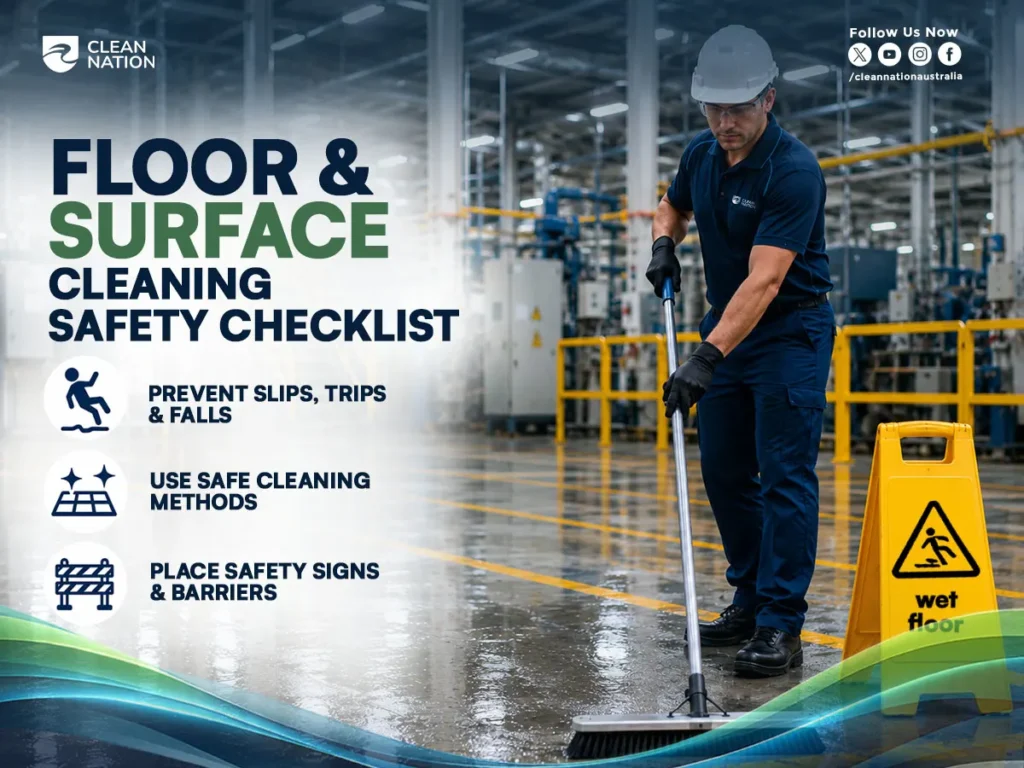
Safe floor cleaning is essential for preventing accidents and maintaining clean industrial floors. A proper floor safety checklist helps reduce the risk of injuries through effective slip and fall prevention, safe industrial floor cleaning, and regular floor maintenance safety. At Clean Nation, we follow proven slip hazard control methods to keep every industrial surface cleaning job safe, efficient, and compliant, with a strong focus on wet floor safety.
Prevent Slips, Trips and Falls
Slips, trips, and falls are among the most common workplace accidents. Reduce risks through effective slip hazard prevention and trip hazard control by removing trip hazards, cleaning wet surfaces quickly, and keeping contaminated floors free from grease, oil, and debris. Repair damaged flooring where needed and maintain even floor surfaces with good floor grip to improve workplace safety.
Use Warning Signs and Safety Barriers
Always place wet floor signage before cleaning begins. Use barricades, guard railings, and toe boards to keep people away from hazardous areas. Ensure adequate workplace lighting, clearly marked ramps and steps, and maintain pedestrian safety by separating foot traffic from vehicles. Where forklifts are operating, follow vehicle traffic control and forklift traffic management procedures to reduce collision risks.
Use Suitable Cleaning Methods for Different Surfaces
Different surfaces require different cleaning methods. Use the correct approach for high-gloss floors, polished concrete floors, concrete floors, and slip-resistant surfaces to avoid damage and maintain safety. Use the proper squeegee assembly, pressure washing techniques, keep drains clear, protect floor coatings, and complete the floor drying process before reopening the area to foot or vehicle traffic.
Manual Handling Safety During Industrial Cleaning
Safe manual handling practices are essential for reducing manual handling risks, preventing injuries, and protecting workers during industrial cleaning. Following ergonomic workplace practices, using safe lifting techniques, and avoiding unnecessary physical strain help support musculoskeletal injury prevention. At Clean Nation, we prioritise safe work methods to reduce worker fatigue and ensure safe heavy load handling.
Use Correct Lifting Techniques
Always use safe lifting techniques when moving equipment or supplies. Maintain a comfortable working posture, keep good wrist alignment, correct shoulder position, and proper forearm position while lifting. Avoid awkward positions, reduce forceful movements, and change your body posture variation regularly to minimise the impact of repetitive tasks.
Move Heavy Equipment Safely
Use mechanical assistance equipment whenever possible to move heavy items. Trolleys, hoists, and other powered equipment make heavy equipment cleaning safer and reduce the risk of injury. Follow the site’s materials handling schedule, apply materials handling safety procedures, and keep equipment supply lines clear to prevent accidents.
Prevent Strain and Repetitive Injuries
Reduce the risk of injury by limiting repetitive movements and following repetitive movement prevention strategies. Support musculoskeletal injury prevention by managing workplace vibration exposure, using appropriate vibration protection, taking regular rest breaks, and monitoring worker fatigue. Safe handling of manual tasks, combined with ergonomic workplace practices and regular health monitoring, helps keep workers healthy and productive.
Common Industrial Cleaning Hazards and Controls
Industrial cleaning involves a range of workplace hazards that can affect worker safety if not managed properly. A thorough hazard identification process, regular industrial hazard assessment, and effective workplace hazard control help reduce risks and support occupational health and safety (OHS). At Clean Nation, we follow a comprehensive hazard prevention checklist, apply proven hazard prevention strategies, and implement appropriate risk control measures to minimise physical hazards on every job.
Electrical Hazards
Electrical equipment should always be checked before use to reduce electrical risks. Carry out regular electrical safety inspections, look for electrical damage, and inspect cords and plugs for wear. Remove damaged plugs and cords from service immediately, ensure safety switch testing is up to date, and have repairs completed by a competent electrician to maintain electrical safety and effective electrical hazard management.
Dust and Air Quality Risks
Industrial cleaning can create dust and air quality risks, especially in warehouses and manufacturing facilities. Use effective dust control, dust extraction systems, and dust collection systems to reduce dust exposure and improve airborne particle control. Where required, workers should wear appropriate respiratory protection to support respiratory health management and safe industrial dust management.
Sharp Objects and Biological Hazards
Workers should stay alert for sharp objects and biological hazards during cleaning. Follow sharps injury prevention procedures when handling discarded needles, broken glass, or contaminated waste. Use approved sharps disposal methods and follow infection control procedures when dealing with blood exposure or body fluids to reduce health risks.
Heat Stress Risks
Cleaning in hot industrial environments can increase the risk of heat stress. Effective heat stress prevention includes recognising heat stress symptoms, following heat exposure management procedures, and taking extra care around heat-generating equipment. Workers should stay hydrated with cool drinking water, take breaks in shaded rest areas, and use appropriate workplace climate control measures wherever possible.
High-Risk Industrial Cleaning Safety Procedures
Some high-risk cleaning environments require extra planning, training, and safety controls. High-risk cleaning tasks and high-risk work activities often involve working at heights, confined spaces, or operating specialised equipment. At Clean Nation, we follow strict high-risk work procedures, use approved industrial access equipment, and implement effective fall prevention measures to minimise height-related risks and ensure safe operations. Where applicable, we also comply with safety requirements for high-risk construction work and high-level cleaning safety.
Working at Heights Safety
When performing work at height, workers must follow approved work at height safety procedures. Extra care is needed when cleaning high racking, mezzanine floors, and elevated storage areas. Only use suitable access equipment such as ladders, mobile scaffolding, Elevated Work Platforms (EWP), or scissor lifts, and always inspect equipment before use to reduce the risk of falls.
Confined Space Cleaning Safety
Cleaning confined spaces should only be carried out by trained personnel following approved confined space entry procedures. A valid confined space entry permit should be obtained before work begins. Conduct atmospheric testing to check oxygen levels, identify flammable gases, and detect toxic substances. A standby person must remain outside the confined space, and emergency retrieval equipment should always be available in case of an emergency.
Emergency Response and Incident Reporting Checklist
A fast and organised response can reduce injuries, minimise damage, and improve workplace safety. Every industrial site should have clear emergency response planning, documented emergency response procedures, and an effective system for incident reporting and near-miss reporting. At Clean Nation, we encourage prompt workplace hazard reporting, complete WHS observation forms, maintain accurate incident logs, and follow safety observation procedures and emergency evacuation procedures on every job.
First Aid Procedures
Every workplace should have accessible first aid kits stocked with essential first aid supplies. Follow approved first aid procedures, ensure trained first aid personnel are available, and seek immediate medical care using the correct medical attention procedures when needed. Quick injury response, ongoing first aid compliance, and reliable workplace medical support help protect workers during emergencies.
Reporting Accidents and Workplace Hazards
All accidents, injuries, hazards, and near misses should be reported immediately. Keep accurate injury records, complete incident reporting and near-miss reporting, and follow workplace hazard reporting and safety observation procedures. Maintaining detailed cleaning records, carrying out safety verification, and obtaining supervisor approval help support incident prevention and continuous workplace safety improvements.
End-of-Shift Industrial Cleaning Safety Checklist
A proper end-of-shift routine helps keep the workplace safe, organised, and ready for the next team. Following end-of-shift cleaning procedures, completing workplace inspections, documenting any site condition changes, and confirming operational readiness are essential. At Clean Nation, every job ends with a final area inspection, accurate cleaning documentation, completed sign-off procedures, and supervisor verification fields where required.
Clean and Store Equipment
Clean all equipment before storing it to prevent contamination and extend its lifespan. Carry out basic equipment maintenance, inspect for equipment deterioration, and store tools in designated tool storage areas. Follow fuel and charging requirements, protect cleaning machinery, and keep machine exteriors clean to ensure reliable equipment storage and equipment protection.
Secure Chemicals and Waste
Return all chemicals to approved chemical storage areas and keep them in locked storage areas where required. Dispose of chemical waste, contaminated materials, and other hazardous materials using approved chemical disposal procedures. Ensure waste bins are emptied safely, maintain spill containment areas, and follow chemical storage compliance requirements.
Inspect the Area After Cleaning
Complete a final area inspection to confirm the site is clean, safe, and ready for use. Perform workplace inspections, check for any site condition changes, and complete safety verification using the facility inspection checklist. Carry out a cleaning quality evaluation, follow cleaning audit procedures, confirm operational readiness, and ensure all dry egress routes are clear and safe.
Report Remaining Safety Issues
Report any unresolved hazards before leaving the site. Follow safety observation procedures, complete workplace hazard reporting, and update hazard logs, incident logs, and safety documentation. Maintain accurate cleaning records, notify the supervising manager, and support complaint resolution and performance monitoring to improve future cleaning operations.
WHS Requirements for Industrial Cleaning in Australia
Industrial cleaning businesses must comply with Australian Work Health and Safety (WHS) legislation to protect workers, visitors, and the public. This includes following WHS regulations, completing risk assessments, maintaining Safety Data Sheets (SDS), and implementing safe work procedures.
At Clean Nation, our industrial cleaning services in New South Wales are carried out in accordance with Australian WHS requirements, helping businesses maintain safe, compliant, and efficient workplaces.
Risk Assessments
Every industrial cleaning job should begin with a workplace risk assessment. A thorough industrial cleaning risk assessment helps with hazard identification, task evaluation, and selecting the right risk management procedures. Additional assessments, such as a confined space risk assessment, may be required for high-risk tasks. Following proper risk assessment procedures helps prevent workplace incidents before work begins.
Safe Work Method Statements (SWMS)
A Safe Work Method Statement (SWMS) is required for certain high-risk construction work and other high-risk activities. It should be supported by the site WHS plan, relevant WHS documentation, and other safety documentation requirements. Where applicable, include work at height safety requirements, confined space entry training, the contractor induction process, and clear safety planning before work starts.
Safety Data Sheets (SDS)
All hazardous cleaning chemicals must have up-to-date Safety Data Sheets (SDS). Maintaining SDS compliance, a current hazardous chemical register, accurate chemical identification labels, and a complete chemical inventory helps workers understand chemical risk controls and hazard communication requirements. Businesses should also meet all SDS documentation requirements and keep current safety documentation readily available.
Cleaning Contractor Responsibilities
An industrial cleaning contractor has important legal and safety obligations. Cleaning contractor WHS responsibilities include protecting workers, clients, and visitors through effective contractor safety management. PCBU has a duty of care to ensure that contractors and subcontractors, and cleaning workers, can perform their duties safely. Meeting regulatory compliance, fulfilling health and safety duties, and understanding all legal responsibilities are essential for maintaining a safe and compliant workplace.
Why Choose Clean Nation for Industrial Cleaning
Clean Nation provides reliable industrial cleaning services in Australia for warehouses, factories, manufacturing plants, and other high-risk workplaces. Our experienced team follows strict WHS procedures, uses commercial-grade equipment, and delivers consistent, high-quality cleaning results.
Whether you need ongoing maintenance or a one-off project, our trained professionals are committed to keeping your workplace safe, compliant, and operating efficiently.
Our Clean Nation industrial cleaning teams are fully trained, use commercial-grade equipment, complete regular industrial cleaning equipment checks, and follow all WHS compliance standards. Whether it’s a warehouse, factory, manufacturing plant, or another high-risk cleaning environment, we provide consistent, high-quality results with a strong focus on safety and operational efficiency.
If you manage a warehouse, read our guide on How Often Should Warehouses Be Professionally Cleaned? to learn the ideal cleaning schedule for maintaining safety, compliance, and operational efficiency.
Client Experience with Clean Nation
A Sydney-based manufacturing facility partnered with Clean Nation after experiencing inconsistent cleaning standards from another provider. Following a detailed site assessment, we implemented a customised cleaning plan with regular inspections, WHS-compliant procedures, and ongoing quality reporting.
Within weeks, the client noticed cleaner production areas, fewer workplace hazards, and improved operational efficiency. It’s one of the many reasons businesses continue to choose our industrial cleaning service in Sydney for reliable, professional results.
Client Review
“Clean Nation has been reliable from day one. Their team is professional, follows all safety procedures, and consistently delivers a high standard of cleaning. Communication is excellent, and we always know the job has been completed properly. We highly recommend their industrial cleaning services.”
Read more client reviews to see why businesses across Sydney trust Clean Nation for safe, reliable, and professional industrial cleaning services.
FAQs
How often should an industrial cleaning safety checklist be reviewed or updated?
At minimum, review it every 6-12 months, or sooner if there’s a change in equipment, chemicals, site layout, or after any incident. A checklist that hasn’t been updated in years often misses new hazards or outdated procedures, so it’s worth treating it as a living document rather than a one-off setup.
Who is responsible for making sure the checklist is actually followed on-site?
It’s usually a shared responsibility. The site supervisor or team leader signs off on checks being completed, but every individual worker is responsible for their own PPE, equipment inspections, and the immediate area before starting. Under WHS law, the PCBU (person conducting a business or undertaking) carries overall accountability for making sure the system works, not just exists on paper.
What should a worker do if they find a hazard but a supervisor isn’t around to report it to?
Don’t wait. If it’s something that can be safely isolated (like putting up a wet floor sign or barricading a spill), do that immediately, then log it and notify the supervisor as soon as they’re reachable. If it’s a serious hazard, such as exposed electrical wiring or a chemical leak, stop work in that area and escalate straight away rather than continuing until someone senior is available.
How long do industrial cleaning businesses need to keep safety records and checklists?
In Australia, WHS records like incident reports, SDS documentation, and inspection checklists are generally recommended to be kept for at least 5 years, though some hazardous chemical exposure records may need to be kept longer (sometimes decades) due to potential long-term health effects. It’s worth checking state-specific WHS regulator guidance since retention periods can vary slightly.
Do all cleaning staff need full WHS training, or just supervisors and senior staff?
Everyone on the floor needs a working level of WHS training, not just supervisors. Frontline cleaning staff are the ones actually exposed to chemicals, machinery, and physical hazards day to day, so they need to know how to read an SDS, use PPE correctly, and recognise when to stop and report something. Supervisors typically need additional training on top of that, covering things like risk assessments, incident investigation, and sign-off procedures.
Conclusion
Industrial cleaning safety is essential for protecting workers, maintaining WHS compliance, and keeping your facility running efficiently. By following the right safety procedures, using proper equipment, and managing workplace hazards, businesses can reduce risks and create a safer working environment.
Looking for a cleaning service in Australia? Contact Clean Nation today for a free quote and discover how our professional industrial cleaning solutions can support your business.