

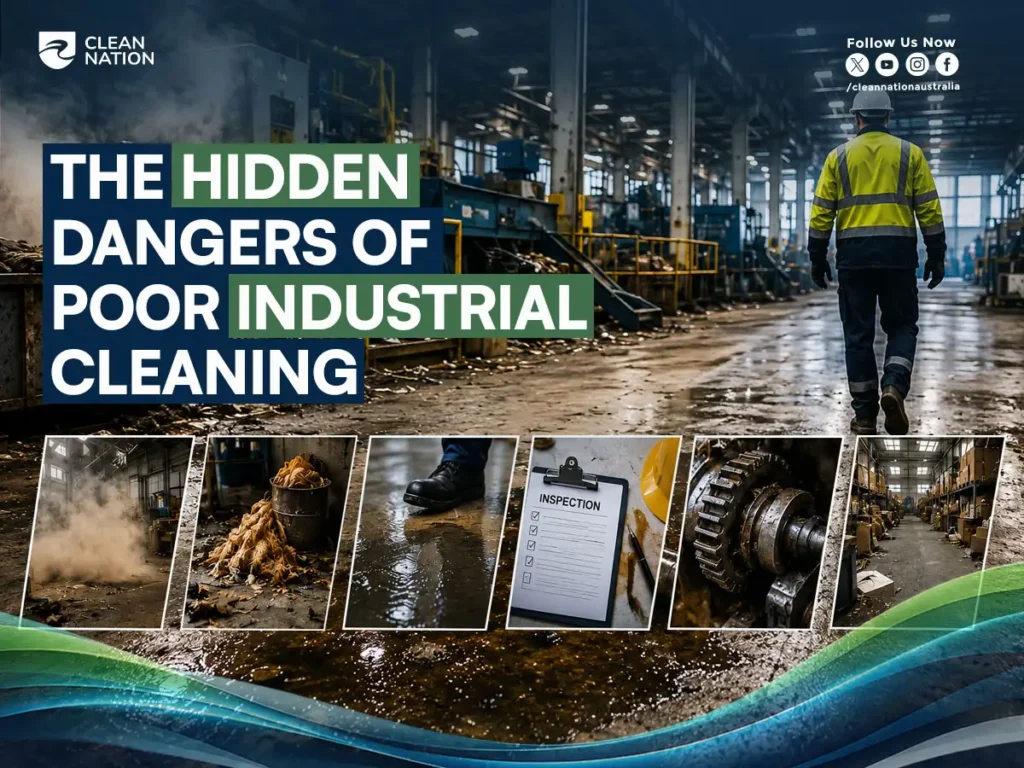
Poor industrial cleaning creates far more risk than a messy site suggests, and that’s really what makes the hidden dangers of poor industrial cleaning so easy to overlook until something goes wrong. Silica dust and airborne particles threaten workers’ lungs and can lead to silicosis; built-up sawdust and chemical residues create fire hazards; spills and blocked walkways cause slips and falls, and dust accumulation wears down machinery and drives up repair costs. On top of that, neglected cleaning standards can breach WHS compliance and Safe Work Australia regulations, lower employee productivity and morale, and expose staff to bacteria, allergens, and other hygiene-related health risks. The fix is a proper cleaning system: a regular schedule, the right industrial equipment like HEPA filtration and floor scrubbers, and trained staff following safe cleaning practices, which is exactly what Clean Nation delivers through our industrial cleaning services in Australia to keep workplaces safe, compliant, and running efficiently.
Airborne Dust and Respiratory Health Risks
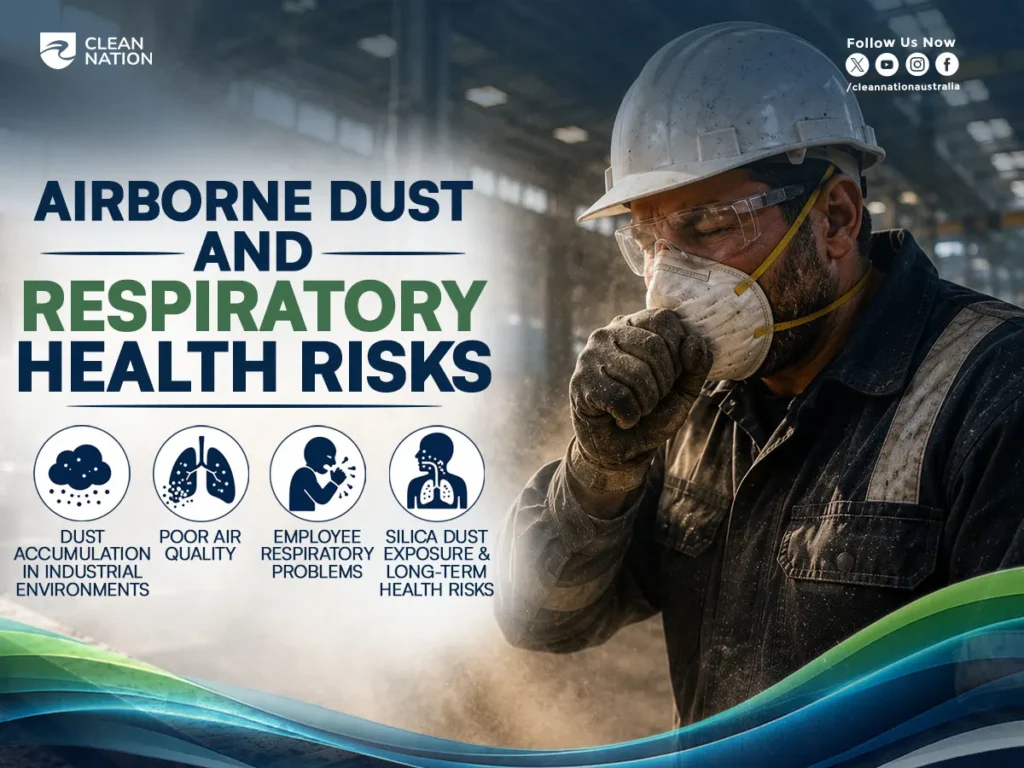
If you work around construction, cutting, or grinding, chances are you’ve breathed in more dust than you realised. The real danger comes from fine silica particles. They’re so small you can’t see or feel them, but they settle deep in your lungs and stay there.
This is how silicosis develops. It’s a serious lung disease caused by silica dust exposure, and it’s becoming more common across Australian workplaces. The worst part is you often don’t notice the damage until years later.
Dust accumulation makes things worse. It builds up on surfaces, gets stirred back into the air, and adds to ongoing airborne dust hazards. In enclosed or poorly ventilated spaces, this leads to poor air quality that puts everyone on site at risk.
At Clean Nation, we focus on respiratory health protection by stopping dust before it spreads. Our HEPA filtration systems capture airborne particles at the source, keeping the air cleaner and safer to breathe.
Protecting your lungs shouldn’t be an afterthought. It should be part of how every job gets done.
Fire Hazards Caused by Debris Build-Up
Most workplace fires don’t start with something dramatic. They start with the stuff nobody bothered to clean up. Sawdust piling up in a corner, metal shavings left near machinery, chemical residues soaked into rags or surfaces. On their own, they seem harmless. Together, they’re a fire waiting for a spark.
These flammable materials are everywhere in industrial settings, and that’s exactly the problem. Industrial debris buildup happens gradually, day after day, until it reaches a point where even a small heat source or stray spark can set things off. That’s how workplace fire risks quietly grow in the background while everyone focuses on getting the job done.
Fire hazard prevention isn’t complicated, but it does need to be consistent. It means regular hazardous waste removal, proper storage of anything combustible, and not letting debris pile up “just for now.” Because in most workplaces, “just for now” turns into weeks.
At Clean Nation, we help businesses stay ahead of this with reliable flammable material removal, clearing out sawdust, shavings, and chemical residues before they become a liability. A cleaner site isn’t just tidier. It’s safer, and it’s one less thing to worry about.
Slip, Trip, and Fall Accidents
Some of the most common workplace injuries have nothing to do with heavy machinery or dangerous tools. They happen because someone stepped on a wet patch of floor or tripped over something that shouldn’t have been there in the first place.
Oil spills are a classic culprit. Left unnoticed, even a small patch turns a walkway into a hazard. Combine that with floor contamination from dust, grease, or general workplace mess, and you get slippery floors that catch people off guard, especially when they’re focused on the task at hand rather than watching their feet.
Then there are trip hazards. Cables running across walkways, tools left on the ground, boxes stacked where people need to walk. Blocked walkways and general walkway obstruction might seem like small inconveniences, but they’re one of the leading causes of workplace injuries across Australia.
Slip and fall prevention comes down to two things: keeping floors clean and keeping pathways clear. That means dealing with wet floor hazards as soon as they appear, not after someone’s already gone down. In high-traffic or high-risk areas, slip-resistant flooring adds another layer of protection, but it works best alongside good housekeeping, not instead of it.
At Clean Nation, we help keep workplaces clear, dry, and safe to move through, because most accidents like these are completely preventable with the right routine in place.
Equipment Damage and Hidden Financial Costs
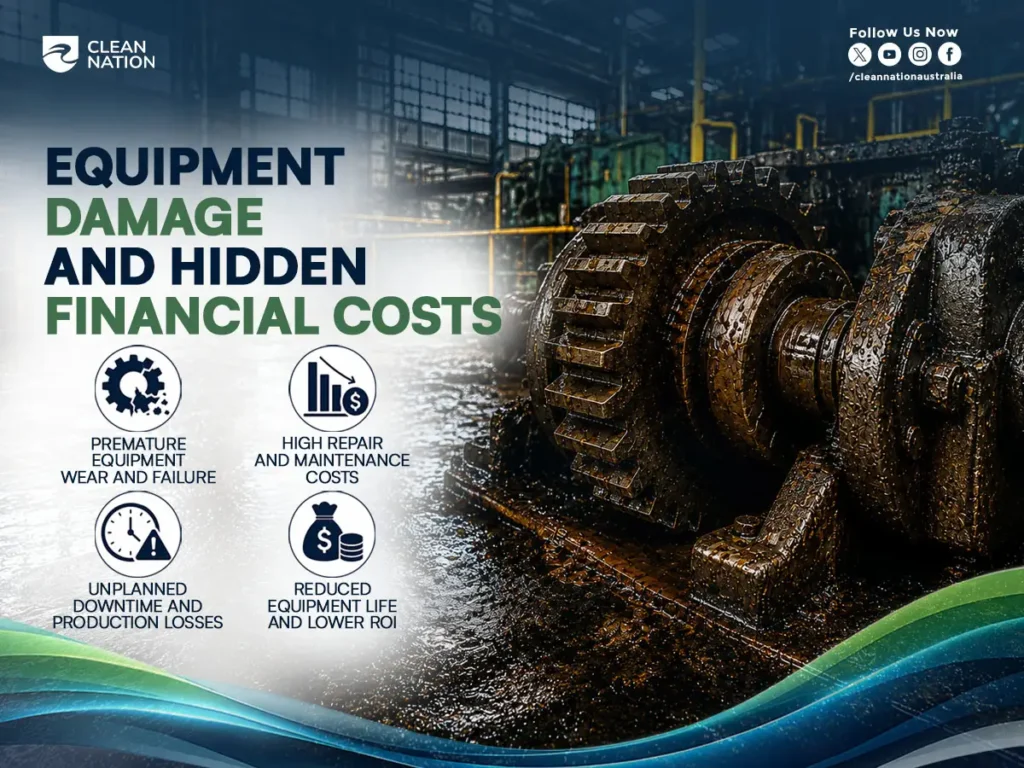
Dust and debris don’t just affect the people on site. They quietly work away at your equipment too, and the costs of that often fly under the radar until something breaks down at the worst possible time.
Take conveyor belts and machinery, for example. Dust builds up in places you can’t easily see, jamming components, clogging vents, and putting extra strain on moving parts. Over time, this leads to premature wear that shortens equipment lifespan well before it should. What could’ve lasted years starts needing repairs after months.
This is how mechanical failures sneak up on businesses. It’s rarely one big issue. It’s dust accumulating in the background until a machine that was running fine suddenly isn’t. And when equipment breakdowns happen unexpectedly, they don’t just cost money to fix. They cost time, and costly downtime has a way of throwing off entire schedules and workflows.
Repair expenses add up fast too, especially when the same issues keep repeating because the root cause, built-up dust and debris, never actually gets addressed.
The fix is simpler than most businesses expect. Regular cleaning reduces strain on machinery, supports reduced downtime, and helps equipment run the way it’s meant to for longer. At Clean Nation, we help businesses protect their equipment before small issues turn into expensive ones through consistent, industrial cleaning.
Compliance Risks and Costly Penalties
Keeping a workplace clean isn’t just good practice. In Australia, it’s the law. Under WHS compliance requirements, businesses have a legal duty to manage risks like dust, debris, and workplace hazards, and Safe Work Australia takes this seriously.
The problem is, compliance breaches often build up the same way physical hazards do, gradually, and without anyone really noticing until it’s too late. A build-up of dust in the wrong area, a walkway that’s been blocked for weeks, hazardous waste that hasn’t been dealt with properly. None of it looks urgent day to day, but it all falls under occupational safety requirements that businesses are expected to meet.
Compliance audits don’t wait for convenient timing. Failed inspections can happen when you least expect them, and the consequences go beyond a slap on the wrist. Regulatory compliance failures can lead to serious fines and legal consequences, not to mention the disruption of dealing with legal penalties on top of everyday operations.
The real cost isn’t just financial either. It’s reputation, it’s trust, and it’s the risk of something worse happening down the line if hazards keep getting overlooked.
Staying on top of cleanliness and hazard control is one of the simplest ways to stay ahead of compliance issues before they become a problem. At Clean Nation, we help businesses maintain the standards Safe Work Australia expects, so audits and inspections are something you’re prepared for, not worried about.
Reduced Employee Productivity and Workplace Efficiency
A messy, dust-filled workplace doesn’t just create safety risks. It slows everything down, and most businesses don’t realise how much until they see what a clean site actually does for output.
Think about it. When walkways are blocked, machinery is running below par, or the air quality makes people take more breaks than usual, workplace productivity takes a hit without anyone flagging it as the cause. It’s rarely one big disruption. It’s small delays that add up, wasted working hours here and there that quietly chip away at the day.
Lost productivity isn’t always about people working slower either. Sometimes it’s equipment underperforming because of dust and debris, or time spent working around hazards instead of just getting the job done. Either way, it affects operational efficiency across the board.
There’s also the human side of it. Employee morale drops in environments that feel neglected or unsafe. People notice when a workplace isn’t looked after, and it shows in how they show up to work each day.
On the flip side, a clean, well-maintained site supports improved workflow naturally. Tasks move faster, machinery runs the way it should, and people aren’t losing time navigating around hazards. That adds up to real gains in operational performance over time.
At Clean Nation, we help businesses create that kind of environment, one where cleanliness supports the work instead of getting in the way of it.
Poor Workplace Hygiene and Employee Health Risks
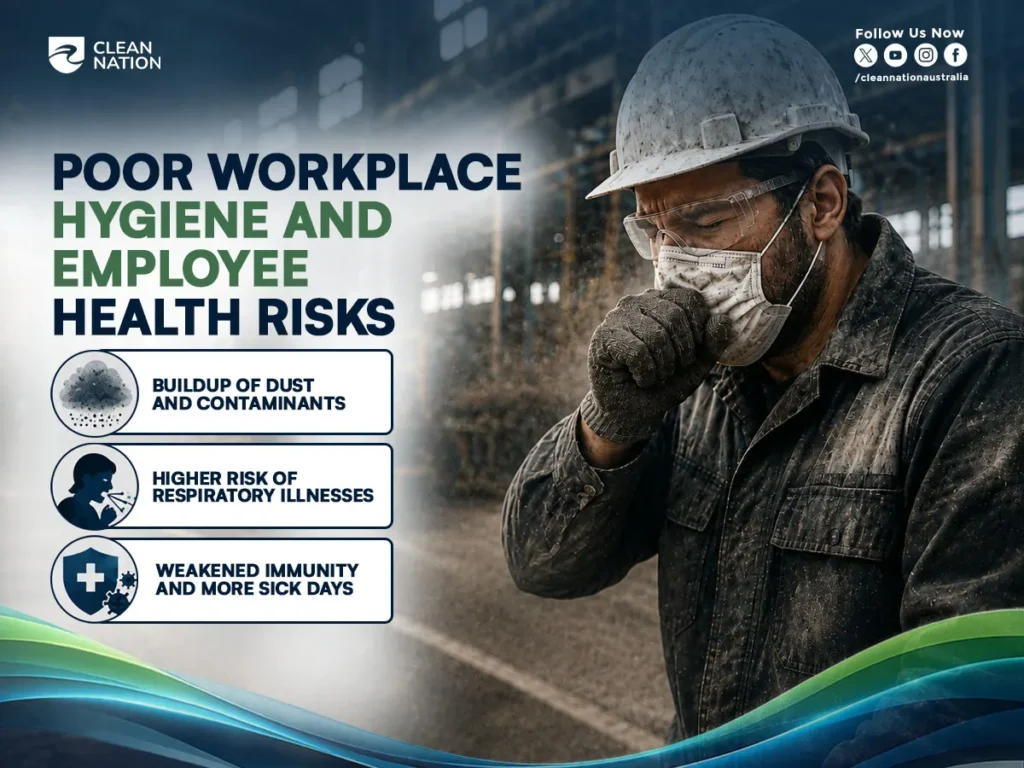
Dust and debris aren’t just a mess to deal with. They create the perfect conditions for things you really don’t want building up in a workplace: bacteria, pathogens, and allergens that can affect people long before anyone realises what’s going on.
Surface contamination is often where it starts. Shared equipment, break rooms, and high-touch areas can carry a lot more than dirt if they’re not cleaned properly and regularly. Add in poor indoor air quality, especially in enclosed spaces, and you’ve got the right environment for bacterial growth to take hold and spread.
For employees with allergies or sensitivities, this isn’t a minor inconvenience. Ongoing exposure to allergens and airborne contaminants can lead to real workplace health risks, from constant headaches and fatigue to more serious respiratory issues over time. It affects people differently, but it affects everyone eventually.
This is why contaminant control and understanding the main role of cleaning in factory hygiene matter just as much as visible cleanliness. A workplace can look tidy on the surface and still carry hidden risks that impact employee wellbeing day after day.
At Clean Nation, we look beyond what’s visible. Our approach focuses on genuine hygiene, not just appearances, so the air people breathe and the surfaces they touch actually support their health, not work against it.
How to Prevent the Dangers of Poor Industrial Cleaning?
Most of the risks we’ve covered aren’t complicated to fix. They just need a proper system behind them instead of being handled whenever there’s time. Here’s what actually makes a difference.
Create a Regular Cleaning Schedule
Cleaning that happens “when someone gets around to it” is how dust, debris, and hazards build up in the first place. A proper regular cleaning schedule takes the guesswork out of it.
That means having daily cleaning routines for high-traffic areas and end-of-shift cleaning to stop mess from carrying over into the next day. On top of that, weekly maintenance cleaning covers the spots that don’t need attention every single day but still can’t be ignored.
Then there’s periodic deep cleaning, the kind that gets into the areas regular routines miss. Combined, these routine cleaning procedures shift cleaning from reactive to preventative maintenance, which is exactly where it should be. Many businesses find that scheduled cleaning services take this off their plate entirely, so it happens consistently without relying on staff to remember.
Use Proper Industrial Cleaning Equipment
The right equipment makes a bigger difference than most people expect. Industrial sweepers and floor scrubbers handle debris and grime far more effectively than manual methods, especially across large spaces.
For sites dealing with fine dust, HEPA filtration systems are essential. They capture airborne particles that regular cleaning can’t touch. Dust suppression skirts help stop dust from spreading in the first place, while squeegee systems and spill management tools deal with liquids before they turn into a slip hazard.
Newer options like robotic industrial scrubbers are also changing the game, handling large areas consistently without cutting corners. If you want to see where this technology is headed, check out our piece on The Role of Robots in Industrial Cleaning. Investing in this kind of advanced cleaning equipment isn’t just about doing the job faster. It’s about doing it properly.
Train Cleaning Staff on Safe Cleaning Practices
Even the best equipment and schedule fall short without the right people behind them. Trained cleaning staff know how to handle situations that untrained staff might miss or mishandle.
This includes proper chemical handling, since the wrong combination or technique can create new hazards instead of solving existing ones. It also covers correct equipment handling, so machinery is used safely and doesn’t cause damage or injury.
Following clear workplace safety procedures and cleaning safety protocols keeps everyone on the same page, rather than relying on guesswork. Where possible, working with certified cleaning professionals adds another layer of confidence, knowing the job is being done to a proper standard, not just a passable one.
At Clean Nation, this is exactly how we approach every site. A solid schedule, the right equipment, and a team that knows what they’re doing.
Why Choose Clean Nation for Industrial Cleaning?
There’s a lot that goes into keeping a workplace genuinely safe and clean, and it’s not something you want to leave to guesswork or a rushed job every now and then. That’s where Clean Nation’s industrial cleaning services in Australia come in.
We’re not a one-size-fits-all service. Every site is different, which is why we build industry-specific cleaning schedules around how your workplace actually operates, not a generic checklist. Whether it’s daily upkeep or periodic deep cleans, the plan fits the risks your business actually faces. If you’re based in Sydney, our industrial cleaning service in Sydney team knows the local compliance landscape inside out, and businesses across the state can rely on our industrial cleaning services in New South Wales for the same standard of service…
Everything we do follows WHS-aligned cleaning processes, which means you’re not just getting a cleaner site. You’re staying ahead of compliance requirements too, without having to manage that separately.
At the end of the day, businesses choose Clean Nation because they want a trusted cleaning partner, not just another contractor. We aim to be that affordable cleaning service in Australia you don’t have to think twice about, so you can focus on running your business while we take care of the rest.
Client experience with Clean Nation
A metal fabrication facility in Australia was facing ongoing issues caused by poor cleaning practices… The facility introduced a structured industrial cleaning program with support from Clean Nation’s industrial cleaning services in Australia. The plan included scheduled floor cleaning, HEPA filtration for airborne dust control, safe removal of industrial debris, and regular cleaning of high-risk areas. While the workplace appeared functional, the hidden risks were increasing every day.
Workers reported more dust exposure during cutting and grinding tasks, and the maintenance team noticed that machinery needed repairs more often due to dust entering moving components. Blocked walkways and oil residue on floors also increased the chance of slip and trip incidents.
The facility introduced a structured industrial cleaning program with support from Clean Nation. The plan included scheduled floor cleaning, HEPA filtration for airborne dust control, safe removal of industrial debris, and regular cleaning of high-risk areas.
After implementing the cleaning routine, the facility experienced noticeable improvements:
- Cleaner air quality: HEPA filtration helped reduce airborne dust and improved respiratory protection for workers.
- Fewer safety hazards: Regular removal of spills, metal shavings, and debris helped keep walkways clear and reduced slip and trip risks.
- Better equipment performance: Removing dust build-up around machinery helped reduce unnecessary wear and support smoother operations.
- Improved workplace compliance: A documented cleaning schedule helped the business maintain stronger WHS practices and prepare for safety inspections.
- Higher employee confidence: Workers felt safer and more comfortable in a cleaner, better-maintained environment.
The biggest lesson from this case was that industrial cleaning is not just about keeping a facility looking tidy. It is a preventative safety measure that protects employees, equipment, and daily operations. Regular cleaning helped the facility move from reacting to problems after they happened to preventing risks before they became serious.
A proactive cleaning system, supported by the right equipment and trained professionals, can make a major difference in industrial workplace safety.
FAQs
How often should an industrial site be professionally cleaned?
It depends on the type of work and how much dust or debris is generated, but most industrial sites benefit from daily upkeep in high-traffic areas, weekly maintenance cleaning, and a deep clean every one to three months. Sites with heavy dust or machinery use may need more frequent attention.
What industries are most at risk from poor industrial cleaning?
Construction, manufacturing, mining, metal fabrication, woodworking, and warehousing are among the highest-risk industries. Any workplace involving cutting, grinding, chemical use, or heavy machinery tends to generate more dust and debris, which raises the stakes if cleaning isn’t managed properly.
Can poor industrial cleaning affect insurance claims?
Yes. If an accident or fire happens and it’s found that debris, dust, or hazards weren’t properly managed, insurers may view this as a failure of duty of care, which can affect claim outcomes or even void coverage in some cases. Documented cleaning schedules help demonstrate compliance if a claim ever needs to be made.
How do I know if my workplace has an underlying dust or hygiene problem?
Common signs include a build-up of fine dust on high surfaces, employees reporting headaches or respiratory irritation, unusual odours, visible residue on machinery, or a pattern of unexplained equipment issues. A professional assessment is the most reliable way to confirm the extent of the problem.
Is industrial cleaning different from commercial or office cleaning?
Yes, significantly. Industrial cleaning deals with heavier debris, hazardous materials, machinery, and stricter safety and compliance requirements than standard commercial cleaning. It typically requires specialised equipment, trained staff, and cleaning protocols suited to the specific risks of an industrial environment.
Conclusion
At the end of the day, industrial cleaning is about more than appearances. It’s what keeps your workplace safe, your team healthy, and your business protected from risks that build up when cleaning gets pushed aside.
A clean industrial workspace means fewer hazards, better operational performance, and regulatory compliance you don’t have to stress about. It also means long-term facility protection, so your equipment lasts longer and your people stay safer on the job.
Ready for a safer workplace? Get in touch with Clean Nation today, your trusted Affordable cleaning service in Australia, and let’s build a cleaning plan that actually protects what matters.