

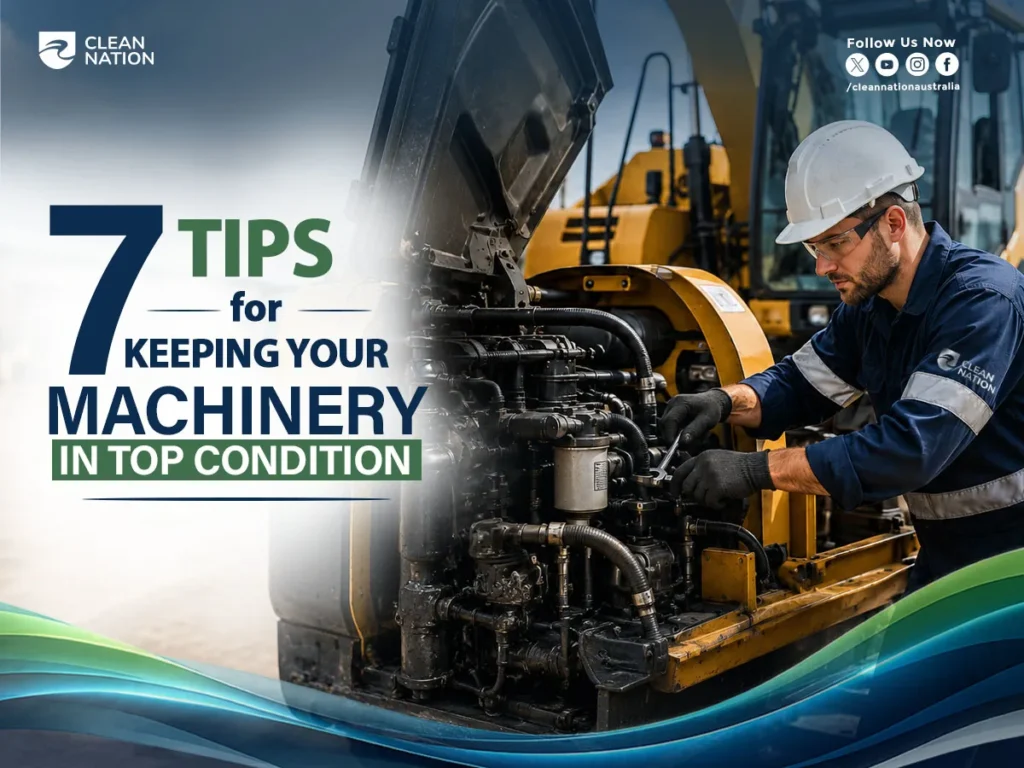
Following these 7 tips for keeping your machinery in top condition a preventive maintenance schedule, daily pre-start checks, regular cleaning, correct lubrication, performance monitoring, safe and correct operation, and proper storage when idle helps reduce unexpected downtime, lower repair costs, improve workplace safety, and extend the working life of industrial machinery. Together, these seven habits form a simple but effective routine that keeps equipment running reliably day after day. As a trusted cleaning service in Australia, Clean Nation sees firsthand how much of a difference this kind of routine makes for businesses that depend on their equipment daily.
1. Follow a Preventive Maintenance Schedule
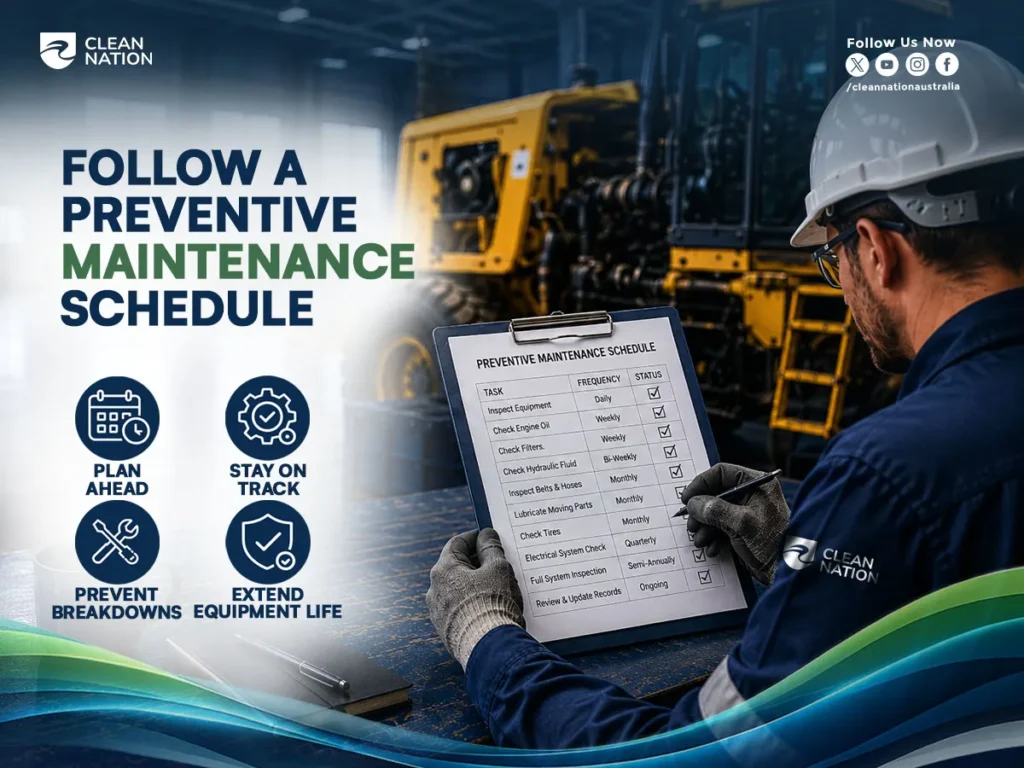
A proper maintenance schedule takes the guesswork out of servicing. It tells you what needs doing and when, instead of leaving it to memory or chance.
Start with the manufacturer’s manual. It sets out recommended service intervals for inspections, oil changes, filters, fluids, belts, hoses, and other key components, and those intervals exist for a reason.
Maintenance frequency might be based on:
- Operating hours
- Distance travelled
- Production cycles
- Calendar dates
- Working conditions
- Equipment age and usage patterns
Keep a record of what’s been done. Digital maintenance software works well for larger fleets, but a clear spreadsheet or service log is often enough for smaller operations. The goal isn’t the tool; it’s knowing at a glance what’s due and what’s already covered.
2. Complete Daily Pre-Start Checks
A quick inspection before machinery starts work can catch a problem before it becomes a breakdown or worse, an incident.
Before switching anything on, walk around the equipment and look for:
- Fluid leaks
- Loose or missing components
- Damaged hoses
- Worn tyres or tracks
- Cracks and corrosion
- Blocked vents
- Damaged guards
- Unusual residue around components
Check fluid levels where relevant: engine oil, coolant, hydraulic fluid, fuel. Low levels are often the first sign something’s off.
Once the machine is running, pay attention to warning lights, unusual sounds, excessive vibration, sluggish response, or overheating. These aren’t things to shrug off they should be reported and looked into.
A standardised checklist makes this easier to do consistently, especially across a team where different people are doing pre-starts on different days.
3. Keep Machinery Clean to Prevent Damage
It’s easy to treat cleaning as cosmetic, but it’s actually one of the simplest ways to protect equipment.
Dirt, dust, grease, mud, and production residue build up around machinery during normal use. Left alone, these contaminants can block ventilation, hide leaks, trap moisture, and work their way into sensitive components.
Keeping equipment clean makes it easier to:
- Spot leaks and loose fittings
- Inspect hoses, seals, and accessible parts properly
- Prevent vents and cooling fins from clogging
- Reduce moisture-related corrosion
- Maintain a safer work area
- Protect the machine’s appearance and resale value
The right cleaning method depends on the machine, its components, the type of contamination, and the manufacturer’s guidelines. High-pressure water, harsh chemicals, or excessive moisture can damage electrical systems, seals, and finishes if used carelessly — so machinery should always be isolated and made safe before cleaning begins.
How often cleaning is needed depends on the environment. Equipment working in dust, mud, or grease-heavy conditions will need it far more often than machinery running in a controlled indoor facility.
To learn more about how regular equipment cleaning improves workplace safety, extends machinery lifespan, reduces downtime, and supports manufacturing efficiency, read our guide on Why Equipment Cleaning Matters in Manufacturing Plants.
4. Lubricate Moving Parts Correctly
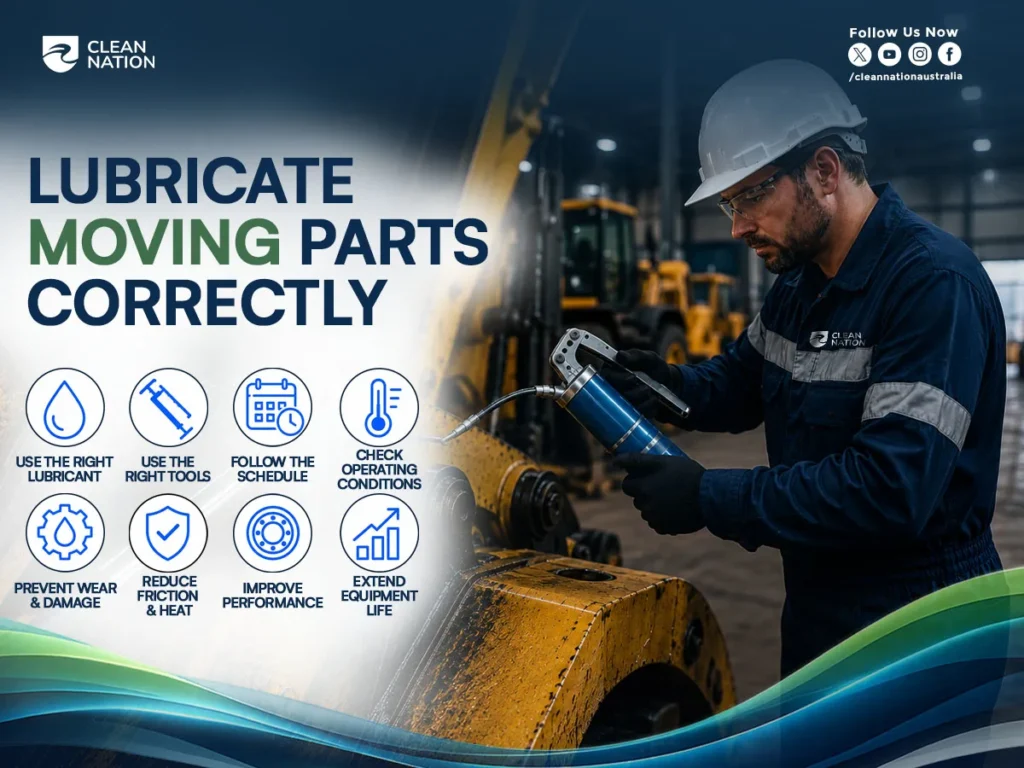
Moving parts need the right lubrication to reduce friction, manage heat, and avoid premature wear. Bearings, joints, pins, bushings, and grease fittings all depend on it; how often varies by machine and how hard it’s being worked.
Follow the manufacturer’s recommendations on:
- Lubricant type
- Application quantity
- Lubrication points
- Service frequency
- Contamination control
Too little lubricant increases friction and wear. But more isn’t automatically better; over-lubricating can cause heat buildup, damaged seals, and unnecessary contamination of its own.
Clean grease fittings and the surrounding area before applying anything new, so dirt doesn’t get pushed into the component along with the grease.
Hydraulic fluid needs the same attention. Keep it at the recommended level and replace it on schedule. Contaminated or low hydraulic fluid can affect performance and damage the system over time.
5. Monitor Equipment Performance
A change in how a machine performs is often the earliest warning sign you’ll get. Operators and maintenance teams should keep an eye on:
- Operating temperature
- Fuel or energy consumption
- Hydraulic pressure
- Fluid levels
- Engine hours
- Noise and vibration
- Output quality
- Response time
- Warning lights and fault codes
Modern equipment increasingly comes with telematics or onboard monitoring that tracks this automatically service intervals, usage, fault codes, fuel consumption, and more. It’s a useful layer, but it should support physical inspections and operator judgment, not replace them.
When a machine starts behaving differently, look into it promptly. Catching a worn part, a small leak, or a pressure drop early usually means a quick fix rather than a major repair down the line.
6. Use Machinery Correctly and Follow Safety Procedures
Even a well-serviced machine can wear out fast or cause harm if it’s not operated properly. How equipment is used matters just as much as how it’s maintained.
Operators need proper training before they’re behind the controls, covering:
- The machine’s intended purpose
- Operating controls
- Load and weight limits
- Suitable attachments
- Emergency procedures
- Warning systems
- Daily inspection requirements
- Site-specific safety rules
Equipment should never be pushed past its designed limits. Overloading, excessive speed, sudden movements, or the wrong attachments all add unnecessary strain to mechanical and hydraulic components.
Operators should wear the required PPE and follow established safety procedures every time not just when someone’s watching. Where machinery needs to be isolated for cleaning, maintenance, or repair, the correct lockout or tagout procedure should be followed, and only trained, authorised people should work near hazardous energy sources.
Correct operation protects the equipment and the people working around it, in that order of visibility but not importance.
7. Store Equipment Properly When Not in Use
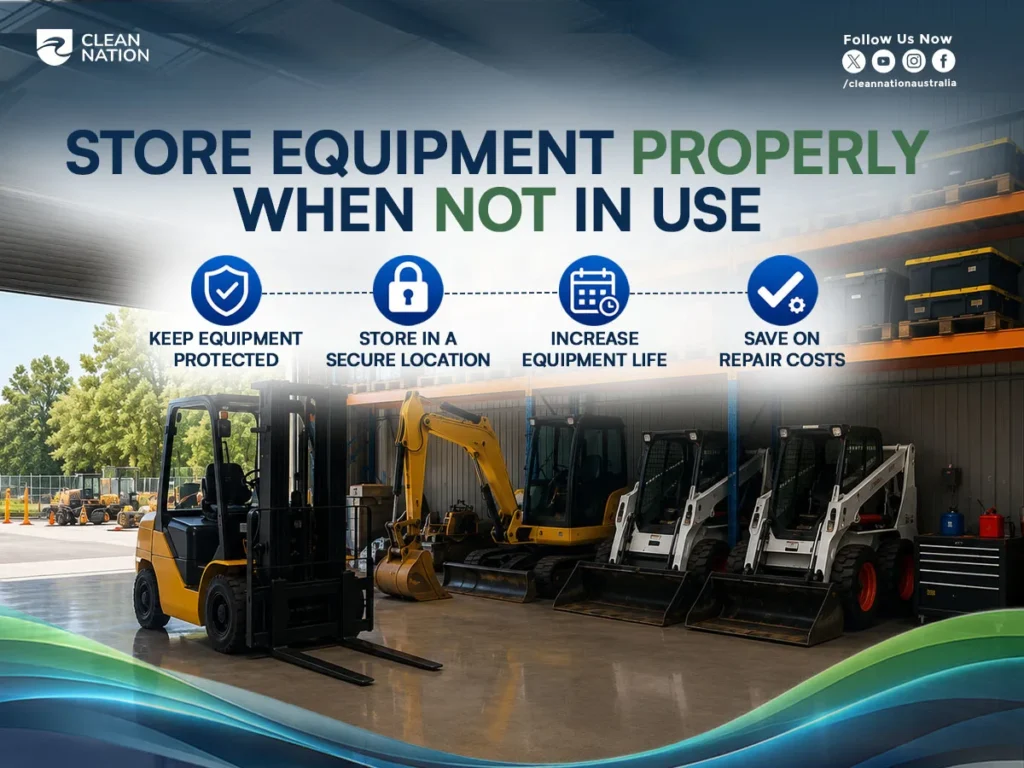
What happens to machinery between jobs matters almost as much as how it’s used on site. Poor storage can undo months of good maintenance surprisingly quickly.
Where possible, store equipment somewhere covered, secure, and well-ventilated. If indoor storage isn’t an option, use a protective cover that won’t trap moisture against the machine; trapped moisture can be worse than no cover at all.
Before long-term storage, it’s worth taking a few extra steps:
- Remove dirt, mud, grease, and residue
- Inspect for leaks or visible damage
- Check and top up fluids where recommended
- Lubricate specified components
- Protect exposed metal surfaces
- Disconnect or maintain batteries as instructed
- Cover sensitive openings and components
- Park on a stable, level surface
- Follow the manufacturer’s storage procedure
Moisture is the main enemy here; prolonged exposure is one of the fastest routes to rust and corrosion. Equipment in long-term storage should still be checked periodically, not left completely unattended until it’s needed again.
Why Professional Machinery Cleaning Matters?
Operators can usually handle routine surface cleaning as part of their daily responsibilities. However, heavily contaminated machinery, large fleets, shutdown projects, and hard-to-reach areas often require specialist equipment, experienced technicians, and a more structured cleaning approach.
Professional cleaning is often the best option when:
- Dirt and grease have built up over an extended period
- Equipment needs to be prepared for inspections or maintenance
- Production residue is spreading into surrounding work areas
- A facility is planning a shutdown or major maintenance project
- Internal teams don’t have access to the right cleaning equipment
- Cleaning must be completed outside normal production hours
- Multiple machines or large industrial areas need cleaning
Professional cleaning relies on specialised equipment that must also be properly maintained to deliver reliable results. Industrial vacuums, for example, play an important role in removing dust, debris, and fine contaminants from machinery and surrounding work areas. Keeping this equipment in peak condition improves cleaning efficiency, reduces downtime, and extends its service life. To learn more, read our guide on 8 Tips to Care for Your Industrial Cleaning Vacuum, which explains how regular maintenance, filter cleaning, hose inspections, and professional servicing help maintain strong suction and reliable performance.
A professional cleaning provider will assess the machinery, contamination level, site conditions, and safety requirements before selecting the most appropriate cleaning method rather than applying a one-size-fits-all approach. Machinery cleaning should always support an organisation’s preventive maintenance program by improving equipment accessibility, making inspections easier, and helping businesses maintain safer, more reliable operations over the long term.
Building an Effective Machinery Maintenance Program
None of these seven habits do much on their own. The real value comes from combining scheduled servicing, daily inspections, cleaning, lubrication, performance monitoring, safe operation, and proper storage into one consistent routine.
Assigning clear responsibility for each piece helps a lot:
- Operators handle daily pre-start checks and basic cleaning
- Maintenance teams manage servicing, lubrication, repairs, and technical inspections
- Supervisors review documentation and follow up on reported faults
- Professional cleaners support deep cleaning, shutdown cleaning, and large-scale contaminant removal
Maintenance records should note the date, equipment ID, work completed, any issues found, the corrective action taken, and who was responsible.
Review the program regularly. Changes in production volume, operating conditions, equipment age, or usage patterns may mean inspections and maintenance need to happen more often than they used to.
Why Choose Clean Nation for Machinery Cleaning?
Clean Nation provides industrial cleaning support for machinery, equipment, production areas, and the surfaces around them.
Our approach is based on the condition of the site, the type of contamination involved, and the manufacturer’s cleaning requirements. Depending on the job, that might mean removing dust, dirt, grease, oil residue, mud, or production waste from suitable external and accessible areas.
We treat cleaning as something that should support existing maintenance procedures, not get in the way of them. Work can be planned around production schedules, maintenance windows, or shutdowns as needed. If you’re based in New South Wales, our industrial cleaning service in Sydney covers everything from routine servicing to larger fleet cleaning jobs, and we also offer dedicated industrial cleaning services in New South Wales for businesses needing consistent, on-schedule support across the state.
Mechanical servicing, electrical work, lubrication, repairs, and internal equipment maintenance should always be left to appropriately qualified personnel — cleaning is where we come in.
Client Experience with Clean Nation
A Sydney-based manufacturing company, Astra, was experiencing a gradual build-up of grease, dust, and production residue on its machinery and surrounding work areas. Although routine maintenance was being carried out, the accumulated contaminants made equipment inspections more difficult and reduced visibility of accessible components.
To support the facility’s maintenance program, Clean Nation provided a professional machinery cleaning service tailored to the site’s operational requirements. The team cleaned accessible machinery surfaces, removed built-up grease and debris, and restored cleaner production areas while scheduling the work to minimise disruption to daily operations.
Following the cleaning program, maintenance personnel found it easier to inspect equipment, identify visible leaks and signs of wear, and complete routine servicing more efficiently. The cleaner working environment also improved housekeeping standards and supported safer day-to-day operations.
While every industrial facility has different maintenance needs, this example demonstrates how professional machinery cleaning can complement a preventive maintenance program by improving equipment accessibility, supporting inspections, and helping maintain a cleaner, safer workplace.
Frequently Asked Questions
What factors affect the cost of machinery cleaning?
Cost depends on the size and type of machinery, the level of contamination, accessibility, the cleaning method required, safety considerations, the number of machines involved, and how often the service is needed. A site assessment is usually needed before an accurate quote can be given.
How often should machinery be serviced?
It depends on the manufacturer’s recommendations and how the equipment is actually used. Some machines are serviced by operating hours, others by time, distance, or production cycles. Harsh conditions or heavy use generally mean more frequent servicing.
Can I clean machinery myself?
Basic surface cleaning is often fine for operators who’ve had proper instruction and can do it safely. Deep cleaning, heavy degreasing, and work near electrical components or hard-to-reach areas is better left to trained professionals. Always follow the manufacturer’s instructions and site safety procedures.
What are the signs of poorly maintained machinery?
Fluid leaks, unusual noise or vibration, overheating, reduced performance, higher fuel or energy use, corrosion, damaged hoses or seals, frequent warning lights, excessive smoke, and recurring breakdowns. Any of these should be checked out by someone qualified.
Does regular cleaning actually help machinery last longer?
Yes removing contaminants that trap moisture, block ventilation, or hide developing damage genuinely extends equipment life. But cleaning is only one part of the picture; it works best alongside proper servicing, lubrication, inspection, and storage.
Can machinery be cleaned without stopping production?
Sometimes. External cleaning can often be scheduled while other parts of a facility keep running. But cleaning near powered equipment, moving parts, or active production processes may require isolation or a planned shutdown. It really depends on the machine, the site, and the safety requirements involved.
Conclusion
Keeping machinery in top condition isn’t complicated, but it does require consistency. Follow the manufacturer’s schedule, do the daily checks, remove dirt and contaminants, lubricate correctly, watch for changes in performance, train operators properly, and store equipment the right way when it’s idle.
These habits make it far easier to catch problems early and avoid interruptions that didn’t need to happen. They also protect the people working around the equipment and the investment the business has already made in it.
Cleaning is a bigger part of that process than it gets credit for; clean machinery is simply easier to inspect and maintain.
For professional machinery and industrial equipment cleaning, get in touch with Clean Nation to discuss your site requirements and request a tailored quote.