

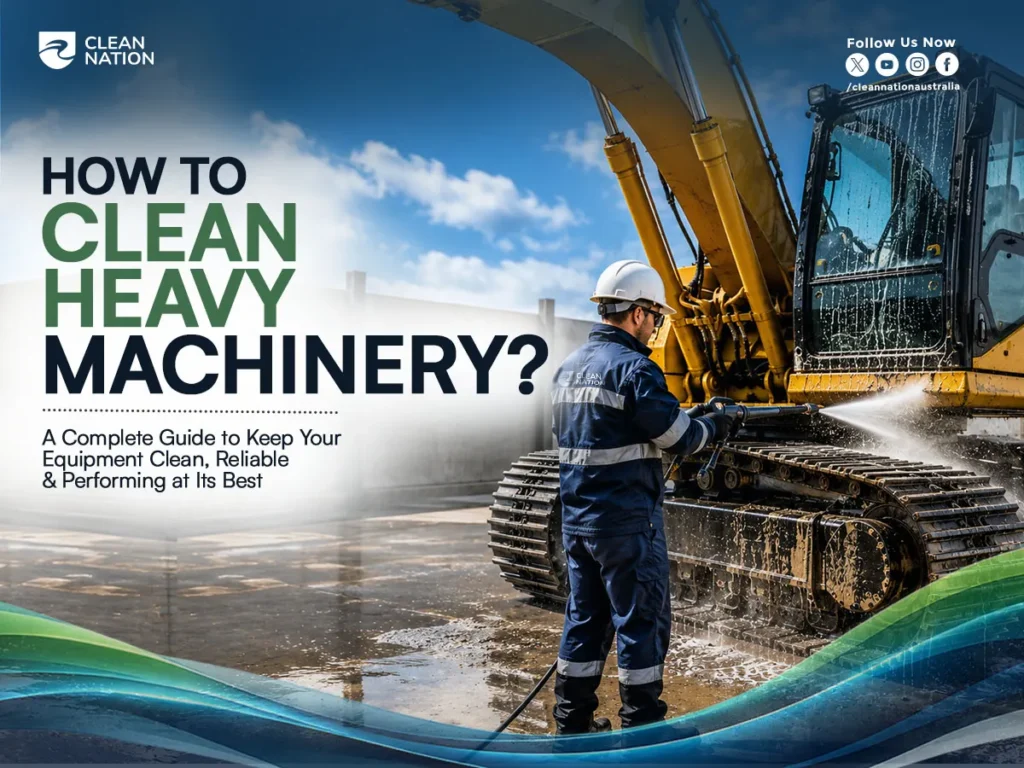
How to clean heavy machinery properly starts with parking it in a wash bay with good drainage, then clearing off loose dirt, mud, and debris by hand. From there, apply a heavy-duty degreaser to break down grease, then pressure wash the machine and finish with a cold water rinse.
Clean the undercarriage, tracks, and tyres carefully, use compressed air (not water) around electrical components in the engine bay, and wipe down the cab and controls separately. Finish by rinsing, drying, lubricating moving parts, and doing a quick inspection to catch any early wear. That’s really the full process for how to clean heavy machinery the right way: it protects the equipment, reduces downtime, and extends its working life. Or if you’d rather skip the hassle, a professional cleaning service in Australia like Clean Nation can handle it for you.
Why Cleaning Heavy Machinery Matters?
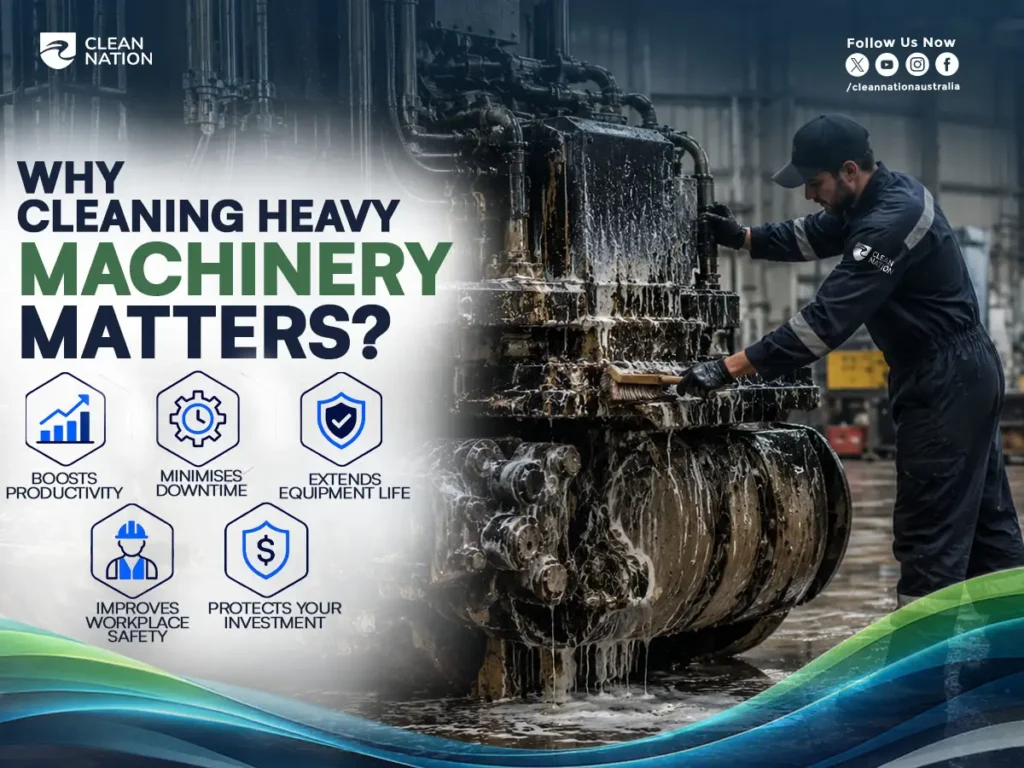
Heavy machinery picks up dust, oil, and grime just from everyday use. Left alone, that buildup slows machines down and gets in the way of good machine performance.
Dirty equipment also breaks down more often, which means more reduced downtime turning into lost time on the job. Grime trapped near metal parts speeds up corrosion, and buildup around motors raises fire risk. Regular cleaning helps with both fire prevention and corrosion prevention.
Clean machinery also lasts longer. That means a better equipment lifespan, fewer surprise repairs, and stronger resale value when it’s time to sell or upgrade.
At Clean Nation, we treatWhy Professional Machinery Cleaning Matters?
Operators can usually handle routine surface cleaning as part of their daily responsibilities. However, heavily contaminated machinery, large fleets, shutdown projects, and hard-to-reach areas often require specialist equipment, experienced technicians, and a more structured cleaning approach.
Professional cleaning is often the best option when:
- Dirt, grease, and residue have built up over an extended period
- Equipment needs to be prepared for inspections or maintenance
- Production residue is spreading into surrounding work areas
- A facility is planning a shutdown or major maintenance project
- Internal teams don’t have access to the right cleaning equipment
- Cleaning must be completed outside normal production hours
- Multiple machines or large industrial areas need cleaning
Keeping cleaning equipment in good condition is just as important as maintaining the machinery being cleaned. Following the 8 Tips to Care for Your Industrial Cleaning Vacuum helps ensure industrial vacuums deliver strong suction, reliable performance, and efficient dust and debris removal during professional cleaning projects. Well-maintained cleaning equipment improves productivity, reduces unexpected downtime, and supports more effective machinery and facility cleaning.
A good cleaning provider will assess the machinery, the level of contamination, site conditions, and safety requirements before selecting the most suitable cleaning method, rather than using a one-size-fits-all approach. You can see this kind of industrial cleaning process in action to better understand how a professionally managed cleaning project is carried out. Machinery cleaning is part of real equipment reliability and long-term equipment care, not just a quick wipe-down. Keep it clean, and it keeps working the way it should.
What You’ll Need Before Cleaning Heavy Machinery
Gather theBefore you begin, make sure you have the right heavy equipment cleaning supplies on hand. Using professional-grade products designed for industrial environments helps remove grease, oil, mud, and built-up contaminants more effectively while protecting machinery surfaces and components. If you’re unsure which products are best suited for your equipment or work environment, our guide on Top-Rated Industrial Cleaning Products for Factories explains the most effective degreasers, floor cleaners, disinfectants, and other industrial cleaning solutions used across Australian manufacturing and construction facilities.
Gather these heavy equipment cleaning supplies before you start:
- Pressure washer – clears caked-on dirt and grime quickly.
- Industrial detergent or heavy-duty degreaser – breaks down grease around engines and moving parts.
- Garden hose – suitable for light rinsing and washing away detergent.
- Wet/dry vacuum – removes dust, loose debris, and spilled liquids from hard-to-reach areas.
- Shop rags – ideal for wiping away grease and excess moisture.
- Microfiber cloths – safely clean gauges, screens, and painted surfaces without scratching.
- Owner’s manual – always check the manufacturer’s recommended cleaning products and procedures before starting.
At Clean Nation, we always recommend preparing the correct tools and cleaning products before beginning any machinery cleaning task. Proper preparation makes the process safer, faster, and far more effective.
Safety Tips Before You Start Cleaning
A few precautions go a long way before you get started:
- Personal Protective Equipment (PPE) – wear it every time, no exceptions.
- Safety boots or anti-slip footwear – protects your feet and keeps you steady on wet or oily surfaces.
- Heavy-duty gloves – shield your hands from chemicals, sharp edges, and hot surfaces.
- Eye protection – keeps splashes, dust, and debris out of your eyes.
- Safety mask – blocks fumes and airborne particles, especially when using degreasers.
- Insulated coveralls – protect your skin and clothing from chemicals and grime.
- Operator safety – make sure the machine is powered off and locked out before cleaning.
- Safe cleaning practices – follow the owner’s manual and never mix cleaning chemicals.
At Clean Nation, we treat safety as step one, not an afterthought. Gear up properly, and the rest of the job goes a lot smoother.
Best Cleaning Methods for Heavy Machinery
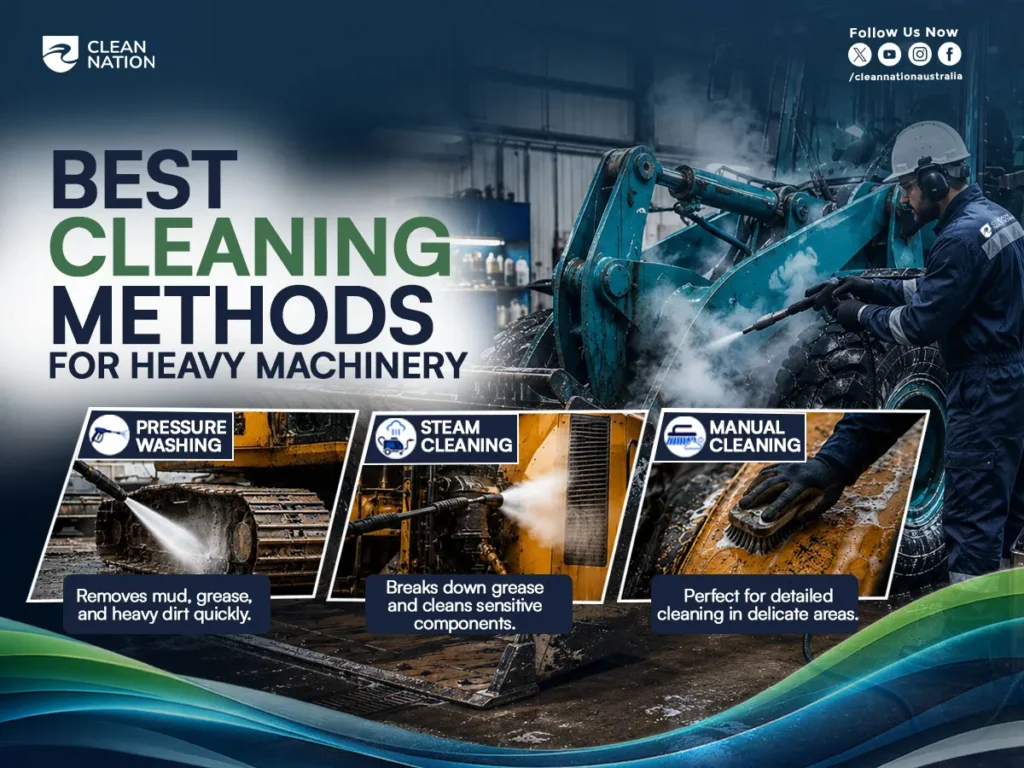
Pressure Washing
Pressure washing heavy equipment is one of the fastest ways to strip off built-up dirt and grime. A high-pressure washer sends out concentrated water streams that break through caked-on mess without much scrubbing.
- Use a coarse wash first to loosen heavy dirt.
- Switch to high-pressure washing for stubborn grime on metal surfaces.
- For large machinery, a water cannon or high-volume low-pressure water cannon covers more ground faster.
- Keep the nozzle at a safe distance from seals, gauges, and electronics.
Steam Cleaning
Hot water cleaning works well for grease and oil that pressure washing alone can’t fully break down.
- A warm water rinse helps loosen dirt before applying cleaner.
- Give your cleaning solution proper chemical soak time so it can work into the grime.
- Quick break detergents are useful here since they separate from oil and grease quickly, making rinsing easier.
- Proper detergent application speeds up grease breakdown, especially on engine components.
Manual Cleaning
For detail work or areas that shouldn’t be blasted with water, manual cleaning is the safer choice.
- Use a scrub brush or soap brush with mild liquid dish soap for stubborn spots.
- A sponge or cloth works well for wiping down panels and smaller parts.
- Keep a bucket of clean water nearby for rinsing your cleaning cloth or mop as you go.
- Sponge cleaning is gentle enough for gauges, screens, and painted surfaces.
At Clean Nation, we usually recommend combining these methods. Pressure or steam cleaning for the heavy lifting, manual cleaning for the finer details. If you’d like to see the process in action, check out this quick look at industrial cleaning on the job.
Best Way to Clean Heavy Machinery
The best way to clean heavy equipment is a two-stage cleaning process: coarse wash first to remove loose dirt and debris, then a detergent or chemical soak to break down grease and fine contaminants, followed by a rinse and manual wipe-down for detail areas.
This proper cleaning technique improves cleaning efficiency and keeps the entire heavy equipment cleaning process safe and thorough.
How to Clean Heavy Machinery Step by Step
Step 1 – Park the Machine in a Safe Wash Area
- Move the machine to a proper wash station, wash bay, or wash pad.
- A permanent wash bay works well for regular cleaning, while a relocatable wash bay suits job sites that change often.
- Choose an indoor cleaning bay for weather protection, or outdoor equipment cleaning if space is limited.
- Make sure the heavy equipment wash area has proper drainage before you start.
Step 2 – Remove Loose Dirt, Mud, and Debris
- Start with dirt removal, mud removal, and general debris removal.
- Use a steel pry bar to break up caked-on mud and stubborn mud buildup.
- Clear out rocks, large debris, and loose dust and debris before applying any water or cleaner.
Step 3 – Apply a Heavy-Duty Degreaser
- Apply a degreaser or industrial-strength detergent to greasy, grimy areas.
- A butyl-based cleaner works well for tough grease removal and grime removal.
- Let the degreasing solution sit for proper chemical soak time.
- Evenly apply detergent across the surface for best results.
Step 4 – Pressure Wash the Machine
- Use a pressure washer with concentrated water streams for high-pressure washing.
- A water cannon helps cover larger machines faster.
- Finish with a cold water rinse to clear away loosened grime.
- Keep pressure moderate on painted surfaces to support equipment paint protection on metal surfaces.
Step 5 – Clean the Undercarriage, Tracks, Tyres, and Attachments
- Focus on undercarriage cleaning for the machine undercarriage, chassis cleaning, and any tracked machinery.
- Don’t skip tire cleaning and rubberized components.
- Take care around hydraulic hoses for proper hose protection and component protection.
Step 6 – Clean the Engine Area and Sensitive Components Safely
- Handle engine compartment cleaning and radiator cleaning with care.
- Use compressed air instead of water near electrical components for safer electrical circuit cleaning.
- Support water damage prevention and hydraulic system protection by avoiding direct spray on mechanical components.
- Check for leak prevention as you go
Step 7 – Clean the Operator Cab and Controls
- Wipe down the operator cab area, including joysticks, the steering wheel, and door handles.
- Use a proper touchscreen cleaner on the LCD monitor.
- Finish with general dashboard cleaning and clean the windshield for clear visibility.
Step 8 – Rinse, Dry, Lubricate, and Inspect the Machine
- Give the machine a final rinse, then allow for air drying or manual equipment drying.
- Apply wax application followed by buffing and polishing if needed.
- Finish with routine inspections and maintenance checks for early issue detection.
- Regular equipment inspection and machine inspection help catch small problems before they grow.
At Clean Nation, we follow this same process on every job. It’s thorough, it protects the equipment, and it works whether you’re cleaning one machine or a whole fleet.
Common Mistakes to Avoid When Cleaning Heavy Machinery
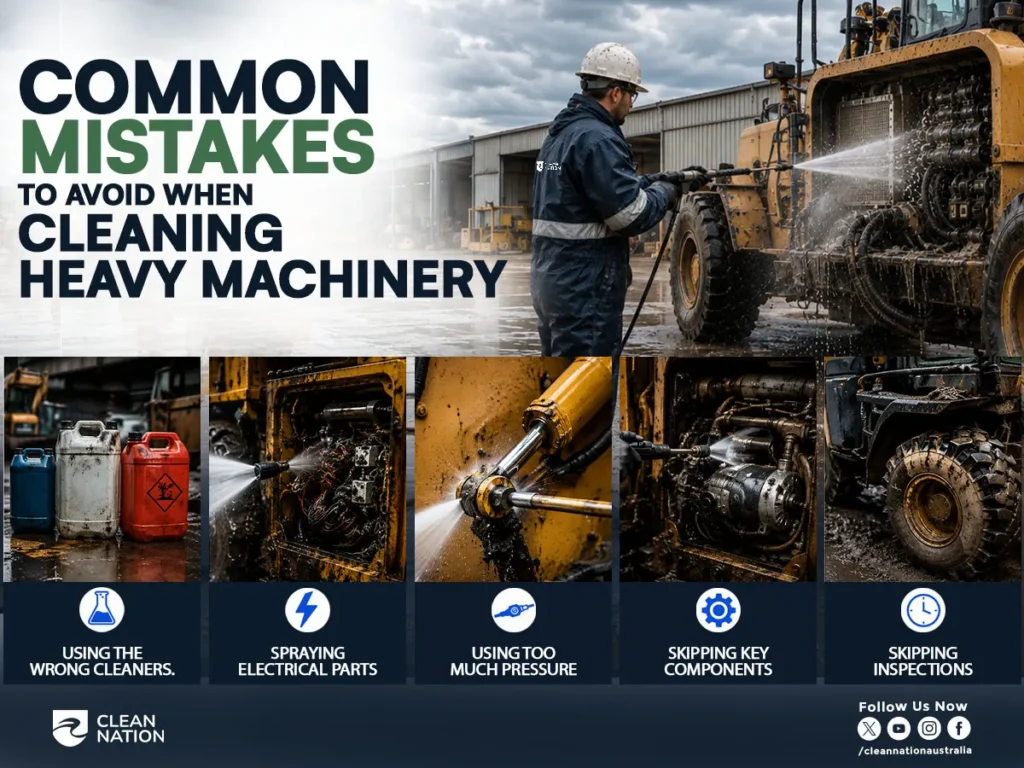
Even with good intentions, a few common slip-ups can undo all your hard work.
- Using abrasive cleaners or acidic cleaners – these can strip paint, damage seals, and wear down surfaces over time.
- Skipping proper cleaning techniques – rushing the process often leads to equipment damage instead of a clean machine.
- Spraying water directly into electrical or hydraulic systems – this is one of the fastest ways to cause machine malfunctions and mechanical problems.
- Ignoring water damage prevention basics – always keep water away from sensitive components, not just wipe around them.
- Not checking for cracked tires or leaking hoses before you start – high-pressure water can force its way into existing damage and make it worse.
At Clean Nation, we’ve seen how avoidable most of these mistakes are. Stick to the right products and the right process, and you protect the machine instead of accidentally damaging it.
How Often Should You Clean Heavy Machinery?
Cleaning frequency really depends on how the machine is used, but a general routine helps keep things on track.
- Daily equipment cleaning – a quick wipe-down or rinse after heavy use, especially in muddy or dusty conditions.
- Biweekly cleaning – a more thorough clean for machines used regularly but not daily.
- Regular cleaning schedule – set intervals based on your equipment’s workload and environment.
- Routine cleaning – build it into your normal operations so it doesn’t get skipped.
A consistent equipment cleaning routine works hand in hand with your broader maintenance schedule. It’s a form of preventive maintenance that catches small issues, like early corrosion or worn parts, before they turn into expensive repairs.
At Clean Nation, we recommend building a daily cleaning routine for machines in heavy use, with deeper cleans scheduled regularly. It keeps equipment running well and saves you from bigger problems down the line.
DIY vs Professional Heavy Machinery Cleaning
Cleaning heavy machinery yourself is doable, especially for routine dirt and grime. But there are times when it makes more sense to call in the experts.
DIY cleaning works well when:
- You’re handling regular dirt, mud, or dust after normal use.
- The machine doesn’t need specialised equipment or chemicals.
- You have the time and basic supplies on hand.
Professional cleaning services make more sense when:
- The buildup is heavy, greasy, or has been left too long.
- You need access to professional heavy equipment cleaning solutions and equipment you don’t have.
- The machine requires careful handling around sensitive parts.
Bringing in industrial cleaning services in Australia or professional maintenance teams also gives you access to trained mechanics who know what to look for. Many businesses pair cleaning with a visit to the service department or repair shop, combining machinery servicing with a proper clean in one go.
It can also help control maintenance costs long-term. Catching small issues during a professional clean, like a hose starting to wear or early rust, often costs a lot less than dealing with a full breakdown later.
At Clean Nation, we handle the cleaning side so your team can focus on running the equipment, not maintaining it. Whether it’s a one-off deep clean or a regular service, we make sure it’s done properly.
Why Choose Clean Nation for Heavy Machinery Cleaning?
Heavy machinery requires more than a standard wash. Different equipment, operating conditions, and contaminants demand the right cleaning methods to protect critical components and support reliable performance.
At Clean Nation, we provide professional heavy machinery cleaning using purpose-built equipment, suitable cleaning products, and proven processes for construction and industrial machinery. Our team works carefully around hydraulic systems, electrical components, and other sensitive areas to help businesses keep their equipment clean and ready for operation.
We also follow responsible wastewater management practices and support compliance with applicable trade waste and environmental requirements. Whether you need a one-off deep clean or ongoing fleet maintenance, our industrial cleaning service in Sydney and industrial cleaning services in New South Wales are tailored to meet the needs of construction, manufacturing, warehousing, and other industrial businesses.
One construction company approached Clean Nation for scheduled heavy machinery cleaning after grease, mud, and debris were making routine inspections more difficult. Dirty equipment was slowing maintenance checks and making it harder to spot signs of wear.
Our team implemented a regular cleaning schedule tailored to the client’s operating requirements. Each service included cleaning engine compartments, undercarriages, hydraulic components, and operator cabins while identifying any visible issues that should be reviewed by the client’s maintenance team.
Keeping machinery clean made inspections more efficient by improving visibility around critical components. It also helped the client maintain cleaner equipment across the fleet and support a more consistent preventive maintenance routine.
While cleaning is not a replacement for mechanical servicing, it plays an important role in helping businesses maintain equipment, identify visible issues earlier, and keep machinery ready for day-to-day operations.
FAQs
Will cleaning heavy machinery void the warranty?
No, cleaning doesn’t void the warranty, but using the wrong products or spraying water directly on electrical or hydraulic components might. Always check the owner’s manual before cleaning.
Do you need a permit to wash heavy equipment on-site?
It depends on your local council, since wastewater and runoff from equipment washing often need to be managed properly. Many businesses use a compliant wash bay or professional service to avoid breaching trade waste regulations.
Can heavy machinery be washed in cold weather?
Yes, but use warm water where possible and dry the machine thoroughly afterward to stop water from freezing in joints, hoses, or the undercarriage.
How much does professional heavy machinery cleaning cost?
Cost depends on machine size, condition, and how often it’s cleaned, but a regular professional schedule is usually cheaper long-term than one-off deep cleans or repairs from neglect.
How should wastewater from cleaning heavy machinery be disposed of?
Wastewater should be captured and disposed of through a compliant drainage or trade waste system, not left to run into stormwater drains, since it often contains oil, grease, and chemical residue that’s harmful to the environment.
Conclusion
Regular heavy machinery cleaning is an important part of preventive maintenance. Removing dirt, grease, and debris helps improve inspections, protects key components, and supports reliable day-to-day operation.
By following the cleaning process outlined in this guide and sticking to a regular maintenance schedule, you can help extend equipment life and reduce the risk of avoidable wear.
If you need professional heavy machinery cleaning, Clean Nation offers tailored cleaning services for construction, industrial, and commercial equipment. Contact our team to discuss your requirements or request a free quote.