



How To Clean Your Kitchen Appliances comes down to a few consistent habits, not one big job. Start with basic supplies like warm soapy water, white vinegar, baking soda, and a microfibre cloth. Descale your kettle and coffee machine monthly to clear limescale, wipe your microwave with a vinegar steam clean weekly, and empty your toaster’s crumb tray often to prevent fire risk.
Deep clean your oven every one to two months using a baking soda paste or a pyrolytic cycle, wash your air fryer basket after each use, and wipe your hob and range hood regularly to stop grease build-up. Clean your fridge every one to two weeks and run your dishwasher on a hot cycle monthly to clear detergent residue. For stainless steel finishes, always wipe in the direction of the grain and avoid abrasive pads or bleach.
Learning how to clean kitchen appliances the right way keeps them running efficiently, extends their lifespan, and keeps your kitchen hygienic. And if it feels like too much to manage, Clean Nation’s cleaning service in Australia can handle the deep cleaning for you.
Why Regular Kitchen Appliance Cleaning Matters?
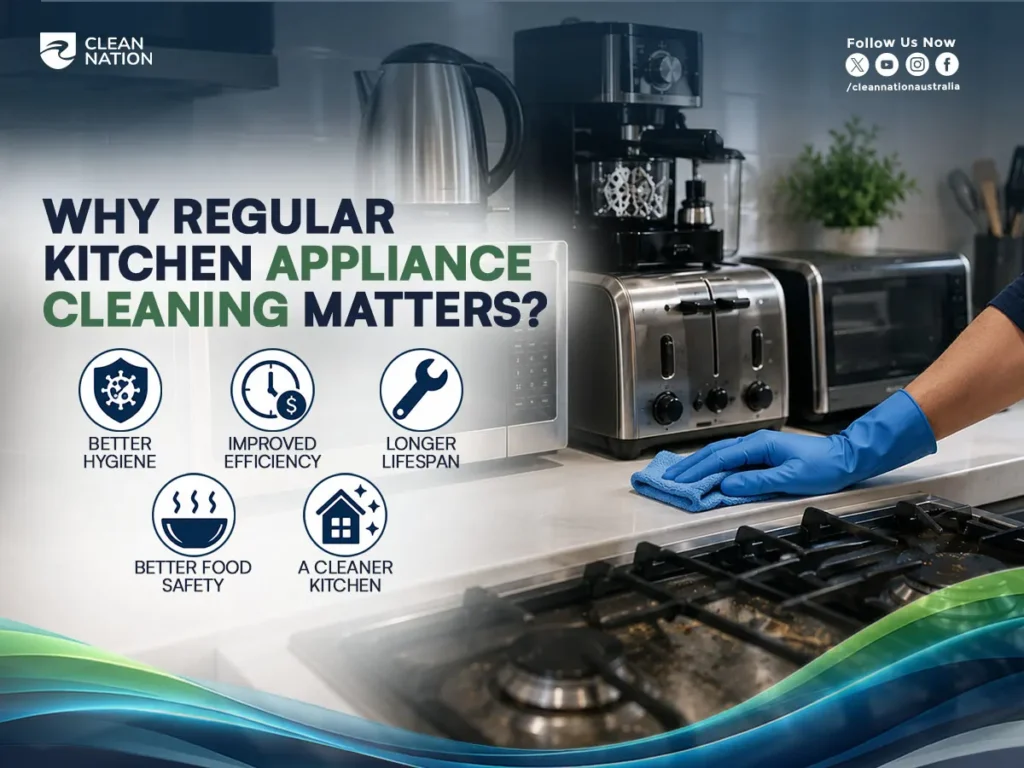
Most people only clean their appliances when they look dirty. But grease and food build up long before you can see it.
Here’s what happens when you skip cleaning:
Bacteria grows fast in warm, damp spots. Your microwave, fridge seals, and dishwasher filter are easy targets. This creates a real food hygiene problem, not just a bad smell.
Dirt build-up slows appliances down. A kettle with limescale takes longer to boil. A greasy oven needs more energy to heat up. This drop in appliance efficiency shows up on your energy bill.
Grease shortens appliance lifespan. Heating elements, filters, and seals wear out faster when they’re covered in residue. Regular cleaning protects the parts that keep appliances running.
Poor kitchen sanitation spreads. Crumbs, spills, and grease don’t stay in one place. They spread to counters, utensils, and your food.
The fix is simple. A short cleaning routine prevents dirt build-up before it becomes a bigger problem. It keeps your appliances working well and your kitchen safer.
At Clean Nation, we see this every day. Appliances that get regular care last longer and cost less to maintain.
For a complete room-by-room routine, check out our guide on How to Deep Clean Your Kitchen.“
Cleaning Supplies You’ll Need Before You Start
You don’t need a cupboard full of products. A few basics handle most kitchen appliance cleaning jobs.
Here’s what to keep on hand:
- Warm soapy water – works on most surfaces and cuts through everyday grime
- Dish soap – your go-to for grease and food residue
- White vinegar – great for descaling kettles and cutting through limescale
- Baking soda – handles stuck-on grime without scratching surfaces
- Damp microfibre cloth – picks up dust and fingerprints without leaving streaks
- Soft sponge – gentle enough for glass and stainless steel
- Soft-bristled brush – gets into tight spots like toaster crumbs or oven racks
- Mild cleaner – use on delicate surfaces where stronger products might damage the finish
Keep these cleaning supplies together in one spot. When everything’s in reach, you’re more likely to wipe down an appliance right away instead of putting it off. Want to see the process in action? Check out this quick kitchen cleaning video for a visual walkthrough.
How To Clean Your Coffee Machine or Espresso Machine?

Coffee oils build up fast, even if you can’t see them. Left alone, they turn bitter and affect every cup you make.
Here’s how to clean your coffee machine or espresso machine:
- Wipe down the exterior daily. Use a damp cloth to remove spills and coffee grounds before they dry on.
- Run a cleaning cycle weekly. Fill the water tank with a descaling solution or specialist cleaning fluid, then run it through as you would with water.
- Rinse with hot water. Run two or three cycles of plain hot water afterward to clear out any leftover solution.
- Clean the water boiler regularly. Limescale builds up here fast, especially in hard water areas. Water boiler cleaning every few weeks keeps water flowing properly and heating evenly.
- Remove and wash detachable parts. Portafilters, drip trays, and milk frothers need a separate wash with warm soapy water.
Espresso machine cleaning matters even more if you use milk. Leftover milk residue turns sour fast and affects the taste of every drink after it.
Staying on top of coffee machine maintenance isn’t just about taste. It stops mineral buildup from damaging internal parts, which means your machine lasts longer and works the way it should.
How To Clean Your Kettle?
If your kettle takes longer to boil than it used to, limescale build-up is probably the reason. Here’s how to fix it.
To descale your kettle:
- Fill it halfway with equal parts white vinegar and water.
- Let it sit for about an hour. This gives the vinegar time to break down mineral deposits.
- Boil the mixture, then let it cool for a few minutes.
- Pour it out and rinse the kettle two or three times with fresh water.
- Wipe the inside with a soft sponge to remove any leftover residue.
For the outside:
- Wipe the kettle handle and kettle lid with a damp microfibre cloth.
- Use warm soapy water for grease or fingerprints.
- Dry it right away to avoid water spots.
Kettle descaling every few weeks keeps it boiling faster and tasting fresher. If you live in a hard water area, you may need to remove limescale from your kettle more often, sometimes every one to two weeks.
Skipping this step doesn’t just slow your kettle down. It also means every cup of tea or coffee picks up a slightly off-taste from the mineral buildup.
How To Clean Your Microwave?
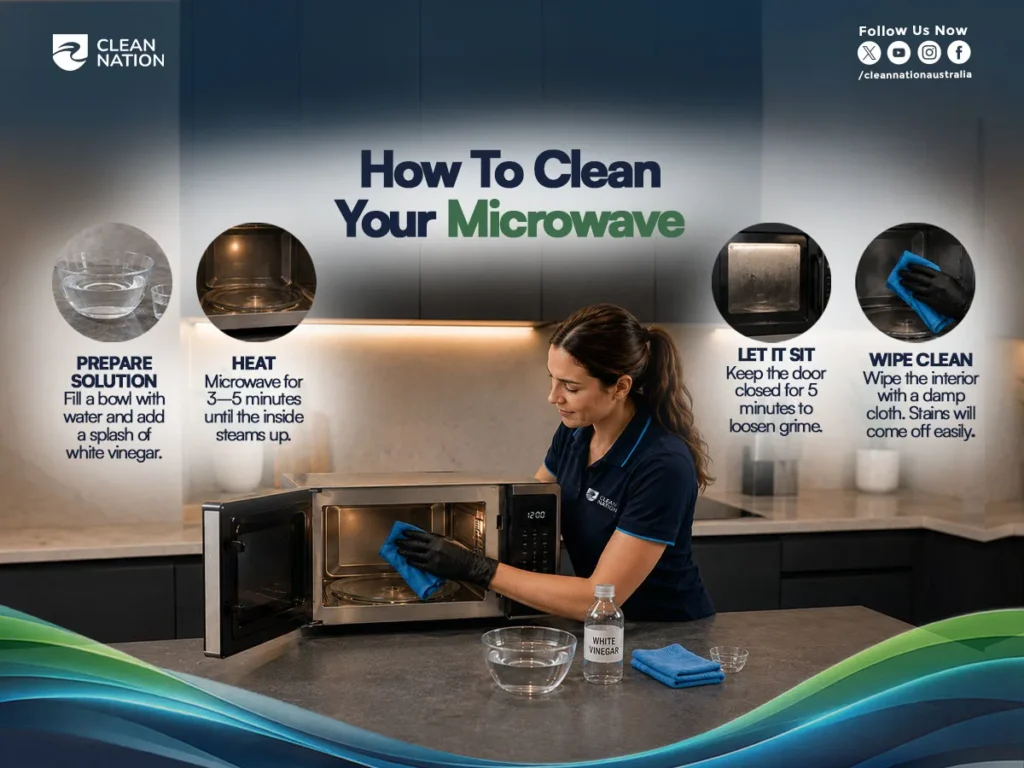
Food splatters harden fast, and once they bake on, they’re much harder to remove. Steam cleaning makes this job easy.
How to clean your microwave with vinegar:
- Fill a microwave-safe bowl with water and a splash of white vinegar.
- Microwave it for 3 to 5 minutes until it steams up the inside.
- Leave the door closed for another 5 minutes. The steam loosens stuck-on grime.
- Wipe down the inside with a damp cloth. Splatters should come off easily now.
- Remove the turntable and wash it separately with warm soapy water.
For the outside:
- Wipe the control panel with a damp microfibre cloth. Avoid soaking buttons or dials.
- Clean the door and handle with mild cleaner to remove fingerprints.
Microwave cleaning once a week stops food splatters from building up into stubborn stains. It also gets rid of smells that linger after cooking strong foods like fish or curry.
Skipping this step means grime keeps baking on layer by layer, until scrubbing is your only option.
How To Clean Your Air Fryer?
Grease builds up inside an air fryer faster than most people expect. Left too long, it starts smoking during your next cook.
How to clean your air fryer:
- Allow appliances to cool before you start. Never clean a hot air fryer.
- Remove the air fryer basket and any other removable components, like the tray or pan.
- Soak in hot soapy water for 10 to 15 minutes. This helps degrease stuck-on residue without much scrubbing.
- Wipe the interior. Use a damp cloth to clean around the heating element. Don’t submerge this part in water.
- Avoid abrasive materials. Skip steel wool or scouring pads, they scratch the non-stick coating.
- Dry everything fully before putting it back together.
Air fryer cleaning after every few uses keeps grease from building up on the heating element. That buildup is what causes smoke and burnt smells during cooking.
A quick clean also helps your food cook evenly next time, since a greasy basket can affect airflow inside.
How To Clean Your Cooktop or Hob?
Spills and grease build up on your cooktop every time you cook. A quick wipe after each use saves you a bigger scrub later.
How to clean your hob, based on type:
Induction hob:
- Wipe with a damp cloth after each use, once it’s cooled.
- Use cream cleaner for tougher marks. Avoid anything abrasive; it can scratch the glass surface.
Ceramic hob:
- Clean the same way as induction. Cream cleaner works well on burnt-on spills.
- A glass scraper held at a low angle can lift stubborn residue without scratching.
Gas hob:
- Remove the pan supports and burners, and soak them in warm soapy water.
- Use a degreaser on grease around the burner heads.
- Scrub with a soft brush to clear clogged holes; this keeps the flame burning evenly.
For all hob types:
- Wipe up spills while they’re still warm, before they harden.
- Dry the surface fully to avoid streaks or water spots.
Hob cleaning after every use stops grease from baking on. It also keeps burners working properly, so your flame stays even, and your cooking stays consistent.
How To Clean Your Oven?
Baked-on food residue is the toughest job in the kitchen. But with the right approach, it doesn’t need harsh chemicals.
How to clean your oven:
- Remove the oven racks. Soak them in warm soapy water while you clean the inside.
- Make a paste with bicarbonate of soda and a little water. Spread it over the inside surfaces, avoiding heating elements.
- Leave it overnight. This gives the paste time to break down grease and baked-on residue.
- Wipe it out with a damp cloth the next day. Use a glass scraper on stubborn spots, held at a low angle to avoid scratches.
- Scrub the racks with a soft brush, then rinse and dry before putting them back.
If you have a self-cleaning oven:
- Run the pyrolytic oven cleaning cycle instead. It heats the oven to a very high temperature and burns off residue into ash.
- Wipe out the ash once the oven has fully cooled.
- Don’t use oven cleaner sprays on pyrolytic ovens. The high heat can react badly with chemical residue.
Oven deep cleaning every one to two months keeps grease from building up into a job that takes hours instead of minutes.
How To Clean Your Range Hood and Exhaust Fan?
Grease build-up on your range hood does more than look bad. It clogs airflow and makes your kitchen smell like every meal you’ve cooked this month.
How to clean your range hood and exhaust fan:
- Remove the extractor filter. Most filters lift out or unclip easily.
- Soak it in hot soapy water. Add a degreaser for heavy grease build-up. Let it sit for 10 to 15 minutes.
- Scrub gently with a soft brush, then rinse and dry before refitting.
- Wipe the exterior. Use a damp cloth with mild cleaner on the hood body and controls.
- Clean the exhaust system every few months. If you can reach the ductwork, wipe away visible grease. For deeper exhaust cleaning, a professional may be needed.
Cleaning the extractor fan every month keeps air flowing properly while you cook. It also stops grease from building up into a fire hazard over time.
Clean kitchen vents also improve air quality, cutting down on lingering smoke and cooking smells throughout your home.
How To Clean Your Refrigerator?
Your fridge is where food safety matters most. A build-up of spills or expired food can spread bacteria fast.
How to clean your fridge:
- Remove expired food first. Check dates and toss anything past its prime.
- Take out fridge shelves and drawers. Wash them separately with warm soapy water, then dry fully before putting them back.
- Wipe the interior. Use a damp cloth with mild cleaner on walls and corners. Baking soda works well for lingering smells.
- Clean the fridge seals. Wipe along the rubber gasket where crumbs and spills often hide.
- Dust the condenser coils. These are usually at the back or bottom. Dust build-up here makes your fridge work harder and use more energy.
For a stainless steel fridge:
- Wipe with a soft cloth in the direction of the grain.
- Avoid abrasive sponges; they leave visible scratches on the finish.
Fridge cleaning every one to two weeks keeps food fresh longer and stops odours before they start. It’s one of the simplest ways to protect food safety at home.
How To Clean Your Dishwasher?
It sounds odd, but the appliance that cleans your dishes needs cleaning too. Detergent residue and food particles build up over time.
How to clean your dishwasher:
- Remove the dishwasher filter. It’s usually at the bottom, under the lower rack. Rinse it under running water to clear trapped food.
- Check the spray arms. Food particles can clog the small holes, which stops water from spraying evenly. Use a toothpick to clear any blockages.
- Wipe the door seal. Grime and detergent residue collect along the rubber edge. A damp cloth handles this easily.
- Run a hot cycle empty. Add a cup of white vinegar to the top rack and run the dishwasher on its hottest setting. This clears grease and odours from the inside.
- Wipe the exterior with a damp microfibre cloth, including the control panel and handle.
Dishwasher maintenance basics:
- Rinse filters regularly, at least once a month.
- Scrape large food scraps off plates before loading, even if your dishwasher handles most of it.
- Leave the door slightly open after each cycle to let it air dry and avoid musty smells.
Dishwasher cleaning once a month keeps it running efficiently and stops your dishes from coming out with a filmy residue.
How To Care for Stainless Steel Finishes?
Stainless steel shows every fingerprint and water spot. A few small habits keep it looking sharp.
How to clean stainless steel appliances:
- Find the grain first. Look closely at the surface; you’ll see faint lines running one direction.
- Wipe with the grain. Use a soft cloth and warm soapy water, always cleaning in the direction of the grain. Wiping against it can leave faint scratches.
- Use a stainless steel cleaner for a streak-free finish. Spray it on, then buff with a dry microfibre cloth.
- Dry immediately. Water left to air-dry causes spots. A quick wipe afterward prevents this.
What to avoid:
- Avoid steel wool or abrasive scrubbing pads. They scratch the protective coating.
- Avoid chlorine bleach and other harsh chemicals. These can cause pitting or discoloration over time.
- Skip generic all-purpose cleaners with chloride, they slowly wear down the finish.
To remove scratches from stainless steel:
- For light scratches, rub a small amount of olive oil along the grain with a soft cloth.
- For deeper scratches, a dedicated stainless steel polish works better than home remedies.
Stainless steel maintenance doesn’t take long. A quick wipe after cooking keeps fingerprints and smudges from building up between deeper cleans.
Maintenance Tips to Keep Appliances Running Longer
Cleaning is only part of the picture. A few maintenance habits go a long way toward keeping appliances running properly for years.
Simple appliance maintenance tips:
- Follow the product manual. Every appliance has different needs. The manual tells you the right cleaning products and how often to service it.
- Stick to safe cleaning methods. Avoid harsh chemicals that can damage seals, coatings, or internal parts, even if they clean faster.
- Set a regular maintenance schedule. Small tasks like clearing filters or wiping seals take minutes, but they prevent bigger problems.
- Don’t wait for visible dirt. Preventative maintenance means cleaning before buildup starts, not after it becomes a problem.
- Check seals and gaskets often. On fridges and dishwashers, worn seals let heat or moisture escape, making the appliance work harder.
- Unplug before deep cleaning. This protects both you and the appliance’s electrical components.
- Address small issues early. A slightly loose handle or a slow-draining filter is easier to fix now than after it fails.
Good kitchen appliance maintenance isn’t about spending more time cleaning. It’s about doing the right small tasks consistently.
This kind of appliance care and maintenance is what extends appliance lifespan the most. Appliances that get regular attention simply last longer and perform better than ones that only get cleaned when something goes wrong. For a closer look at what this involves, this short video on professional kitchen cleaning shows the process from start to finish.
Why Choose Clean Nation for Kitchen Appliance Cleaning?
DIY cleaning handles daily upkeep. But some jobs need more time, the right tools, or a level of appliance sanitisation that’s hard to match on your own.
That’s where Clean Nation comes in.
What sets us apart:
- Trained teams, not guesswork. Our staff know how to handle every appliance safely, from delicate stainless steel finishes to greasy exhaust systems.
- Kitchen deep cleaning done properly. We reach the spots most people skip, behind appliances, inside vents, and deep in filters.
- Professional kitchen cleaning tools. We use equipment and products that cut through grease and buildup faster and more thoroughly than standard home supplies.
- Real appliance sanitisation. We don’t just make things look clean. We target the bacteria and residue that build up in warm, damp spots.
- Flexible for any kitchen. Whether it’s a single home kitchen or a full commercial setup, our kitchen cleaning services in Australia scale to fit the job, including our kitchen cleaning services in New South Wales.
For businesses:
If you run a restaurant, cafe, or catering kitchen, Clean Nation commercial kitchen cleaning keeps you compliant and running smoothly. Our commercial kitchen cleaning services cover everything from daily wipe-downs to full deep cleaning services, so your equipment stays in top shape and your kitchen passes inspection without stress.
Professional appliance maintenance from Clean Nation means fewer breakdowns, longer-lasting equipment, and one less thing on your to-do list.
Book a clean with us, and let us handle the parts of kitchen upkeep that take the most time and effort.
Client experience with Clean Nation
A mid-sized cafe and bakery in Sydney’s inner west called Clean Nation ahead of a routine health inspection, booking through our kitchen cleaning service in Sydney. After two years of daily service, the kitchen was showing wear. Grease had built up in the exhaust system, the oven took longer to heat, and staff noticed a lingering smell near the dishwasher.
Our team ran a full deep clean outside trading hours. This covered extractor fan and exhaust system degreasing, descaling the espresso machine, a pyrolytic oven cleaning cycle, dishwasher filter and spray arm cleaning, and a full stainless steel polish across the prep area.
The results were clear. The kitchen passed inspection without any issues. Coffee machine performance improved, with better water flow and taste. Oven preheat times dropped, cutting gas use during peak hours. And the lingering odours the owner had dealt with for months were gone within a day.
Daily wiping keeps a kitchen running, but it doesn’t reach buildup behind appliances, inside vents, or deep in filters. A scheduled deep clean catches what daily cleaning misses, and keeps commercial kitchens compliant, efficient, and ready for service. You can read more experiences like this one on our client reviews page.
FAQs
How often should I deep clean my kitchen appliances?
Aim for a full deep clean every 3 to 6 months, alongside the regular weekly and monthly cleaning covered above. Homes in hard water areas or with heavy daily cooking may need it closer to every 3 months.
Can I use the same cleaning products on all my kitchen appliances?
No, different surfaces need different care. Vinegar and baking soda work well on most appliances, but they can dull stainless steel finishes or damage rubber seals if used too often. Always check the surface type before applying a cleaner.
Is it safe to clean appliances with vinegar every time?
Vinegar is safe for most kitchen appliances, but avoid using it on stone benchtops, rubber gaskets, or unsealed wood, as the acidity can wear down these materials over time. Stick to water and mild soap on those surfaces instead.
What’s the fastest way to clean multiple kitchen appliances in one go?
Start with appliances that need soaking time, like kettles or air fryer parts, so they work while you clean something else. Wipe down surfaces from top to bottom, and tackle grease-heavy appliances like the oven and hob last, since they take the most time.
Do I need to clean appliances I rarely use, like a slow cooker or blender?
Yes, even rarely used appliances collect dust, moisture, and sometimes mould if stored without cleaning. Give them a quick wipe and dry before storing, and do a full wash every couple of months even if they haven’t been used.
Conclusion
A spotless kitchen doesn’t happen by accident. It comes from a simple cleaning routine, done consistently, for every appliance you use daily.
Regular cleaning protects your equipment, keeps food safe, and saves you money on repairs down the line. A little appliance care each week is all it takes to keep things running well.
Don’t forget the surfaces around your appliances too; see our guide on How to Clean Kitchen Tiles.
If you’d rather leave the deep cleaning to the pros, Clean Nation is ready to help. Book your kitchen deep clean today and enjoy a sparkling kitchen without lifting a finger.