



Most Australian homes benefit from pressure cleaning every 12 to 24 months, but there is no universal schedule. Climate, coastal exposure, humidity, vegetation, traffic, surface type and visible buildup can shorten the interval. High use areas such as driveways and patios may need more frequent attention, while delicate surfaces require gentler cleaning methods to prevent damage.
What Determines How Often Your House Needs Pressure Cleaning?
Your pressure cleaning frequency depends on local climate, rainfall, humidity, coastal exposure, surrounding vegetation and everyday property use. Clean Nation assesses these conditions to determine when your property needs professional cleaning. Moisture can accelerate mold and algae growth, while salt air, tree debris, shade, road dust and vehicle traffic can cause surfaces to become dirty faster. Homes facing these conditions may need cleaning more frequently than properties in dry, sheltered areas.
Climate, Rainfall and Humidity
Australia’s varied climate has a major influence on exterior cleaning frequency. Humid regions and areas receiving frequent rainfall generally experience more moisture-related buildup, including mold, mildew and algae. Drier locations may accumulate dust and dirt instead, so the right schedule depends on the environmental conditions surrounding your property.
Coastal Air, Salt and Environmental Exposure
Coastal properties face additional exposure from salty air, wind and moisture. Salt deposits can accumulate on exterior surfaces, while damp conditions can encourage organic growth. Homes close to the coast may therefore benefit from more regular exterior cleaning than properties located farther inland, particularly on exposed walls, windows, patios and outdoor hard surfaces.
Trees, Shade and Vegetation Around the Property
Overhanging trees and dense vegetation can dramatically increase the amount of debris and moisture around a home. Leaves, pollen and organic matter can settle on driveways, patios, roofs and walls, while shaded areas dry more slowly. If your property has substantial tree coverage, inspect these areas regularly rather than relying on a fixed annual schedule.
Traffic, Dust and Property Usage
Properties beside busy roads or frequently used outdoor areas tend to collect dirt faster. Vehicle exhaust, road dust, tyre residue and everyday foot traffic can leave a film across driveways, paths and exterior surfaces. High-use properties may need more frequent cleaning to maintain a presentable appearance and prevent contamination from becoming embedded.
How Often Should You Pressure Wash Different Parts of Your Property?
Different exterior surfaces require different cleaning schedules and techniques. House walls, driveways, patios, decks, roofs, gutters, fences and outdoor structures should be assessed according to their material, exposure, moisture levels, traffic and buildup. Hard surfaces may tolerate stronger pressure, while timber, painted finishes, roofs and delicate materials often need low-pressure or soft washing to prevent damage.
House Exterior Walls
Exterior walls made from render, painted finishes, weatherboards or cladding generally benefit from gentle cleaning rather than aggressive pressure. Annual inspection and cleaning can help control mold, algae and environmental grime, but the method should match the material. Soft washing or low-pressure cleaning is often more appropriate for delicate finishes where excessive force could damage coatings or drive water into vulnerable areas.
Driveways and Concrete Paths
Driveways and concrete paths usually tolerate stronger cleaning than painted or rendered walls, making pressure washing effective for removing dirt, tyre marks, oil and general grime. Many homes can benefit from cleaning every 12 to 24 months, although busy driveways, shaded paths and heavily stained areas may require more frequent attention.
Patios, Pool Areas and Outdoor Spaces
Patios and pool surrounds can accumulate algae, moss, food residue, sunscreen, dirt and other outdoor grime, particularly where moisture remains for long periods. Cleaning once a year is a useful benchmark for many properties, while shaded or heavily used entertaining areas may need attention sooner to keep surfaces looking clean and reduce slippery buildup.
Decking and Timber Surfaces
Timber and composite decking require a more controlled approach because excessive pressure can damage fibres, coatings and surface finishes. Cleaning frequency depends on weather exposure, foot traffic, mold growth and the condition of the protective coating. A professional cleaner can determine whether low-pressure washing, soft washing or another suitable method is appropriate.
Roofs, Gutters and Other Elevated Areas
Roofs and gutters should not automatically be cleaned on the same schedule as driveways. Moss, lichen, leaves and blocked gutters can indicate that maintenance is overdue, but roof materials require careful handling. Because working at height also introduces safety risks, professional inspection and appropriate low-pressure cleaning methods are preferable to DIY high-pressure washing.
Fences and Outdoor Structures
Fences, pergolas and awnings are exposed to weather, dust, moisture and organic growth throughout the year. Timber and coated surfaces can be particularly sensitive to excessive pressure, so cleaning should be based on material and condition. Regular inspection helps identify mold, discoloration and buildup before they become difficult to treat.
What Are the Signs Your House Needs Pressure Washing?

Visible mould, algae, lichen, grime, stains, discolouration and slippery buildup are clear signs that your home’s exterior needs attention. If driveways, paths, walls or outdoor areas look dull despite regular maintenance, accumulated contamination may be affecting the property’s appearance. Early professional cleaning can restore surfaces and maintain curb appeal.
Mould, Mildew, Algae and Lichen
Green growth, black spotting and slimy deposits are strong indicators that exterior surfaces need attention. Mould, mildew, algae and lichen commonly develop where moisture, shade and organic debris remain for extended periods. Early treatment can prevent buildup from spreading across larger sections of walls, paving or outdoor areas.
Dirt, Grime and Environmental Buildup
A grey, dusty or greasy appearance often means your exterior surfaces have accumulated environmental residue. Road pollution, pollen, dust, dirt and airborne particles gradually dull surfaces even when there are no obvious stains. Professional pressure cleaning can restore the appearance without waiting until the buildup becomes heavily embedded.
Stains, Discolouration and Slippery Surfaces
Oil marks on driveways, rust stains, dark patches and slippery green areas should not be ignored. These signs can indicate deeper contamination that requires pre-treatment or specialised cleaning rather than simply increasing water pressure. Treating the cause and selecting the correct cleaning method generally produces better results than using excessive force.
Your Property Looks Dull Despite Regular Maintenance
Sometimes the clearest sign is simply that the property no longer looks fresh. Dirty paths, faded-looking paving, stained walls and grimy outdoor areas can reduce curb appeal even when the garden and interior are well maintained. A professional exterior clean can quickly improve property presentation and create a stronger first impression.
Does Your Australian Location Change Pressure Washing Frequency?
Yes, location can significantly affect how often your property needs pressure washing. Coastal moisture, humidity, rainfall, salt, dust, vegetation and local weather conditions can accelerate mold, algae and grime buildup. Sydney, Brisbane and coastal areas may require more frequent cleaning, while regional and drier locations can often follow longer intervals based on actual surface conditions.
Sydney and Coastal NSW Homes
Sydney homes can experience a combination of coastal moisture, urban dust, rainfall and heavy vegetation depending on the suburb. Properties close to the coast or surrounded by trees may develop buildup faster, while exposed surfaces can collect environmental residue. Local conditions should therefore be considered when setting a pressure cleaning schedule.
Brisbane and Humid Queensland Areas
Brisbane and other humid Queensland locations can experience conditions that encourage mould and algae growth. Shaded patios, exterior walls and paved areas may remain damp after rainfall, allowing organic buildup to return quickly. Homes with these conditions often benefit from more frequent inspections and cleaning than properties in drier climates.
Melbourne, Adelaide, Perth and Other Major Cities
Melbourne, Adelaide and Perth have different weather patterns, so there is no single frequency that works across all three. Seasonal rainfall, dust, coastal exposure, vegetation and surface conditions can all influence cleaning requirements. Rather than copying another city’s schedule, assess how quickly your own exterior surfaces accumulate dirt or biological growth.
Regional, Rural and Coastal Properties
Regional and rural properties may experience heavier dust, agricultural residue, vegetation and weather exposure, while coastal homes face salt and moisture. These environmental differences can significantly affect cleaning intervals. A property inspection is often more useful than applying a generic national recommendation.
When Is the Best Time of Year to Pressure Wash Your House?
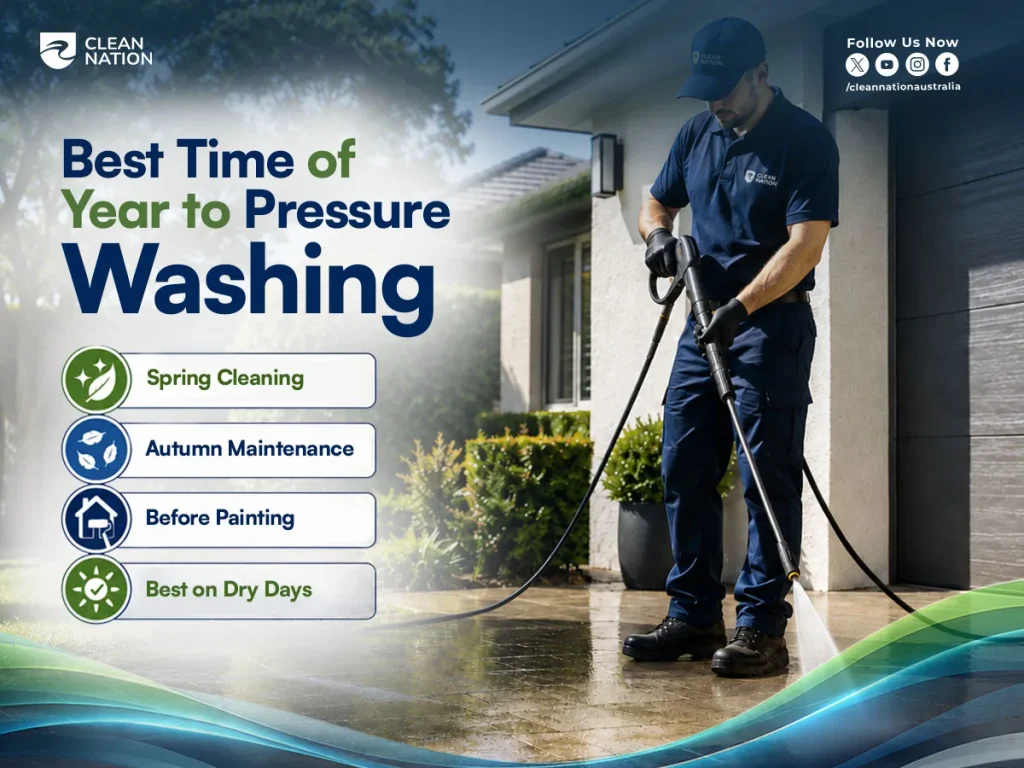
The ideal time for pressure washing depends on weather conditions, seasonal buildup and your property’s needs. Spring and autumn are useful for routine exterior maintenance, while cleaning before selling or painting can improve property presentation. Choose a dry, suitable day so surfaces and cleaning treatments can dry properly and deliver better results.
Spring Cleaning
Spring is a popular time for exterior cleaning because it provides an opportunity to remove dirt, mould, algae and winter residue before the warmer months. Cleaning patios, driveways and exterior walls can also freshen the property before outdoor entertaining becomes more frequent.
Autumn Exterior Maintenance
Autumn is useful for removing accumulated debris before wetter or colder conditions arrive. Clearing leaves and organic material from outdoor surfaces and gutters can help minimise moisture-related buildup and keep drainage areas functioning properly.
Cleaning Before Selling or Painting
Pressure or soft washing can make a noticeable difference before selling, photographing or repainting a property. Removing surface grime allows exterior finishes to look cleaner and can improve overall presentation. For painting projects, however, surfaces should be properly cleaned and completely dry before coatings are applied.
When Weather Conditions Are Suitable ?
Good weather matters because cleaning solutions need sufficient dwell time and surfaces need to dry properly. Excessive wind can create overspray problems, while rain can interfere with cleaning treatments. A professional cleaner can assess weather conditions and select an appropriate time for the work.
Pressure Washing vs Soft Washing: Which Should Your House Have?
Visible mould, algae, lichen, grime, stains, discolouration and slippery buildup are clear signs that your home’s exterior needs attention. If driveways, paths, walls or outdoor areas look dull despite regular maintenance, accumulated contamination may be affecting the property’s appearance. Early professional cleaning can restore surfaces and maintain curb appeal.
High-Pressure Cleaning for Hard Exterior Surfaces
Concrete, some brickwork and suitable pavers can generally tolerate higher pressure when the equipment and technique are correctly selected. High-pressure cleaning is particularly effective at removing surface dirt, tyre marks and certain hard-to-remove deposits, but pressure should still be adjusted according to the condition and construction of the surface.
Soft Washing for Painted and Delicate Surfaces
Soft washing uses cleaning solutions with much lower water pressure and is often better suited to render, painted walls, weatherboards, timber and other delicate finishes. Instead of relying on force alone, the treatment loosens organic contamination before it is rinsed away, helping reduce the risk of stripping paint or damaging the surface.
Why Using Too Much Pressure Can Backfire ?
More pressure does not automatically mean better cleaning. Excessive force can etch concrete, damage timber fibres, strip coatings, loosen mortar or drive water into vulnerable areas. Choosing the correct PSI and cleaning method is therefore more important than simply using the strongest setting available.

Can You Pressure Wash Your House Too Often?
Yes, over-cleaning or using excessive pressure can damage certain exterior surfaces, especially render, painted finishes, timber and older masonry. Cleaning frequency should depend on the material, exposure and visible buildup rather than a fixed schedule. A professional assessment helps determine when pressure washing is necessary and when a gentler method is safer.
Excessive Pressure Can Damage Exterior Surfaces
Frequent aggressive washing can gradually wear certain coatings and delicate materials, particularly when the wrong pressure is used. Render, painted surfaces, timber and older masonry require careful treatment. Professional cleaning should focus on removing contamination effectively without unnecessarily stressing the surface.
Cleaning Frequency Should Match Surface Condition
A heavily exposed driveway may need cleaning more often than a sheltered wall, while a shaded patio can require attention sooner than a roof. The ideal schedule should consider material, age, exposure, previous maintenance and visible buildup instead of applying the same frequency across the entire property.
Professional Assessment Prevents Unnecessary Cleaning
A professional cleaner can identify whether a surface actually needs pressure washing or whether a softer treatment is more appropriate. This prevents unnecessary cleaning and helps protect surfaces that could be damaged by excessive pressure. It also means problem areas can receive targeted treatment rather than having the whole property cleaned unnecessarily.
How to Build a Pressure Washing Maintenance Schedule ?
A practical maintenance schedule starts with regular inspections, prioritizing high-exposure areas and cleaning before heavy buildup develops. Focus on surfaces affected by moisture, traffic, salt and vegetation, then consider resealing suitable concrete or pavers after cleaning. This preventive approach can protect exterior surfaces, maintain curb appeal and reduce future cleaning costs.
Inspect Your Property Every Few Months
A quick inspection every few months can identify mould, algae, stains, dirt and blocked drainage before they become difficult problems. Pay particular attention to shaded walls, driveways, patios, pool surrounds and areas underneath trees where buildup tends to develop faster.
Prioritise High-Exposure Areas
Not every surface needs the same attention. Prioritise areas exposed to moisture, traffic, salt, vegetation and direct contamination. Driveways, paths and shaded outdoor areas may require cleaning sooner than sheltered exterior walls or less frequently used surfaces.
Schedule Professional Cleaning Before Heavy Buildup
Preventive cleaning is usually easier than trying to restore a neglected surface after years of buildup. Arranging professional pressure or soft washing when contamination is still manageable can reduce the need for aggressive treatments and help preserve the appearance of exterior surfaces.
Reseal Surfaces Where Appropriate
Sealing suitable concrete, pavers and other surfaces after cleaning can help reduce water penetration and staining. A protective sealer does not eliminate the need for future maintenance, but it can make some surfaces easier to keep clean and provide additional protection between professional services.
When Should You Hire a Professional Pressure Cleaning Service?
Professional pressure cleaning is the smarter choice for large properties, multi-story buildings, heavy mold or staining, delicate surfaces and high-risk areas. Experienced cleaners have the right equipment, safety procedures and cleaning methods to handle challenging jobs without unnecessary surface damage, making professional service safer, more efficient and often more cost-effective.
Large or Multi-Storey Properties
Large homes and multi-storey buildings often require specialised equipment, access planning and additional safety measures. Professional cleaners can handle elevated areas more safely and select suitable methods without forcing homeowners to work from unstable ladders or attempt difficult high-level cleaning themselves.
Mould, Algae and Heavy Staining
Severe mould, algae, oil, grease and other stubborn contamination may require pre-treatment, specialised detergents or multiple cleaning stages. Simply increasing pressure can damage the surface without properly addressing the contamination. Professionals can match the treatment to the type of buildup.
Delicate or Expensive Exterior Surfaces
Rendered walls, painted cladding, timber, sandstone and older roof materials deserve extra care. Professional surface assessment helps determine whether pressure washing, soft washing or another cleaning technique is appropriate, reducing the risk of avoidable damage to costly exterior finishes.
When Safety and Equipment Become a Concern ?
Pressure washers can cause injury and property damage when operated incorrectly, while roof and elevated cleaning introduce additional hazards. Professional cleaners use appropriate equipment, safety procedures and cleaning techniques, making professional service a practical choice when the job is too large, high or technically demanding.
FAQs:
Following are the faq’s;
How often should I pressure wash my house in Australia?
Most Australian homes can benefit from pressure cleaning every 12–24 months. Coastal, humid or heavily shaded properties may need it sooner due to mold, algae, salt and grime buildup. Clean Nation can recommend a schedule based on your home’s surfaces and local conditions.
Does Sydney or Brisbane weather affect pressure washing frequency?
Yes. Homes in Sydney, Brisbane and coastal NSW or Queensland can experience faster mould, algae and grime buildup because of humidity, rainfall and coastal exposure. Drier regional areas may need less frequent cleaning. Clean Nation assesses actual surface conditions before recommending a cleaning schedule.
How much does regular house pressure washing cost?
Pressure washing prices vary with property size, surface condition, accessibility and cleaning method. Clean Nation provides a tailored quote rather than applying one fixed price to every home. Ask for a current estimate based on your property’s specific cleaning requirements.
How quickly can Clean Nation respond to a pressure cleaning request?
Response times depend on your location, availability and job size. Clean Nation services Australian areas including Sydney and surrounding regions, with appointment availability confirmed when you request a quote. For urgent buildup or property presentation, ask about the earliest available service.
Should I choose a certified pressure cleaning professional?
Look for cleaners with appropriate training, safety procedures and insurance. Australian pressure-washing competency covers surface assessment, equipment selection, cleaning methods and safe work practices; the national training register states no specific licensing or certification requirement applies to the relevant unit.
Conclusion
For most Australian homes, pressure washing every 12 to 24 months is a practical maintenance schedule, but coastal exposure, humidity, rainfall, shade, trees, traffic pollution and heavy outdoor use can make more frequent cleaning necessary. Instead of waiting for severe buildup, watch for mold, algae, grime, stains and slippery surfaces, and choose the right method for each material. Professional pressure cleaning can restore curb appeal while protecting concrete, pavers, render, painted walls, timber and other exterior surfaces from avoidable damage.