


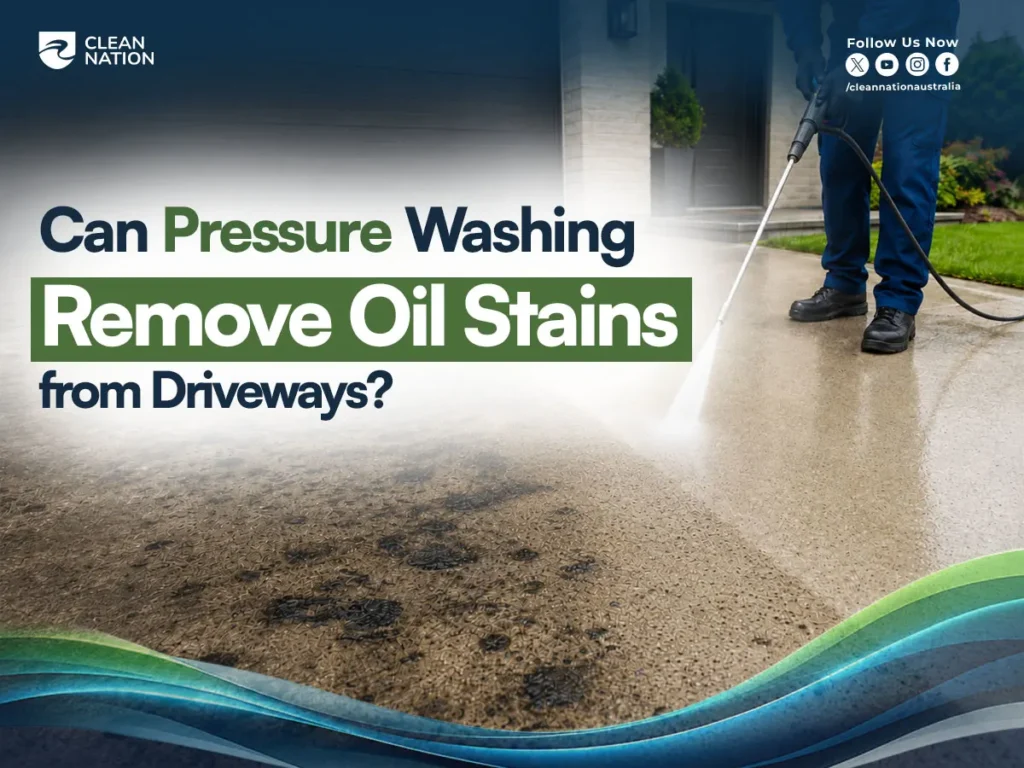
Pressure washing can remove or significantly reduce many driveway oil stains, but results depend on the stain’s age, depth, driveway material and cleaning method. Fresh oil is generally easier to treat, while old, embedded stains may need degreasing, dwell time, agitation and controlled pressure cleaning. Professional assessment helps achieve better results without damaging concrete, asphalt, pavers or protective coatings.
Why Are Oil Stains So Difficult to Remove from Driveways?
Oil stains are more challenging than ordinary dirt because oil can penetrate porous driveway materials rather than remaining entirely on the surface. Concrete, in particular, contains tiny pores that can absorb motor oil, grease and other vehicle fluids. Once contamination moves deeper into the material, a pressure washer may remove the visible residue without extracting everything underneath.
The age and severity of the stain also make a major difference. A recent spill can often be treated before it penetrates deeply, whereas an old oil patch may have been absorbed into the driveway through repeated exposure. This is why stubborn black or darkened areas sometimes require targeted pre-treatment rather than simply increasing the water pressure.
How Oil Penetrates Porous Concrete
Concrete is naturally porous, allowing oil to seep into microscopic spaces below the surface. As the contamination penetrates, ordinary surface cleaning becomes less effective because the visible mark is only part of the problem. A suitable treatment can help loosen embedded oil before controlled pressure cleaning removes the resulting residue.
Fresh Oil Stains Are Easier to Treat
Fresh oil spills generally offer a better opportunity for effective removal because the contamination has had less time to penetrate the driveway. Prompt action can limit absorption and make subsequent cleaning more effective. Leaving motor oil or other vehicle fluids sitting on concrete for days or weeks can turn a manageable spill into a stubborn stain.
Old and Deep-Set Oil Stains
Old oil stains can become deeply embedded, particularly on unsealed concrete that has repeatedly absorbed vehicle fluids. Simply increasing the pressure may lighten the surface without addressing the oil underneath. Deep-set contamination may require degreasing, agitation and repeated treatment to achieve the best possible result.
What Affects Oil Stain Removal on a Driveway?
There is no universal pressure setting or cleaning treatment that guarantees the same result on every driveway. Stain age, contamination type, surface material, existing sealer, driveway condition and cleaning technique all influence how effectively an oil stain can be treated. A proper assessment helps determine what combination of cleaning methods is appropriate.
Type and Age of the Oil Stain
Motor oil, engine oil, transmission fluid, brake fluid and grease can behave differently once they reach a driveway surface. A fresh spill is usually easier to address than contamination that has been exposed to heat, weather and repeated vehicle traffic. Identifying the source and age of the stain helps determine the appropriate treatment.
Driveway Material and Surface Condition
Concrete, asphalt, pavers and exposed aggregate all respond differently to pressure and cleaning products. An unsealed porous concrete driveway may absorb oil deeply, while a sealed surface can provide greater resistance to penetration. Cracks, deterioration, damaged coatings and existing surface wear should also be considered before cleaning begins.
Pressure Level and Cleaning Technique
More pressure does not automatically mean better oil removal. The wrong nozzle, excessive PSI, incorrect spray distance or poor technique can damage a driveway while still leaving oil behind. Controlled pressure should be selected according to the surface material, condition and level of contamination rather than simply using the strongest available setting.
Whether the Driveway Is Sealed
A concrete sealer can help reduce the amount of oil absorbed into the surface, making future contamination easier to manage. However, sealed driveways still require appropriate cleaning methods because excessive pressure or unsuitable chemicals can damage the protective coating. The condition and type of sealant should be considered before treatment.
Is Pressure Washing Alone Enough for Oil Stains?
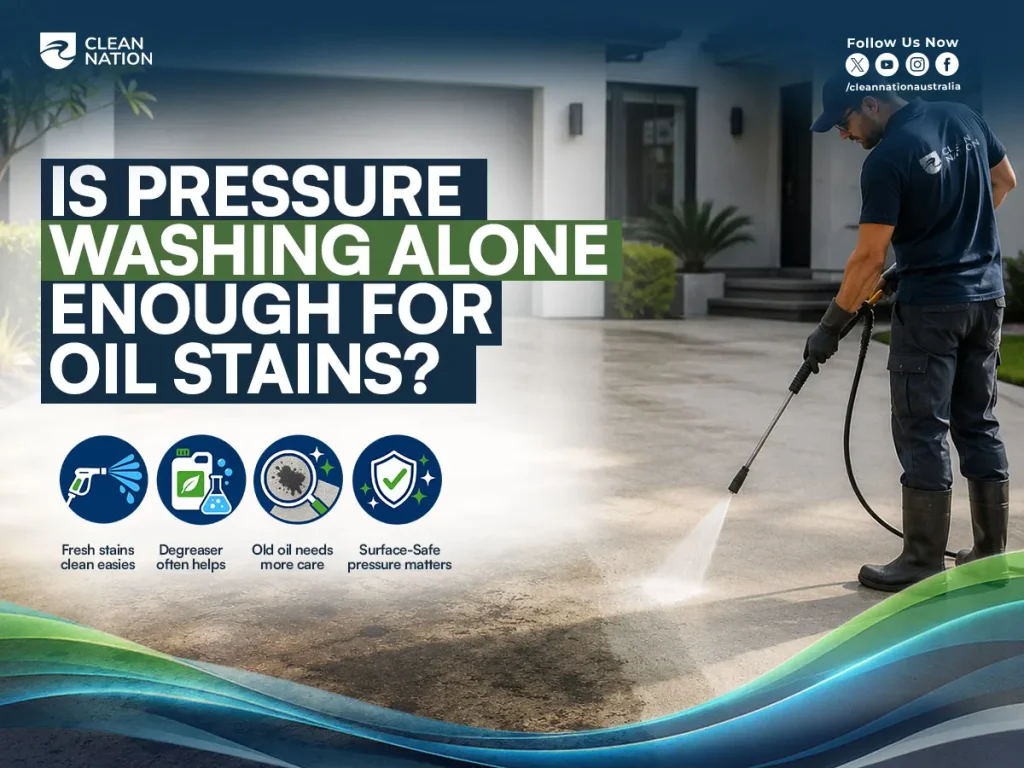
Pressure washing can be highly effective against surface contamination, but stubborn oil often requires more than mechanical force. A professional approach may combine pressure cleaning with an appropriate degreaser or pre-treatment to break down the oil before rinsing. This allows the cleaning process to target the contamination rather than simply moving residue around the driveway.
The right combination depends on the stain and surface. Fresh, light contamination may require less treatment, while old or deeply embedded oil can need additional applications. Using the correct cleaning chemistry alongside controlled pressure is generally more sensible than repeatedly increasing PSI in an attempt to force the stain away.
When Pressure Washing May Be Enough
Pressure washing may be sufficient when oil contamination is fresh, light or primarily sitting on the surface of a durable driveway. Controlled mechanical force can lift loosened oil, dirt and surrounding grime, particularly when the contamination has not had enough time to penetrate deeply into the material.
When a Degreaser or Pre-Treatment Is Needed
A concrete-safe degreaser can help break down oil before pressure cleaning begins. Rather than relying entirely on water pressure, pre-treatment targets the oily contamination chemically, helping loosen and emulsify residue so it can be more effectively removed during rinsing.
Why Dwell Time and Scrubbing Improve Results
Cleaning solutions need enough contact time to work effectively. Allowing suitable dwell time gives the product an opportunity to break down contamination before agitation helps loosen it from the surface. Scrubbing can be particularly useful for stubborn patches where simply spraying the area does not provide enough contact.
When Hot Water Pressure Cleaning Helps
Heated pressure cleaning can be useful for stubborn oil and grease because heat can help soften and loosen oily contamination. Combined with an appropriate cleaning solution and controlled pressure, hot water may improve cleaning performance on heavily contaminated areas. The equipment and temperature should still be selected according to the driveway material.
Can You Pressure Wash Oil Stains from Every Type of Driveway?
Not every driveway should be treated in exactly the same way. Concrete may tolerate controlled pressure cleaning, while asphalt, decorative concrete, sealed finishes and pavers can have different limitations. Matching the cleaning pressure, equipment and treatment to the specific material helps reduce surface damage while improving the chances of a consistent result.
Concrete Driveways
Concrete is one of the most common surfaces for pressure cleaning, but its porosity makes oil removal challenging. Controlled pressure combined with suitable pre-treatment can help remove surface grime and oil residue. Older or unsealed concrete may require additional treatment because oil can penetrate beneath the visible surface.
Asphalt Driveways
Asphalt requires greater care because aggressive pressure or unsuitable cleaning methods can affect the surface and potentially disturb loose aggregate. Oil can also interact with the asphalt binder, making early treatment particularly important. Cleaning should therefore be controlled according to the condition and composition of the driveway.
Pavers and Exposed Aggregate
Pavers and exposed aggregate have textured surfaces and joints where oil, dirt and debris can accumulate. Excessive pressure can disturb jointing material or produce inconsistent results across the surface. The cleaning method should account for the texture, condition and stability of the paving system.
Sealed and Decorative Concrete
Decorative or sealed concrete may have coatings, colours or finishes that require careful handling. Strong pressure or incompatible cleaning chemicals can affect these finishes even when the underlying concrete is durable. A surface-specific approach is essential when treating oil stains on decorative driveways.
How Professionals Remove Oil Stains from Driveways?
Professional oil stain removal is not simply a matter of pointing a pressure washer at the darkest patch and turning up the pressure. The process starts with identifying the driveway material, assessing the stain and selecting an appropriate treatment. This helps Clean Nation target the contamination while reducing unnecessary stress on the surrounding surface.
Inspect the Driveway and Identify the Stain
The first step is assessing the driveway’s material, condition, stain age and contamination level. A fresh motor oil spill on sealed concrete requires a different approach from an old, deeply embedded stain on porous concrete. Identifying these factors helps determine the safest and most effective cleaning method.
Pre-Treat the Oil Contamination
Where required, a suitable degreaser or oil-treatment product is applied to help break down the contamination before pressure cleaning. The product, concentration and application method should be appropriate for the surface so the treatment targets the oil without unnecessarily affecting surrounding finishes.
Agitate and Pressure Clean
After pre-treatment has had sufficient contact time, agitation can help loosen stubborn residue before controlled pressure cleaning removes the contamination. Pressure, nozzle selection and spray distance are adjusted according to the driveway rather than relying on maximum mechanical force.
Rinse and Assess the Results
A thorough rinse removes loosened oil, cleaning residue and surface debris. The area can then be inspected to determine how much contamination has been removed and whether additional treatment is necessary. This assessment is particularly important with old or deeply embedded oil stains.
Repeat Treatment for Stubborn Stains
Some oil stains have accumulated over months or years and cannot realistically be removed in a single pass. Additional treatment may be required to progressively reduce deeply embedded contamination. Repeated targeted treatment is preferable to simply increasing pressure and risking unnecessary surface damage.
Can Pressure Washing Damage an Oil-Stained Driveway?
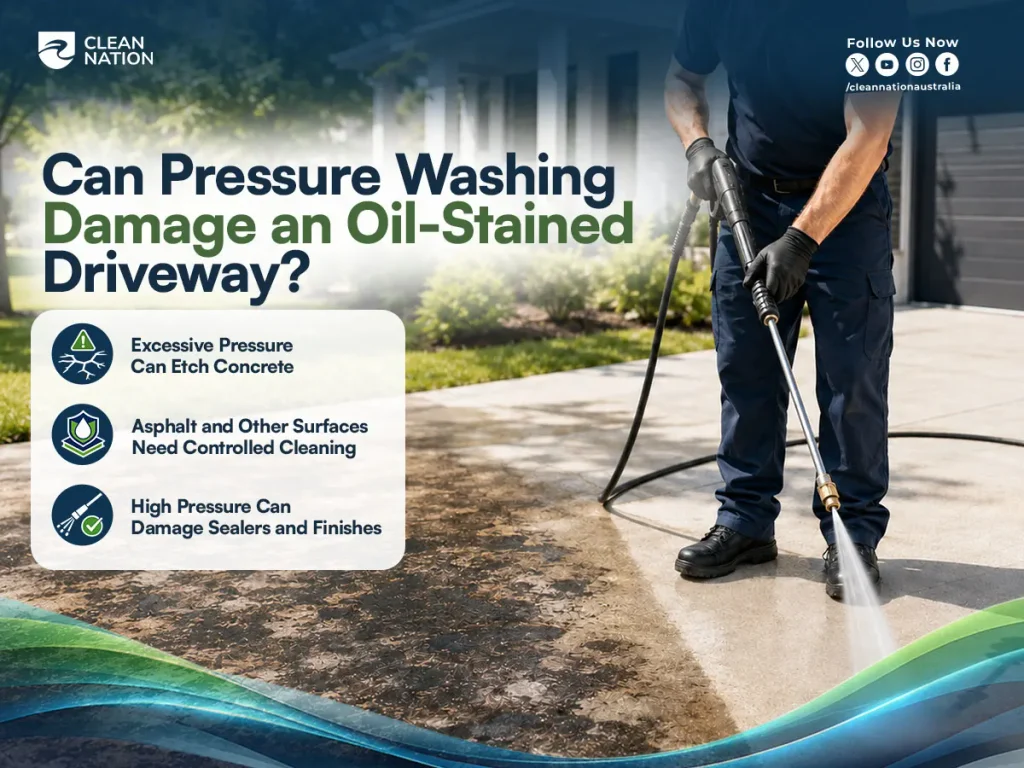
Yes. Incorrect pressure cleaning can damage concrete, asphalt, coatings and other driveway surfaces. The biggest mistake is assuming that stubborn contamination should always be attacked with greater pressure. Excessive PSI, unsuitable nozzles, poor spray distance and incorrect technique can create surface damage without necessarily removing deeply embedded oil.
Professional cleaning focuses on balancing cleaning power with surface protection. The driveway material, condition and contamination should determine the pressure and treatment used. Removing an oil stain is important, but damaging the surface underneath can create a much bigger and more expensive problem.
Excessive Pressure Can Etch Concrete
Too much pressure can remove more than dirt. It can etch the surface of concrete, create uneven cleaning patterns and contribute to surface deterioration. A controlled approach uses enough mechanical force to clean effectively without unnecessarily removing the surface layer.
High Pressure Can Damage Sealers and Finishes
Sealed and decorative driveways can be particularly sensitive to aggressive cleaning. Excessive pressure may strip or affect protective coatings and finishes, potentially leaving the surface less protected against future staining. Cleaning should therefore account for the existing coating rather than treating sealed concrete like unprotected concrete.
Asphalt and Other Surfaces Need Controlled Cleaning
Asphalt, pavers and other driveway materials have different structural characteristics and cleaning requirements. Aggressive pressure can disturb loose aggregate, affect joints or create uneven results. The safest approach is to identify the material first and then select equipment and pressure accordingly.
Will Pressure Washing Completely Remove Old Oil Stains?
Pressure washing can significantly improve the appearance of many oil-stained driveways, but complete removal of old, deeply embedded contamination cannot always be guaranteed. Once oil has penetrated porous concrete, some discolouration may remain even after professional treatment. A reputable cleaner should set realistic expectations rather than promise that every old stain will disappear completely.
The objective is to achieve the best practical result without damaging the driveway. Fresh stains can often respond more readily, while long-standing contamination may require multiple treatments or, in severe cases, a different restoration approach. Cleaning should always be judged by the condition and history of the surface.
Fresh Stains Have a Better Chance of Complete Removal
Fresh oil has had less opportunity to penetrate the driveway, making prompt treatment highly valuable. Removing surface contamination early can prevent the oil from becoming deeply embedded and significantly reduce the effort required for subsequent cleaning.
Deep Oil Stains May Leave Discolouration
When oil has remained inside porous concrete for an extended period, cleaning may reduce the stain without completely restoring the original colour. A remaining oil shadow or slight discolouration does not necessarily mean the cleaning process failed—it can indicate that contamination has penetrated beyond the easily accessible surface.
When Cleaning Is Not Enough
Severe, long-term staining may sometimes require restoration beyond conventional pressure cleaning. If a driveway has permanent discolouration, significant surface deterioration or extensive contamination, options such as resurfacing may need to be considered. A professional assessment can determine whether cleaning alone is a realistic solution.
How Can You Prevent Oil Stains on Your Driveway?
Preventing oil contamination is easier than repeatedly trying to remove deeply embedded stains. Regularly checking vehicles, responding quickly to spills and maintaining the driveway can reduce the chance of oil becoming a permanent-looking feature of the property. Early intervention is particularly important on porous and unsealed surfaces.
Treat Oil Spills as Soon as They Happen
Quick action gives oil less time to penetrate the driveway. Fresh spills should be addressed promptly using an appropriate absorbent and cleaning approach rather than being left exposed to traffic, heat and weather. Early treatment can make future pressure cleaning considerably easier.
Check Vehicles for Oil and Fluid Leaks
Recurring oil stains often indicate an ongoing vehicle leak rather than a one-time spill. Engine oil, transmission fluid and other automotive fluids can repeatedly contaminate the same area. Identifying and repairing the source prevents the driveway from being re-stained immediately after cleaning.
Consider Driveway Sealing
A suitable concrete sealer can help reduce absorption and provide an additional layer of surface protection. Sealing does not make a driveway immune to staining, but it can make certain contaminants easier to manage and may help protect the surface when combined with sensible maintenance.
Keep Up With Regular Driveway Cleaning
Routine driveway cleaning removes accumulated dirt, grime and contaminants before they become more difficult to manage. Regular maintenance can also make oil spills easier to identify, allowing homeowners to deal with new contamination before it becomes deeply embedded.

Should You Remove Driveway Oil Stains Yourself?
DIY cleaning can work for small, fresh oil spills on straightforward, durable surfaces, but pressure washing becomes much less forgiving when stains are old or the driveway material is delicate. Using the wrong pressure or chemical can leave permanent marks, damage coatings or create a larger problem than the original stain.
Professional cleaning makes more sense when the contamination is extensive, deeply embedded, recurring or located on a specialised surface. Clean Nation can assess the driveway and determine whether pressure cleaning, pre-treatment, or a combination of methods is appropriate rather than relying on a one-size-fits-all approach.
When DIY Cleaning Can Work
DIY treatment may be reasonable for a fresh, small spill on an accessible driveway when the homeowner has suitable cleaning products and understands the surface. The key is acting quickly and avoiding excessive pressure simply because the stain does not disappear immediately.
When Professional Cleaning Is the Better Choice
Professional cleaning is the safer option for large oil patches, old stains, repeated vehicle leaks, decorative surfaces or driveways where the material is uncertain. Proper equipment, cleaning solutions and surface-specific techniques can deliver a more controlled result while reducing the risk of avoidable damage.
Get Stubborn Driveway Oil Stains Cleaned by Clean Nation
Don’t keep attacking a stubborn oil stain with more pressure and hoping it disappears. Clean Nation assesses the driveway, identifies the contamination and uses an appropriate combination of pre-treatment and controlled pressure cleaning to tackle oil, grease, dirt and embedded residue. Whether your driveway has fresh vehicle oil, years-old staining or recurring contamination, the right treatment matters more than maximum PSI. Choose Clean Nation for professional driveway cleaning focused on effective stain removal and surface protection.
FAQs:
Following are the faq’s;
What surfaces should never be pressure washed?
Avoid high-pressure cleaning on fragile roofing, weathered timber, old render, painted surfaces, weak mortar, window seals, electrical fixtures and delicate coatings. Clean Nation assesses the material and condition first, then recommends pressure washing, soft washing or a safer low-pressure method.
Can Clean Nation pressure wash roofs and painted walls?
Clean Nation can clean roofs and painted walls, but high pressure is not automatically suitable. Soft washing or controlled low-pressure cleaning is often safer for mould, algae and surface grime. The method depends on the material, coating, age and condition of the property.
How quickly can Clean Nation provide exterior cleaning?
Clean Nation services Sydney and surrounding suburbs, with response times depending on your location, availability and job requirements. You can contact the team to arrange an inspection or cleaning appointment based on your preferred schedule.
How much does pressure or soft washing cost?
Pricing depends on the surface type, property size, contamination, access and cleaning method required. Clean Nation provides tailored pricing rather than applying one fixed rate to every property, helping customers pay for the actual work their surfaces need.
Is Clean Nation certified and insured for exterior cleaning?
Clean Nation follows professional, surface-specific cleaning practices and uses appropriate equipment for pressure and soft washing. Customers can ask about current technician qualifications, insurance and relevant certifications when booking, particularly for roofs, elevated areas and delicate exterior surfaces.
Conclusion
Pressure washing can make a significant difference to oil-stained driveways, but the best results depend on more than water pressure alone. Fresh stains are generally easier to treat, while older, deeply embedded oil may require degreasing, agitation and controlled pressure cleaning. Because every driveway reacts differently, the right method should always consider the surface material, stain severity and existing condition. With professional assessment and surface-specific treatment, Clean Nation can help restore the appearance of concrete, asphalt, pavers and other driveway surfaces without relying on unnecessary pressure.