


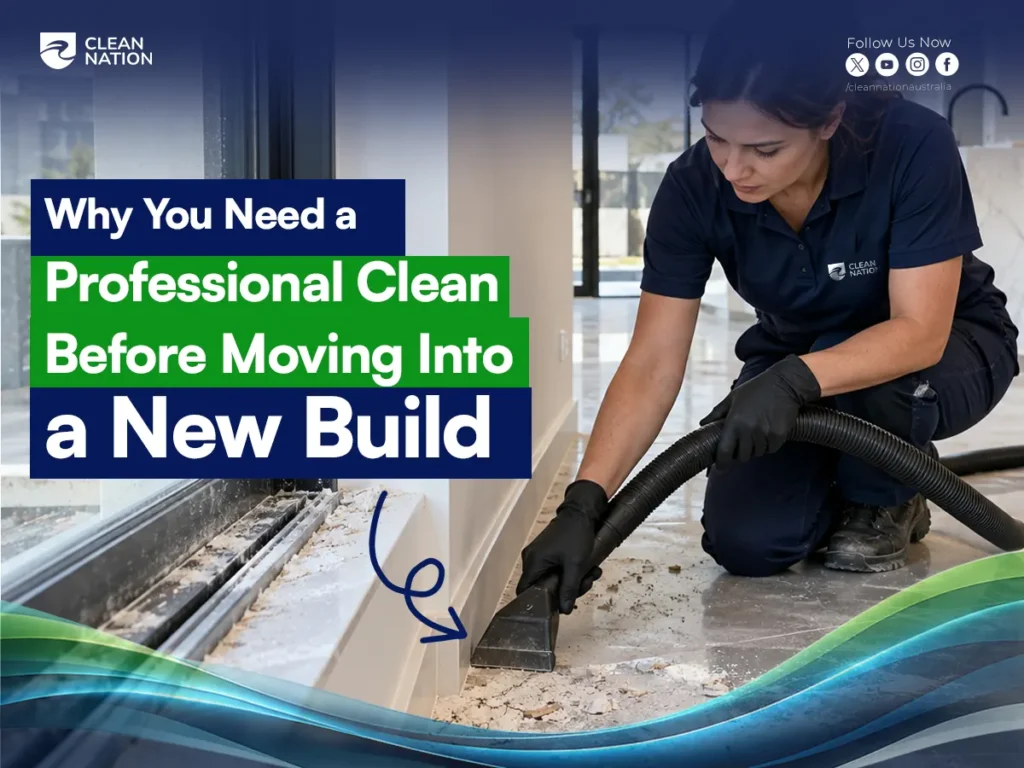
Moving into a newly built home should mean unpacking your belongings, arranging furniture and settling in. But when you open a kitchen cupboard or run your hand along a window track, you might find something unexpected: construction dust that was never properly removed. Fresh paint, new flooring and spotless-looking benchtops can make a property appear ready for occupation. In reality, building work often leaves plaster dust, sawdust, adhesive marks, and fine debris in places a quick handover clean may overlook.
That is why professional new build cleaning is worth considering before moving into your Sydney property. A detailed post-construction clean removes building residue, protects newly installed finishes, and makes the home more comfortable to live in. A professional clean before moving into a new build helps address leftover construction dust, hidden debris and residue before you unpack.
Why a Newly Built Home Isn’t Necessarily Move-In Ready
A completed construction project is not automatically a thoroughly cleaned home. Even after the final trades have left, dust can remain on surfaces, inside storage spaces and around new fixtures.
The difference becomes noticeable when you inspect areas beyond the main floors and benchtops.
Construction Dust and Hidden Debris After Building Work
Cutting timber, sanding plaster, installing tiles and fitting cabinetry can generate dust throughout a construction project. Fine particles may settle inside cupboards, behind doors, on skirting boards and along window frames.
Common construction residues include:
- Plaster and plasterboard dust on walls, ledges and flooring
- Sawdust inside wardrobes, shelving and cabinet corners
- Grout haze across newly installed bathroom and kitchen tiles
- Paint splatters and adhesive marks on glass or fittings
- Silicone residue around sinks, splashbacks and showers
- Packaging fragments and small offcuts in storage areas
Dust can remain even when the rooms look clean from the doorway. Once you begin using the house, air movement and everyday activity can disturb settled particles.
A professional post-construction clean focuses on these less obvious areas rather than simply improving the appearance of visible surfaces.
What a Standard Builder’s Clean May Miss
Some construction contracts include a builder’s clean before handover. However, the agreed scope can vary considerably between projects.
A basic builder’s clean may focus on removing loose rubbish, sweeping floors and wiping visible surfaces. Detailed cleaning inside cupboards, window tracks, fittings and other difficult areas may not be included.
For example, a kitchen may look finished while the drawer runners still contain sawdust. Bathroom tiles may appear clean until natural light reveals a cloudy film of grout haze.
Before booking additional cleaning, review your building contract and handover documentation. Your builder may already be responsible for completing certain cleaning tasks, and these should be addressed before you pay another provider for the same work.
Why Professional New Build Cleaning Matters Before Moving In
A thorough new home clean is not only about making rooms look presentable. It helps address construction residue before you begin using the property and reduces the need to clean around furniture later.
Construction Dust Can Affect Indoor Air and Comfort
Fine construction dust deserves particular attention, especially after cutting, drilling, grinding or sanding building materials.
Depending on the materials and work performed, dust can contain particles that may irritate the eyes and respiratory system. Work involving silica-containing materials can also generate respirable crystalline silica, which requires appropriate risk controls.
Ordinary household vacuum cleaners are not suitable for every type of construction dust. Where hazardous silica dust may be present, trained personnel must use appropriate methods and rated extraction equipment rather than relying on a standard domestic vacuum.
Professional cleaners should assess the type of residue and use cleaning methods suitable for the site. They should also recognise when specialist hazardous-dust remediation is necessary.
Cleaning does not guarantee perfect indoor air quality, but removing settled residue before occupancy is a sensible part of preparing a new home.
Proper Cleaning Helps Protect New Floors, Tiles and Fixtures
Newly installed surfaces need care during the final cleaning stage.
Fine grit dragged across timber flooring can cause scratches. Incorrect chemicals may damage natural stone, while aggressive scraping can mark glass, tiles or stainless-steel fixtures.
A professional new build clean should match cleaning products and methods to each surface.
For example, engineered timber flooring may require a manufacturer-approved cleaning solution and limited moisture. Porcelain tiles with grout haze may need a different approach from marble or limestone.
Paint spots, silicone marks and adhesives should be assessed before removal rather than treated with strong chemicals indiscriminately.
The aim is to remove construction residue without damaging the workmanship you have just paid for.
An Empty Home Is Easier to Inspect and Clean
Once furniture arrives, access becomes more difficult.
Beds cover sections of flooring, appliances block wall edges and storage items fill cupboards that have not yet been checked for dust.
Cleaning before unpacking allows better access to skirting boards, wardrobe interiors, corners and floor edges. It also gives homeowners a clearer opportunity to inspect finishes.
Dust removal can reveal chipped tiles, paint imperfections, damaged joinery or marks on glass. These should be documented and reported to the builder where appropriate.
Professional cleaners can identify visible issues during their work, but cleaning is not a substitute for an independent building inspection or formal defects assessment.
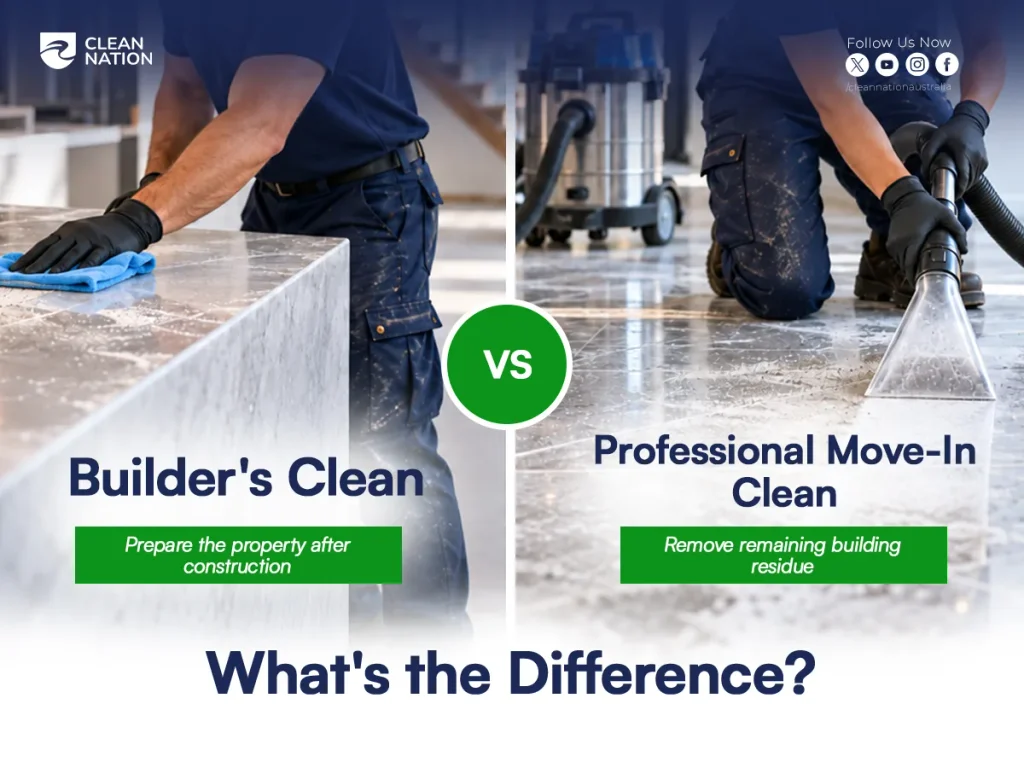
Builder’s Clean vs Professional Move-In Clean – What’s the Difference?
The terms builder’s clean, post-construction cleaning, final sparkle clean and move-in cleaning are sometimes used interchangeably. However, the work included can differ.
| Cleaning type | Main purpose | Typical focus |
| Builder’s clean | Prepare the property after construction | Debris, loose dust and visible surfaces |
| Detailed post-construction clean | Remove remaining building residue | Fine dust, cabinetry, glass, floors and fixtures |
| Final sparkle clean | Improve presentation before inspection or occupation | Smudges, fingerprints, remaining marks and final detailing |
| Move-in deep clean | Prepare rooms for everyday living | Cupboard interiors, kitchens, bathrooms and accessible surfaces |
A detailed builder’s clean can sometimes cover everything needed for move-in. In other cases, additional cleaning is necessary.
Rather than relying on the service name, ask for a written checklist showing exactly what will be completed.
For Sydney homeowners, Clean Nation offers post-construction cleaning in NSW for properties requiring detailed dust removal and final cleaning after building or renovation work.
New Build Cleaning Checklist Before Moving In
A practical new build cleaning checklist helps you identify the areas that require attention before furniture and personal belongings arrive.
Cleaning requirements depend on the home’s finishes and the condition left by the trades.
Kitchens, Cupboards and Newly Installed Cabinetry
Kitchen cabinets are among the most important places to inspect before unpacking.
Construction dust can accumulate along shelves, drawer runners, hinges and corners during cabinetry installation.
A detailed kitchen clean may include:
- Cleaning cupboard and drawer interiors
- Removing loose dust from shelving and cabinet edges
- Wiping splashbacks and benchtops using suitable products
- Cleaning sinks, taps and accessible fixtures
- Removing fingerprints and suitable adhesive residue
- Checking accessible appliance surfaces for installation dust
Clean inside the cabinets before placing crockery, utensils or food into storage.
Confirm whether appliance interiors and specialist residue removal are included in the service quotation.
Bathrooms, Tiles and Grout Haze
New bathrooms can contain residue from grouting, sealing and the installation of fittings.
Grout haze may leave tiles looking dull, while silicone marks and adhesive residue can remain around shower screens, vanities and basins.
Bathroom cleaning should focus on shower screens, accessible grout lines, tile surfaces, vanities, tapware, toilets and storage interiors.
Care is particularly important with natural stone and recently completed grout or sealant. Products should be selected according to manufacturer instructions and curing requirements.
Aggressive scrubbing or unsuitable acidic cleaners can damage sensitive finishes.
Windows, Glass and Sliding Door Tracks
Construction dust frequently gathers in window tracks, sliding door rails and the corners of glass frames.
Protective film, installation labels and paint spots may also remain on windows.
A detailed clean can address these areas, but removing hardened material from glass requires care. Some glass surfaces have coatings that can be scratched by inappropriate blades or abrasive tools.
For specialised glass detailing, Clean Nation provides post-construction window cleaning services in New South Wales.
Check whether internal and external windows, elevated glazing, screens and balcony doors are included in your cleaning quote.
Floors, Skirting Boards, Living Areas and Air Vents
Living spaces can appear clean while dust remains along wall edges and around installed fittings.
Before moving furniture into the home, inspect:
- Timber, laminate and tiled floors
- Skirting boards and door frames
- Built-in wardrobes and shelving
- Window sills and accessible tracks
- Light fittings and ceiling fans
- Accessible ventilation grilles
- Stair edges and corners
Floors should be cleaned using methods appropriate to their material. Dry sweeping suspected hazardous dust should be avoided because it can redistribute particles into the air.
If dust appears to have entered air-conditioning ductwork, ask a qualified HVAC specialist whether the system requires inspection or cleaning. Wiping accessible vents is not the same as professionally cleaning an entire duct system.
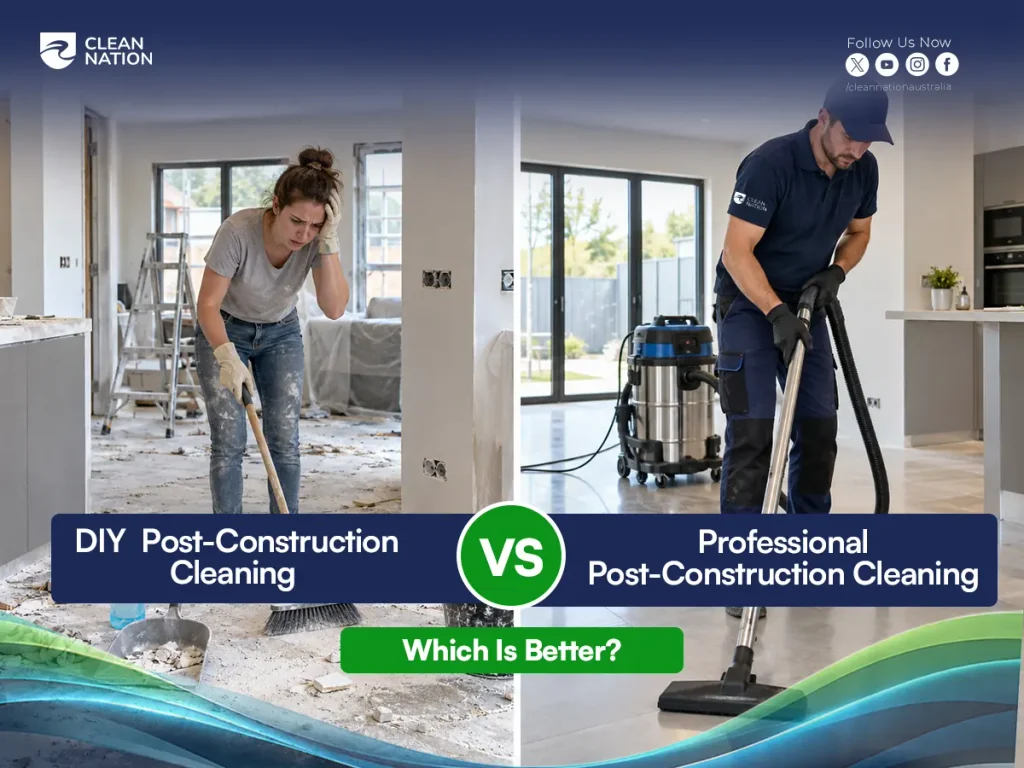
DIY vs Professional Post-Construction Cleaning – Which Is Better?
Some homeowners can manage a light final clean themselves. Others may need specialist equipment and an experienced team.
The right choice depends on the type of dust, the property size, the cleaning standard already achieved and the time available before moving day.
DIY cleaning may be reasonable when construction debris has already been properly removed, the property contains only ordinary light household dust, and all surfaces are safe and straightforward to clean.
However, extensive plaster residue, stubborn grout haze, paint marks and fine construction dust may require more specialised attention.
Hiring a professional cleaner can be particularly useful for larger homes, tight move-in schedules and properties with extensive cabinetry, glazing or detailed finishes.
If silica-containing dust or another hazardous material is suspected, do not attempt to remove it with an ordinary vacuum or dry broom. Arrange a suitable assessment and cleaning method first.
A professional service should be able to explain which types of residue it handles and which tasks require specialist contractors.
When Should You Schedule a New Build Clean?
The best cleaning date depends on your handover arrangements and whether construction work is genuinely finished.
For many homeowners, the ideal time for a final move-in clean is after dusty trades have completed their work and before furniture arrives.
A practical sequence is:
Confirm the construction work is complete
Painting, sanding, installations and other dust-generating tasks should be finished.
Inspect the property and record defects
Take photographs of unfinished or damaged areas and report them through the appropriate handover process.
Confirm which cleaning tasks the builder must complete
Avoid paying twice for work already included in the construction contract.
Arrange detailed cleaning
Schedule the agreed cleaning scope when the property can be accessed safely.
Check the finished work before unpacking
Inspect cupboard interiors, window tracks, floors and other priority areas.
Some projects require a builder’s clean before the final inspection and a separate sparkle clean afterwards. Others only need one detailed clean.
For a new Sydney apartment, also confirm lift access, building management requirements, loading facilities and available cleaning hours before booking.
The important point is to prevent cleaners and trades from repeatedly working over each other’s completed tasks.
How Much Does New Build Cleaning Cost in Sydney?
New build cleaning costs vary because no two recently constructed properties have identical cleaning requirements.
The property size, number of rooms, level of residue and scope of specialist detailing all influence the quote.
Clean Nation’s published NSW post-construction cleaning page provides broad indicative pricing of A35–A85 per hour or approximately A3–A15 per square metre. These are general published ranges, not fixed quotes for every Sydney new build.
A small apartment requiring only final detailing may involve less work than a large house with several bathrooms, extensive glazing and substantial construction dust.
Other factors that can affect pricing include:
- Interior and exterior window cleaning
- Grout haze and adhesive residue removal
- Number of cupboards, wardrobes and fixtures
- Staircases, balconies and access restrictions
- Condition of flooring and delicate finishes
- Whether extra cleaning passes are required
Before agreeing to a service, request an itemised quotation confirming what is included, which tasks cost extra and whether GST is included.
The lowest price may not represent the best value if important cleaning work is excluded.
How to Choose a Professional New Build Cleaning Service in Sydney
Not every routine house cleaner is equipped to handle post-construction residue.
Before booking a service, ask whether the company has experience with newly completed residential properties and can provide an appropriate cleaning checklist.
Check that the team understands surface-specific cleaning methods, carries relevant insurance and uses suitable equipment for the dust involved.
It is also worth confirming whether waste removal, external windows, grout haze treatment and appliance interiors form part of the quotation.
For homeowners looking for move-in cleaning advice, understanding the difference between routine house cleaning and a detailed one-off service can help prevent misunderstandings.
If you are also comparing house cleaning in Sydney for future maintenance, remember that the first clean after construction may require a different scope from the regular cleaning needed once the home is occupied.
Prepare Your Sydney New Build With Clean Nation
A newly built property deserves a proper clean before everyday life begins.
Whether you are preparing an apartment for occupation or finishing a newly constructed family home, Clean Nation provides construction and builders cleaning services designed around post-build dust, residue and final presentation.
Tell our team about your property size, handover date, completed finishes and cleaning priorities so the required scope can be reviewed.
Call Clean Nation on +61 480 810 142 or submit an online enquiry to request a quote for your Sydney new build.
Frequently Asked Questions
1. Should I arrange a professional clean if the builder has already cleaned my new house?
Not necessarily. First review the builder’s cleaning checklist and inspect the property. If cupboard interiors, window tracks or other agreed areas still contain residue, ask the builder to address them. An additional professional clean is useful when the existing service does not cover the level of detailing you need.
2. Can construction dust return after a new build has been cleaned?
Yes. Remaining dust can resettle after cleaning if residue is still present in hidden areas or further dusty work takes place. Recurring dust may indicate the need for additional assessment rather than repeated surface wiping alone.
3. Do new build cleaners remove protective film from appliances and fixtures?
This depends on the agreed scope and manufacturer instructions. Some protective films can be safely removed during final detailing, while others should remain until installation or finishing work is complete. Confirm responsibility before the clean begins.
4. Can I move furniture in immediately after professional cleaning?
Usually, once the cleaning is complete and floors and treated surfaces are sufficiently dry. If specialist chemicals, sealants or floor treatments have been used, follow the product’s ventilation and curing instructions before bringing furniture inside.
5. Can professional cleaners fix defects found in a new build?
Cleaning teams can identify and report visible issues such as chipped tiles, damaged fittings or unfinished paintwork. They do not replace qualified trades or building inspectors. Construction defects should be documented and referred to the builder or relevant specialist for rectification.