


A newly finished building can look ready from a distance, but a closer inspection often tells a different story. Fine plaster dust sits inside cupboards, paint marks remain on windows, and leftover building residue makes new surfaces look unfinished. For builders, these small details matter. A client walking through their new property expects clean floors, clear glass, spotless bathrooms and well-presented finishes.
A final builders clean checklist helps make sure nothing is overlooked before that important handover. This guide explains what’s included in a professional final builders clean, how it differs from earlier cleaning stages, what to check before signing off and how to prepare your site for a successful handover.
What Is a Final Builders Clean?
A final builders clean is a detailed cleaning service carried out towards the end of a construction or renovation project. It removes remaining construction dust, building residue, fingerprints and marks from finished surfaces before the property is presented to its owner.
Unlike regular house cleaning, a final clean focuses on newly installed materials, fittings and hard-to-reach areas affected by building work.
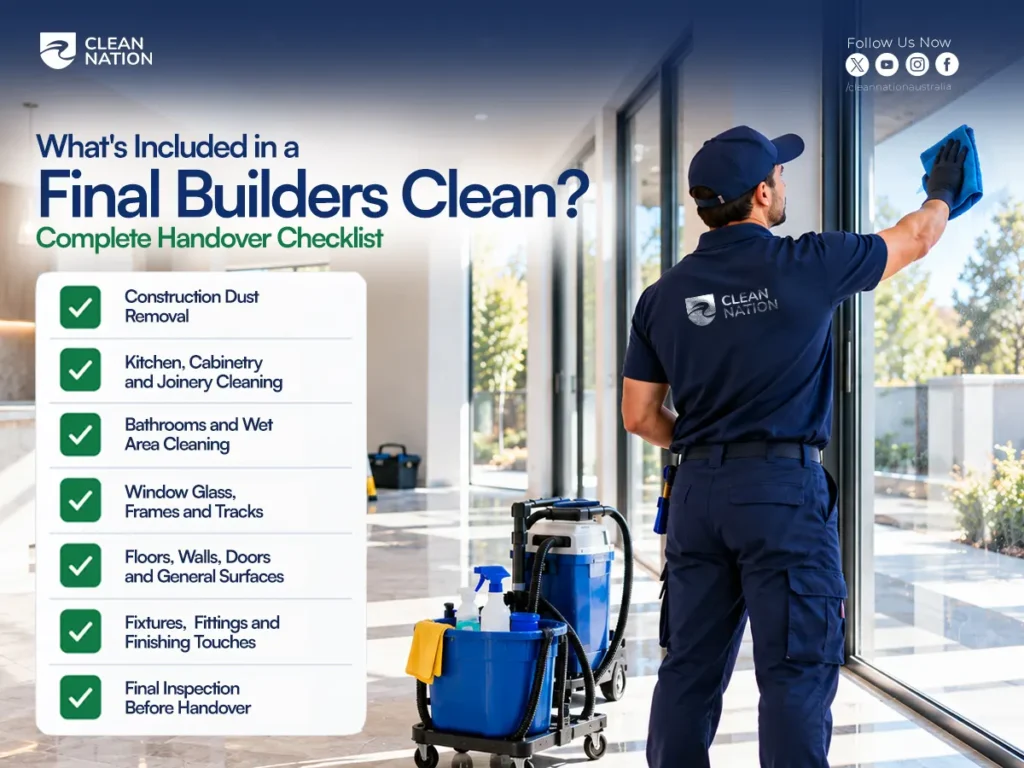
A typical final handover clean includes:
- Removing fine dust from walls, ledges, doors and skirting boards.
- Cleaning kitchens, bathrooms, cupboards and built-in joinery.
- Cleaning windows, glass panels, frames and tracks.
- Removing suitable paint spots, grout haze and adhesive residue.
- Vacuuming and mopping finished floors using appropriate methods.
- Detailing fixtures, fittings, handles and switches.
- Checking visible surfaces before the client walkthrough.
The exact scope depends on the building, its condition and the cleaning contractor’s written quotation.
A final builders clean is commonly required for newly built houses, apartment developments, commercial fit-outs, renovations and other completed construction projects.
What’s Included in a Final Builders Clean?
A professional final builders clean covers much more than visible floors and benchtops. Construction dust travels through rooms, settles inside fittings and gathers around newly installed materials.
The following cleaning tasks form the basis of a practical builders cleaning checklist for Australian projects.
1. Construction Dust Removal From All Accessible Surfaces
Even after the main building work has finished, fine dust can remain across the property. Plaster sanding, timber cutting and other construction activities leave particles on surfaces that ordinary cleaning may miss.
Final cleaning usually includes:
- Removing dust from accessible walls, ledges and shelves.
- Wiping door frames, skirting boards and window sills.
- Cleaning accessible light fittings and air vent covers.
- Detailing built-in cupboards, drawers and storage spaces.
- Removing dust from corners, stairs and other finished surfaces.
Cleaning should follow a planned top-to-bottom sequence so settled dust is not spread back onto surfaces already cleaned.
Safety matters: Where construction dust may contain respirable crystalline silica, ordinary dry sweeping or domestic vacuuming is not appropriate. Safe Work Australia recommends suitable dust-control methods, including wet methods and appropriately rated industrial vacuums, based on the exposure risk.
2. Kitchen, Cabinetry and Joinery Cleaning
Kitchens receive close attention during a property handover. Dust inside a drawer or adhesive marks on a new benchtop can affect the appearance of an otherwise well-finished installation.
Kitchen and joinery cleaning generally covers:
- Cleaning cabinet doors, shelves and drawer interiors.
- Wiping benchtops, splashbacks and cupboard handles.
- Removing dust from cabinet edges and kickboards.
- Cleaning sinks, taps and accessible surrounding fittings.
- Removing suitable installation marks and fingerprints.
- Polishing stainless-steel surfaces where appropriate.
Special care is needed around natural stone, engineered surfaces, timber and decorative finishes. Cleaning products must suit the manufacturer’s care instructions to avoid damage.
Internal appliance cleaning and removing difficult protective films should be confirmed in the agreed cleaning scope.
3. Bathroom and Wet Area Cleaning
A newly completed bathroom may still contain grout haze, plaster dust, silicone marks and fingerprints from installation work.
A detailed final clean generally includes:
- Cleaning wall and floor tiles.
- Removing light grout residue where safe for the surface.
- Cleaning toilets, basins, baths and vanities.
- Polishing taps, shower fittings and mirrors.
- Cleaning shower screens and glass panels.
- Wiping bathroom cabinetry and accessible fixtures.
- Removing dust and marks around fittings and edges.
Careful inspection is important because some marks are not cleaning problems. Damaged tiles, defective grout and poorly finished silicone may need rectification by the responsible trade.
Cleaners should identify these issues rather than attempt repairs outside their agreed work.
4. Window Glass, Frames and Tracks
Windows are one of the most noticeable areas during a final property inspection. Natural light can reveal streaks, fingerprints, construction dust and leftover protective-film residue.
Window cleaning after construction may include:
- Cleaning internal and accessible external glass.
- Wiping window frames, sills and surrounding trims.
- Removing dust and loose debris from window tracks.
- Cleaning sliding glass doors and accessible glass panels.
- Removing approved stickers and suitable adhesive marks.
- Checking visible glass for streaks and fingerprints.
Paint spots and hard residue require careful treatment. Using the wrong scraper or abrasive cleaning product can scratch glass or damage coatings.
High-level external glazing, difficult-access windows and specialised stain removal may need separate arrangements.
5. Floor Cleaning and Surface Finishing
New floors can collect dust, plaster particles, adhesive marks and debris during the final weeks of construction.
The correct method depends on the flooring material and its condition.
| Flooring type | Typical final cleaning work |
| Tiles | Remove loose dust, suitable grout haze and surface marks |
| Timber | Remove dust and debris using methods suitable for the finish |
| Vinyl | Clean adhesive marks where approved and wipe or mop appropriately |
| Carpet | Vacuum installation dust and loose fibres |
| Polished concrete | Remove dust and clean according to the floor-finishing specification |
| Natural stone | Use compatible cleaning products and non-abrasive methods |
Specialised services such as carpet steam cleaning, floor polishing, sealing or machine scrubbing are not automatically included in every final builder’s clean.
Builders should confirm these requirements before approving the quotation.
6. Doors, Skirting Boards and Fixtures
Small fittings can collect dust and fingerprints as different trades move through a property.
Detailed cleaning generally includes door faces, frames, handles, skirting boards, accessible light switches, power point covers, staircase edges and other finished fixtures.
Cleaners should pay attention to corners, grooves and the lower edges of joinery where dust often collects.
The aim is to present the completed work clearly without disturbing paintwork, electrical components or delicate finishes.
7. Outdoor Areas, Balconies and Garages
Some construction projects also require cleaning outside the main building.
Depending on the agreed scope, the final clean may cover:
- Sweeping balconies and alfresco areas.
- Removing dust from accessible balcony balustrades.
- Cleaning porch floors and entry areas.
- Removing loose debris from garage floors.
- Wiping accessible external doors and fittings.
- Cleaning suitable paved areas around the entrance.
Discuss pressure washing, façade cleaning, landscaping waste removal, and difficult-access exterior work separately.
Final Builders Clean Checklist Before Handover
Before presenting a completed property, the builder or site supervisor should carry out a final walkthrough.
This final builders clean checklist can be used to inspect the main areas and record anything that still needs attention.
| Area | Final handover check |
| General surfaces | No visible loose dust, fingerprints or cleaning residue |
| Walls and skirtings | Accessible surfaces and edges cleaned |
| Kitchen | Cabinet interiors, benchtops, sink and fittings clean |
| Bathrooms | Tiles, fixtures, mirrors and shower screens clean |
| Windows | Glass clear and agreed frames and tracks cleaned |
| Floors | Appropriate cleaning completed without visible loose debris |
| Doors and handles | Fingerprints, dust and suitable marks removed |
| Stairs and hallways | Treads, edges, rails and accessible surfaces clean |
| Garage and external areas | Agreed external cleaning tasks completed |
| Final inspection | Remaining cleaning issues recorded and assigned |
A useful sign-off process: Walk through the property in natural light where possible. Open cupboards and drawers, check window tracks and inspect floors from different angles.
If anything remains unfinished, record the location and whether it needs further cleaning or trade attention.
This checklist is a cleaning-quality tool. It does not replace a formal building defect inspection, safety inspection or statutory approval.
Rough Clean vs Final Builders Clean vs Sparkle Clean
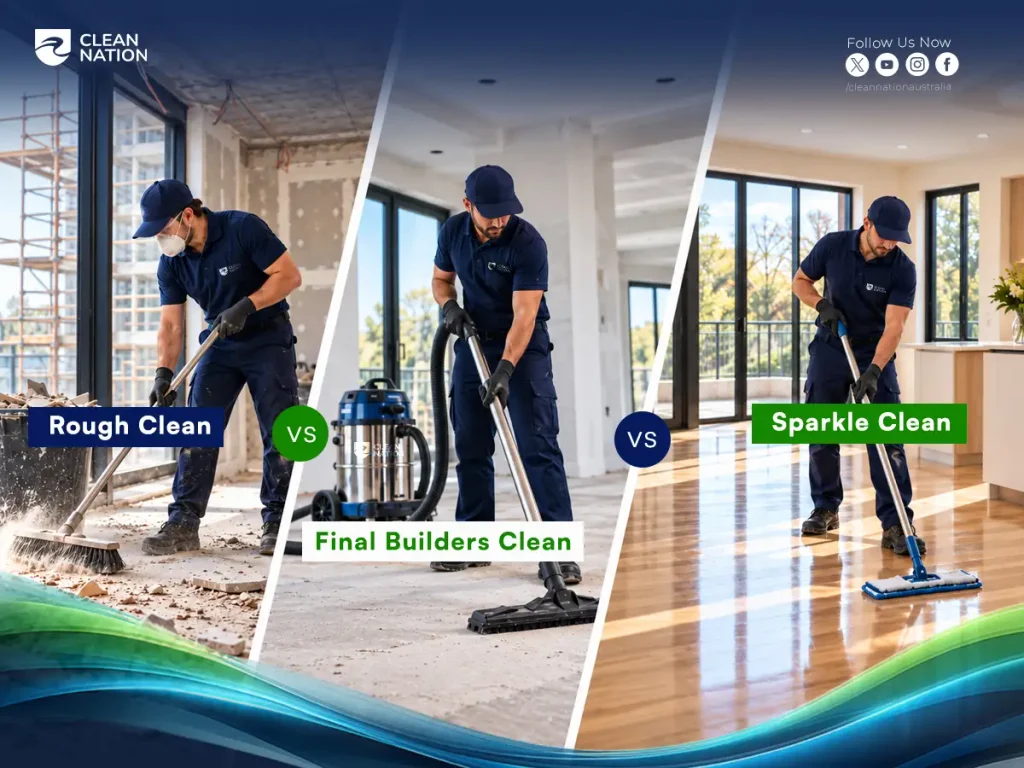
Builders cleaning often takes place in stages. Understanding the difference helps prevent the final clean from being booked before the site is ready.
| Cleaning stage | Main purpose | Typical timing |
| Rough clean | Remove loose construction debris and prepare accessible work areas | During or towards the end of major building work |
| Detailed final clean | Remove construction dust and clean installed surfaces, rooms and fixtures | Once relevant finishing trades are complete |
| Sparkle clean | Remove light fingerprints, settled dust and minor presentation marks | Shortly before final presentation or handover |
A rough clean does not provide the same result as a detailed final clean. Similarly, a sparkle clean is usually a lighter presentation clean rather than a replacement for full post-construction cleaning.
Some contractors combine stages, while others quote for each separately.
Builders should confirm the number of visits and expected cleaning results before work begins.
What Is Not Included in a Standard Final Builders Clean?
Not every construction-related task belongs in a standard final cleaning package.
Depending on the contractor and site conditions, the following may require separate quotations:
- Removal of large quantities of construction waste or skip-bin rubbish.
- Disposal of hazardous or regulated materials.
- High-access façade or window cleaning.
- Carpet steam cleaning and specialised floor treatments.
- Heavy concrete, grout, silicone or adhesive removal.
- Pressure washing and extensive external cleaning.
- Cleaning inside appliances and specialist equipment.
- Re-cleaning caused by trades returning after completion.
- Repairs to scratched glass, damaged paint or faulty finishes.
For example, removing a small approved adhesive mark from a window may be part of a final clean. Removing extensive hardened material from dozens of windows is a different task that may require specialised labour.
Always ask for an itemised cleaning scope. This makes it easier to compare quotations and avoids disagreements before handover.
When Should Builders Schedule Their Final Clean?
The best time for a detailed final builders clean is after dust-generating work and the main finishing trades have been completed, but before the property is presented for its final walkthrough.
Booking cleaners while sanding, painting or drilling is still underway can lead to newly cleaned areas becoming dusty again.
A practical sequence is:
- Complete major building and installation work.
- Remove construction waste and unnecessary materials.
- Carry out the builder’s preliminary defects inspection.
- Finish outstanding dusty or messy trade work.
- Arrange the detailed final builder’s clean.
- Inspect the cleaning results and address remaining issues.
- Complete any agreed presentation touch-ups before handover.
Large projects may need staged cleaning, especially when different floors or units become ready at different times.
Keep enough time between cleaning and handover to deal with unexpected issues. The appropriate gap depends on the project programme and site condition.
How Long Does a Final Handover Clean Take?
There is no fixed duration for every property.
The time required for final builders cleaning depends on the total area, construction residue, number of rooms, access arrangements and the standard of presentation required.
Several factors can affect the cleaning schedule:
Property size and layout:
A multi-storey house or apartment complex may require more labour and movement between areas than a smaller single-level property.
Amount of construction dust:
Buildings with significant plaster, timber or masonry residue may need additional dust-control and detailed cleaning work.
Windows and glazing:
Large glass areas, sliding doors and numerous window tracks increase the cleaning workload.
Flooring and finishes:
Delicate stone, timber or polished surfaces can require more careful handling.
Site access:
Locked rooms, missing utilities, restricted access and remaining materials can slow the work.
Providing floor plans, site photographs and a clear cleaning specification helps a contractor prepare a more suitable estimate.
How to Prepare Your Building Site for Final Cleaning
A well-prepared site makes the final clean easier to coordinate and helps protect completed surfaces.
Before the cleaners arrive, builders should check the following:
- Confirm that major dusty trades have finished.
- Remove large building waste and unused materials.
- Make all agreed rooms and cleaning areas accessible.
- Confirm suitable electricity, water and lighting are available.
- Provide information about delicate or specialist finishes.
- Identify any known damage, heavy residue or problem areas.
- Explain site access, parking and safety requirements.
- Confirm the cleaning schedule and handover deadline.
One often-overlooked detail is the finishes schedule.
For example, a cleaning contractor should know whether a benchtop is natural stone or another material before attempting to remove an adhesive mark.
Sharing these details early can help prevent inappropriate cleaning methods and avoidable surface damage.
How Should Builders Check the Final Cleaning Before Sign-Off?
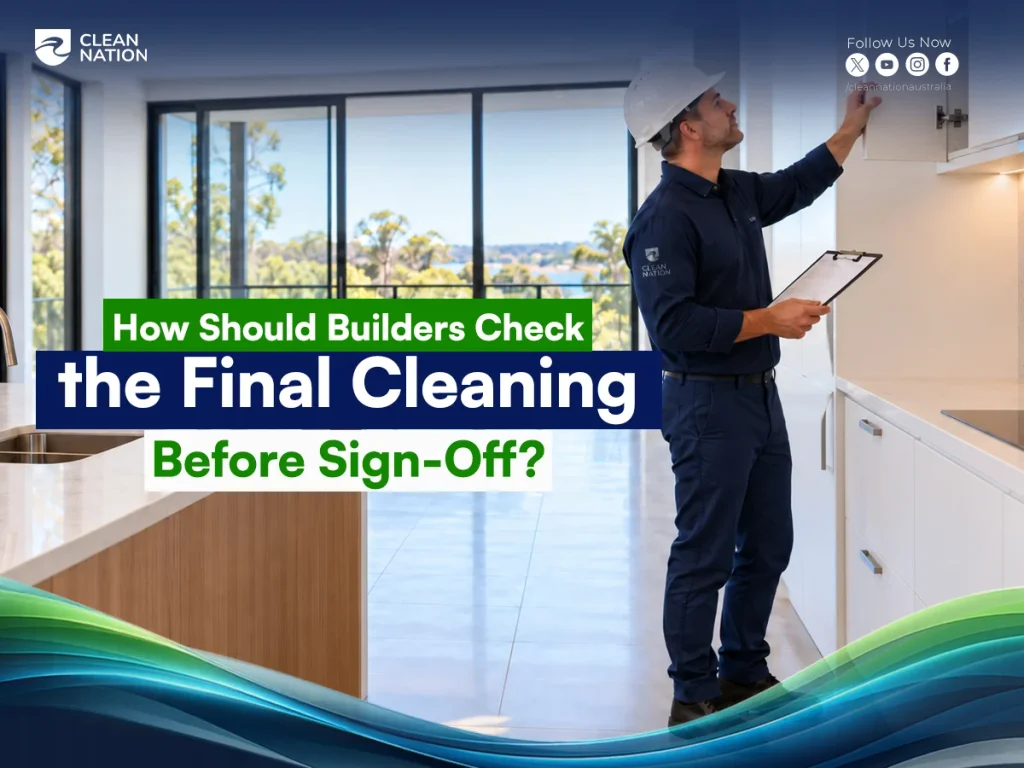
A final walkthrough should assess cleaning results against the agreed quotation, rather than relying only on whether the property looks tidy from the entrance.
Start with high-visibility areas such as the kitchen, bathrooms, windows and main flooring. Then inspect less obvious places, including cupboard interiors, skirting edges, tracks and corners.
Separate Cleaning Issues From Building Defects
A dusty window track is generally a cleaning issue. A scratched window or damaged frame is usually a defect or damage issue that needs assessment by the appropriate party.
The same applies to cracked tiles, chipped benchtops, faulty fittings and unfinished paintwork.
Record the location, photograph the issue where appropriate, and identify who is responsible for following it up.
Record Completion Clearly
A simple sign-off record should include the inspection date, areas checked, outstanding cleaning items and the person responsible for reviewing them.
This creates a clearer handover process for builders, cleaners and project managers.
If additional work is required beyond the original cleaning scope, agree on the responsibilities and any extra charges before proceeding.
Why a Detailed Handover Checklist Matters for Builders
A final clean does more than improve appearances.
It helps builders present finished materials properly, identify remaining dust or residue, and assess whether the agreed cleaning work has been completed.
A consistent checklist also helps site supervisors coordinate cleaning across multiple projects without relying on memory.
For clients, the difference is easy to notice. Clean windows make rooms brighter, dust-free cabinetry looks complete, and properly cleaned floors allow the finished materials to be seen as intended.
The most useful checklist is one that matches the property’s actual cleaning scope, rather than a generic list applied to every building.
For homeowners arranging cleaning after moving into a newly finished property, our guide on hiring professional house cleaning services in Australia also explains how to choose a suitable cleaning service.
Need a Final Builders Clean Before Handover?
Preparing a new build for handover involves more than clearing leftover materials. Kitchens, bathrooms, windows, flooring and detailed finishes all need the right attention.
Clean Nation provides construction and builders cleaning services across Australia, including detailed final cleaning and handover preparation for residential and commercial projects.
Whether you’re finishing a new home, renovation or commercial fit-out, share your project details, required cleaning areas and proposed handover date with Clean Nation.
Request a cleaning quote from Clean Nation to discuss the final cleaning scope for your project.
Frequently Asked Questions
1. Do builders or homeowners usually pay for the final builder’s clean?
This depends on the building contract. Some builders include the final clean in their project price, while other arrangements make it a separately agreed cost. Check the contract and cleaning inclusions before handover.
2. Can a final builder’s clean be completed in an occupied property?
It may be possible in certain circumstances, but access, safety and protection of furniture or personal belongings need careful planning. A cleaning contractor should assess the site and agree on the work areas beforehand.
3. Are air-conditioning ducts cleaned during a final builders clean?
Internal duct cleaning is generally a separate specialist service. Cleaning accessible vent covers may be included, but builders should confirm whether internal ductwork and ventilation systems require additional cleaning.
4. Who is responsible if cleaning damages a newly installed surface?
Responsibility depends on what caused the damage, the contract terms and the available evidence. Builders should record the property’s condition, provide material-care instructions and agree on how damage concerns will be reported and assessed.
5. Can builders request a final cleaning report with photographs?
Yes, builders can ask whether the cleaning contractor provides a completion checklist or photographic report. Discuss this before booking so the cleaning arrangements include the required records and sign-off process.