


The health benefits of cleaning the kitchen go beyond looks. It protects your family from foodborne illness and bacteria buildup on the surfaces you touch every day. That’s why more Australian households now turn to a cleaning service in Australia to keep things safe and under control.
1. Prevents Foodborne Illness and Ensures Food Safety

Foodborne illness is one of the most common health risks tied to a dirty kitchen. It usually comes from cross-contamination, where bacteria from raw food spreads to other surfaces or ready-to-eat food.
Raw meat, eggs, and unwashed produce carry bacteria like Salmonella and E. coli. If these touch a cutting board, countertop, or utensil that isn’t cleaned properly, that bacteria transfers to your next meal.
Areas that need extra attention:
- Cutting boards, especially after raw meat
- Countertops near food prep zones
- Kitchen sinks, where bacteria can linger in the basin
- Utensils and knives used on raw food
Following Australian food safety standards at home is simple: wash hands, clean surfaces between tasks, and never let raw meat juices touch ready-to-eat food. If daily prep leaves you short on time, professional Kitchen cleaning services in Australia can help households keep food prep areas consistently safe.
2. Reduces Germs and Bacteria on High-Touch Surfaces
Some spots in your kitchen get touched dozens of times a day. Cabinet handles, fridge doors, tap handles, and countertops pick up germs from every hand that touches them, then pass those germs along to the next person.
Regular wiping breaks this cycle. A quick daily wipe of high-touch surfaces stops bacteria from multiplying and spreading further.
It helps to know the difference between three terms:
- Cleaning removes dirt and food particles from a surface
- Sanitizing reduces bacteria to a safe level
- Disinfecting kills nearly all germs and viruses on a surface
Most kitchens need regular daily cleaning, sanitizing after handling raw food, and disinfecting occasionally, especially during flu season or after someone in the house has been sick.
3. The Dirtiest Item in Your Kitchen: Sponges and Dishcloths
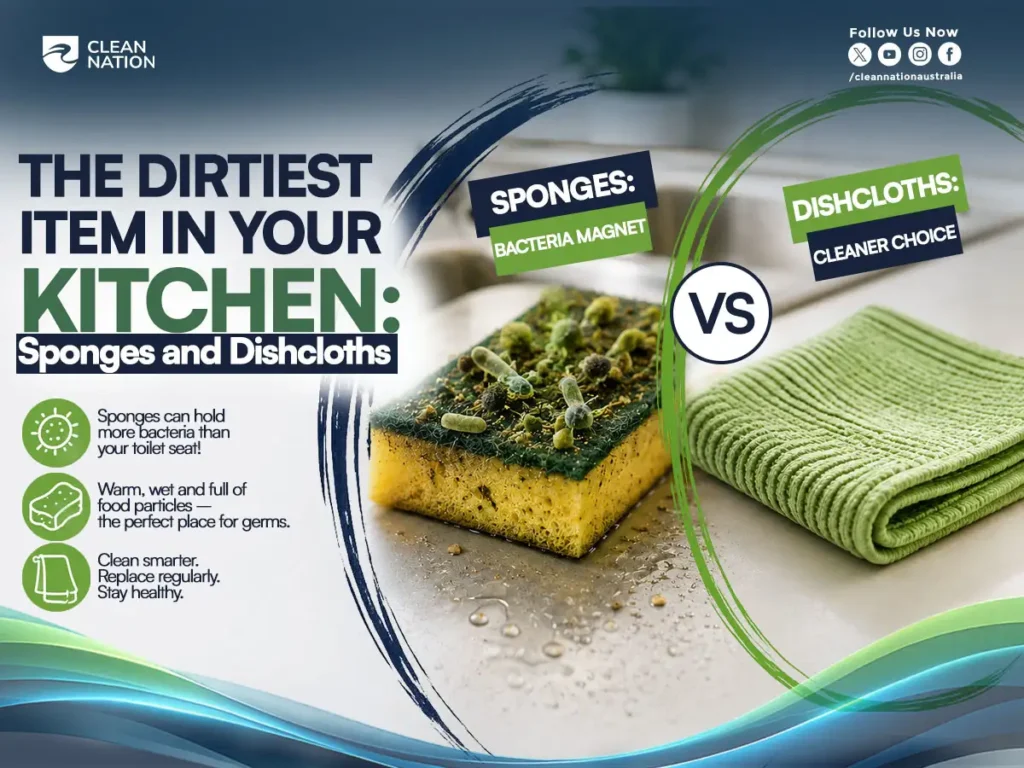
Here’s something most people don’t expect: your kitchen sponge is often dirtier than your toilet seat. Sponges stay damp, trap food particles, and sit at room temperature, which is the perfect combination for bacterial growth.
Simple ways to manage this:
- Replace sponges every one to two weeks
- Microwave a wet sponge for one minute daily to kill most bacteria
- Run sponges through the dishwasher on a hot cycle if they’re dishwasher-safe
- Switch to a microfiber kitchen cloth, which dries faster and holds fewer germs
Still not convinced? Watch this quick Kitchen cleaning video to see how fast bacteria build up on everyday cleaning tools.
4. Prevents Mold, Odors, and Moisture Problems
Mold needs two things to grow: moisture and food. Kitchens provide both. Damp sink areas, food residue in drains, and forgotten leftovers in the fridge all create the right conditions for mold and bad smells.
Common trouble spots:
- How to Clean a Kitchen Sink Drain
- The rubber seal around the fridge door
- Under the sink, where pipes can sweat
- Behind and under appliances
Wiping up spills right away and drying surfaces after cleaning cuts moisture buildup significantly. In Australia’s humid coastal regions, this step matters even more, since higher humidity speeds up mold growth.
5. Keeps Pests Away From Your Home

Crumbs, grease, and food waste are basically an invitation for pests. Cockroaches, ants, and rodents are drawn to kitchens with accessible food sources, even small ones like crumbs under the toaster.
Steps that make a real difference:
- Sweep floors daily, especially under appliances
- Store dry goods like flour, pasta, and nuts in sealed containers
- Take out kitchen trash regularly and keep bins covered
- Wipe down grease buildup around the stove and range hood
Pest problems are common across Australian homes, particularly in warmer months. A clean kitchen removes the main reason pests show up in the first place.
6. Reduces Allergens and Improves Air Quality
Dust, food particles, and grease residue don’t just sit on surfaces. They also affect the air you breathe. Over time, this buildup can trigger allergies or make asthma symptoms worse.
What helps improve air quality:
- Clean range hood filters monthly to reduce grease particles in the air
- Vacuum or sweep regularly to cut down on dust
- Wipe surfaces that collect crumbs and food residue
- Keep the kitchen well-ventilated when cooking
For households with asthma or allergy sensitivities, this is one of the most overlooked benefits of a clean kitchen.
7. Supports Mental Health and Reduces Stress
There’s a real connection between a cluttered kitchen and a cluttered mind. Visual clutter competes for your brain’s attention, which makes it harder to focus and easier to feel overwhelmed. A Princeton University study found that clutter in your visual field can reduce your ability to concentrate.
An organized kitchen removes that background noise. You spend less time hunting for what you need and more time actually using the space.
Small habits that support this:
- Clear countertops before bed so mornings start fresh
- Deal with dirty dishes the same day
- Keep one dedicated spot for everyday items
- Do a five-minute reset after cooking
For busy Australian households juggling work and family life, this small routine can lower daily stress more than people expect.
8. Encourages Healthier Eating Habits
A messy kitchen makes cooking feel like a chore. When counters are cluttered and dishes are piling up, it’s tempting to skip cooking altogether and order takeaway instead.
A clean, organized kitchen removes that friction. Ingredients are easy to find, tools are ready to use, and prepping a meal doesn’t feel like extra work.
This also helps with:
- Reducing food waste, since you can see what you already have
- Better meal planning, because your fridge and pantry are organized
- More consistent home cooking, which usually means healthier meals overall
9. Prevents Accidents and Keeps the Kitchen Safe
Grease buildup on floors and stovetops is a real slip hazard. Add clutter on counters or blocked walkways and the risk of accidents, especially in busy households with kids.
Basic safety habits to build in:
- Wipe up grease spills immediately, not after cooking is done
- Keep walkways clear of bags, shoes, or clutter
- Store sharp tools and knives properly after use
- Keep cleaning chemicals in a locked or high cabinet, away from children
Safe storage matters just as much as cleaning itself. Mixing certain cleaning chemicals can create dangerous fumes, so always read product labels and never combine bleach with other cleaners.
10. Extends the Life of Appliances and Saves Money
Grease and grime don’t just look bad. They also make appliances work harder than they need to. A dirty fridge coil, clogged dishwasher filter, or grease-coated oven can all reduce efficiency and shorten the lifespan of your equipment.
Quick appliance care tips:
- Wipe down the fridge seal monthly to keep it airtight
- Clean the dishwasher filter every few weeks
- Descale the coffee maker or kettle regularly
- Wipe the oven after spills instead of letting them bake on
Regular maintenance costs almost nothing in time or money. Replacing a damaged appliance early does.
Common Kitchen Cleaning Mistakes to Avoid
Even people who clean regularly can miss a few key details. Here are the mistakes that come up most often.
1. Only cleaning visible surfaces: Countertops get wiped, but drains, vents, and the inside of appliances get ignored. Bacteria and mold often build up in these hidden spots first.
2. Using the wrong products. Not every surface needs bleach. Using strong chemicals on the wrong material can damage surfaces or leave harmful residue near food. Always check the product label first.
3. Skipping cleaning tool maintenance: A dirty sponge or cloth spreads bacteria instead of removing them. Cleaning tools need to be cleaned too, not just the surfaces they’re used on.
4. Mixing cleaning chemicals: Combining products like bleach and ammonia-based cleaners can create toxic fumes. Stick to one product at a time, and always ventilate the room.
For a full breakdown of what to skip and what to prioritize, this short Kitchen cleaning video covers the most common errors people make at home.
How Often Should You Clean Your Kitchen?
Not every task needs to happen daily. Here’s a simple breakdown to keep things manageable.
Daily:
- Wipe countertops and the stovetop
- Wash or load dishes
- Take out food scraps and rubbish
- Sweep the floor
Weekly:
- Clean the sink and drain
- Wipe down cabinet handles and high-touch surfaces
- Clean the microwave inside and out
- Mop the floor
Monthly:
- Clean behind and under appliances
- Descale the kettle or coffee maker
- Clean the range hood filter
- Deep clean the fridge, including shelves and drawers
If a full cleaning schedule feels like too much on top of work and family life, a Kitchen cleaning service in Sydney can take care of the deeper, more time-consuming tasks on a set schedule.
Best Practices for a Healthy Kitchen
A few consistent habits go further than one big clean-up session. Here’s what actually works.
- Use the right products for the surface. Check labels before applying any cleaner to stone, wood, or stainless steel.
- Clean as you cook. Wiping spills immediately prevents stains and stops bacteria from settling in.
- Wash your hands before and after handling food. Twenty seconds with soap and water is enough to make a real difference.
- Replace sponges and cloths regularly. A worn-out cleaning tool does more harm than good.
- Store food properly. Keep raw meat on the bottom shelf of the fridge and seal leftovers before storing them.
For a natural, chemical-free option, white vinegar and baking soda handle most everyday kitchen cleaning jobs. Vinegar cuts through grease and mineral buildup, while baking soda works well on stubborn stains and odors. Both are safe around food and gentle on most surfaces.
For a visual walkthrough, this Professional kitchen cleaning video breaks down a natural cleaning routine step by step.
Why Choose Clean Nation for Kitchen Cleaning?
Keeping up with kitchen cleaning is easier said than done, especially with work, kids, and everything else competing for your time. That’s where professional support makes a real difference.
Clean Nation offers Kitchen cleaning services in New South Wales for homes across Sydney and surrounding areas, along with Industrial cleaning services in New South Wales for commercial kitchens that need to meet stricter hygiene and compliance standards.
What sets the service apart:
- Trained, background-checked cleaning staff
- Deep cleaning that covers hidden, hard-to-reach areas
- Safe, eco-friendly products that are suitable around food
- Flexible scheduling built around your household or business needs
Client experience with Clean Nation
A café owner in Sydney’s inner west reached out after their kitchen exhaust started struggling. Grease had built up along the range hood and filters over several months of daily service. Staff noticed the extraction wasn’t clearing smoke properly, and a routine health inspection was coming up in three weeks.
The problem:
- Grease buildup had reduced the range hood’s extraction efficiency by an estimated 30%
- Filters hadn’t been professionally cleaned in over six months
- The café risked failing its upcoming compliance check, which could mean a forced shutdown until issues were fixed
What Clean Nation did:
The team scheduled an after-hours deep clean to avoid disrupting service. This covered the range hood, exhaust filters, extraction ductwork, and the cooking line surfaces beneath them. Every step followed the food safety and workplace hygiene standards required for commercial kitchens in New South Wales.
The result:
- Extraction airflow returned to normal within a single session
- The kitchen passed its health inspection with no follow-up required
- The owner moved to a quarterly cleaning schedule to avoid the same buildup happening again
Why it matters: Grease buildup doesn’t just look bad. It slows down extraction, raises fire risk, and can shut a commercial kitchen down if it fails an inspection. A home kitchen faces a smaller version of the same problem. A greasy range hood works harder, pulls less smoke and odor out of the air, and wears out sooner. Regular cleaning, commercial or residential, stops small buildup from turning into a bigger, costlier issue.
Don’t just take our word for it. You can read real feedback from local customers in our Client reviews.
Frequently Asked Questions
How does cleaning the kitchen improve health?
Regular cleaning removes bacteria, mold, and food residue that can cause illness, allergies, or pest problems. It also lowers the risk of accidents and supports better mental well-being by reducing clutter.
What kitchen areas need cleaning every day?
Countertops, the stovetop, sink, and floors need daily attention. These are the surfaces most exposed to food, spills, and bacteria.
Does a clean kitchen prevent food poisoning?
Yes. Most cases of food poisoning at home come from cross-contamination or bacteria on surfaces. Cleaning cutting boards, hands, and countertops properly lowers that risk significantly.
What is the difference between sanitizing and disinfecting a kitchen?
Sanitizing reduces bacteria to a safe level, while disinfecting kills nearly all germs and viruses on a surface. Both matter, but disinfecting is usually reserved for situations like illness in the household.
How can I keep my kitchen clean naturally?
White vinegar and baking soda handle most cleaning jobs without harsh chemicals. Vinegar cuts grease, while baking soda tackles stains and odors, and both are safe to use around food.
Conclusion
A clean kitchen does more than look good. It protects your family from foodborne illness, keeps pests and mold away, supports mental clarity, and helps your appliances last longer. None of this requires hours of work each day. A few consistent habits, done regularly, cover most of what your kitchen needs.
If keeping up with it all feels like a lot, professional help is available. Check out our Client reviews to see how Clean Nation has helped other Australian households keep their kitchens safe, clean, and stress-free.