


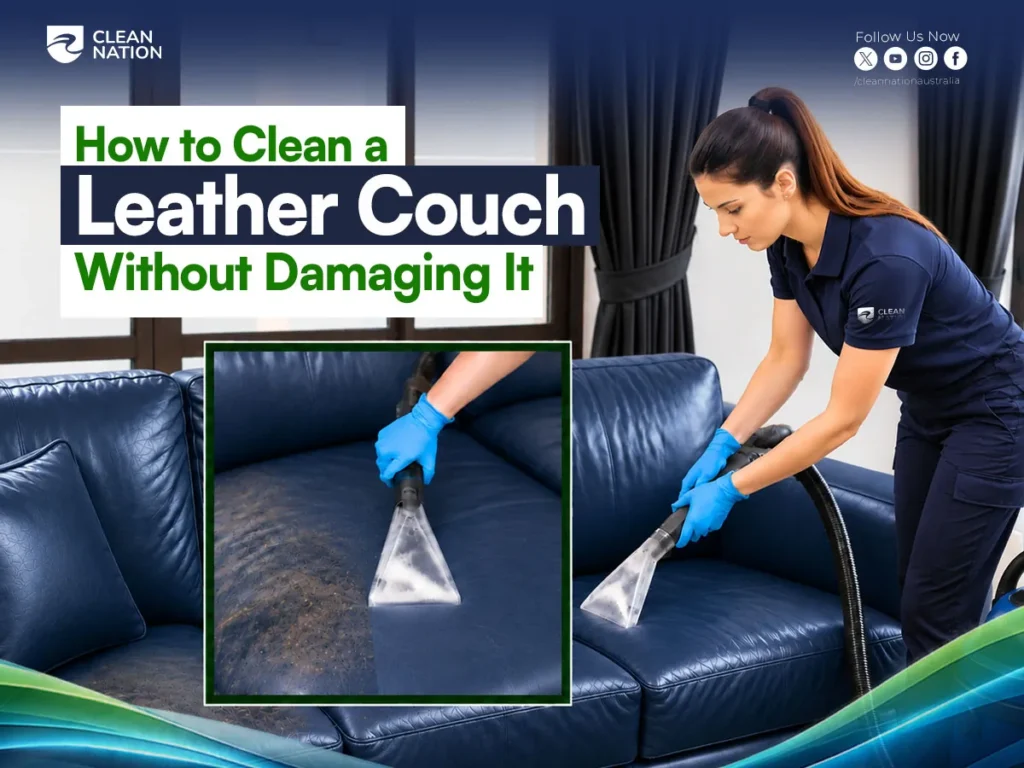
The safest way to clean a leather couch is to check its care label, remove loose dust with a soft vacuum brush and use a cleaner approved for its leather type. Gently wipe the surface, remove any leftover product and let it air-dry. Apply leather conditioner only if the manufacturer recommends it. Avoid harsh chemicals, excess water and direct heat.
This guide explains how to clean a leather couch step by step, remove common marks and care for leather furniture in Australian homes.
Which Type of Leather Is Your Couch?
Before cleaning a leather sofa, identify its leather type. Different finishes react differently to water, cleaning products and conditioners.
Most leather lounges have a care label underneath the furniture or inside the manufacturer’s documents.
Look for information about the leather finish and approved cleaning products.
Aniline, Semi-Aniline and Pigmented Leather
| Leather Type | Water Resistance | Recommended Cleaning Approach |
| Aniline leather | Low; absorbs moisture easily | Dry dusting and approved aniline-specific products |
| Semi-aniline leather | Moderate; has a light protective finish | Gentle cleaning with a product approved for that finish |
| Pigmented or protected leather | Higher; has a protective surface coating | Suitable leather cleaner and controlled moisture, as directed |
Aniline leather has a natural appearance and soft feel. It has little or no protective coating, making it more sensitive to moisture and stains.
Semi-aniline leather has a light protective finish. It offers some stain resistance but still needs gentle cleaning.
Pigmented leather has a stronger surface coating. It generally handles everyday dirt and minor spills better than aniline leather.
Should You Use the Water-Drop Test?
Some guides suggest placing a drop of water on a hidden area to identify the leather finish.
Water may bead on protected leather and absorb into porous aniline leather.
However, this test can leave a permanent dark mark on absorbent leather. It also cannot reliably identify every modern leather finish.
The safer option is to check the care label or ask the furniture manufacturer.
If you cannot confirm the leather type, limit home cleaning to gentle dry dusting until you receive suitable care advice.
What Do You Need to Clean a Leather Couch?
You only need a few items for routine leather couch care.
| Cleaning Item | Purpose |
| Vacuum with soft brush attachment | Removes dust, crumbs and loose dirt |
| Two or three microfibre cloths | Gentle cleaning, wiping and drying |
| Leather-specific cleaner | Removes suitable surface dirt |
| Distilled water | For approved damp-cleaning methods |
| Leather conditioner | Used only when recommended for the finish |
| Soft, dry towel | Removes excess moisture |
Choose a cleaner designed for your leather type rather than a general household product.
Mild soap is sometimes suggested for leather cleaning, but many Australian furniture manufacturers advise against household detergents. Use soap only if your couch’s care instructions specifically permit it.
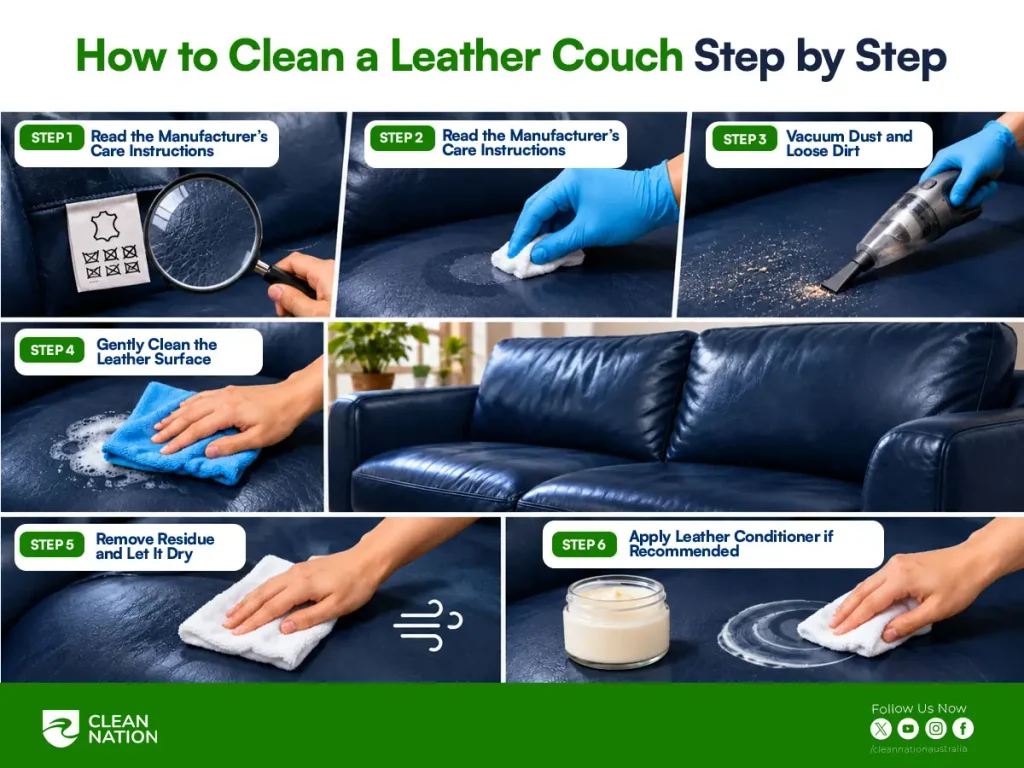
How to Clean a Leather Couch Step by Step
This method suits routine care, provided you follow the manufacturer’s instructions for your leather finish.
Step 1: Read the Manufacturer’s Care Instructions
Check the leather care label before using water or cleaning products.
Identify whether the couch is aniline, semi-aniline, pigmented or another finish.
Some furniture also has waxed, oiled or suede surfaces that need different treatment.
Do not apply a cleaning method intended for protected leather to an unknown or delicate finish.
If the label is missing, contact the furniture retailer or manufacturer.
Step 2: Test the Leather Cleaner
Before cleaning the entire couch, test the approved product on a small, hidden area.
For example, choose an area behind a cushion or underneath the sofa where the leather finish is the same.
Apply a small amount as directed.
Allow the area to dry completely.
Check for darkening, colour transfer, stickiness or changes in texture.
If the leather reacts badly, stop using the product.
Step 3: Vacuum Dust and Loose Dirt
Remove loose cushions where possible.
Use a vacuum cleaner with a soft brush attachment and low suction.
Carefully clean the seat surfaces, seams, stitching and gaps between cushions.
Avoid dragging hard plastic attachments across the leather.
Next, wipe the couch with a clean, dry microfibre cloth.
This removes remaining dust before you start cleaning the surface.
Step 4: Gently Clean the Leather Surface
For pigmented or suitable semi-aniline leather, apply a small amount of approved leather cleaner to a soft cloth or applicator.
Some products require a slightly damp cloth. Others have their own application instructions.
Work gently across one section at a time.
Pay attention to armrests, headrests and seating areas where body oils often collect.
Avoid strong rubbing or soaking the leather.
For aniline leather: Use only products specifically approved for its finish. If you do not have suitable instructions, stick to dry dusting and seek specialist advice for marks.
Step 5: Remove Residue and Let It Dry
Follow the cleaner’s instructions for removing any remaining product.
Where permitted, use a second clean cloth lightly dampened with distilled water.
Wring the cloth out thoroughly before touching the leather.
Remove excess moisture with a soft, dry cloth.
Allow the couch to dry naturally in a ventilated room.
Do not use a hair dryer, heater or direct sunlight to speed up drying.
Step 6: Apply Leather Conditioner if Recommended
Some leather finishes benefit from a suitable conditioner or protective treatment.
However, not every leather couch should be conditioned.
For example, certain aniline finishes have manufacturer instructions that advise against ordinary conditioners.
If conditioning is recommended:
- Choose a product approved for the leather finish.
- Test it on a hidden area.
- Apply a thin layer using a soft cloth.
- Follow the recommended application time.
- Remove excess product and allow the surface to dry.
Avoid applying too much conditioner, as this may leave a sticky or uneven finish.
How to Clean Leather Furniture Properly
The same basic care principles apply to leather armchairs, recliners, ottomans and lounge suites.
However, different furniture pieces may have different leather finishes.
For example, a leather recliner may contain several moving sections where dirt collects around the seams.
An ottoman may receive more contact with shoes, clothing and everyday items.
When cleaning leather furniture:
- Check the manufacturer’s care instructions.
- Remove loose dirt before using cleaning products.
- Use products suited to the leather finish.
- Avoid excessive moisture and rubbing.
- Keep cleaning products away from electrical recliner controls.
If your lounge has fabric cushions or fabric upholstery instead, follow our fast way to clean a fabric sofa guide.
Fabric and leather upholstery should not be cleaned using the same method.
How to Remove Common Marks From a Leather Couch
Spills and marks are easier to manage when treated promptly.
However, different stains need different cleaning methods.
Grease and Food Stains
Food spills, cooking oil and body oils can leave dark marks on leather.
If the spill is fresh, gently blot the affected area with a clean, absorbent cloth.
Do not rub, as this may spread the grease or damage the finish.
For protected leather, use a suitable leather cleaner if the manufacturer permits it.
On aniline leather, oils may absorb quickly and leave permanent darkening.
Avoid applying baking soda, household degreasers or other powders unless the manufacturer recommends them.
Ink and Pen Marks
Ink stains can be difficult to remove without damaging the leather colour or protective finish.
Do not use hairspray, rubbing alcohol or nail polish remover.
These products can remove surface colour or damage the coating.
If the mark is fresh, avoid spreading it. Ask a leather-care specialist about a suitable ink remover for the finish.
Old or deeply absorbed ink may not be fully removable.
Dye Transfer From Jeans
Dark jeans and other dyed clothing can transfer colour onto light leather sofas.
This is especially noticeable on cream, white and beige leather.
Ordinary leather cleaner may not remove transferred dye.
Use a product specifically designed for dye transfer only when it is approved for your leather type.
If the colour remains, professional treatment may be safer than repeated scrubbing.
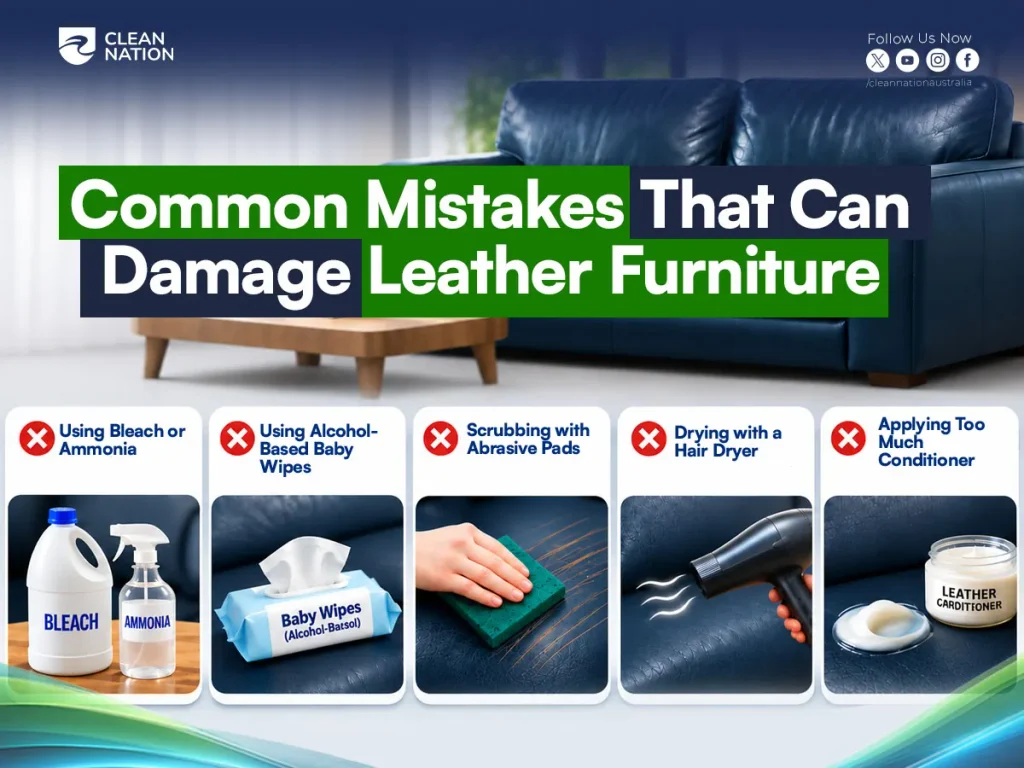
Common Mistakes That Can Damage Leather Furniture
Leather can be durable, but unsuitable cleaning methods may cause permanent damage.
| Cleaning Mistake | Possible Damage |
| Using bleach or ammonia | Discolouration and finish damage |
| Using alcohol-based baby wipes | Loss of colour or protective coating |
| Scrubbing with abrasive pads | Scratches and surface wear |
| Soaking the leather | Water marks and material damage |
| Using a steam cleaner | Heat and moisture damage |
| Drying with a hair dryer | Drying, hardening or cracking |
| Using vinegar without approval | Damage to sensitive leather finishes |
| Applying too much conditioner | Sticky residue or uneven appearance |
Avoid furniture polish, saddle soap and household oils unless the manufacturer specifically approves them.
Steam cleaning should not be used as a general DIY method for leather sofas.
A gentle, leather-specific cleaning approach is usually safer than strong chemicals or home remedies.
How Often Should You Clean and Condition a Leather Couch?
Regular care helps prevent dust, perspiration and body oils from building up.
However, leather cleaning and conditioning schedules depend on the finish, usage and manufacturer’s recommendations.
| Maintenance Task | Suggested Frequency |
| Dry dusting | Weekly |
| Vacuuming seams and gaps | Weekly or as needed |
| Gentle surface cleaning | When light dirt appears, using approved methods |
| Detailed leather cleaning | According to the manufacturer and level of use |
| Leather conditioning | Only when recommended for the leather finish |
| Professional assessment | When stubborn stains or surface damage appear |
Some manufacturers recommend leather care every few months. Others specify shorter or longer intervals.
For example, King Living recommends its own approved leather-care products every six to eight weeks for certain furniture.
Other leather suppliers provide different instructions.
This is why a universal six-month conditioning rule is not suitable for every leather couch.
For broader upholstery maintenance advice, read our guide on how often a sofa should be cleaned.
How Does Australia’s Climate Affect Leather Furniture?
Australian homes can expose leather furniture to strong sunlight, heat and changing humidity.
Direct sunlight may cause fading, particularly on aniline and semi-aniline leather.
Long exposure to heaters or hot windows can also contribute to drying and cracking.
Keep leather lounges away from direct heat where possible.
In coastal homes, high humidity and poor ventilation may increase the risk of mould developing on furniture.
Keep rooms ventilated and address moisture problems promptly.
Do not place a damp leather couch directly against a wall or leave it in a poorly ventilated room.
When Should You Call a Professional Leather Couch Cleaner?
Light dust and everyday surface dirt can often be managed at home.
However, some leather problems need professional assessment.
Consider professional help when:
- Stains remain after suitable cleaning.
- The couch has absorbed oil or dye.
- The leather finish is unknown or delicate.
- There is significant discoloration.
- The surface has become sticky, cracked or damaged.
Cleaning cannot reverse every stain or repair worn leather coatings.
A leather restoration specialist may be needed when the problem involves colour loss, peeling finishes or physical damage.
Clean Nation provides sofa cleaning services across Australia, including suitable leather upholstery cleaning.
How Much Does Professional Leather Couch Cleaning Cost?
Clean Nation’s published pricing guide lists leather or suede sofa cleaning at approximately 170–260.
The final price depends on the sofa size, material, condition and required treatment.
This is an indicative range, not a fixed quote for every leather couch.
For more information about choosing professional upholstery care, read our guide on whether professional sofa cleaning is worth it.
Request a Leather Sofa Cleaning Quote From Clean Nation
If your leather sofa has stubborn marks or needs specialist attention, Clean Nation can discuss suitable cleaning options.
Our team assesses upholstery materials and cleaning requirements before selecting an appropriate method.
Call +61480810142 or contact Clean Nation online to request a tailored quote.

Frequently Asked Questions
1. How Do You Clean a Faux or Bonded Leather Couch?
Faux and bonded leather are different from full leather upholstery. Faux leather often has a synthetic surface, while bonded leather contains leather fibres held together with a backing and coating. Follow the manufacturer’s instructions. Avoid ordinary leather conditioners, which may not suit these materials.
2. Why Does My Leather Couch Feel Sticky After Cleaning?
Stickiness may result from leftover cleaning products, unsuitable conditioners or damage to the surface finish. Stop adding more products. Check the manufacturer’s instructions and seek specialist advice if the sticky feeling remains after the recommended drying period.
3. Can Leather Conditioners Make a Couch Darker?
Yes. Some conditioners can darken certain leather finishes, especially absorbent aniline leather. Always check product compatibility and test a hidden area first. Do not condition leather when the manufacturer advises against it.
4. How Long Should You Wait Before Sitting on a Cleaned Leather Couch?
Wait until the leather is completely dry and any approved conditioner has finished absorbing. The time depends on the product, room conditions and cleaning method. Follow the manufacturer’s instructions rather than using a fixed waiting time.
5. How Do You Remove Pet Urine or Bad Smells From a Leather Couch?
Blot fresh urine immediately without rubbing. Avoid soaking the leather with water or household deodoriser. Urine may enter seams and cushioning, where surface cleaning cannot reach it. A professional assessment may be needed to address the contamination and odour safely.
Final Checks Before Cleaning Your Leather Couch
Before starting, confirm the leather type, read the care instructions and choose a suitable cleaner.
Use gentle methods, avoid unnecessary moisture and allow the surface to dry naturally.
For ongoing care, regular dusting and quick attention to spills are often more useful than aggressive cleaning.
If the leather is heavily stained or the finish is damaged, professional advice can help you avoid making the problem worse.